
Sugar maple (Acer saccharum, )
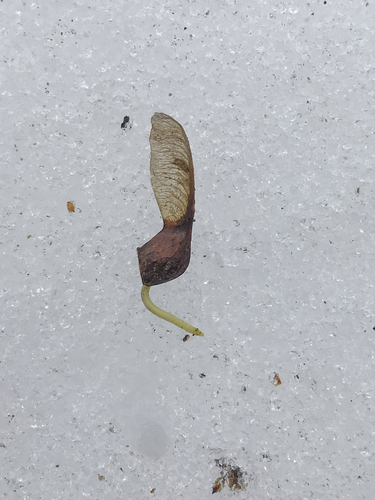
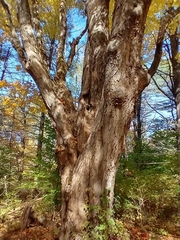
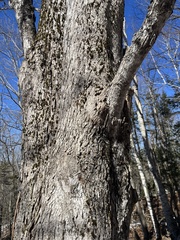
Sugar maple (Acer saccharum) is a large deciduous tree in the Sapindaceae, native to eastern Canada and the northeastern United States. Its five-lobed leaves have rounded sinuses, its sweet spring sap supplies maple syrup, and its seedlings tolerate deep woodland shade.
Read moreSugar maple, Sugar tree, Sweet maple, Rock maple and Hard maple


© photo
Kent P. McFarland · cc0
Tom Norton · cc-by
iNaturalist User · cc-by
Taken Jul 20, 2021 by Giode Tonpino (cc-by-sa)
Taken Sep 21, 2020 by lsusr lsusr (cc-by-sa)
Taken Sep 19, 2022 by Ingvild Tronvik (cc-by-sa)
Taken Nov 15, 2009 by Photoflora - Jean-Luc TASSET (©)
Taken Sep 15, 2015 by Photoflora - Jean-Luc TASSET (©)
© copyright of the Board of Trustees of the Royal Botanic Gardens, Kew.




Global distribution
Sugar maple is native to eastern Canada, from southeastern Manitoba to Nova Scotia, and the northeastern and east-central United States, from Minnesota to northern Georgia along the Appalachians. South of the 42nd parallel it becomes less frequent and more restricted to cool ravines and moist sites.
Identity
Sugar maple (Acer saccharum Marshall, 1785), also known as rock maple or hard maple, is a large deciduous tree in the Sapindaceae, subfamily Hippocastanoideae. Its home range spans eastern Canada and the northeastern to east-central United States. 1 2
Across that range, sugar maple dominates extensive stands of temperate hardwood forest. Some trees live beyond 200 years, occasionally reaching 300 years, while continuing to produce sweet sap each spring. 7
American naturalist Humphry Marshall described the species in 1785 in his work on North American trees. Its common name reflects its defining use: spring sap rich enough in sugar to concentrate into syrup. Indigenous peoples, including the Mohegan, used its sap as a sweetener long before European metal cookware became available. 7 6
Canada’s flag bears a stylized maple leaf rather than a precise botanical portrait of one species. Sugar maple and its close relative black maple remain especially associated with the symbol. Sugar maple is also the official tree of Quebec, Ontario and several U.S. states. 7
Recognition
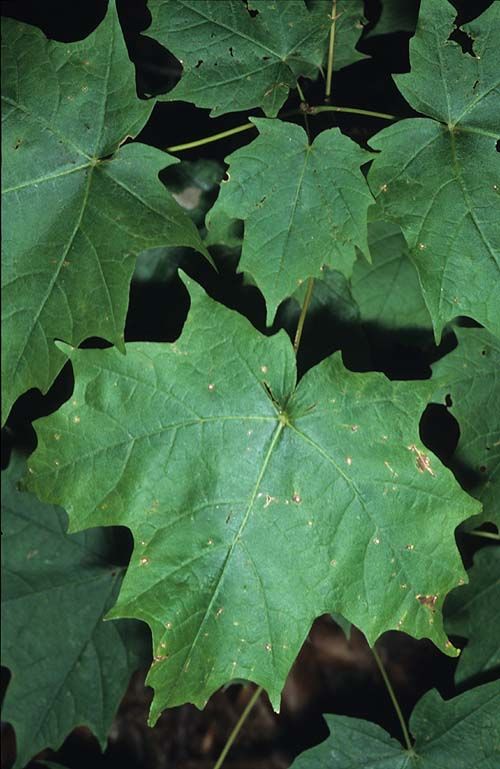
A dense, rounded crown tops a tree commonly 20–35 m (65–115 ft) tall, with exceptional old specimens reaching 45 m (150 ft). Leaves grow in opposite pairs and have five lobes, sometimes three, separated by rounded, U-shaped sinuses and largely toothless margins. Red maple (Acer rubrum) has distinctly toothed lobes and V-shaped sinuses instead. 7 3
Clear, colorless sap from a broken leaf stalk distinguishes sugar maple from Norway maple (Acer platanoides), a frequent source of confusion in urban plantings. Norway maple releases milky sap. Sugar maple’s pointed, dark brown buds also differ from the blunt, greenish or purple buds of that introduced relative. 7
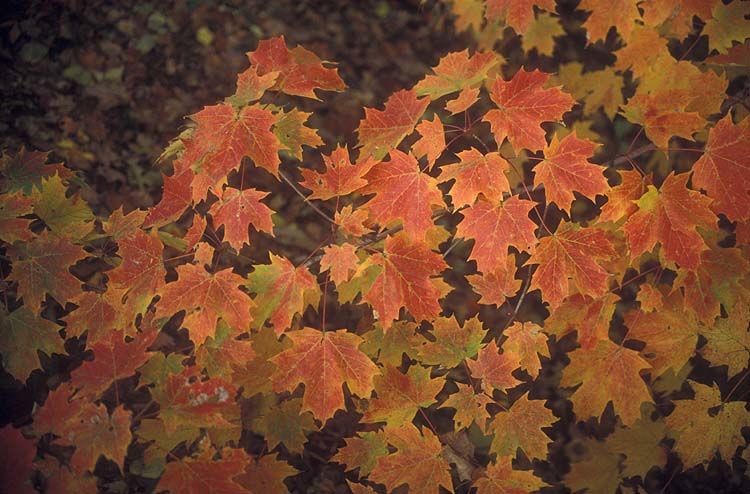
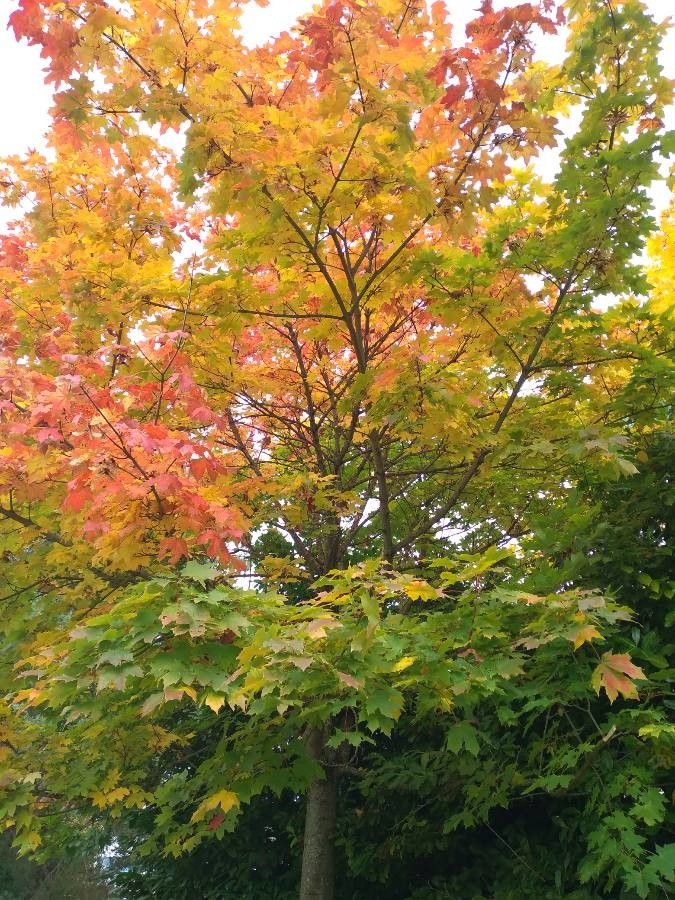
Autumn leaves turn yellow, orange or brilliant red, with considerable variation between individual trees. Fall color alone therefore cannot identify the species reliably. Bark is gray and smooth on young trees, becoming fissured into irregular plates with age. 5 4
Useful taxonomy
Historical names and synonyms include the following combinations. They refer to earlier treatments rather than names of garden cultivars:
- Saccharodendron saccharum (Marshall) Moldenke, a historical combination
- Acer barbatum Michx.
- Acer saccharum var. rugelii (Pax) Rehder
Earlier classifications sometimes treated black maple (Acer nigrum F.Michx.) as a variety or subspecies of sugar maple. Current authorities, including POWO, recognize it as a separate, closely related species, although hybrids occur where the trees meet. The accepted scientific name Acer saccharum provides the stable reference for sugar maple when older names or differing classifications appear in a record. 1 7
Habitat and range
Eastern Canada, from southeastern Manitoba to Nova Scotia, forms the northern part of sugar maple’s native range. In the United States it extends from Minnesota through the northeast and east-central states, reaching northern Georgia along the Appalachians. South of the 42nd parallel, it becomes less frequent and increasingly restricted to cool ravines and moist sites, where winter conditions better support dormancy. 1 7
Among North American hardwoods, sugar maple ranks with American beech as particularly shade tolerant. A seedling can survive for years beneath a closed canopy with slow growth, then grow faster when a gap admits more light. This persistence helps explain the nearly pure stands that can develop in mature forest. 7 4
The International Union for Conservation of Nature lists sugar maple as Least Concern, consistent with its extensive range and abundant populations. Local declines nevertheless occur in association with pollution, road salt, competition from introduced Norway maple and compacted urban soils. 8
Life cycle and reproduction
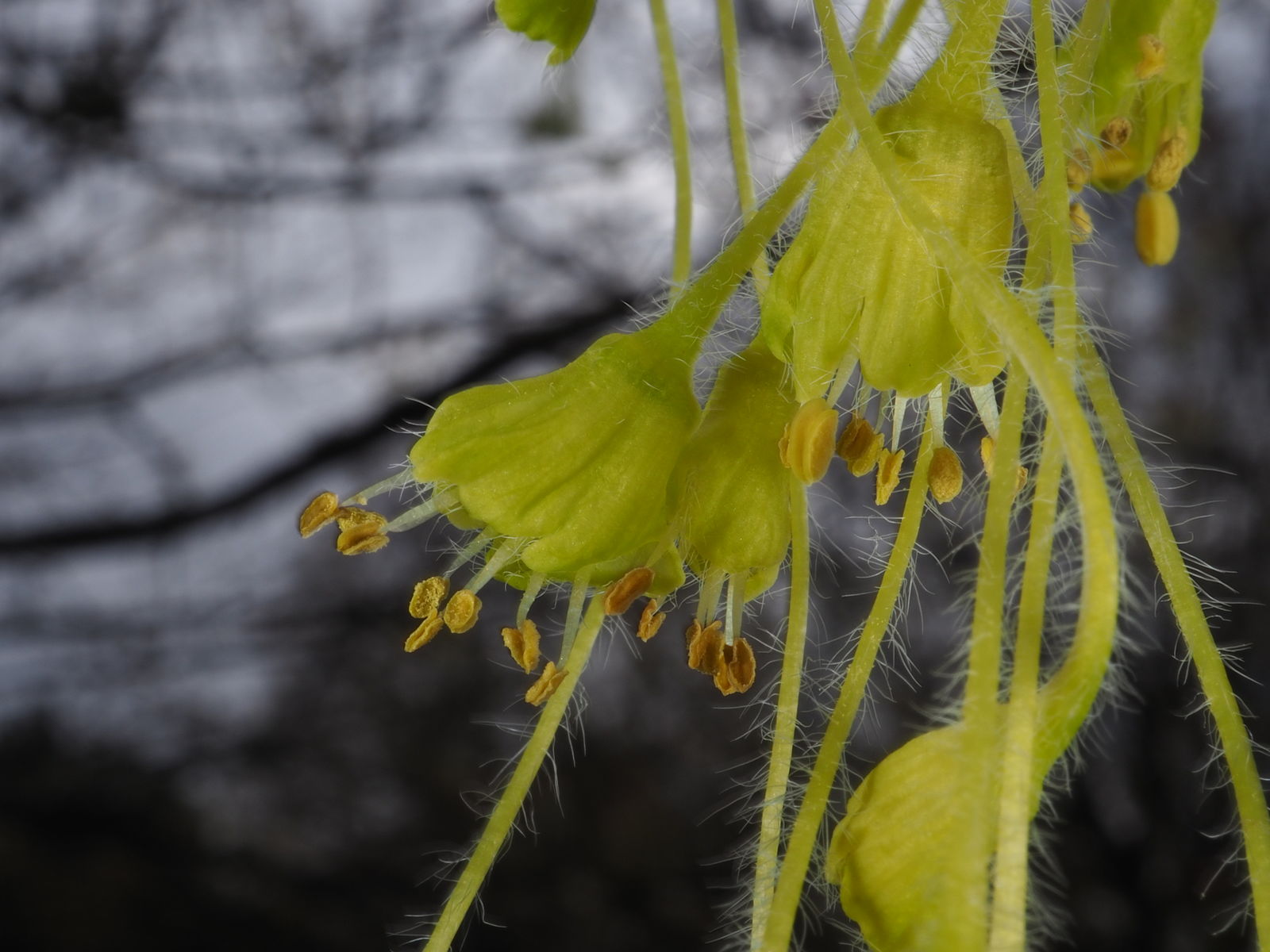
Small, inconspicuous yellow-green flowers appear in local spring, before or alongside the unfolding leaves. The fruits are paired samaras, each about 2–3 cm (0.8–1.2 in) long, with wings held almost parallel. They ripen in autumn and travel away from the parent tree on the wind. 7
Winter cold stratification prepares the seeds for germination. Seed production generally begins at around 30 years. A trunk often reaches 25–30 cm (10–12 in) in diameter at 30–40 years old; this size allows a first sap tap without undue harm to the tree. Trunk size is the practical guide rather than age alone. 7 4
Freezing nights followed by thawing days trigger sap flow for several weeks in late winter. Roughly 32 liters (8.5 U.S. gallons) of sap yield one liter (about one U.S. quart) of syrup, although the ratio depends on sugar concentration. Sap sugar content commonly varies between 2 and 6% from year to year. 6
Uses and risks
Sweet sap supplies the maple syrup industry, carrying an old tradition into large-scale production in Quebec and the northeastern United States. The timber, sold as hard maple, is among the hardest temperate hardwoods. Uses include sports flooring, cabinetmaking, musical instruments and baseball bats, where its strength and close grain are valued. 7 6
No systemic toxicity is documented for people or household pets; the status for horses remains unrecorded because species-specific evidence is lacking. Sugar maple has long been planted for shade and fall color, but its poor tolerance of deicing salt and sensitivity to soil compaction limit its use as a street tree. More tolerant trees often replace it where these urban stresses are persistent. 5 3
Varieties, look-alikes and related plants
Urban growing conditions have shaped the selection of garden cultivars. Legacy and Green Mountain offer resistance to heat, drought and leaf disease, while Apollo has a narrow, columnar crown suited to confined sites. These are grafted selections of the same taxon, rather than separate botanical varieties. A cultivar name describes a selected form, not a different species. 7
Four other maples frequently cause identification difficulties:
- Acer platanoides, Norway maple, has milky sap and blunt green or purple buds;
- Acer rubrum, red maple, has toothed leaves with V-shaped sinuses and reddish young twigs;
- Acer nigrum, black maple, is very similar in appearance and sometimes hybridizes with sugar maple;
- Acer saccharinum, silver maple, has more deeply cut, angular leaf lobes.
When leaves are available on a young tree, breaking a leaf stalk reveals a useful distinction: clear sap in sugar maple, milky sap in Norway maple. Combine that feature with bud shape and leaf margins. It is more dependable than trying to identify a tree from autumn color alone. 7
Main sources
- Plants of the World Online / Kew, Acer saccharum Marshall
- Royal Horticultural Society, Acer saccharum - sugar maple
- Missouri Botanical Garden, Acer saccharum
- Missouri Department of Conservation, Sugar Maple field guide
- NC State Extension, Acer saccharum (Sugar Maple)
- Plants For A Future, Acer saccharum
- Wikipedia (EN), Acer saccharum
- IUCN Red List of Threatened Species, Acer saccharum assessment
Frequently asked questions
Is sugar maple toxic to cats or dogs?
No systemic toxicity is documented for people or household pets. Its status for horses remains unrecorded because specific evidence is lacking.
How can I tell sugar maple from red maple or Norway maple?
Sugar maple has clear sap in a broken leaf stalk; Norway maple has milky sap. Sugar maple buds are pointed and brown, while Norway maple buds are blunt and greenish or purple. Red maple has toothed leaves with V-shaped sinuses and reddish young twigs.
How old must a sugar maple be before tapping?
A trunk at least 25–30 cm (10–12 in) in diameter, often reached at 30–40 years, can support a first tap. About 32 liters of sap yield one liter of syrup, depending on that year’s sugar concentration.
Why does sugar maple tolerate shade so well?
It is among the most shade-tolerant North American hardwoods. A seedling can persist beneath a closed canopy for years with slow growth, then accelerate when a gap admits light.
Is sugar maple invasive?
Sugar maple is native to North America and is not considered invasive there. Introduced Norway maple, which produces more seeds, can instead threaten its natural regeneration locally.
Why do sugar maples often decline in cities?
Deicing salt, compacted soil and air pollution are poorly tolerated. These common urban stresses have reduced its use as a street tree in favor of more tolerant species.
How long does a sugar maple live?
Around two centuries is common, with documented trees reaching three hundred years under favorable forest conditions.
If you are unsure about a plant’s toxicity, ask a botanist or veterinarian for advice.