
Carpet bugle (Ajuga reptans, )
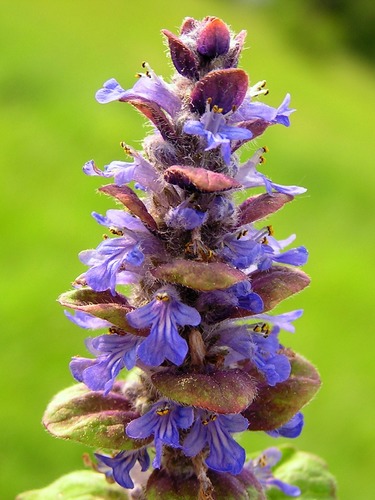
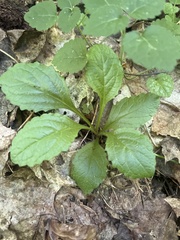
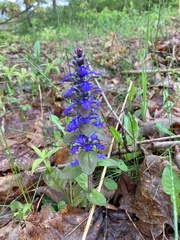
Carpet bugle (Ajuga reptans L.) is an accepted species in the Lamiaceae, native to Europe and grown as a perennial ground cover. It forms low mats through rooting runners and sends up blue-violet flower spikes in local spring. Its creeping habit and garden management distinguish it from other Ajuga species.
Read moreCarpet bugle, Bugleweed and Blue bugle
Give plenty of ambient light without direct sun on the leaves.
Partial shade, light shade or gentle sun with moist soil
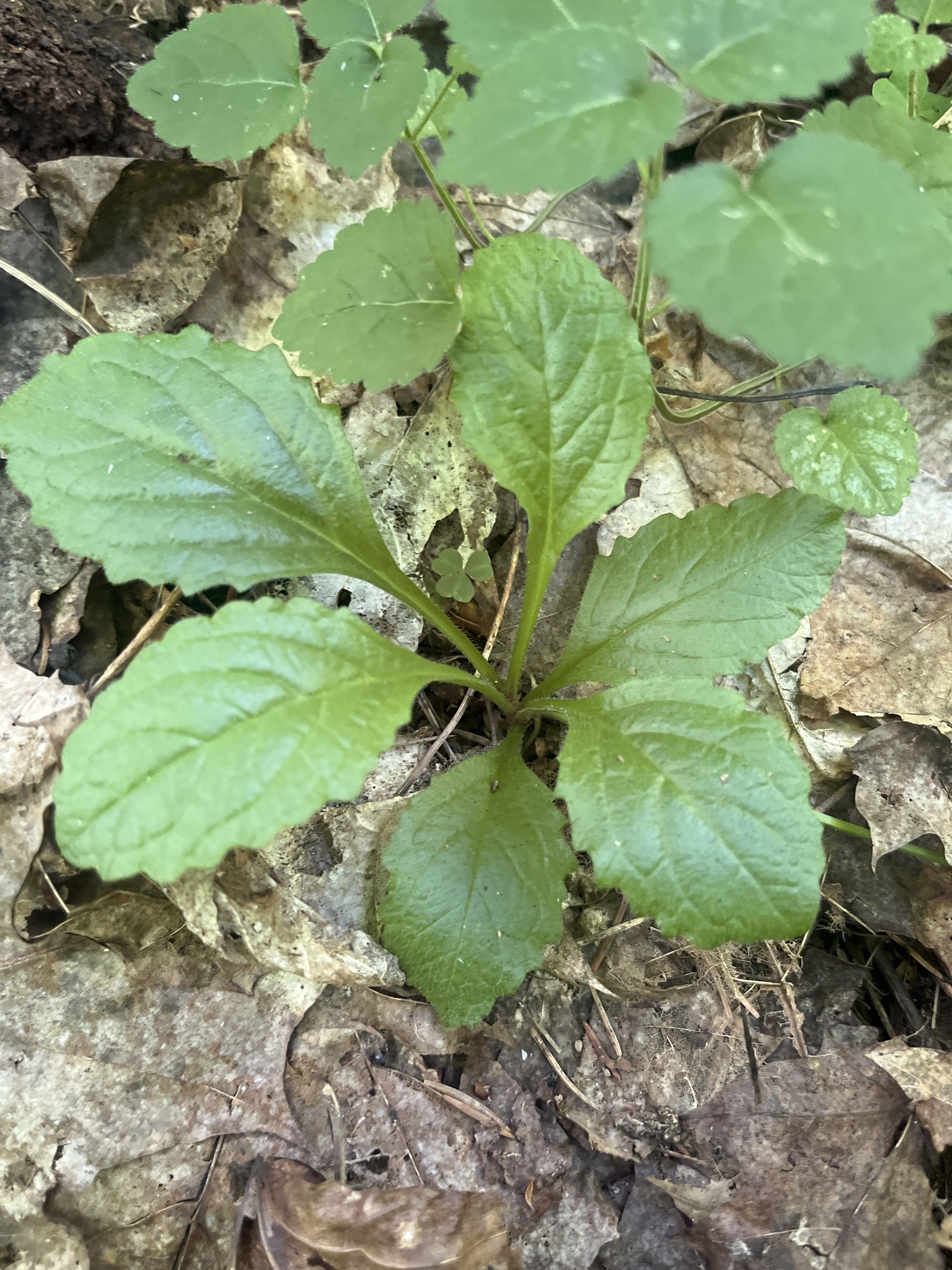
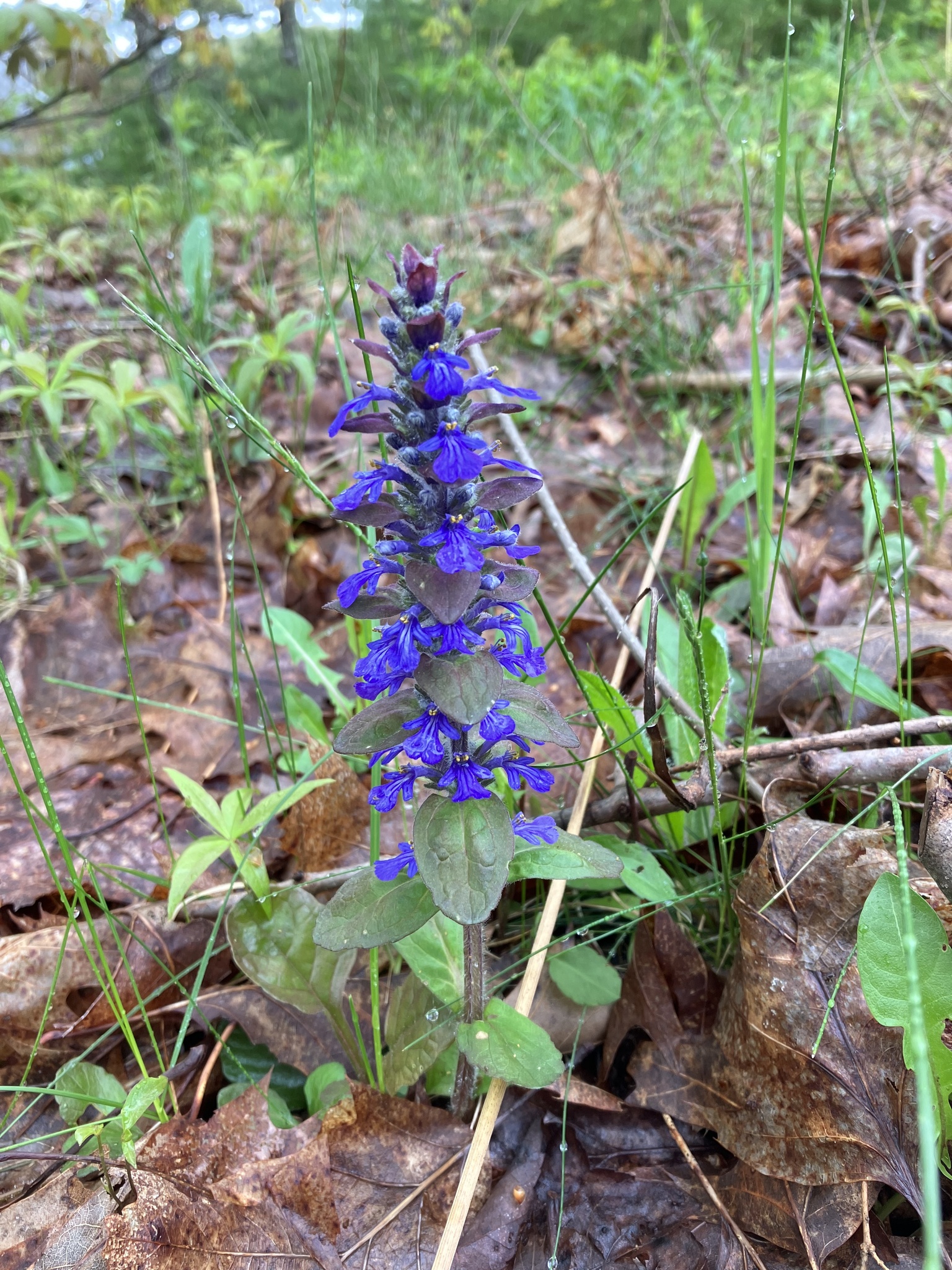


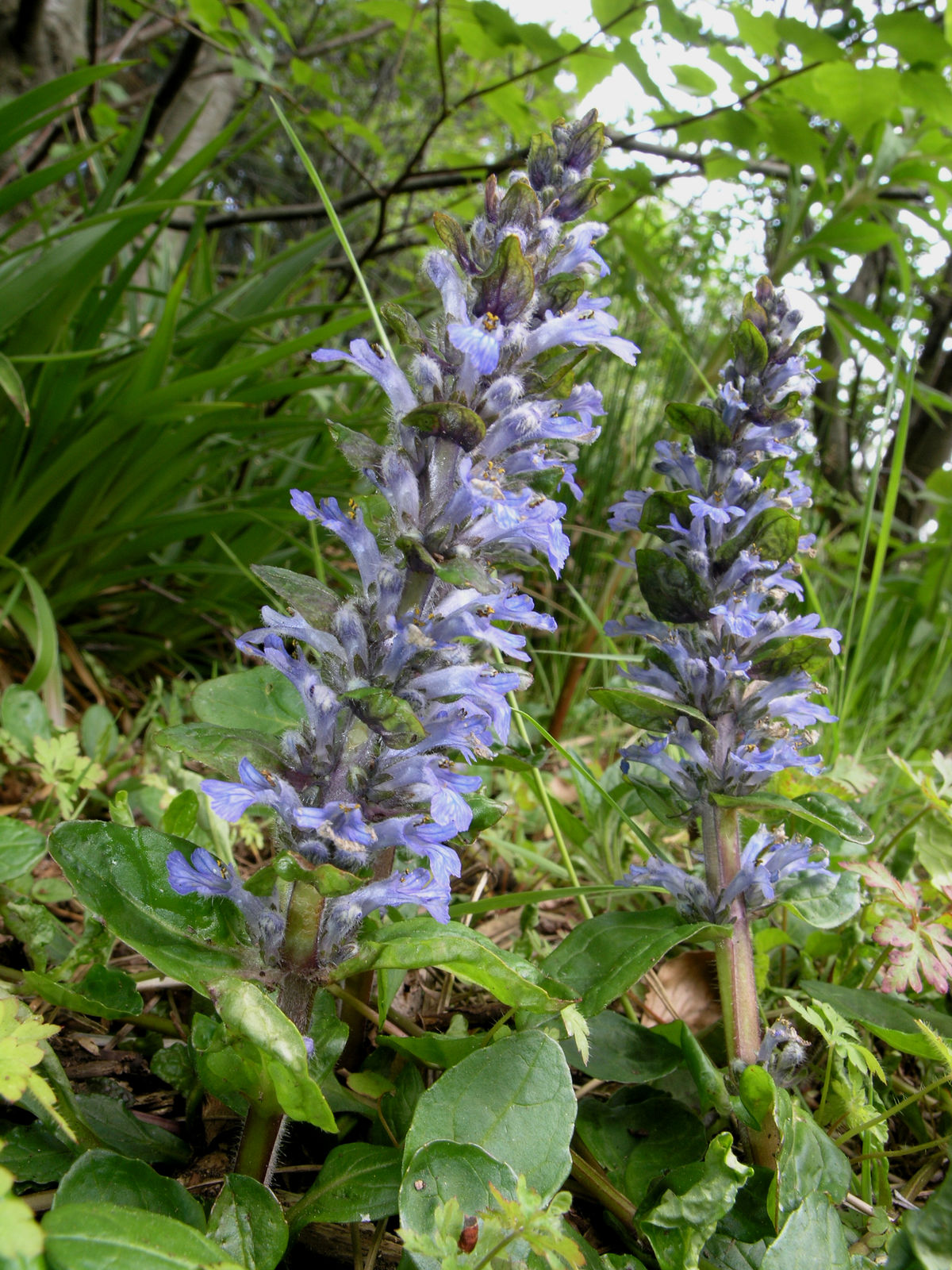
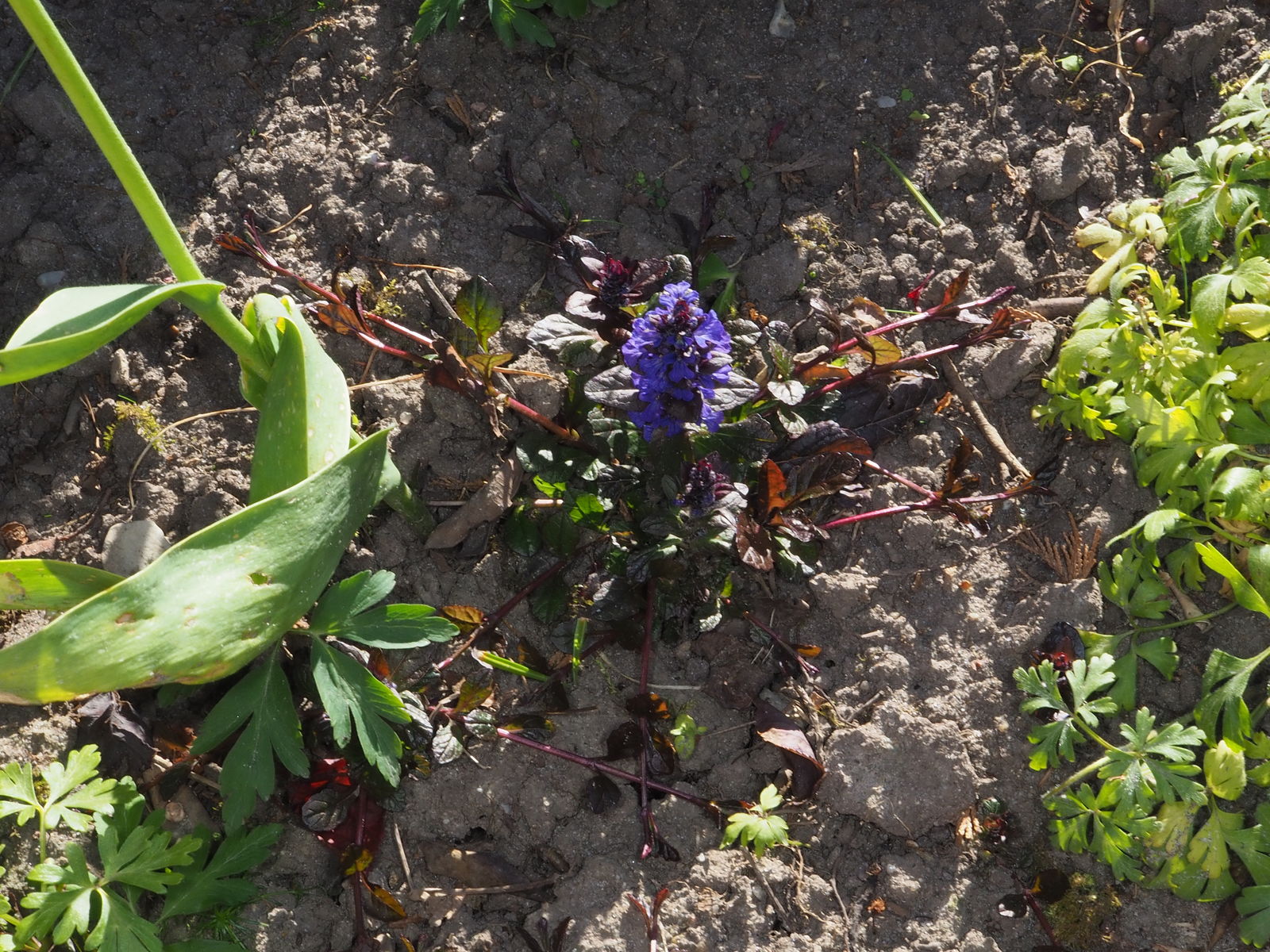
© photo
(c) Nasser Halaweh, some rights reserved (CC BY), uploaded by Nasser Halaweh · cc-by
Ольга Зеленова · cc0
Charlie O'Brien · cc0
Taken May 21, 2021 by David Hocken (cc-by-sa)
Taken Apr 11, 2022 by Manuela Furrer (cc-by-sa)
Taken Apr 19, 2020 by Andrei Contiu (cc-by-sa)
Taken Apr 7, 2022 by Fabrice Rubio (cc-by-sa)
Taken Nov 5, 2016 by Tela Botanica − Stephane BLANPAIN (cc-by-sa)
© copyright of the Board of Trustees of the Royal Botanic Gardens, Kew.


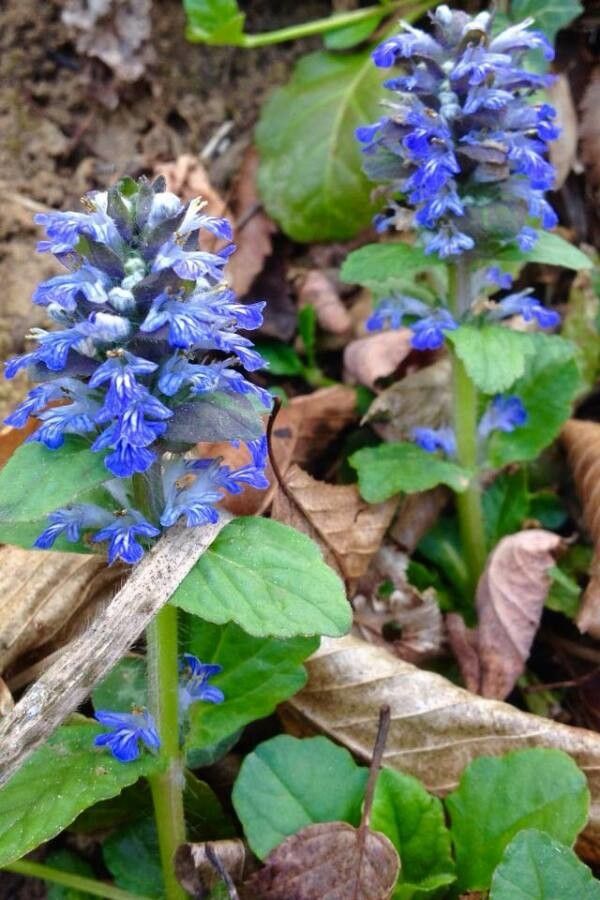


Global distribution
POWO accepts Ajuga reptans as a species in the Lamiaceae. It is native to Europe and grown as a garden ground cover in many places outside that range, where its vigor needs monitoring.
- Native3
- Introduced1
- Europe
- United Kingdom and Ireland
- France
- North American gardens
Hexagons: regions where the plant occurs. Green dots: native range.2
Identity
Carpet bugle (Ajuga reptans L.) is an accepted species in the Lamiaceae, described by Linnaeus. POWO, WFO, IPNI and Wikidata identify the same taxon. The name denotes a particular blue-violet-flowered species, rather than any low-growing ground cover. 2 3 1
The names bugleweed and blue bugle describe this creeping, blue-flowered ground cover. Runners creep outward and root into rosettes, then send up blue to violet flower spikes in local spring. Ground cover and seasonal flowers are both characteristic of the species. 5 4
The genus Ajuga contains other species. A. reptans has a particular garden habit: a low, semi-evergreen carpet, useful but sometimes too vigorous for its neighbors. 6 7
Recognition
Carpet bugle forms low rosettes of opposite leaves, usually green but purple or variegated in some cultivars. Creeping stems extend horizontally and establish new rooting points. 5 7
In local spring, flower spikes rise above the mat. The tubular flowers are usually blue-violet and attract small pollinators. Their color can reasonably be described as either purplish blue or bluish purple. 5 8
An isolated clump without runners is probably not typical Ajuga reptans. Its main value lies in spreading between taller perennials to cover the soil.
Foliage also reflects the season. In a mild winter it can remain semi-evergreen; after a wet winter or dry summer it renews from the rosettes. A mat may consequently look tired for several weeks without being lost. 7
Colored cultivars strongly affect the planting’s appearance. Atropurpurea darkens the ground, Burgundy Glow adds cream and pink, and Chocolate Chip stays lower. These are horticultural selections of carpet bugle, rather than separate species. 5 7
Cultivation and spread
Ajuga reptans prefers partial shade, light shade or gentle sun with moist soil. It tolerates varied positions but suffers in hot, dry ground. Humus-rich, well-drained soil that stays slightly moist produces the most even carpet. 7 5
It is useful beneath shrubs, along shaded borders, between spring bulbs or on a small moist bank. It covers bare ground and suppresses some low weeds, without replacing a thick mulch.
Vigor is the other side of that usefulness. Runners can enter the crown of a less robust perennial or escape a border. Regular cutting back, pulling or division is necessary. This light management is often sufficient because the plant lifts readily from moist soil.
In small gardens, use defined patches rather than an intricate mixture with delicate perennials. Runners travel at the surface and exploit gaps. A mineral edge, path or drier mulched area helps maintain clear boundaries.
Carpet bugle is not lawn grass. It tolerates occasional maintenance steps, but daily traffic crushes spikes, breaks up the mat and encourages bare patches. Along a shaded path it belongs at the edges, rather than in the walking line. 7
After flowering, spent spikes can be trimmed for a tidier carpet. This is optional, but reduces seedlings and returns attention to the ground-covering foliage. In naturalistic plantings, leaving some spikes to dry is also reasonable, especially after the flowers have fed early-season insects. 5
Management and safety
The available sources report no major toxicity comparable to irritating Ranunculaceae or Allium poisoning in animals. Simple human precautions remain appropriate: use it ornamentally, without food preparations or self-medication. 8
The main risk is ecological or practical, especially outside its native range. North American sources report dense mat formation. It is not assigned invasive status in France, although garden spread still needs monitoring. 5 7
In a pot, a crowded carpet may become bare at the center. Division and refreshed growing medium work better than heavy fertilization.
Watch the mat’s edges for the most effective maintenance. Dense rosettes whose runners leave neighboring plants alone need little attention. When runners enter a heuchera or primrose clump, lift them with a hand cultivator and replant elsewhere or remove them.
This management suits partial-shade gardens, where carpet bugle quickly covers bare ground while remaining low. It is less suitable for very dry beds, lean rock gardens or plantings where every specimen must remain isolated.
Choose a cultivar according to the maintenance you can provide. Vigorous green or purple forms cover quickly but need clear edges. Variegated forms often grow more slowly and suit small spaces, provided they avoid scorching full sun.
Role in garden planting
Ajuga reptans is a low perennial valued more for covering soil than for cut flowers. Its creeping stems, preference for partial shade, runner management and limited tolerance of foot traffic define its place in planting. 2 5
The species name Ajuga reptans identifies that particular garden behavior. Using the genus Ajuga alone is broader and does not distinguish the same ground-covering habit or cultivation needs.
Main sources
Frequently asked questions
Are carpet bugle flowers purple or blue?
Both descriptions fit. The flowers are often blue-violet and can be grouped with either blue or purple flowers.
Is carpet bugle a good ground cover?
Yes, in moist partial shade, especially beneath shrubs or between bulbs. Its runners need to be kept in check.
Is carpet bugle invasive?
It is not assigned invasive status in France, but can form extensive garden mats and spread strongly outside its native range.
Can you walk on carpet bugle?
It is not a lawn substitute. It tolerates occasional steps during maintenance, rather than regular foot traffic.
Is carpet bugle toxic to animals?
The available sources report no major toxicity. It is grown ornamentally rather than recommended for food.
Why distinguish Ajuga reptans from other Ajuga?
Ajuga reptans has a particular runner-forming, ground-covering habit. The broader genus name alone does not describe its specific garden behavior or management needs.
If you are unsure about a plant’s toxicity, ask a botanist or veterinarian for advice.