
Chives (Allium schoenoprasum, )
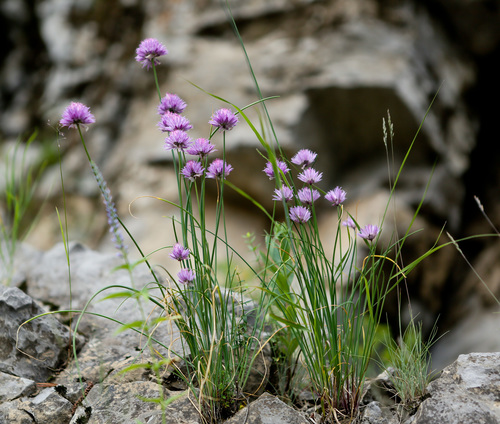

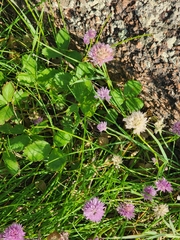
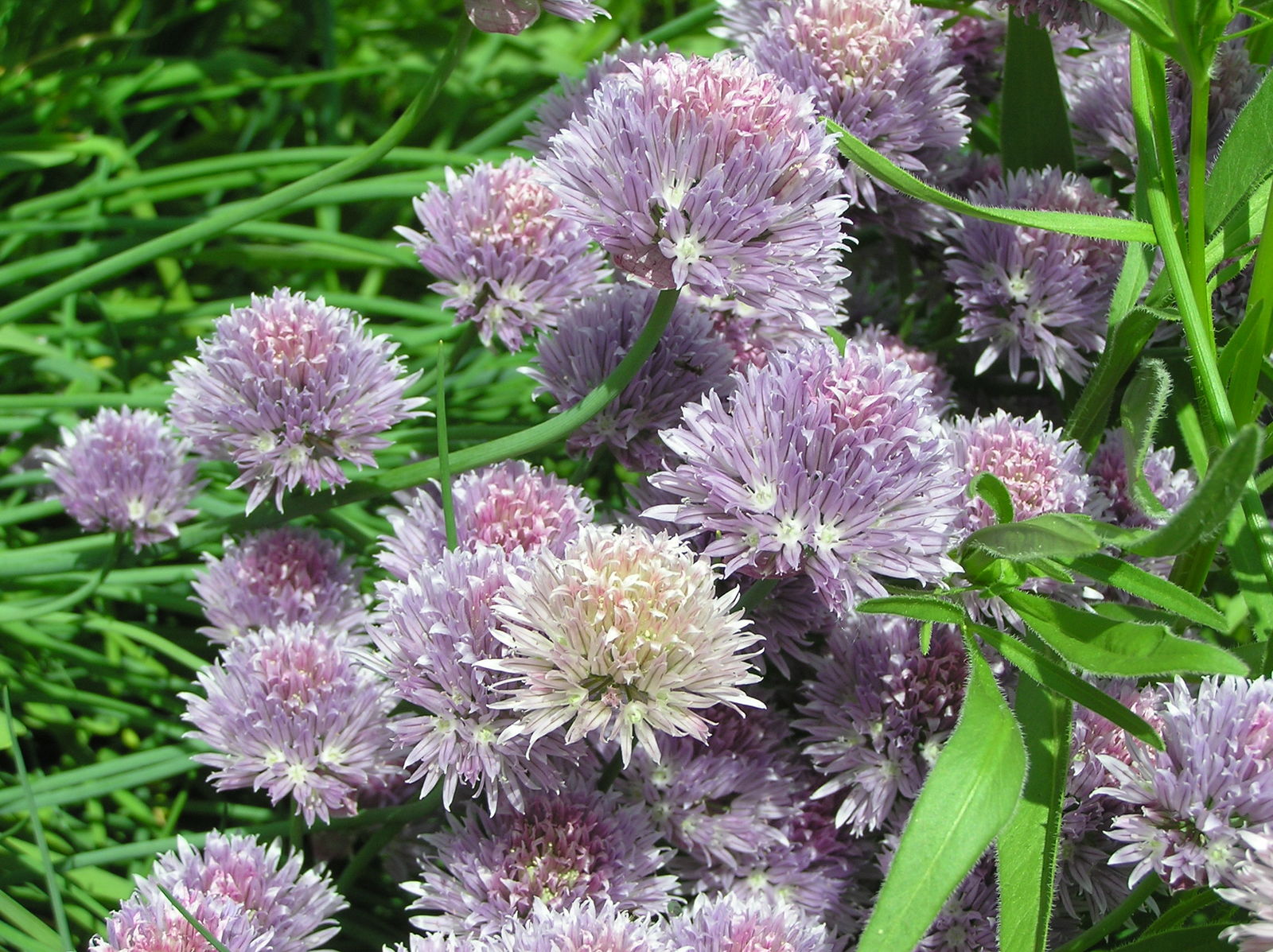
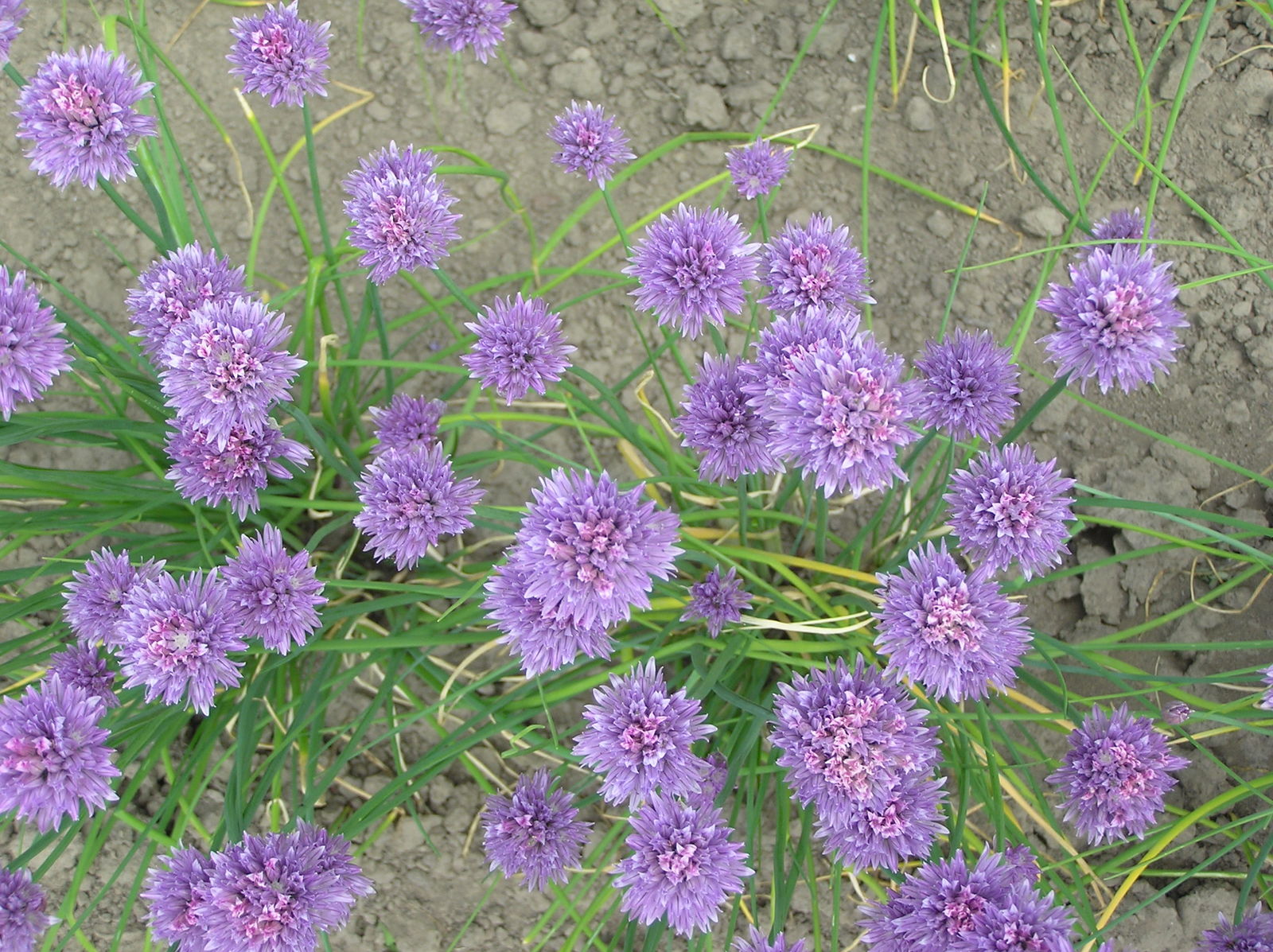
Chives (Allium schoenoprasum) are a small perennial culinary herb in the Amaryllidaceae, related to onions and garlic. Dense clumps of slender, hollow, cylindrical leaves have a mild onion flavor, while rounded heads of pink flowers appear in spring.
Read moreChives and Wild chives




© photo
(c) Igor, some rights reserved (CC BY-NC), uploaded by Igor · cc-by-nc
Morten Ross · cc-by
Jennie Lawrence · cc-by
Taken Jul 6, 2010 by Tela Botanica − Marie PORTAS (cc-by-sa)
Taken May 6, 2019 by Davide Davide (cc-by-sa)
Taken Jun 1, 2021 by Jana Vovk (cc-by-sa)
Taken Apr 29, 2020 by Leandro Martins Santos (cc-by-sa)
Taken Jun 19, 2020 by Loïk Raymond (cc-by-sa)
© copyright of the Board of Trustees of the Royal Botanic Gardens, Kew.


Global distribution
Allium schoenoprasum has one of the widest ranges in its genus, occurring naturally across much of the temperate Northern Hemisphere in Europe, Asia and North America. Widely grown as a culinary herb, it also escapes from gardens; cultivated and escaped populations should be distinguished from its native range.
- Native7
- Metropolitan France
- Germany
- Sweden
- Russia
- China
- Canada
- United States
Hexagons: regions where the plant occurs. Green dots: native range.1
Identity
Chives (Allium schoenoprasum L.) are a small perennial culinary herb in the Amaryllidaceae. They belong to Allium, the genus that includes onions, garlic and leeks. Long cultivated for their slender leaves, Chives have a mild onion flavor and are used raw or added near the end of cooking to retain their aroma. 1 4
In vegetable beds and containers alike, Wild chives form dense clumps of hollow, cylindrical leaves topped in spring by rounded pink flower heads. This easygoing, very hardy culinary herb regrows from its base each year, combining a useful harvest with an attractive flowering display in a relatively small space. 2 3
Recognition
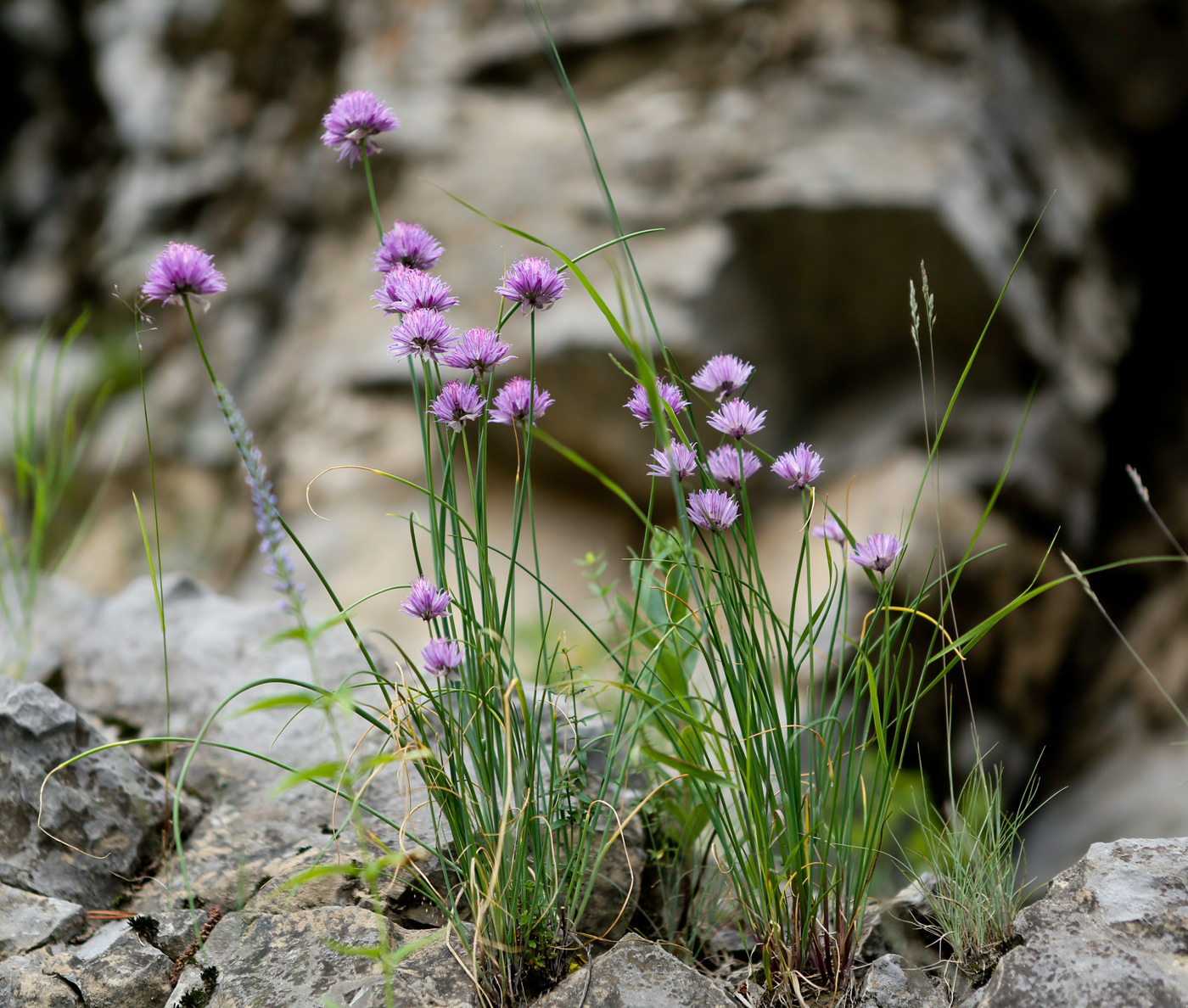
Slender, hollow, cylindrical leaves are the first useful clue to Allium schoenoprasum. They stand upright in a dense clump 20–45 cm (8–18 in) tall. Crushing a leaf releases a clear, mild onion smell, which supports identification alongside the leaf shape and clumping habit rather than replacing those visible features. 3 6
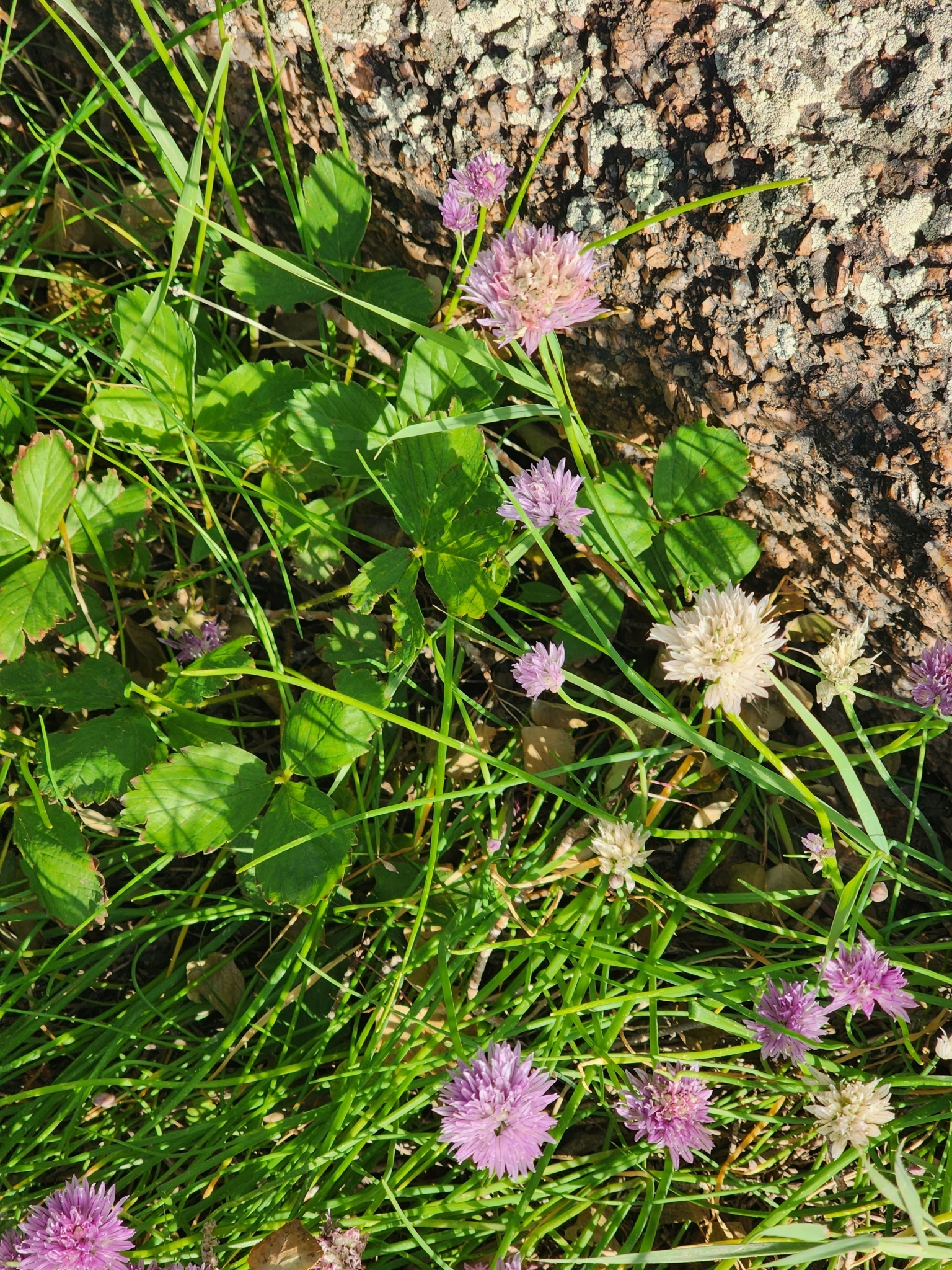
Small pink to purple flowers gather into a rounded head at the top of a hollow flower stalk. Flowering occurs mainly in spring, often April and May in temperate Northern Hemisphere gardens, with timing varying by climate and hemisphere. The flowers attract bees and are also edible, so they have both ornamental and culinary value. 3 2
Below the soil, small, narrow bulbs grow tightly together rather than forming a single large onion. This underground arrangement helps distinguish Chives from some other vegetable Allium. An established clump separates readily into smaller pieces, which is the basis of its straightforward propagation by division in gardens and containers. 5 1
Useful taxonomy
In 1753, Carl Linnaeus described this species as Allium schoenoprasum L. Within the large genus Allium, several infraspecific names and synonyms remain in circulation. The following are useful names to recognize when comparing botanical records or older references:
- Allium schoenoprasum var. schoenoprasum (botanical name)
- Allium schoenoprasum subsp. sibiricum (L.) Syme
- Allium sibiricum L.
- Allium schoenoprasum var. lusitanicum Nyman
For identification, use the accepted scientific name Allium schoenoprasum as the stable reference. Cultivar names such as Forescate and Staro identify horticultural selections within the species. They do not describe separate species or distinct botanical varieties, even when their leaves or flowers differ noticeably from another cultivated selection. 1 7
Habitat and range
Across temperate Europe, Asia and North America, Allium schoenoprasum occupies one of the widest natural ranges in its genus. Its native distribution spans much of the temperate Northern Hemisphere. Damp meadows, riverbanks and moist grassland provide typical habitats, often in sunny positions where the foliage receives plenty of light. 1 3
Moist, well-drained soil suits the species from lowland sites to mountain grassland. Chives are very cold hardy and tolerate substantial frost during winter dormancy. Their ability to survive cold weather should be distinguished from the appearance of their leaves: the foliage can disappear while the underground plant remains alive. 6 2
Widespread cultivation as a culinary herb also allows Chives to escape from gardens and establish near settlements. Those populations derived from cultivation should be distinguished from natural sites, even in regions where the species is native. A plant growing outside a garden is therefore not automatically evidence of an undisturbed native population. 7 5
Life cycle and reproduction
Winter dormancy is part of the perennial rhythm of Chives: foliage dies back, then fresh leaves emerge from the base in spring. Rounded pink flower heads follow, mainly in the local spring, often April and May in temperate Northern Hemisphere conditions. Small capsules containing black seeds develop after flowering. 3 6
Two complementary methods are used for propagation. Seeds are sown at the surface in spring with warmth; germination takes two to three weeks, followed by several months of growth before a harvestable clump develops. Division is often preferred: split an established clump in spring or fall into sections, each carrying a few bulbs. This both produces new plants and rejuvenates the original clump. 2 5
A well-managed clump can provide leaves in its first year, with flowers appearing the next year. Dividing every three to four years helps prevent the center from becoming bare and renews the supply of tender young leaves. Keeping a vigorous clump matters more for sustained harvesting than allowing an old, crowded center to remain undisturbed. 6 3
Uses and risks
Finely chopped Chives give salads, omelets, soups, fresh cheeses and sauces a mild onion flavor. Add the leaves raw or near the end of cooking to preserve their aroma. The pink flowers are edible too and make a colorful garnish. In the garden, Chives also work as an edging plant, attract bees and are reputed to discourage some vegetable pests. 4 2
Although edible for humans, Chives are toxic to animals. Like other Allium, they contain sulfur compounds, including N-propyl disulfide, that damage red blood cells. The ASPCA lists them as toxic to cats, dogs and horses, with possible hemolytic anemia, vomiting, lethargy and dark urine. Keep leaves, flowers and harvesting waste away from domestic animals rather than assuming that a human food is suitable for pets. 8 5
Varieties, look-alikes and related plants
Named Chives selections remain members of the same species. Forescate and Staro are cultivars selected for vigor and harvesting qualities, while Wallington White and Corsican White refer to white-flowered forms. Before buying, check the shape of the clump, the slender leaves and their onion smell as well as the label. 2
Several related culinary Allium are the most likely sources of confusion. Their leaves differ in width, shape or flavor, so comparing the whole plant is more useful than relying on a general resemblance to onions:
- Allium tuberosum, garlic chives, has flat leaves and a garlicky flavor;
- Allium fistulosum, bunching onion, is larger and has thicker leaves;
- Allium ursinum, wild garlic, has broad leaves and white flowers.
Fine, hollow leaves, a low clumping habit and a mild onion smell together are the most reliable features for recognizing Chives. These combined characteristics help separate it from the flat-leaved or broad-leaved relatives that may grow nearby or appear beside it in herb collections. 3 1
Main sources
- Plants of the World Online / Kew, Allium schoenoprasum L.
- Royal Horticultural Society, Allium schoenoprasum - chives
- Missouri Botanical Garden, Allium schoenoprasum
- Encyclopaedia Britannica, chive
- Plants For A Future, Allium schoenoprasum
- North Carolina State Extension, Allium schoenoprasum
- USDA PLANTS Database, Allium schoenoprasum L.
- ASPCA, Chives (Allium schoenoprasum) toxicity entry
Frequently asked questions
Are Chives toxic?
Chives are an edible herb for humans, eaten raw or cooked. Like other Allium, they are toxic to cats, dogs and horses. The ASPCA lists them as toxic because their sulfur compounds can cause hemolytic anemia.
How do Chives differ from bunching onions?
Chives (Allium schoenoprasum) form low clumps of fine, hollow leaves, while bunching onions (Allium fistulosum) are larger and have thicker leaves. Both are related culinary plants, but they are distinct species.
How do I harvest Chives without weakening the clump?
Cut leaves 2–3 cm (about 1 in) above the soil instead of pulling them out, and harvest only part of the clump at a time. Fast regrowth allows several harvests during the season.
Do Chives grow back every year?
Yes. This very hardy perennial loses its leaves during winter dormancy and regrows from its base in spring. Division every three to four years maintains vigor.
Can you eat Chives flowers?
Yes. The pink flower heads are edible and make a garnish for salads and other dishes. They have a mild onion flavor and usually appear in spring, often April and May in temperate Northern Hemisphere gardens.
Do Chives grow well in pots?
Yes, with a moist but well-drained growing medium, a sunny spot and regular watering, since containers dry quickly. Rejuvenating the clump every two to three years maintains production.
What plants look like Chives?
The main look-alikes are garlic chives (Allium tuberosum), with flat leaves, and wild garlic (Allium ursinum), with broad leaves. Slender, hollow leaves are the most useful distinguishing feature of Chives.
If you are unsure about a plant’s toxicity, ask a botanist or veterinarian for advice.