
Mountain arnica (Arnica montana, )
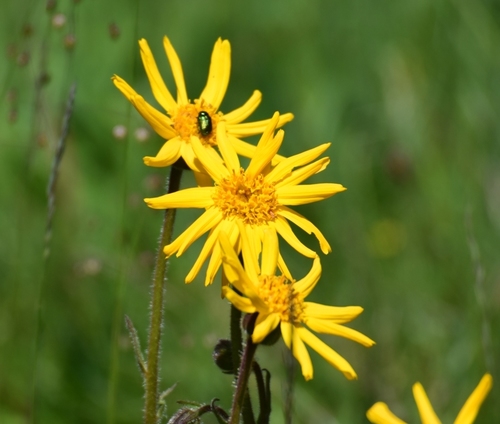
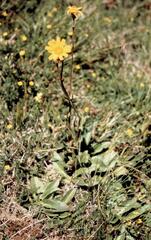
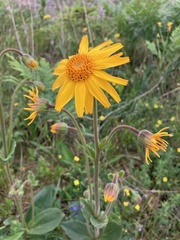
Mountain arnica (Arnica montana L.) is an accepted species in the Asteraceae, a perennial of open mountain habitats with yellow flower heads. Historically used medicinally but toxic, it is best observed in the wild and obtained from cultivated stock rather than collected without local authorization.
Read moreMountain arnica, Mountain tobacco, Arnica and Leopard's-bane



© photo
(c) Marion Zöller, some rights reserved (CC BY-NC), uploaded by Marion Zöller · cc-by-nc
zebedeugalinha · cc-by
Martin Johansson · cc-by
Taken Feb 17, 2017 by Yoan MARTIN (cc-by-sa)
Taken Aug 9, 2022 by Irmgard Groß (cc-by-sa)
Taken Jul 18, 2020 by leandro leandro (cc-by-sa)
Taken Jul 1, 2021 by Llandrich anna (cc-by-sa)
Taken Aug 7, 2021 by Pietro Brignoli (cc-by-sa)
© copyright of the Board of Trustees of the Royal Botanic Gardens, Kew.


Identity
Mountain arnica (Arnica montana L.) is an accepted species in the Asteraceae. POWO, WFO, IPNI and Wikidata agree on its botanical identity, with the Latin binomial providing a stable reference. Floralens includes it in a selection of yellow flowers. That reference concerns this particular species, rather than the whole genus or any plant marketed as arnica. 2 3 1
The name mountain arnica reflects its ecology. Also known as mountain tobacco, arnica and leopard's-bane, it is a perennial of open habitats, often associated with nutrient-poor, acidic mountain meadows. It differs substantially from a yellow bedding annual, both in its cultivation needs and in the care required to protect wild populations. 5 7
Other species belong to the genus Arnica, including plants native to North America. This account concerns A. montana, the European species historically associated with arnica preparations. Its precise botanical identity matters when comparing plants and products bearing the same common name. 6 4
Recognition
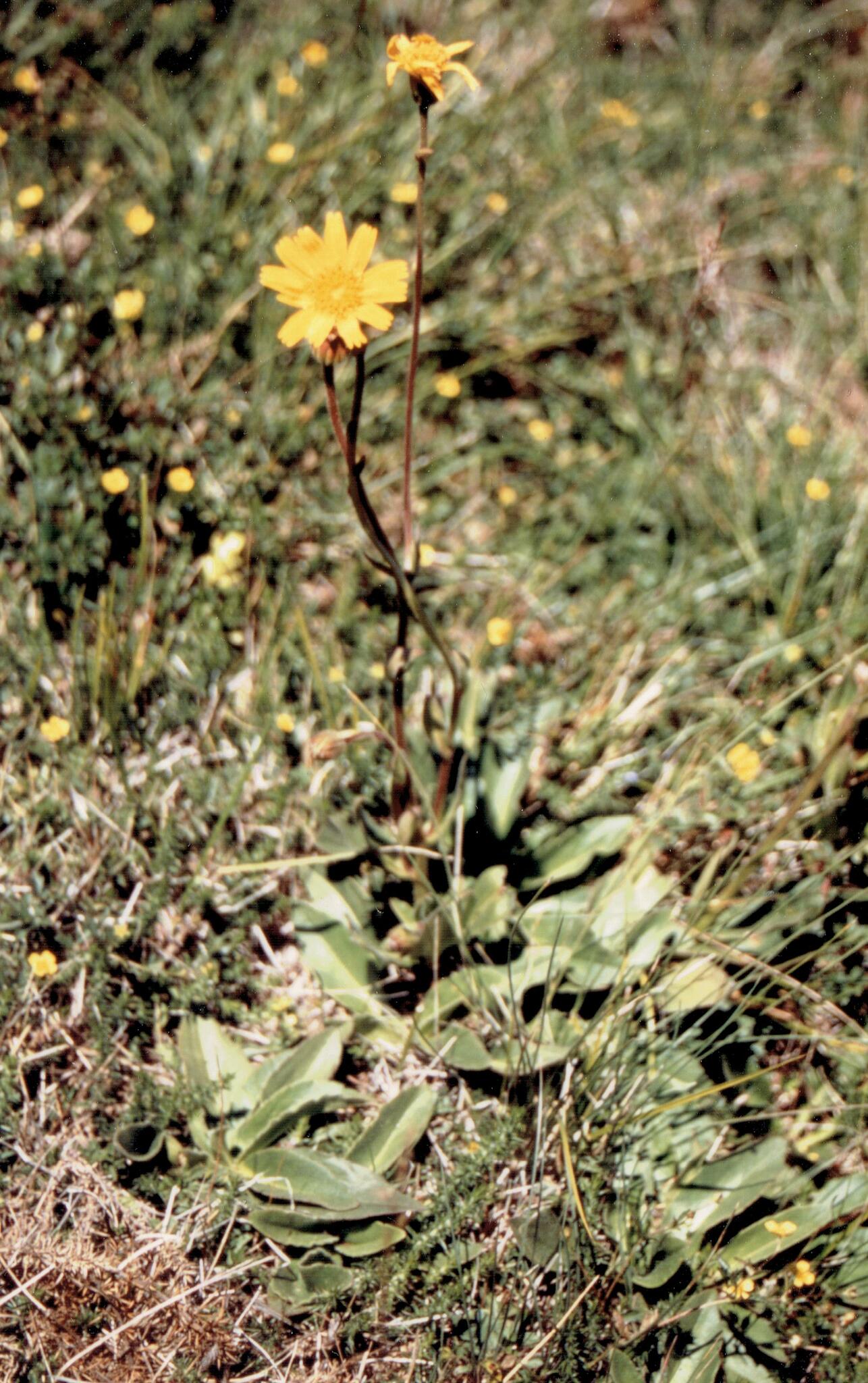
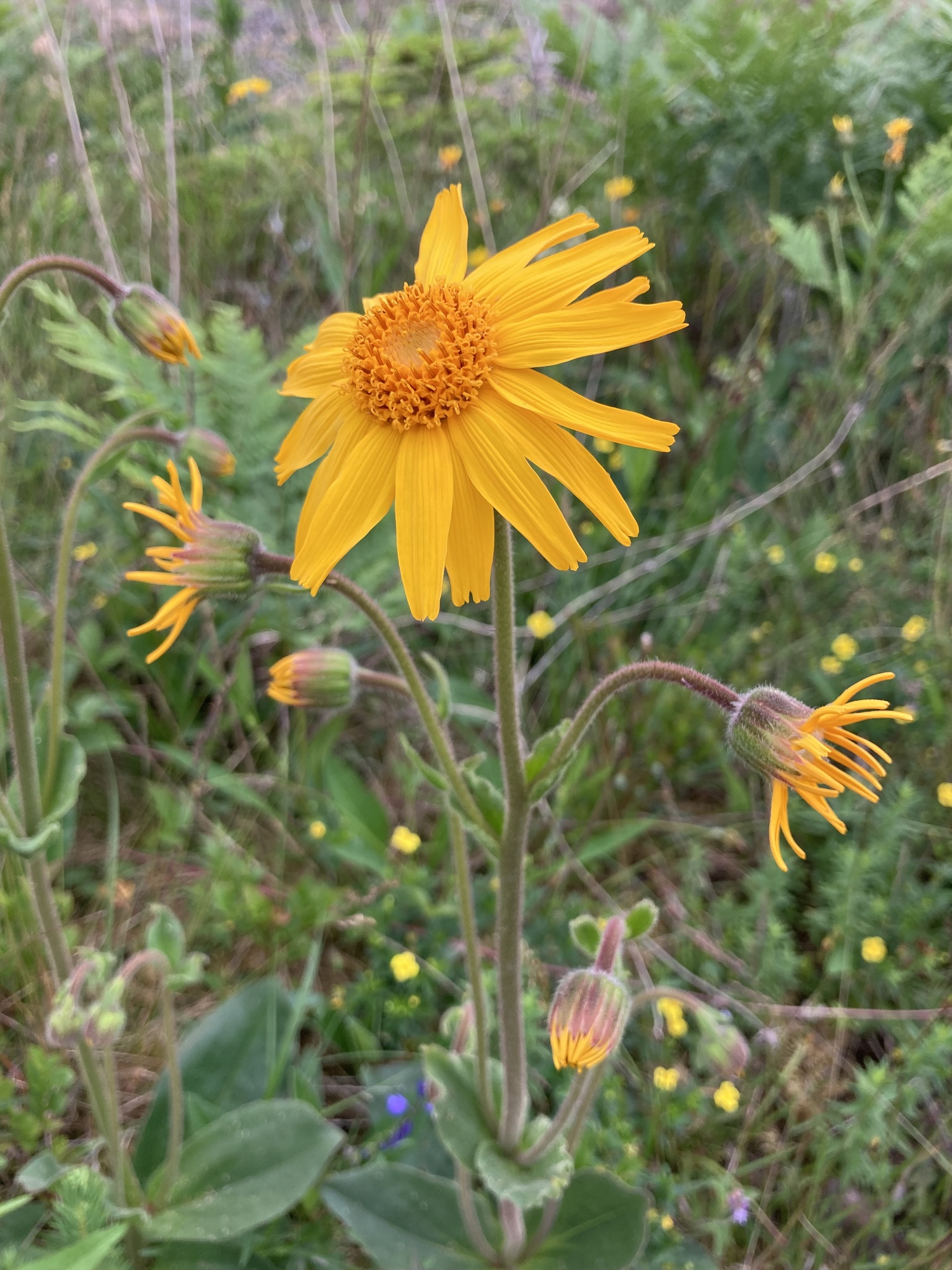
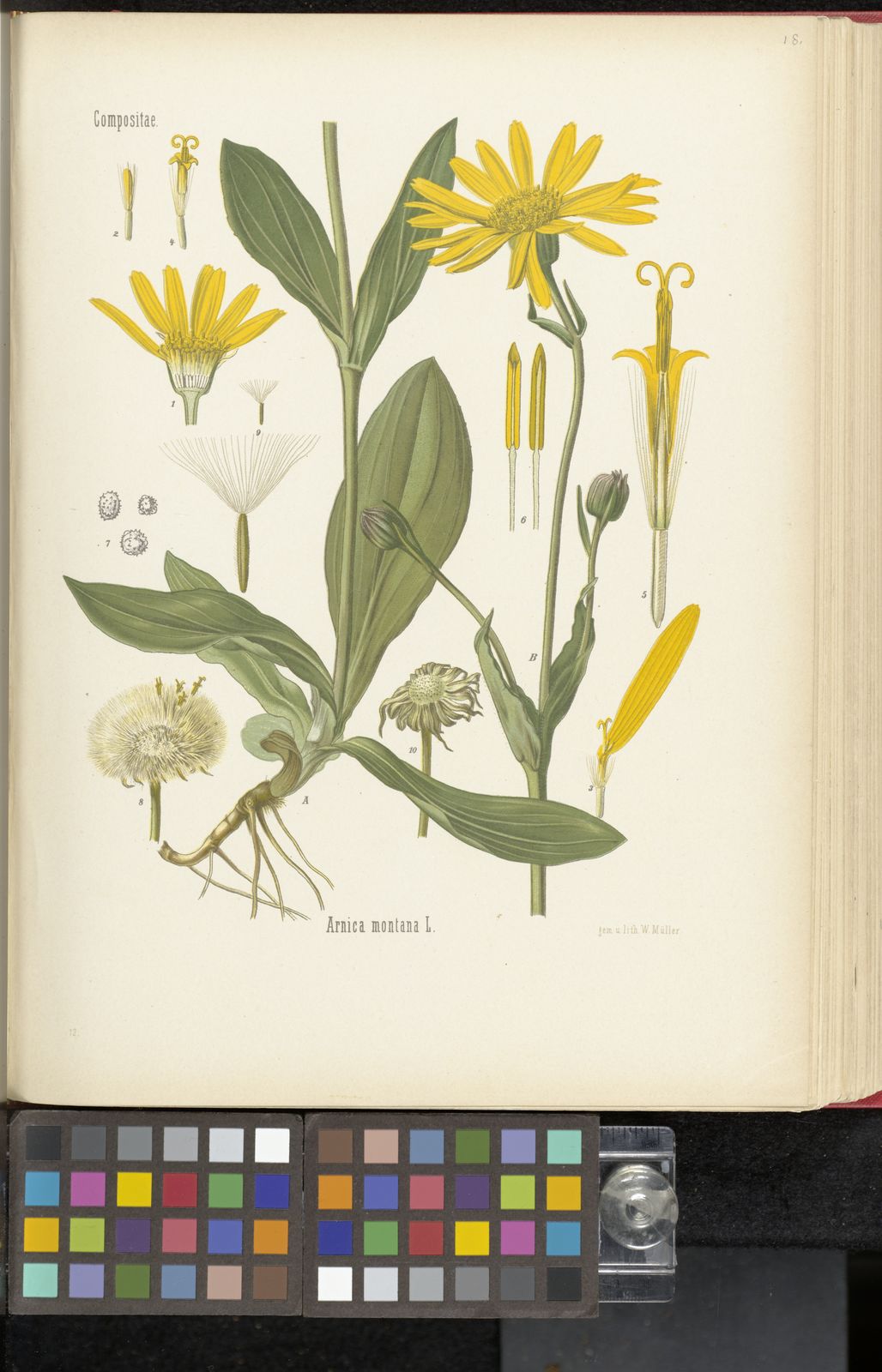
A low rosette of hairy basal leaves develops first, lying fairly close to the ground. The hairy flowering stem carries an orange-yellow flower head that can look slightly irregular, less symmetrical than a cultivated garden daisy. This wild appearance helps distinguish it from some ornamental members of the Asteraceae. 7 5
Flower heads appear mainly from late spring into summer, depending on altitude and climate. Outer ray florets surround a yellow central disk; the fruits later develop a pappus of hairs. Insects visit the flowers, but their value to pollinators is no reason to remove plants from a natural population. 7
Habitat provides another useful identification clue. Mountain arnica is associated with poor, acidic, lightly fertilized meadow soil and limited competition. A rich lawn that is regularly watered and cut very short does not reproduce the conditions in which this mountain perennial grows. 5
Yellow flowers alone cannot establish the identification. Dandelions have different leaves and milky sap, garden daisies may branch more freely, and other mountain Asteraceae share the color without the same rosette. Compare the basal leaves, hairy stem, flower head and habitat together, without picking a plant to inspect it. 7 5
Cultivation and conservation
Growing mountain arnica means working with a plant adapted to lean soil. It prefers good light, drainage and soil with little or no lime, without excessive fertilizer. A bed rich in compost, prepared for dahlias or tomatoes, encourages competitors and does not reproduce its natural habitat. 7
A container is an option only where the substrate can be managed carefully. Provide a draining mix, moderate moisture and protection from complete drying in summer. A hot balcony is a difficult setting for this plant; a cool rock garden or nutrient-poor meadow better reflects its needs. 7
Conservation is the central concern. Wild arnica has been collected for medicinal use and may be rare or subject to collection rules in particular places. Observe and photograph it, buy cultivated plants when needed, and check the applicable local rules before considering any wild collection. 5 8
Establishing it in a garden meadow requires more than sowing seed. Keep the soil poor, restrain vigorous grasses and avoid feeding that favors competing plants. Managing a nutrient-poor meadow involves removing cut material and using little fertilizer, accepting a subtler display than a heavily fed flower bed. 7
Toxicity and uses
Commercial gels, macerated extracts and pharmacy preparations make arnica a familiar name. Familiarity can hide the danger of the raw plant: its flowers are not edible. NC State describes severe poisonous characteristics, particularly following ingestion, as well as skin irritation in susceptible people. 7
Helenalin, a sesquiterpene lactone, is often associated with arnica toxicity. Do not make homemade tea, eat the flowers, put fresh plant material on a wound or try it on a child or animal. Medicinal applications belong to appropriately prepared and regulated products rather than improvised garden remedies. 5 7
Cats, dogs and horses should not be allowed to chew arnica. The available garden information does not establish it as safe for pets. Keep pruning waste away from animals and contact a professional if significant ingestion is suspected. 7
People sensitive to the Asteraceae also need care when handling it. Skin irritation or an allergic reaction is possible, especially after crushing leaves or prolonged contact. Gloves are a sensible precaution during division or cleanup, consistent with the plant's toxic classification. 7
Place in the blog
Within Floralens' yellow-flower selection, mountain arnica represents a mountain wildflower rather than a flower suitable for every garden. Its species account explains both the sensitivity of wild populations and the limitations of its familiar medicinal reputation. 8 2
Readers arriving from that flower selection need a clear botanical identification. An account focused on medicinal products would require a different emphasis; here, the priorities are recognizing the living plant, understanding its habitat and appreciating why observation is preferable to collection. 5
The species name provides a clear reference for gardeners and anyone learning to recognize wild mountain plants.
Main sources
If you are unsure about a plant’s toxicity, ask a botanist or veterinarian for advice.