
European Michaelmas daisy (Aster amellus, )
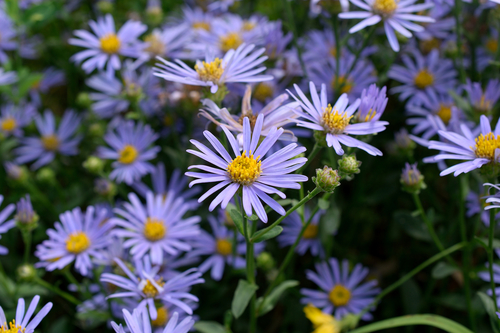
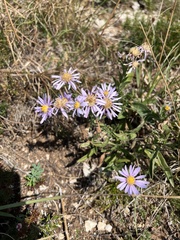
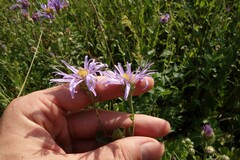
European Michaelmas daisy (Aster amellus) is a clump-forming perennial in the Asteraceae, native from Europe to western Siberia and the Caucasus. Its lilac to violet flower heads with yellow centers open in late summer and fall and attract many pollinators. This non-toxic plant suits borders and dry grassland, but is susceptible to powdery mildew.
Read moreEuropean Michaelmas daisy and Italian aster

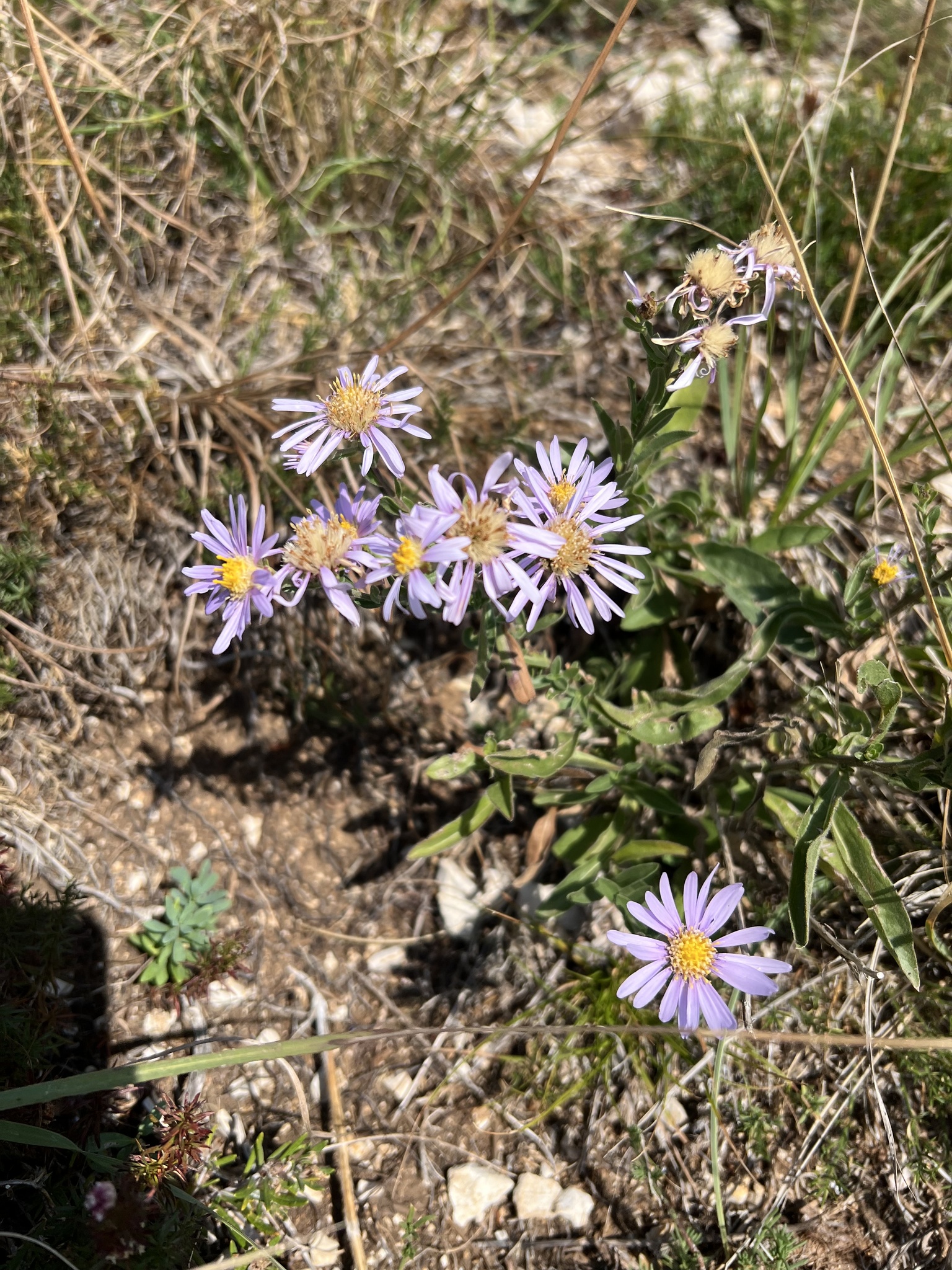


© photo
(c) Сергей Шитов, some rights reserved (CC BY-NC), uploaded by Сергей Шитов · cc-by-nc
Mirko Ubović · cc0
Aleksei Baushev · cc-by
Taken Aug 15, 1999 by Photoflora - Benoit BOCK (©)
Taken Sep 24, 2016 by Florent Beck (cc-by-sa)
Taken Nov 2, 2022 by Jim Knopf (cc-by-sa)
Taken Nov 3, 2020 by Dieter Wagner (cc-by-sa)
© copyright of the Board of Trustees of the Royal Botanic Gardens, Kew.


Global distribution
The native range of Aster amellus extends from central, southern and eastern Europe to western Siberia and the Caucasus. In France it grows wild on chalky slopes in the east and south and has legal protection in several regions. Widely grown as an ornamental, it also occurs in gardens far beyond its native range.
- Native6
- Metropolitan France
- Italy
- Germany
- Austria
- Poland
- Russia (Caucasus, western Siberia)
Hexagons: regions where the plant occurs. Green dots: native range.1
Identity
European Michaelmas daisy (Aster amellus L., 1753), also called Italian aster, is a clump-forming perennial in the genus Aster, within the Asteraceae family. The epithet amellus preserves an ancient Latin word used by Virgil in the Georgics for a meadow flower. Linnaeus adopted that word when naming the species. 1 4
Late-season borders benefit from its lilac to violet flower heads with yellow centers. They open toward the end of summer and continue into fall, after many other perennials have finished flowering. Easy to grow and cold hardy, this plant supplies flowers that late-flying pollinators visit readily. 2 3
Recognition
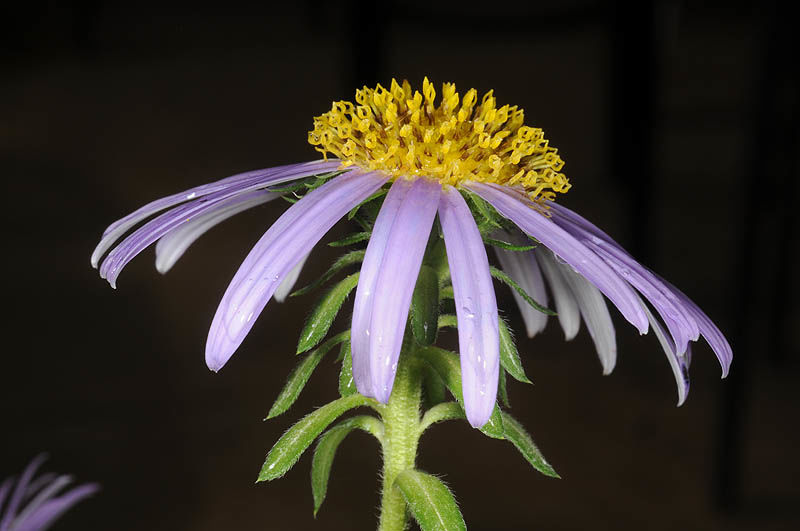
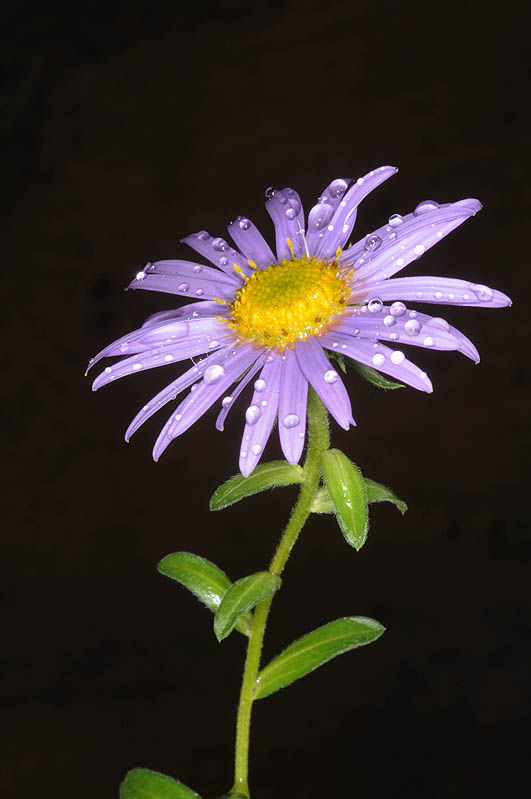
Upright, branching stems form a clump 30–70 cm (1–2.3 ft) tall. The firm stems and leaves feel slightly rough. Leaves grow alternately along the stems and range from oblong to spoon-shaped, with no conspicuous leaf stalk. These details help distinguish the species from many other garden asters before its flowers open. 3 5
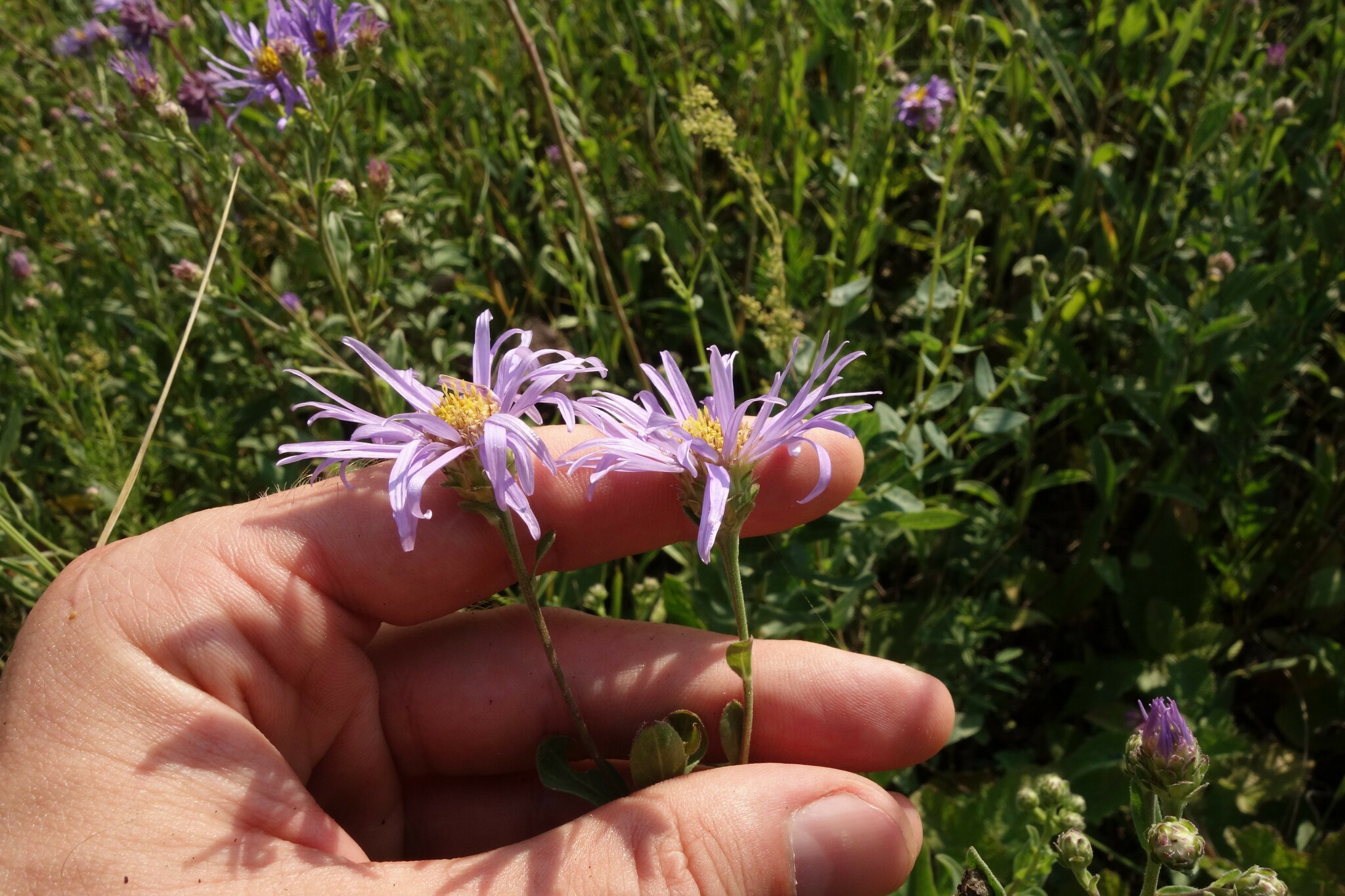
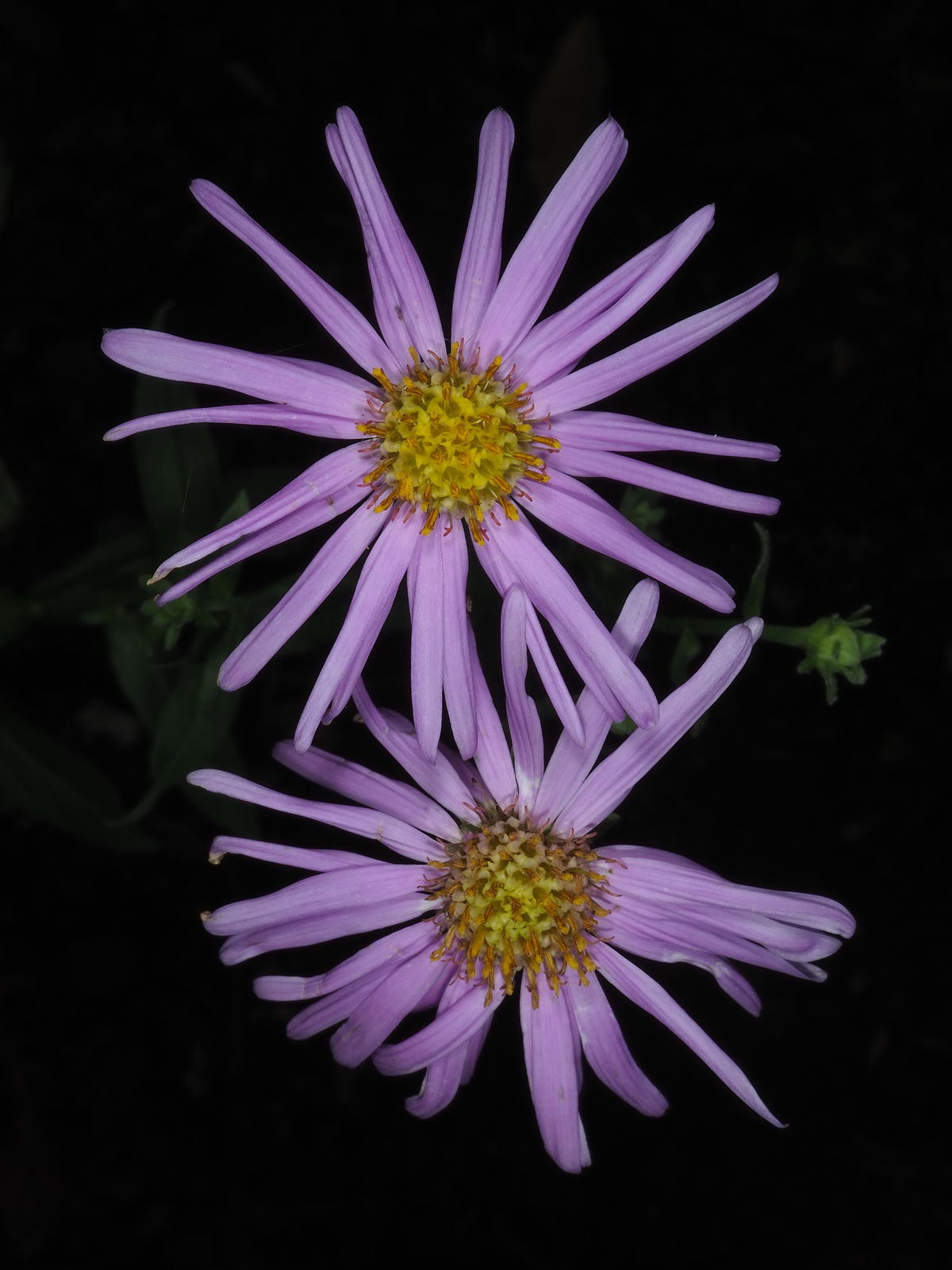
Each flower head has a bright yellow central disk surrounded by lilac to violet ray florets, producing a daisy-like display 3–5 cm (1–2 in) across. This radiating arrangement, typical of the Asteraceae, is carried at the stem tips. A head contains many small flowers rather than one flower with large petals. 4 2
The rootstock remains compact, without invasive creeping rhizomes. Flowering continues for several weeks from late summer into fall. This restrained, clump-forming habit is a useful distinction from the taller American asters that also flower late in the growing season. 5 7
Useful taxonomy
Named by Carl Linnaeus as Aster amellus L. in 1753, the species retains its place in Aster in the strict botanical sense. The genus has undergone major revisions, and many former North American asters now belong to other genera. Important infraspecific names and synonyms include:
- Aster amellus subsp. amellus, the nominate subspecies
- Aster amellus subsp. bessarabicus (Bernh. ex Rchb.) Soó
- Aster amellus subsp. ibericus (Steven ex M.Bieb.) Avetisyan
- Aster amellus subsp. scepusiensis (Kit. ex Kanitz) Dostál
- Aster bessarabicus Bernh. ex Rchb.
The accepted scientific name, Aster amellus, remains the dependable reference. Names such as King George and Veilchenkönigin refer to horticultural selections, rather than separate botanical species or subspecies. A cultivar name adds information about a selected garden form without replacing the species identity. 1 6
Habitat and range
Central, southern and eastern Europe form the main native range, which continues to western Siberia and the Caucasus. Wild plants occupy dry chalk grassland, warm woodland edges and sunny slopes. Well-drained soils rich in lime characterize these habitats. 1 7
Bright light and free drainage matter more than a rich soil. Like many dry-grassland plants, European Michaelmas daisy dislikes standing moisture around its roots in winter. Its natural preference for well-drained ground explains both its requirements in garden borders and its ability to withstand summer drought. 2 3
In France, wild populations occur on chalky slopes in the east and south. Habitat loss has made the species scarcer, and it has legal protection in several French regions. Plants available from garden centers are horticultural cultivars rather than plants taken from wild populations; French protection does not describe the legal position in every country. 7 5
Life cycle and reproduction
Winter dormancy marks the annual rhythm of this herbaceous perennial. Aboveground growth dries back in winter, while the rootstock survives and produces new shoots in spring. Plants raised from seed begin flowering in their second year, then bloom annually once the clump is established. 3 5
Bees, bumblebees and butterflies visit the late flower heads and pollinate them when fewer other plants remain in bloom. This late-season nectar resource gives the species ecological value as well as ornamental interest. After flowering, each head produces small dry achenes, topped with a tuft of hairs that helps them disperse in the wind. 4 7
Gardeners usually propagate it by clump division in spring, every two to three years. This also rejuvenates plants whose centers have become bare. Seed, often requiring a cold period before germination, and spring stem cuttings are other options. Division is the most reliable way to preserve a cultivar, since seedlings from garden plants do not reproduce the selected flower color faithfully. 2 5
Uses and risks
Flowering borders, sunny edges and rock gardens are its principal ornamental settings. Late flowering and nectar production make it especially useful alongside sedums, coneflowers and black-eyed Susans. These combinations create a drought-tolerant late-season border, with the aster contributing its lilac and violet daisy-like heads. 2 3
European Michaelmas daisy is considered non-toxic. It is not among the plants reported as dangerous to cats, dogs or horses, and no signs of human poisoning are documented. In ordinary garden use, it therefore raises no particular toxicity concern around visiting animals. 5 7
Powdery mildew is the main cultivation problem. This fungal disease produces a white, powdery coating on leaves, especially where air movement is poor or foliage stays too damp. Space clumps apart, water at their bases, keep the border airy and grow the plant in full sun to reduce the problem. 3 2
Varieties, look-alikes and related plants
Nursery selections differ in flower color and growth, rather than representing separate species. King George is a widely grown cultivar with large blue-violet heads. Veilchenkönigin, Rudolf Goethe, Rosa Erfüllung and Sonia offer other ray-floret colors and forms. Check the cultivar name, clump vigor and flower shade before choosing a plant for a border. 2
The plants most likely to cause confusion are:
- Symphyotrichum novi-belgii, New York aster, taller and spreading by suckers;
- Symphyotrichum novae-angliae, New England aster, forming tall upright clumps;
- Aster alpinus, alpine aster, shorter and spring flowering.
A compact clump without spreading rhizomes, rough leaves and lilac flower heads with yellow centers opening late in the season remain the strongest identification clues. Together they help establish whether a plant sold as European Michaelmas daisy is indeed Aster amellus. 3 1
Main sources
- Plants of the World Online / Kew, Aster amellus L.
- Royal Horticultural Society, Aster amellus - Italian aster
- Missouri Botanical Garden, Aster amellus
- Encyclopaedia Britannica, aster (plant genus)
- Plants For A Future, Aster amellus
- GRIN Taxonomy / USDA-ARS, Aster amellus L.
- Tela Botanica, Aster amellus L. (bdtfx)
Frequently asked questions
Is European Michaelmas daisy toxic?
No. Aster amellus is not listed as toxic to cats, dogs or horses by the ASPCA, and no signs of poisoning in humans are documented. It is considered a safe garden perennial.
When does European Michaelmas daisy bloom?
It flowers from late summer into fall, often around Michaelmas in late September, which explains its common name. Flowering lasts several weeks.
Why are my aster leaves turning white?
A powdery white coating is powdery mildew, encouraged by poor air circulation and damp foliage. Space clumps apart, water at soil level and choose an airy position in full sun.
How does Aster amellus differ from American fall asters?
Aster amellus stays relatively low and forms compact clumps without spreading rhizomes. American fall asters in the genus Symphyotrichum are often taller and spread by suckers. Lilac flower heads with yellow centers and a compact habit are useful clues.
Does European Michaelmas daisy attract pollinators?
Yes. Its late flower heads provide valuable nectar and pollen for honeybees, bumblebees and butterflies when fewer other plants are still flowering.
How do I divide European Michaelmas daisy?
Divide the clump in spring every two to three years when its center becomes bare. Replant vigorous outer sections in sunny, well-drained soil, where they establish quickly.
Is Aster amellus protected in France?
Native to chalky slopes in eastern and southern France, Aster amellus has legal protection in several French regions. Garden plants come from horticultural cultivars rather than collection from the wild.
If you are unsure about a plant’s toxicity, ask a botanist or veterinarian for advice.