
Large-flowered chrysanthemum (Chrysanthemum × grandiflorum, )


Chrysanthemum × grandiflorum is a large-flowered horticultural chrysanthemum in the Asteraceae family, associated with florist’s chrysanthemums and their floral symbolism. The name refers to ornamental cultivated forms rather than a separate wild species, and should not be equated without qualification with all chrysanthemums. Cultivation and toxicity precautions follow those of the large ornamental chrysanthemum group.
Read moreLarge-flowered chrysanthemum, Florist’s chrysanthemum and Mum


© photo
Wikimedia Commons · CC BY-SA or Public Domain
Identity
Chrysanthemum × grandiflorum is a name used for a large-flowered chrysanthemum horticultural group, associated with ornamental cultivation and floral symbolism. It refers to these cultivated forms within the genus Chrysanthemum, rather than to the whole genus. Its use in the language of flowers accompanies its familiar role as a pot plant and bouquet flower. 8 1
The secure botanical placement is the genus Chrysanthemum, in the Asteraceae. Florist’s chrysanthemums are cultivated plants selected for large flower heads and fall flowering. Horticultural references associate this group with Chrysanthemum × morifolium, often the name most widely used for commercial groups. 3 5
The epithet grandiflorum therefore calls for caution: it describes large flower heads and ornamental cultivation, rather than a separate wild species with its own natural habitat. The distinction matters when identifying a plant: a horticultural name can describe a cultivated form without establishing a separate wild species or a distinct natural range. 4 6
The flowers used for All Saints’ Day displays and bouquets belong to this cultivated ornamental context. Their symbolic associations do not resolve the botanical boundaries between horticultural groups. The name Chrysanthemum remains the genus-level reference, while the large-flowered forms require the more qualified horticultural description. 8 1
Recognition
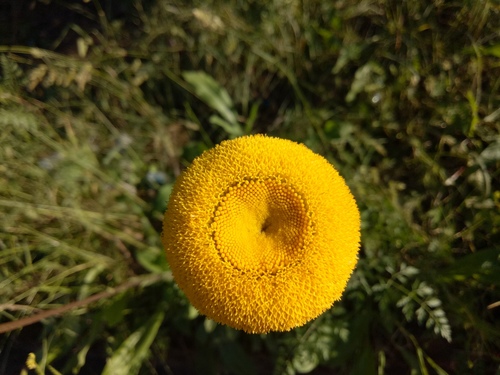
The first identifying feature is the Asteraceae flower head. What people call a chrysanthemum flower is actually an inflorescence made up of numerous florets, often transformed through selection into double, pompon, decorative, spider or incurved forms. 4 3
Large-flowered chrysanthemums form upright clumps, encouraged to branch by pinching, with alternate, lobed or toothed leaves that are often aromatic when crushed. Flowering occurs naturally in fall because the group responds strongly to shortening days. 2 3
Available colors include yellow, white, pink, purple, orange and red, but no true blue. This range helps explain its cultural importance: depending on form and color, the same horticultural entity can serve as a cemetery flower, balcony pot plant, cut flower or exhibition specimen. 5 8
Useful taxonomy
The names require a qualified reading. Chrysanthemum is the accepted genus, and Chrysanthemum × morifolium provides a major reference point for florist’s chrysanthemums. Chrysanthemum × grandiflorum is used in a horticultural sense for large-flowered ornamental forms; these different levels of naming should not be treated as interchangeable without explanation. 1 3
The genus has undergone major nomenclatural changes, with former daisies transferred to Leucanthemum, Tanacetum, Glebionis and other genera. This explains why sales names and botanical names sometimes appear contradictory. Checking the genus alongside the horticultural name helps explain these differences without mistaking a cultivated form for a separate wild species. 4 6
The appropriate description is a horticultural hybrid assigned to the genus Chrysanthemum. The large-flowered name identifies the ornamental group discussed in floral symbolism, with the genus providing its broader botanical placement. It does not by itself establish a separate wild species or justify applying the name to every chrysanthemum. 8 1
Cultivation
Grow these plants as large florist’s chrysanthemums. They need full sun, rich but well-drained soil, regular watering in pots and good air circulation to limit powdery mildew, rots and aphids. 2 3
Flowering responds to short days. In gardens it occurs mainly in fall; commercial growers can control the flowering date using blackout covers and lighting. This sensitivity explains the compact pots sold for All Saints’ Day in France: they are often grown for a particular display rather than lasting garden establishment. 4 5
Cuttings preserve selected forms, because seed does not reliably retain double flowers and selected colors. Hardy clumps in beds can be divided or rejuvenated, while forced pot plants often behave as seasonal displays. 5 6
Symbolism and uses
In France, chrysanthemums are closely associated with All Saints’ Day and decorating graves. Within this tradition, Chrysanthemum × grandiflorum is both a cultivated ornamental plant and a flower carrying meaning in the language of flowers. 8 4
Elsewhere, particularly in East Asia, chrysanthemums carry broader associations: longevity, the seasons, horticultural refinement, exhibitions and cultural uses. Meaning therefore varies with country, color and purpose. The French association with remembrance is therefore one cultural meaning among several, rather than a universal interpretation of the flower. 4 6
Garden uses include fall containers, late-season beds and cut flowers. Large-flowered forms often look more spectacular than natural; grasses, asters, sedums and dark foliage make useful companions, breaking up solid blocks of color. 5 2
Toxicity and precautions
The ASPCA lists chrysanthemums as toxic to cats, dogs and horses. Reported substances include pyrethrins and sesquiterpene lactones. Possible signs involve the digestive system, skin and mild to moderate neurological effects, including excessive salivation, vomiting, dermatitis or ataxia. 7 3
These precautions apply to the horticultural group whenever the plant sold is a florist’s chrysanthemum. An All Saints’ Day pot set on the floor within reach of a cat or dog should therefore be treated as a risk. Cut flowers call for the same caution, especially in a home with an animal that chews plants. 7 2
For people, the main concern is contact irritation in sensitive individuals and avoiding improvised food uses. Edible chrysanthemums come from specific production channels and species or cultivars; a treated ornamental pot plant is unsuitable as a kitchen flower. 4 5
For these large-flowered ornamental chrysanthemums, the practical points are full sun, a flowering response to short days and caution around animals. Their role in floral symbolism belongs alongside these cultivation and safety considerations. The horticultural name describes cultivated plants, without implying a separate wild species with its own natural habitat. 8 7
Main sources
- Plants of the World Online / Kew, Chrysanthemum
- North Carolina Extension Gardener Plant Toolbox, Chrysanthemum
- North Carolina Extension Gardener Plant Toolbox, Chrysanthemum × morifolium
- Encyclopaedia Britannica, Chrysanthemum
- Royal Horticultural Society, Chrysanthemum search results
- Missouri Botanical Garden, Plant Finder
- ASPCA, Chrysanthemum toxic plant entry
- Floralens, chrysanthemum symbolism
If you are unsure about a plant’s toxicity, ask a botanist or veterinarian for advice.