
Cape sundew (Drosera capensis, )

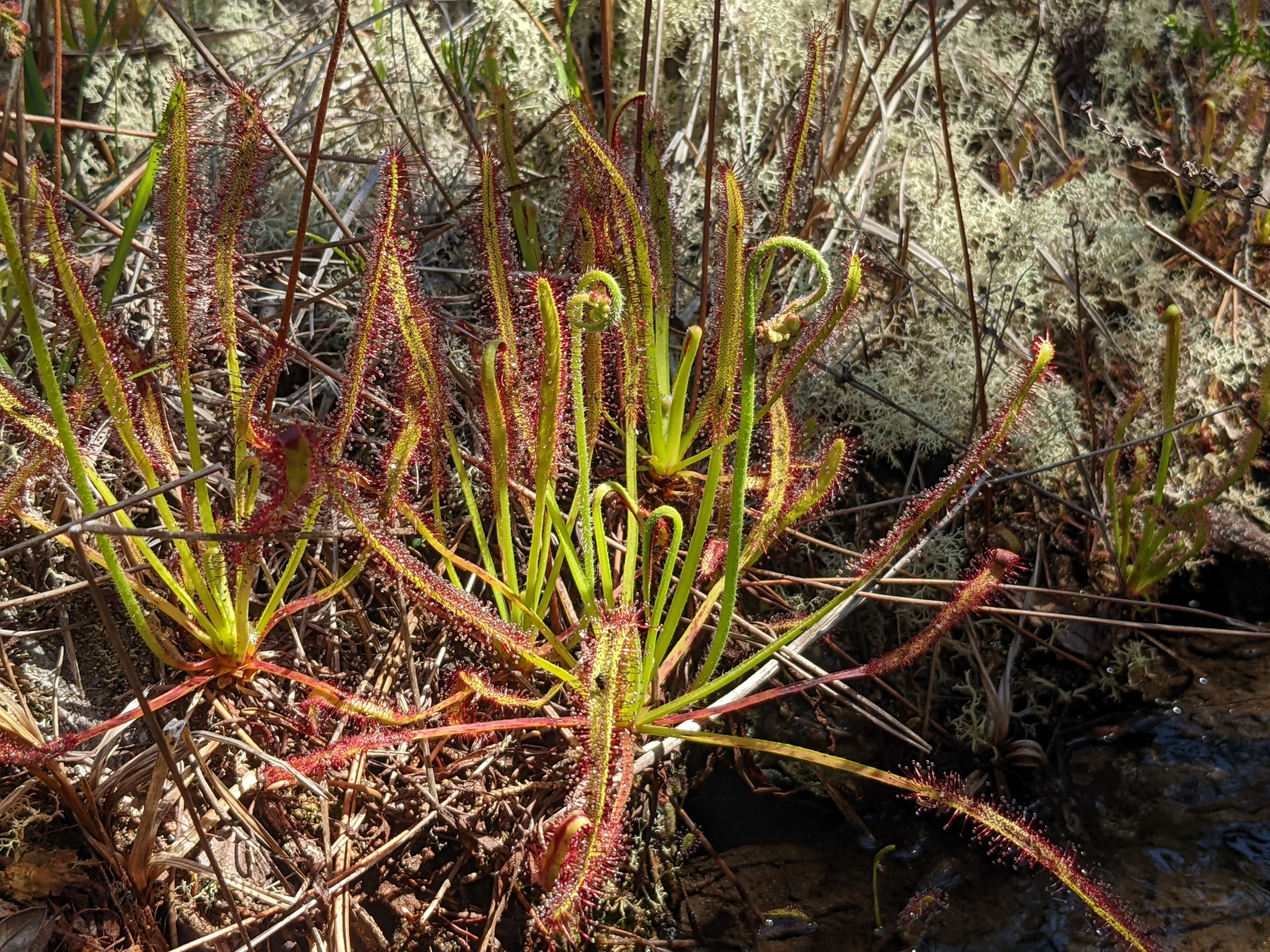
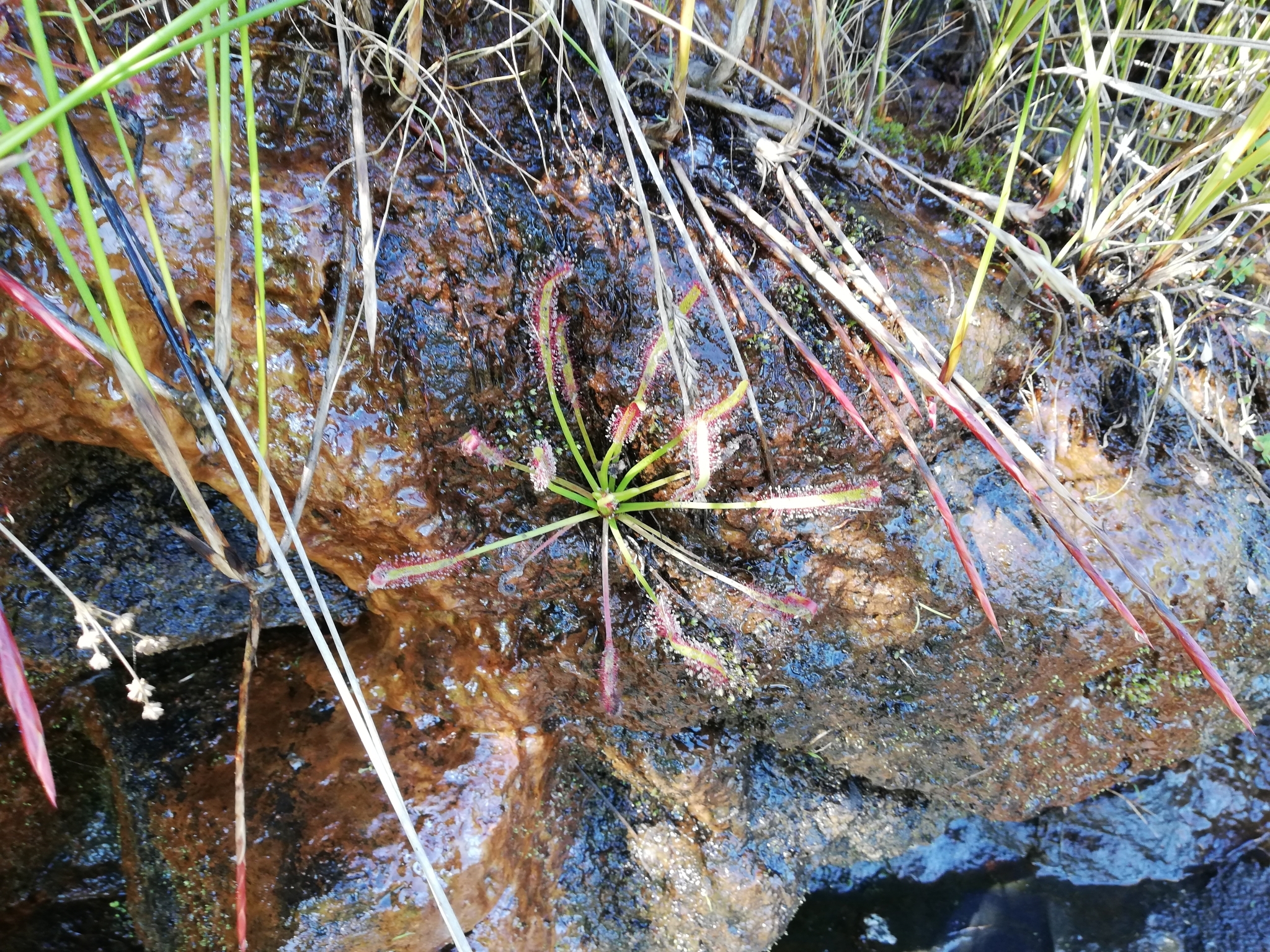
Cape sundew (Drosera capensis) is a perennial carnivorous plant in the Droseraceae, native to wetlands in South Africa's Cape region. Its long, upright leaves bear tentacles that actively curl around captured prey, an unusual trait among sundews. Easy cultivation and abundant self-sown seedlings make it the most widespread carnivorous plant among beginners.
Read moreCape sundew
Give plenty of ambient light without direct sun on the leaves.
Full sun to light partial shade




© photo
(c) Gerhard Malan, some rights reserved (CC BY-NC), uploaded by Gerhard Malan · cc-by-nc
Zoltán Stekkelpak · cc0
Calvin Cooper · cc0
Taken Sep 30, 2022 by manuseitz (cc-by-sa)
Taken Jul 9, 2022 by Věra Sychrová (cc-by-sa)
© copyright of the Board of Trustees of the Royal Botanic Gardens, Kew.




Global distribution
Drosera capensis is endemic to South Africa's Cape region, especially the southwestern Western Cape, with a mild, humid climate. Its easy cultivation and abundant seed production have made it one of the most widely introduced sundews in horticulture. Naturalized populations are recorded beyond its native range, including New Zealand.
- Native1
- Introduced1
- South Africa
- New Zealand
Hexagons: regions where the plant occurs. Green dots: native range.1
Identity
Cape sundew (Drosera capensis L., 1753) is a perennial carnivorous plant in the Droseraceae. Carl Linnaeus described it in 1753, the same year as several other historically known sundews, but its native range is strictly South African. It is now the most widely cultivated carnivorous plant among beginners, ahead of Dionaea muscipula and Drosera rotundifolia. 1
The genus name Drosera comes from the ancient Greek drosos, dew. It refers to the shining drops of mucilage on each tentacle, visible even in full sun and dry weather. Cape sundew takes its geographic name from South Africa's Cape region, the species' sole native range before its widespread introduction to horticulture. 2
Recognition
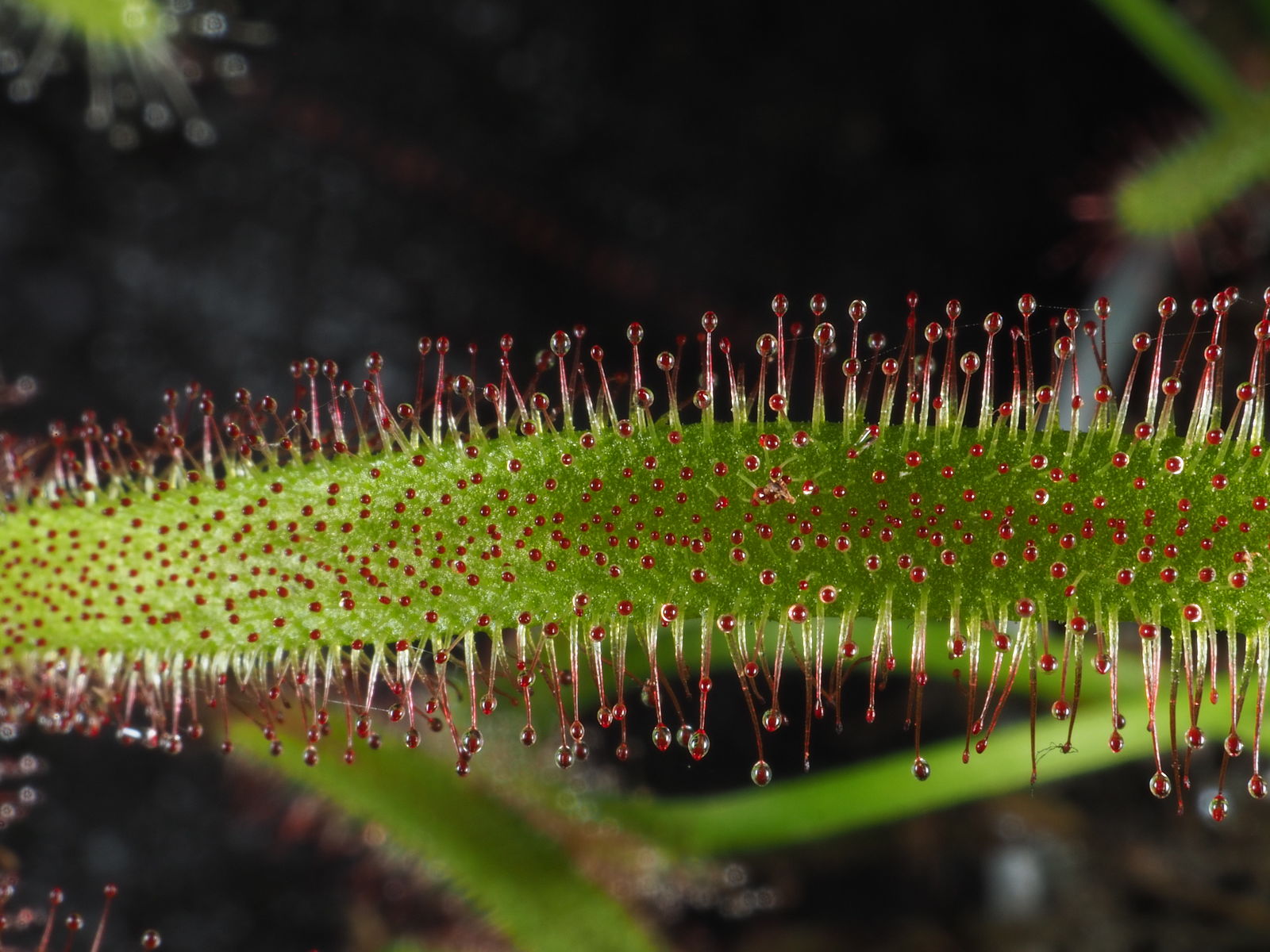
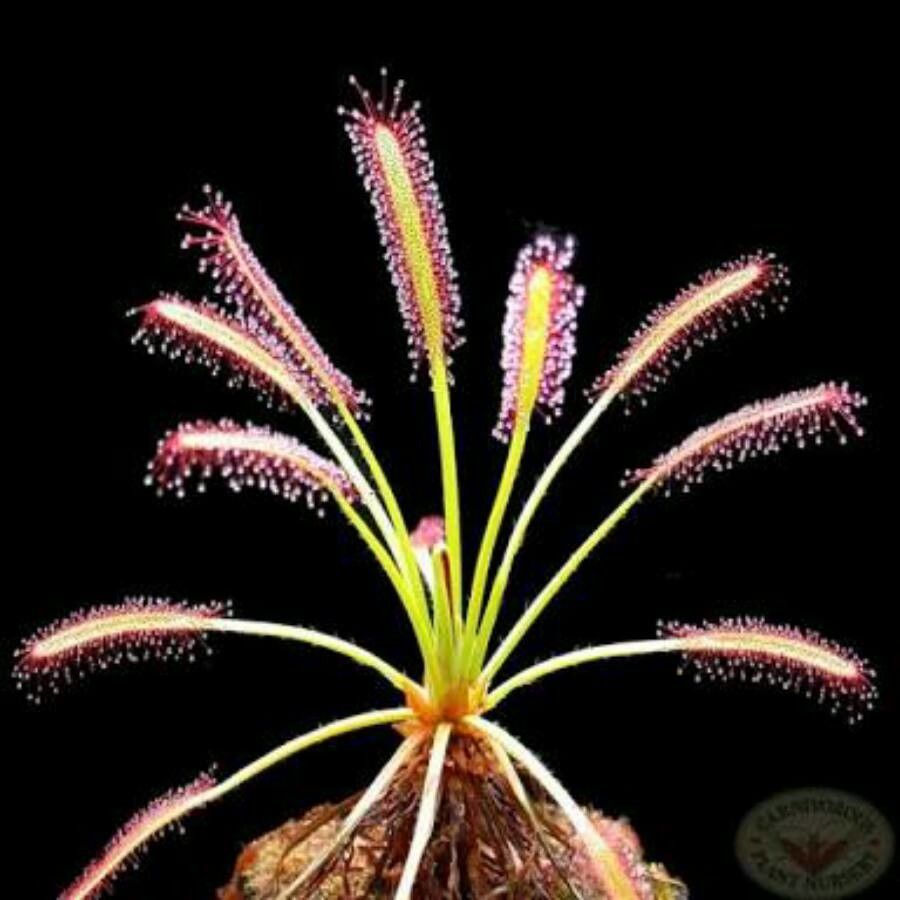
The loose, often spreading rosette consists of long, almost linear leaves, held partly upright, with a clear petiole distinct from the blade. Plants generally measure 8–30 cm (3–12 in), while flower stalks can reach 45 cm (18 in). This upright outline differs clearly from the flat, round-leaved rosettes of Drosera rotundifolia. 2
Movement is its most conspicuous feature. Red tentacles actively bend around captured prey within a few minutes, a behavior unusual among sundews and well documented since Charles Darwin's work on carnivorous plants. A leaf that never curls may simply lack light or prey, rather than being diseased. 1
A branched flower stalk rises well above the sticky leaves, carrying several small pink flowers 1.5–2 cm (0.6–0.8 in) across. Flowers generally open in late morning and readily self-fertilize, explaining the steady supply of seeds around the parent plant. 3
Useful taxonomy
The genus Drosera contains more than 150 species across nearly every continent. Three easy-to-grow sundews are often confused in collections: Drosera capensis has long, upright leaves; Drosera aliciae Hamet forms rosettes of short, spoon-shaped leaves; and Drosera spatulata Labill. stays flatter, more compact and close to the ground. 1
Horticulture also distinguishes stable forms within the species: narrow-leaved, with slimmer leaves than the typical plant, and albino, without red pigment, its tentacles and flowers remaining pale green to white. These variations have no separate taxonomic status; they remain horticultural labels within the accepted species Drosera capensis. 2 3 7
Habitat and range
Drosera capensis is endemic to the Cape region, especially the southwestern Western Cape, where conditions remain mild and humid throughout the year. It grows in permanently wet marshes and ditches, coastal peatlands and stream margins, in full sun or light partial shade, often on disturbed soils close to human activity. 1
Easy cultivation and abundant self-fertilized seed have made it one of the sundews most widely introduced beyond its native range. Naturalized populations are documented in New Zealand, where it is monitored as a potentially invasive wetland plant, without being included among the country’s regulated pest organisms. 4 5
A recent dispersal study links its rapid colonization of new wet ditches after introduction to tiny seeds carried by wind and water. 6
Life cycle and reproduction
An insect attracted by the sweet mucilage becomes stuck to a tentacle. Neighboring tentacles then actively bend toward it within minutes, a faster and more pronounced movement than in most other sundews. Digestive enzymes dissolve its soft tissues, supplying nitrogen scarce in the plant's native marshy soils. 1
Flowering can begin in the first year of cultivation, on a branched stalk. The flowers readily self-fertilize and continuously produce tiny seeds, carried by wind near the parent. In cultivation, this abundance can populate a whole container without intervention. 3 6
Vegetative propagation uses whole-leaf cuttings laid flat on wet peat. Several plantlets often appear on each leaf within weeks. Root cuttings and division of established clumps provide further methods. 7
Uses and risks
Ornamental and educational cultivation are the main uses. Cape sundew is often a beginner's first carnivorous plant, grown in an artificial bog, an open terrarium or a pot standing in a water tray with live sphagnum. No toxic principle is recorded for this species in cats, dogs or humans; its status in horses remains undocumented because specific data are lacking. 2
Beyond its native range, cultivation in a wet outdoor setting can encourage local naturalization, as observed in New Zealand. Indoors or in an enclosed greenhouse, this risk is absent. 5
Varieties, look-alikes and related plants
Specialist growers mainly offer the narrow-leaved form, with leaves slimmer than those of wild plants, and albino, lacking red pigment in its tentacles and flowers. A deep red selection, colored under strong light, also circulates among collectors. None of these forms changes the species' botanical identity. 2 3
The closest easy-growing look-alikes are Drosera aliciae, with shorter spoon-shaped leaves, and Drosera spatulata, with a flat, compact rosette. The more widely marketed Dionaea muscipula snaps its traps shut within seconds, whereas Cape sundew gradually folds its tentacles over minutes. It also shares growing trays with Drosera rotundifolia, which tolerates constant warmth less well and requires a marked winter dormancy. 1
Main sources
- Plants of the World Online / Kew, Drosera capensis L.
- Royal Horticultural Society, Drosera capensis (narrow-leaved)
- Royal Horticultural Society, Drosera capensis (albino)
- New Zealand Journal of Botany, Drosera capensis naturalisation record
- New Zealand Pest Register, Drosera capensis entry
- Global Ecology and Conservation (2020), Drosera capensis dispersal study
- Carnivorous Plant Newsletter, Drosera capensis narrow-leaved form note
Frequently asked questions
Is Cape sundew easy for a beginner to grow?
Yes. Drosera capensis tolerates a broad range of temperatures without a strict winter dormancy, making it the most frequently recommended carnivorous plant for beginners, ahead of Drosera rotundifolia or Dionaea muscipula.
Why is my Cape sundew pot filling with seedlings?
It readily self-fertilizes and scatters seeds around the parent. Seeds germinate within a few weeks on wet peat, quickly forming a dense clump without the gardener's intervention.
Is Cape sundew poisonous to cats or dogs?
No established toxic principle is recorded in this species for cats, dogs or humans. Its status in horses remains undocumented because specific data are lacking.
How does Drosera capensis differ from other easy sundews?
Drosera capensis has long, upright leaves and tentacles that actively bend around prey. Drosera aliciae has shorter, spoon-shaped leaves, while Drosera spatulata forms a flatter, more compact rosette.
Do I need to feed Cape sundew indoors?
Not if it receives enough light and occasional access to small insects. Never put meat or liquid fertilizer on its tentacles: these spoil the digestive mucilage rather than feeding the plant.
Can Cape sundew be propagated from leaf cuttings?
Yes. It is one of the most reliable methods in Drosera. A whole leaf laid flat on wet peat often produces several plantlets within a few weeks, alongside self-sowing and division of clumps.
If you are unsure about a plant’s toxicity, ask a botanist or veterinarian for advice.