
Black crowberry (Empetrum nigrum, )
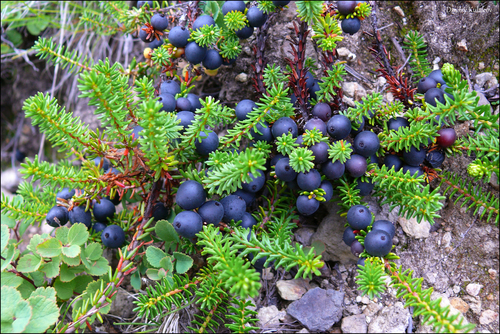
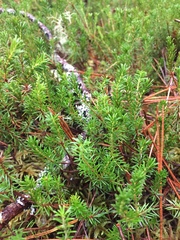
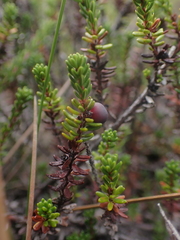
Black crowberry (Empetrum nigrum) is a creeping evergreen subshrub in the Ericaceae, distributed around the Northern Hemisphere from Arctic bogs to the Alps and Pyrenees. It forms dense mats of narrow leaves, with tiny pinkish spring flowers on separate male and female plants followed by glossy black fruits that are edible but not very sweet.
Read moreBlack crowberry and Crowberry
Allow a few hours of direct sun per day, preferably morning or evening.
Full sun to light partial shade


© photo
(c) Dmitry Kulakov, some rights reserved (CC BY), uploaded by Dmitry Kulakov · cc-by
Paul Manning · cc0
Deniz Wilson · cc0
Taken Jul 15, 2009 by Photoflora - Benoit BOCK (©)
Taken Jan 1, 1970 by Photoflora - L'Abbé COSTE (©)
Taken Jul 15, 2014 by Photoflora - Benoit BOCK (©)
© copyright of the Board of Trustees of the Royal Botanic Gardens, Kew.




Global distribution
The native range of Empetrum nigrum is circumboreal, covering Greenland, Iceland, Scandinavia, Russia and northern North America. Isolated southern extensions are confined to bogs and mountain to alpine habitats in Scotland, the Alps, Pyrenees, Corsica and Japan. It remains rare and protected in several French regions.
- Native9
- Iceland
- Norway
- Russia
- Canada
- United States
- Greenland
- France
- Japan
- United Kingdom
Hexagons: regions where the plant occurs. Green dots: native range.1
Identity
Black crowberry (Empetrum nigrum L., 1753) is a creeping evergreen subshrub in the Ericaceae. Its genus name comes from ancient Greek, literally meaning upon a rock; the Latin epithet nigrum describes the black color of the ripe fruit. 1 6
Long placed in a separate family, the Empetraceae, the plant was incorporated into the Ericaceae following molecular analyses. Empetrum now forms the tribe Empetreae within the Ericoideae, alongside heathers with similar requirements for poor, acid soil. 6 1
The French name camarine noire describes the dark fruit. The English name crowberry instead evokes the crows and their relatives that eat the berries in autumn and winter. 5 4
Recognition
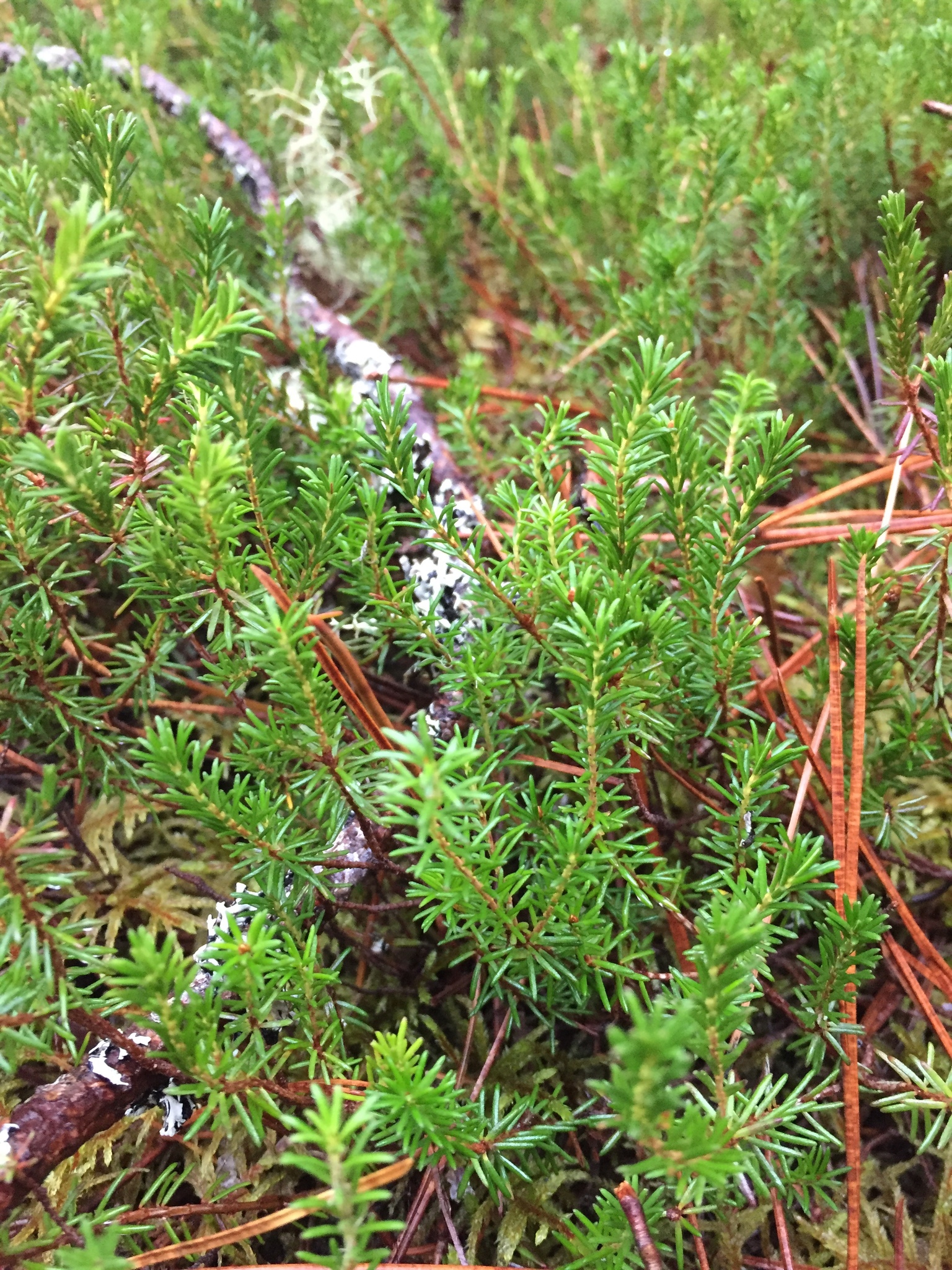
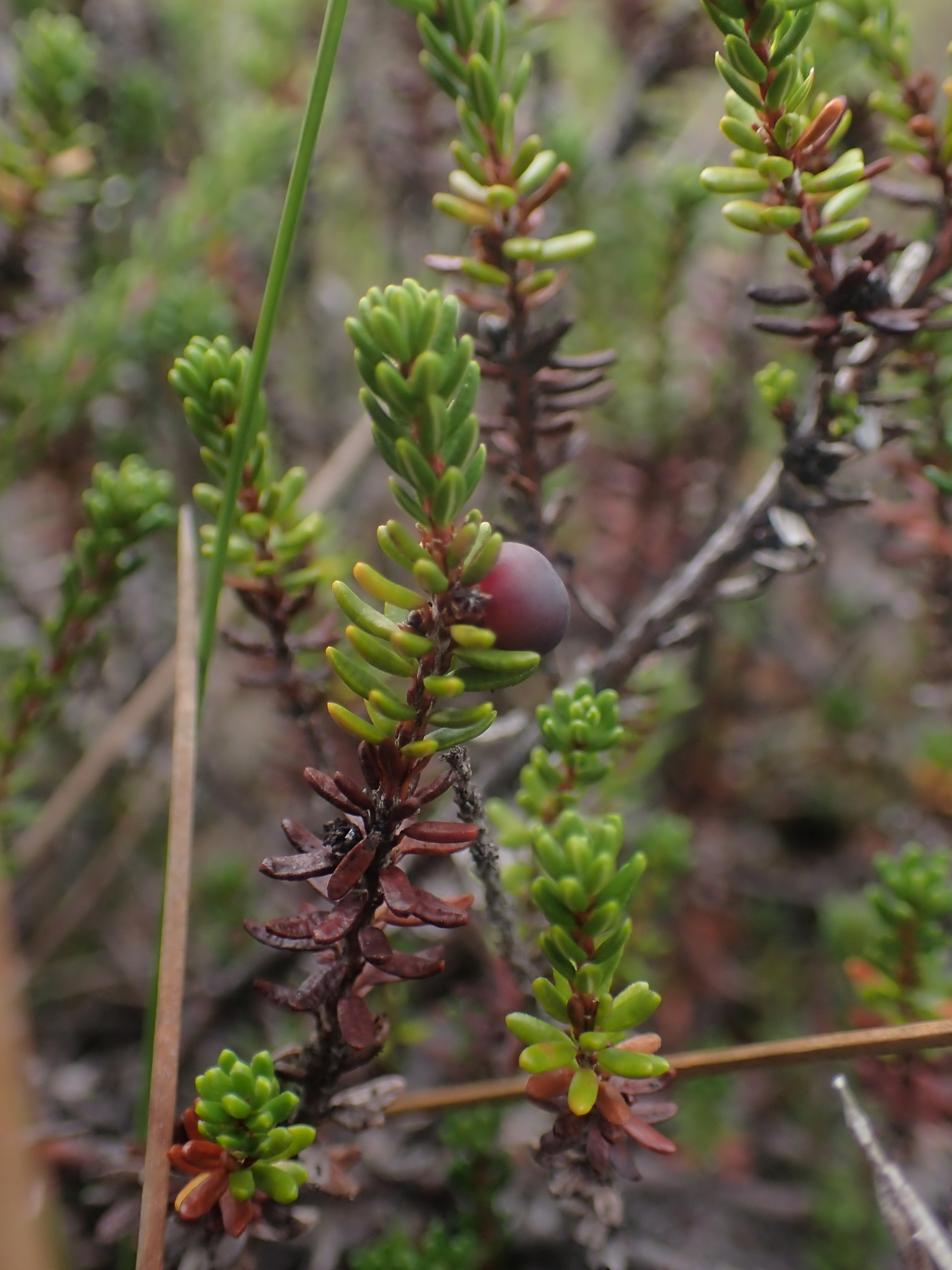
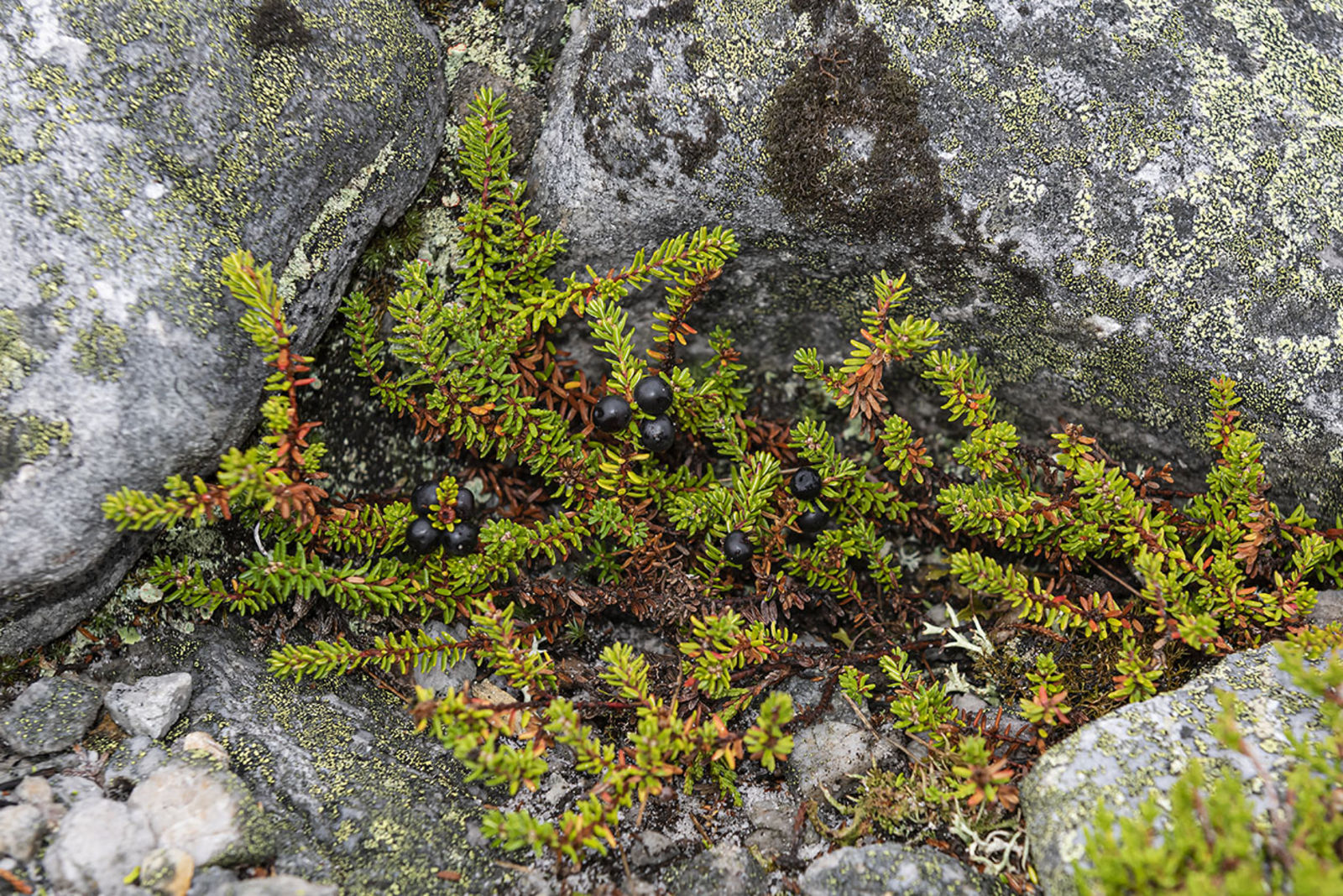
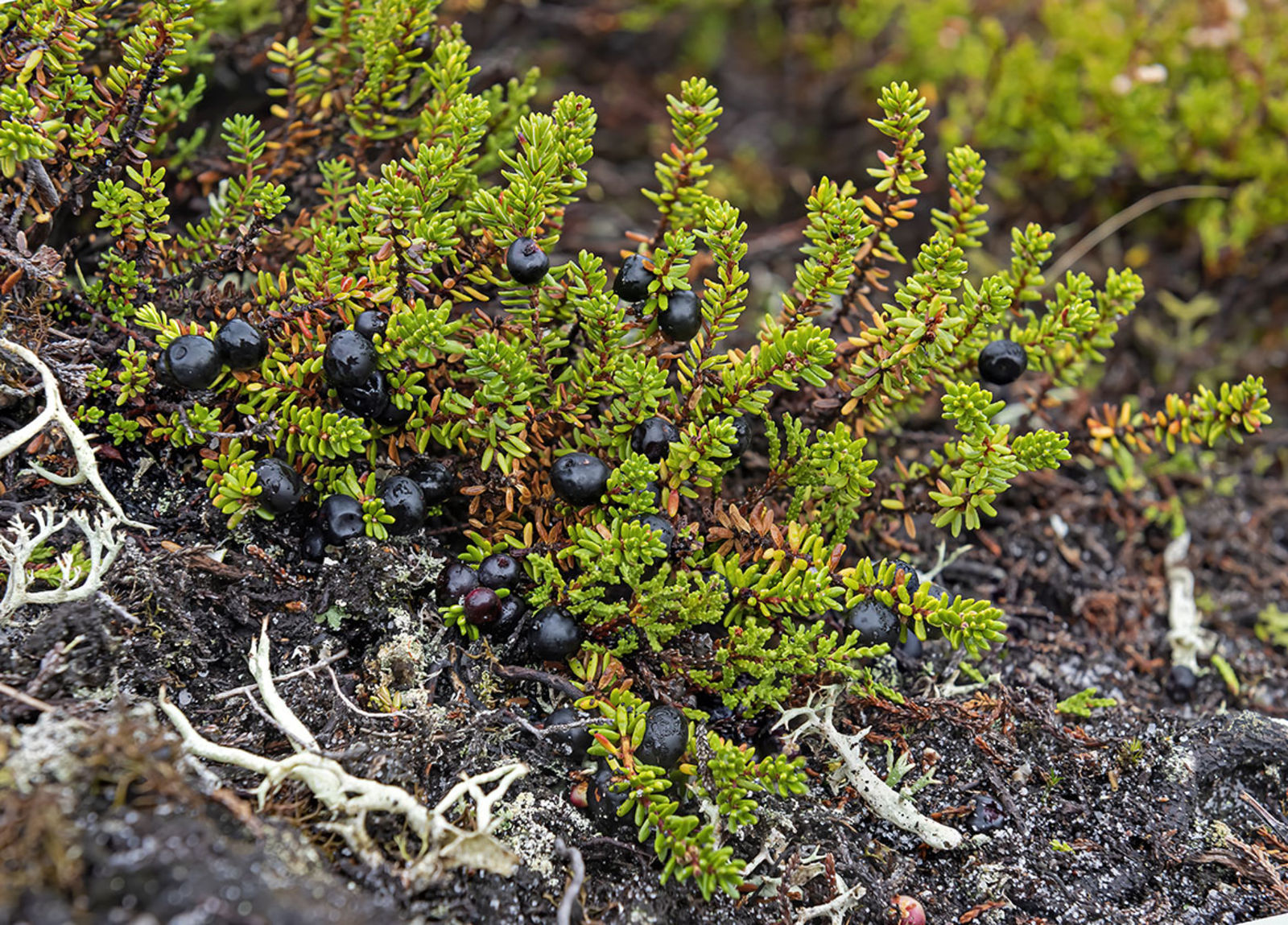
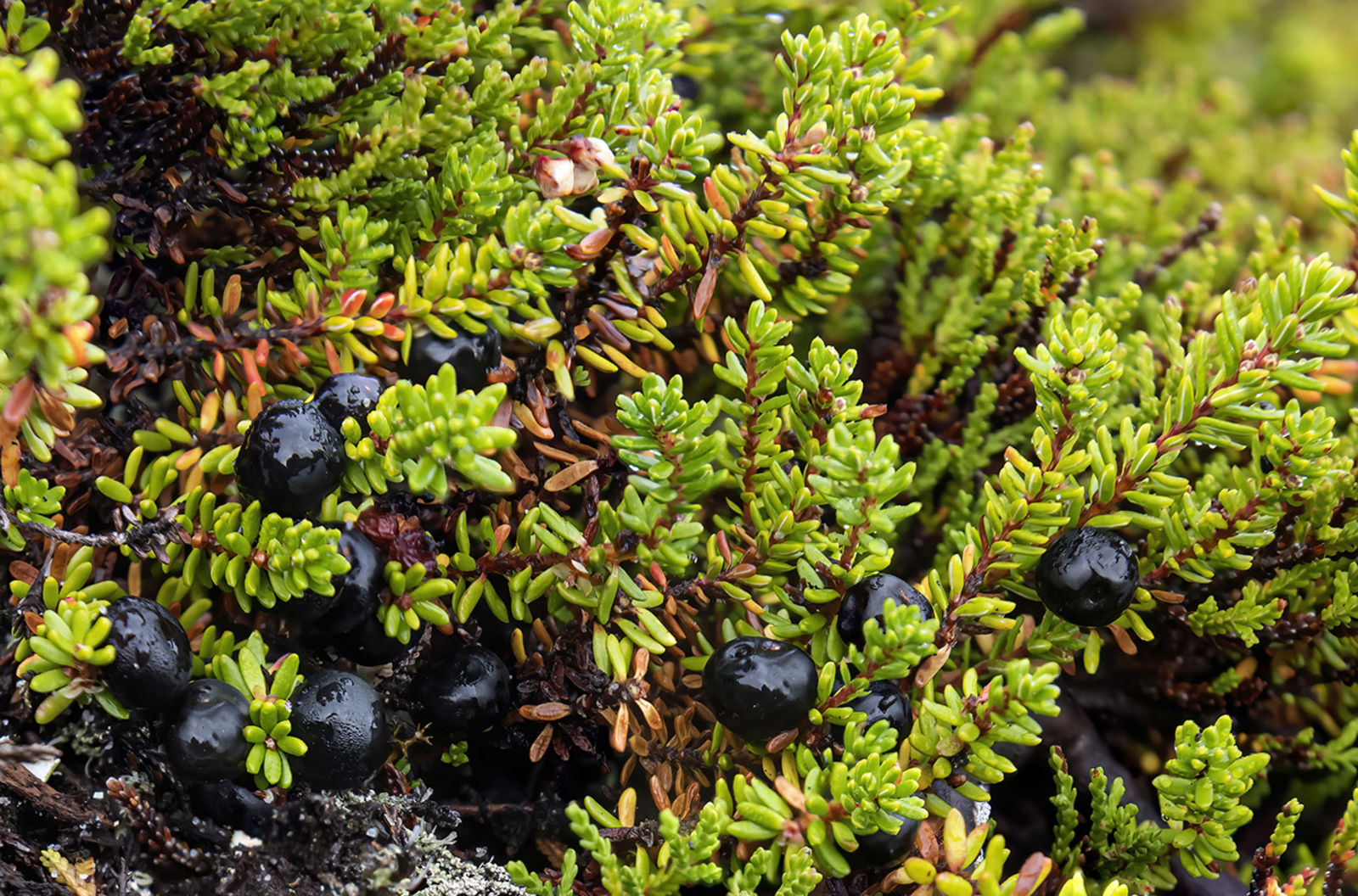
Empetrum nigrum makes a low mat 15–45 cm (6–18 in) high. Creeping stems are reddish to green and finely downy when young. Leathery evergreen leaves, just 4–6 mm (0.16–0.24 in) long, have rolled edges concealing a downy underside. This shape limits water loss in its cold, windy habitats. 5 7
Tiny pink to purple flowers, 1–3 mm (0.04–0.12 in) across, sit in the leaf axils near the tips of the previous year's shoots. They are wind-pollinated. Most populations are dioecious, with male and female flowers on separate plants, so an isolated individual cannot bear fruit. 7 5
Female plants subsequently carry glossy black drupes, 4–5 mm (0.16–0.20 in) across, with juicy flesh and six to nine hard seeds. Fruits often remain throughout winter, helping distinguish crowberry from other acid-loving ground covers with more conspicuous flowers. 7 3
Useful taxonomy
The taxonomic treatment distinguishes two subspecies of Empetrum nigrum: the widespread, dioecious subsp. nigrum of lowlands and Arctic areas from hermaphrodite crowberry, named subsp. hermaphroditum in that treatment. The latter is a compact tetraploid with bisexual flowers and green shoot tips, occurring in northern and mountain areas. A dioecious plant needs a plant of the other sex nearby to fruit; a hermaphrodite plant can fruit alone. 8 5
Other names in botanical literature are synonyms of the typical species rather than distinct taxa. They include Empetrum sibiricum V.N.Vassil., Empetrum nigrum var. purpureum (Raf.) A.DC. and the white-fruited Empetrum nigrum f. leucocarpum Asch. ex Neuman, occasionally sold as a nursery curiosity. 1
Linnaeus published the name accepted by POWO, Empetrum nigrum L., in Species Plantarum in 1753. An infraspecific name can refine identification when the taxonomic treatment being followed is specified. 1
Habitat and range
Its circumboreal native range covers Greenland, Iceland, Scandinavia, Russia and northern North America. Isolated populations extend southward only in bogs and mountain to alpine zones of Europe, including Scotland, the Alps, Pyrenees and Corsica, and Asia, including Japan. 2 3
Poor, acid and often moist soils suit it: bogs, heaths, coastal dunes and windswept rocky summits. On calcareous soil with a pH above 6, impaired iron uptake causes chlorosis and slows growth, its strictest cultivation limit outside its native climate. In France it is rare, notably on Atlantic dunes in Aquitaine and in Corsican mountains, with regional legal protection in Rhône-Alpes, Auvergne and Franche-Comté. 4 2
Despite regional rarity, the species is globally assessed as Least Concern. Its extensive circumpolar range outweighs the vulnerability of isolated populations along its southern limits. 4
Life cycle and reproduction
Flowering comes in local spring, often as early as March in oceanic Northern Hemisphere climates and later in the Arctic. Wind carries most pollen between male and female plants. Without both sexes nearby, an isolated dioecious plant never fruits, unlike the self-fertilizing hermaphrodite form. 7 5
Fruits ripen in local late summer and often persist all winter. Birds, bears and Arctic foxes disperse the hard-coated seeds, which need prolonged cold stratification before germinating. This dormancy makes seed propagation slow and much less common in horticulture than cuttings. 2
Vegetative spread predominates in the wild. Creeping stems root wherever prolonged contact with moist soil allows, enabling one individual to form a clonal mat covering several square meters, or tens of square feet, over decades. 5 7
Uses and risks
The fruit is edible, with a mild, slightly tart flavor that improves after the first frosts. It is eaten raw or made into jam, pies and drinks. Iceland has a commercial harvest for these uses. 2 5
For several circumpolar peoples, the berry is an important traditional Arctic food, frozen for winter. Some names describe its color directly: the Inuktitut paurngait literally means something resembling soot. 6
No toxicity is documented in people or pets. The fruits contain flavonoids and antioxidant compounds, attracting scientific interest in their potential health effects. 2 9
Traditional diuretic and astringent uses for digestive complaints remain part of folk medicine, without modern clinical validation comparable to that of other Ericaceae such as bearberry. 2
Varieties, look-alikes and related plants
The species has no stable, widely distributed horticultural cultivars. Nurseries mainly offer the typical form, occasionally a white-fruited curiosity corresponding to leucocarpum in botanical synonymy. 1
Several low-growing heathland Ericaceae can be confused with it. Vaccinium myrtillus, bilberry, sheds its leaves in winter. Vaccinium uliginosum shares bog habitats but is also deciduous, with broader oval leaves. Evergreen Vaccinium vitis-idaea, lingonberry, has finely toothed oval leaves, unlike crowberry's narrow, entire ones. On Iberian dunes the related genus Corema includes white crowberry, with pale rather than black fruits. 5
Main sources
- Plants of the World Online / Kew, Empetrum nigrum L.
- Plants For A Future, Empetrum nigrum - crowberry
- Encyclopaedia Britannica, crowberry
- Tela Botanica / eFlore, Empetrum nigrum L.
- Wikipédia (FR), Camarine noire (Empetrum nigrum)
- Wikipedia (EN), Empetrum nigrum
- Native Plant Trust Go Botany, Empetrum nigrum - black crowberry
- Florealpes, Empetrum nigrum subsp. hermaphroditum - camarine hermaphrodite
- Jurikova et al. (2016), Black Crowberry (Empetrum nigrum L.) Flavonoids and Their Health Promoting Activity, PMC
Frequently asked questions
Is black crowberry toxic to people or pets?
No toxicity is documented in people or pets. Its edible fruits are low in sugar and slightly mealy, though they are widely used for jams and drinks in northern countries.
Can crowberries be eaten raw?
Yes. They can be eaten raw or made into jam, pies or drinks. Their flavor improves after the first frosts, and they are a traditional food resource in Arctic regions.
How do ordinary and hermaphrodite crowberries differ?
In the treatment distinguishing these two forms, subsp. nigrum is dioecious, with separate male and female plants. Hermaphrodite crowberry, called subsp. hermaphroditum in some floras, is more compact and grows in mountains or the Arctic; its bisexual flowers allow a single plant to fruit.
Where does black crowberry grow in France?
It is rare, chiefly on Atlantic dunes and in a few mountain areas, including the Alps, Auvergne, Jura and Corsica. It is legally protected in several French regions.
How can black crowberry be propagated?
Naturally layered stems that have already rooted, and cuttings from an established mat, establish most readily. Seed also works but is slow and needs cold stratification.
Can it be confused with bilberry or lingonberry?
Yes. All three are low-growing Ericaceae of acid heaths. Crowberry keeps its narrow evergreen leaves, whereas bilberry loses its leaves in winter and lingonberry has finely toothed oval leaves.
Does crowberry still belong to the Empetraceae?
No. Molecular studies have incorporated that former family into the Ericaceae. Empetrum now forms the tribe Empetreae within the subfamily Ericoideae.
If you are unsure about a plant’s toxicity, ask a botanist or veterinarian for advice.