
English bluebell (Hyacinthoides non-scripta, )
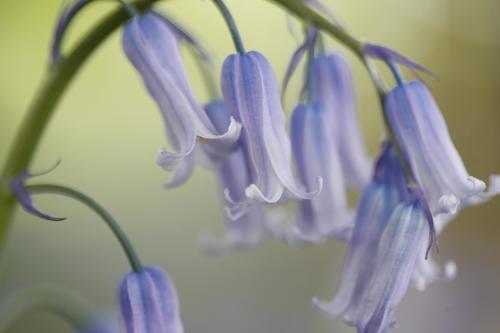
English bluebell (Hyacinthoides non-scripta (L.) Chouard ex Rothm.) is a woodland bulb in the Asparagaceae. It forms naturalized carpets beneath trees, differs from Spanish bluebell, and needs careful handling because Kew reports toxic glycosides.
Read moreEnglish bluebell



© photo
(c) Ian Hayhurst, some rights reserved (CC BY-NC-SA) · cc-by-nc-sa
Sean Crocker · cc0
Charles Joynson · cc0
Taken Apr 18, 2022 by Dave Flack (cc-by-sa)
Taken Apr 9, 2020 by Jean-Pierre Bartkowiak (cc-by-sa)
Taken May 25, 2021 by Werner Köster (cc-by-sa)
Taken May 5, 2021 by Gerrit van der Horst (cc-by-sa)
Taken Apr 16, 2022 by Lucile Hubas (cc-by-sa)
© copyright of the Board of Trustees of the Royal Botanic Gardens, Kew.




Identity
English bluebell (Hyacinthoides non-scripta (L.) Chouard ex Rothm.) is a woodland bulb in the Asparagaceae: it is neither common hyacinth nor a grape hyacinth. 1 2 3
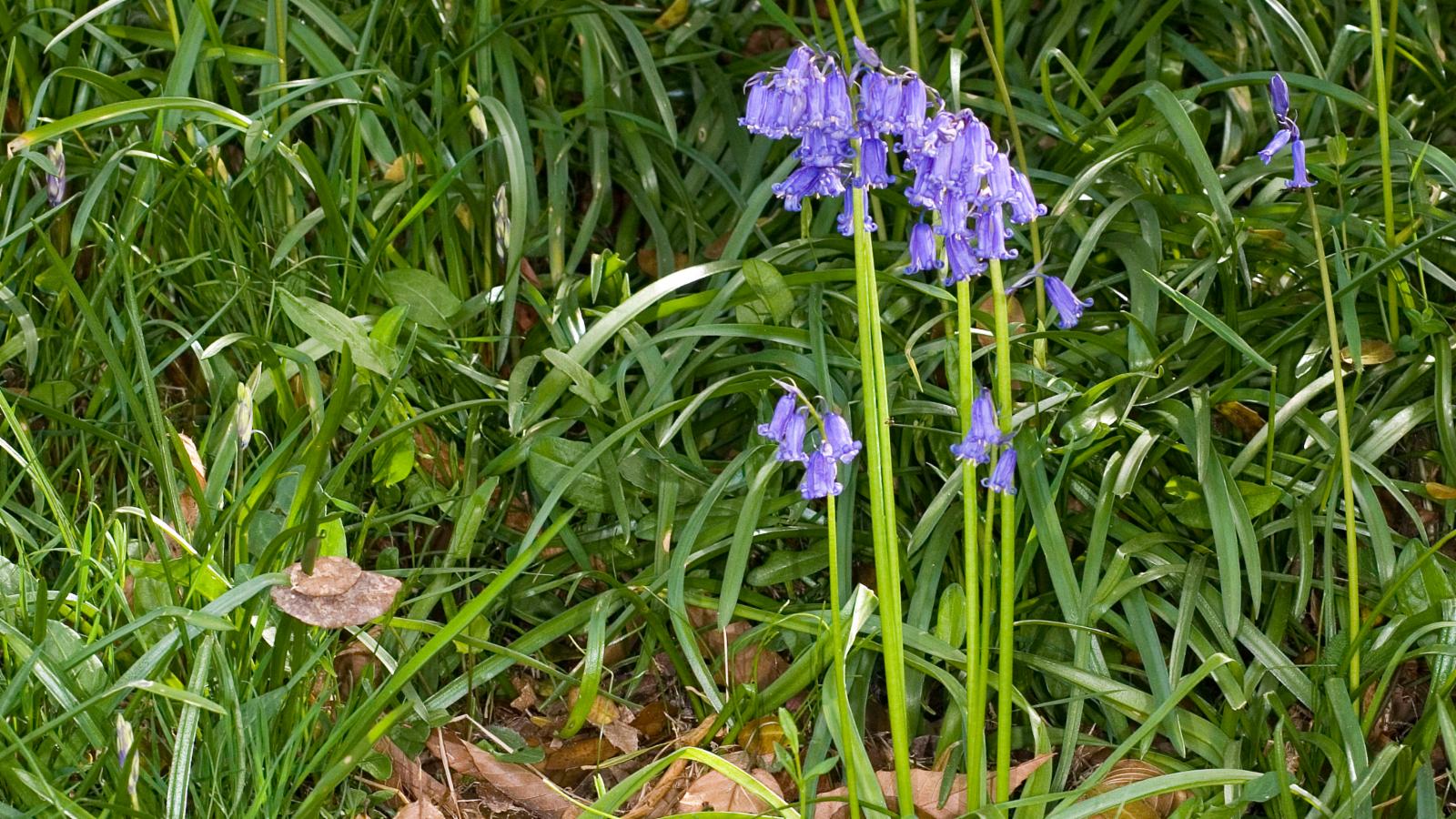
Partial shade and woodland suit its growth: a bulbous plant that forms spring carpets beneath deciduous trees, while sunlight still reaches the ground before the leaves close the canopy. 8 5
Kew gives its native range as Atlantic Europe, including France. This origin helps explain its preference for cool, moist woodland, hedgerows and humus-rich soil rather than dry rock gardens in full sun. 5 6
Its appeal extends beyond botanical interest. A carpet of English bluebells transforms woodland within a few weeks: the ground turns blue, the light seems cooler, and then almost all of the display disappears before summer. 8 5
Recognition
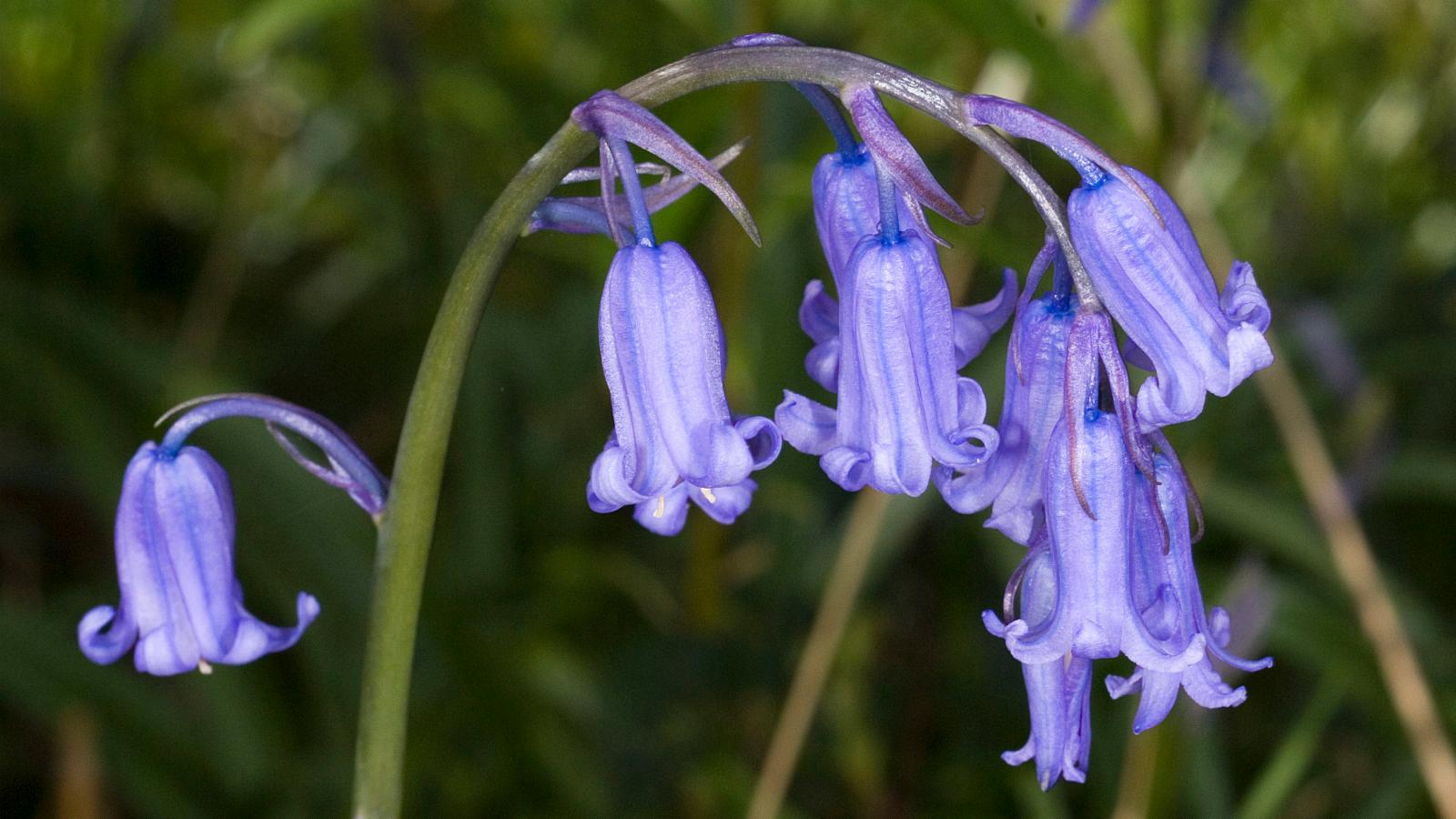
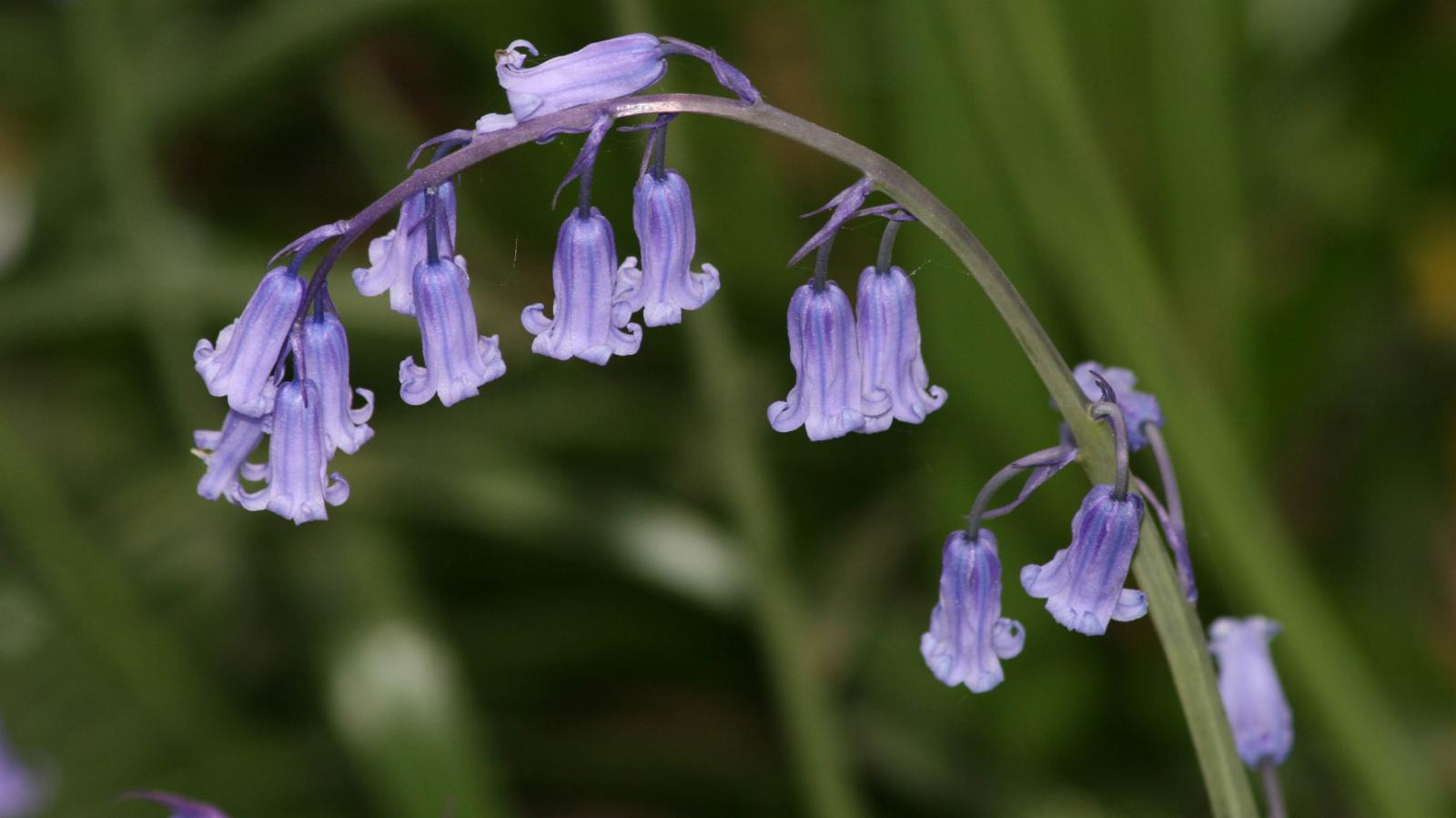
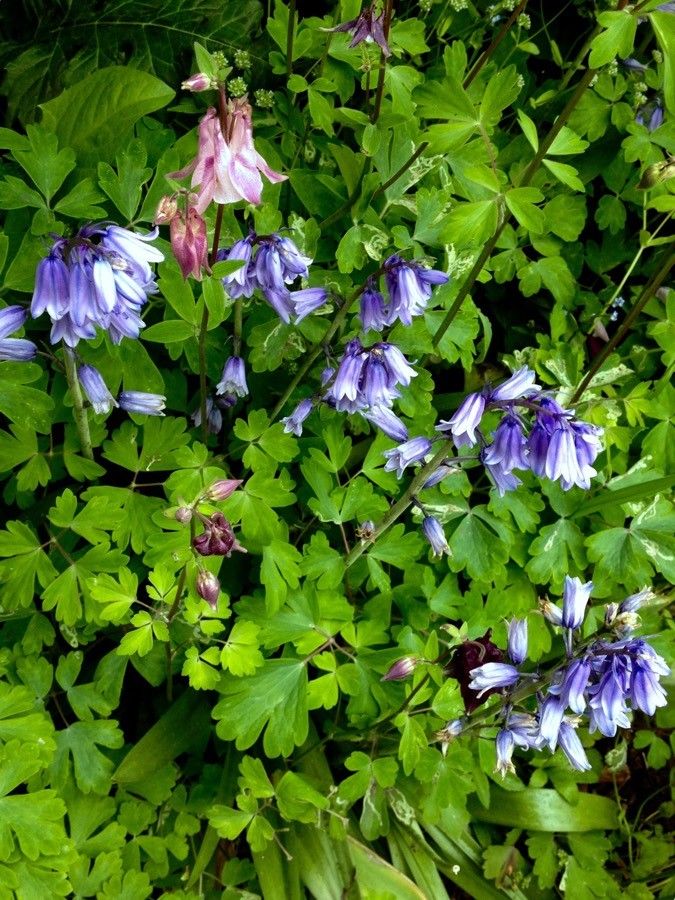
A bulb produces the basal, linear leaves of English bluebell. Its flower stalk curves to one side and carries fragrant violet-blue bells, often arranged along just one side of the stem. 5 6
That nodding outline is a major identifying feature. Spanish bluebell, Hyacinthoides hispanica, is generally more upright and less fragrant, with flowers distributed more evenly around its stalk. Hybrids blur these distinctions, so a single feature does not settle every identification. 5 6
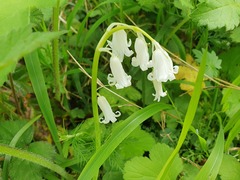
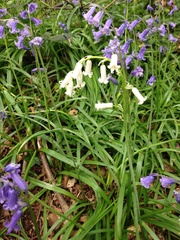
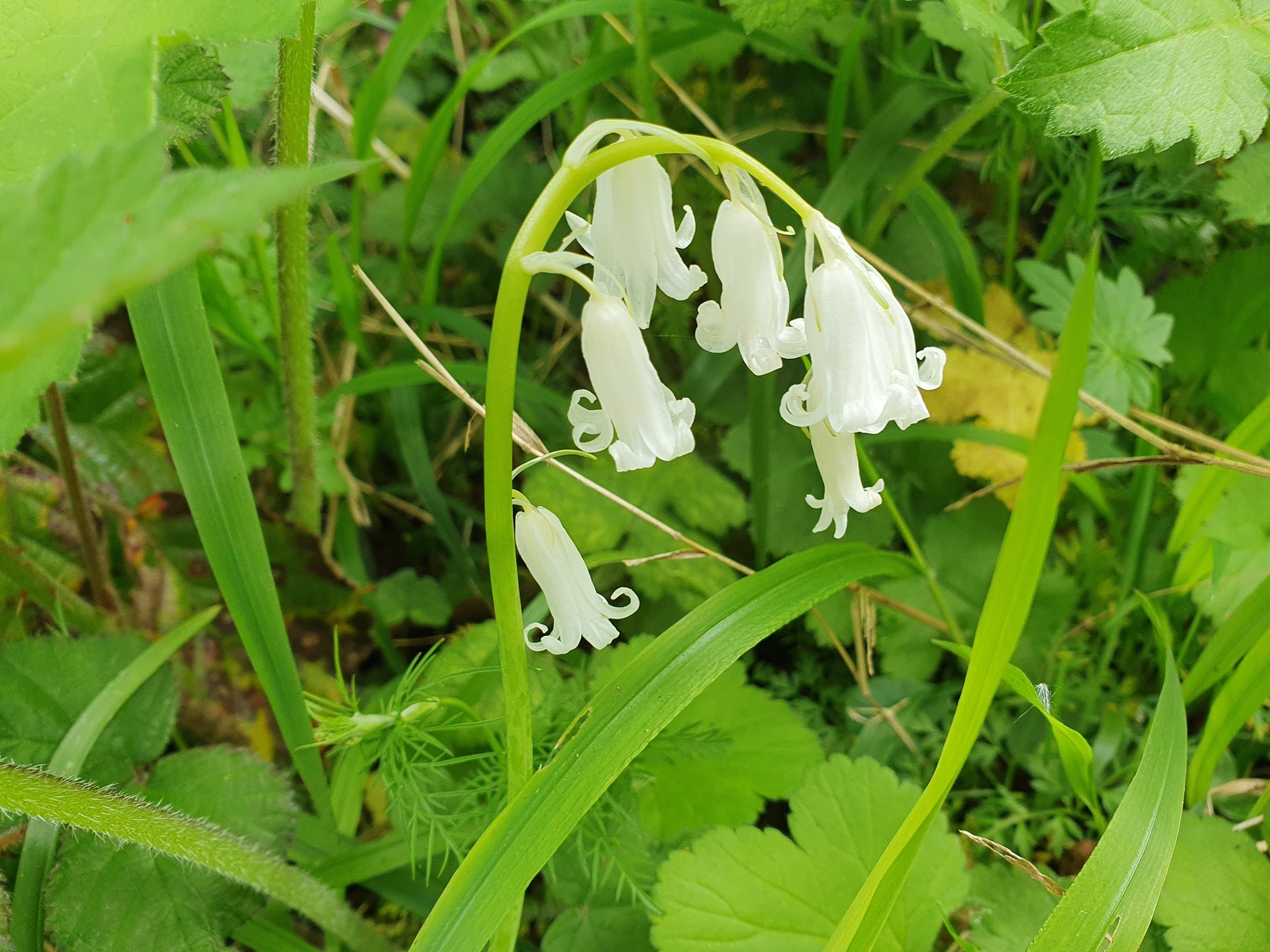
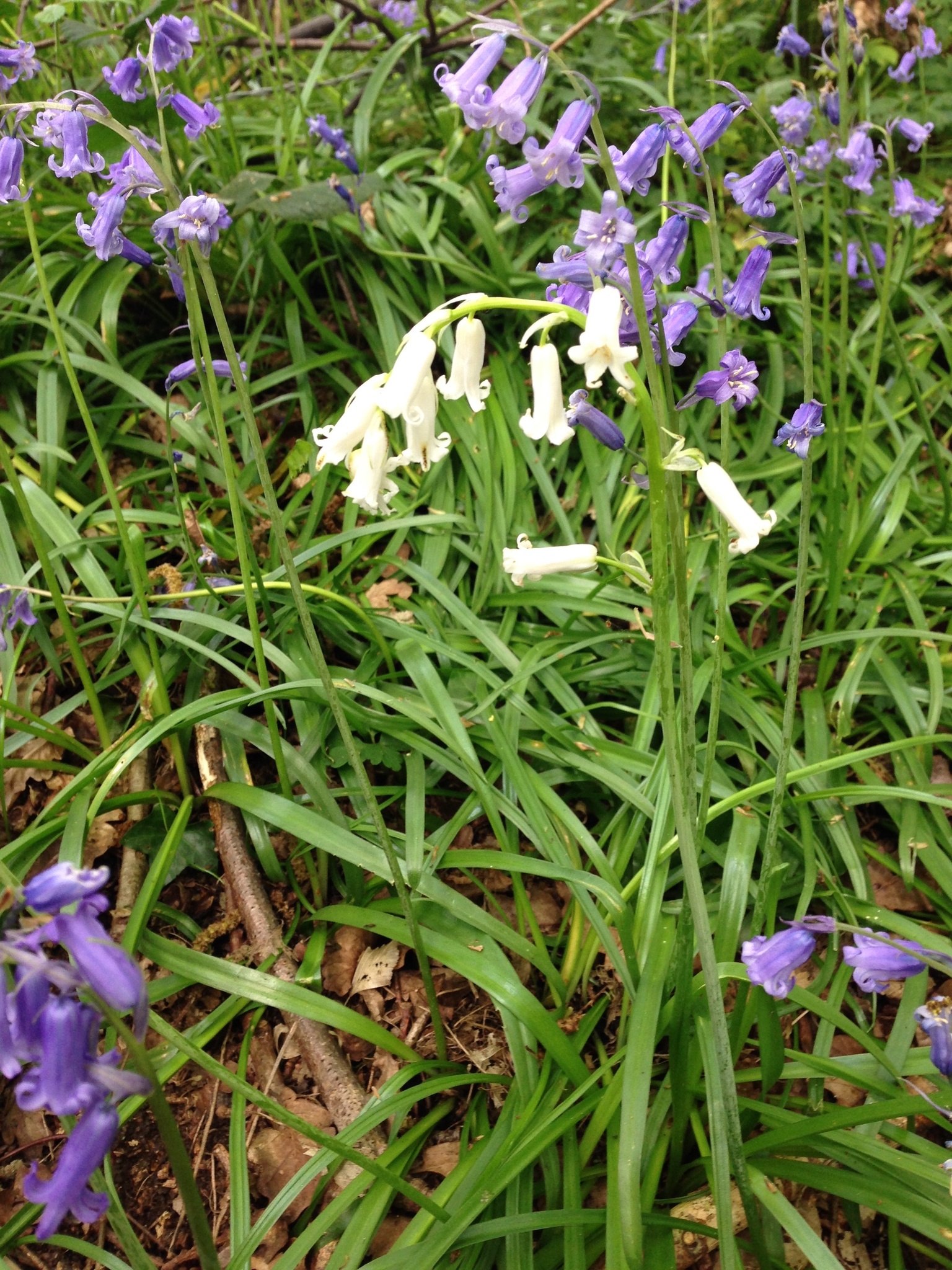
Violet-blue is the typical color, but white and pink forms also occur. For a woodland-style planting, the nodding blue form gives the clearest effect; horticultural color forms should be placed where they do not threaten nearby wild populations. 7 8
Scent offers another clue. A typical English bluebell has a gentle fragrance, whereas Spanish bluebell is often less scented. Scent alone is insufficient, but it supports an identification based on the nodding stalk and one-sided flowers. 5 6
Useful taxonomy
For this species, the accepted name is Hyacinthoides non-scripta. Older names such as Endymion non-scriptus and Scilla non-scripta still appear in books and catalogs, but the current binomial remains the botanical reference. 4 6
The important confusion involves Hyacinthoides hispanica and Hyacinthoides × massartiana. English bluebell is distinct from other blue-flowered bulbs; its nodding stalk and one-sided flowers help distinguish it from these related plants. 8 5
Near natural habitats, buy bulbs from a reliable source and avoid uncertain mixtures. Introducing hybrids into woodland in the name of biodiversity can damage its local character rather than support it. This is especially relevant where wild English bluebells already grow nearby. 5 7
The plant's popularity makes that distinction especially important. Recreating a bluebell wood is an appealing idea, but an imprecise planting can mix species, cultivars and hybrids. Begin with a reliable identification before deciding what to plant. 5 8
Cultivation
In light shade or partial shade, English bluebell grows well in humus-rich, well-drained soil that stays moist in spring. It uses the light of late winter, flowers in spring, then replenishes its bulb through the leaves before summer dormancy. 5 8
The most important step is to leave the foliage until it has finished. Leaves may look untidy after flowering, but they are still feeding the bulb. Mowing too early often makes clumps decline instead of allowing them to naturalize and build into a lasting carpet. 8 5
Plant in fall, in irregular groups beneath deciduous trees, a lightly shaded hedge or a cool, moist woodland edge. Isolated bulbs create a sparse display. A carpet develops with time, natural division and cleanup delayed until the foliage has completed its work. 8 6
Keep the soil biologically active. Fallen leaves, a light layer of humus and moderate competition reproduce woodland conditions better than a bed dug over every year. Bulbs dislike prolonged dryness as well as repeated disturbance. 5 8
Uses
Naturalizing woodland is the main garden use. Among blue flowers, English bluebell creates a living, atmospheric blue distinct from a pot display or a conventional flower bed. Its effect comes from the number of plants, slanting light and a continuous covering over the ground. 8 5
Snowdrops, wild daffodils, deciduous ferns, lungworts and woodland-edge perennials make suitable companions. Neighboring plants need to respect its cycle: light in spring, followed by foliage that dies back without being smothered too early. 5 8
English bluebell can flower in a pot, but loses some of its character there. Its strength is the colony, repetition and woodland setting, rather than a single isolated blue ornament. A patio container will often be better suited to grape hyacinths or cultivated hyacinths. 8
Toxicity and protection
According to Kew, bluebells are not used in modern medicine because of their toxicity. They contain toxic glycosides, and their sap may cause contact dermatitis. It would therefore be unwise to treat English bluebell as edible or safe to chew. 5
The main practical concern is ingestion, particularly of the bulbs. Store bulbs beyond the reach of children and pets, avoid confusing them with edible bulbs, and wear gloves if your skin reacts to bulb sap. 5 6
Legal protection varies by territory. Kew describes British protection against collecting and trading wild bulbs, while the French page notes local or regional protections in France. Wherever you garden, choose cultivated stock and leave wild woodland plants in place. 5 7
These considerations call for care both in handling bulbs and in protecting wild populations. English bluebell does best when allowed to form its carpet gradually, without wild collecting or unnecessary hybridization. 5 8
Main sources
- Wikidata, Hyacinthoides non-scripta
- Plants of the World Online / Kew, Hyacinthoides non-scripta
- World Flora Online, Hyacinthoides non-scripta
- International Plant Names Index, Hyacinthoides non-scripta
- Royal Botanic Gardens, Kew, Bluebell
- Wikipedia EN, Hyacinthoides non-scripta
- Wikipedia FR, Hyacinthoides non-scripta
- Floralens, selection of blue flowers
If you are unsure about a plant’s toxicity, ask a botanist or veterinarian for advice.