
Busy Lizzie (Impatiens walleriana, )
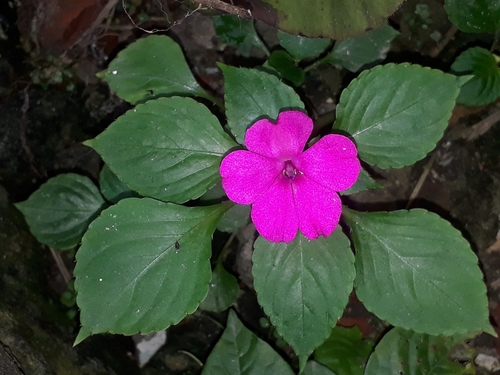

Busy Lizzie (Impatiens walleriana), also called balsam, sultana or simply impatiens, is an herbaceous plant in the Balsaminaceae family native to eastern Africa. Grown as an annual in shaded beds and containers, it has fleshy, translucent stems, flat, colorful flowers and seed capsules that burst when touched.
Read moreBusy Lizzie, Impatiens, Balsam and Sultana





© photo
(c) Vinicius P. dos S. F., some rights reserved (CC BY-NC), uploaded by Vinicius P. dos S. F. · cc-by-nc
Carrie Seltzer · cc0
Greg III Espera · cc-by
Taken Apr 18, 2021 by vivi mendez (cc-by-sa)
Taken Oct 11, 2019 by Leandro Martins Santos (cc-by-sa)
Taken Dec 28, 2020 by García Johny (cc-by-sa)
Taken Jun 6, 2020 by Sandra Chassery (cc-by-sa)
Taken Dec 21, 2019 by C S (cc-by-sa)
© copyright of the Board of Trustees of the Royal Botanic Gardens, Kew.




Global distribution
The native range of Impatiens walleriana lies in eastern Africa, from Kenya to Mozambique, including Tanzania and Zimbabwe. Widely grown for bedding, it has naturalized and spread locally in several tropical and subtropical regions; introduced populations are distinct from its African native range.
- Native4
- Introduced3
- Kenya
- Tanzania
- Mozambique
- Zimbabwe
- United States
- Australia
- Brazil
Hexagons: regions where the plant occurs. Green dots: native range.1
Identity
Busy Lizzie (Impatiens walleriana Hook.f., 1868), also known as balsam, sultana or simply impatiens, is an herbaceous member of the Balsaminaceae family. The epithet walleriana honors the British missionary Horace Waller; Impatiens refers to the capsules, which release their seeds at the slightest pressure. 1 4
Across Europe, Busy Lizzie is familiar as a shade bedding and container plant. Its flat, bright flowers make it one of the most widely grown flowering annuals for dim corners, with blooms renewed from spring until the first frosts. 3 2
Recognition
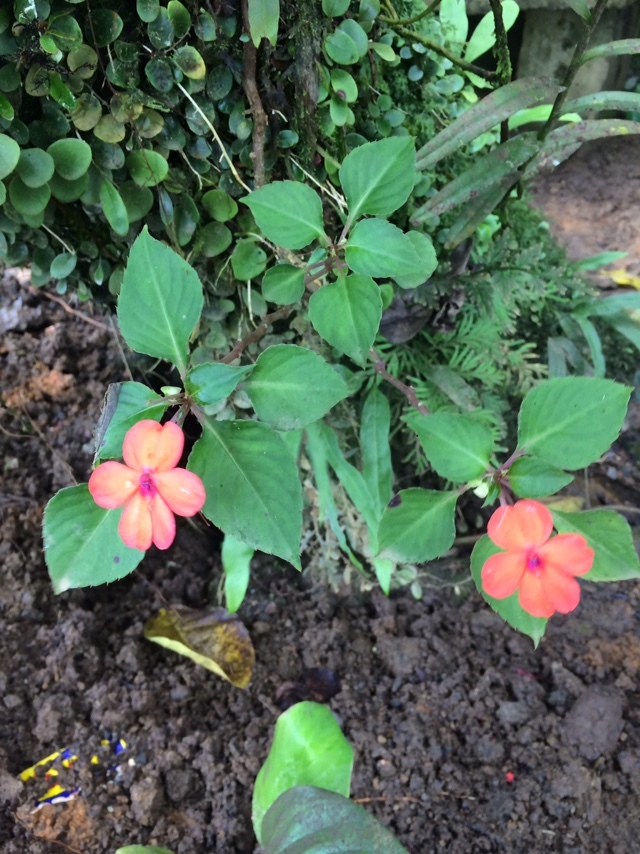
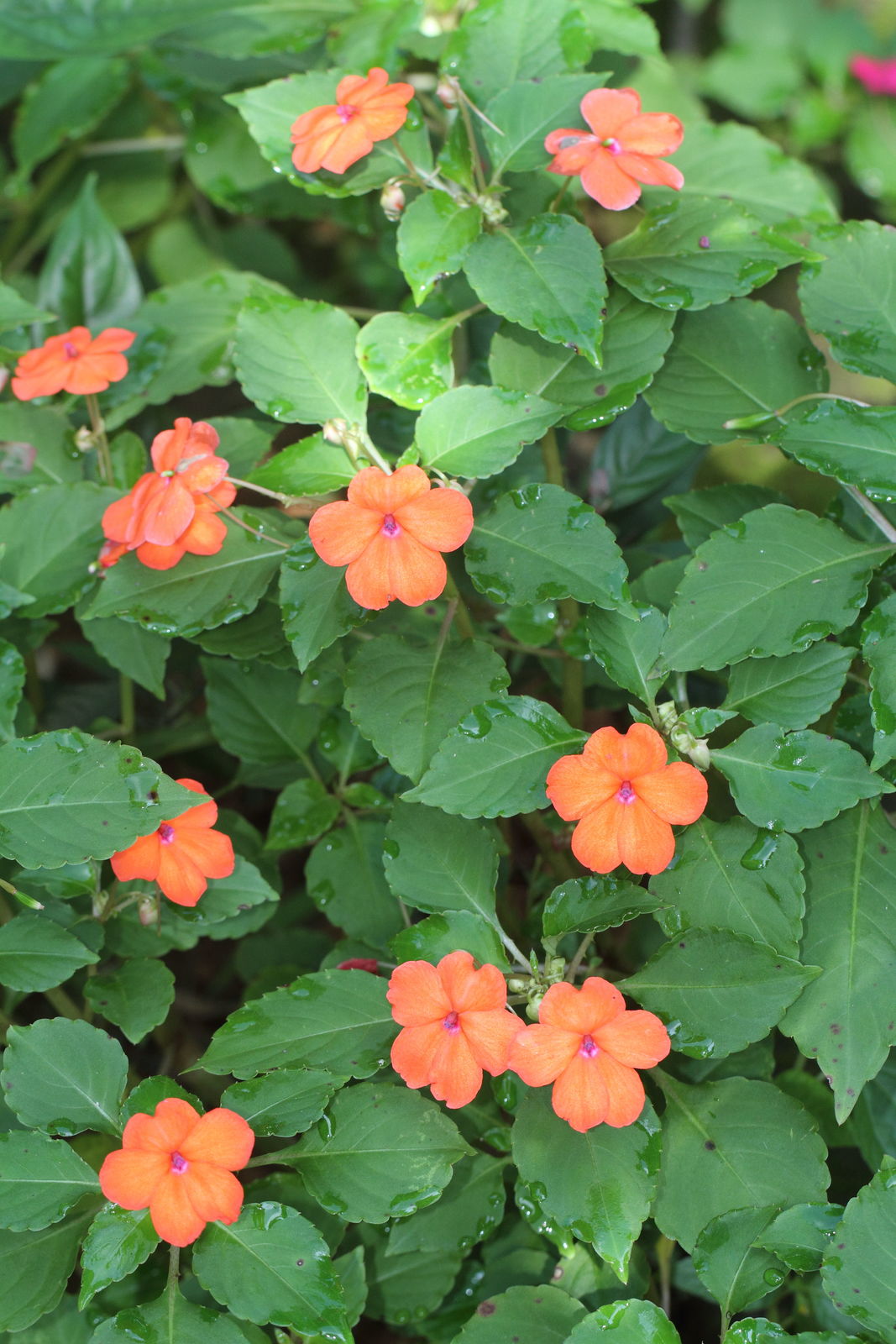
A compact, rounded clump reaches 15–60 cm (6–24 in) in height, with a similar spread depending on the series and growing conditions. The pale green stems are fleshy, slightly translucent and full of water, so they snap easily. Oval, finely toothed leaves grow alternately, forming apparent whorls near the tips. 3 6
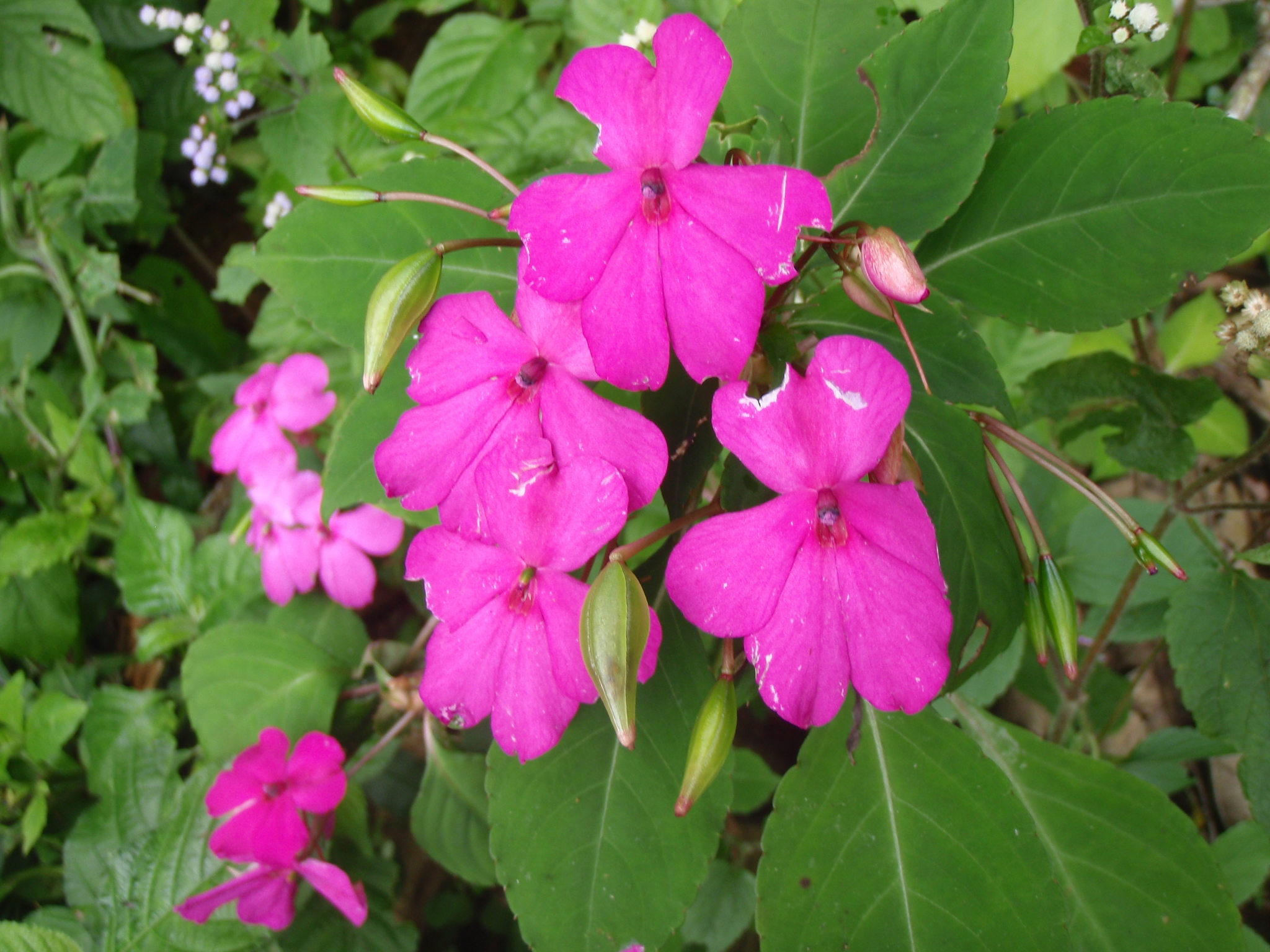
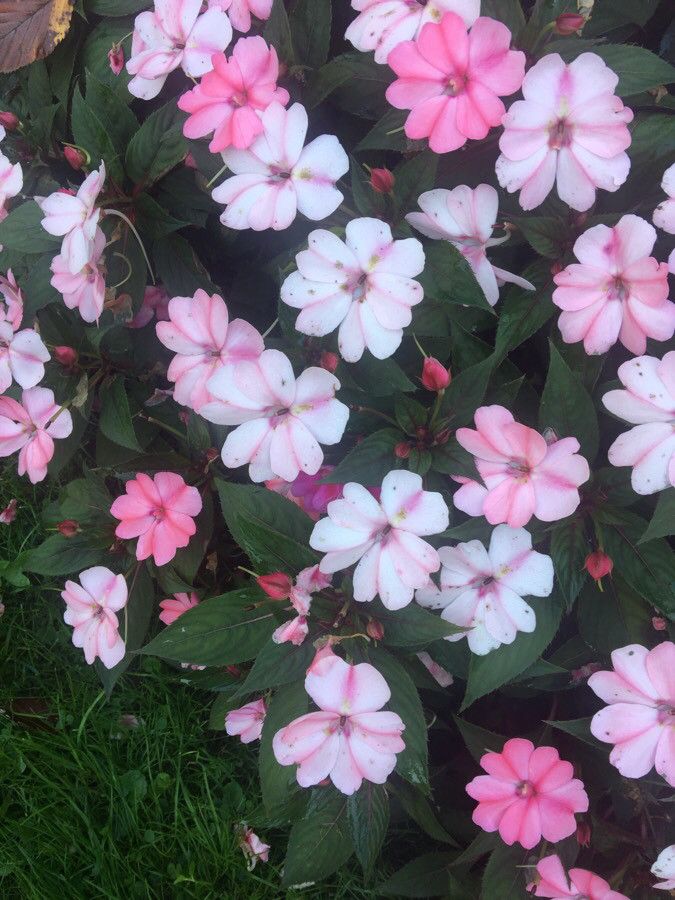
Flat, wide-open flowers measure 2–6 cm (0.8–2.4 in) across and have a slender spur at the back. Colors include white, pink, red, orange and purple, with many bicolors. These continually renewed flowers above bright green leaves are a recognizable feature of shaded beds. 2 4
Ripe fruit provides another clue: the fleshy capsule bursts at the lightest touch and flings its seeds away. This explosive mechanism, reflected in the name Impatiens, distinguishes the genus from most other garden annuals. 4 5
Useful taxonomy
Joseph Dalton Hooker described Impatiens walleriana Hook.f. in 1868. Impatiens is a very large genus, and several older or horticultural names remain in circulation. The main names to recognize are:
- Impatiens sultanii Hook.f., an older name;
- Impatiens holstii Engl. & Warb., another older name;
- Impatiens walleriana subsp. walleriana, the nominal subspecies;
- Impatiens lujae De Wild., a historical name.
Use the accepted scientific name, Impatiens walleriana, as the botanical reference. Series names such as Super Elfin, Accent and Beacon identify horticultural selections rather than separate species or botanical varieties. 1 3
Habitat and range
Eastern Africa is the native home of Impatiens walleriana, from Kenya through Tanzania and Zimbabwe to Mozambique. It grows in moist woodland, shaded forest margins and along streams, in cool soils rich in organic matter. 1 3
The preference for cool shade explains its garden role: it flowers where many sun-loving annuals struggle. Direct afternoon sun and dry soil quickly cause wilting because its drought tolerance is low. 6 2
Worldwide bedding cultivation has carried the species beyond Africa. It has naturalized in several humid tropical and subtropical regions; those introduced populations should be distinguished from its African native range. 5 3
Life cycle and reproduction
Where winters bring frost, Impatiens walleriana is grown as an annual: sown or transplanted in spring, it flowers through summer until frost kills its fleshy stems. In its tropical range it is an herbaceous perennial that can live for several seasons. 3 6
Flowers continue from spring until frost. Each fertilized flower develops into a green, fleshy capsule that splits suddenly when ripe, projecting seeds several tens of centimeters (several inches) away. This explosive dispersal allows spontaneous seedlings to appear in beds in mild climates. 4 5
Growers propagate Busy Lizzie mainly by seed or stem cuttings with a node. Surface-sow seeds in light at about 20–22 °C (68–72 °F), eight to ten weeks before the last frost. Late-summer cuttings root readily within weeks in water or moist growing medium. Keeping rooted cuttings frost-free is also a useful way to preserve a particular selection for another year. 3 2
Uses and risks
Shade planting accounts for almost all its use. Busy Lizzie brings long-lasting color to beds, borders, pots, window boxes and hanging baskets in places where few other flowering annuals bloom as freely. 3 2
The main threat concerns the plant itself: impatiens downy mildew, caused by Plasmopara obducens, produces white growth under leaves followed by sudden collapse. Fungicides offer limited control; space plants well, improve air circulation and avoid replanting the same spot. Resistant series such as Beacon, and New Guinea impatiens (Impatiens hawkeri), help reduce this problem. 6 3
For pet safety, the ASPCA lists Impatiens walleriana as non-toxic to cats, dogs and horses. With no known poisoning risk to domestic animals, it is a reassuring flowering choice for gardens used by pets. 7 5
Varieties, look-alikes and related plants
Commercial forms belong to horticultural series rather than separate species. Super Elfin, Accent and Tempo are dwarf or compact series with single flowers; Beacon was selected for mildew resistance, while Fiesta groups double-flowered forms. Before buying, check the series, leaf condition and absence of the white growth associated with mildew. 2
Plants most often confused with Busy Lizzie include:
- Impatiens hawkeri, New Guinea impatiens, with larger, often bronze leaves and greater sun tolerance;
- Impatiens balsamina, garden balsam, with more upright growth and flowers crowded along the stems;
- shade begonias, used in similar beds but with quite different foliage and flowers.
Bright green leaves, fleshy translucent stems and explosive capsules are the most useful features when checking whether a plant sold as impatiens is Impatiens walleriana. 3 6
Main sources
- Plants of the World Online / Kew, Impatiens walleriana Hook.f.
- Royal Horticultural Society, Impatiens walleriana - busy Lizzie
- Missouri Botanical Garden, Impatiens walleriana
- Encyclopaedia Britannica, Impatiens
- Plants For A Future, Impatiens walleriana
- North Carolina State Extension, Impatiens walleriana
- ASPCA, Buzzy Lizzie (Impatiens walleriana) non-toxic entry
Frequently asked questions
Is Busy Lizzie toxic to cats and dogs?
No. The ASPCA lists Impatiens walleriana as non-toxic to cats, dogs and horses. It is one of the flowering bedding and container plants with no known poisoning risk for pets.
Why have my impatiens suddenly collapsed?
Sudden leaf collapse with white growth beneath the leaves is typical of impatiens downy mildew (Plasmopara obducens). Fungicides have limited effectiveness; remove affected plants and avoid replanting Impatiens walleriana in the same spot.
Why are impatiens called touch-me-nots?
A ripe capsule bursts at the slightest pressure and throws its seeds away from the plant. This explosive mechanism explains the genus name Impatiens and the descriptive nickname shared by several balsams.
How much sun does Busy Lizzie need?
Partial to full shade suits it best. It tolerates gentle morning sun if the soil stays moist, but direct afternoon sun wilts the leaves and scorches the flowers.
Does Busy Lizzie come back every year?
In temperate climates it is frost-tender and grown as an annual, dying at the first frosts. In tropical conditions it behaves as an herbaceous perennial and can live for several seasons.
How do you propagate Busy Lizzie?
Sow in warmth at 20–22 °C (68–72 °F), in light, eight to ten weeks before the last frost, or take stem cuttings with a node in late summer. Cuttings root readily in water or moist growing medium.
How big does Busy Lizzie grow?
Depending on the series and growing conditions, clumps reach 15–60 cm (6–24 in) tall with a similar spread. Dwarf series such as Super Elfin stay low and compact for edging and containers.
How does it differ from New Guinea impatiens?
Impatiens hawkeri, New Guinea impatiens, has larger leaves, often bronze-tinted, and tolerates more sun. It also resists downy mildew better than traditional Impatiens walleriana.
If you are unsure about a plant’s toxicity, ask a botanist or veterinarian for advice.