
common morning glory (Ipomoea purpurea, )
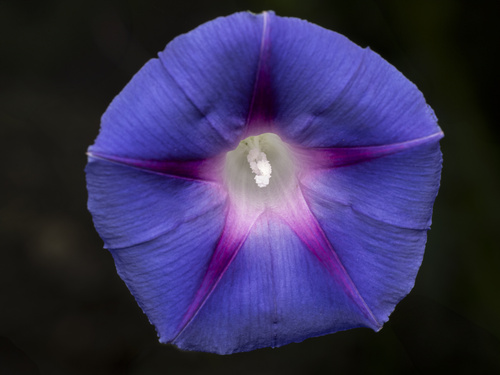
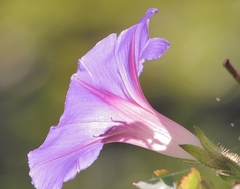
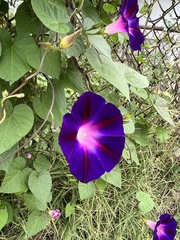
Common morning glory (Ipomoea purpurea (L.) Roth) is a fast-growing annual vine with flowers in blue-violet and purple shades as well as other colors. It can cover a summer trellis quickly, but its toxic seeds and ready self-seeding need careful management.
Read morecommon morning glory and morning glory



© photo
(c) jaguarundi_2025, some rights reserved (CC BY-NC) · cc-by-nc
iNaturalist User · cc0
Ian Wolfe · cc0
Taken Aug 26, 2021 by Marta Leite (cc-by-sa)
Taken Aug 11, 2021 by Fillype (cc-by-sa)
Taken Jul 17, 2022 by Ya Lama (cc-by-sa)
Taken Aug 18, 2021 by André van Veldhuizen (cc-by-sa)
Taken Sep 18, 2022 by Jacques Zuber (cc-by-sa)
© copyright of the Board of Trustees of the Royal Botanic Gardens, Kew.




Identity
A railing or trellis can disappear behind the common morning glory (Ipomoea purpurea) in a single growing season. This annual climber belongs to the Convolvulaceae family. Its blue-violet and purple flowers earn it a place in Floralens’ selection of blue flowers, especially where a quick summer screen is wanted. 1 2 8
POWO accepts the species and places its native range in tropical and subtropical America. NC State describes it as naturalized, frequently sold under confusing names, and very capable of reproducing by self-seeding. 2 5
This morning glory should be distinguished from Ipomoea tricolor. Both climb supports, but their garden color ranges differ. Floralens’ blue-flower selection treats I. tricolor as the clear-blue morning glory and I. purpurea as a source of blue-violet to purple shades. 8 6
Its practical appeal is the speed with which it covers a railing, wire fence or trellis. In frost-prone climates this is a seasonal display: it provides a leafy, flowering summer curtain, then dies when cold ends its growth. It is a way to change a garden for one season rather than build a permanent woody framework. 8 5
Recognition
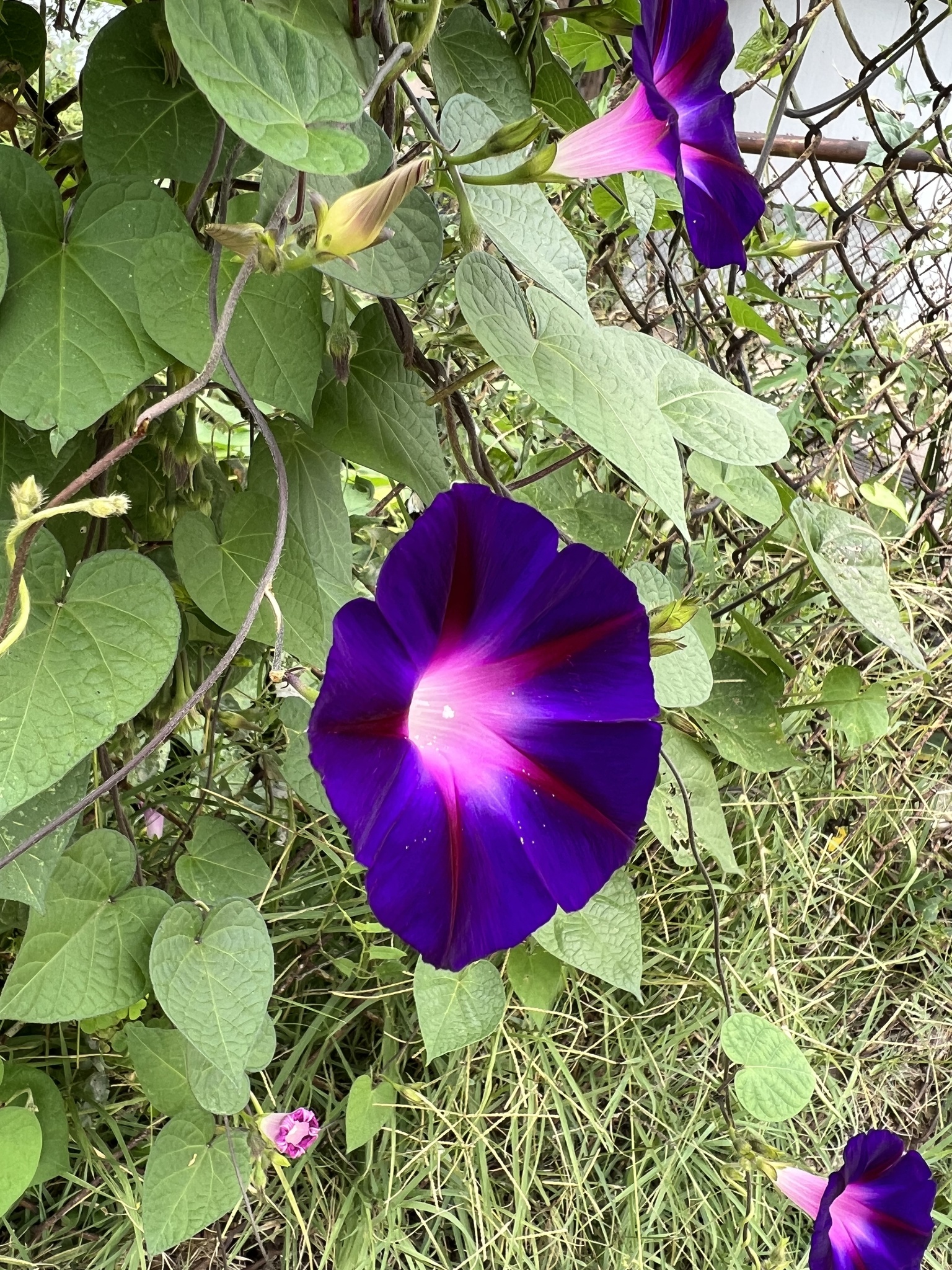
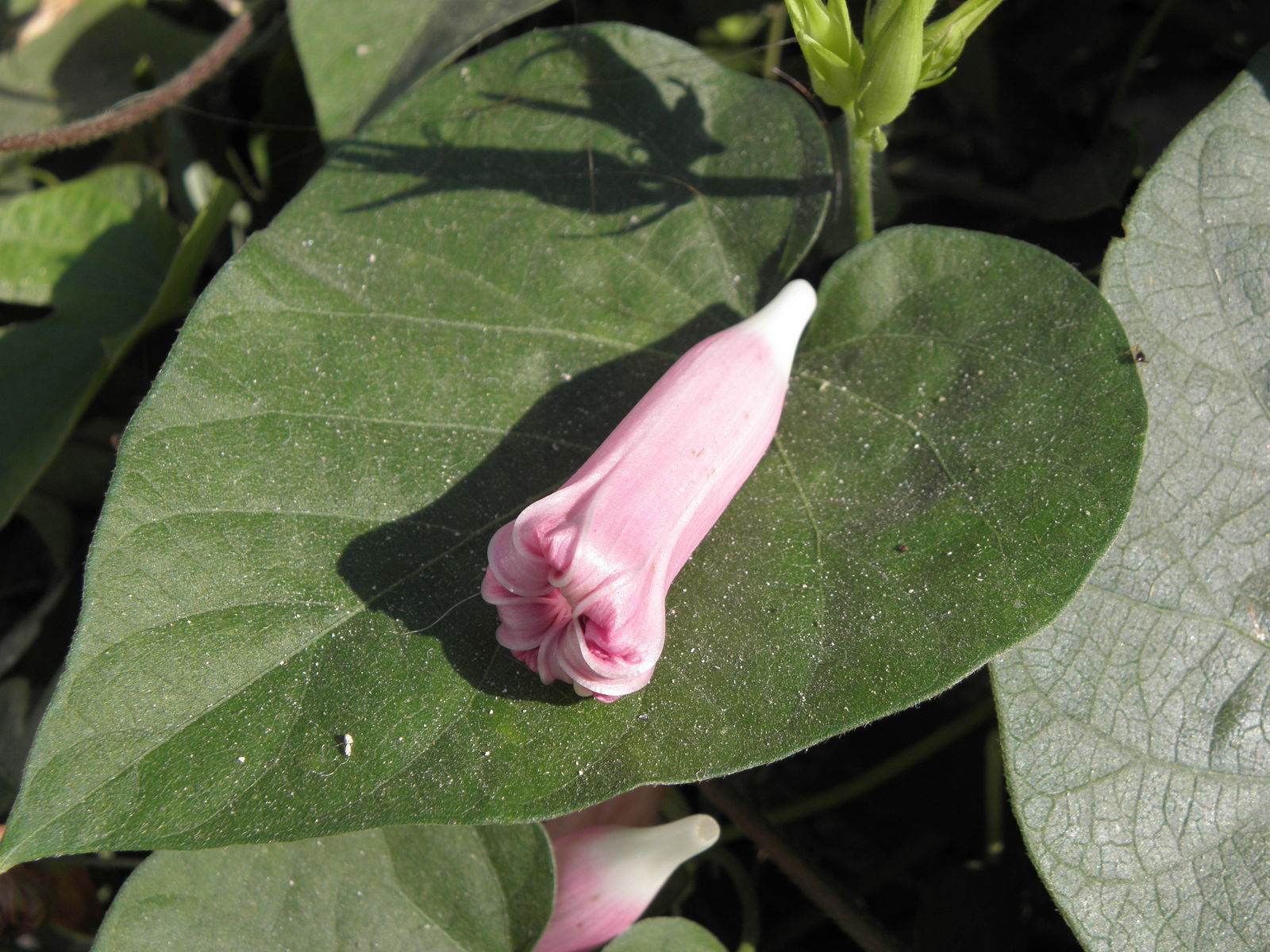
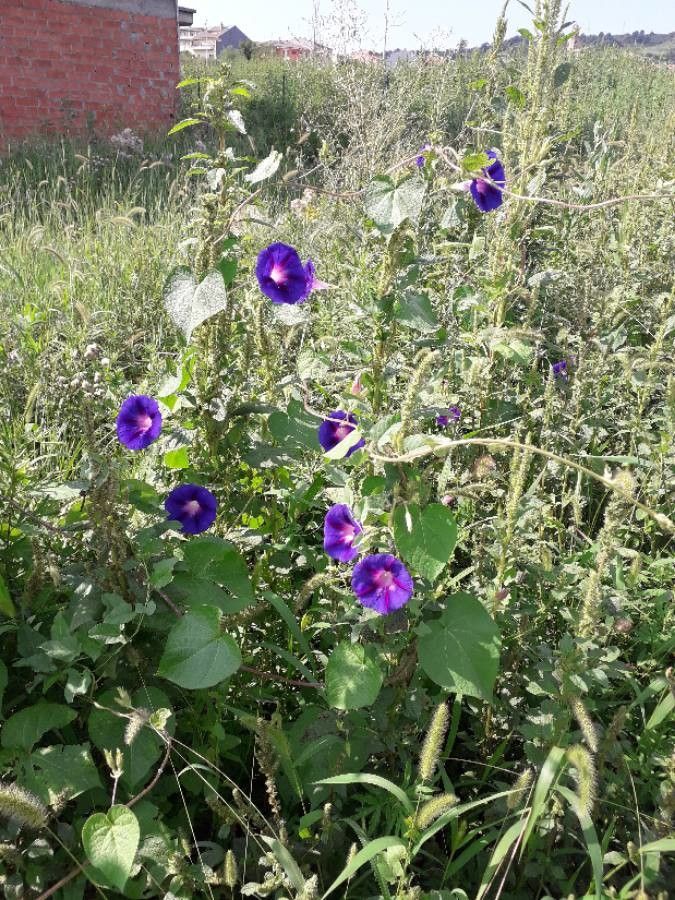
Twining stems do the climbing. Green, heart-shaped leaves stand on long petioles, while funnel-shaped flowers open in the morning and fade as the day progresses. With support, the vine can reach 150–400 cm (5–13 ft) tall and spread 50–180 cm (20–71 in). 5 6
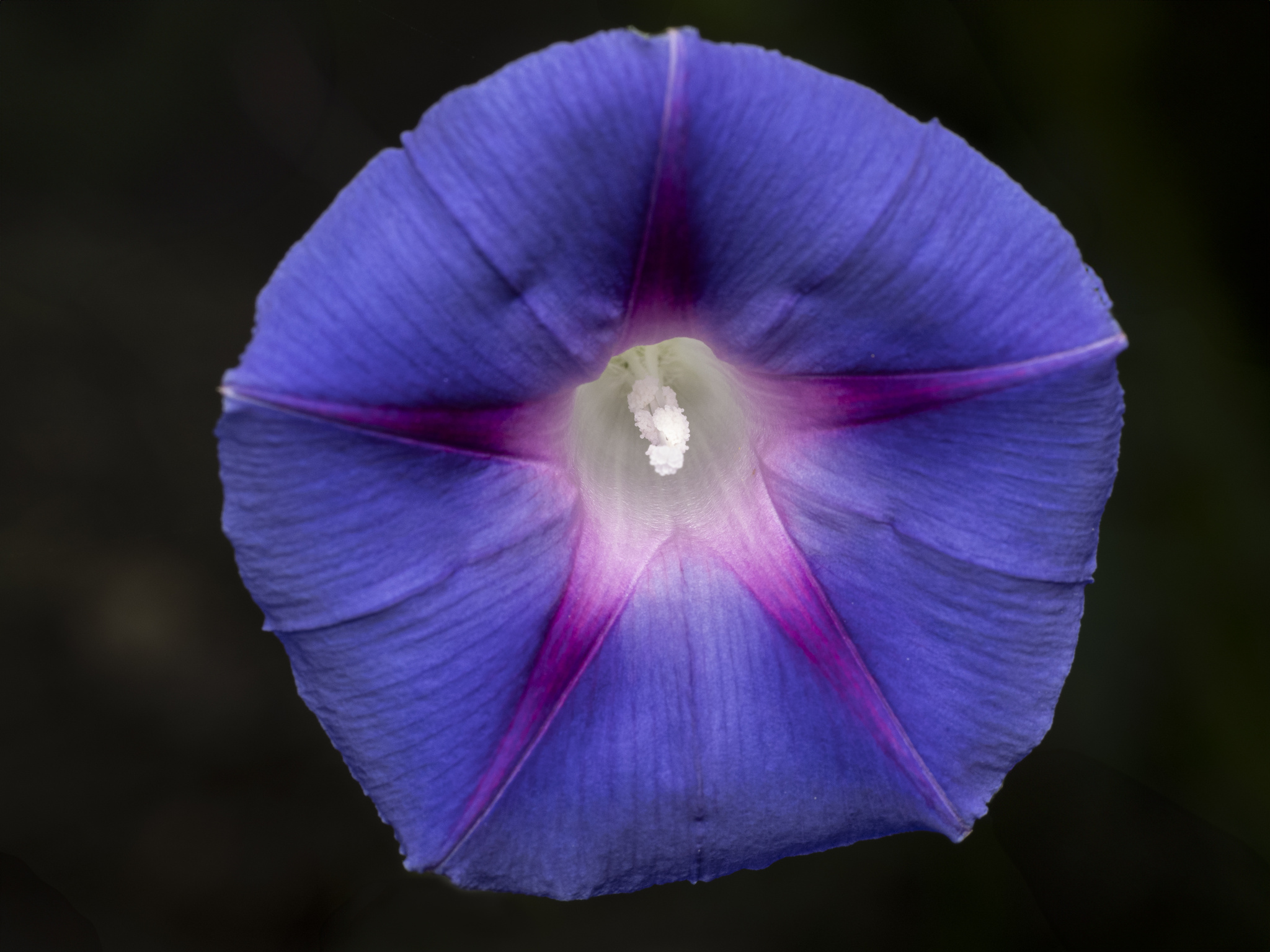
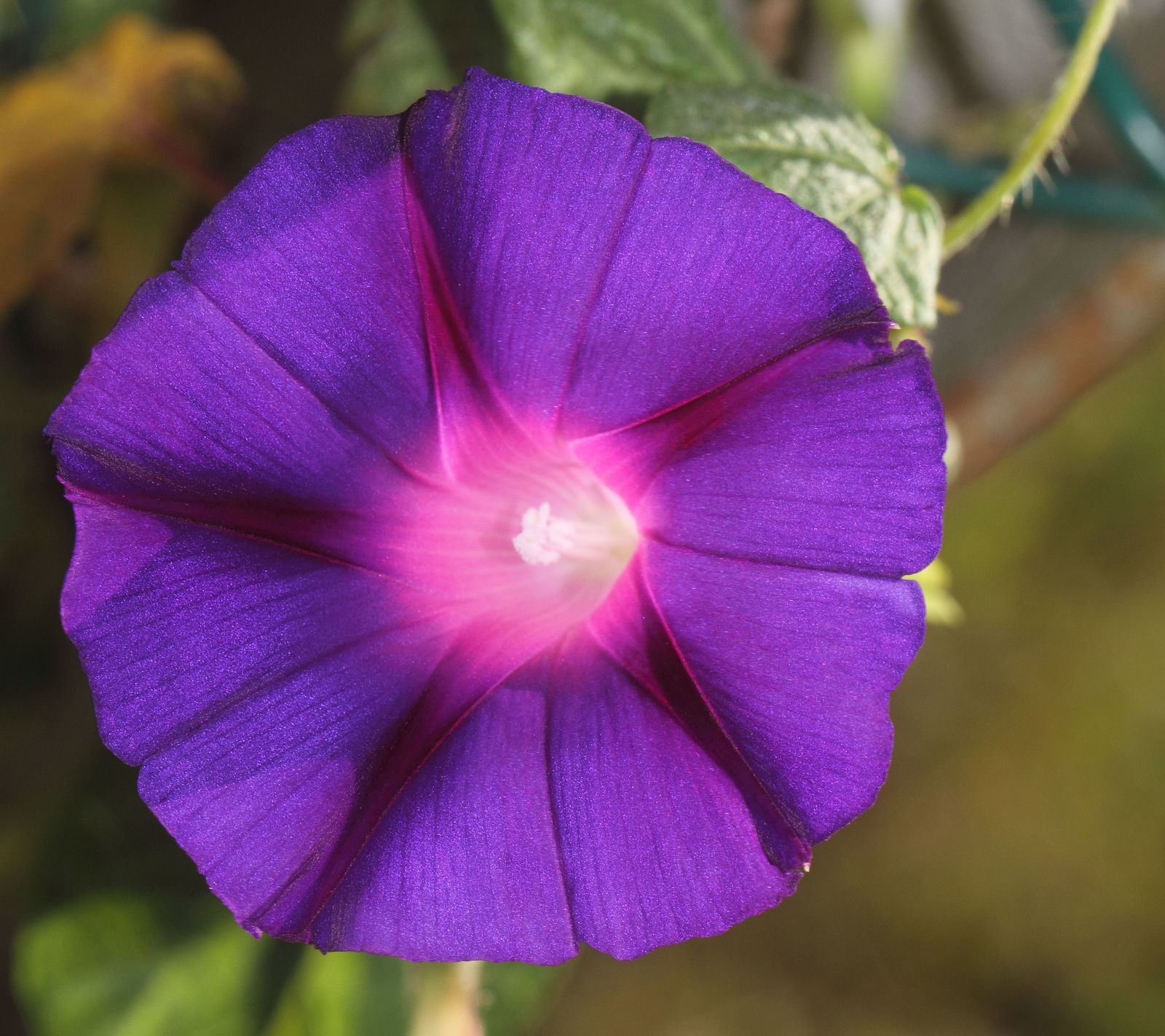
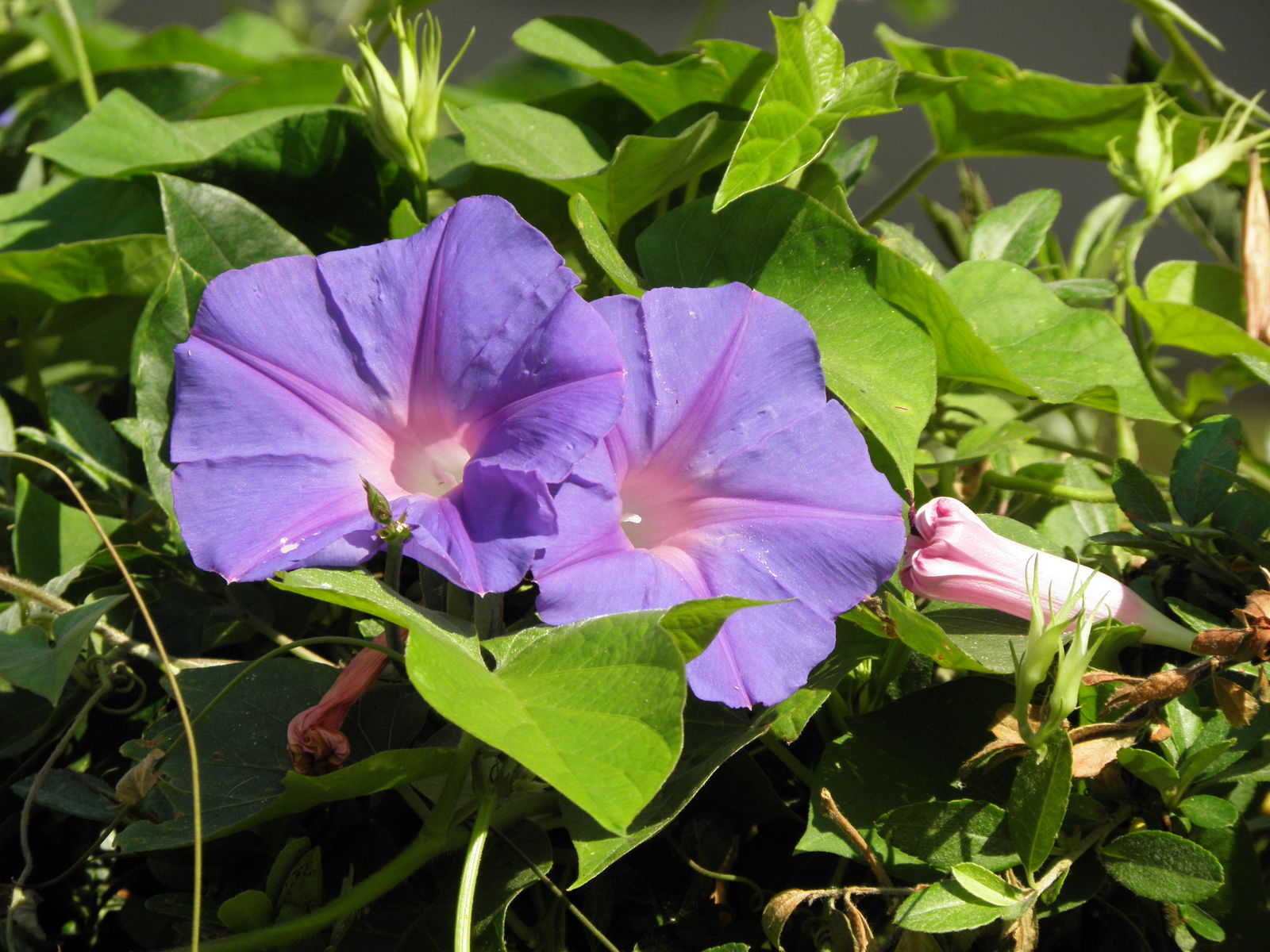
Flower color varies widely between cultivars, from blue-violet and purple to pink, purplish red or white. This explains the blue-purple emphasis in Floralens’ selection: the species offers a range of shades rather than a uniformly clear blue. 8 5
Growth habit provides another useful clue. A healthy plant quickly reaches for a support, builds a generous mass of stems and leaves, and produces capsules containing hard seeds. Those seeds are the main reason for caution around the plant. 5
Confusion between morning glory species and cultivars is common in horticulture. Checking the full botanical name helps distinguish their vigor, flower colors, toxicity concerns and tendency to produce unwanted seedlings. 2 6
Within a blue planting scheme, this species contributes shaded, mixed tones. Purple, violet and blue combine into a deeper-colored screen than the light blue usually associated with Ipomoea tricolor. Its appeal lies in that variation, so choosing a named cultivar matters when a specific color is important. 8 6
Useful taxonomy
The accepted name is Ipomoea purpurea (L.) Roth. Wikidata, Plants of the World Online and World Flora Online provide records for this species, helping distinguish it from other plants sold simply as morning glories. 1 2 3
Like many twining plants with funnel-shaped flowers, it belongs to the Convolvulaceae. Family resemblance alone does not identify a species: I. purpurea, I. tricolor, I. nil and loosely labeled horticultural morning glories can look similar. The complete binomial is the more useful starting point. 4 5
Cultivars such as 'Grandpa Ott's', 'Star of Yelta' and 'Milky Way' explain much of the color variation seen in gardens. They retain the same basic requirements: a warm growing season, a climbing support and seed management that keeps seeds out of reach. 6 5
Its role as a seasonal blue-purple climber is accompanied by a safety consideration. A wall of flowers can draw attention away from the capsules developing behind it, but the seeds need just as much attention as the floral display. 8
Growing
Sowing is the first important step. The hard seeds germinate more readily after soaking or gentle scarification. Start them in warmth and plant out once local nighttime temperatures allow active growth; the timing follows the local warm season rather than a fixed month. 5 8
Plan for the period after flowering as well. Capsules left to mature may provide useful seedlings, but they also leave toxic seeds and volunteers in unwanted places. In a small garden, removing the capsules is often easier than sorting through seedlings the following year. 5 7
Choose full sun, a readily available support and well-drained soil. The plant tolerates a range of soils, but its vigorous growth quickly dries out a small pot. Once established in the ground, it becomes less dependent on frequent attention than a plant confined to a small container. 5
Without support, stems spread across the ground and tangle with neighboring plants. A trellis gives that growth a clear purpose: a temporary screen, a covering for wire fencing, a summer railing or a balcony backdrop. Put the support in place as the first twining shoots develop. 8
Managing the seeds addresses both unwanted self-seeding and accidental ingestion. In a family garden, remove capsules before they ripen or position the vine away from play areas and places regularly used by animals. Placement helps, but it does not remove the need to monitor developing capsules. 5
Uses
A quick summer screen is its most useful garden role. It can cover a light support rapidly, adding color and a sense of enclosure within weeks. A seasonal climber is particularly useful where the display is needed for only part of the year. 8 5
It suits seasonal gardens, temporary fences, sunny balconies and spaces where starting again each year is welcome. Its annual life cycle limits permanence but also simplifies maintenance: there is no heavy pruning or long-lived woody framework to manage. 8
The clearest effect comes from a slender, tall support installed before growth takes off. Wire fencing, vertical strings or a narrow trellis guide the stems into a coherent curtain. A support that is too low quickly leaves a tangled mass at the top. 8 5
Blue-purple flowers work beside pale foliage, white cosmos, blue salvias or fine-textured grasses. The planting generally looks more natural when its generous growth is given room, instead of being forced into an unusually rigid outline. 6
A vegetable garden where seeds might be mistaken for something edible is a poor position, as is a yard where a dog chews capsules. Enjoying the morning flowers also means checking the developing fruits and keeping seed material under control. 5
Toxicity
NC State describes low-severity poisonous characteristics for humans while also flagging the plant as a problem for cats, dogs and horses. Its reported symptoms chiefly concern seed ingestion, with vomiting and possible hallucinations after large quantities are eaten. 5
Where children or animals are present, keep seeds out of reach and prevent access to capsules. Do not improvise recreational or medicinal uses. The plant’s familiarity as a garden annual does not make its seeds suitable for eating. 5 6
The same care applies to packets of seed. Store them as garden supplies, separately from edible seeds and food. This is an ornamental vine valued for its speed and flowers; sowing material should remain inaccessible to anyone likely to taste it. 5
These precautions allow its ornamental value to be understood alongside its risks. A vigorous, colorful annual can be useful in a garden, provided it is treated as a nonedible plant and its seeds are managed throughout the season. 8
Main sources
If you are unsure about a plant’s toxicity, ask a botanist or veterinarian for advice.