
Japanese kerria (Kerria japonica, )
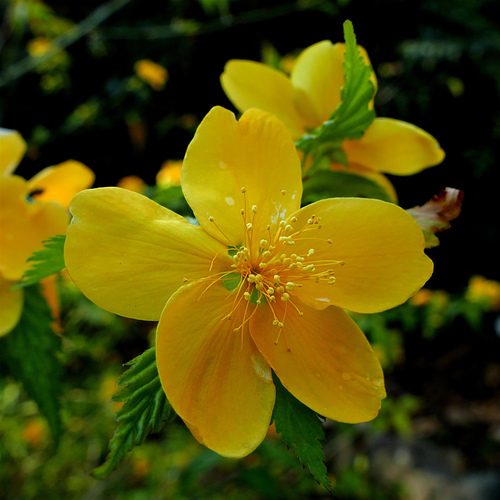

Japanese kerria (Kerria japonica) is a deciduous shrub in the Rosaceae family, native to East Asia. Its yellow spring flowers brighten partial shade, while arching green stems add winter interest. It flowers on the previous year’s wood and can spread by suckers, so thoughtful pruning matters.
Read moreJapanese kerria, Japanese rose, Kerria and Yellow rose



© photo
(c) Marco Grandis, some rights reserved (CC BY-NC), uploaded by Marco Grandis · cc-by-nc
Hrishikesh Bhaskaran · cc-by-sa
Wikimedia Commons · CC BY-SA or Public Domain
Taken Aug 16, 2016 by Gael Herve (cc-by-sa)
Taken Apr 23, 2017 by Sarah Dechamps (cc-by-sa)
Taken Apr 23, 2018 by arlas (cc-by-sa)
Taken Aug 22, 2016 by John Musgrove (cc-by-sa)
Taken Apr 8, 2017 by Francesco Maschietto (cc-by-sa)
© copyright of the Board of Trustees of the Royal Botanic Gardens, Kew.


Identity
Japanese kerria (Kerria japonica (L.) DC.), also known as Japanese rose, Kerria and Yellow rose, is a deciduous shrub in the Rosaceae family. Its yellow spring flowers bring color to partially shaded places. 1 2 8
NC State describes a graceful shrub with slender, arching stems, native to central and southern China, South Korea and Japan. The yellow flowers appear in spring on wood produced the previous year. 5
Among yellow-flowered shrubs, kerria has a useful distinction: it blooms well in partial shade. Strong, direct sunlight is not essential for a bright display. 8 6
Winter interest comes from its green, zigzagging stems. Their visible framework gives the garden a light, graphic structure before much foliage appears. 5
Recognition
Flexible, arching green canes form a clump that can gradually spread by suckers. The simple, alternate leaves have toothed margins, range from light to mid-green and sometimes turn yellow in fall. 5
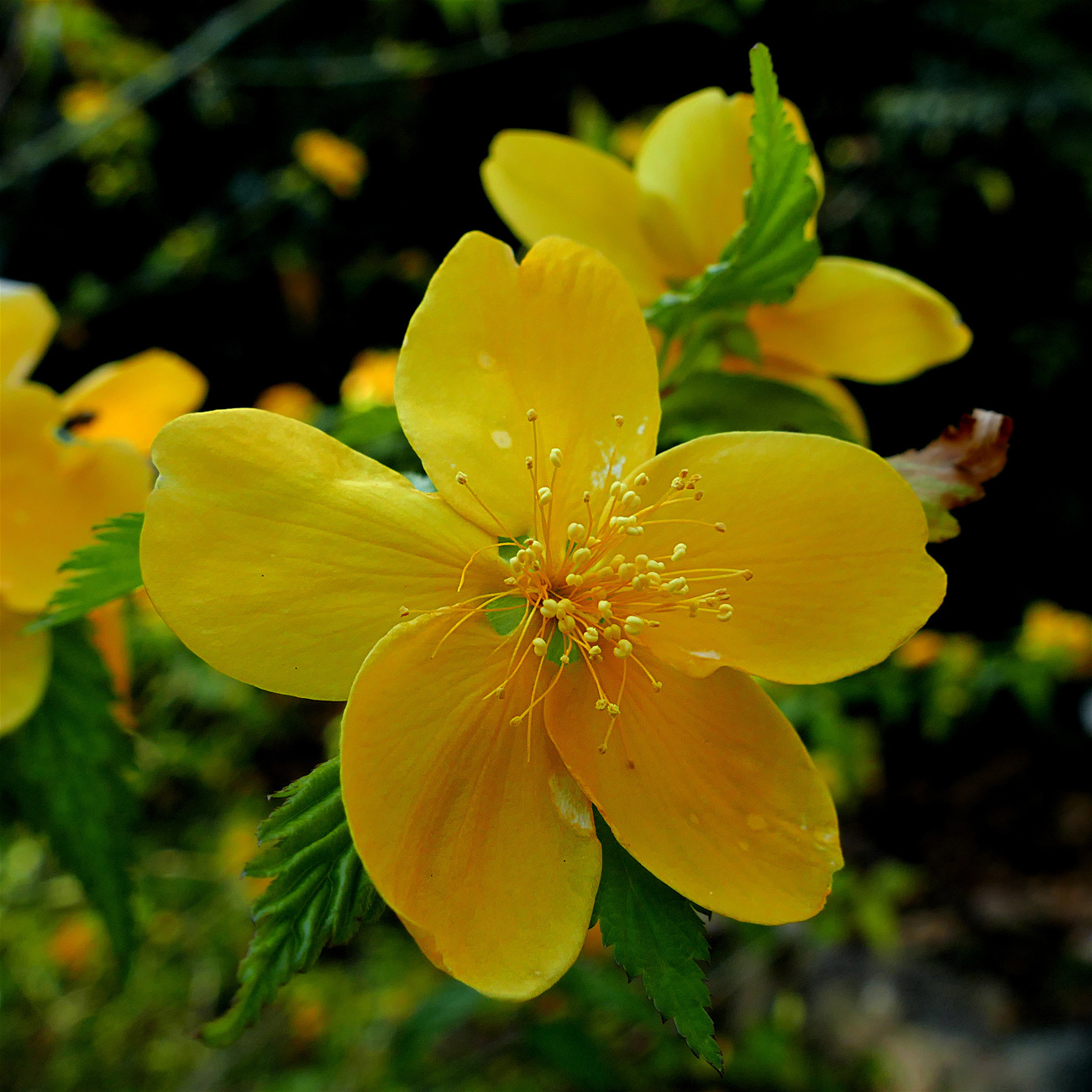
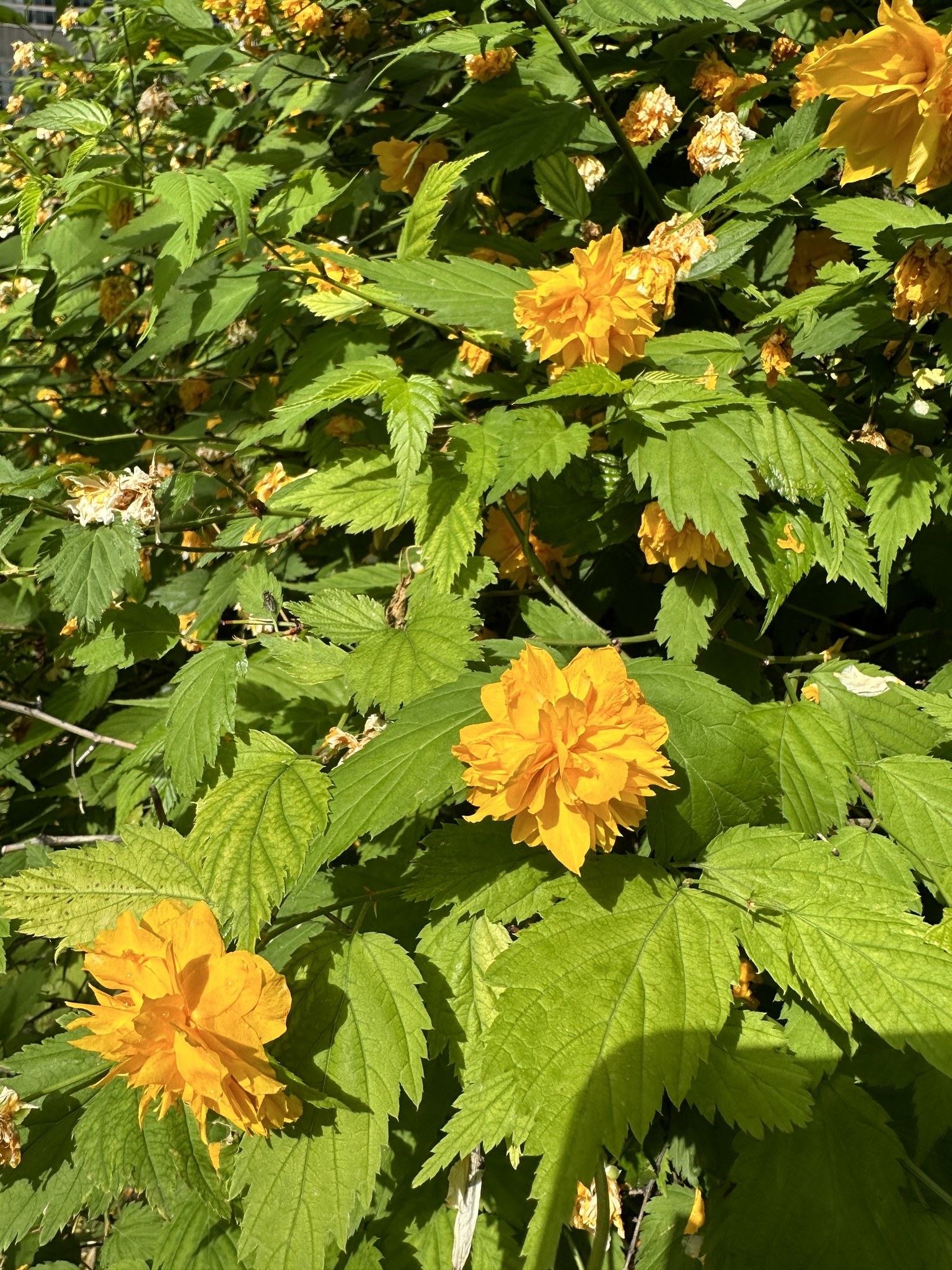
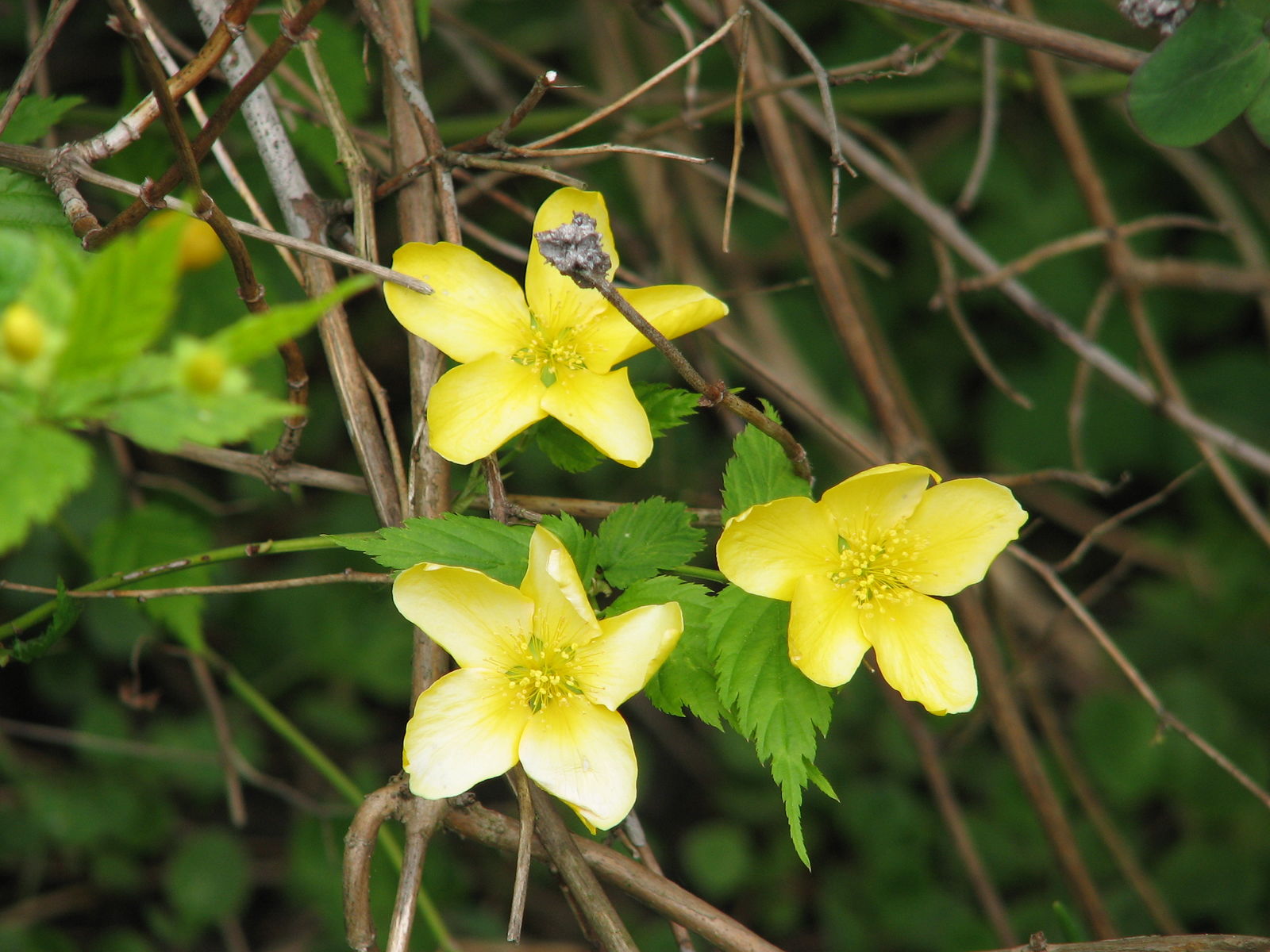
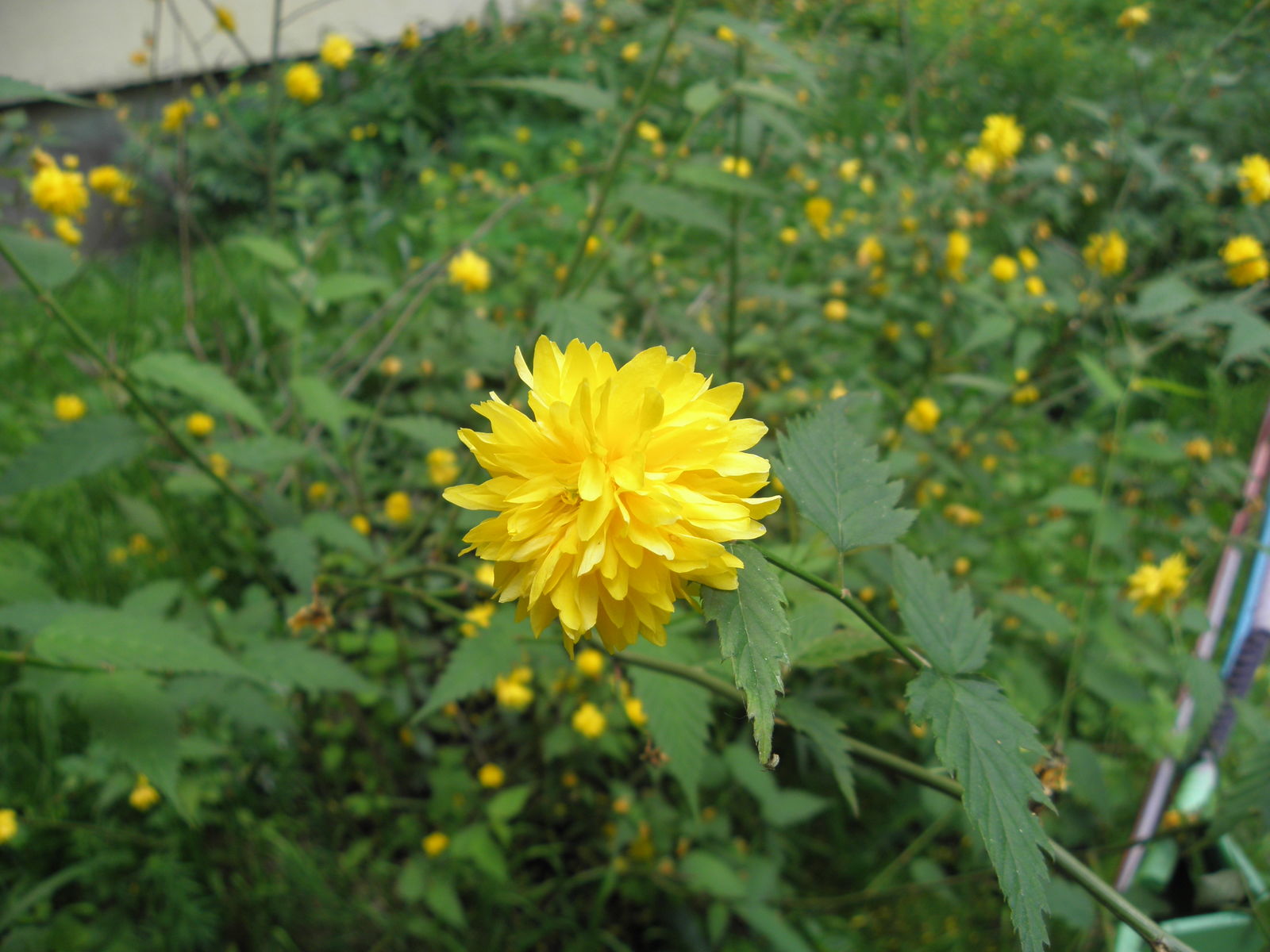
Single flowers have five yellow petals; double flowers occur in selected cultivars. Pleniflora bears familiar yellow pompoms, while single-flowered forms have a lighter, more natural appearance. 5 7
An informal habit and easy growth are part of kerria’s appeal. An old specimen can be attractive, but a clump that is never renewed soon becomes tangled, with older wood carrying fewer flowers. 8
Identification rests on three features together: green stems, yellow spring flowers and a canelike habit. Yellow flowers alone are insufficient, since forsythia, mahonia and primroses share the same color. 8 5
Useful taxonomy
Botanical records recognize Kerria japonica (L.) DC. as the accepted name. Wikidata, POWO, WFO and IPNI connect this name with the Rosaceae family. 1 2 3
William Kerr, a plant collector associated with Kew, is honored by the genus name. The epithet japonica refers to Japan, although NC State records a broader native range that also includes China and Korea. 5
Cultivar names such as 'Pleniflora', 'Golden Guinea', 'Picta' and 'Simplex' do not change the species. They mainly indicate single or double flowers, vigor, variegation and eventual size. 5 6
Despite the name Japanese rose, kerria is not a yellow-flowered member of Rosa. The common name refers to the appearance of some flowers rather than membership of that genus. 7 4
Cultivation
Light shade or partial shade, with well-drained soil that stays reasonably moist, suits Japanese kerria. Strong sun fades the flowers more quickly; very deep shade produces stretched growth and fewer flowers. 5 8
Ordinary garden soil can suffice, provided it is not heavy and waterlogged. NC State recommends moderately fertile, well-drained loam and warns that excessive feeding can encourage more aggressive spreading. 5
Pruning has a strong effect on the shrub’s shape. Because flowers form on the previous year’s wood, prune after flowering, removing some older stems at the base rather than shearing the entire bush. 5 6
Suckers need watching. In a large garden they can build a soft mass of growth; in a confined space they soon blur the intended outline. Allow an informal shape while keeping its spread under control. 8
Renewal starts at the base of the clump. Removing a few old canes after flowering admits light, encourages young stems and keeps the flowers easy to see. Selective renewal usually works better than clipping the shrub into a ball. 5 6
Uses
A yellow display in partial shade is its strongest garden role: a shrub border, a light-colored wall, the back of a small bed, an informal hedge or a transition beneath deciduous trees. It brings brightness without needing scorching sun. 8
Hellebores, ferns, primroses, hydrangeas and dark foliage make suitable companions. Yellow appears early, then the shrub becomes a green background for later plants. 6
With other yellow flowers, kerria complements forsythia rather than simply repeating it. Forsythia prefers brighter light and flowers on bare branches; kerria has a softer woodland-edge character, with green stems visible outside the flowering season. 8 5
Small gardens call for a compact form or regular pruning. Poor placement can leave a shrub that is wider, more suckering and less tidy than expected. Easy growth does not mean a tiny plant. 5
Vertical spring interest is another useful quality. Green canes provide a light framework before perennials take over, keeping a yellow border from becoming a flat, uniform carpet of low flowers. 8 5
Practical difficulties mostly involve maintenance rather than toxicity: pruning at the wrong time, feeding too generously, allowing suckers to spread or choosing strong sun when gentler light gives a better display. 8 5
Cautions
The selected sources report no major ornamental toxicity warning for dogs and cats. Avoid ingestion as a precaution, though Japanese kerria is not highlighted among the garden’s major poisonous plants. 5
Disease and structure impose the main limits: cankers, leaf spots, stressed roots in heavy soil and aging clumps that receive no renewal pruning. NC State notes stem and leaf diseases, particularly in damp conditions. 5
Successful Japanese kerria combines yellow flowers in partial shade with pruning that respects its flowering wood and controls suckering. An easy shrub still needs selective renewal. 8 6
Main sources
- Wikidata, Kerria japonica
- Plants of the World Online / Kew, Kerria japonica
- World Flora Online, Kerria japonica
- International Plant Names Index, Kerria japonica
- NC State Extension, Kerria japonica
- Better Homes & Gardens, How to plant and grow Kerria
- Wikipedia EN, Kerria japonica
- Floralens, selection of yellow flowers
If you are unsure about a plant’s toxicity, ask a botanist or veterinarian for advice.