
cardinal flower (Lobelia cardinalis, )

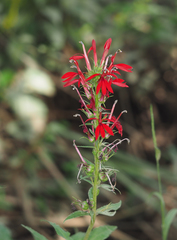
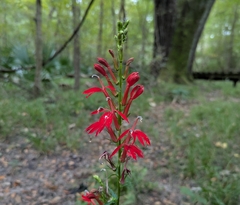
Cardinal flower (Lobelia cardinalis L.) is an upright perennial in the Campanulaceae. Its vivid red flowers brighten late summer where the soil stays moist to wet. Alkaloids throughout the plant make ingestion hazardous.
Read morecardinal flower, lobelia and Indian pink
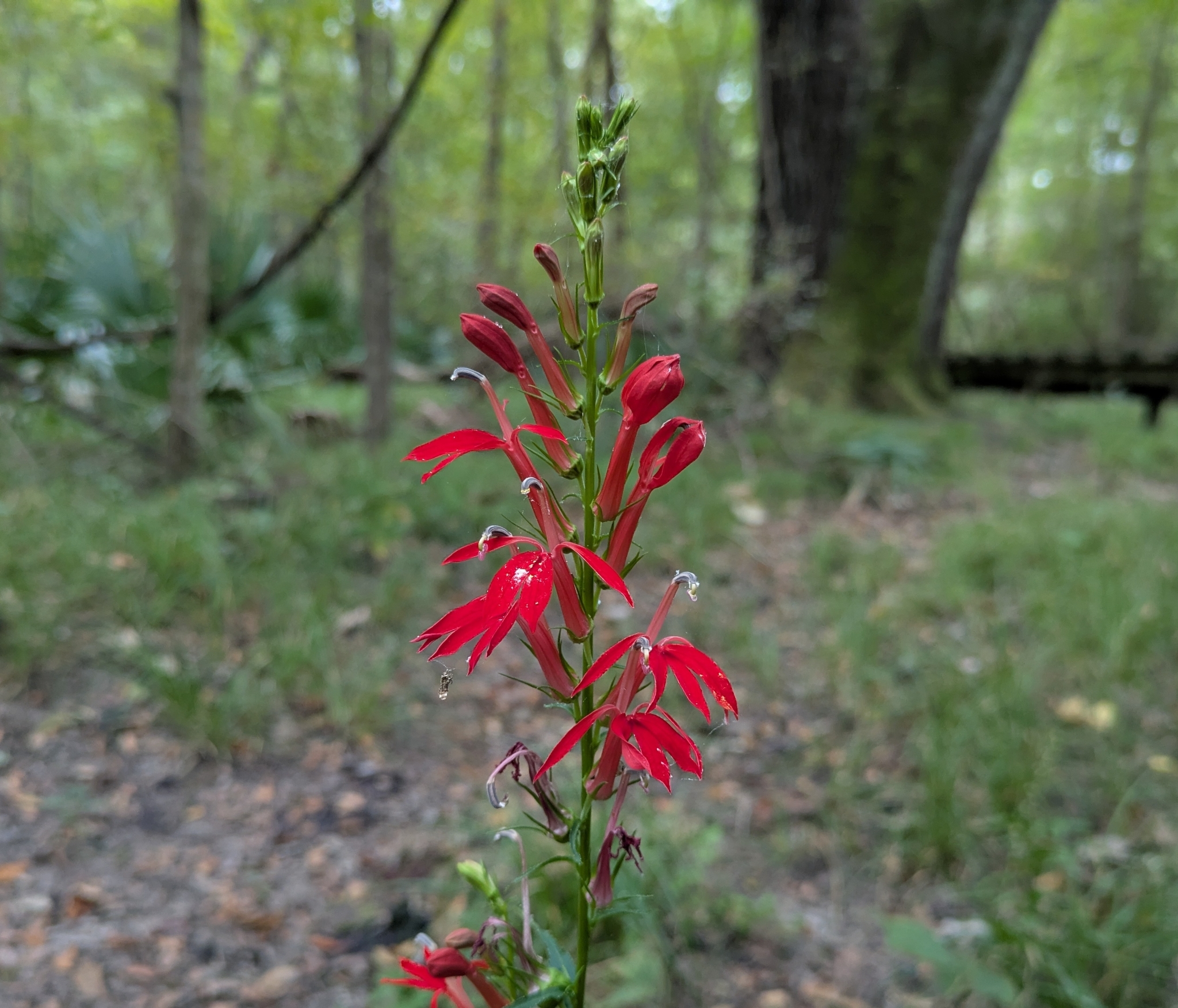


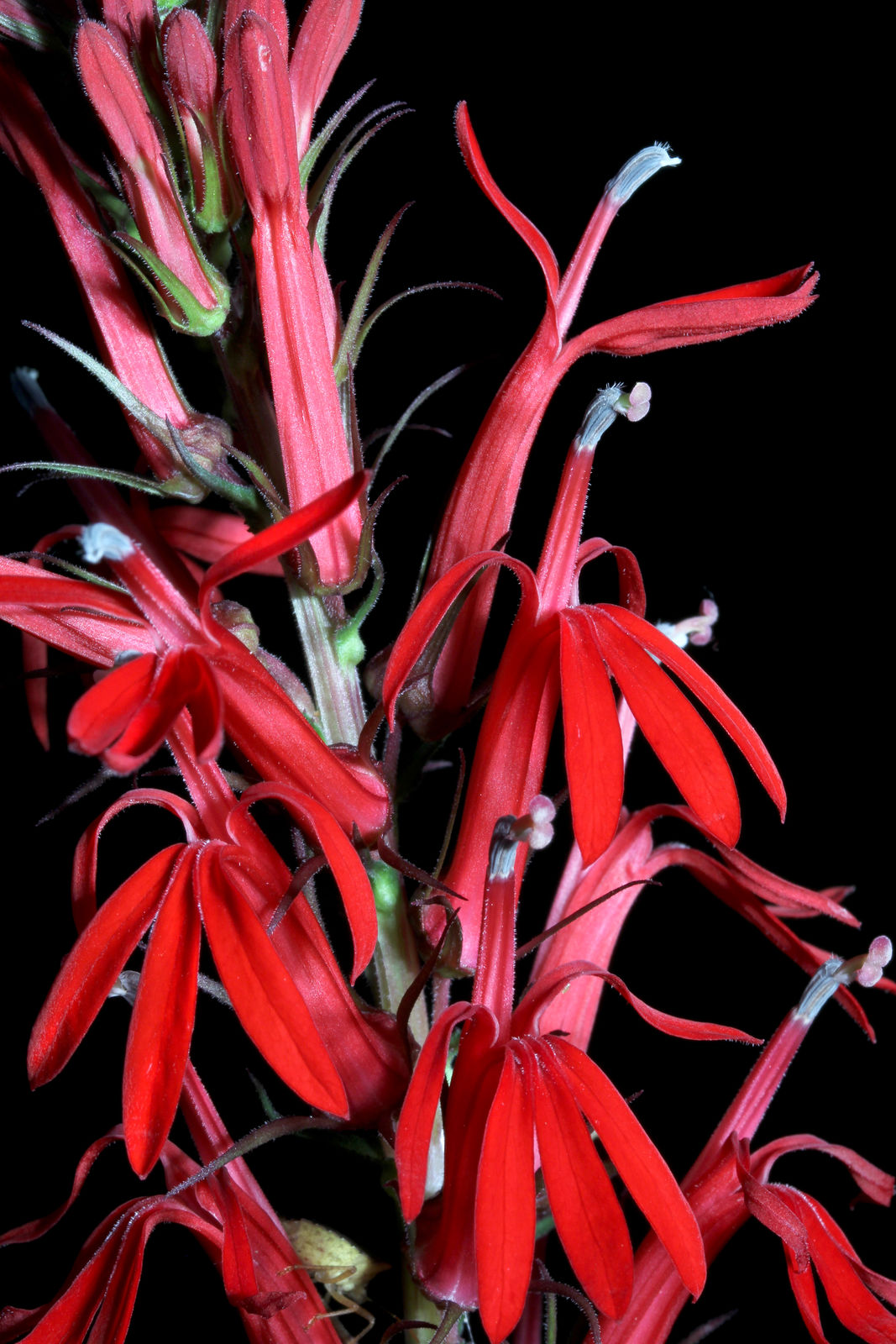


© photo
iNaturalist User · cc0
Philip Vanbergen · cc-by
Taken Jul 15, 2015 by OTS - Oviedo-Brenes, Federico (cc-by-nc-sa)
Taken Oct 21, 2020 by Karolina Ska (cc-by-sa)
Taken Jun 30, 2021 by Susann Friedrich (cc-by-sa)
Taken Aug 6, 2021 by Rebecca Smith (cc-by-sa)
Taken Jul 25, 2022 by Marina Schnabel (cc-by-sa)
© copyright of the Board of Trustees of the Royal Botanic Gardens, Kew.




Identity
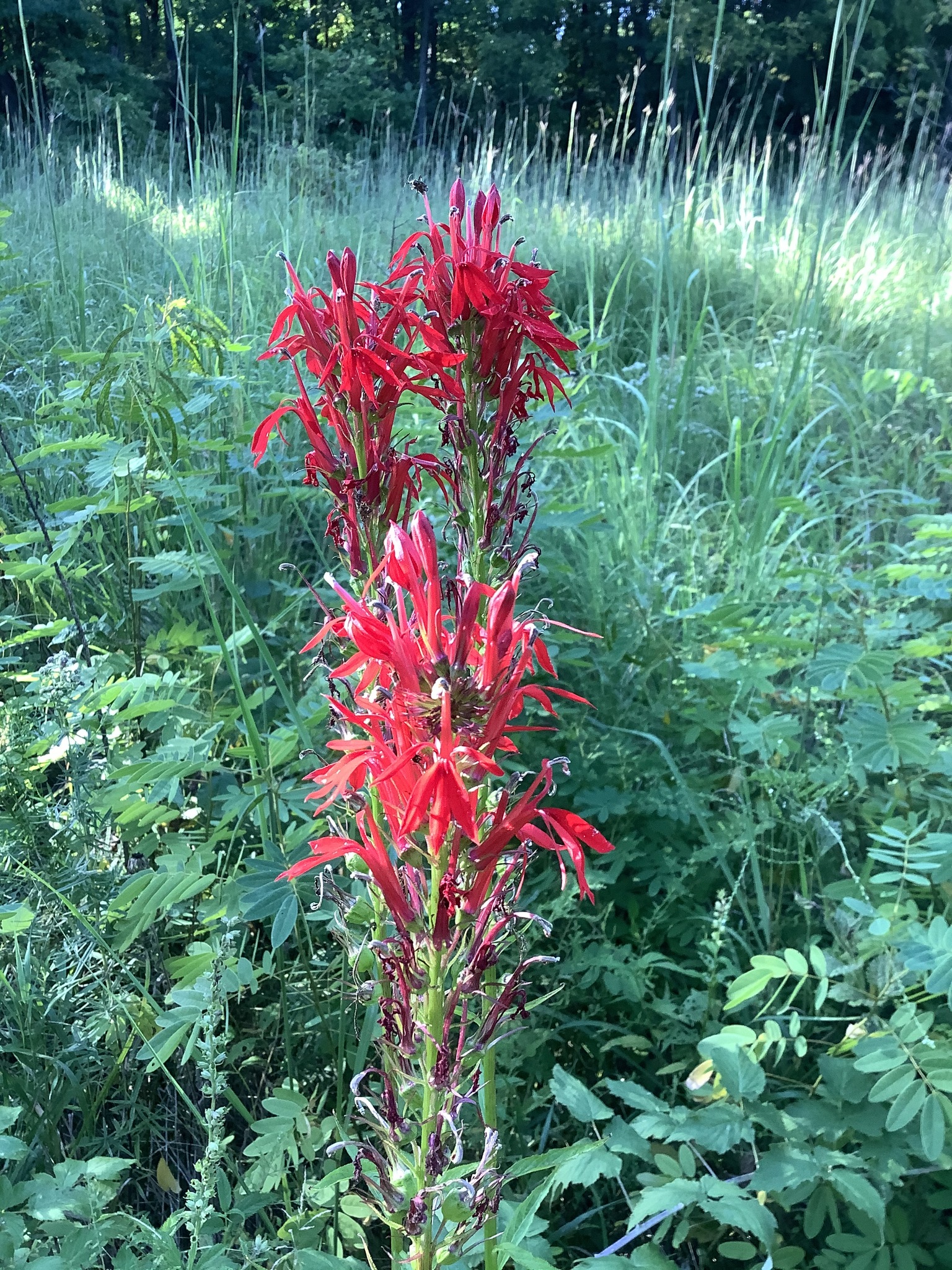
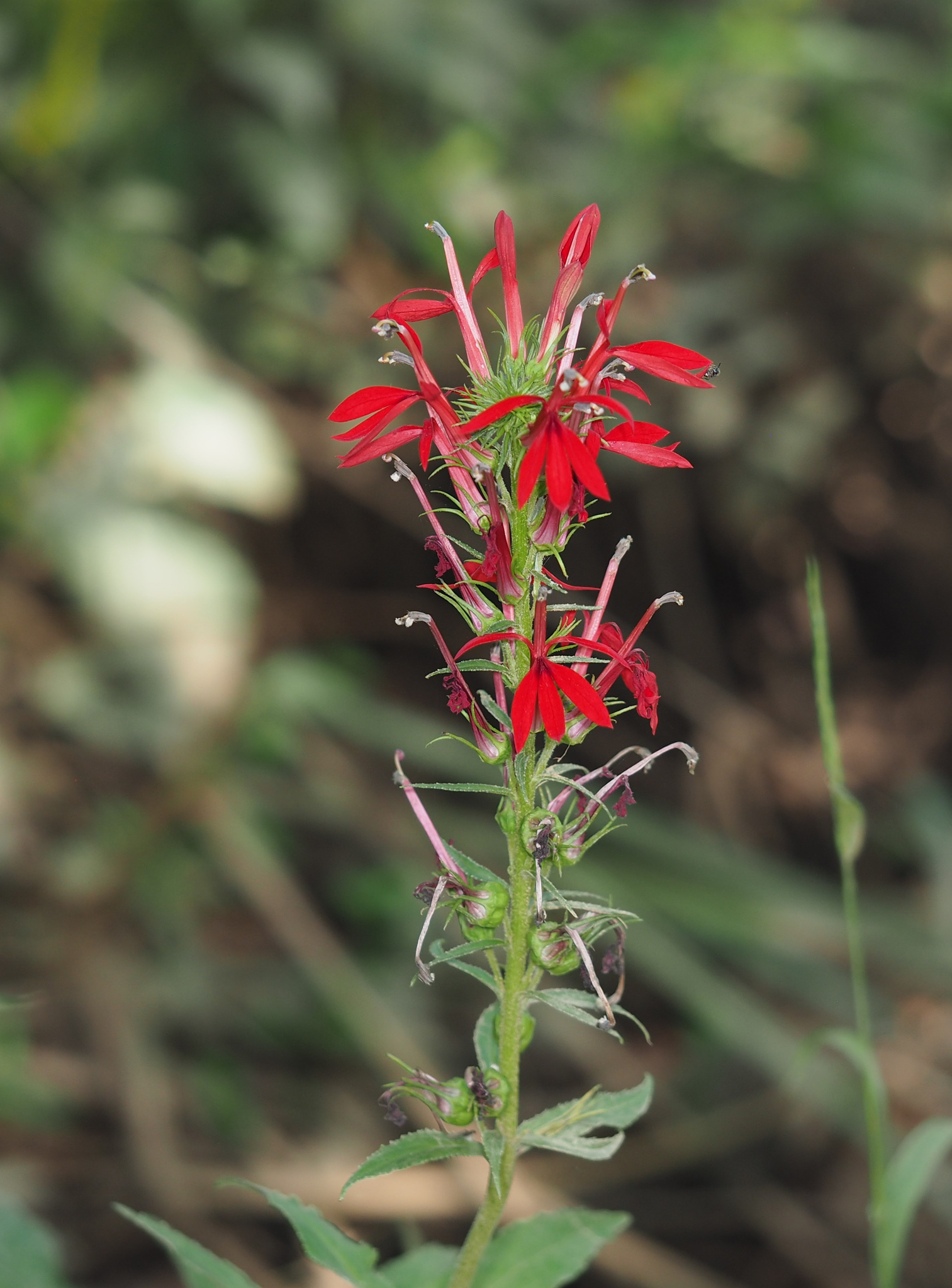
Brilliant red flowers distinguish cardinal flower (Lobelia cardinalis L.), an upright perennial in the Campanulaceae. It brings intense color to watersides and garden beds that stay moist rather than drying out. 1 2 8
NC State describes it as a wetland perennial native to the eastern United States, attractive to hummingbirds, butterflies and other pollinators. It tolerates wet soil but not prolonged drought. Its established names also include lobelia and Indian pink. 5
The striking contrast is between a fiery flower color and a need for cool, moist roots. Many red-flowered garden plants suit warm, freely draining sites; cardinal flower instead needs a steady supply of moisture. Choosing its position by color alone can therefore lead to a poor planting decision. 8 6
This is not one of the annual bedding lobelias used in window boxes. It is taller and upright, needs wetter growing conditions, has a wilder appearance and poses a markedly greater ingestion hazard. Sharing a genus does not mean that these plants have interchangeable garden uses. 5 7
Recognition
A clump of toothed, lance-shaped leaves gives rise to upright flowering stems with terminal racemes. The tubular flowers are cardinal red, with unequal lips. They open progressively from the bottom of the flower cluster toward its tip rather than all opening at once. 5
Flowering falls between July and October in the Northern Hemisphere accounts, depending on climate. Its late-summer red is especially useful when other parts of a border are beginning to lose their definition. Elsewhere, interpret this as a seasonal flowering pattern rather than transferring those months unchanged. 8 5
Cultivars may have pink or white flowers, or bronze foliage such as that of 'Queen Victoria'. The typical species nevertheless remains strongly associated with cardinal red, a particularly distinctive color along a pond or stream. A different flower color does not by itself establish a different species. 5 7
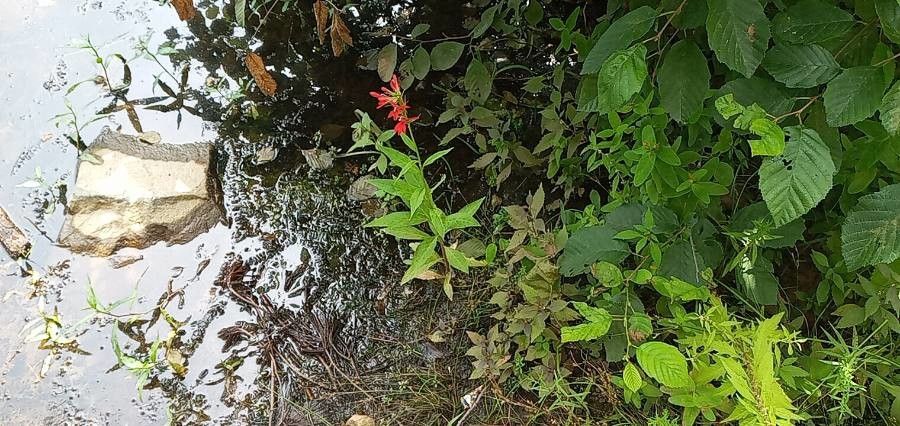
The growing site is another useful clue. A red lobelia flourishing in poor, dry ground deserves a closer identification check: L. cardinalis needs moisture that its fiery appearance may not suggest. Its habitat should be considered alongside the leaves and flowers rather than ignored. 8
That combination makes the plant memorable: the color of fire in a setting supplied with water. Plan around bright red flowers and moist soil first, then choose neighboring plants that can share those conditions. The planting will be more convincing when its physical requirements are met. 5 8
Useful taxonomy
The accepted name is Lobelia cardinalis L. Wikidata, POWO, WFO and IPNI provide botanical identifiers for the species and its placement in the Campanulaceae. These references distinguish the botanical plant from a loosely applied garden label. 1 2 3
Horticultural uses vary considerably within Lobelia. Small bedding lobelias and cardinal flower differ in habit, moisture requirements and the ingestion warning associated with them. Knowing the genus alone is therefore less useful than identifying the species when choosing a plant for a particular garden site. 4 5
“Cardinal” describes the flower color, not a requirement for scorching full sun. Keeping those ideas separate avoids the common mistake of matching vivid red flowers with dry ground. Strong color need not indicate a plant adapted to drought. 8 6
Use the species name when checking its soil needs or toxicity. A label such as “red lobelia” is too vague to communicate either reliably, since the genus includes plants grown for quite different effects and conditions. 2 5
Cultivation
Successful cultivation starts with moist to wet soil. Pond edges, rain gardens, gently sloping ditches, wet meadows and regularly watered borders suit it better than a dry edging strip. The moisture supply is a basic requirement, not an optional improvement to an otherwise suitable dry site. 5 8
Light requirements depend on the available water. Full sun needs a genuinely cool, moist root zone; where the soil is moist rather than wet, light partial shade provides better protection during hot weather. Adjust the position to local heat and moisture rather than assuming that one exposure suits every climate. 6
Plants can be divided or raised again from seed, but they should not be planted in poor soil and then forgotten. A light mulch and attention during summer are more useful than a heavy application of fertilizer. Keeping the growing conditions consistent matters more than trying to force growth. 5
In a conventional flower bed, choose its position carefully: water should be within easy reach, mulch should help retain moisture, and competition at the base should remain limited. Watch the plant during hot weeks. Cardinal flower is not inherently delicate in suitable soil; it is intolerant of drying out. 6
Leave spent flowers to produce seed, or remove them to keep the planting looking fresh. Cutting them suits a formal border, while a few seed capsules are quite at home in a naturalistic planting. The choice depends on the effect wanted rather than a need to make every plant look identical. 8
Uses
Its strongest garden role is red color in a wet setting. Upright flower spikes provide a clear vertical accent among plants more often chosen for foliage or softer flower colors. This is particularly useful where the soil already supplies the moisture the plant needs. 8
Sedges, water irises, ligularias, heleniums and large ferns of moist soil make suitable companions. Red flowers against lush green foliage create a strong effect without artificial ornament. Select neighboring plants for their shared growing conditions as well as their appearance. 6
The plant also supports pollinators. NC State records visits by hummingbirds, butterflies and other pollinators, adding to its value in rain gardens and naturalistic plantings. These wildlife benefits accompany, rather than replace, the need to provide suitable soil. 5
Avoid using it in dry gardens, in bouquets accessible to animals, or in beds deliberately watered only rarely. Spectacular red flowers cannot compensate for an inadequate water supply. A plant that looks right in a color scheme may still be wrong for the site. 8
Small groups work better than isolated red spikes. Three to five plants along a moist edge create a coherent vertical accent and are easier to water than individual plants scattered throughout a border. Repetition gives the color a clear relationship to its surroundings. 8 5
Repeating the clumps also reduces the visual gap if one disappears after an excessively dry summer. The planting remains more balanced than a design that depends entirely on a single specimen. 8
Toxicity
NC State lists the plant as poisonous to humans and a problem for cats, dogs and horses, with medium human poison severity. Toxic parts include flowers, fruits, leaves, roots, sap, seeds and stems. Its wetland habitat and attractiveness to wildlife should not be mistaken for edibility. 5
Reported compounds include lobelamine, lobeline and other alkaloids. Possible symptoms include nausea, vomiting, diarrhea, salivation, weakness, dilated pupils, convulsions, coma or heart rhythm disturbances, depending on the dose. Neither the ornamental flowers nor the foliage should be treated as food. 5 7
Handle pruning waste with the same care as the standing plant. Do not leave it where a dog, horse or child might handle or chew it. A plant can be useful to pollinators and thrive in a moist garden while remaining toxic if ingested. 5
Lobelia cardinalis is a valuable red-flowered perennial for moist soil, but it does not belong where plants are likely to be chewed. Its horticultural appeal and ingestion risk need to be considered together when choosing a position. 8 5
Main sources
- Wikidata, Lobelia cardinalis
- Plants of the World Online / Kew, Lobelia cardinalis
- World Flora Online, Lobelia cardinalis
- International Plant Names Index, Lobelia cardinalis
- NC State Extension, Lobelia cardinalis
- Lady Bird Johnson Wildflower Center, Lobelia cardinalis
- Wikipedia EN, Lobelia cardinalis
- Floralens, red flower selection
If you are unsure about a plant’s toxicity, ask a botanist or veterinarian for advice.