
great blue lobelia (Lobelia siphilitica, )
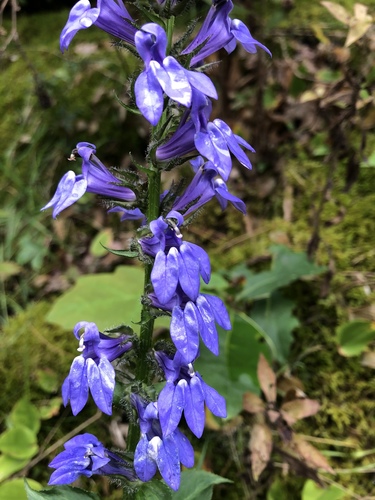
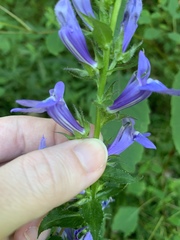
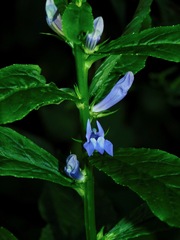
Great blue lobelia (Lobelia siphilitica L.) is an upright perennial in the Campanulaceae for moist to wet soil. Its blue flower spikes have a more naturalistic appearance than bedding lobelias. NC State reports low but genuine human poisoning risk from ingestion.
Read moregreat blue lobelia and blue cardinal flower
© photo
(c) Annette Seidenglanz, some rights reserved (CC BY-NC), uploaded by Annette Seidenglanz · cc-by-nc
Carrie Seltzer · cc0
Michael J. Papay · cc-by
© copyright of the Board of Trustees of the Royal Botanic Gardens, Kew.




Identity
Upright blue flower spikes give great blue lobelia (Lobelia siphilitica L.) a place in moist woodland edges and cool garden borders. This perennial belongs to the Campanulaceae and is also known as blue cardinal flower. Its color suits a softer, more naturalistic planting than many bedding displays. 1 2 9
NC State describes a clump-forming perennial about 60–90 cm (2–3 ft) tall, with tubular blue flowers in a terminal raceme. It suits meadows, naturalized areas, streamside plantings, rain gardens and woodland edges. These are settings where soil moisture remains available during growth. 5
A consistently moist site is central to its use. Unlike many blue garden flowers grown chiefly for sunny, freely draining positions, this species needs a steadier supply of water. A convincing planting begins with the soil rather than with an attempt to fill a gap in a blue color scheme. 9
It shares a genus with Lobelia cardinalis but contributes a different color effect. Cardinal flower supplies vivid red along wet margins; great blue lobelia brings a cooler blue accent, less conspicuous at a distance and more at home in an informal scene. 5 6
That relationship helps explain where to plant it. Where cardinal flower marks a bright red point on a bank, great blue lobelia works particularly well along a moist woodland edge or a gentler transition between garden areas. Both effects depend on meeting the plants' moisture needs. 9 7
Recognition
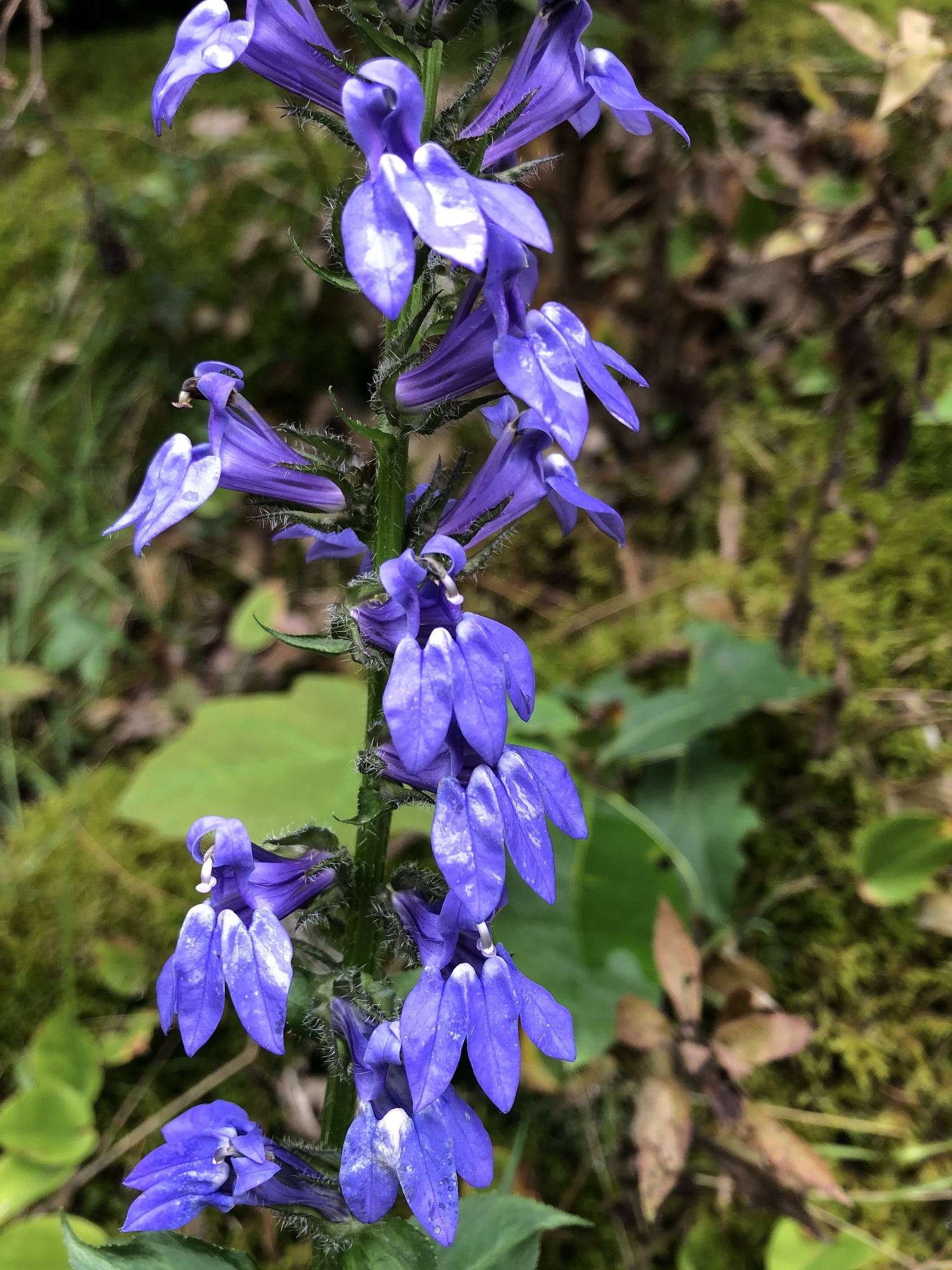
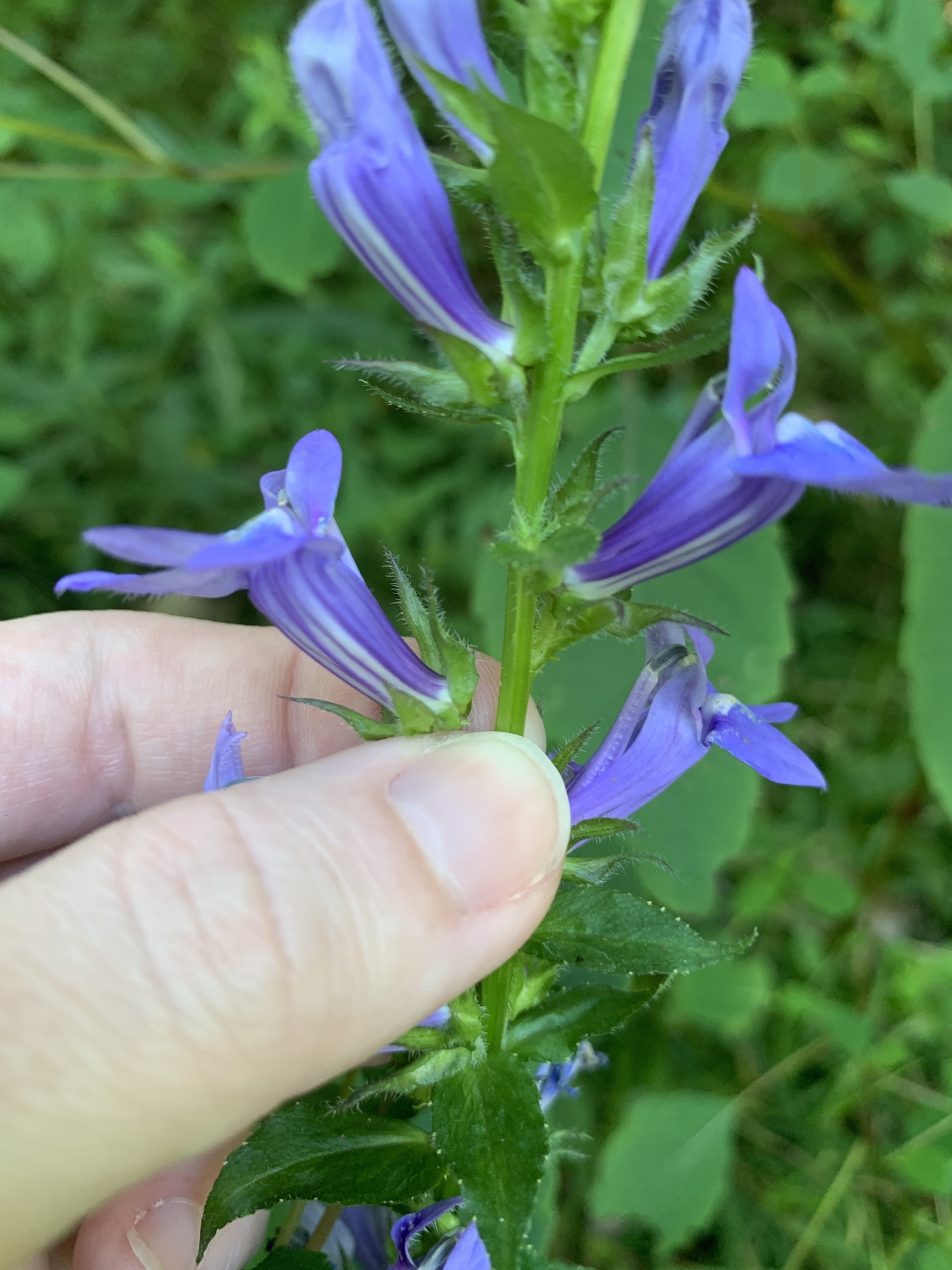
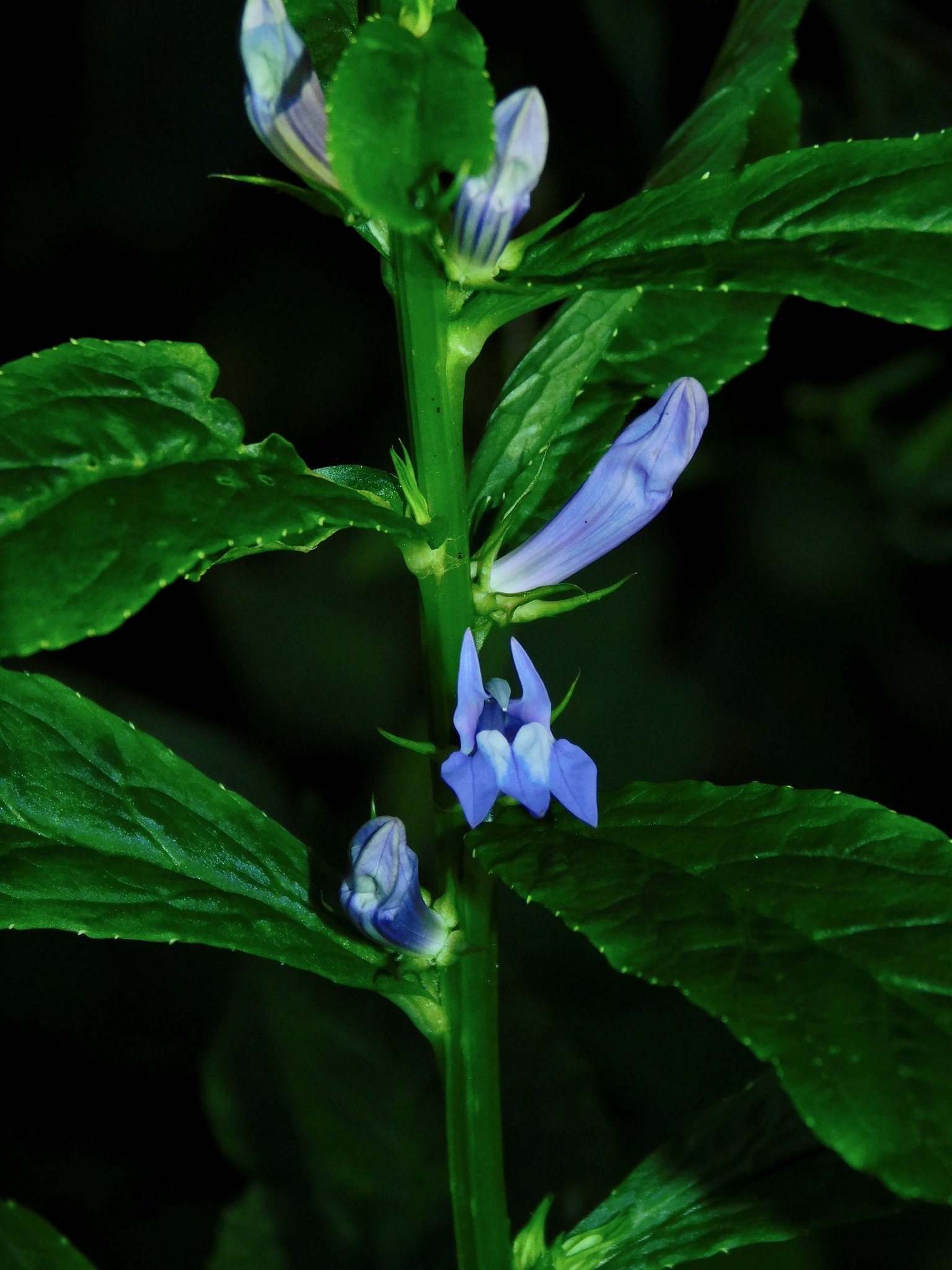
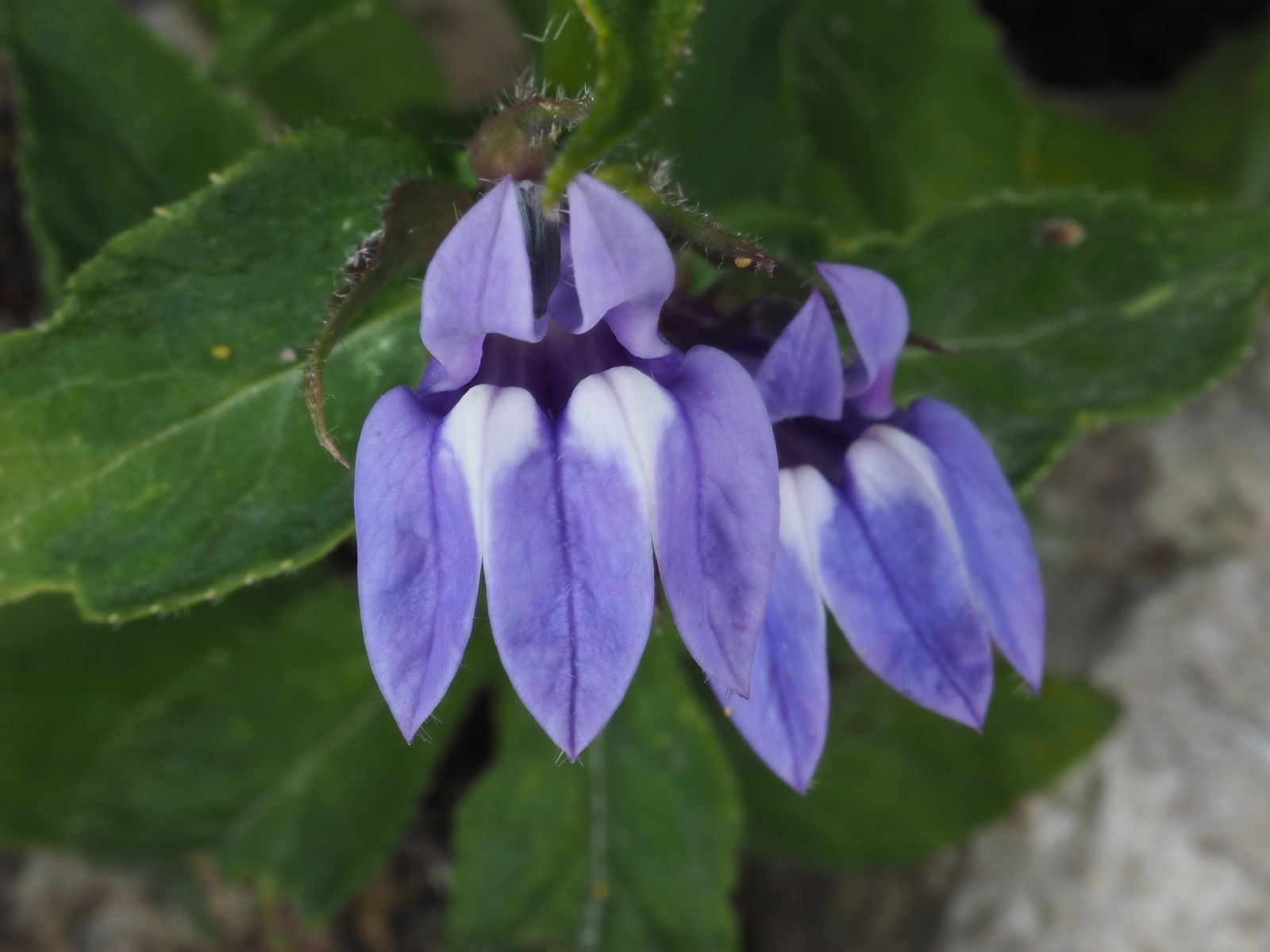
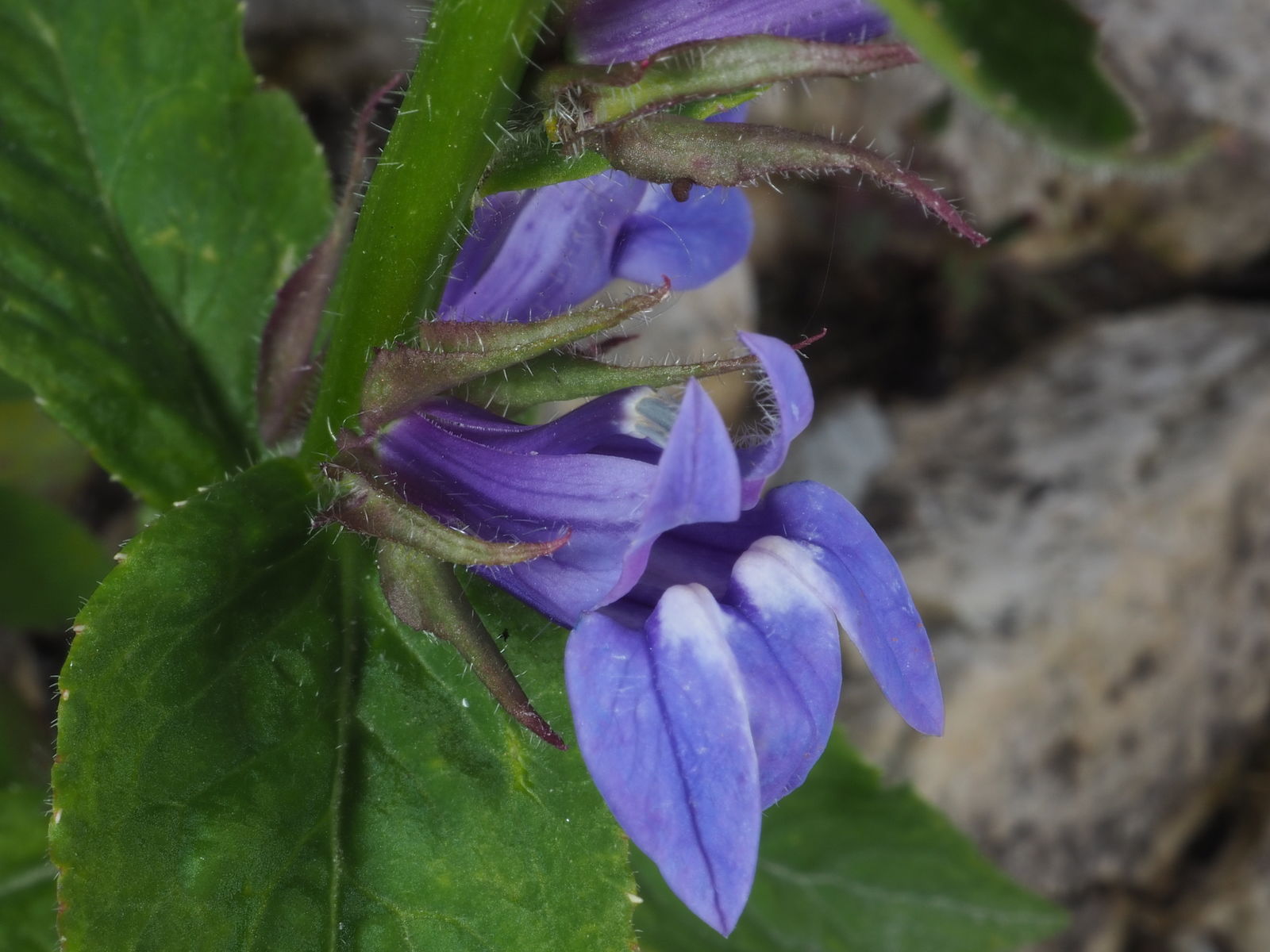
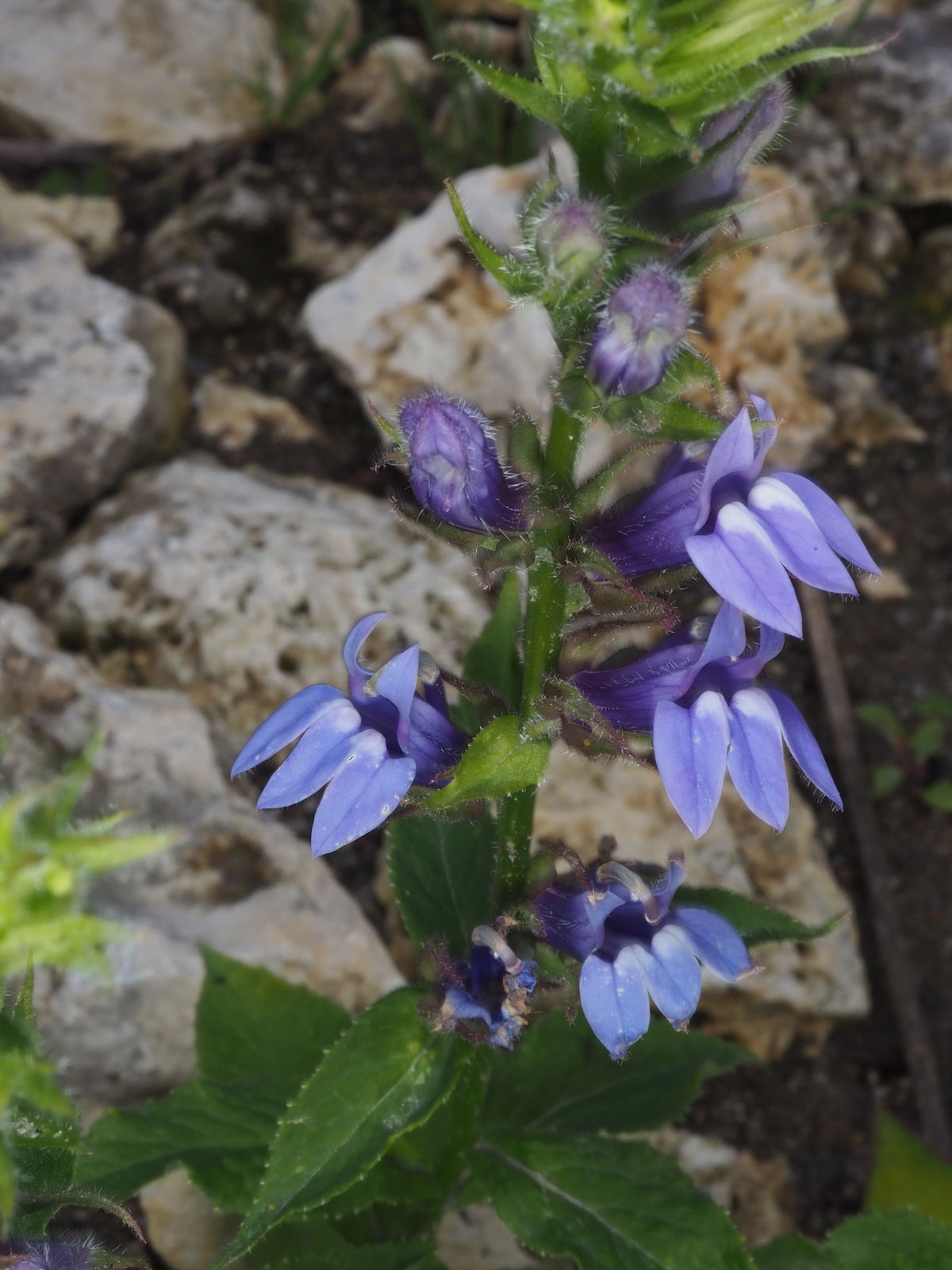
Stems are upright and usually little branched, with alternate, stalkless, lance-shaped leaves and toothed margins. Blue to violet-blue flowers are tubular and two-lipped. The combination of leafy upright stems and terminal flower clusters separates its overall appearance from that of low bedding lobelias. 5
Flowering runs from July to October in the Northern Hemisphere descriptions, depending on conditions. Flowers arise from the upper leaf axils and form a dense terminal raceme. In other climates, follow the corresponding summer-to-fall season rather than treating those months as universal. 5 8
The blue works more naturally in a woodland edge, wet meadow or moist border than in a stark, mineral planting. In dry soil, the plant struggles instead of producing the intended display. The right surroundings support both its appearance and its growth. 9
Habit is a useful distinction from small window-box lobelias: this is an upright perennial of moist ground, rather than a carpeting annual for a planter. The same genus name covers quite different garden plants, so their growing needs should not be assumed to match. 5
Useful taxonomy
The accepted name is Lobelia siphilitica L. Wikidata, POWO, WFO and IPNI provide identifiers for the species and its placement in the Campanulaceae. Using the botanical name helps separate it from other plants sold simply as blue lobelias. 1 2 3
The epithet siphilitica comes from a historical medicinal use attributed to the plant. That history is not a recommendation to use it medicinally. In a garden, its main value lies in its flower color and adaptation to moist soil. 8
The genus Lobelia contains active alkaloids. Although an undemanding-looking ornamental may seem harmless, NC State lists low-severity human poisoning from ingestion for this species. Its garden role should therefore be considered alongside an explicit ingestion warning. 5
Pollinator value does not make a plant food. Great blue lobelia can be ornamental and useful in a rain garden while remaining unsuitable for eating. There is no contradiction between those characteristics, and neither should obscure the other. 7 5
Cultivation
Provide moist to wet soil rich in organic matter. The plant tolerates wet ground and damp woodland edges, but quickly suffers when a border dries out in summer. Water availability should remain part of the planting plan after the clump has been established. 5 9
Light partial shade or gentle sun with constant moisture is ideal. A dry position in full sun leaves the plant without the moisture reserve it needs, while dense shade reduces flowering. Local heat and soil moisture are more useful guides than a single exposure rule applied to every garden. 7
Division can rejuvenate clumps, and seed can help maintain plants in naturalistic settings. Leave enough air and space around them: large neighboring plants can quickly overwhelm the stems. A damp site should not mean that the plant disappears beneath vigorous companions. 5
A light mulch is suitable provided the crown does not remain submerged. Moist soil is different from stagnant water held tightly around the roots. The aim is a consistently damp growing environment rather than compacted, airless conditions at the base. 9
Care is straightforward but regular attention matters. If the leaves wilt in summer, correct the water supply or shade promptly; waiting until the flowering stem dries out often means losing the display. The plant responds better to steady moisture than to a late attempt at rescue. 5
Uses
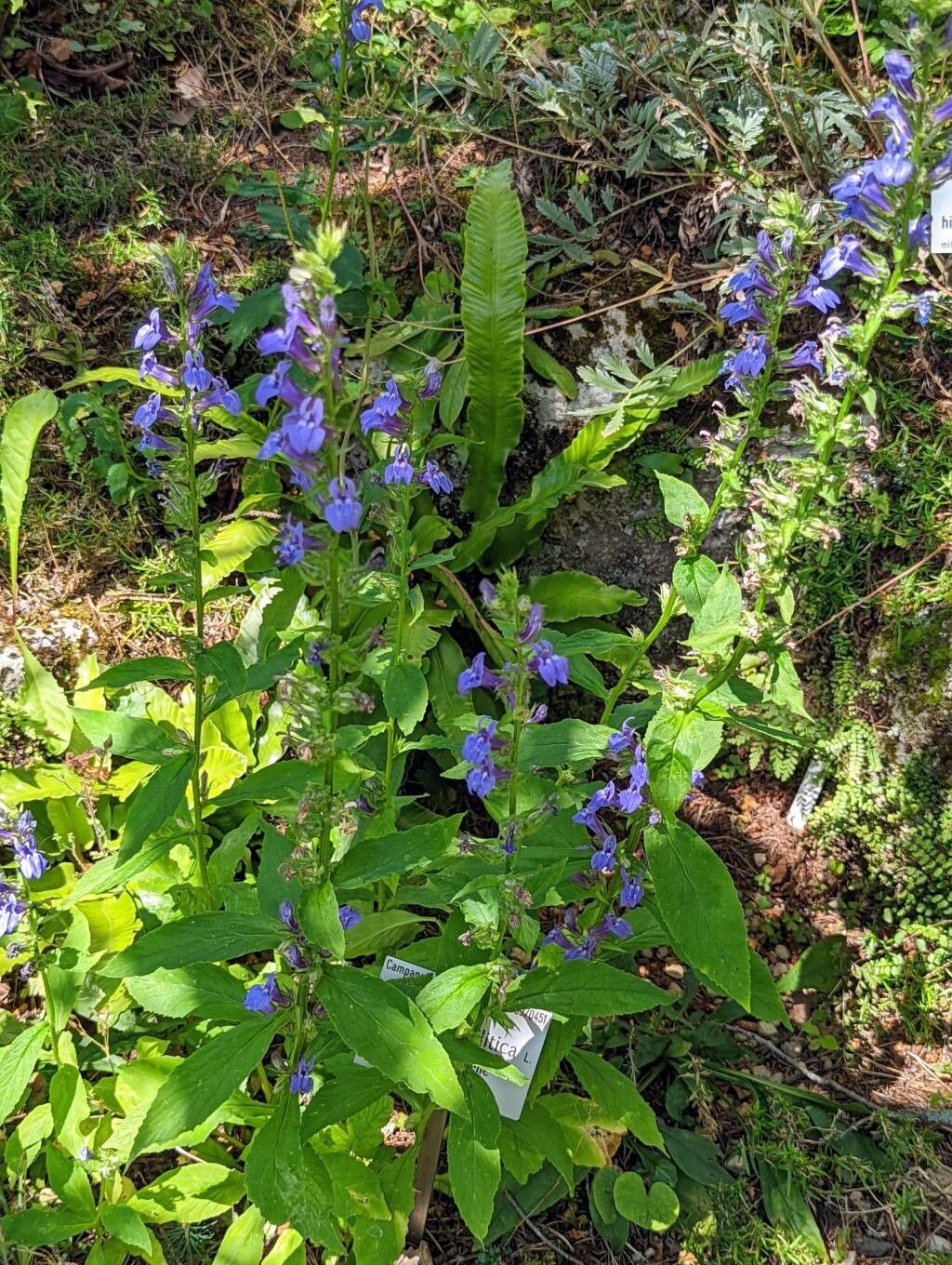
Its strongest role is a blue accent along a moist edge: a watered border, damp meadow, rain garden, gently sloping bank or open woodland. The upright flowers create a natural-looking effect without the highly cultivated appearance of some annual bedding displays. 9
Combine it with sedges, ferns, astilbes, water irises, cardinal flower or dark foliage. The planting should suggest moist growing conditions rather than a dry full-sun bed. Companions that share those requirements help the group remain convincing throughout the season. 7
NC State records attraction to butterflies, hummingbirds, pollinators and beneficial predatory insects. This wildlife value adds to its interest in a naturalistic garden, where flower color is only one part of the planting's purpose. 5
It is less suited to a dry balcony, a neglected pot or a gravel garden. Placement matters more than the appeal of the blue flowers. A great blue lobelia in unsuitable conditions will struggle to deliver the effect for which it was chosen. 9
Repeat it in small groups among other moisture-loving plants. Two or three clumps among sedges or ferns make a more coherent scene than one isolated plant surrounded by dry-site species. The blue flowers belong in a setting shaped by moisture. 7 9
Repetition also helps pollinators find the floral resource more easily. It gives several clumps a shared role instead of relying on a single flowering stem as the entire attraction. 5
Caution
NC State rates human poison severity as low. Significant ingestion can produce the same kinds of symptoms reported for other lobelias: nausea, vomiting, diarrhea, salivation, weakness, dilated pupils, convulsions or coma. Low severity should not be confused with an invitation to eat the plant. 5
Reported compounds include lobelamine, lobeline and other alkaloids, together with a volatile oil. Keep children and animals from chewing the flowers, leaves, roots, stems, seeds or sap. The warning concerns the plant as a whole, not just the most conspicuous flowers. 5
Its reported human poison severity is lower than that of cardinal flower, but the risk is not zero. Treat it as ornamental only: grow it and watch the pollinators, without tasting it. The distinction between the two species does not make either an edible garden plant. 5
Lobelia siphilitica is a useful blue-flowered perennial for moist soil and can be tougher than it looks when water remains available. Its place is in an ornamental planting, not among plants grown for tasting. 9 5
Main sources
- Wikidata, Lobelia siphilitica
- Plants of the World Online / Kew, Lobelia siphilitica
- World Flora Online, Lobelia siphilitica
- International Plant Names Index, Lobelia siphilitica
- NC State Extension, Lobelia siphilitica
- NC State Extension, Lobelia cardinalis
- Lady Bird Johnson Wildflower Center, Lobelia siphilitica
- Wikipedia EN, Lobelia siphilitica
- Floralens, blue flower selection
If you are unsure about a plant’s toxicity, ask a botanist or veterinarian for advice.