
Sacred lotus (Nelumbo nucifera, )
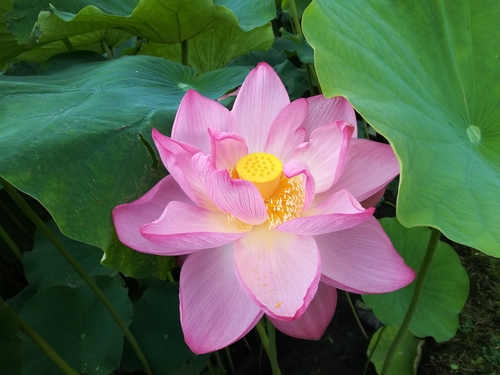
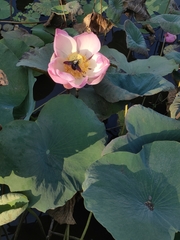

Sacred lotus (Nelumbo nucifera), also called Indian lotus, is a rhizomatous aquatic perennial in the Nelumbonaceae, native to Eurasia and Australia. Broad peltate leaves rise above the water with a water-repellent cuticle, while large pink or white flowers hold a conical receptacle resembling a watering-can rose. This edible, non-toxic pond plant has strong symbolic significance in Asia.
Read moreSacred lotus, Lotus, Pink lotus, Indian lotus, Egyptian bean and East Indian lotus




© photo
(c) Inessa, some rights reserved (CC BY-NC), uploaded by Inessa · cc-by-nc
Tom Ferguson · cc0
Adrien Jailloux · cc-by
Taken Aug 13, 2020 by Diego Alex (cc-by-sa)
Taken Jul 28, 2022 by Tristan Jaton-Maria (cc-by-sa)
Taken Jun 9, 2019 by Blue Bottle (cc-by-sa)
Taken Jul 26, 2022 by Tristan Jaton-Maria (cc-by-sa)
Taken Jun 3, 2015 by Tela Botanica − SP Wong (cc-by-sa)
© copyright of the Board of Trustees of the Royal Botanic Gardens, Kew.




Global distribution
The native range of Nelumbo nucifera extends from eastern Europe and Iran to the Russian Far East, tropical Asia and northern Australia. Cultivated for food and ornament for millennia, sacred lotus has naturalized beyond that range, notably in North America; these introduced areas remain distinct from its Eurasian origin.
- Native7
- Introduced1
- India
- China
- Iran
- Russia (Far East)
- Australia (north)
- Japan
- Vietnam
- United States
Hexagons: regions where the plant occurs. Green dots: native range.1
Identity
Sacred lotus (Nelumbo nucifera Gaertn., 1788), also known as Indian lotus, is a rhizomatous aquatic perennial in the Nelumbonaceae. It is one of just two living species of Nelumbo, the other being North America's yellow lotus, Nelumbo lutea. Despite its appearance, it is not a water lily: it belongs to a different botanical order, the Proteales. 1 4
Gardeners grow it as a large ornamental pond plant, valued for broad upright leaves and fragrant pink or white flowers. It is also an important food plant in Asia, where the rhizomes and seeds are widely eaten. 2 3
Recognition
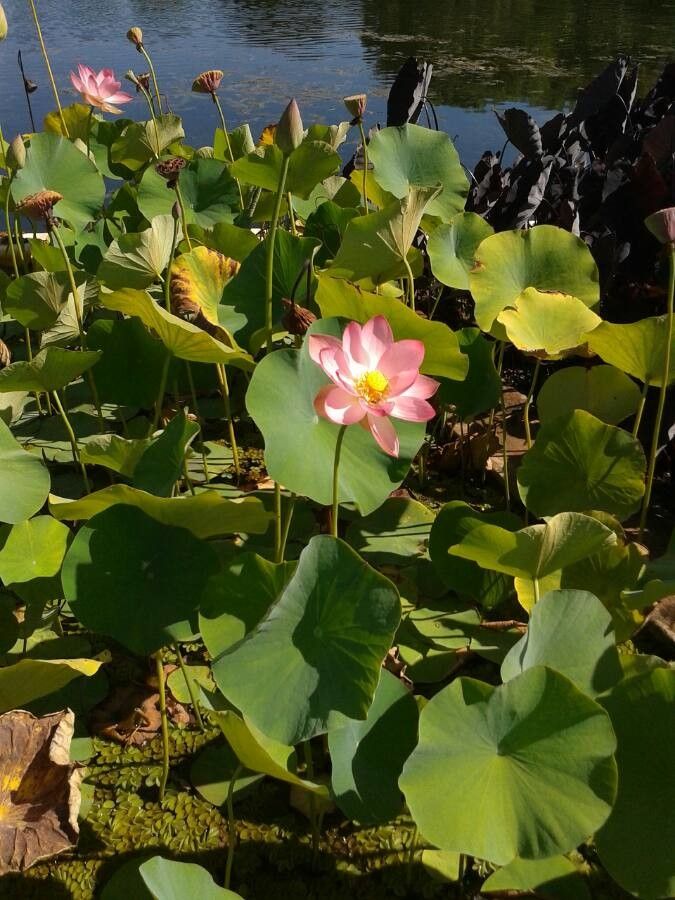
Broad, round peltate leaves identify Nelumbo nucifera: the leaf stalk attaches at the center of the blade and holds it well above the water rather than on the surface. The waxy cuticle is so water-repellent that droplets bead and roll away, taking dust with them, a phenomenon called the lotus effect. 3 2
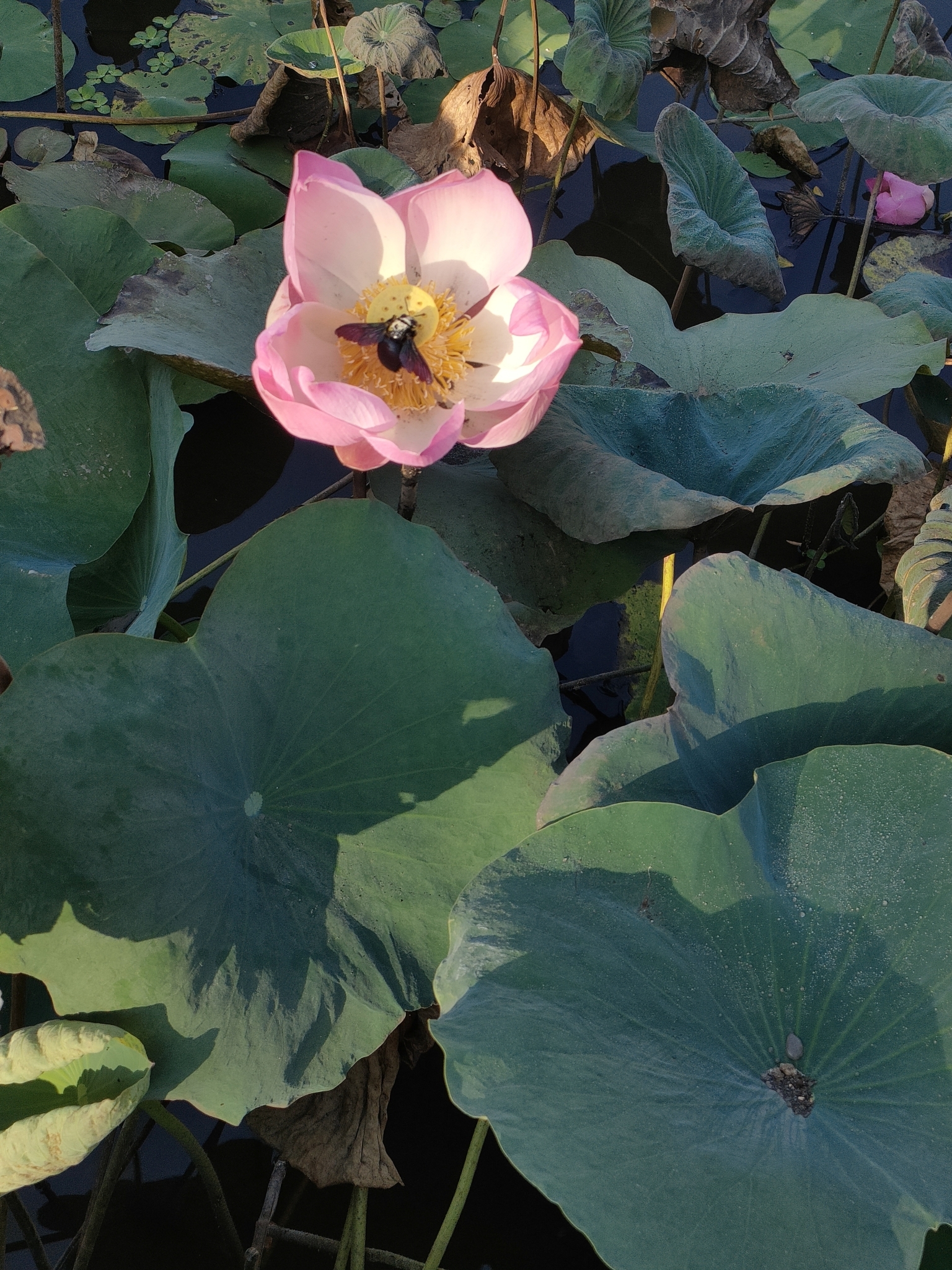
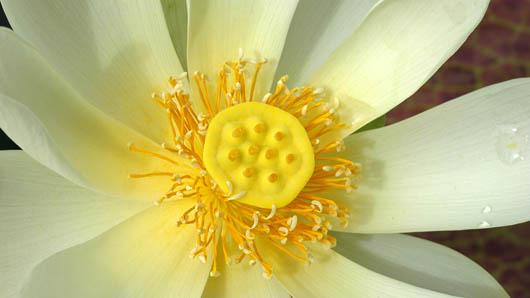
Each large, solitary pink or white flower rises on a long upright stalk. At its center, a conical receptacle with small cavities resembles a watering-can rose; each cavity holds an ovule that will harden into an achene. The flowers are thermogenic, producing their own heat, which helps disperse fragrance and attract insects. 4 5
Below the water, a fleshy, chambered rhizome anchors the plant in mud. Its air channels run through an edible structure several tens of centimeters long, allowing the clump to spread from season to season. 6 3
Useful taxonomy
Joseph Gaertner described the species as Nelumbo nucifera Gaertn. in 1788. Once grouped with water lilies, Nelumbo now belongs to its own family, Nelumbonaceae. Older literature contains several synonyms, including:
- Nelumbium speciosum Willd. (historical synonym)
- Nelumbo speciosa Willd. (historical synonym)
- Nymphaea nelumbo L. (historical synonym)
- Nelumbo nelumbo (L.) H.Karst. (historical synonym)
- Nelumbium nelumbo (L.) Druce (historical synonym)
The accepted scientific name, Nelumbo nucifera, remains the reliable reference. Cultivar names such as Momo Botan and Chawan Basu describe horticultural selections rather than separate species or botanical varieties. 1 8
Habitat and range
A broad Eurasian and Australian native range stretches from eastern Europe and Iran to the Russian Far East, tropical Asia and northern Australia. The plant occupies still, shallow freshwater in ponds, pools, oxbows and marshes on warm lowlands. 1 4
Warm water and full sun drive its seasonal rhythm. Growth follows the warm season, and the plant becomes dormant as water cools. In temperate climates, flowering therefore needs a sunny pond whose water warms readily. 3 2
Millennia of cultivation for food, ornament and symbolism have led to sacred lotus becoming naturalized beyond its original range, notably in North America. These introduced areas remain distinct from its native Eurasian range. 7 5
Life cycle and reproduction
As a winter-dormant aquatic perennial, Nelumbo nucifera loses its leaves and flowers during the unfavorable season. The rhizome survives in mud and resumes growth in spring as the water warms. Summer flowering usually begins in the second year after sowing. 3 5
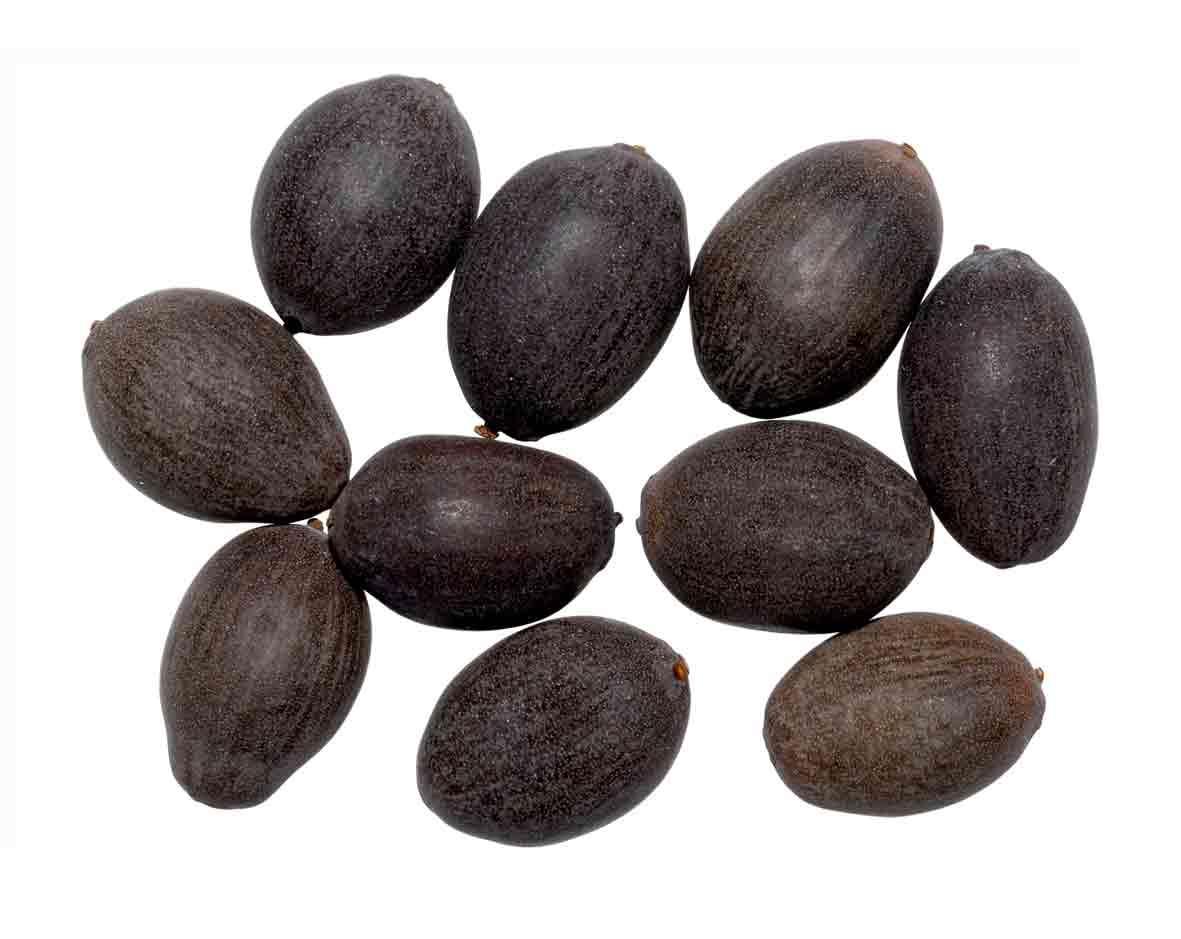
Following pollination, the conical receptacle hardens and releases hard achenes, commonly called lotus seeds. These are among the plant world's longest-lived seeds: a highly impermeable coat has enabled some to germinate after several centuries in sediment. 4 6
Garden propagation chiefly uses rhizome division in spring, retaining a section with a growing bud. The brittle rhizome needs careful handling. Seed sowing is possible after scarifying the hard coat and germinating in warm water, but division preserves cultivar traits more reliably because seedlings do not faithfully reproduce flower color. 2 5
Uses and risks
Ornamental and culinary uses both matter for Nelumbo nucifera. In ponds it makes a large, striking display; in Asian cooking, the chambered rhizome is cut into crisp slices and the seeds are eaten fresh, dried or candied. Young leaves, petals and stamens also enter various preparations. 5 4
Sacred lotus is described as non-toxic, unlike many ornamental plants. It is not listed as hazardous to cats, dogs or horses, and people have long eaten its various parts. The main general precaution is to harvest only from clean, unpolluted water. 6 3
Across Asia, the plant also carries strong symbolism: a flower rising intact above muddy water represents purity and renewal. Its self-cleaning leaves have given their name to the lotus effect, studied in the design of hydrophobic surfaces. 4 2
Varieties, look-alikes and related plants
Commercial forms belong to the same species. Alba Grandiflora is a large white-flowered form; Rosea Plena and Mrs Perry D. Slocum have double flowers, while Momo Botan and Chawan Basu are dwarf lotuses suited to containers. Before buying, check the cultivar name, expected mature size and rhizome vigor. 2
Three pond plants commonly cause confusion:
- Nymphaea, water lilies, whose notched leaves float on the surface instead of rising above it;
- Nelumbo lutea, North America’s yellow lotus, the only other species in the genus;
- Nuphar lutea, yellow water lily, another pond plant with floating leaves.
An entirely emergent habit, water-repellent peltate leaves and a receptacle resembling a watering-can rose remain the best features for confirming Nelumbo nucifera. 3 1
Main sources
- Plants of the World Online / Kew, Nelumbo nucifera Gaertn.
- Royal Horticultural Society, Nelumbo nucifera - sacred lotus
- Missouri Botanical Garden, Nelumbo nucifera
- Encyclopaedia Britannica, sacred lotus
- Plants For A Future, Nelumbo nucifera
- NC State Extension, Nelumbo nucifera
- USDA PLANTS Database, Nelumbo nucifera Gaertn.
- International Plant Names Index, Nelumbo nucifera Gaertn.
Frequently asked questions
Is sacred lotus toxic?
No. Nelumbo nucifera is not listed as toxic to cats, dogs or horses. It is a food plant whose rhizomes and seeds have been eaten in Asia for millennia.
How does a lotus differ from a water lily?
Lotus (Nelumbo) holds its peltate leaves and flowers above water, whereas water lilies (Nymphaea) keep notched floating leaves on the surface. They belong to different botanical families.
Why is my lotus not flowering?
The most common cause is insufficient sunlight or water that is too cold. Lotus requires full sun, at least six hours a day, and warming water; a shallow container in sunshine encourages flowering.
Can you eat lotus?
Yes. The chambered rhizome is cooked in crisp slices, and seeds are eaten fresh, dried or candied. Young leaves and stamens are also used in Asian cooking.
How do you overwinter lotus in a pond?
The rhizome is vulnerable to freezing. In a deep pond it overwinters safely beneath ice; in containers or cold regions, lower the container to a frost-free depth or bring the rhizome into a cool, moist room.
What is the lotus effect?
This is the self-cleaning property of Nelumbo nucifera leaves. Their waxy, microstructured surface is so water-repellent that droplets bead, roll away and remove dust. It inspires technical coatings.
How long do lotus seeds survive?
A very long time. Nelumbo nucifera seeds are among the longest-lived known; some have germinated after several centuries in sediment thanks to their highly impermeable coat.
If you are unsure about a plant’s toxicity, ask a botanist or veterinarian for advice.