
Love-in-a-mist (Nigella damascena, )
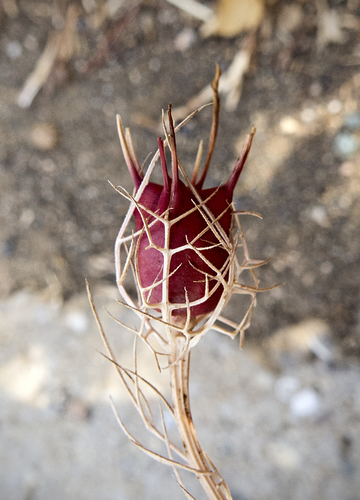
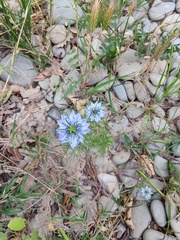
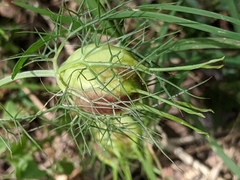
Love-in-a-mist (Nigella damascena) is a cool-season annual in the Ranunculaceae. Its finely divided foliage, blue or white flowers and decorative capsules suit airy borders and fresh or dried bouquets; it should not be confused with Nigella sativa.
Read moreLove-in-a-mist and Devil-in-the-bush


© photo
katunchik · cc0
Tatiana Gavrilova · cc0
Alison Northup · cc0
Taken Jul 30, 2020 by dragongid (cc-by-sa)
Taken Jun 20, 2021 by Kieran Brennan (cc-by-sa)
Taken Aug 4, 2022 by Jim Knopf (cc-by-sa)
Taken Aug 28, 2022 by Häxa Noita (cc-by-sa)
Taken Jul 26, 2020 by Dieter Wagner (cc-by-sa)
© copyright of the Board of Trustees of the Royal Botanic Gardens, Kew.




Identity
Love-in-a-mist (Nigella damascena L.) is a blue-flowered annual valued for airy foliage and decorative seed capsules. It belongs to the Ranunculaceae, rather than the borage family of forget-me-nots and baby blue eyes. 1 8
POWO, WFO, IPNI and Wikidata confirm the accepted binomial. This precision matters because the name nigella may also suggest Nigella sativa, grown for its seeds, while N. damascena is primarily ornamental. 2 3 4
NC State describes a cool-weather annual grown for unusual flowers and capsules used in arrangements. Sow it directly as soon as the ground can be worked. 5
In blue planting schemes, love-in-a-mist gives a less solid effect than grape hyacinth and a more structured outline than baby blue eyes. Its threadlike foliage contributes as much as its flowers. 8 5
That combination makes even the small flowers noticeable. Finely divided leaves, enclosed buds and sharply outlined fruits give the plant a distinctive silhouette beyond its blue color. 8 5
Recognition
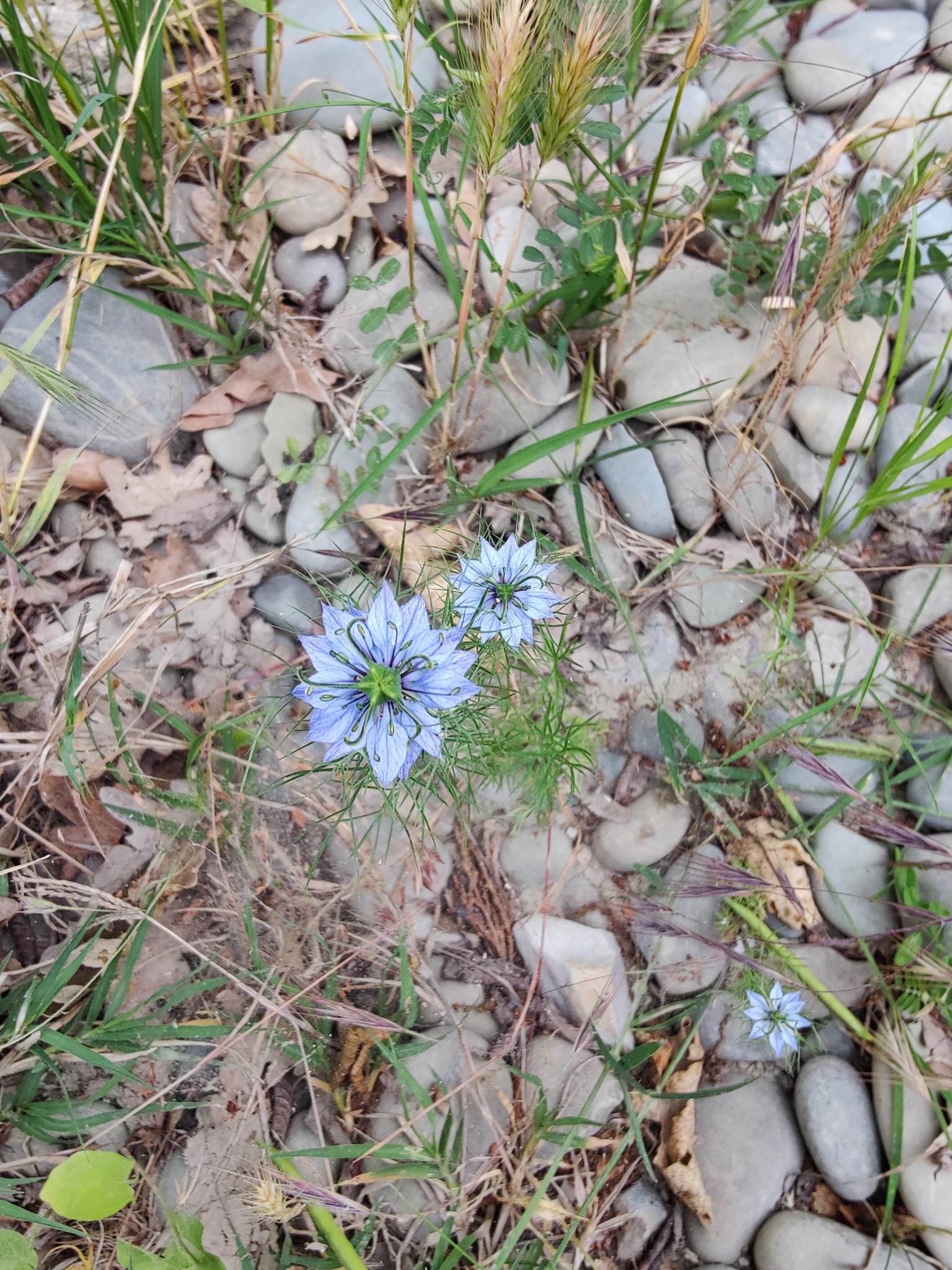
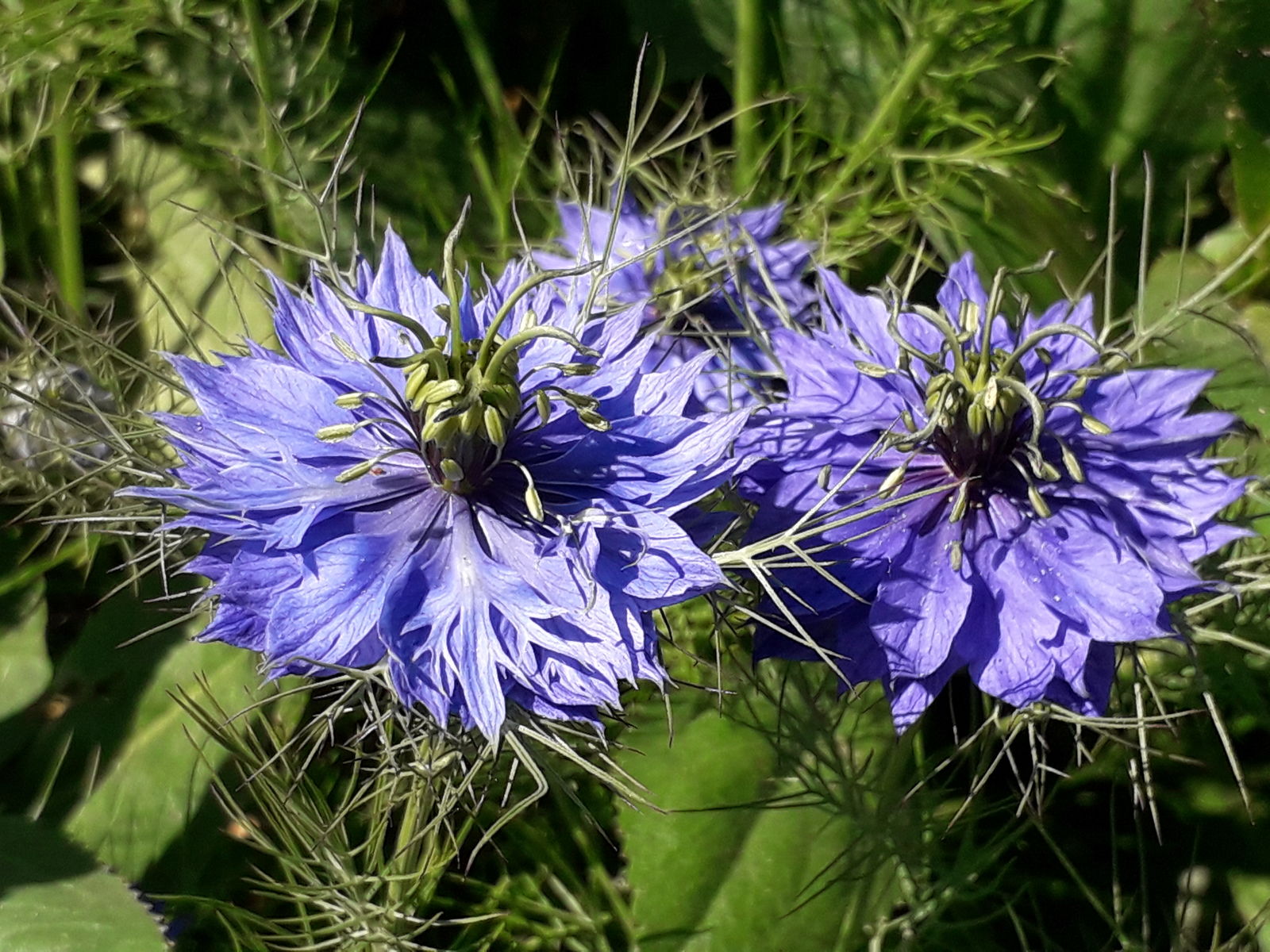
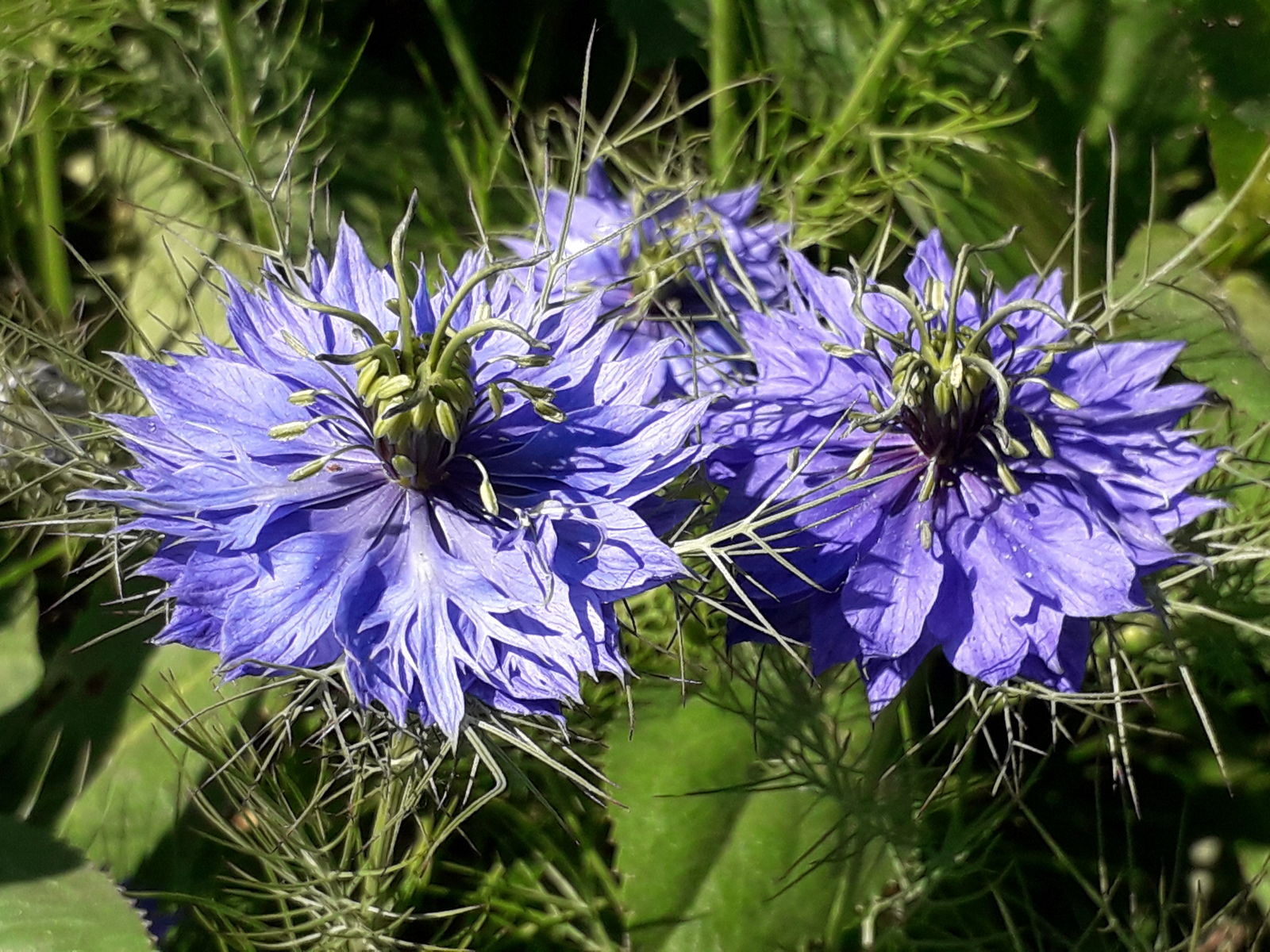
Recognize love-in-a-mist by its extremely fine, almost vaporous foliage surrounding the buds, which gives the English name its meaning. Each flower seems to rest in green mist. 5 7
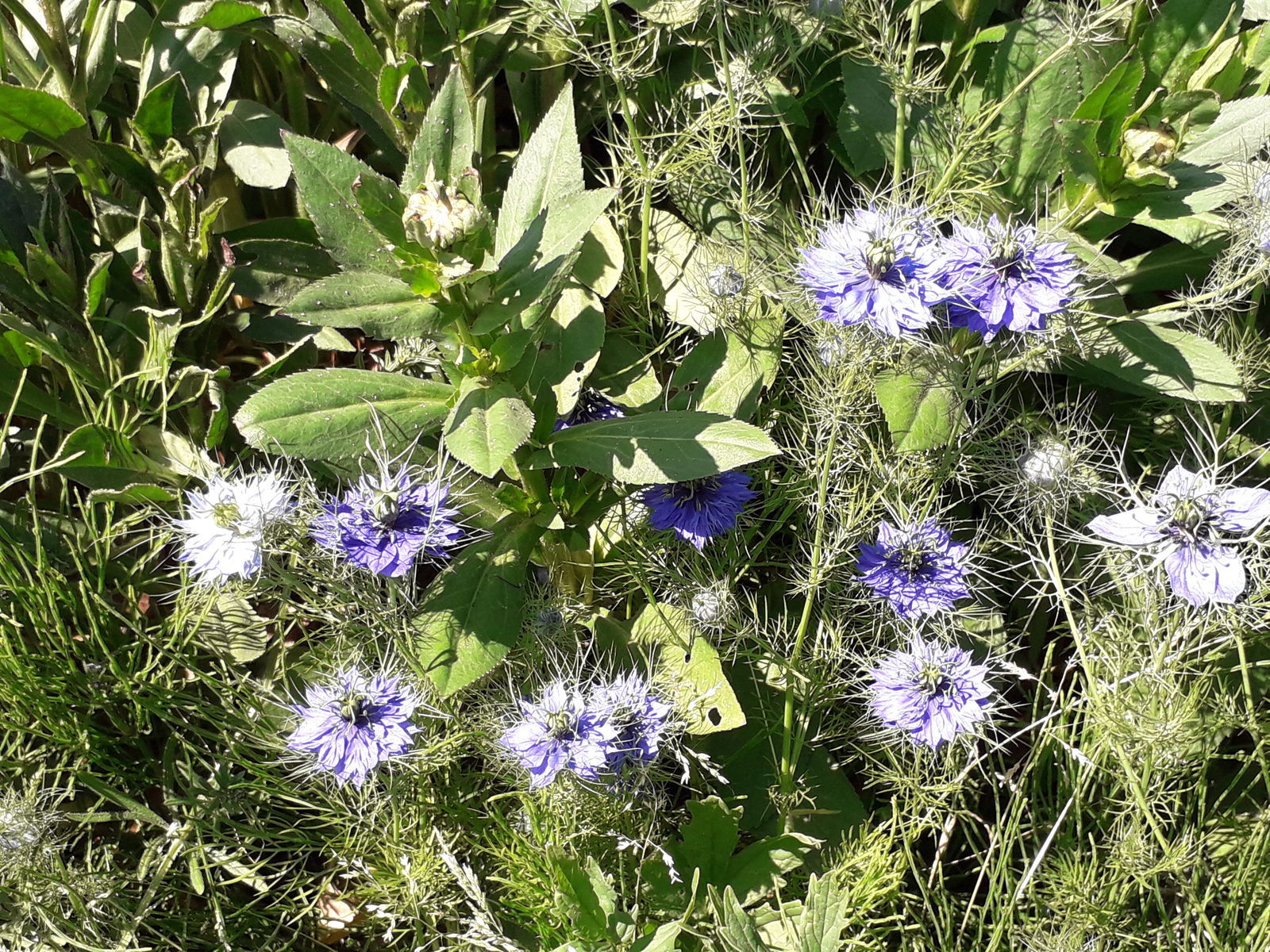
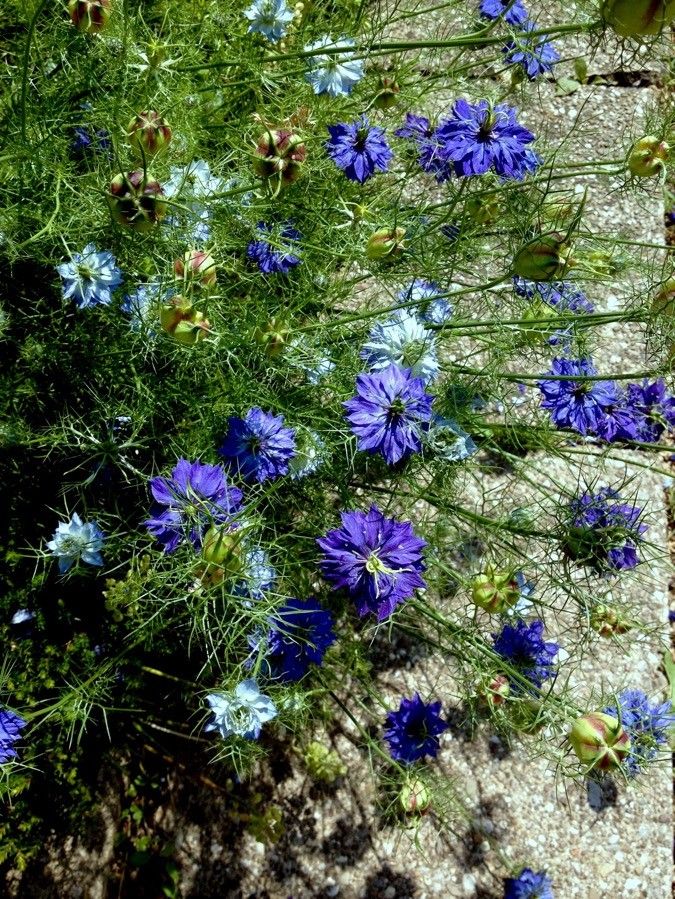
Flowers may be blue, white, purple or pink, depending on cultivar or seed mixture. NC State describes solitary flowers resting on finely divided foliage and notes their value for cutting. 5
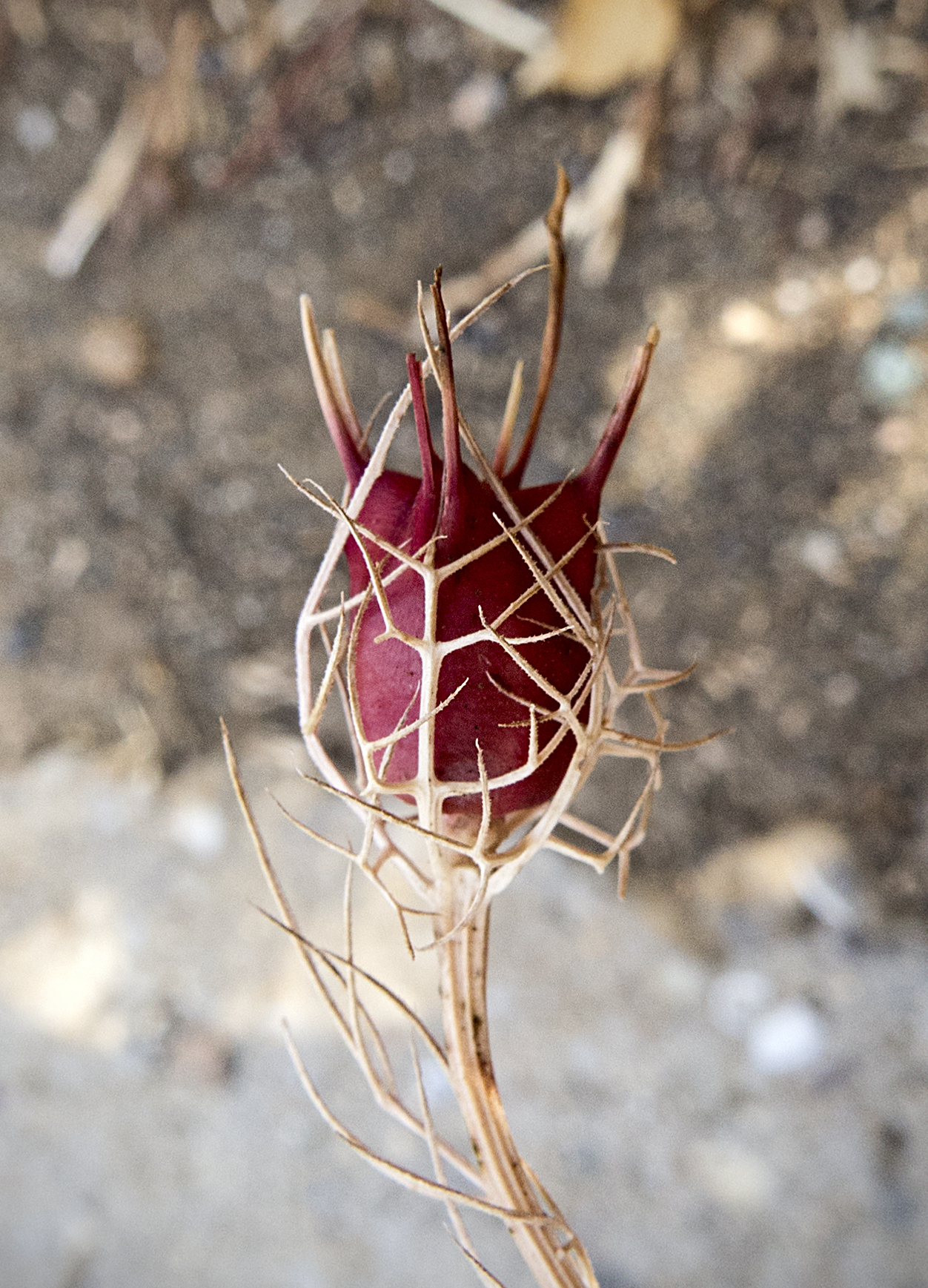
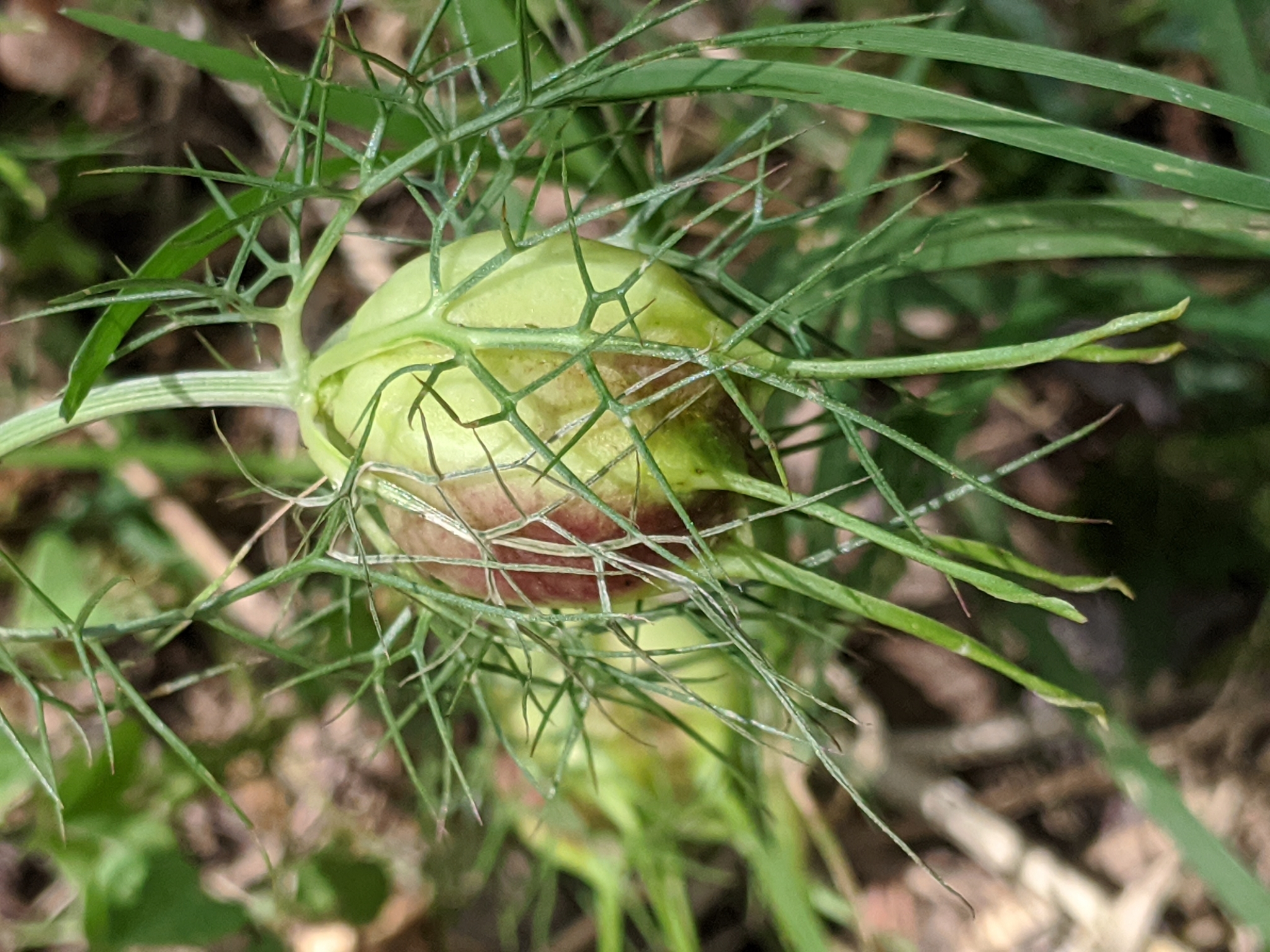
After flowering, the horned, egg-shaped capsules become as decorative as the blooms. They dry well and extend the plant's usefulness in dried arrangements. 5 8
Height varies considerably, often 30–75 cm (12–30 in). Plants growing too densely or in overly rich conditions may flop; thin sowing in sun gives a clearer outline. 5
Useful taxonomy
The accepted botanical name is Nigella damascena L. Its genus belongs to the Ranunculaceae, alongside anemones, buttercups, hellebores and delphiniums, whose characteristics differ greatly. 2 3
The important confusion is with Nigella sativa. Although nigella seeds are familiar in cooking, that use should not be transferred to love-in-a-mist without specific evidence; its role here is ornamental. 7 5
Cultivars and mixtures such as Miss Jekyll, Persian Jewels and Delft Blue change flower colors and markings. Their cultivation still follows the pattern of a directly sown annual. 6 5
Recognizing the species keeps its flowers, foliage, capsules and short annual cycle together. Blue color alone does not capture the plant's full identity. 8 1
Cultivation
Love-in-a-mist favors direct sowing. Young roots tolerate late transplanting poorly; sow thinly and thin seedlings if necessary rather than moving large plants. 5
Ordinary, well-drained soil with regular moisture during establishment suits it. NC State recommends full sun and accepts clay, loam or sand when drainage is adequate. 5
In cool climates, successive sowings extend flowering. Heat shortens the life cycle, making love-in-a-mist an early-season annual rather than a permanent summer flower. 5 8
For dried arrangements, cut well-formed capsules before they open too far. They then retain their volume and horned outline. 5
A mild autumn can allow fall sowing for earlier plants, while spring sowing is simpler in cold regions. In either case, sow into finely prepared soil with little covering; a dry surface crust can make germination uneven. 5 6
Uses
An airy flower bed is an ideal setting: cottage borders, annual mixtures, sunny containers and fresh or dried bouquets. This annual creates a passing pattern rather than filling space like a perennial. 8 5
Poppies, cornflowers, ammi, baby blue eyes, fine grasses and single roses make suitable companions. Leave space around them so neighboring plants do not hide the delicate foliage. 8
Capsules take over the decorative role after the blue flowers fade. They help love-in-a-mist offer more lasting interest than its delicate annual habit might suggest. 5
In containers, provide enough depth and avoid dense sowing. A crowded window box soon produces soft stems; a broad container gives a more natural, airy effect. 8 6
Small drifts read better than dense blocks in a busy border. Let plants weave between low perennials, then retain some capsules late in the season for a long presence without letting the annual become intrusive. 8 5
Cautions
Love-in-a-mist has a non-toxic profile for dogs and cats, while its effects on horses are undocumented. NC State's horticultural description does not highlight a specific toxicity warning. 5 2
Food use requires particular caution. The name nigella can cause confusion with Nigella sativa; seeds of N. damascena must not be presented as a spice simply by analogy. 7
The main practical difficulties are dense sowing, transplanting, rapidly arriving heat, fallen stems and self-seeding. Spontaneous seedlings may suit a naturalistic garden; remove seed heads early in a tidy border. 5 8
Choose Nigella damascena when both blue flowers and decorative capsules matter. Its foliage and fruit are integral to its appeal, alongside the brief flowering display. 8 1
Main sources
- Wikidata, Nigella damascena
- Plants of the World Online / Kew, Nigella damascena
- World Flora Online, Nigella damascena
- International Plant Names Index, Nigella damascena
- NC State Extension, Nigella damascena
- Royal Horticultural Society, Nigella damascena search results
- Wikipedia EN, Nigella damascena
- Floralens, blue flower selection
If you are unsure about a plant’s toxicity, ask a botanist or veterinarian for advice.