
Common evening primrose (Oenothera biennis, )
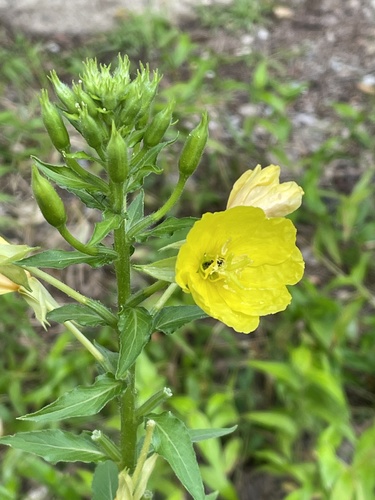
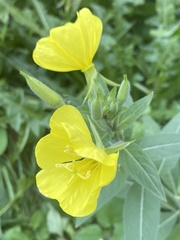
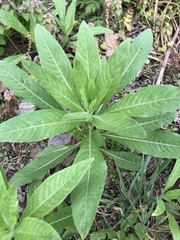
Common evening primrose (Oenothera biennis) is a biennial in the Onagraceae family, native to Canada and the United States. It forms a rosette in its first year, then a tall stem of lemon-yellow flowers that open in the evening, attracting nocturnal pollinators, early-morning bees and seed-eating birds.
Read moreCommon evening primrose, Evening primrose, Evening star and Sundrop

© photo
(c) Tom Pollard, some rights reserved (CC BY), uploaded by Tom Pollard · cc-by
Alan Weakley · cc0
Andrew Conboy · cc-by
no rights reserved · cc0
(c) Andrew Conboy, some rights reserved (CC BY) · cc-by
Identity
Common evening primrose (Oenothera biennis L.) is a yellow-flowered member of the Onagraceae whose flowers open in the evening. It grows in waste ground, on banks and in sunny, dry gardens. 1 8
POWO, WFO and IPNI confirm the accepted binomial. The epithet biennis describes its cycle: a rosette develops first, followed by a flowering stem the next year. 2 3 4 11
NC State describes it as a biennial or short-lived perennial native to Canada and the United States. Its pale yellow flowers open in the evening and remain visible in the morning before the day grows hot. 5
Among yellow flowers, it offers a different effect from the solid blocks of color made by rudbeckias. Its evening yellow is light and vertical, associated with nocturnal pollinators and gardens that receive less watering. 8 5
Evening opening helps determine where to plant it. Beside a patio, path or area enjoyed late in the day, the flowers are easy to appreciate; at the back of a bed viewed only at midday, some of their appeal is lost. Their timing adds activity as well as color to a garden. 8 5
Recognition
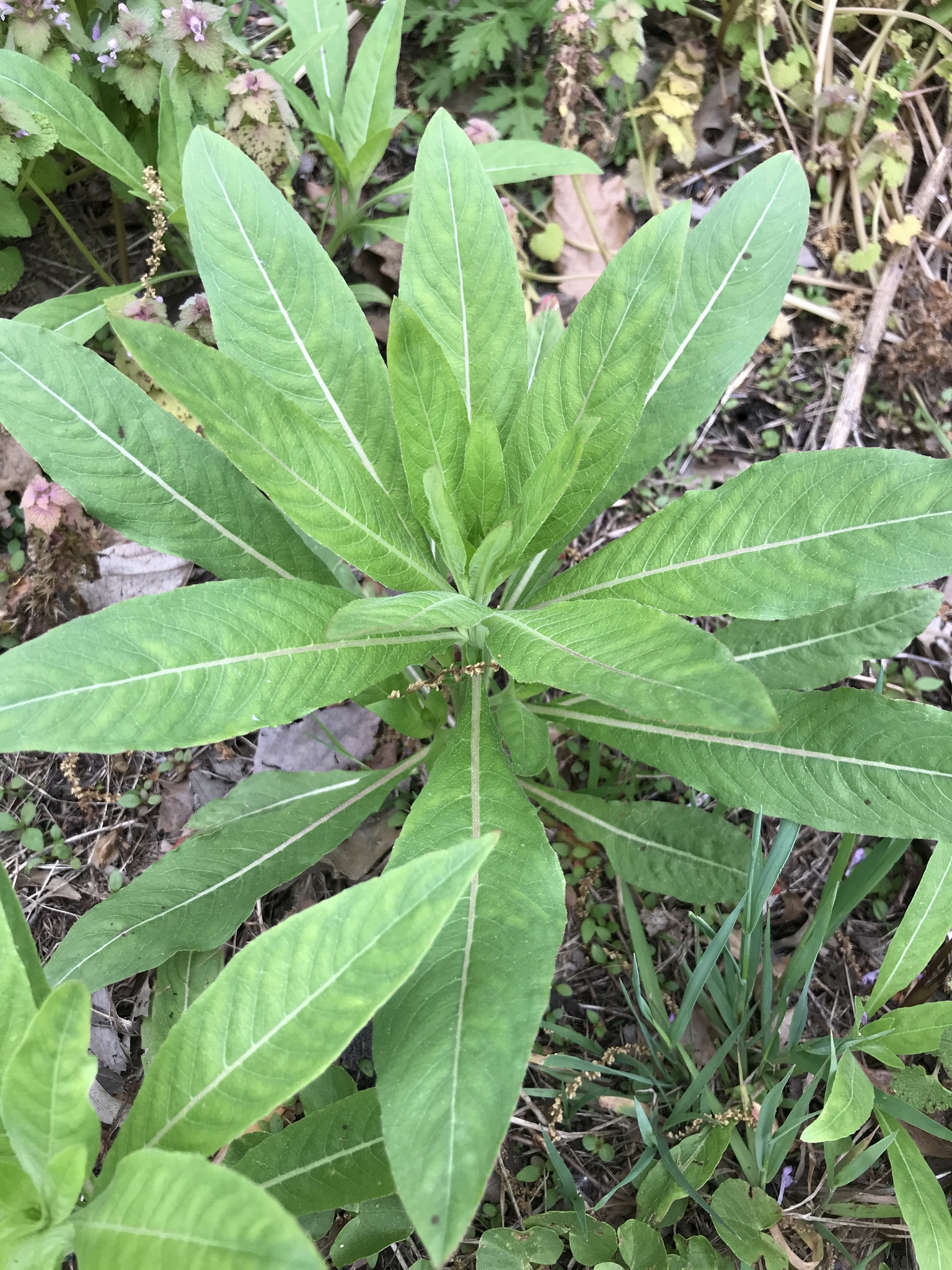
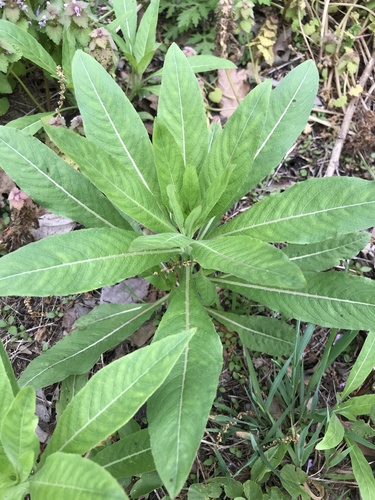
During its first year, a rosette of lance-shaped, light green to olive leaves is the main feature. Pulling it up as a weed at this stage is a common mistake that prevents the following year's flowers from appearing. 5
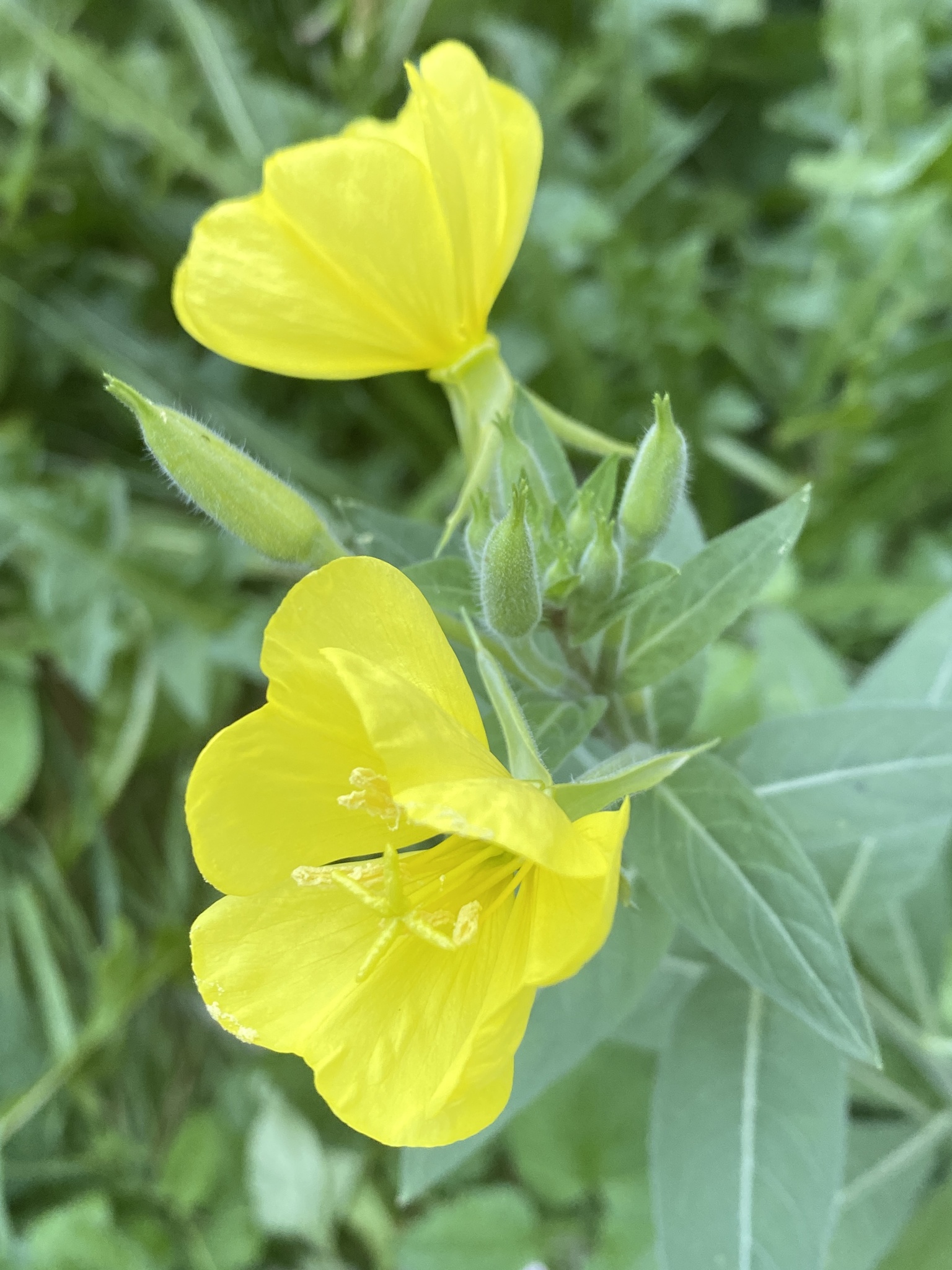
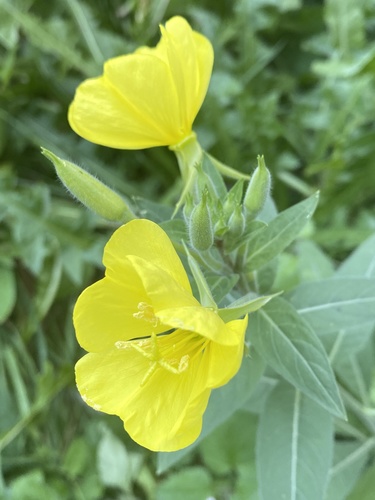
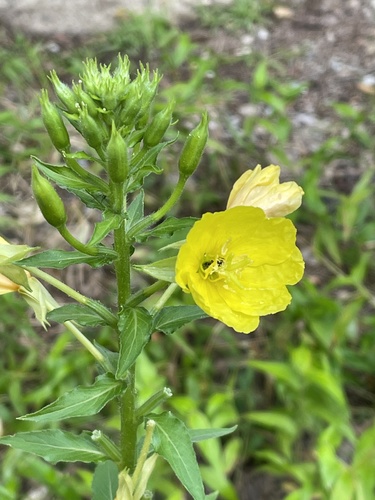
An upright, sometimes reddish stem develops in the second year and can reach 1.5 m (5 ft). The lemon-yellow, four-petaled flowers form a terminal panicle and open mainly late in the day. 5
A light fragrance attracts moths, while bees visit early in the morning. NC State also records seeds that attract birds and associations with specialist bees that visit Oenothera. 5
Its habit feels more wild than formal. The flowering stem can look too tall in a very low bed, but on a bank or in a naturalistic planting it provides a simple vertical accent. 8 7
Useful taxonomy
Botanically, Oenothera biennis L. is the accepted name. It should be distinguished from Oenothera lindheimeri, the plant commonly sold as gaura, and from other garden evening primroses that are lower-growing or have pinker flowers. 2 3 9
Several Oenothera species are known for evening flowering, often with four petals and twilight pollinators. Each species nevertheless has its own habit and life cycle. 7 5
Evening primrose oil refers to uses of seeds and extracts; it is not an invitation to eat an unidentified border plant. In the garden, this species is grown chiefly for ornament and wildlife. 7
The species name is more precise than the broad name evening primrose. It brings together the yellow flowers, evening opening, biennial rosette and tall flowering stem that identify this particular plant. 8 1
Using the full name also separates it from garden gauras, now placed in Oenothera by botanical references. Common evening primrose remains a yellow biennial with a rosette, whereas Oenothera lindheimeri supplies white or pink flowers in dry borders. 2 3 9 10 11
Cultivation
Sun and drainage are the foundations of cultivation. NC State gives full sun to partial shade, good drought tolerance and a need for soil that does not retain standing water. 5
Sow seeds or retain a few self-sown seedlings. Learn to recognize the rosettes and give them room to flower the following year; removing them too soon means losing the plant before it blooms. 5 8
Overly rich soil produces taller stems that are more vulnerable to wind. In a dry planting, growth stays more restrained and fits the setting better, with less intervention needed. 5
Cut stems before all the seeds disperse if spread needs limiting. To support birds or naturalize a bank, allow a few capsules to ripen. The right balance depends on how tightly the planting needs to be controlled. 5 8
Managed self-seeding is often the most useful approach: retain a few well-placed rosettes and remove surplus seedlings. This keeps the species present while maintaining a clear planting design, rather than treating it as a perennial that stays permanently in one spot. 5 8
Uses
An evening garden makes especially good use of this species: a dry border beside a path, a bank, a flower meadow, a light yellow planting or a bed that welcomes moths. 8 5
Catmints, yarrows, rudbeckias, grasses, sages and other sun-loving plants make suitable companions. Neighbors need to accommodate a somewhat wild presence and a flowering height that can vary. 8
In a small garden, use the plant as an accent rather than a continuous sheet. One or two flowering stems can provide the yellow note; too many seedlings may leave the border looking untidy. 5
Wildlife benefits include nectar for insects and seeds for birds. The flowers also offer a clear way to observe how a plant can open its blooms at a particular time of day. 5
Choose a position where a tall stem will not obstruct other plants: the back of a border, a poor bank, a short meadow or a more informal garden corner. Rich, watered soil can make it too tall; leaner ground keeps the evening display better balanced. 5
Precautions
No major toxicity to dogs or cats is identified in the information retained for this plant; its effects on horses remain undocumented. NC State focuses on its wildlife value and flowering without a specific toxicity warning. 5 2
Identification and use still call for care. Evening primrose extracts are different from eating a raw garden plant, and its capsules should not become an improvised food. 7
The clearest horticultural risk is self-seeding. A well-placed common evening primrose can be attractive, but seedlings allowed to grow everywhere may compete with lower plants and disrupt the design of a bed. 8 5
A sunny site suits Oenothera biennis when its biennial cycle and naturalistic appearance are welcome. The most useful precaution is simply to avoid pulling out the rosette before it has a chance to flower. 8 5
Main sources
- Wikidata, Oenothera biennis
- Plants of the World Online / Kew, Oenothera biennis
- World Flora Online Plant List, Oenothera biennis L. — accepted species, June 2026 snapshot
- International Plant Names Index, Oenothera biennis
- NC State Extension, Oenothera biennis
- Royal Horticultural Society, Oenothera biennis search results
- Wikipedia EN, Oenothera biennis
- Floralens, yellow flower selection
- World Flora Online Plant List, Oenothera lindheimeri — accepted species; Gaura lindheimeri synonym, June 2026 snapshot
- North Carolina Extension Gardener Plant Toolbox, Oenothera lindheimeri
- South Dakota State University, South Dakota Native Plant Research: Oenothera biennis, R. Neil Reese
If you are unsure about a plant’s toxicity, ask a botanist or veterinarian for advice.