
Clockweed (Oenothera lindheimeri, )
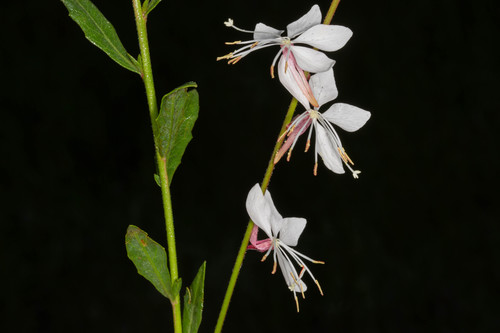
Clockweed (Oenothera lindheimeri) is an airy perennial in the Onagraceae family, native to the southern United States. Still widely sold as Gaura lindheimeri, it produces white or pink flowers over a long season and favors full sun and well-drained soil.
Read moreClockweed, Lindheimer's beeblossom, White gaura, Whirling butterflies, Pink gaura and Gaura lindheimeri


© photo
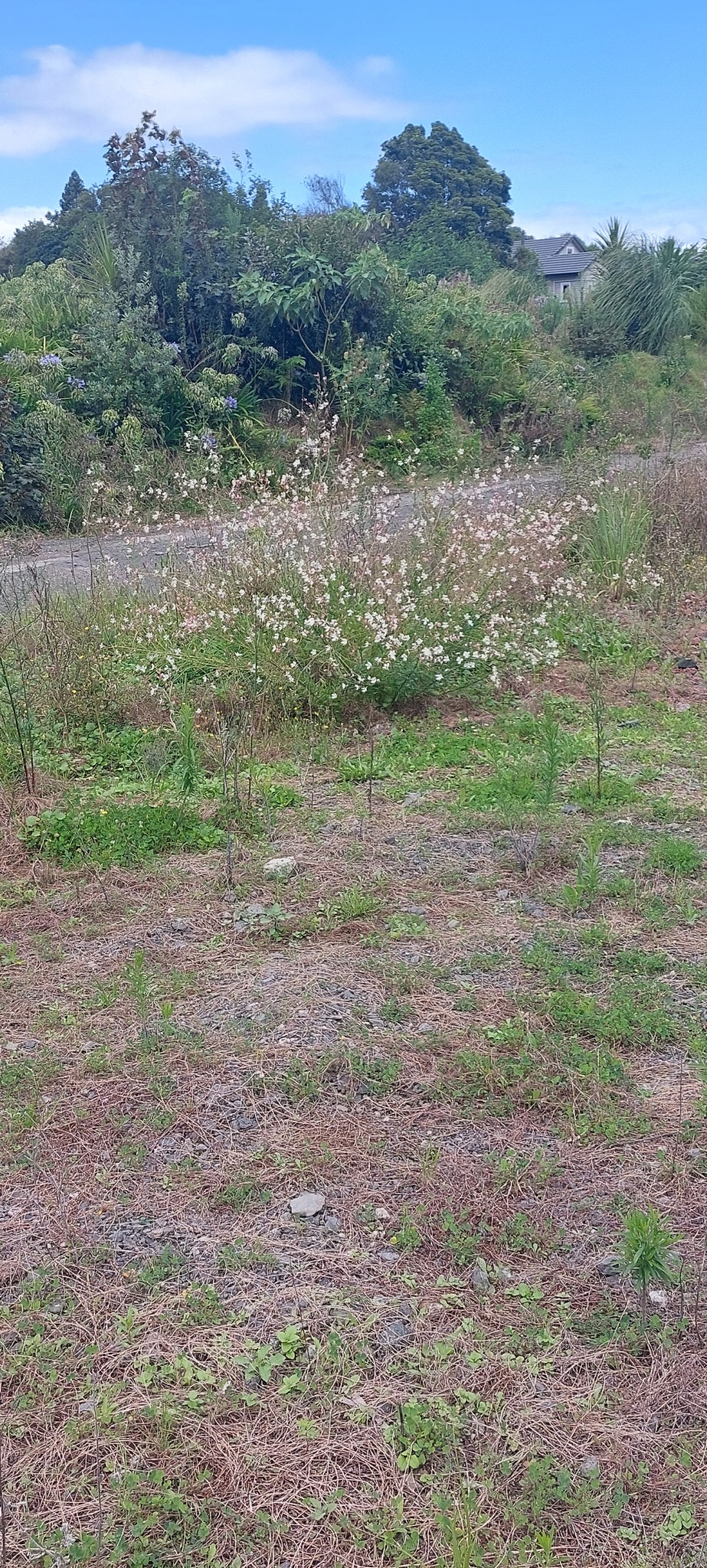
(c) Grant Reed, some rights reserved (CC BY-NC), uploaded by Grant Reed · cc-by-nc
Peter de Lange · cc-by
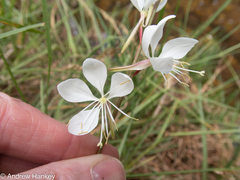
Andrew Hankey · cc-by-sa
© copyright of the Board of Trustees of the Royal Botanic Gardens, Kew.
Identity
Clockweed (Oenothera lindheimeri (Engelm. & A.Gray) W.L.Wagner & Hoch), also called Lindheimer's beeblossom, is still widely sold under the former name Gaura lindheimeri. The cultivar 'Sparkle White' is a white-flowered selection. 1 8
POWO, WFO and IPNI place the species in Oenothera, in the Onagraceae family. The horticultural name gaura remains useful to gardeners, while Oenothera lindheimeri provides the accepted botanical identity. 2 3 4
NC State describes a sun-loving herbaceous perennial native to the southern United States. It tolerates heat and drought and produces white to pinkish flowers from summer into fall. 5
In a white planting, clockweed creates a moving cloud. Its flowers float on long, slender stems rather than forming a compact mass, adding brightness without a rigid outline. 8 5
The familiar name gaura and the accepted botanical name serve complementary purposes. One helps identify a plant in the nursery or garden; the other makes clear that the same plant is classified as Oenothera lindheimeri. Keeping both names together makes that relationship easier to understand. 2 8
Recognition
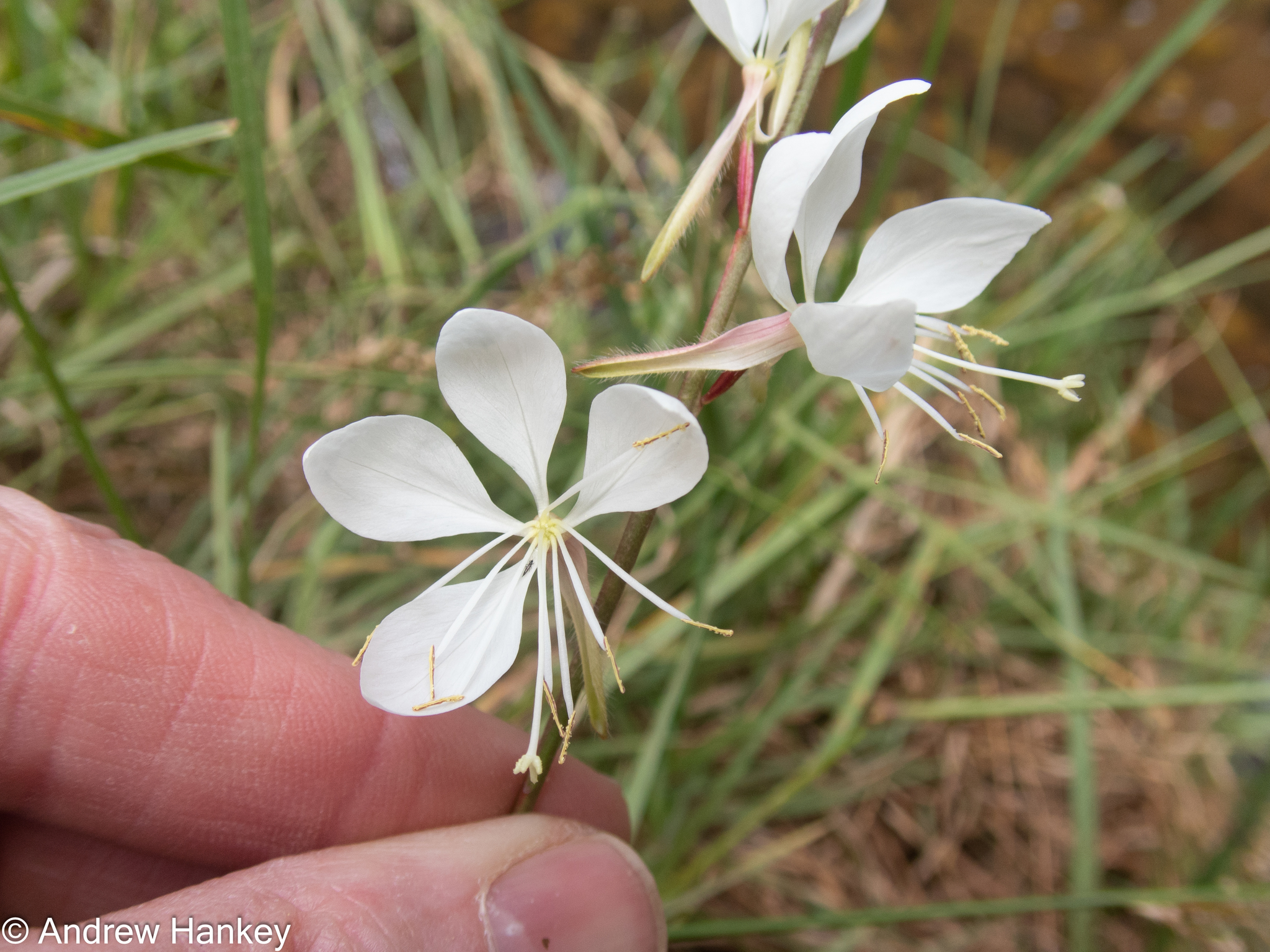
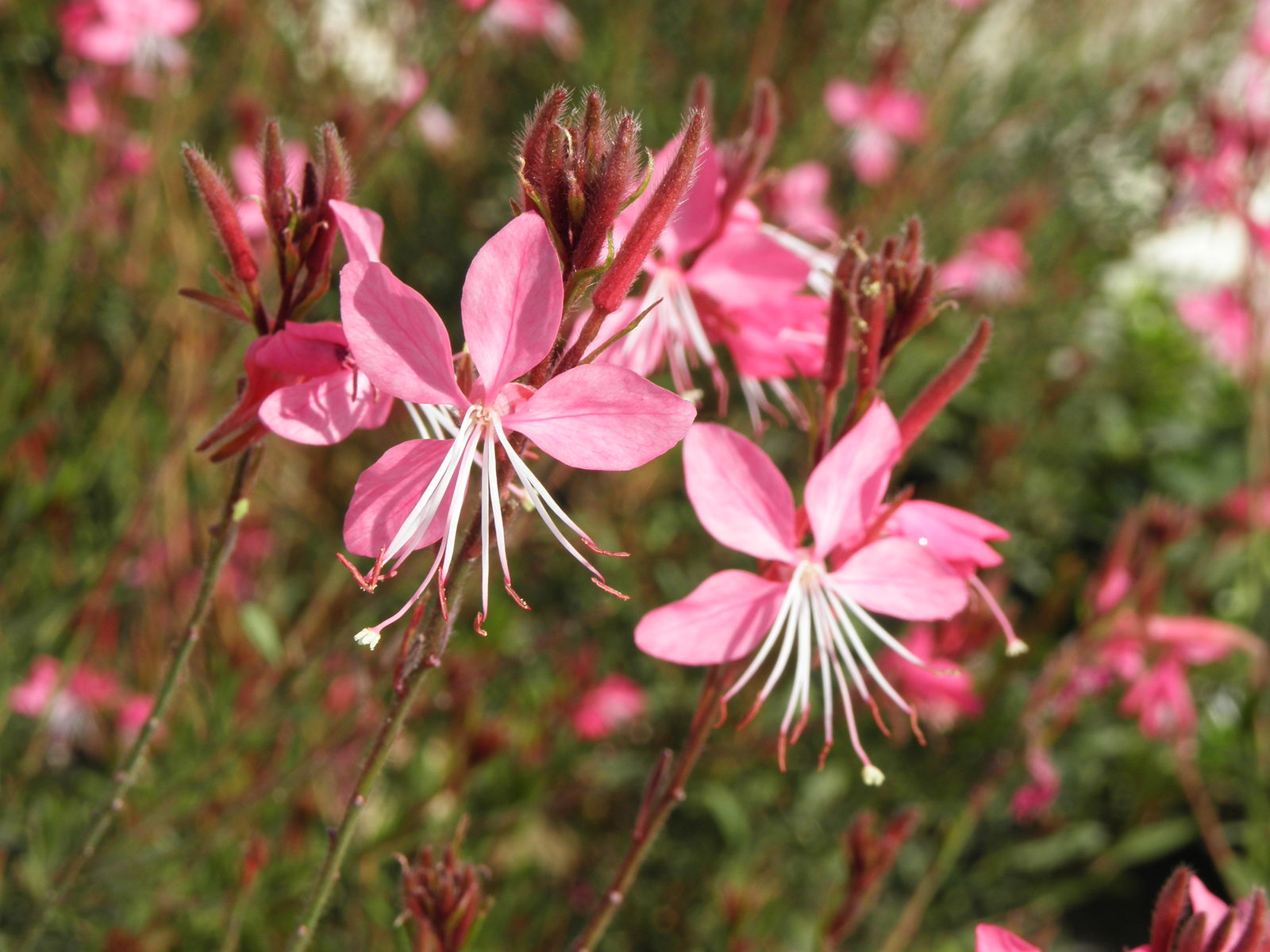
A basal clump gives rise to slender stems that stand upright or arch outward. Each flower has four petals, usually white before turning pink, and conspicuous long yellow stamens. 5
Bloom lasts from summer into fall. NC State notes that only a few flowers open at a time along the stems, explaining the butterfly-like effect rather than a dense screen of blooms. 5
Leaves may be green or marked with burgundy, depending on the conditions and cultivar. Some selections remain more compact, while others grow taller and need more room in a bed. 5
The contrast with Oenothera biennis is clear: common evening primrose has large yellow evening flowers, while clockweed carries a shower of white or pink flowers on flexible stems. 2 5
Useful taxonomy
The transfer from Gaura lindheimeri to Oenothera lindheimeri explains the two names gardeners encounter. Gaura remains familiar in nurseries and gardens, but Oenothera is the accepted genus in botanical references. 2 4
Cultivars include Sparkle White, Whirling Butterflies, Siskiyou Pink, Summer Breeze and Passionate Blush. Their height, flower color, hardiness and compactness vary, while their botanical identity remains the same. 5 6
The common horticultural name gaura can therefore be used alongside Oenothera lindheimeri. The two names identify the same species rather than different plants, even when labels or planting descriptions use the older name. 8 3
This distinction prevents two mistakes: treating the old name as a separate species, or assuming that the plant must resemble the yellow-flowered evening primroses now sharing its genus. 2 8
A nursery label reading Gaura lindheimeri and a botanical reference using Oenothera lindheimeri should be read together. The familiar garden name and the accepted name preserve a useful connection, allowing the horticultural synonyms to be understood as names for one plant. 2 4
Cultivation
For clockweed, full sun and drainage matter most. NC State records tolerance of heat and drought, but also root rot in poorly drained soil. 5
Clay, loam or sand can suit it if water drains away. Overly rich soil sometimes produces a softer clump, while leaner soil better preserves its light outline and movement. 5
Prune with restraint. Tidy the plant in late winter and shorten stems if the clump opens out too far, but avoid removing every flowering stem without a reason during the blooming season. 5 8
Container plants need a sufficiently deep pot with drainage. Clockweed tolerates drought better than standing water, although a pot in a very exposed position needs attention during its first season. 5
A light mineral mulch can help keep the crown drier during a wet winter. 5
Uses
A dry white border suits its habit particularly well: naturalistic beds, garden meadows, planting around grasses, airy borders, large pots or combinations with catmints and sages. 8 5
NC State records visits by pollinators, including bumblebees, long-tongued bees, butterflies and hummingbirds. The species also hosts the caterpillar of the white-lined sphinx moth. 5
The white flowers, light habit and long season of 'Sparkle White' suit pale planting schemes. Its outline may look too loose in a very formal bed; it works better where movement is part of the design. 8 6
With grasses, clockweed suggests a dry meadow. Beside roses, it lightens their masses of flowers. Alongside very rigid plants, the same loose outline can appear untidy. 5
Repeat it in small groups rather than a tightly packed row. Three spaced clumps create a white rhythm that moves with the wind; a solitary plant can look fragile, while a dense mass loses the transparency that gives the species its appeal. 8 6
Precautions
NC State highlights no specific toxicity warning for clockweed, and the retained information indicates a low level of caution. Even so, its role in the garden remains strictly ornamental. 5 2
Growing conditions are the main concern: poorly drained soil, rust, powdery mildew, aphids, whiteflies and flea beetles can cause problems. Choosing a suitable site already helps prevent many difficulties. 5
Around children and animals, apply a simple rule: do not chew the stems or treat an ornamental plant as food. Toxicity is not the central concern here, but confusing ornamental and edible uses serves no purpose. 8
For the familiar garden gaura, Oenothera lindheimeri is the accepted name. Retaining that botanical connection makes it clear that the older genus name and the current name refer to the same plant. 2 8
Main sources
- Wikidata, Oenothera lindheimeri
- Plants of the World Online / Kew, Oenothera lindheimeri
- World Flora Online, Oenothera lindheimeri
- International Plant Names Index, Oenothera lindheimeri
- NC State Extension, Oenothera lindheimeri
- Royal Horticultural Society, Oenothera lindheimeri search results
- Wikipedia EN, Oenothera lindheimeri
- Floralens, white flower selection
If you are unsure about a plant’s toxicity, ask a botanist or veterinarian for advice.