
Parsnip (Pastinaca sativa, )
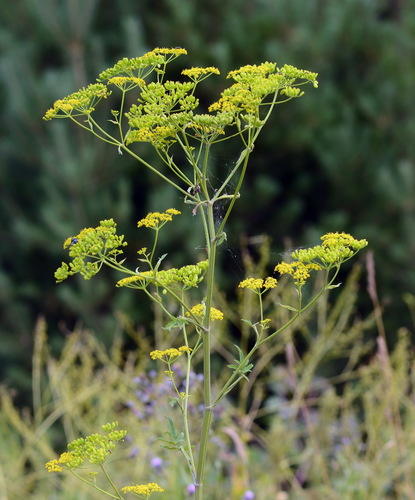
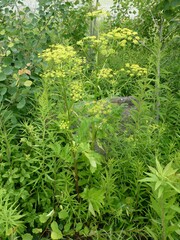
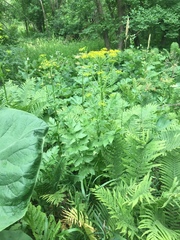
Parsnip (Pastinaca sativa L.) is a biennial member of the Apiaceae family. Its fleshy first-year root is edible, but sap and aerial parts can cause phototoxic dermatitis through furanocoumarins, especially in wild parsnip.
Read moreParsnip and Wild parsnip



© photo
(c) Pavel Gorbunov, some rights reserved (CC BY-NC), uploaded by Pavel Gorbunov · cc-by-nc
Bruce Cook · cc0
Mary Krieger · cc-by
Taken Aug 19, 2014 by Tela Botanica − Liliane Roubaudi (cc-by-sa)
Taken Jul 26, 2022 by Waldemar Zeja (cc-by-sa)
Taken Aug 21, 2019 by Pietro Brignoli (cc-by-sa)
Taken Aug 10, 2021 by Easger (cc-by-sa)
Taken Aug 11, 2020 by michel cosme (cc-by-sa)
© copyright of the Board of Trustees of the Royal Botanic Gardens, Kew.


Identity
Parsnip (Pastinaca sativa L.) is a biennial member of the Apiaceae family. In cultivation, its fleshy first-year root is the crop; on waste ground, the main concern is the phototoxic sap of wild parsnip. 1 8
POWO, WFO and IPNI confirm the accepted binomial. NC State describes a European-origin biennial whose root is edible but whose contact hazards also require attention. 2 3 4 5
Membership of the Apiaceae matters because confusing umbel-bearing plants can have serious consequences. A root vegetable deliberately sown in a garden presents a different situation from an unidentified yellow-flowered plant beside a path. 5 7
Cool-season sowing and soil preparation are central to parsnip's vegetable-garden role. This useful crop still needs protective handling, combining the benefits of a root vegetable with the hazards of its sap. 8 6
Both aspects belong to the same taxon. A valued winter root results from sowing and harvesting at the right stage; leaving the plant to bolt without protection can instead produce a tall, irritating umbellifer. 5 8
Recognition
During its first year, parsnip forms a rosette of compound leaves and a pale taproot that becomes sweeter after cold weather. Harvest that root before the plant runs to seed. 5 6
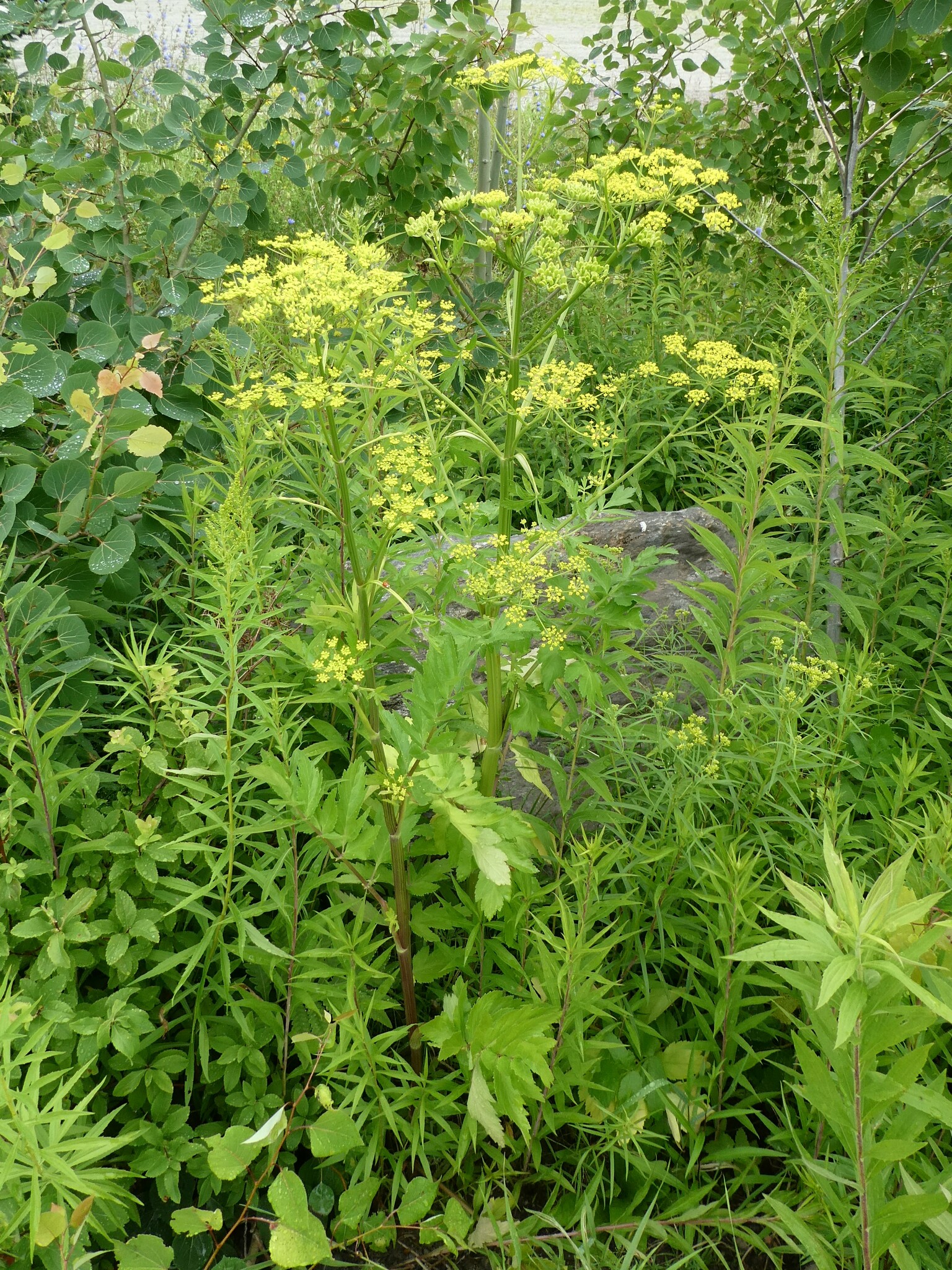
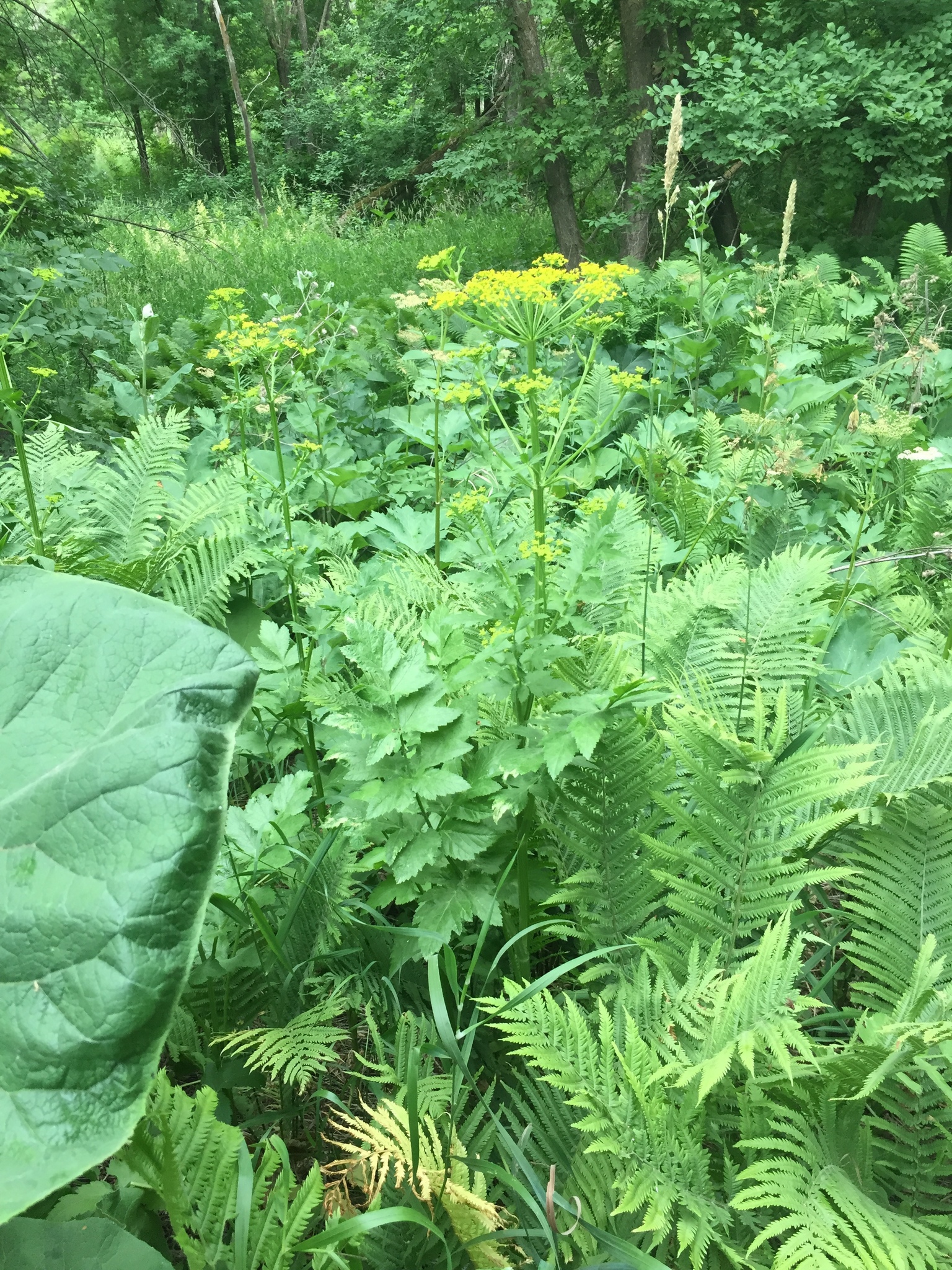
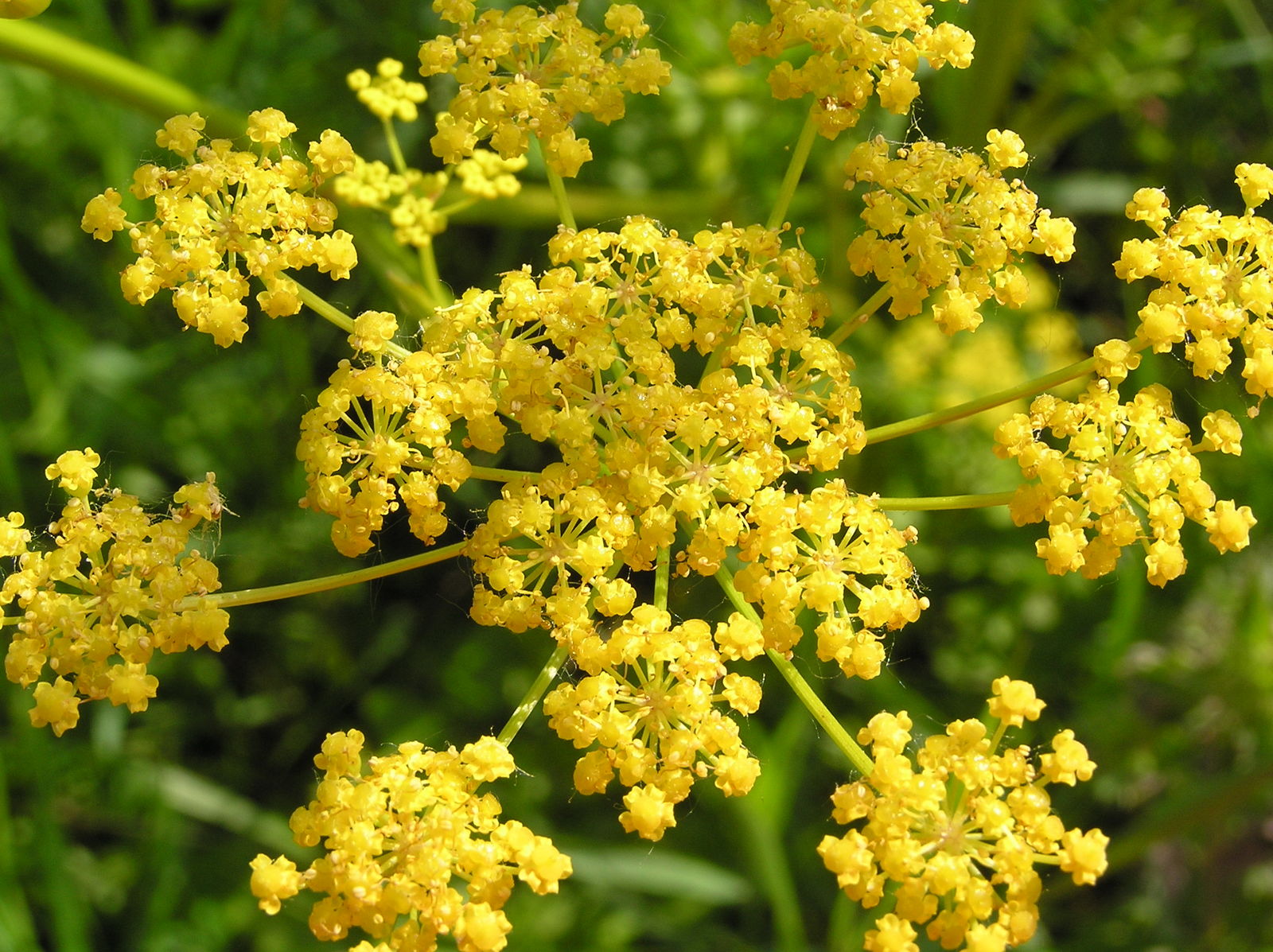
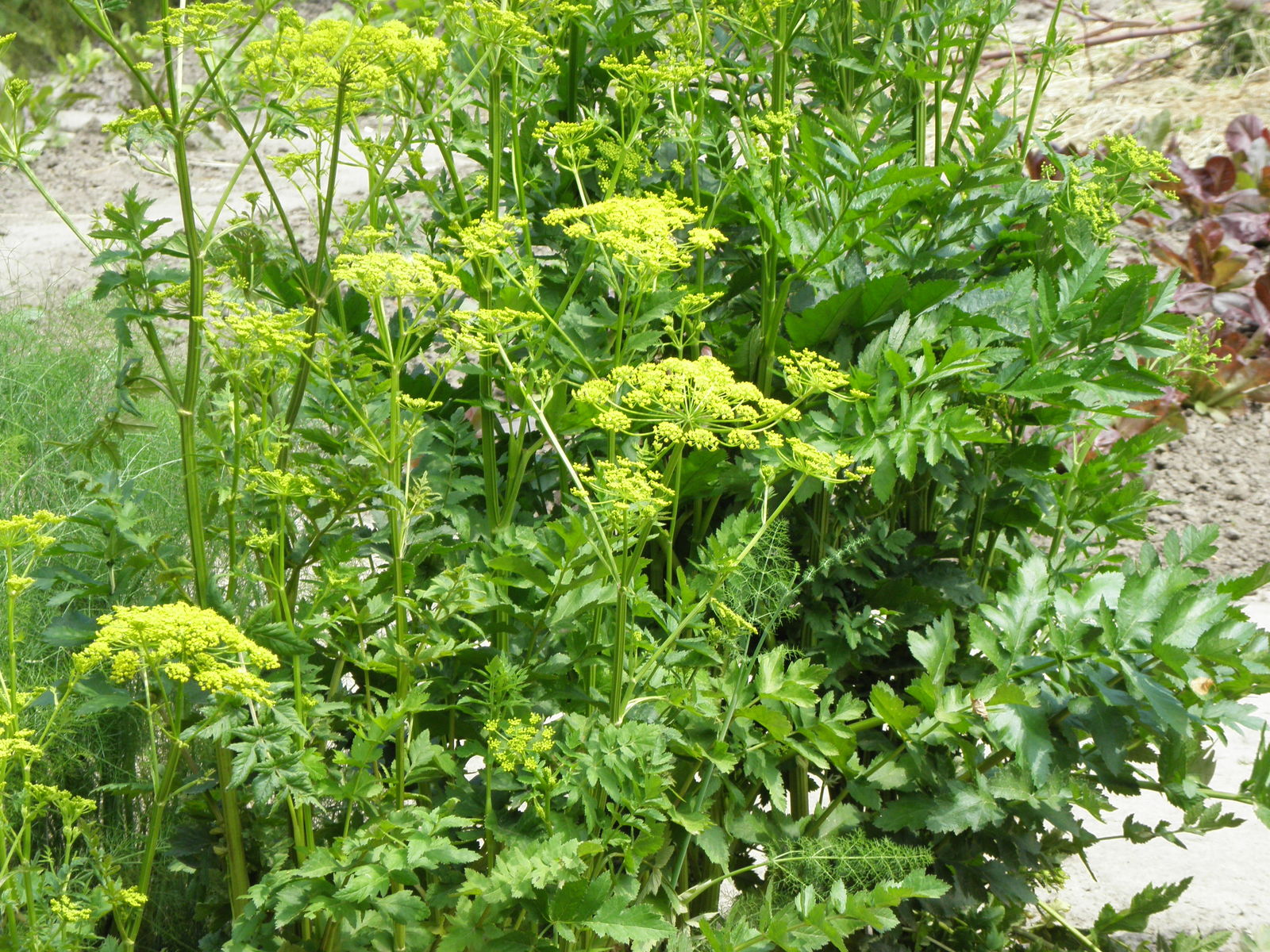
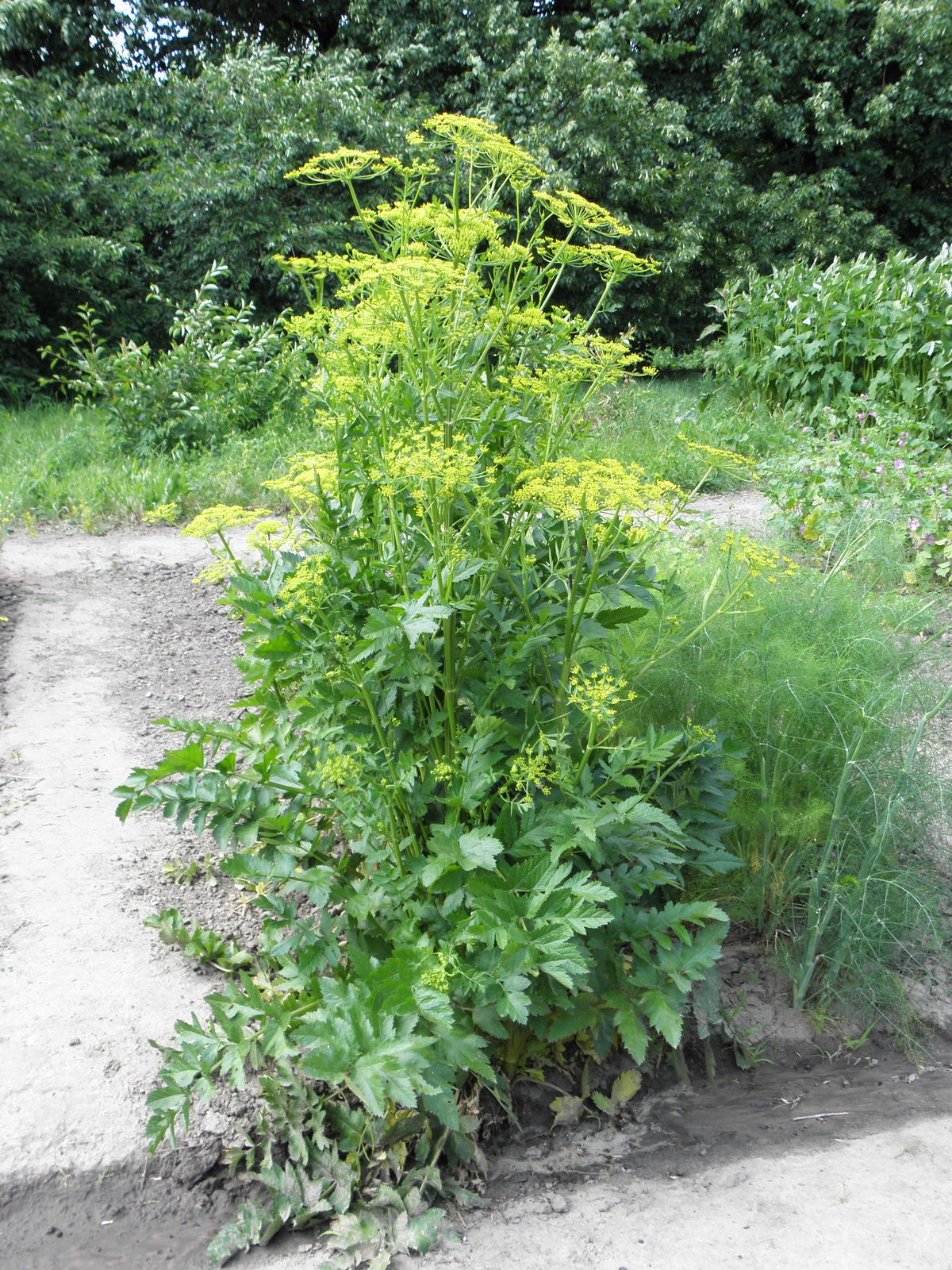
Second-year growth produces tall, hollow, angular, grooved stems. Compound umbels bear small yellow flowers, followed by dry, winged fruit dispersed by wind. 5
Large alternate leaves are compound, with toothed or lobed leaflets. This resembles other Apiaceae and can never, by itself, establish that a wild plant is safe to harvest. 5 7
Sap on sun-exposed skin is the key contact hazard. NC State reports light sensitivity with possible burns and blistering. 5
Useful taxonomy
The accepted botanical name is Pastinaca sativa L. The epithet sativa denotes cultivation, but escaped, wild and naturalized forms also exist, with contact hazards their principal concern. 2 3
The genus Pastinaca must be distinguished from Daucus, Heracleum, Angelica and other umbellifers. Umbels alone do not provide an adequate identification within this family. 5 7
Vegetable cultivars such as Hollow Crown and Gladiator are selected for more uniform roots. They do not remove the need for care around leaves, stems, flowers, fruit and sap. 6 5
A single species identity connects the garden vegetable with phototoxic wild parsnip. Treating them as wholly separate plants obscures that relationship and can understate the hazards of the whole plant. 8 1
Cultivated carrot is another possible source of confusion. Both are Apiaceae grown for roots, but their flowers, fruit and contact risks should not be reduced to a generic root-vegetable category. 2 5
Cultivation
Sow parsnip directly where it will grow, in deep, loose, stone-free soil. The taproot becomes misshapen in compacted or stony ground, or when seedlings are transplanted. 8 6
Germination can be slow and needs steady moisture. Established plants tolerate drier spells better, but irregular watering can produce hard or forked roots. 5
Root harvest should precede bolting. In the second year, energy moves into stems and umbels, and culinary root quality falls sharply. 6 5
Wear gloves, long sleeves and sun protection when weeding, harvesting or pulling bolted parsnips. Risk increases when sap reaches skin that is then exposed to light. 5 7
Direct sowing remains the most dependable approach. Prepare a deep drill, use fresh seed and thin early so that each root can grow downward without competition. Successful root development is often determined during those first weeks. 8 6
Uses
The cool-season root is its chief food use: soups, purées, roasting and winter vegetable dishes. NC State identifies the fleshy first-year root as the desired edible part. 5 6
In a vegetable garden, parsnip can share a root-crop bed with carrots, beets or leeks, provided the soil is deep. Container growing is worthwhile only in a very deep vessel. 8
Umbels attract flies, wasps, beetles and ants, according to NC State. Allowing every plant to flower, however, increases both seed dispersal and contact with flowering stems. 5
Wild or naturalized stands are unsuitable for casual harvesting. Identify the plant, protect skin and manage it if it grows where people pass. 7 5
Clear separation of garden areas helps: keep young rows accessible for root harvest, and remove bolting plants before tall umbels develop beside a path. This reduces both seed spread and accidental contact. 5 8
Precautions
NC State rates human poison severity as moderate and identifies furanocoumarins as the toxic principle. Reported effects include skin sensitivity to light, with possible severe burns and blisters. 5
Reported hazardous parts include flowers, fruit, leaves, sap, seeds and stems. The cultivated first-year root remains edible, but that does not make the entire plant harmless. 5 6
Dogs, cats and children also warrant care around waste ground or a vegetable bed left to flower. Avoid sap contact with skin or fur followed by sunlight exposure. 5 7
Skin protection is central to safe handling. Even pulling up a forgotten plant calls for long sleeves, gloves, prompt washing and avoidance of direct sun after suspected contact. 5 7
A properly cultivated parsnip root harvested at the right stage is an excellent vegetable. Bolted or wild plants require gloves, long sleeves and reliable identification. 8 5
Main sources
- Wikidata, Pastinaca sativa
- Plants of the World Online / Kew, Pastinaca sativa
- World Flora Online, Pastinaca sativa
- International Plant Names Index, Pastinaca sativa
- NC State Extension, Pastinaca sativa
- Wikipedia EN, parsnip
- Minnesota Department of Agriculture, wild parsnip
- Floralens, what to plant in January
If you are unsure about a plant’s toxicity, ask a botanist or veterinarian for advice.