
Spotted lady's thumb (Persicaria maculosa, )
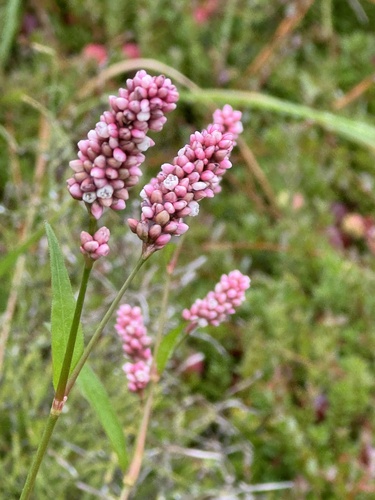
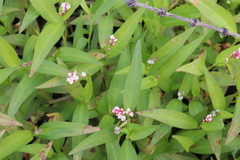
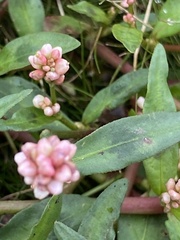
Spotted lady's thumb (Persicaria maculosa Gray, 1821) is an annual Polygonaceae native to temperate Eurasia, Macaronesia and North Africa. Its jointed stem carries lance-shaped leaves with a dark crescent-shaped blotch, followed by dense spikes of tiny pink flowers. Introduced to North America in the nineteenth century, it is now widely naturalized there as a weed of disturbed, damp ground.
Read moreSpotted lady's thumb, Lady's thumb and Redshank
Allow a few hours of direct sun per day, preferably morning or evening.
Full sun to light partial shade
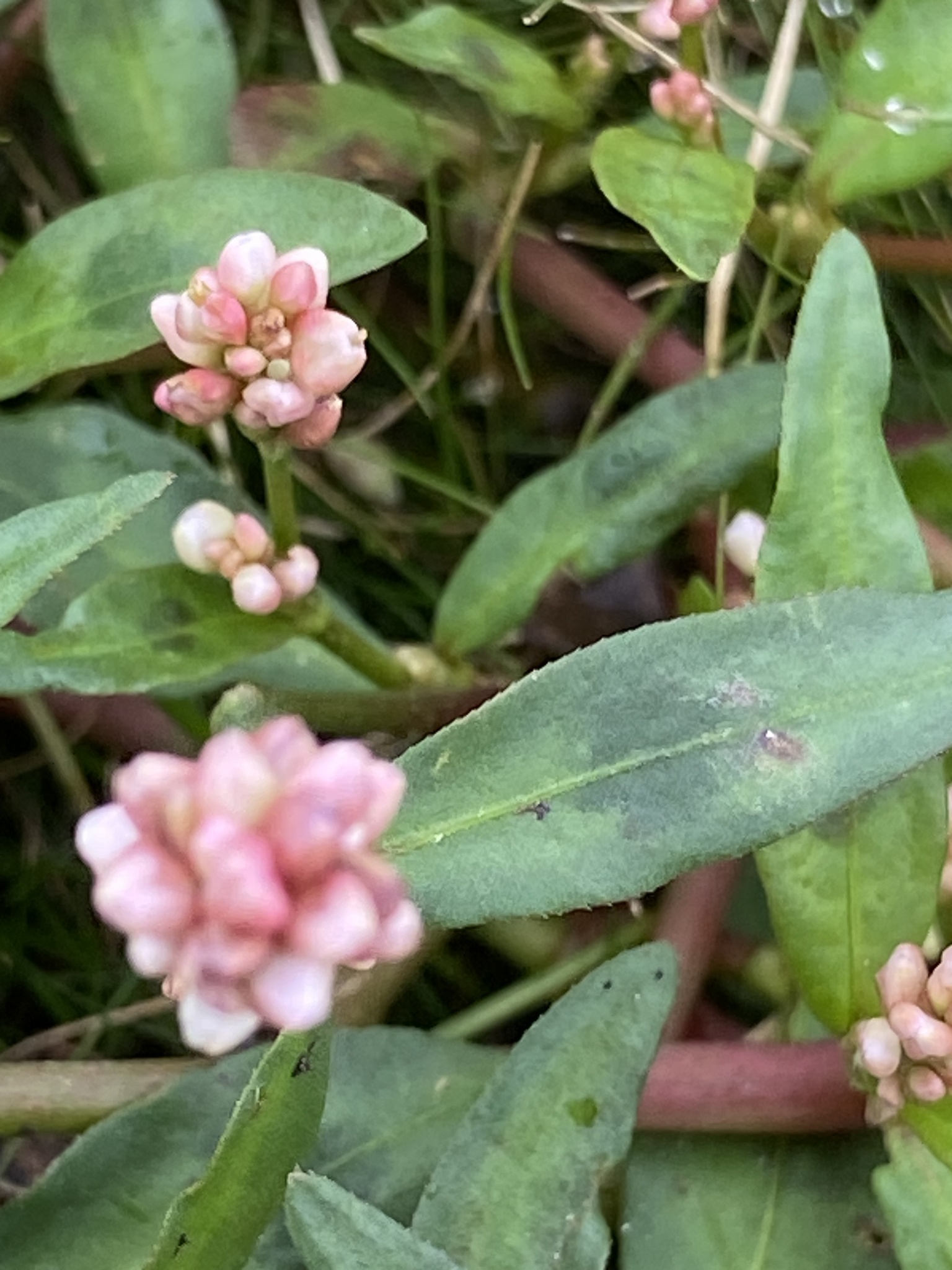


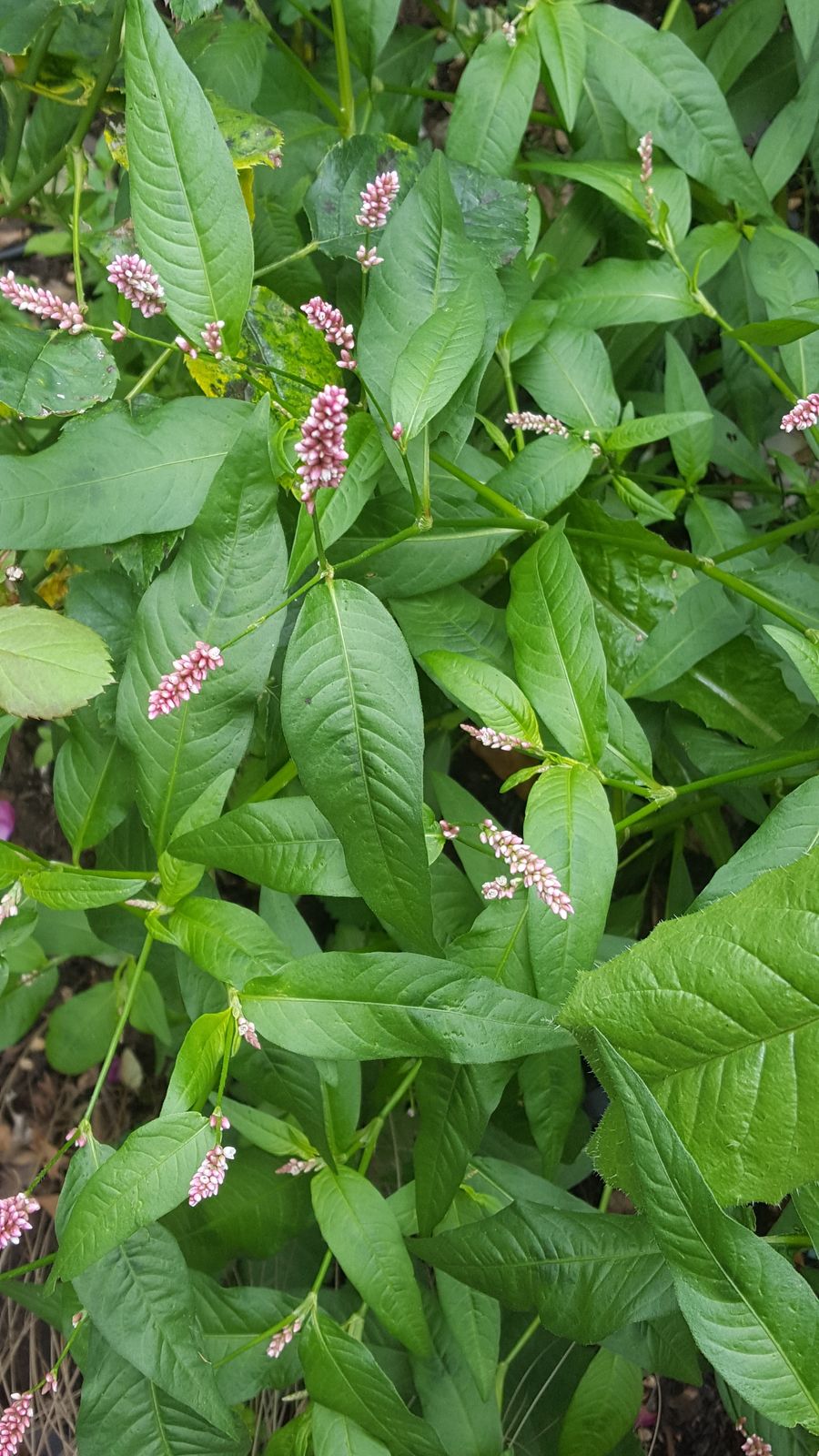
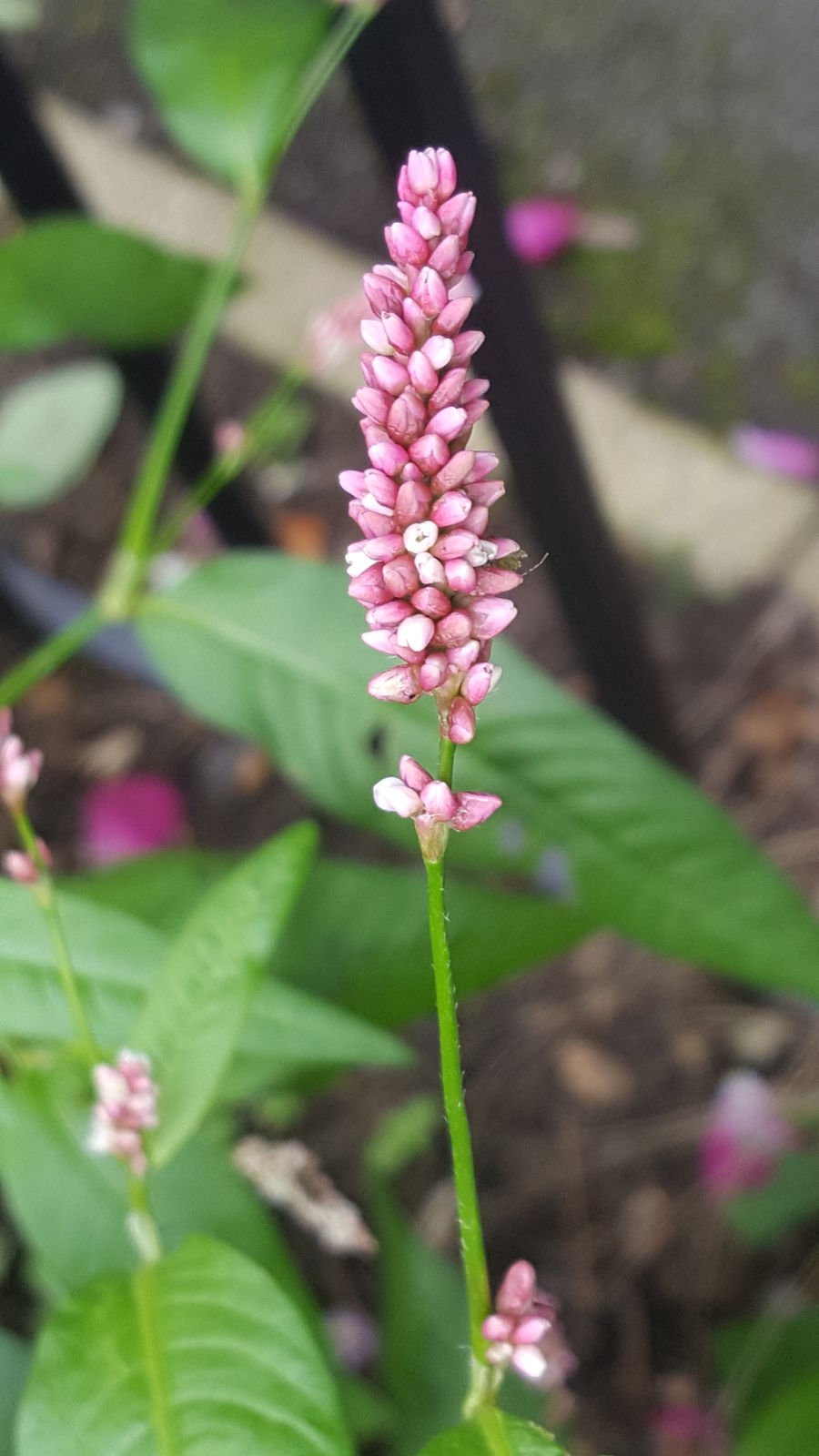
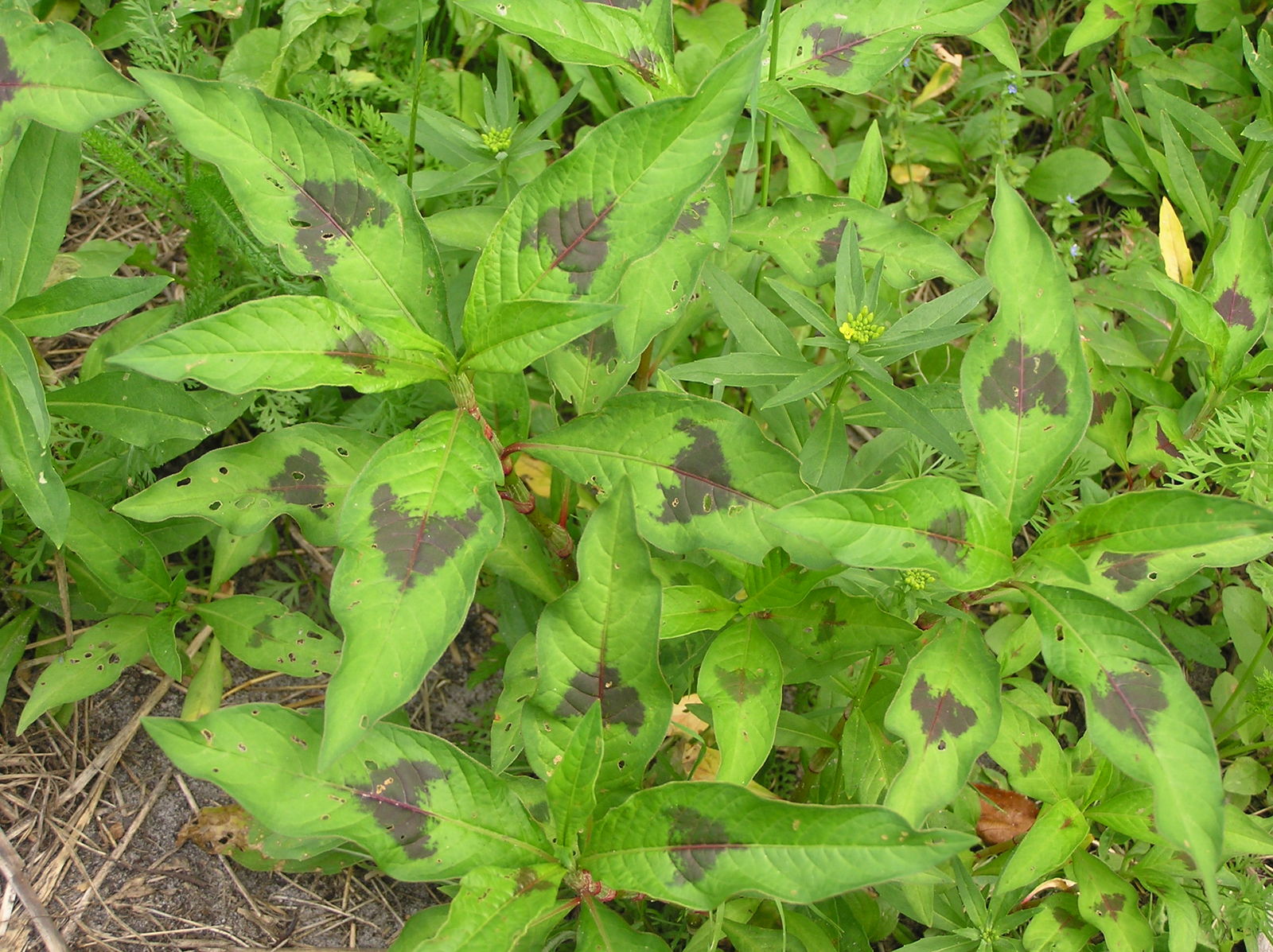
© photo
(c) hemulen_wa, some rights reserved (CC BY-NC) · cc-by-nc
iNaturalist User · cc0
Pam Martin · cc0
Taken May 31, 2014 by Tela Botanica − Clément BEURET (cc-by-sa)
Taken Sep 22, 2019 by evelyne vauzelle (cc-by-sa)
Taken Aug 21, 2019 by Dan W (cc-by-sa)
Taken Dec 24, 2021 by Gui ferl (cc-by-sa)
Taken Aug 7, 2020 by Joshua Griffin (cc-by-sa)
© copyright of the Board of Trustees of the Royal Botanic Gardens, Kew.




Global distribution
Spotted lady's thumb is native to temperate Eurasia extending into Indochina, Macaronesia and North Africa. In France, where it is native, it remains common across almost the entire country. Introduced to North America, it has been documented in the Great Lakes region since 1843 and has since spread across much of the continent. It also occurs in Australia and New Zealand.
- Native4
- Introduced4
- Metropolitan France
- Europe
- Temperate Asia extending into Indochina
- Macaronesia and North Africa
- United States
- Canada
- Australia
- New Zealand
Hexagons: regions where the plant occurs. Green dots: native range.1
Identity
Spotted lady's thumb (Persicaria maculosa Gray, 1821), also called lady's thumb or redshank, is an annual Polygonaceae in the genus Persicaria. Its dark, crescent-shaped leaf blotch and reddish stem help identify it early in growth on wet, disturbed ground in temperate Europe. Plants of the World Online accepts the name dating to 1821, when Gray published it from an earlier Linnaean basionym. 1 2
Latin persica, meaning peach tree, gives the genus Persicaria its name: the lance-shaped leaves resemble peach foliage. The epithet maculosa, “spotted,” describes the dark leaf marking, which also explains the English name lady's thumb. 4
Recognition
Spotted lady's thumb develops a jointed stem, upright or spreading according to available space. It commonly reaches 20–60 cm (8–24 in), occasionally 1 m (3.3 ft) in rich, wet ground. Swollen nodes, often reddish, carry the membranous, short-haired sheaths typical of Polygonaceae. 3 4
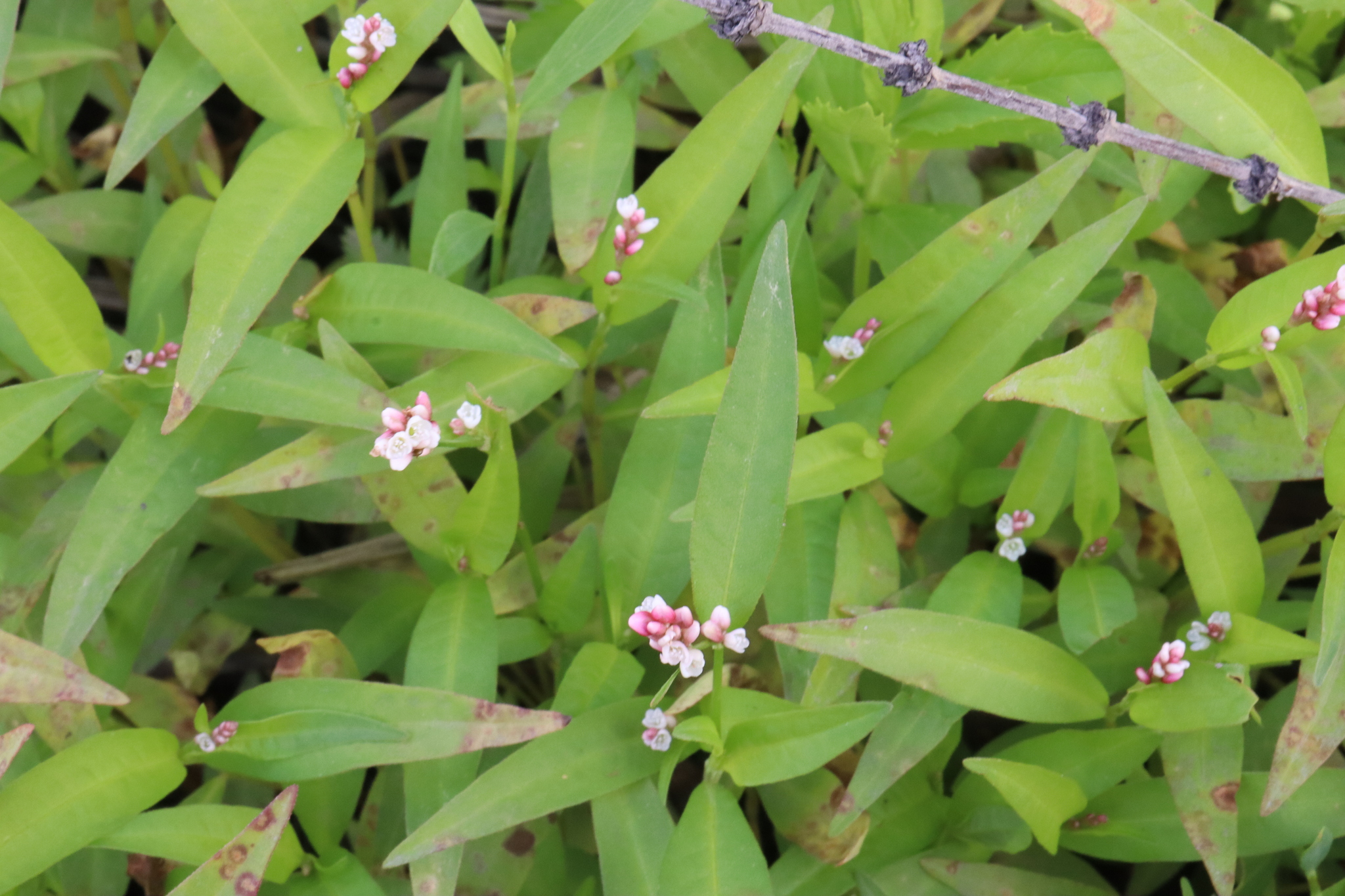
Almost stalkless, lance-shaped leaves extend along the stem and measure 1–18 cm (0.4–7 in) long. Most display a brown or blackish crescent-shaped blotch in the center. This is useful but not conclusive: some individuals lack the marking. When it is absent, the hairy sheath at each node remains the decisive character, present in all individuals. 4
Pink to whitish flowers, just 2–4 mm (0.08–0.16 in) across, form dense, upright spikes in the upper leaf axils. In the temperate Northern Hemisphere these appear from July to September. The spikes are much less showy than those of garden-grown Persicaria bistorta. Each flower produces a glossy black, three-sided achene hidden within the persistent perianth. 3 4
Useful taxonomy
The name retained by Plants of the World Online is Persicaria maculosa Gray. Its basionym, Polygonum persicaria L., dates to Linnaeus in 1753. Several synonyms still occur in older floras and herbarium collections: 1
- Persicaria mitis Delarbre (botanical synonym or infraspecific name)
- Persicaria persicaria (L.) Small, a tautonym rejected under nomenclatural rules (botanical synonym or infraspecific name)
- Polygonum ruderale Salisb. (botanical synonym or infraspecific name)
- Peutalis persicaria (L.) Raf. (botanical synonym or infraspecific name)
Long treated as a section of Polygonum, the genus Persicaria groups plants whose nodes carry a membranous ochrea. This sheath distinguishes Polygonaceae from other herbaceous plants with flowers clustered into spikes. 7
Habitat and range
Temperate Eurasia extending into Indochina, Macaronesia and North Africa form the native range of spotted lady's thumb. In France, where it is native, it remains common across almost the whole country, from riverbanks to cultivated fields. 1
North American records date its introduction to the Great Lakes region in 1843. It has since spread across much of the continent, where the USDA PLANTS Database lists it as a naturalized weed. Spotted lady's thumb also occurs in Australia and New Zealand, outside its native range. 6 4
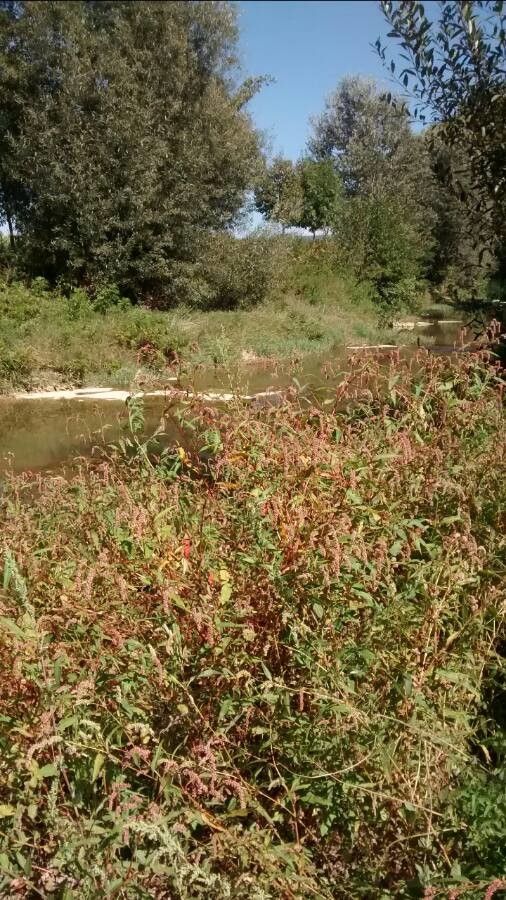
Disturbed, cool to wet soils suit the plant: riverbanks, ditches, cultivated fields, lightly weeded gardens and waste ground beside paths. Dry, well-drained sites restrict its growth. Its seasonal temperature tolerance is broad, −15 to 35 °C (5–95 °F), but it establishes persistently only where soil remains moist. 3
Life cycle and reproduction
An entire annual life cycle fits within one growing season. In the temperate Northern Hemisphere, spring germination leads to rapid leafy growth, flowering from July to September and death with the first autumn frost. Once soil warms, germination takes 1–2 weeks, allowing quick colonization of freshly worked land. 3
Self-fertile flowers produce black achenes that fall to the ground at maturity rather than being ejected. Water, wind and seed-eating birds subsequently disperse them; birds consume them in autumn and winter. This movement helps explain the plant's frequent occurrence beside waterways. 4
Rather than relying mainly on seeds dormant for decades, spotted lady's thumb depends chiefly on abundant annual seed production. Removing plants before flower spikes develop therefore effectively limits self-seeding the following year. 3
Uses and risks
Young leaves and shoots can be eaten raw or cooked. Their mild flavor contrasts with the pungency of the related Persicaria hydropiper. Although technically edible, the seeds are seldom used because gathering them yields little practical return. 5
Modest amounts of oxalic acid occur in the leaves, together with astringent tannins used traditionally against inflammation and in poultices. No acute toxicity is documented for humans or domestic animals. Regular consumption is nevertheless discouraged for people with gout, arthritis or kidney stones. 5
Cherokee traditional practice used crushed leaves externally to relieve itching caused by poison ivy. This use is reported in North American ethnobotanical accounts. 4
Varieties, look-alikes and related plants
Spotted lady's thumb has no recognized ornamental cultivar. It grows spontaneously and has not been selected for gardens, unlike horticultural relatives such as Persicaria bistorta and Persicaria amplexicaulis. 3
A frequent source of confusion is waterpepper, Persicaria hydropiper. Its crushed leaf tastes distinctly pungent, while that of P. maculosa is mild. The sheaths and density of the flower spikes also help distinguish the two species before flowering. 5
Related smartweeds, including Persicaria lapathifolia and Persicaria pensylvanica, share an upright habit and sometimes spotted leaves. Examine the membranous sheath at the leaf axil closely: its length and the presence and length of marginal hairs vary between species. These small characters require close inspection rather than identification from a distance. 4
Main sources
- Plants of the World Online / Kew, Persicaria maculosa Gray
- International Plant Names Index, Persicaria maculosa Gray
- Royal Horticultural Society, Persicaria maculosa - redshank
- Go Botany / Native Plant Trust, Persicaria maculosa
- Plants For A Future, Polygonum persicaria
- USDA PLANTS Database, Persicaria maculosa - spotted ladysthumb
- Integrated Taxonomic Information System, Persicaria maculosa Gray
Frequently asked questions
Is spotted lady's thumb poisonous?
No acute toxicity is documented for humans or domestic animals. Leaves contain modest amounts of oxalic acid, warranting caution for people with gout, arthritis or kidney stones.
Why do the leaves have a dark blotch?
The crescent-shaped mark occurs in most individuals, though not all. It explains both the English name lady's thumb and the Latin epithet maculosa. Its occasional absence does not rule out the species.
Can you eat spotted lady's thumb?
Young leaves and shoots can be eaten raw or cooked. They have a mild flavor, without the pungency of Persicaria hydropiper. The seeds are technically edible but seldom used in practice.
How can you tell spotted lady's thumb from waterpepper?
Taste is the quickest distinction described for these plants: a crushed Persicaria hydropiper leaf is distinctly pungent, while Persicaria maculosa is mild. The fringed sheath and density of the flower spikes also help distinguish them.
Is spotted lady's thumb invasive in France?
No. It is native there and remains a common weed without a regulated status. In North America, where it was introduced as early as 1843, it is now widely naturalized across the continent.
Where does spotted lady's thumb grow?
It colonizes damp riverbanks, ditches, cultivated fields and lightly weeded gardens wherever soil remains moist to wet and rich in nitrogen.
Are there garden cultivars of spotted lady's thumb?
No ornamental cultivar is recognized. It grows spontaneously and has not been selected for gardens, unlike relatives such as Persicaria bistorta or Persicaria amplexicaulis.
If you are unsure about a plant’s toxicity, ask a botanist or veterinarian for advice.