
Petunia
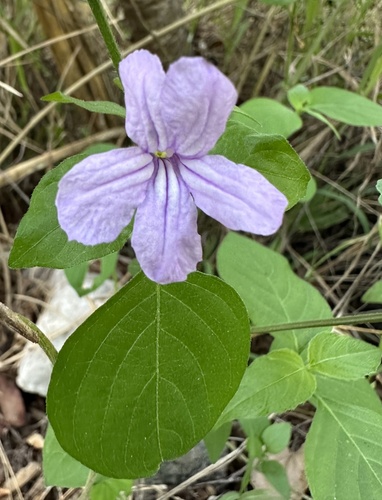
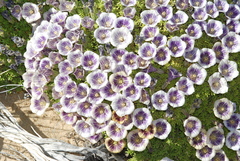
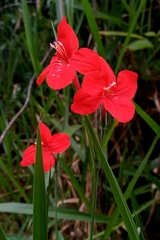
Petunia is a genus in the Solanaceae grown for colorful trumpet-shaped flowers. Garden plants are mainly horticultural annuals or tender perennials treated as annuals, suited to sunny planters, hanging baskets, borders and pots, with a long flowering season when water and nutrients keep pace with growth.
Read more


© photo
Robert Taylor · cc-by
iNaturalist User · cc-by
Carlos Otávio Gussoni · cc-by-nc
© copyright of the Board of Trustees of the Royal Botanic Gardens, Kew.
Identity
Petunia is the genus behind the familiar purple-flowered balcony plant. Garden and container specimens are often horticultural hybrids, so the genus Petunia, in the Solanaceae family, is the appropriate botanical identification when a particular species or hybrid has not been established. 1 8
Kew's POWO, World Flora Online and IPNI recognize this genus. The notation Petunia spp. covers plants at genus level without selecting a particular wild species or assigning every garden specimen to one named commercial series. This is useful for the varied petunias grown as seasonal ornamentals. 1 2 3
Garden petunias are mainly grown as seasonal annuals, although the genus includes plants that are perennial in their native range. In temperate climates, they are planted after frost has passed and are often replaced at the end of the growing season rather than kept outdoors through winter. 6 5
Purple-flowered forms provide strong, immediate color. Their main role is a flower-filled balcony display, quickly covering a planter or hanging basket, rather than a naturalized planting. The effect is deliberately abundant, with enough flowers to make a conspicuous patch of color even when viewed from a distance. 8
Recognition
Broad funnel-shaped or trumpet-shaped flowers rise above green, slightly sticky foliage. Flower colors include purple, pink, red, white, blue, yellow and combinations of two colors. The open flower shape and soft green growth are useful recognition features across the many different garden forms. 4 5 9
Large flowers are striking but quickly show damage after heavy rain. Multiflora types and trailing series often perform better on exposed balconies. Choosing a petunia therefore involves the planting position as well as its color: a sheltered display and a windy balcony place different demands on the flowers. 5
Healthy plants stay dense, with flexible stems that are not excessively stretched. Yellowing leaves, fewer flowers and a pot that dries very quickly may indicate too little root space or exhausted potting mix. These changes are useful signals to assess the growing conditions rather than judge the plant by flower color alone. 4
A purple petunia creates the classic mass of color visible from a distance. In a temperate Northern Hemisphere season, flowering can run from May until frost if warmth, water and nutrition remain steady. In other climates, read that timing in terms of the local warm, frost-free growing season. 8 5
Useful taxonomy
Petunia Juss. names a genus rather than a single species. Membership in the Solanaceae places petunias in the same family as plants as different as tomatoes, ornamental tobaccos and other nightshades. Their familiar horticultural role, however, is that of a freely flowering seasonal ornamental. 1 6
Modern garden petunias are often complex hybrids. Retaining the genus is more accurate than assigning a species without evidence, especially where plants are selected for their color and growth habit. A purple flower alone does not establish the identity of a particular wild species. 5 8
Names such as Surfinia and Supertunia identify commercial series, rather than a botanical rank. They help gardeners select a growth habit and display style, but they do not replace the botanical name Petunia. The series name and the genus describe different aspects of the same garden plant. 5
Keeping the genus clear also helps avoid confusion with calibrachoa. Both can produce similar-looking balcony displays, but a plant identified as Petunia belongs with that genus. Similar uses in hanging baskets and containers do not make the two names interchangeable. 1 8
Cultivation
For sustained flowering, provide full sun, warmth and a freely draining growing medium that is not left dry for too long. Water container plants regularly, then let the excess drain away. A consistent supply of moisture matters, but standing water around the roots does not provide the same benefit. 4 5
Nutrition strongly affects the display. A planter full of petunias flowers continuously only when its soil volume, regular watering and nutrient supply support the rapid growth. As stems extend and flowers keep opening, a small or exhausted volume of potting mix becomes a practical limit. 5
When stems lengthen and carry fewer flowers, cut back part of the plant. This encourages shorter new shoots and produces a neater display in the later part of the season. Trimming is especially useful when the center of a container begins to look sparse. 4 9
Plant petunias outdoors after frost. Cold spells stop growth, while planting very late in the heat of summer requires more watering to establish a dense plant. The right planting date therefore follows local frost and heat conditions rather than a single calendar date for every region. 5
In hanging baskets, the amount of potting mix is a major limiting factor. A light midsummer trim followed by regular watering often produces a better late-season display than leaving long stems to trail unchecked until the middle of the basket becomes bare. 4 5 9
Small-flowered series tolerate spells of rain and wind better. On a very exposed terrace, they are often more consistent than spectacular large-flowered forms, whose petals need more visible cleanup after bad weather. Match the size of the flowers to the shelter available at the site. 5
Uses
A sunny planter is an especially effective setting for petunias. Balconies, hanging baskets, tall containers, window boxes, annual borders and conspicuous summer beds all suit their generous flowering. The same plant can form a low color patch or spill over an edge, depending on its growth habit. 8 5
Petunias and pelargoniums make a familiar balcony pairing, but their requirements differ. Petunias often need more water and nutrients, while pelargoniums are more vulnerable to excessive watering. Keeping these differences in mind helps when planning containers that place the plants close together. 8 4
Trailing forms cover hanging baskets well. Compact forms are better suited to low borders, where their shape stays easier to read. Reserve the largest flowers for places sheltered from driving rain, so that their visual impact is not quickly lost after a storm. 5
In a strongly naturalistic garden, petunias may look conspicuously cultivated. They work best where the planting deliberately uses generous, continuous color and a clearly defined visual effect. Their abundance can be an advantage when the design calls for an emphatic seasonal display. 8
On a balcony, petunias fill the colored space around plants with a stronger upright structure. They can trail in front of a pelargonium, edge a mealycup sage or create a purple carpet below a taller plant. Their flexible stems help connect the different levels of a container display. 8
Choose vigor to match the space available. A strongly trailing series quickly outgrows a small window box, whereas a compact form suits narrow ledges better. A plant whose growth fits the container is also less likely to demand emergency watering during hot weather. 5
Cautions
The ASPCA lists petunias as non-toxic to dogs, cats and horses. They nevertheless remain ornamental plants and should not be offered as food. This low level of concern does not turn a flowering balcony plant into a crop intended for eating. 7 1
The main practical vulnerabilities arise in containers. Sudden drought, exhausted potting mix, hot wind and aphids can quickly reduce the display of an otherwise freely flowering plant. A decline in flowers is therefore a reason to check the growing conditions and foliage. 4 5
Avoid excessive water in a closed saucer. Petunias need regular moisture, not roots deprived of air by standing water. Allowing surplus irrigation to escape is an essential part of balancing their high water demand with a healthy root environment. 4
A petunia that stops flowering in late summer can often recover. Shorten the stems, remove damaged foliage and resume regular watering, provided the growing medium still has sufficient fertility. This can restore the display rather than leaving a tired plant unchanged for the rest of the season. 4 5 9
The genus Petunia encompasses the familiar purple-flowered balcony hybrids without implying a particular species. Growth habit, flower size and vigor then provide the practical distinctions needed for choosing among them, while the genus remains the stable botanical reference. 8 1
Main sources
- Plants of the World Online / Kew, Petunia
- World Flora Online, Petunia
- International Plant Names Index, Petunia
- University of Florida IFAS Extension, Petunias — Petunia spp. and cultivated garden forms
- Royal Horticultural Society, Petunia search results
- Wikipedia EN, Petunia
- ASPCA, Petunia
- Floralens, purple flower selection
- Ask Extension, What makes petunias feel unpleasantly sticky? — expert response #259248 (2015)
If you are unsure about a plant’s toxicity, ask a botanist or veterinarian for advice.