
Maritime pine (Pinus pinaster, )
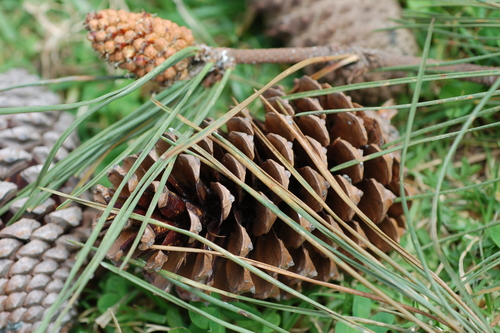
Maritime pine (Pinus pinaster) is a large conifer in the Pinaceae family, native to the western Mediterranean and the Atlantic coast of southwestern Europe. This fast-growing tree has long needles in pairs and large conical cones. It dominates the Landes de Gascogne forest in France, where it is grown for timber and resin.
Read moreMaritime pine and Cluster pine

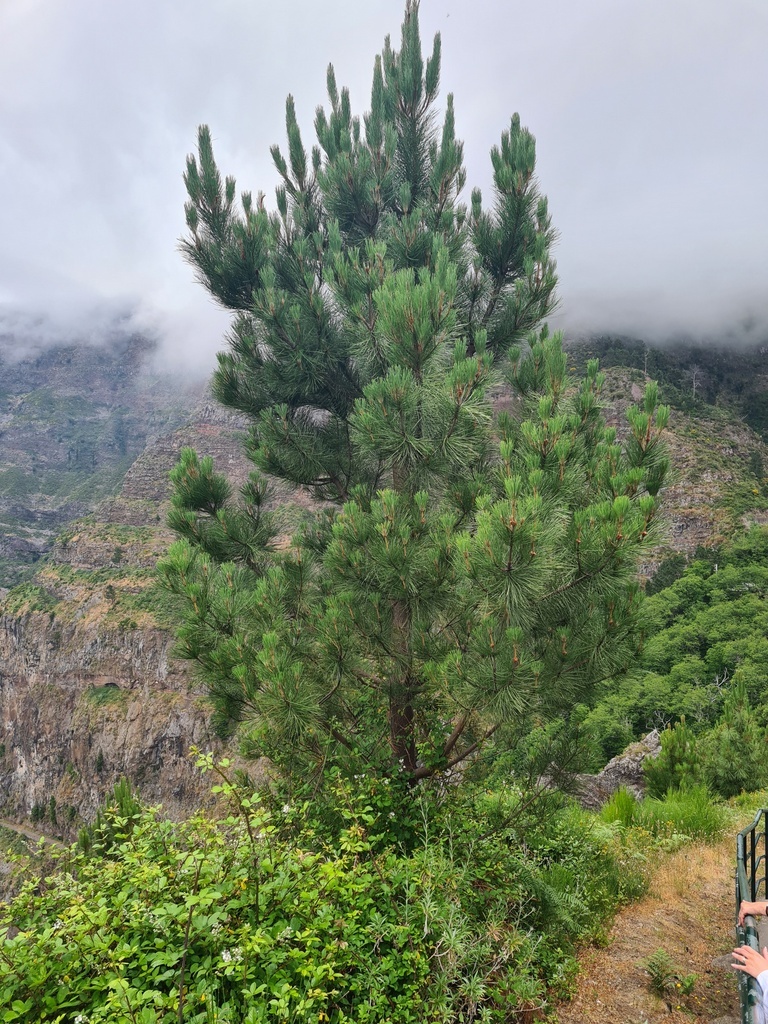
© photo
(c) Hans-Jürgen Becker, some rights reserved (CC BY-NC-SA) · cc-by-nc-sa
Simon Tonge · cc0
Vítor Jorge · cc-by
(c) douglaseustonbrown, some rights reserved (CC BY-SA) · cc-by-sa
no rights reserved · cc0
Global distribution
Pinus pinaster is native to the western Mediterranean and the Atlantic coast of southwestern Europe, including Portugal, Spain, France and Italy, as well as northwestern Africa. Widely planted for forestry, maritime pine has naturalized outside this range, notably in South Africa and Australia, where it is sometimes considered invasive. These introduced populations are distinct from its native Mediterranean–Atlantic range.
- Native6
- Invasive2
- Metropolitan France
- Spain
- Portugal
- Italy
- Morocco
- Algeria
- South Africa
- Australia
Hexagons: regions where the plant occurs. Green dots: native range.1
Identity
Maritime pine (Pinus pinaster Aiton, 1789), also known as cluster pine, is a large conifer in the genus Pinus and the Pinaceae family. A fast-growing tree native to the western Mediterranean and the Atlantic coast of southwestern Europe, it colonizes sandy, acidic coastal ground. 1 5
France's Landes de Gascogne forest is closely associated with maritime pine. Extensively planted there, it forms the largest forest tract in western Europe. Its timber and resin are harvested, and it is also planted as an ornamental and windbreak on sandy coastal land. 8 7
Recognition
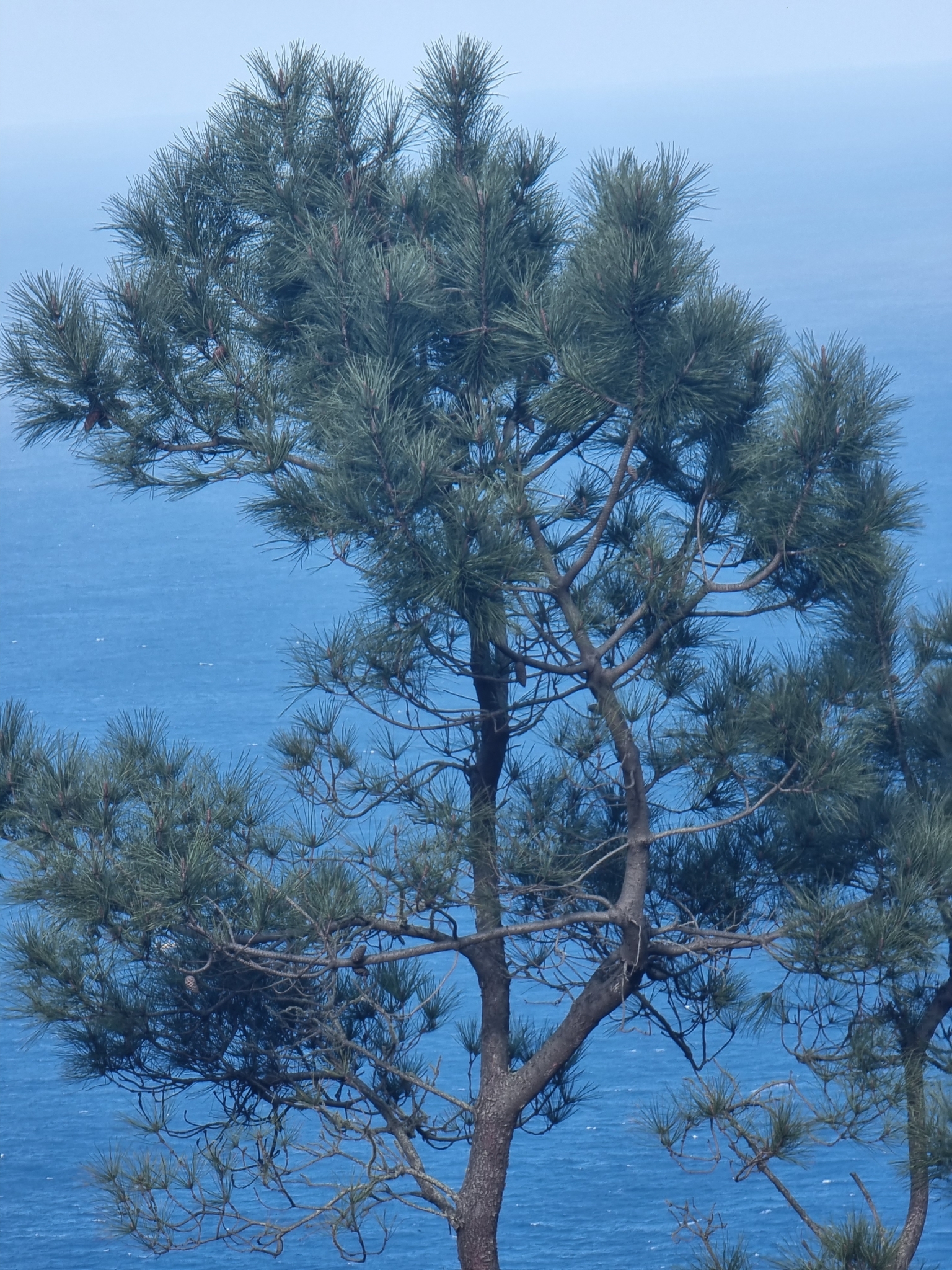
Long, stiff foliage is the first clue to Pinus pinaster: dark green, somewhat thick needles grow in pairs and measure 10–20 cm (4–8 in), among the longest of European pines. They remain on the tree for several years, giving its crown a dense, dark texture. 4 3
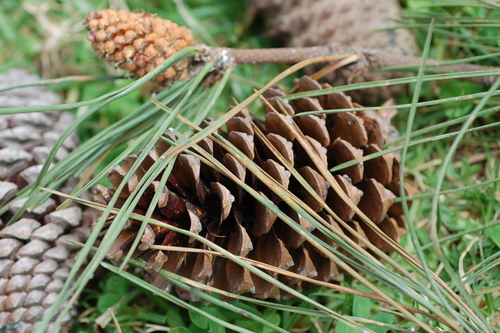
Large, symmetrical, conical cones measure 10–18 cm (4–7 in). Initially green, they turn glossy brown at maturity after about two years. They often remain attached for several more years before releasing winged seeds carried by the wind. Thick, deeply fissured, reddish-brown to gray bark gives old trunks a distinctive appearance. 4 5
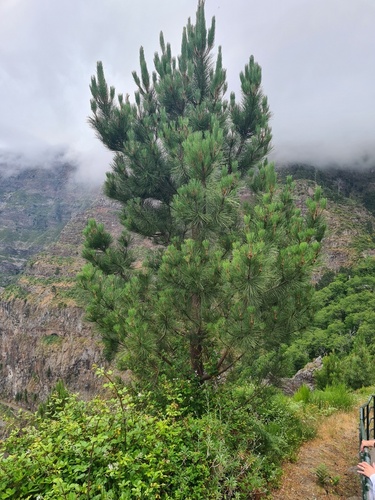
A young tree has a conical outline, later developing an irregular, open crown above a clear trunk. Trees commonly reach 20–30 m (66–98 ft), sometimes more on favorable sites, and can live for several centuries. 3 6
Useful taxonomy
William Aiton described the species as Pinus pinaster Aiton in 1789. It belongs to the hard-pine subgenus, and its naming history includes several names now treated as synonyms:
- Pinus maritima Lam., a historical synonym;
- Pinus syrtica Thore, another synonym;
- Pinus nigrescens Ten., also placed in synonymy;
- Pinus lemoniana Benth., a further historical name.
For identification across these names, the accepted scientific name remains Pinus pinaster. Several subspecies are recognized: the typical Atlantic subsp. pinaster; subsp. escarena, ranging from Spain to Italy and northwestern Africa; and the rare subsp. renoui of northeastern Algeria. Maritime pine should be distinguished from Aleppo pine (Pinus halepensis) and Turkish pine. 1 2
Habitat and range
Western Mediterranean coasts and southwestern Europe's Atlantic frontage form the native range of Pinus pinaster: Portugal, Spain, France and Italy, together with northwestern Africa. It grows in full sun on coastal dunes and sandy soils, lowland acidic heath and dry slopes. 1 7
On poor, well-drained ground, this pioneer species tolerates drought and salt spray but struggles with limestone and standing water. Wind-dispersed seeds let it quickly recolonize clearings and bare ground, making it an important tree for Atlantic reforestation. 4 6
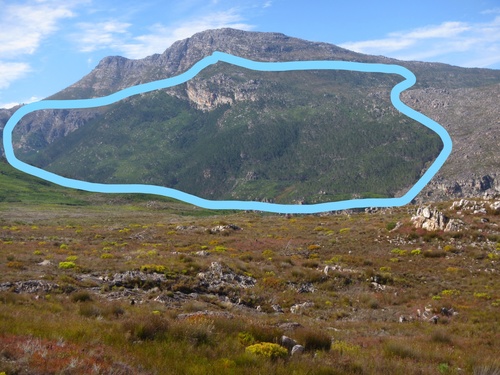
Forestry planting has taken maritime pine beyond its native range. It has naturalized notably in South Africa and Australia, where abundant self-seeding has made it locally invasive. These introduced populations should be distinguished from the native Mediterranean–Atlantic range. 3 5
Life cycle and reproduction
Cone production rather than flowers marks maritime pine as a gymnosperm, like all pines. Small, yellowish male cones release light pollen in spring, carried by the wind through wind pollination. Fertilized female cones enlarge and mature over about two years. 5 4
Opening ripe cones release winged seeds for wind dispersal. Germination is quick on sandy ground, and young trees soon accelerate their growth. Among Europe's fastest-growing pines, maritime pine gains height rapidly during its first few decades, then may live for several centuries. 6 3
Nursery propagation relies on seed. Seeds collected from ripe cones germinate in spring within a few weeks. Genetic selection of Landes forest stands, begun in the 1960s, has greatly improved trunk straightness and timber productivity, making maritime pine a highly selected forestry tree. 4 6
Uses and risks
Timber is maritime pine's main product, used for ordinary construction, crates, stakes and pulp for paper. Its other major product is resin, formerly collected through tapping, or incisions in the trunk. Resin yields turpentine and rosin, which once supported a major industry in the Landes. 6 5
Ingestion does not make maritime pine poisonous. Contact is the main concern: resin, sawdust and wood dust can cause irritation and dermatitis in sensitive people, so gloves are advisable when handling resinous wood. A separate hazard comes from pine processionary caterpillars, which often colonize these trees. Their hairs strongly irritate people and animals; avoid all contact. 6 4
Varieties, look-alikes and related plants
Geographic subspecies, rather than an array of ornamental cultivars, account for the main forms of maritime pine. Subsp. pinaster dominates the Atlantic coast and most Landes stands; subsp. escarena occupies the western Mediterranean; the rare subsp. renoui is confined to the Maghreb. 1
Other European pines can cause confusion:
- Pinus halepensis, Aleppo pine, has much finer, paler needles;
- Pinus pinea, stone pine, has an umbrella-shaped crown and large edible seeds;
- Pinus sylvestris, Scots pine, has orange upper bark and shorter needles.
Paired, long, stiff needles, large glossy brown conical cones and thick reddish-brown bark together provide the most reliable confirmation of Pinus pinaster. 4 3
Main sources
- Plants of the World Online / Kew, Pinus pinaster Aiton
- International Plant Names Index, Pinus pinaster Aiton
- Royal Horticultural Society, Pinus pinaster - maritime pine
- NC State Extension, Pinus pinaster (Maritime Pine)
- Encyclopaedia Britannica, pine (Pinus)
- Plants For A Future, Pinus pinaster
- Tela Botanica, Pinus pinaster Aiton
- INPN / MNHN, Pinus pinaster Aiton, 1789 (cd_nom 113689)
Frequently asked questions
Is maritime pine poisonous?
Maritime pine is not poisonous if ingested. However, its resin, sawdust and wood dust can irritate the skin of sensitive people after repeated contact. Wear gloves when handling its wood and resin.
Why is maritime pine associated with the Landes forest?
During the 19th century, maritime pine was planted extensively in the Landes de Gascogne to drain marshes, stabilize dunes and establish a timber resource. It remains the dominant species there and is harvested for wood and resin.
How fast does maritime pine grow?
Growth is fast, especially during the first few decades. In sandy soil it gains height quickly and commonly reaches 20–30 m (66–98 ft), although its final open crown takes several decades to develop.
What soil does maritime pine need?
Sandy, acidic, very well-drained soil suits it best. It tolerates poor ground and drought, but limestone can yellow its foliage, while waterlogged soil causes root rot.
Which pests threaten maritime pine?
Pine processionary caterpillars defoliate crowns and have irritating hairs; maritime pine scale weakens stands; and pine wood nematodes, carried by insects, cause rapid decline and are closely monitored.
What is maritime pine resin tapping?
Resin tapping involves cutting the trunk to collect resin. Once practiced extensively in the Landes, it supported a major resin industry before declining. The resin yields turpentine and rosin.
Which trees look like maritime pine?
Aleppo pine and Turkish pine are common sources of confusion, with finer, shorter needles. Maritime pine has long, stiff needles in pairs and large conical cones.
Can maritime pine become invasive?
It is not invasive in its native Mediterranean–Atlantic range. Outside that range, notably in South Africa and Australia, it seeds freely and is locally considered invasive.
If you are unsure about a plant’s toxicity, ask a botanist or veterinarian for advice.