
Blue plumbago (Plumbago auriculata, )
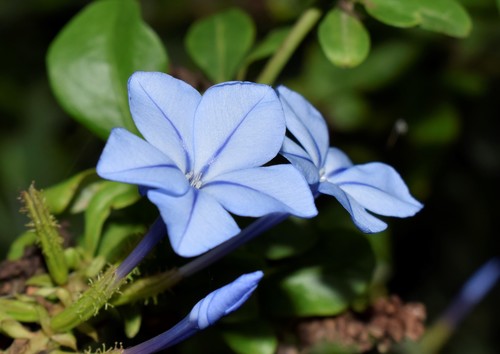
Blue plumbago (Plumbago auriculata Lam.), also called Cape leadwort or Cape plumbago, is an evergreen scrambling shrub in the Plumbaginaceae family, native from Mozambique to South Africa. It is grown for its clusters of sky-blue flowers, heat tolerance and use in containers, informal hedges or on light supports.
Read moreBlue plumbago, Cape leadwort and Cape plumbago
Place in full sun, with intense direct light all day long.
Full sun to bright partial shade; more sun improves flowering.
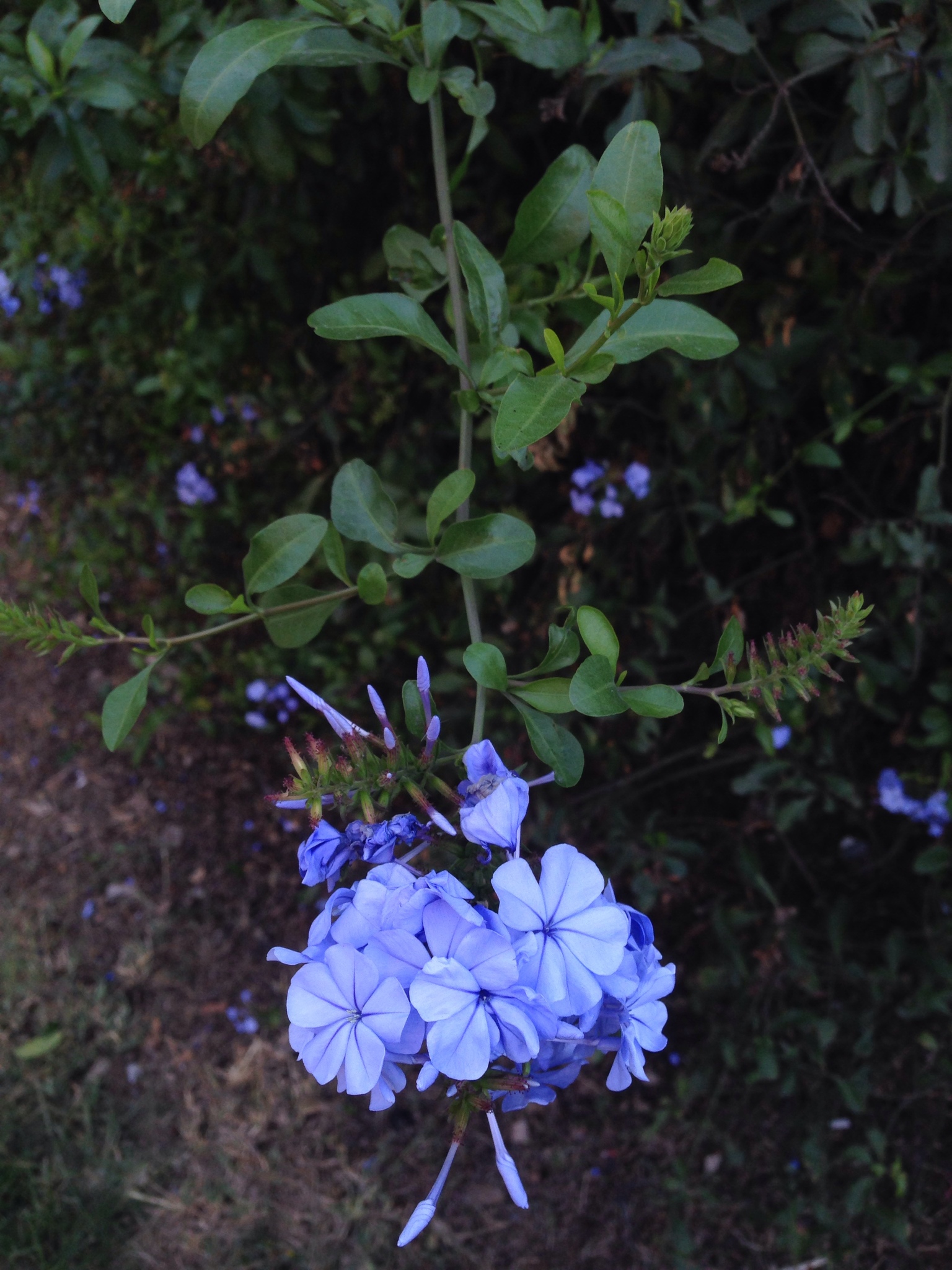
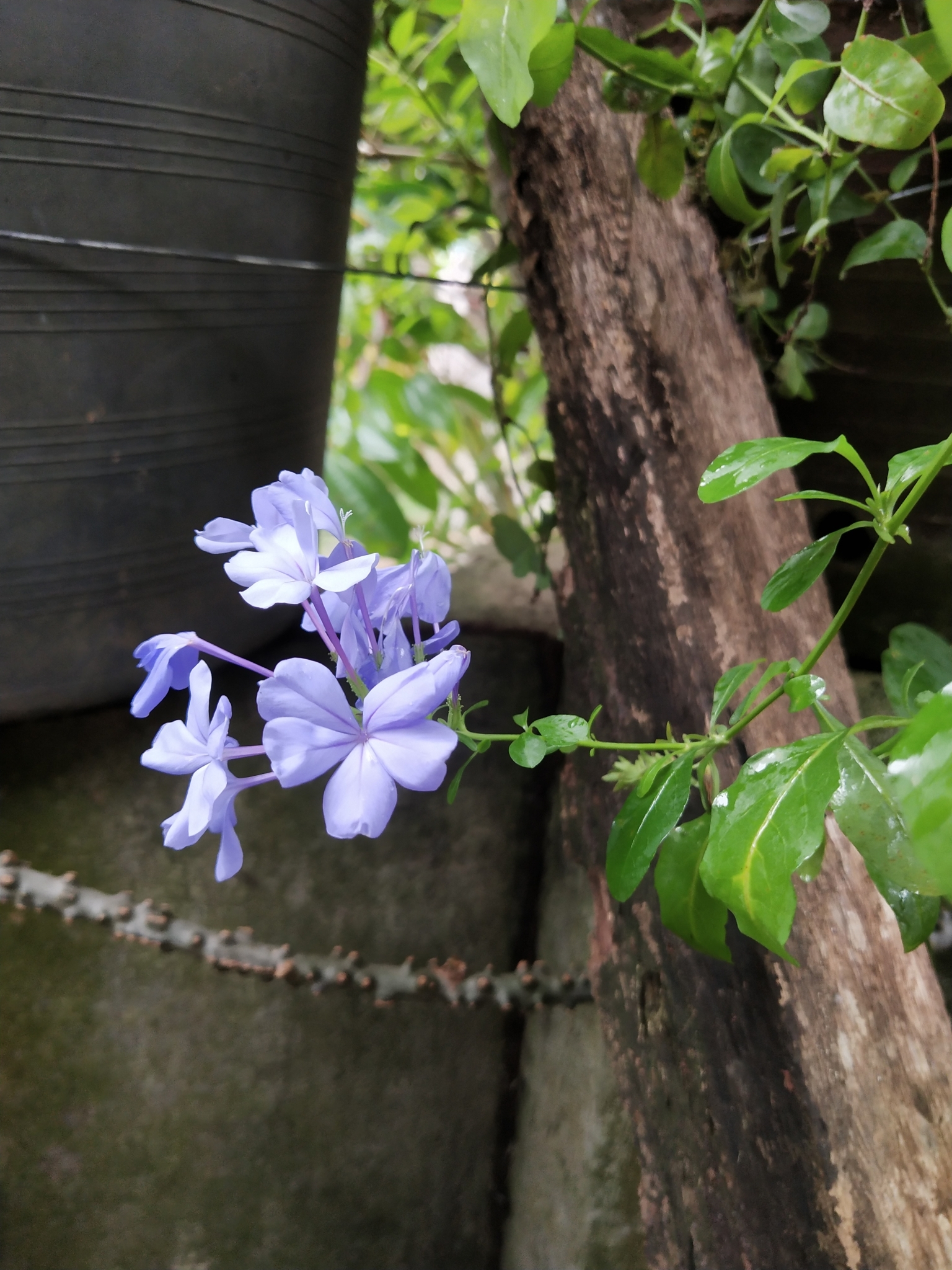


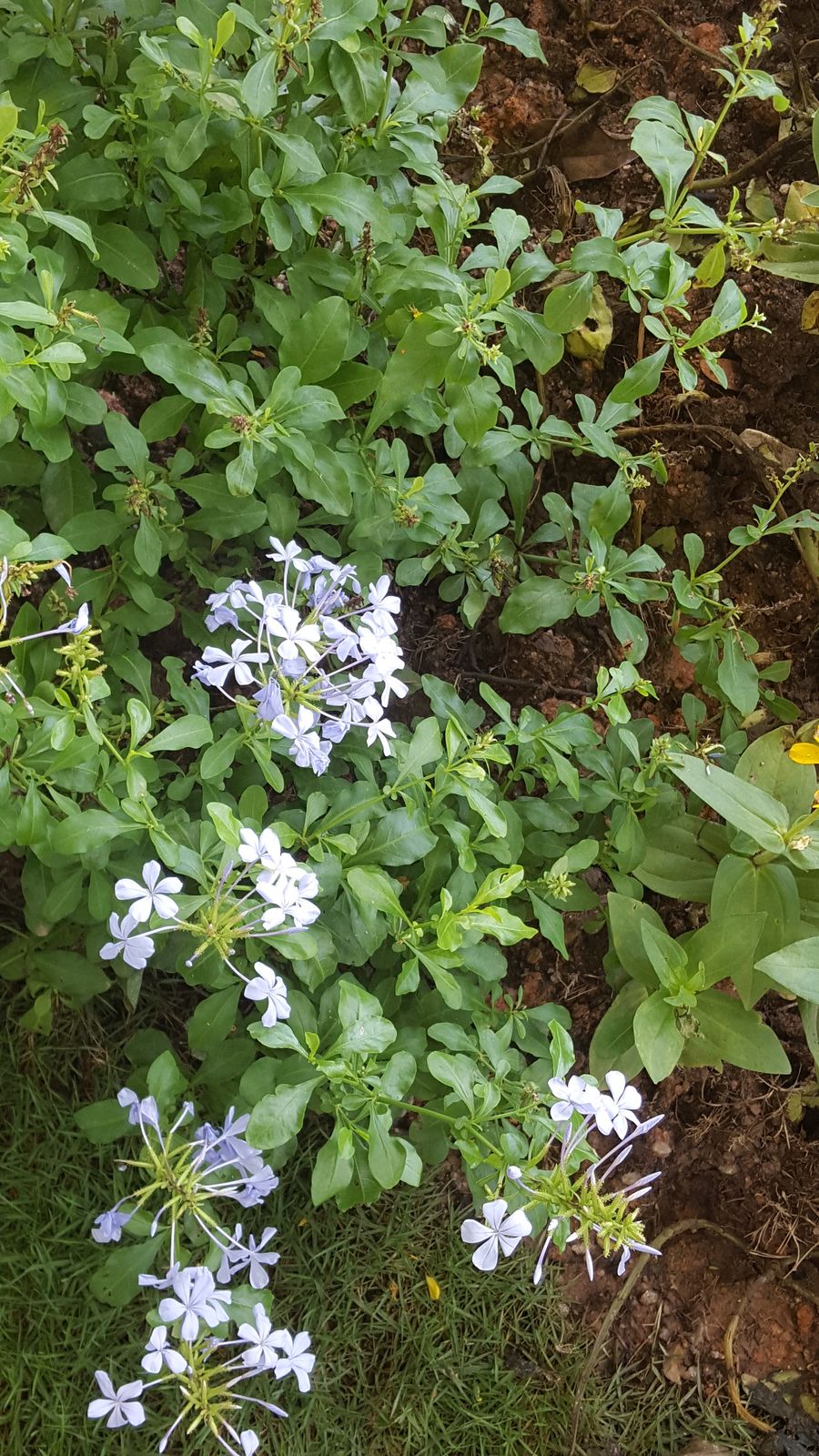

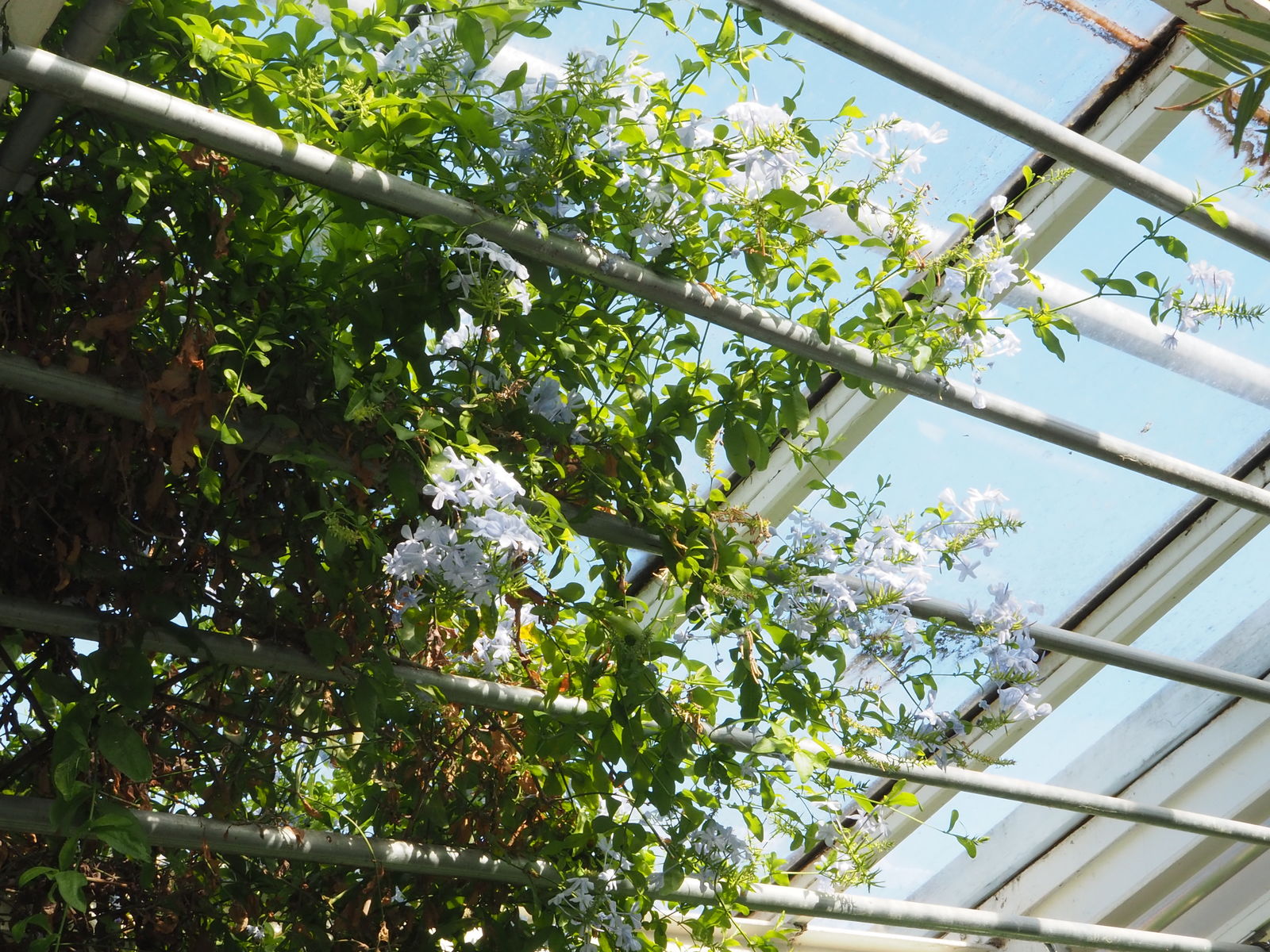
© photo
(c) Σάββας Ζαφειρίου (Savvas Zafeiriou), some rights reserved (CC BY-NC), uploaded by Σάββας Ζαφειρίου (Savvas Zafeiriou) · cc-by-nc
Matt Schultz · cc0
Greg III Espera · cc-by
Taken Aug 17, 2020 by Thierry LE COM (cc-by-sa)
Taken Nov 1, 2017 by m h goujon (cc-by-sa)
Taken Dec 2, 2017 by Rocio Torres (cc-by-sa)
Taken Oct 4, 2021 by Gianni Del Bufalo (cc-by-sa)
© copyright of the Board of Trustees of the Royal Botanic Gardens, Kew.


Global distribution
POWO records a native range from Mozambique to South Africa, including the Cape Provinces, Free State, KwaZulu-Natal and Northern Provinces. The species is widely introduced in warm regions, including the Canary Islands, Madeira, Réunion, Italy, Spain and several tropical islands.
- Native2
- Introduced3
- Mozambique
- South Africa
- Réunion
- Spain
- Italy
Hexagons: regions where the plant occurs. Green dots: native range.1
Identity
Blue plumbago (Plumbago auriculata Lam.) is an accepted species in the Plumbaginaceae family. Its native range extends from Mozambique to South Africa according to POWO, while IPNI traces the name to Lamarck's publication in 1786. 1 3
Cape leadwort and Cape plumbago are other English names for this scrambling shrub, known in French as dentelaire du Cap. The older name Plumbago capensis remains in horticultural use, but POWO treats it as a synonym of Plumbago auriculata. 1 2
Among blue-flowered garden plants, Plumbago auriculata denotes this particular species. It differs both from the broader genus Plumbago and from Ceratostigma plumbaginoides, a related plant also sometimes called blue plumbago. 7 5
Recognition
Arching branches give this woody evergreen shrub a rounded to trailing outline. NC State describes broad-leaved plants about 1.8–4.5 m (6–15 ft) tall, depending on training. It can be trained as a climber, but its scrambling stems need tying rather than attaching themselves to a support. 4 5
Simple, alternate leaves range from pale to medium green and from oblong to inversely lance-shaped. Clusters of flowers develop on new shoots from summer into fall. The tubular corollas are sky blue, although some forms have white or pinkish flowers. 4 5
Sticky, barbed seed capsules offer another identification clue noted by NC State. They help explain how seeds can travel in favorable climates, even though in mainland France the shrub remains primarily an ornamental garden plant. 4 1
Container growing and training
Warmth, light and good drainage are central to growing blue plumbago. NC State places it in USDA zones 9–11, in full sun or partial shade and sandy, well-drained soil. Where winters are cold, a container moved under protection is the safest approach. 4 8
Summer watering needs to support flowering, particularly in pots. An established plant in the ground in a mild climate tolerates short dry spells better, but a pot allowed to dry out completely can quickly lose buds and leaves. Keep the growing medium airy rather than compacted and saturated. 4 8
Training always requires ties: unlike Passiflora caerulea, blue plumbago has no tendrils, and unlike ivy, it has no clinging roots. Guide the flexible stems over a trellis or let them trail from a container. 4 5
Pruning keeps the plant dense and renews its flowering shoots. Shortening branches at the end of winter or after flowering limits old bare stems, makes container plants easier to overwinter and maintains a clear outline. 8
Container success depends on balancing water with air around the roots. A lightweight pot can topple under trained branches, while a growing medium that is too fine can lose its air spaces after repeated summer watering. A large, stable container with drainage and regular pruning is more dependable than a small pot whose root ball swings between drought and saturation. 4 8
Range and uses
Mozambique, the Cape Provinces, Free State, KwaZulu-Natal and Northern Provinces form the native range recorded by POWO. Introduced populations occur in many warm regions, including Réunion, Madeira, the Canary Islands, Spain, Italy, Hawaii and several tropical islands. 1 2
Garden uses include an informal hedge, a warm bank, a blue-flowered patio container, a lightly trained climber, a Mediterranean-style bed or a coastal planting. NC State also notes tolerance of heat, drought and salt, explaining its popularity along mild coasts. 4 8
Tolerance of difficult conditions still leaves room for maintenance. In mild climates the shrub can grow for long periods, building a mass of stems that flowers mainly at the tips. Cutting back weakened old wood has a different effect from regularly renewing young shoots. Annual attention helps prevent a tangled framework that is difficult to manage. 8
Sky-blue flowers are the familiar attraction, but white-flowered forms also exist. NC State lists Alba and Imperial Blue. Flower color should therefore be associated with the particular form or cultivar, rather than assumed to be identical throughout the species. 4
Look-alikes and uses
The word plumbago can describe the whole genus or related garden plants. Ceratostigma plumbaginoides, for example, is a lower, deciduous perennial ground cover with blue flowers; its habit and cold hardiness differ from those of blue plumbago. 5 7
Historical labels reading Plumbago capensis refer to the same Cape species. POWO classifies that name as a heterotypic synonym of Plumbago auriculata, which remains the accepted scientific name. 1 3
A very bright conservatory can accommodate blue plumbago, although it is primarily an outdoor shrub for mild climates. In a dark, heated room it often lacks light, becomes drawn and weak, and is vulnerable to scale insects. 4 8
Contact toxicity
Skin contact is the central safety concern. NC State lists Plumbago auriculata as a plant capable of causing contact dermatitis, with medium severity. The toxic principle it identifies is plumbagin, a quinone. 4
Reported symptoms include severe skin irritation, redness and blisters after contact. NC State lists many affected plant parts, including bark, flowers, fruit, leaves, roots, sap, seeds and stems. Wear gloves when pruning, especially if your skin is sensitive. 4
Evidence is strongest for human skin contact. Caution around animals is appropriate for a plant classed as toxic and irritating, but this account does not establish specific veterinary symptoms. Prevent ingestion and chewing of branches, and wash exposed skin after pruning. 4 5
Main sources
- Plants of the World Online / Kew, Plumbago auriculata Lam.
- World Flora Online, Plumbago auriculata
- International Plant Names Index, Plumbago auriculata Lam.
- NC State Extension Gardener Plant Toolbox, Plumbago auriculata
- Wikipedia EN, Plumbago auriculata
- Wikipedia FR, Plumbago auriculata
- Wikidata, Plumbago auriculata
- The Spruce, Cape Plumbago care guide
Frequently asked questions
Does blue plumbago climb by itself?
No. It is a scrambling shrub that needs tying to supports; it has neither tendrils nor clinging roots.
Is blue plumbago cold hardy?
It is best suited to mild climates. NC State lists USDA zones 9–11; elsewhere, growing it in a container with winter protection is more reliable.
Why is my blue plumbago not flowering?
Too little sun, a cramped pot, late pruning or excess nitrogen can reduce flowering on new shoots.
Is blue plumbago toxic?
Yes, through contact. NC State reports severe dermatitis caused by plumbagin, with irritation, redness and blisters.
How does it differ from Ceratostigma plumbaginoides?
Ceratostigma plumbaginoides is a lower, often deciduous ground-covering perennial, whereas Plumbago auriculata is an evergreen shrub for mild climates that can be trained on supports.
Can blue plumbago grow in a pot?
Yes. A large, heavy container with drainage, placed in the sun, makes winter protection and size control easier.
If you are unsure about a plant’s toxicity, ask a botanist or veterinarian for advice.