
Common pear (Pyrus communis, )
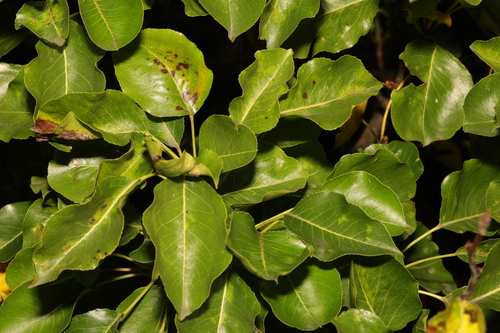
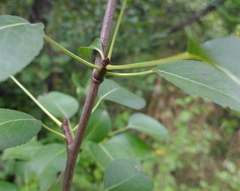
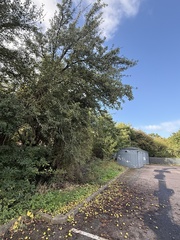
Common pear (Pyrus communis) is a deciduous fruit tree in the Rosaceae family, cultivated for its edible pears. Shaped by a long history of domestication in Europe and western Asia, it is propagated by grafting, usually requires cross-pollination and remains vulnerable to fire blight. It is a major fruit species of temperate orchards.
Read moreCommon pear, European pear, Pear, Cultivated pear and Wild pear
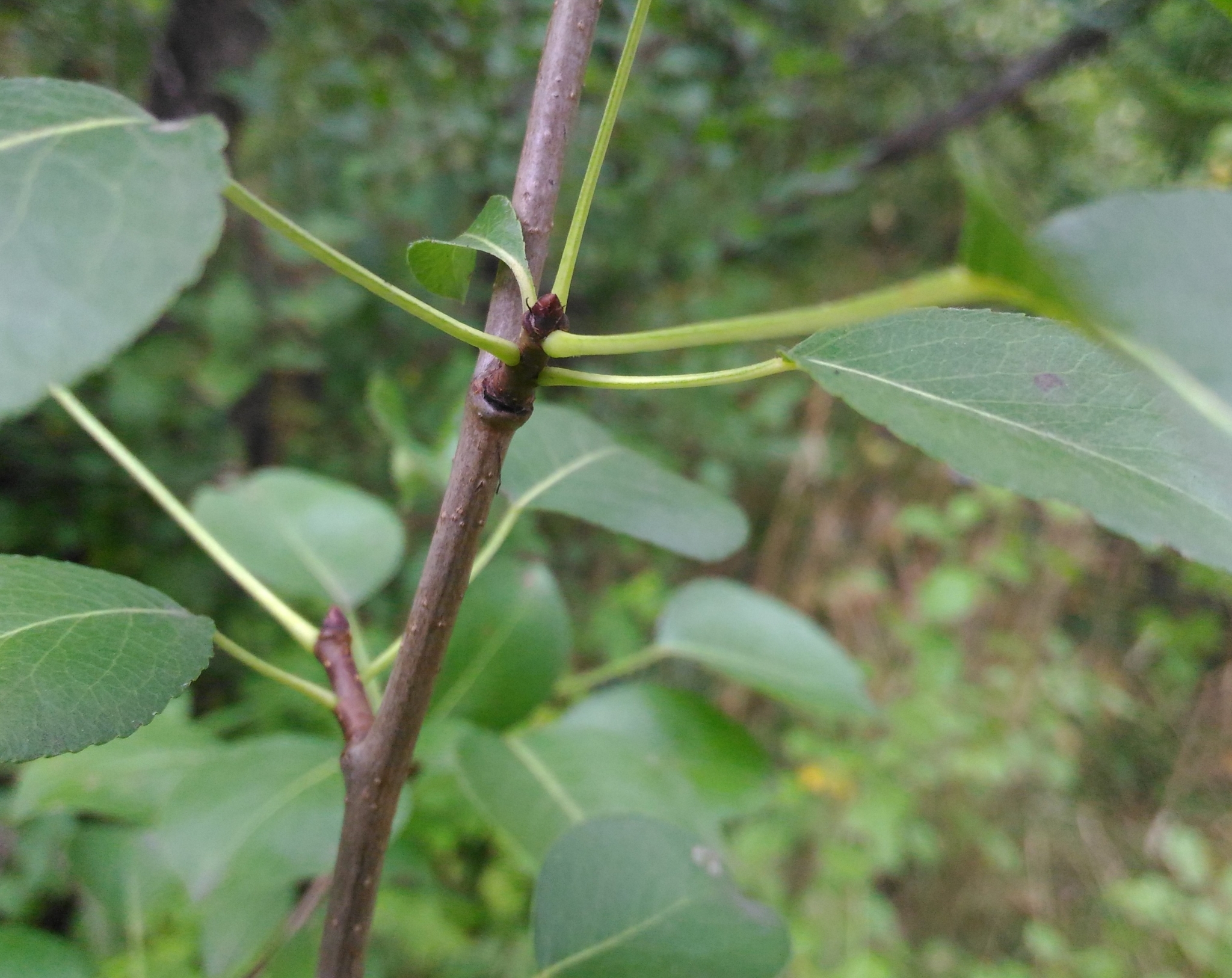



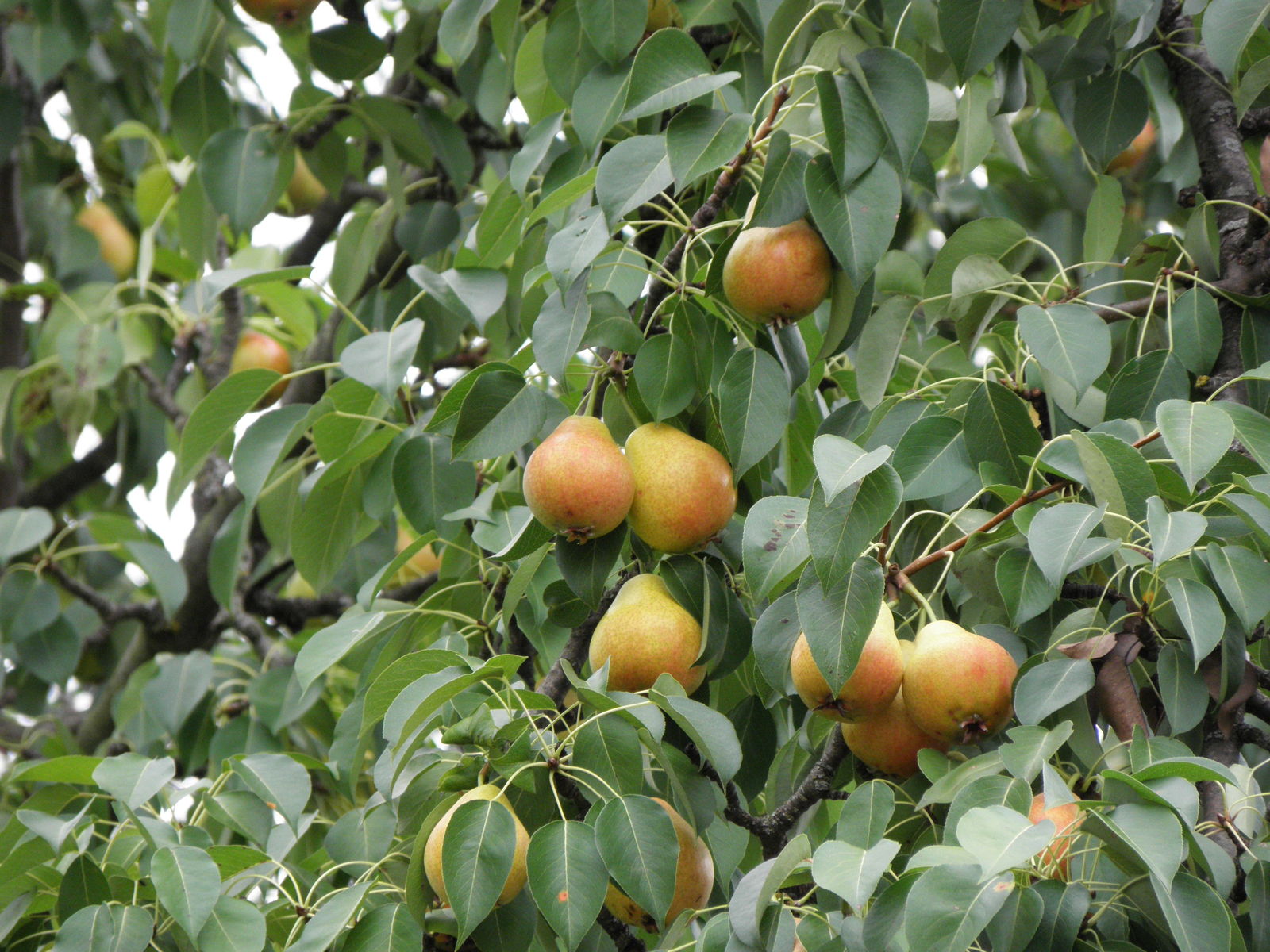
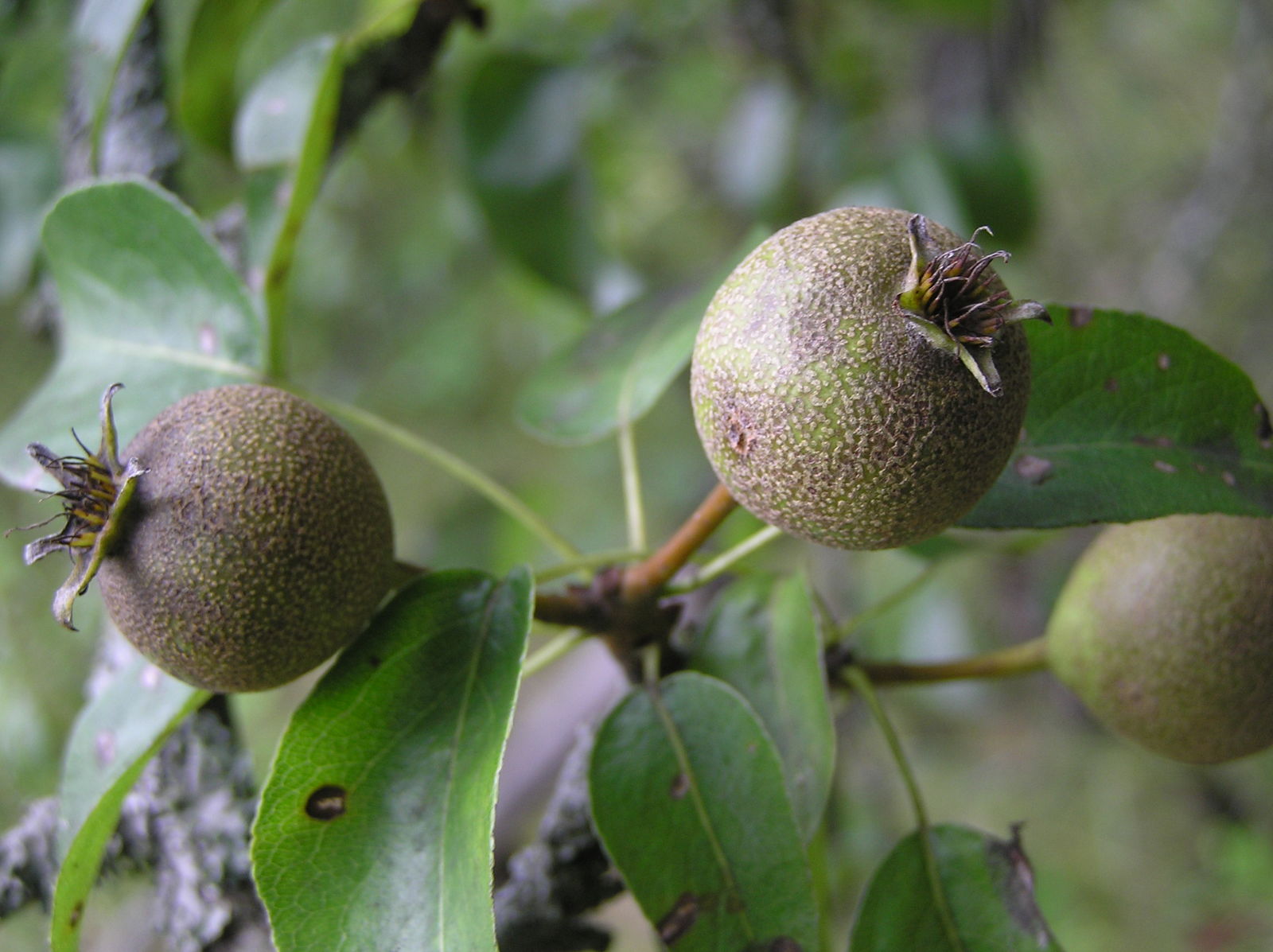
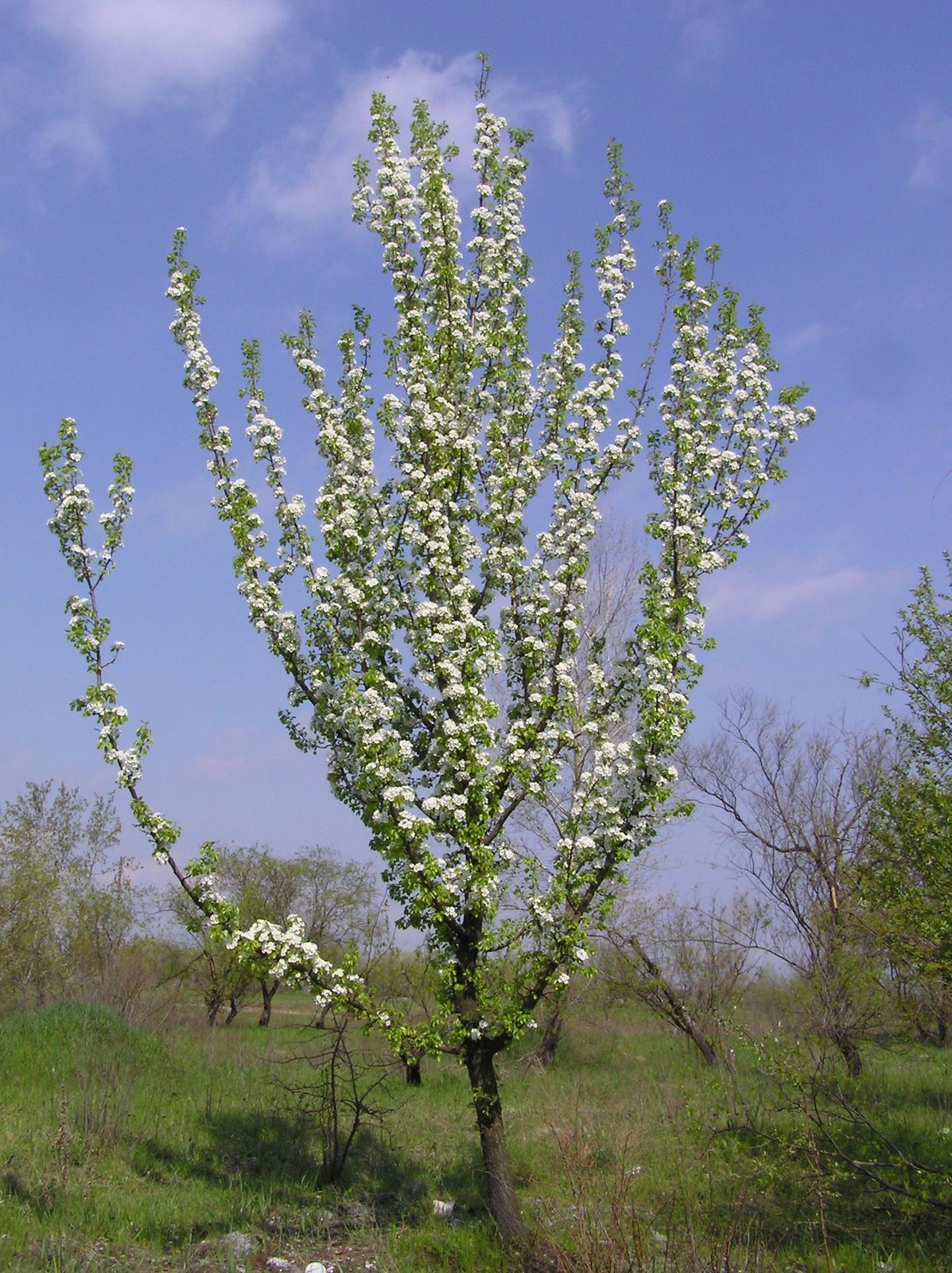
© photo
Stephen James McWilliam · cc0
Älven · cc0
Charles Joynson · cc0
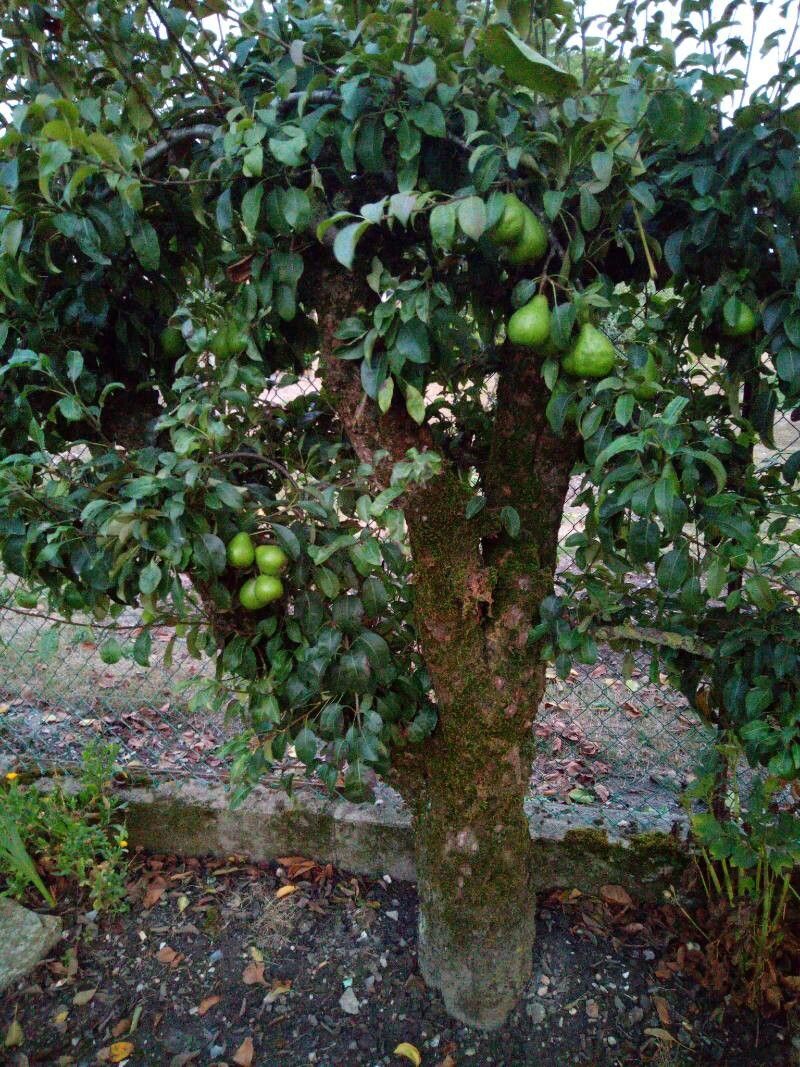
Taken Aug 7, 2021 by Giode Tonpino (cc-by-sa)
Taken Sep 6, 2020 by Sylvain Piry (cc-by-sa)
Taken Oct 22, 2022 by Dominik Muczyński (cc-by-sa)
Taken Jun 30, 2022 by anna866392 (cc-by-sa)
Taken Mar 31, 1854 by Tela Botanica − Herbier PONTARLIER-MARICHAL (cc-by-sa)
© copyright of the Board of Trustees of the Royal Botanic Gardens, Kew.




Global distribution
Pyrus communis has hybrid origins and was established through cultivation from wild pears of Europe and western Asia. Its natural range is difficult to trace because agriculture spread it very early. It is now cultivated throughout temperate regions and locally naturalized beyond its area of origin.
- Native5
- Introduced2
- Metropolitan France
- Germany
- Italy
- Turkey
- Iran
- United States
- Australia
Hexagons: regions where the plant occurs. Green dots: native range.1
Identity
Common pear (Pyrus communis L., 1753) is a deciduous fruit tree in the Rosaceae family and genus Pyrus. A major crop of temperate orchards, it is cultivated for its fleshy fruit, the pear. Its hybrid origins reflect a long process of cultivation and selection from wild pears in Europe and western Asia. 1 4
In gardens, pear trees are hardy and long-lived, sometimes surviving for more than a century. The names common pear and European pear help distinguish this widespread cultivated tree from numerous wild pears with more localized ranges. It is propagated by grafting, usually needs cross-pollination and remains susceptible to fire blight. 2 3
Identification
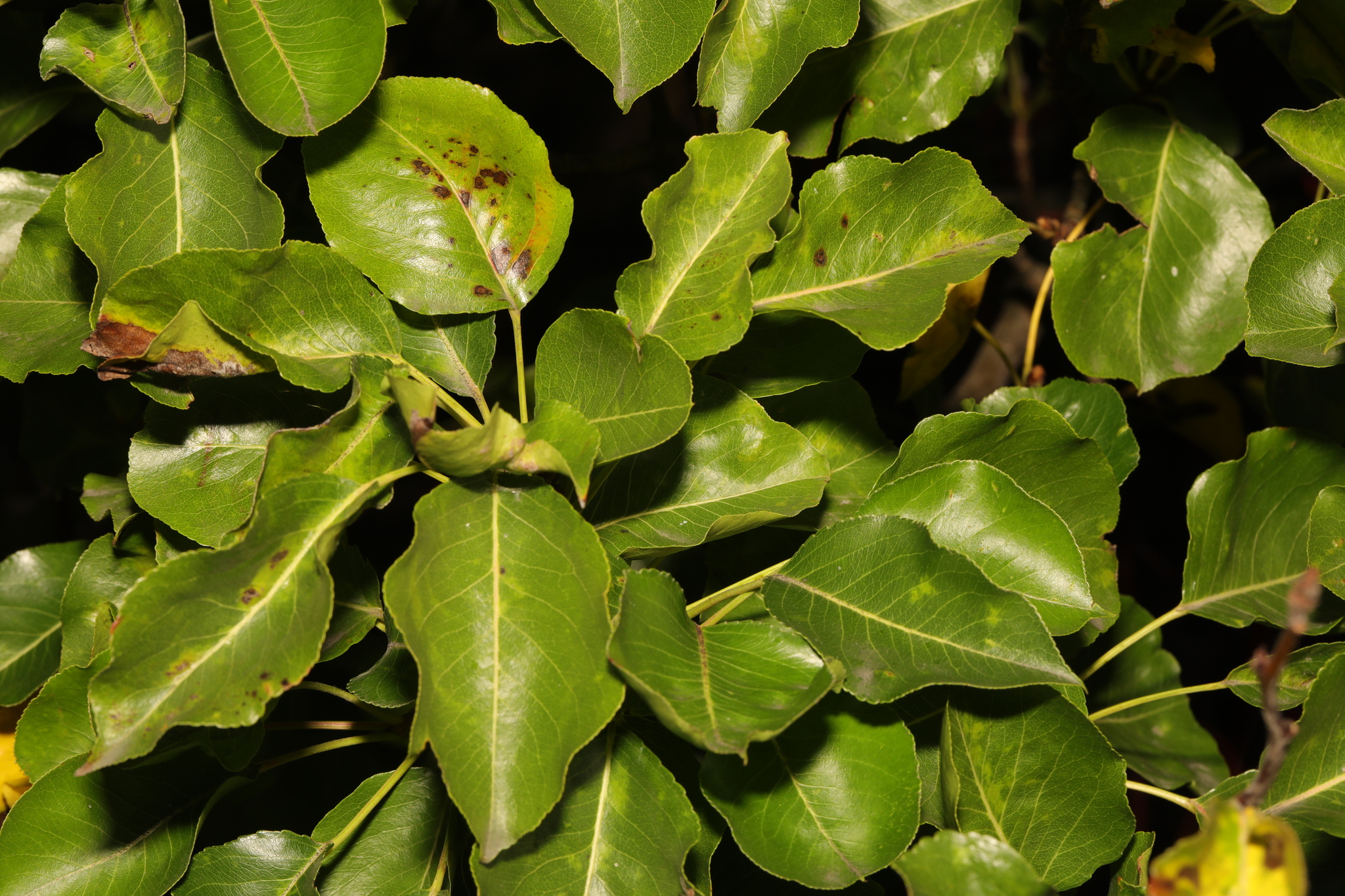
An upright habit, often taller and narrower than an apple tree, provides a first identification clue. The simple, oval leaves are finely toothed and glossy, held on long stalks. Before falling in autumn, the foliage frequently develops orange-red tones. 3 6
White, five-petaled flowers appear in spring, grouped in corymbs, with anthers changing from red to black. They are followed by the pear, typically wider toward the base. Its flesh contains small stone cells around the core, giving a gritty texture that helps distinguish a pear from an apple. 4 2
Short fruiting spurs carry flower buds and future fruits along the branches. Bark starts smooth and later cracks into small gray plates. Mature orchard trees commonly stand 4–8 m (13–26 ft) tall, while unpruned trees on seedling rootstocks can reach or exceed 15–20 m (49–66 ft). 3 5
Useful taxonomy
The name Pyrus communis L. dates to Linnaeus's description in 1753. Pyrus includes numerous wild species, and the cultivated pear has also received historical names now treated as synonyms. Useful names to recognize include:
- Pyrus communis subsp. communis (botanical name)
- Pyrus communis var. sativa (DC.) DC. (botanical name)
- Pyrus achras Gaertn. (botanical name)
- Pyrus domestica Medik. (botanical name)
- Malus communis (L.) Poir. (botanical name)
The accepted scientific name, Pyrus communis, anchors identification. Names such as Williams and Conférence refer to horticultural selections rather than separate species or botanical varieties. The typical subspecies, Pyrus communis subsp. communis, corresponds to the widely distributed cultivated form. 1 7
Habitat and distribution
Hybrid ancestry and early agricultural dispersal make the original range of Pyrus communis difficult to reconstruct. Cultivated pears arose from wild populations in Europe and western Asia, then spread far beyond them. Today the species is grown throughout the world's temperate regions. 1 4
Deep soil that stays moist while draining well, preferably near neutral in reaction, suits pear trees. Excessively lime-rich ground can induce chlorosis on some rootstocks, while waterlogged soil favors root rot. A warm, sunny position helps fruit ripen, making exposure as important as the soil itself. 6 2
Outside orchards, more or less wild forms occur in rural hedges, woodland edges and open woods. Some have naturalized beyond the region of origin, including in North America and Australia. These populations reflect introduction through cultivation and should be distinguished from genuinely spontaneous wild pears. 7 3
Life cycle and reproduction
Spring flowers open shortly before or alongside the emerging leaves, as in other pome-bearing Rosaceae. The bisexual flowers are insect-pollinated, chiefly by bees. Most cultivars are self-incompatible and require cross-pollination from another compatible cultivar flowering at the same time, so several trees are usually needed in an orchard. 4 2
After fertilization, the ovary and receptacle develop into a fleshy pear enclosing the seeds. Late frost can destroy open flowers and jeopardize an entire crop. Most orchard pears are picked firm and finish ripening in storage; otherwise, many cultivars develop internal breakdown while still on the tree. 3 5
Named cultivars are reproduced by grafting, because seed does not preserve their characteristics. A scion is joined to a rootstock selected for vigor. Quince produces smaller, earlier-bearing trees suited to trained forms and containers, whereas pear seedlings yield large, vigorous, long-lived trees. Raising seeds mainly supplies rootstocks or breeding material. A first substantial harvest generally follows four to eight years after grafting, depending on rootstock and training. 6 5
Uses and risks
Fruit production is the tree's principal use. Pears are eaten fresh or made into compotes, pies, syrup-packed preserves, spirits and perry, a fermented drink similar to cider. Hard, even-textured pearwood is valued for cabinetry, musical instruments and engraving. Spring flowers also provide nectar for bees. 4 5
Pear flesh is edible and safe. As in other Rosaceae, the seeds contain amygdalin, a cyanogenic glycoside. Large quantities would have to be crushed and swallowed to release enough cyanide for an effect, so normal fruit consumption poses little practical concern. The fleshy fruit is not classed as toxic to domestic animals, although the same caution applies to large quantities of seeds. 5 2
The tree itself faces a serious risk from fire blight. Its cause, Erwinia amylovora, blackens flowers and young shoots, which bend into a crook; severe infection can kill the tree. Management includes cutting well below infected growth, disinfecting tools and limiting nitrogen. Scab, pear rust associated with nearby junipers, and pear psylla are other familiar orchard problems. 2 6
Cultivars, similar plants and identification
Horticultural selections account for the many named pears rather than separate species. Williams is a fragrant summer pear with melting flesh. Conférence and Doyenné du Comice are celebrated autumn pears, while Beurré Hardy and Louise Bonne d'Avranches help spread the harvest and support cross-pollination. Before buying, check the cultivar, rootstock and compatibility of flowering times. 2
Other pome-bearing Rosaceae cause the most frequent identification difficulties:
- Malus domestica, apple, with round fruit lacking stone cells;
- Cydonia oblonga, quince, also used as a pear rootstock;
- Pyrus pyraster, wild pear, often thorny with small, astringent fruit.
Pear-shaped fruit, stone cells in the flesh and a more upright habit than apple remain the most useful combined clues for confirming Pyrus communis. Looking at all three features is more dependable than relying only on the general shape of the tree. 3 1
Main sources
- Plants of the World Online / Kew, Pyrus communis L.
- Royal Horticultural Society, Pyrus communis - pear
- Missouri Botanical Garden, Pyrus communis
- Encyclopaedia Britannica, Pyrus communis
- Plants For A Future, Pyrus communis
- North Carolina State Extension, Pyrus communis
- USDA PLANTS Database, Pyrus communis L.
Frequently asked questions
Are pears toxic?
Pear flesh is edible and safe for people. Only the seeds contain amygdalin, a cyanogenic compound; large quantities would have to be crushed and swallowed to cause a meaningful effect, making the risk negligible in ordinary use.
Do I need two pear trees to get fruit?
Usually, yes. Most cultivars are self-incompatible and need cross-pollination from a compatible cultivar flowering at the same time. Some, such as Conférence, are partially self-fertile but crop better with a partner.
Why are pear trees grafted?
A pear seed does not reproduce the parent cultivar and produces an unpredictable tree, often slow to bear fruit. Grafting a named scion onto a rootstock preserves the type of pear and allows control of tree vigor.
What is pear fire blight?
This serious disease is caused by Erwinia amylovora. Flowers and young shoots blacken, shoots bend like a shepherd's crook, and the tree may die. Cut well below affected parts and disinfect tools; excessive nitrogen increases susceptibility.
When should I harvest pears?
Most pears are picked firm, before fully ripe, and finish ripening in storage. If picked too late, many cultivars develop internal breakdown or become mealy on the tree.
Which plants resemble common pear?
Other pome-bearing Rosaceae, especially apple and quince, cause most confusion. The pear-shaped fruit, gritty stone cells in the flesh and a more upright habit than apple are useful clues.
Can a pear tree grow well in a pot?
Yes, on a dwarfing rootstock such as quince, in a large, deep, well-drained container. Water and feeding need closer attention, and a suitable pollination partner should grow nearby.
If you are unsure about a plant’s toxicity, ask a botanist or veterinarian for advice.