
Meadow buttercup (Ranunculus acris, )
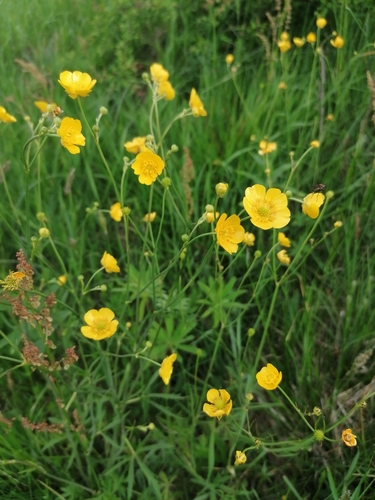
Meadow buttercup (Ranunculus acris) is a perennial wildflower in the Ranunculaceae family, familiar in moist, sunny grasslands. Its glossy yellow petals stand out in spring, but the fresh plant is toxic to animals and its irritating sap makes it unsuitable as an edible flower.
Read moreMeadow buttercup, Tall buttercup and Common buttercup

© photo
(c) rasanaturalist, some rights reserved (CC BY-NC), uploaded by rasanaturalist · cc-by-nc
Charles Joynson · cc0
Erik Schiff · cc0
(c) Daniel Cahen, some rights reserved (CC BY) · cc-by
no rights reserved · cc0
Identity
Meadow buttercup (Ranunculus acris L.), also called tall buttercup or common buttercup, is a familiar yellow meadow flower. Its bright, cheerful appearance can make this wild perennial seem more harmless than it is. 1 8
POWO, WFO and IPNI confirm the accepted binomial. It belongs to Ranunculaceae, a family in which ornamental appeal and toxicity often occur together, as they do in anemones, delphiniums and hellebores. 2 3 4
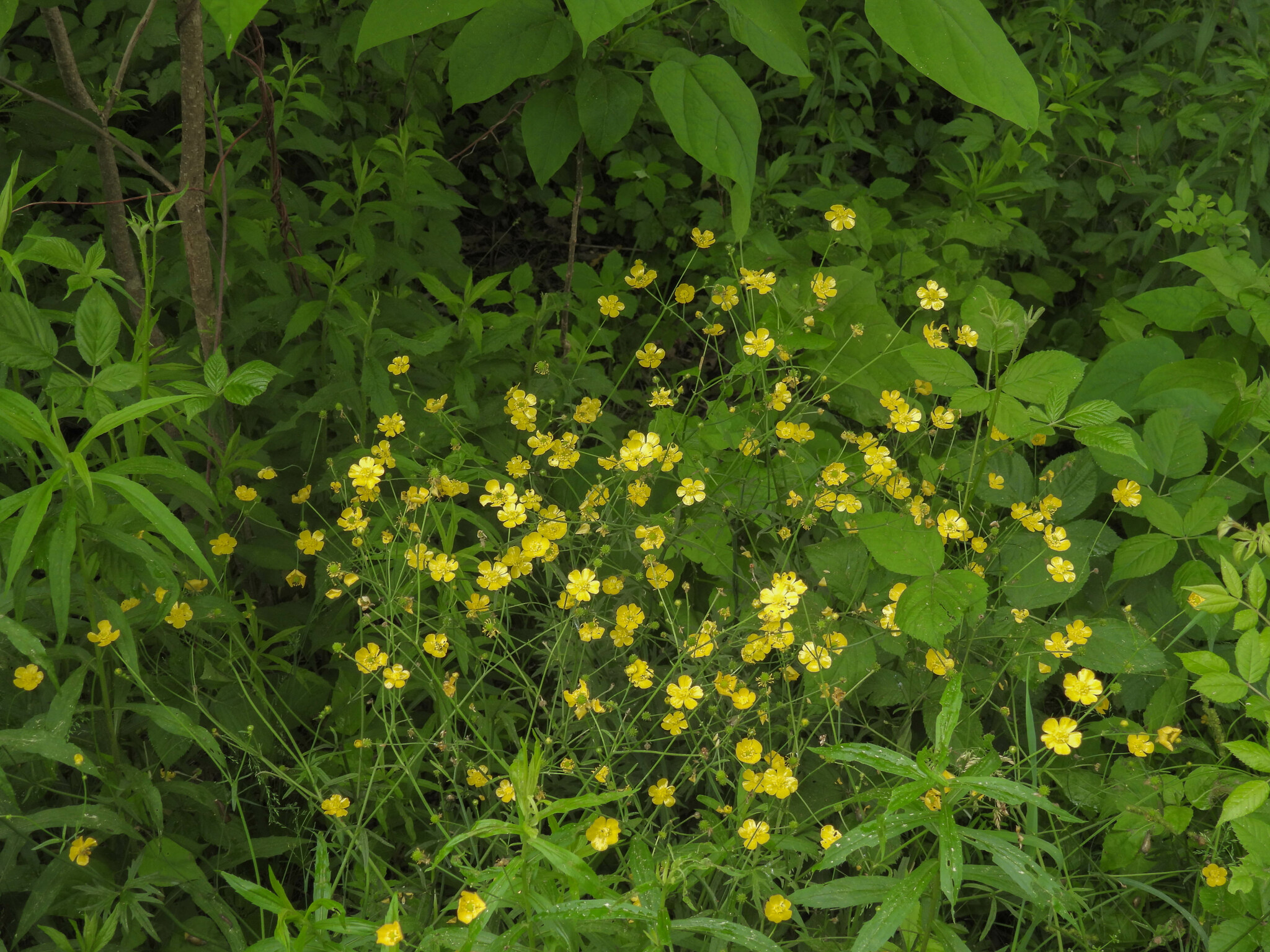
Among yellow wildflowers, meadow buttercup stands out for its glossy petals. Its character is that of a moist, sunlit spring meadow rather than an elaborate florist's bouquet, bringing a vivid yellow accent to living grassland. 8 6
Safety is a central consideration when identifying this species. Fresh meadow buttercup poses a high toxicity risk to dogs, cats and horses; animal poison references describe fresh buttercups as both irritating and toxic. 7 5
Recognition
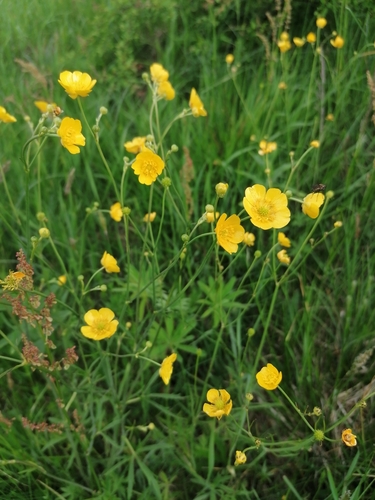
Upright stems, divided leaves and bright yellow flowers with five glossy petals distinguish meadow buttercup. The almost varnished sheen is a useful field clue, especially when comparing several yellow flowers growing together in grass. 6 8
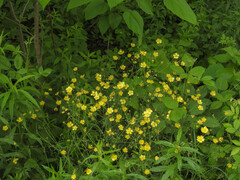
Flowering occurs mainly in spring and early summer. Where many plants grow together, they make conspicuous yellow patches across moist meadows and lawns that are mown infrequently. 8
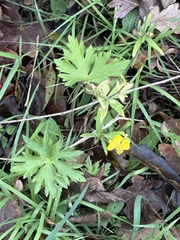
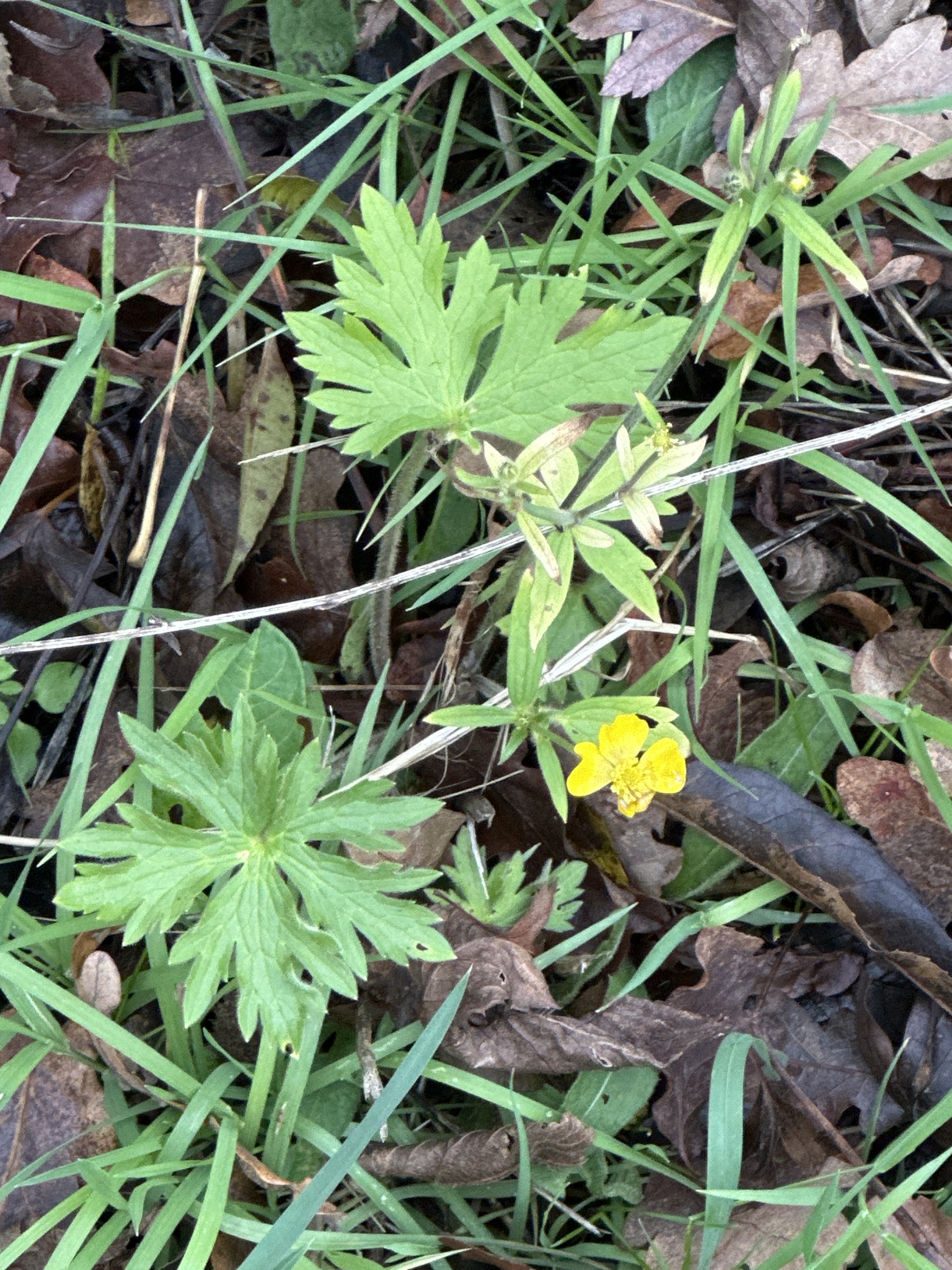
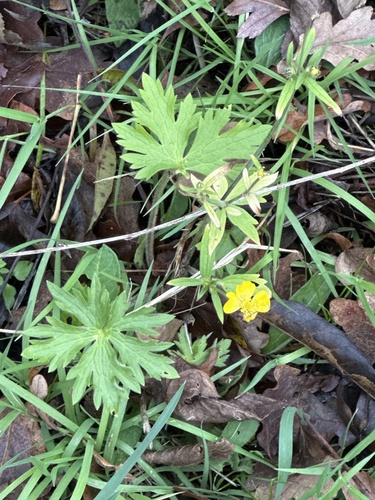
The basal leaves are more deeply divided and carried on long stalks, while leaves higher on the stem become smaller. Looking at this difference helps separate the plant from a yellow dandelion, rather than relying only on flower color. 6
Meadow buttercup differs from florist's buttercups such as Ranunculus asiaticus. It is a wild meadow perennial, whereas the familiar bouquet flower is grown from tuberous roots for its horticultural display. 2 8
Useful taxonomy
Ranunculus acris L. is the accepted scientific name. That complete binomial identifies a particular species, so descriptions of meadow buttercup should not be extended indiscriminately to the whole genus Ranunculus. 2 8
The broader name buttercup can refer to several yellow-flowered species. Using R. acris alongside the common name keeps the identification precise: this is the upright meadow perennial, rather than any yellow buttercup encountered in grassland. 6 1
Membership of Ranunculaceae also calls for care. Several plants in this family contain irritating or toxic compounds, and fresh buttercups should never be handled as though their flowers were food. 5 7
Accurate identification avoids grouping unrelated yellow lawn flowers together. Dandelions, coltsfoot, buttercups and ragworts differ in their leaves, life cycles and risks; a shared flower color does not make them interchangeable. 8
Cultivation
Moist meadow planting suits Ranunculus acris better than a formal flower bed. It is more often encountered in moist grassland, tall lawns, path edges or naturalized areas, where its upright stems can rise above surrounding vegetation. 8 6
It favors moist to wet soil and a bright position. Regular mowing limits it, while later mowing allows the plants to flower and then set seed, changing how strongly their yellow flowers feature in the meadow. 8
A few plants can be accepted in a wildlife garden for biodiversity and their yellow display. Abundant growth in pasture needs more caution, particularly when animals have little varied grass available to eat. 5 7
Control plants before seed develops if they become too numerous. Wearing gloves when pulling them, or mowing early, limits their spread; use caution when composting large quantities of freshly removed plants. 5
Uses
Learning to recognize meadow plants is one of this buttercup's most useful roles. Its glossy yellow flowers, divided leaves and upright grassland habit offer clear identification features, together with a real toxicity risk despite its familiar appearance. 8
It can form part of an established wildflower meadow, but is a less suitable choice for a family flower bed used by young children or very inquisitive animals. Safety takes priority over its decorative effect. 7
For photography and identification, the species offers a distinctive subject. Glossy petals above moist grassland create a typical spring scene, with a taller presence than the low yellow flowers of dandelions. 8 6
Avoid allowing buttercups to dominate grazed ground. Animals often leave the fresh plant because of its irritating taste, but the risk of ingestion rises when other food is scarce. 5
Caution
Fresh buttercup tissue releases irritating protoanemonin. ASPCA and NC State associate buttercups with digestive signs, salivation, irritation and illness in animals, making the fresh plant the main concern during handling or accidental chewing. 7 5
Keep dogs, cats and horses away from chewed or uprooted plants. Bouquets should also be out of children's reach: the flower looks harmless, but its fresh sap can irritate skin and the mouth. 7
Toxicity often decreases as the plant dries, but this does not make it a recommended forage crop. Identification, limiting its presence in sensitive areas and preventing ingestion remain the appropriate precautions. 5
Meadow buttercup combines a common flower, a bright yellow sheen and a moist meadow habitat with irritating sap. That combination makes it useful for teaching the difference between familiarity and safety in wild plants. 8 7
In gardens visited by animals, favor observation at a distance or control before seed forms. A teaching meadow can retain a few plants for identification, with a clear explanation that fresh buttercups are not picked for play or tasting. 5 8
Comparison with other yellow flowers reinforces the point. Dandelions have some food uses, coltsfoot raises different concerns, and meadow buttercup remains primarily an irritating plant. Color alone never establishes whether a flower can be used safely. 8 7
If identification is uncertain, photograph the plant first. After confirming its identity, leave it in place or remove it with gloves; identification should come before casual handling, rather than follow an avoidable exposure. 8 5
These precautions help protect children and animals from the fresh plant. 7
The characteristic glossy yellow flower and upright meadow habit identify Ranunculus acris as meadow buttercup. Recognizing those attractive features should always go together with recognizing the substantial risk from its fresh sap. 8 2
Main sources
If you are unsure about a plant’s toxicity, ask a botanist or veterinarian for advice.