
Marsh Labrador tea (Rhododendron tomentosum, )
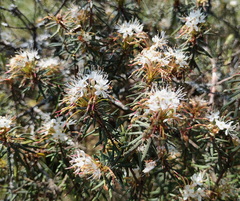
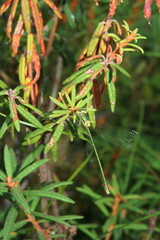
Marsh Labrador tea (Rhododendron tomentosum Harmaja, 1990), also called northern Labrador tea or wild rosemary, is an evergreen shrub in the Ericaceae family, found in acidic, waterlogged bogs of boreal Europe, Siberia and North America. Long known as Ledum palustre, it was moved to Rhododendron in 1990. Its foliage has a strong camphor scent, and high doses are toxic to animals and humans.
Read moreMarsh Labrador tea, Northern Labrador tea, Wild rosemary and Marsh rosemary
Allow a few hours of direct sun per day, preferably morning or evening.
Full sun to partial shade in open bogs
© photo
(c) nkoroleva, some rights reserved (CC BY-NC) · cc-by-nc
Bartosz Czołczyński · cc0
Oleg Kosterin · cc0
no rights reserved · cc0
(c) Oleg Kosterin, some rights reserved (CC BY) · cc-by
Global distribution
The native circumboreal range runs from Scandinavia and the Baltic states through Russia and Siberia, and from Alaska across Canada to Greenland, reaching about 74° N. Historical drainage has greatly reduced Central European bog populations. The species does not grow wild in metropolitan France.
- Native6
- Scandinavia
- Russia and Siberia
- Canada
- Alaska (United States)
- Greenland
- Germany (rare relict populations)
Hexagons: regions where the plant occurs. Green dots: native range.1
Identity
Marsh Labrador tea (Rhododendron tomentosum Harmaja, 1990), also called northern Labrador tea or wild rosemary, is an evergreen shrub in the Ericaceae family. It grows in acidic bogs of boreal Europe, Siberia and North America. The name Labrador tea can be misleading because it also refers to Rhododendron groenlandicum, a distinct North American species considered less toxic in traditional infusions. 1 5 8
Formerly named Ledum palustre L., 1753, this low shrub was transferred to Rhododendron by Finnish botanist Harri Harmaja in 1990. Because the epithet palustre was already occupied within that genus, Harmaja adopted tomentosum. The name refers to the dense rusty felt covering the undersides of its leaves, an important feature when examining the plant. 4 5
Recognition
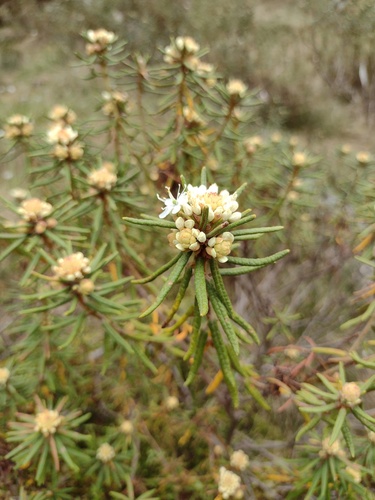
Upright to decumbent clumps reach 20 cm–1.5 m (8 in–5 ft), depending on their geographical origin. Arctic North American populations often remain dwarf and prostrate, while Eurasian bogs support taller, more erect plants. Creeping rhizomes also spread the shrub through the peat, producing the dense, often nearly single-species stands that can cover extensive areas of bog. 3 2
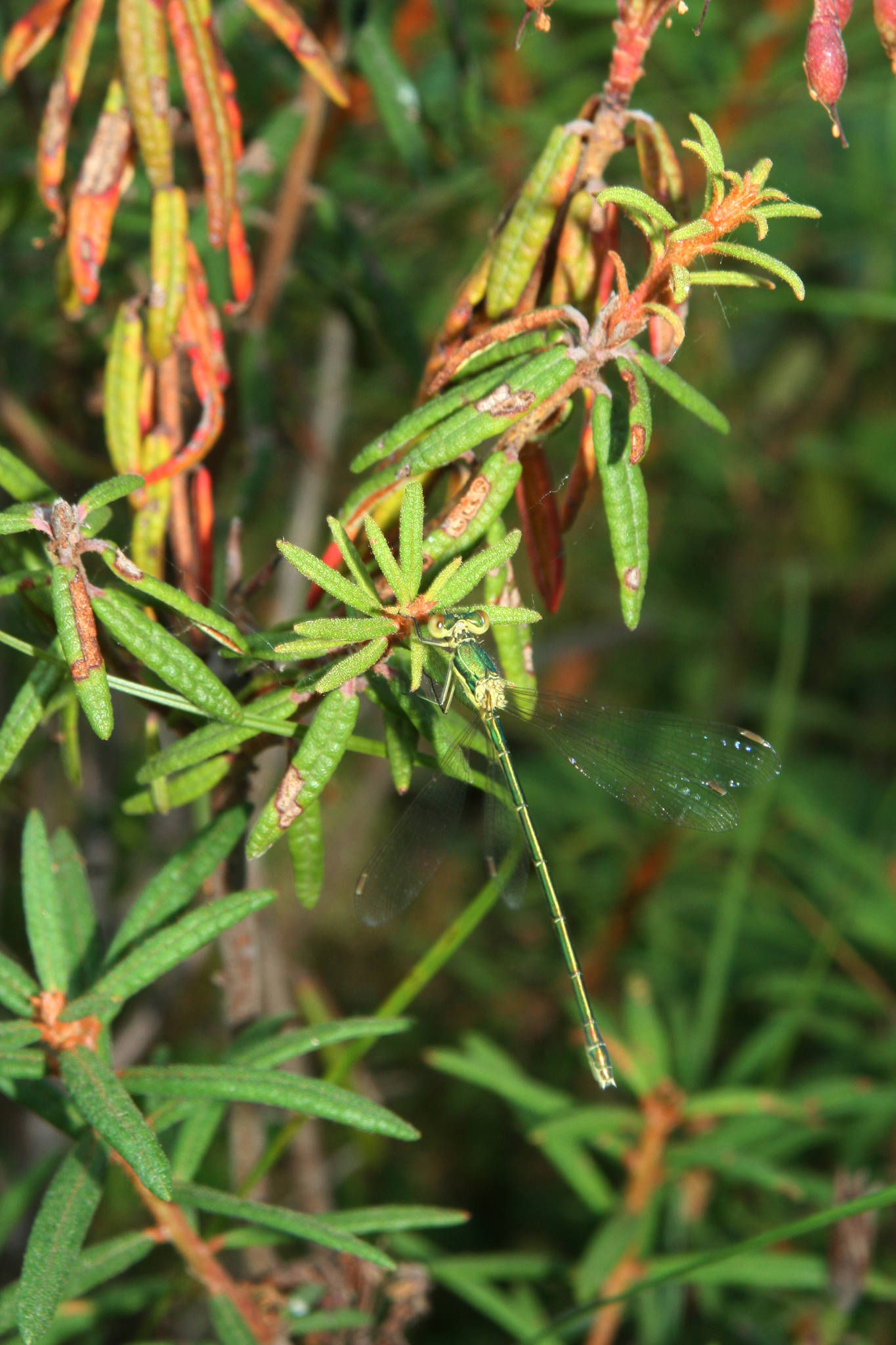
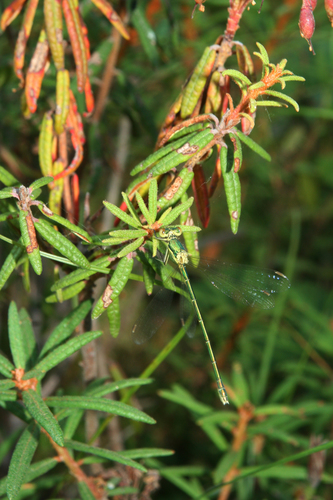
Narrow evergreen leaves are leathery, with rolled margins, and measure 2–5 cm (0.8–2 in) long by only 1–4 mm (0.04–0.16 in) wide. When crushed, they release an intense camphor scent from essential oil rich in ledol and palustrol. Rusty or brown felt on the lower surface contrasts strongly with the dark green upper surface, adding a useful visual feature to the distinctive smell. 3 6
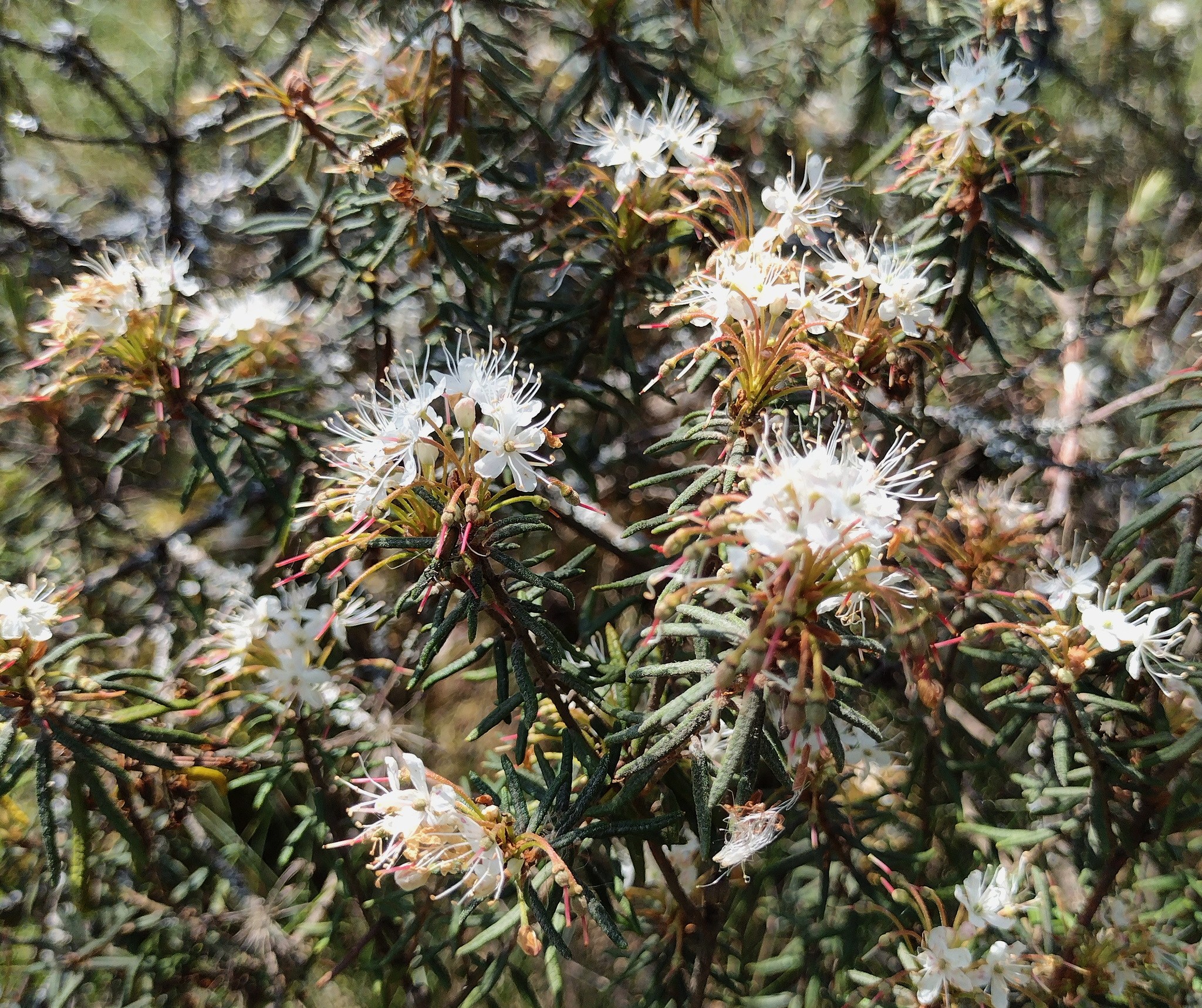
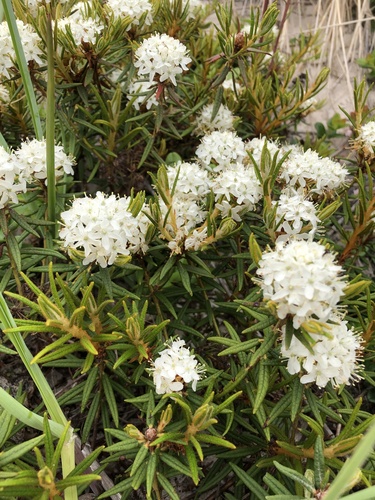
White blossoms open in late spring, after leaves develop on the flowering shoots. Dense terminal corymbs contain 10–35 flowers. Each corolla is 5–8 mm (0.2–0.3 in) wide, with ten stamens extending well beyond the petals. Those conspicuously projecting stamens provide a clearer field character than flower color alone. 3
Useful taxonomy
Within Rhododendron, the species belongs to subfamily Ericoideae and tribe Rhodoreae, alongside other plants formerly assigned to Ledum. This placement connects the small bog shrub with the much larger rhododendron group while preserving its accepted species identity. 4
Important historical and regional names include:
- Ledum palustre L., the historical basionym
- Ledum tomentosum Stokes
- Rhododendron subarcticum Harmaja
- Rhododendron tomentosum subsp. decumbens (Aiton) Elven & D.F.Murray
For identification or purchase, Rhododendron tomentosum remains the accepted name to check. The regional names above occur particularly in North American botanical literature and are less common in European horticultural trade. They document different taxonomic treatments rather than providing interchangeable guarantees about every plant sold as Labrador tea. 1 5
Habitat and range
A circumboreal range links Scandinavia, the Baltic states, Russia and Siberia with Alaska, Canada and Greenland, reaching about 74° N. Acidic raised bogs and sphagnum bogs provide almost all of its habitat. Bog bilberry and bog rosemary are frequent companions, and marsh Labrador tea often forms dense stands that approach a single-species cover over substantial areas. 5 2
Wild populations are absent from metropolitan France; plants seen outside the native range are generally in botanical collections or bog gardens. Central European populations have declined as bogs were drained for agriculture and peat extraction, and several regional red lists now classify the species as threatened. On calcareous soils it develops chlorosis and soon declines: its ericoid mycorrhizal association requires the acidic conditions, below pH 5, provided by native bog peat. 9
Life cycle and reproduction
Late-spring to summer flowering varies with latitude, corresponding to May–July in the native Northern Hemisphere range. Flies attracted by the camphor scent of foliage and flowers provide much of the pollination. Upright capsules, 2.5–5 mm (0.1–0.2 in) long, ripen in summer and open from the base. This differs from the capsules of many other Ericaceae, which open from the top. 3
Tiny elongated seeds travel on the wind and germinate the following year in light on moist peat, without burial. For cultivation, semi-hardwood cuttings taken from the current season's growth in summer are the most reliable method. Seed propagation is possible but slow and irregular; its success varies with seed freshness, so it should not be expected to match the reliability of cuttings. 8
Uses and risks
Leaf essential oil contains ledol and palustrol. A 2013 review of traditional uses documents analgesic, anti-inflammatory, antimicrobial and insecticidal properties. Traditional medicine has used the plant for rheumatism, coughs, colds and insect bites, including tick bites. These recorded uses describe its history and the research literature; they must be read alongside the toxicity of the same oil. 8
High doses make this essential oil, and therefore the plant, toxic to animals and humans. Ledol first stimulates the central nervous system and then causes paralysis, a pattern described as moderately toxic in French literature. Livestock, particularly sheep, can develop digestive and cardiac disorders after eating substantial quantities. The aromatic foliage is therefore not evidence that grazing or concentrated preparations are harmless. 6 7
Before hops became widespread in brewing, dried leaves were used to flavor beer in several parts of Northern Europe. Leaves were also rubbed onto surfaces or materials to repel moths and lice. That external traditional use sometimes caused mild poisoning through skin exposure, showing that the historical record includes adverse effects as well as practical uses. 6
Varieties, look-alikes and related plants
Horticultural trade offers few widely distributed, stabilized cultivars. The typical species predominates, sometimes accompanied by the smaller, more decumbent Arctic subsp. decumbens. Authors differ over whether that form deserves recognition as a distinct subspecies or belongs within the synonymy of the species, so its name reflects a taxonomic treatment rather than a settled horticultural category. 1
Broad-leaved Rhododendron groenlandicum causes the most frequent confusion. This related North American plant is also called Labrador tea and is considered less toxic in traditional infusions. Because the common name can refer to either species, check the scientific name before considering any use. A third relative, Rhododendron neoglandulosum of western North America, shares the strong camphor scent and peatland habitat, making smell alone an inadequate identification test. 8
Main sources
- Plants of the World Online / Kew, Rhododendron tomentosum Harmaja
- Royal Horticultural Society, Rhododendron tomentosum
- Flora of North America, Rhododendron tomentosum
- USDA GRIN Global, Rhododendron tomentosum taxonomy detail
- Integrated Taxonomic Information System, Rhododendron tomentosum Harmaja
- Toxiplante, Ledum palustre, marsh Labrador tea
- ASPCA, Rhododendron toxicity entry
- Sut et al. 2013, Rhododendron tomentosum (Ledum palustre), a review of traditional use
- Tela Botanica eFlore BDTFX, Rhododendron tomentosum
Frequently asked questions
Is marsh Labrador tea poisonous?
Yes. Its leaf essential oil, rich in ledol and palustrol, is considered moderately toxic to humans and animals at high doses, with particular risk to livestock grazing large quantities.
Is marsh Labrador tea the same as Labrador tea?
Not exactly. Labrador tea can refer to Rhododendron tomentosum or to Rhododendron groenlandicum, a distinct North American species considered less toxic in traditional infusions. The scientific name is the dependable reference.
Why did Ledum become Rhododendron?
In 1990, Finnish botanist Harri Harmaja showed that Ledum was not sufficiently distinct from Rhododendron to remain separate, leading to publication of the name Rhododendron tomentosum.
Can marsh Labrador tea grow in a garden in France?
Only in a bog garden that recreates acidic, constantly waterlogged peat conditions. The species does not grow wild in metropolitan France and is difficult to maintain outside these specific conditions.
Why does the foliage smell strongly of camphor?
Crushing the foliage releases essential oil rich in the sesquiterpenes ledol and palustrol, producing the camphor scent. The same oil accounts for toxicity at high doses.
Is marsh Labrador tea threatened?
Historical drainage of European bogs for agriculture and peat extraction has reduced populations. Several regional red lists now consider it threatened, although its overall circumboreal range remains extensive.
If you are unsure about a plant’s toxicity, ask a botanist or veterinarian for advice.