
White willow (Salix alba, )
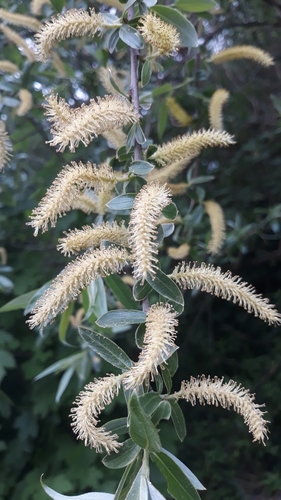
White willow (Salix alba) is a large waterside tree in the Salicaceae family, widespread across Europe, including France. Its long, lance-shaped leaves have silky, silvery undersides that give the crown a pale shimmer in the wind. Male and female catkins grow on separate trees, and the species grows rapidly beside rivers and ponds.
Read moreWhite willow and European white willow




© photo
(c) saartje281, some rights reserved (CC BY-NC) · cc-by-nc
Marc-Aurèle Vallée · cc0
Oleg Kosterin · cc0
Taken May 9, 2014 by Tela Botanica − Françoise CARLE (cc-by-sa)
Taken Apr 20, 2014 by Tela Botanica − Dominique REMAUD (cc-by-sa)
Taken Oct 22, 2022 by Dominik Muczyński (cc-by-sa)
Taken Sep 19, 2021 by Alain Bigou (cc-by-sa)
Taken Nov 25, 2021 by Alain Bigou (cc-by-sa)
© copyright of the Board of Trustees of the Royal Botanic Gardens, Kew.




Global distribution
Salix alba is native to Europe, western and central Asia and northwestern Africa, extending to northern China. In France, white willow is common beside rivers, ponds and ditches, where it forms part of riverside woodland. Extensively planted, it has also naturalized beyond this range, notably in North America.
- Native6
- Introduced2
- Metropolitan France
- United Kingdom
- Spain
- Germany
- Morocco
- Northern China
- United States
- Canada
Hexagons: regions where the plant occurs. Green dots: native range.1
Identity
White willow (Salix alba L., 1753) is a large waterside tree in the Salicaceae family and the genus Salix. Unlike the many shrubby members of its genus, it develops a distinctly tree-like habit. It is also one of Europe's most widespread riverbank trees, forming a substantial crown above the water rather than a low thicket of stems. 1 5
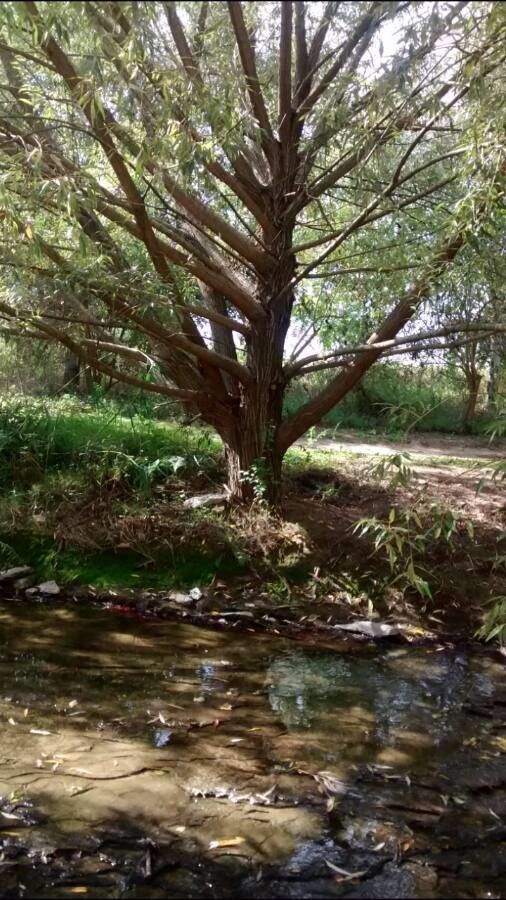
Along rivers, ponds and ditches in France, white willow is a familiar part of riverside woodland. Its pale crown can be recognized from a distance: when the wind turns the silky leaves over, their undersides give the whole tree a silvery shimmer. This light reflection is a useful visual clue even before individual leaves can be examined. 4 7
Recognition
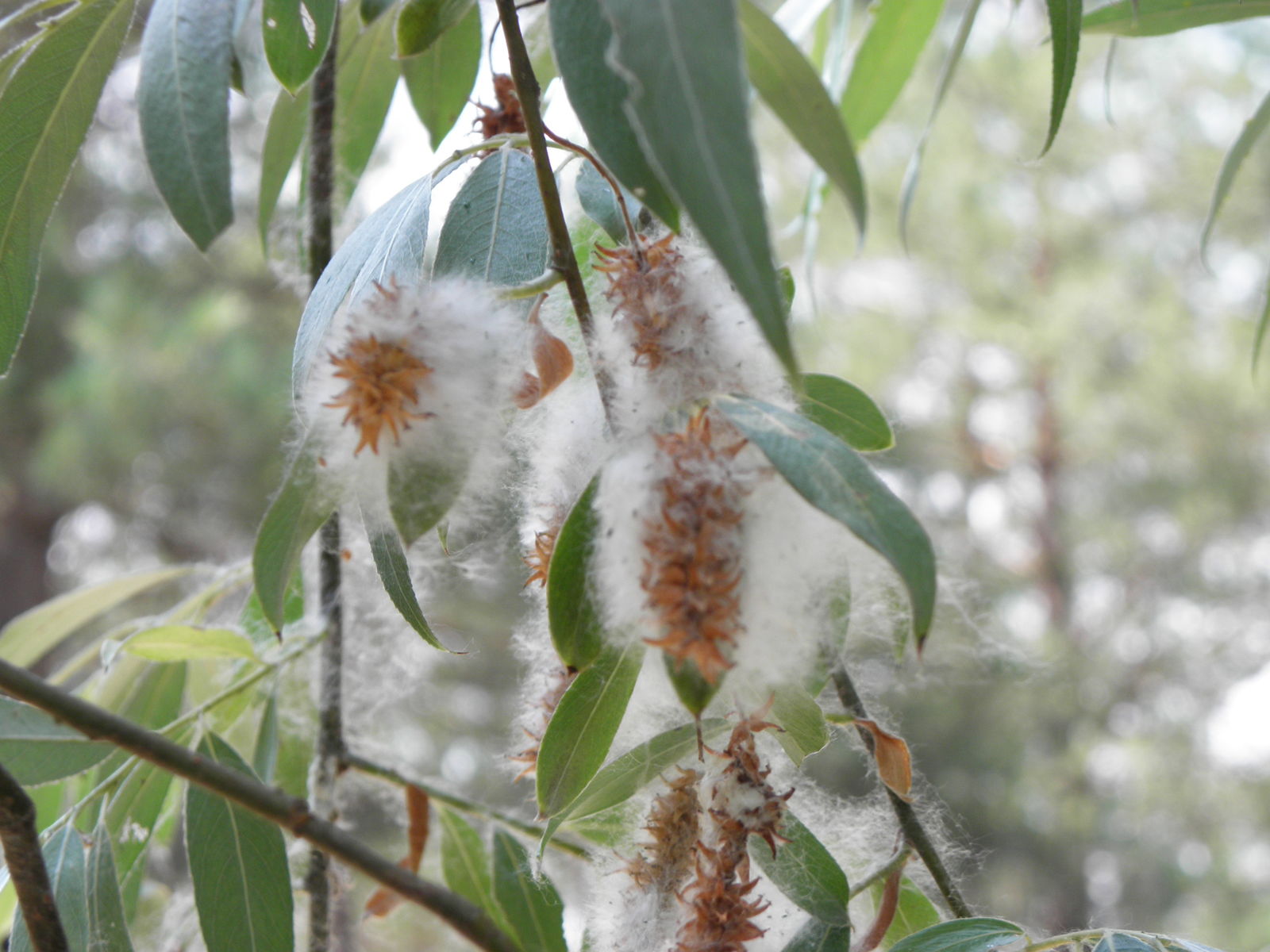
Narrow, lance-shaped leaves offer the first identification clue for Salix alba. Each is about 5–10 cm (2–4 in) long and 0.5–1.5 cm (0.2–0.6 in) wide, silvery green above and distinctly silky and whitish underneath. The pale hairs on the lower surface account for the characteristic whitish appearance of the crown. 4 2
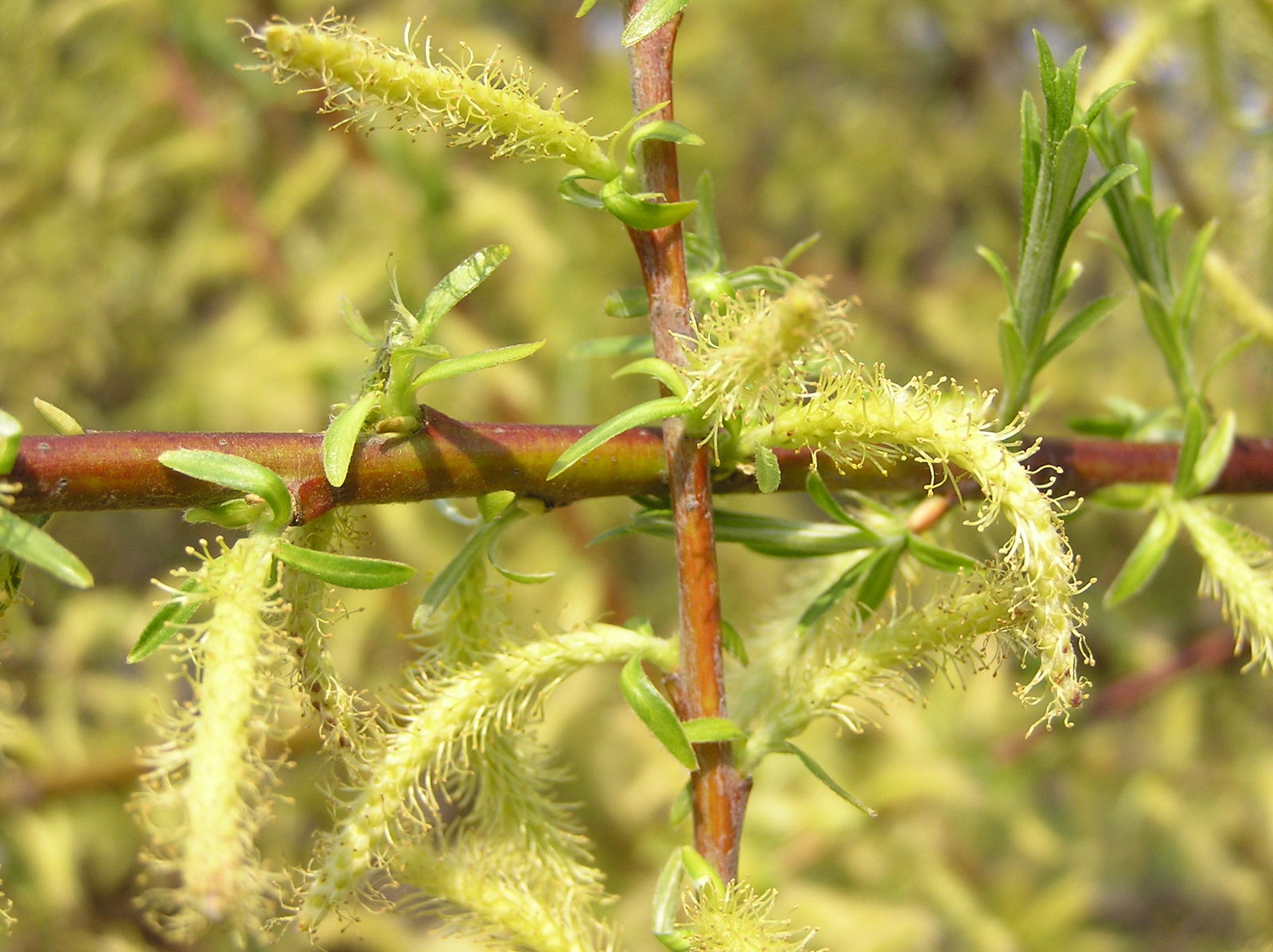
Upright catkins appear in spring. Male catkins are yellow and loaded with pollen, while female catkins are greenish. White willow is dioecious, meaning that male and female flowers grow on separate trees. Insects play a greater role than wind in carrying pollen between them. 5 8
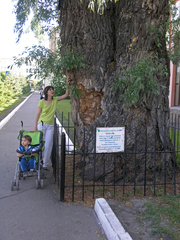
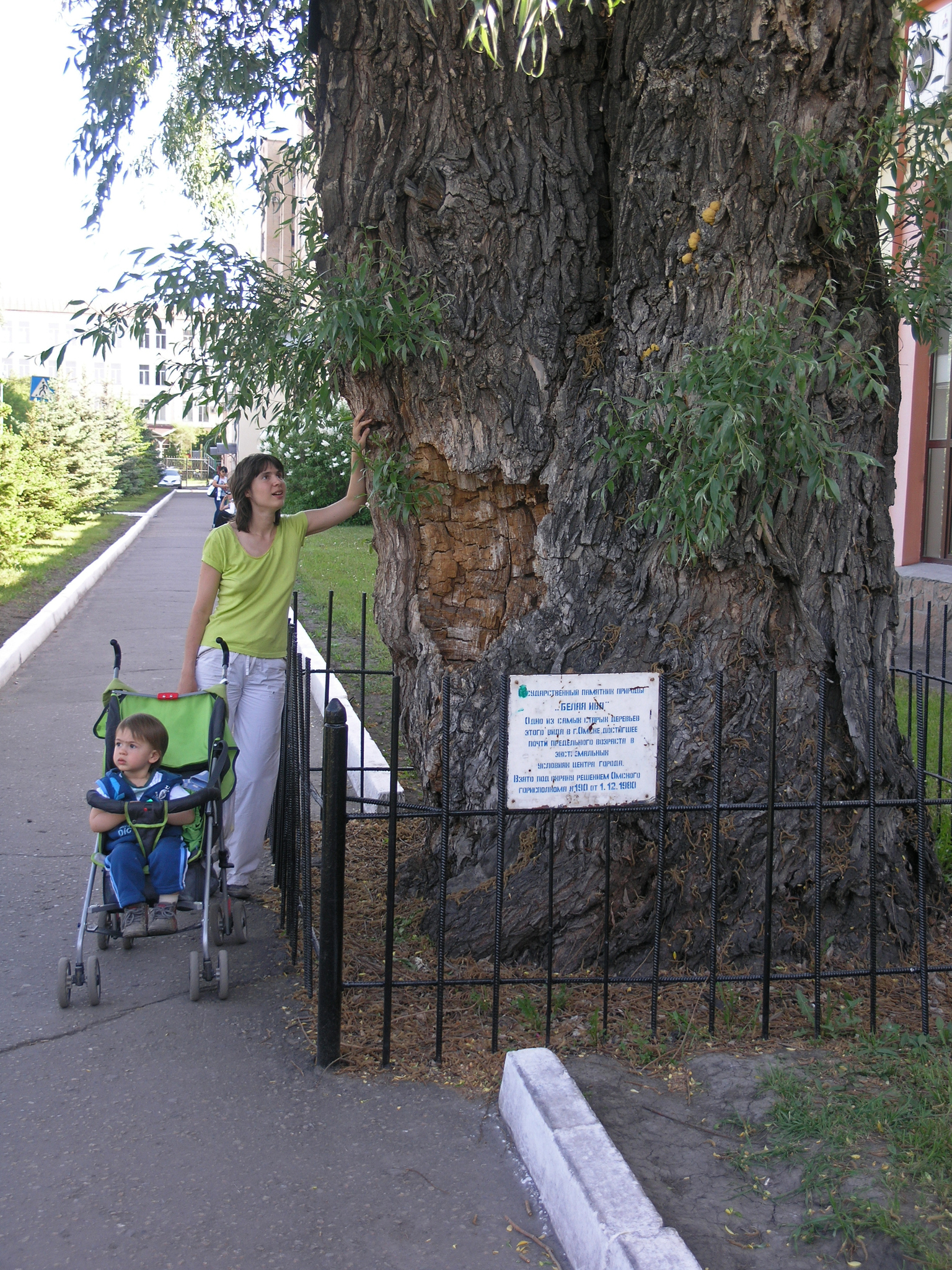
Mature trees commonly stand 10–25 m (33–82 ft) tall and may exceed 30 m (100 ft) on favorable sites. The trunk can approach 1 m (3 ft) in diameter, with gray-brown bark that becomes deeply fissured with age. Slender, flexible twigs range from gray-green to yellowish, depending on the form. 3 2
Useful taxonomy
Linnaeus described Salix alba L. in 1753. Willows form a large genus whose members hybridize readily, and many names for subspecies, varieties and garden forms have circulated over time. Several are now treated as synonyms rather than distinct taxa. The following names are particularly useful when interpreting botanical references and nursery labels:
- Salix alba var. vitellina (L.) Stokes, a yellow-shoot name
- Salix alba var. caerulea (Sm.) Dumort., a cricket-bat willow name
- Salix alba f. britzensis (Späth) C.K.Schneid., a colored-shoot form
- Salix alba subsp. vitellina (L.) Schübl. & G.Martens, another infraspecific combination
The accepted scientific name, Salix alba, remains the reliable reference point. Names such as Vitellina and Britzensis identify horticultural selections with colored twigs, rather than separate botanical species. White willow also crosses with crack willow to produce Salix × fragilis, adding another source of confusion in mixed willow populations. 1 7
Habitat and range
Europe, western and central Asia, and northwestern Africa form the native range of Salix alba, which extends eastward to northern China. In lowland France, it is common beside rivers, ponds and ditches, contributing to riverside woodland and rows of trees on moist ground. 1 4
As a pioneer tree, white willow readily colonizes open, moist ground. Disturbed banks, alluvial deposits and flood-prone land provide suitable places for its light, windborne seed to germinate quickly on wet mud. Its vigorous roots also help stabilize banks and slow erosion, linking its establishment to the physical structure of river margins. 8 3
Extensive planting for ornament, soil stabilization and twig production has carried white willow beyond its original range. It has become naturalized in several introduced areas, especially North America. These established populations outside its original range should be distinguished from the native populations of Eurasia and North Africa. 7 5
Life cycle and reproduction
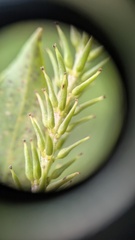
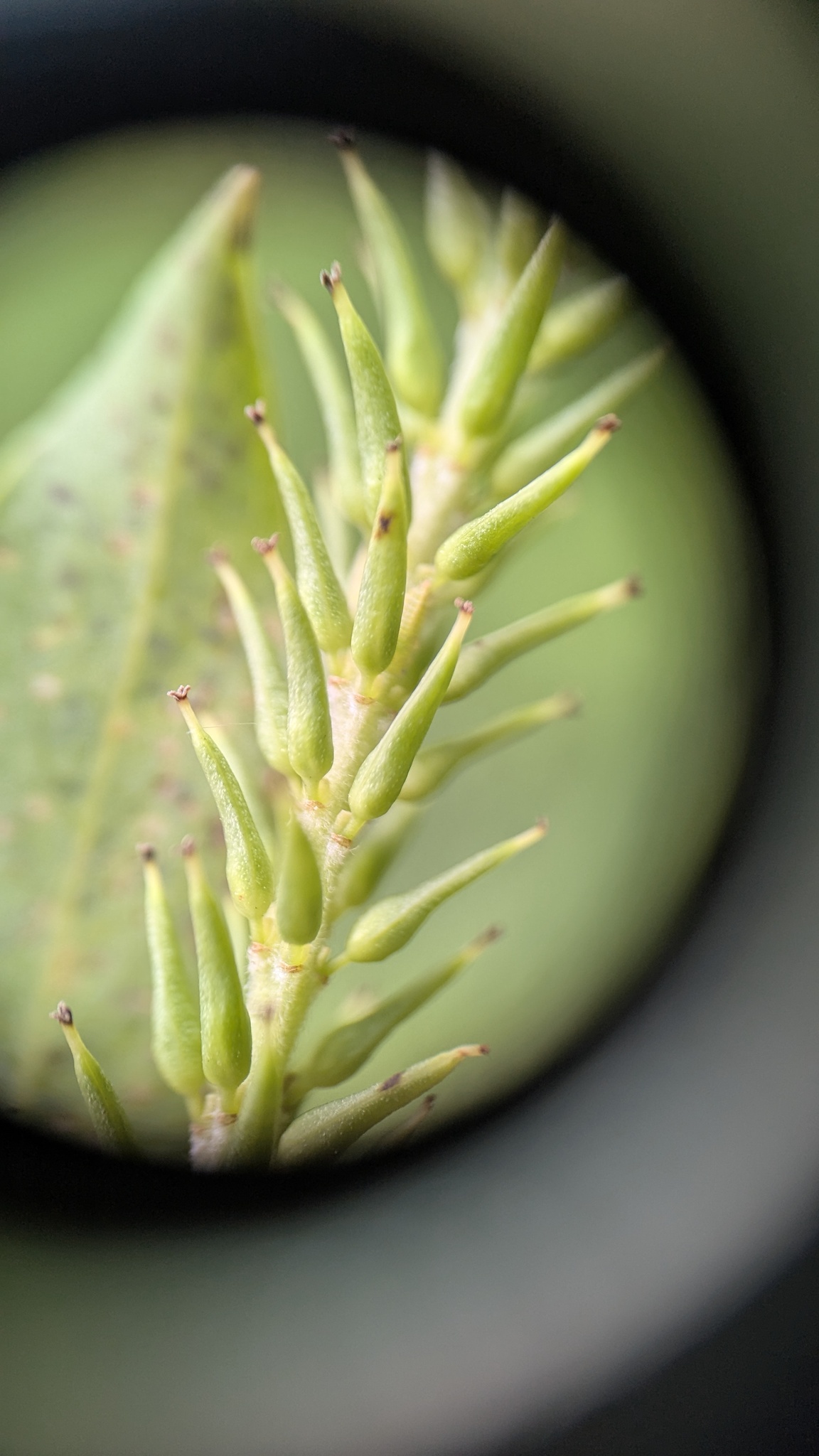
Early spring flowering in white willow often coincides with the emergence of its leaves. Because the sexes grow on separate trees, fruit production requires male trees near the females. Once pollinated, the female catkins release tiny downy seeds that travel on the wind. 5 4
Growth is rapid, particularly during youth, so a young tree establishes its presence quickly. That vigor comes with soft wood and a moderate lifespan. White willow is nevertheless very hardy: it tolerates frost around −30 °C (−22 °F) and temporary flooding that would overwhelm many other trees. 2 7
Propagation by cuttings is straightforward. A piece of year-old twig inserted into moist soil in late winter can root within weeks, and even simple willow stakes often take on riverbanks. Raising plants from seed is less forgiving. The minute, downy seeds lose viability within a few days and must be sown as soon as they ripen, on moist soil. 6 2
Uses and risks
Bank stabilization, waterside avenues and the production of straight rods are traditional uses of white willow. Trees can be managed as pollards, with regular cutting back of the head to provide material for basketry and bundles of fuel. Garden selections with yellow or orange shoots are cut back low each winter for winter color. The Caerulea form supplies the pale wood used for cricket bats. 2 6
White willow bark contains salicin, a bitter glycoside from which salicylic acid derives, linking the tree to the origins of aspirin. Bark decoctions were used for fever and pain long before the modern drug was synthesized. Salicin and tannins also make bark and foliage mildly toxic in large amounts. Wood and bark require caution around horses and people sensitive to salicylates, although the tree is not generally regarded as dangerous in a garden. 6 5
Varieties, look-alikes and related plants
Winter twig color distinguishes several cultivars without making them separate species. Vitellina has golden-yellow shoots, while Britzensis has orange-red growth. Argentea emphasizes the silvery foliage; Caerulea, the cricket-bat willow, is cultivated for its pale wood. Tristis has drooping twigs that suggest a weeping willow rather than the more upright typical tree. 2
The most likely look-alikes include:
- Salix × fragilis, crack willow, a hybrid whose twigs snap off cleanly with a flick;
- Salix babylonica, weeping willow, with conspicuously hanging branches;
- Populus nigra, black poplar, another riverbank tree, but one with broad, diamond-shaped leaves.
Silvery, silky leaf undersides, early catkins and the stature of a large riverbank tree remain the most useful combination for confirming Salix alba. No single colored twig or drooping branch is as dependable as this group of features considered together. 4 1
Main sources
- Plants of the World Online / Kew, Salix alba L.
- Royal Horticultural Society, Salix alba - white willow
- Missouri Botanical Garden, Salix alba
- NC State Extension, Salix alba (White Willow)
- Encyclopaedia Britannica, white willow (Salix alba)
- Plants For A Future, Salix alba
- USDA PLANTS Database, Salix alba L.
- Woodland Trust, white willow (Salix alba)
Frequently asked questions
Is white willow toxic?
It is mildly toxic. Bark and leaves contain salicin and tannins, which are bitter and irritating in large amounts. Wood and bark require caution around horses and people sensitive to salicylates, although the species is not generally considered dangerous in the garden.
What is the connection between white willow and aspirin?
White willow bark contains salicin, from which salicylic acid derives, the compound linked to the origins of aspirin. Bark decoctions were used against fever and pain long before the modern drug was chemically synthesized.
How fast does white willow grow?
Very fast. This pioneer of riverbanks adds several tens of centimeters a year when young, reaching its mature size in a few decades. That vigor comes with soft wood and a moderate lifespan.
Why plant white willow beside water?
Its roots stabilize banks and slow erosion, while the tree tolerates temporary flooding and moist soil. It is one of the most common riverside woodland trees in France, suited to ditches, rivers and ponds.
Which plants look like white willow?
It is most often confused with crack willow (Salix × fragilis), whose twigs snap cleanly, and weeping willow (Salix babylonica), with strongly drooping branches. Silvery, silky leaf undersides remain the best clue.
Does white willow grow wild in France?
Yes. Salix alba is common in France beside streams, ponds and ditches, where it forms part of lowland riverside woodland. It is a widespread European native.
How large does white willow grow?
Trees commonly reach 10–25 m (33–82 ft) and may exceed 30 m (100 ft) on favorable sites, with trunks sometimes approaching 1 m (3 ft) in diameter. Spread is roughly 6–15 m (20–49 ft).
Why pollard a white willow?
Regular cutting back of the head produces straight rods for basketry or bundles of fuel and reduces the leverage acting on brittle wood. It is a traditional way to manage waterside willows.
If you are unsure about a plant’s toxicity, ask a botanist or veterinarian for advice.