
Scarlet sage (Salvia splendens, )
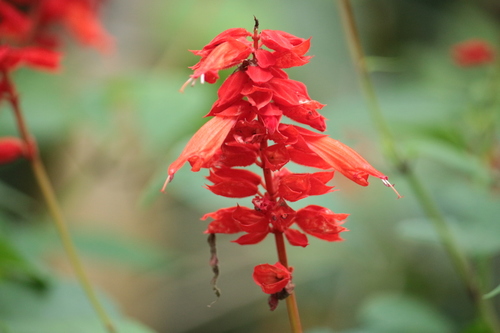

Scarlet sage (Salvia splendens) is a Brazilian member of the Lamiaceae family, often grown as an annual in temperate climates. Its vivid red spikes and prolonged flowering give borders, containers and summer beds a clear splash of color.
Read moreScarlet sage, Red sage and Scarlet salvia


© photo
(c) Gabrielly Benaducci Tolentino, some rights reserved (CC BY-NC), uploaded by Gabrielly Benaducci Tolentino · cc-by-nc
Wikimedia Commons · CC BY-SA or Public Domain
Wikipedia · CC BY-SA
Taken May 2, 2022 by Iram Sabha (cc-by-sa)
Taken Jan 9, 2022 by Francisco Donoso (cc-by-sa)
Taken Feb 29, 2020 by Elaine Elaine (cc-by-sa)
Taken Jun 27, 2022 by Tristan Jaton-Maria (cc-by-sa)
© copyright of the Board of Trustees of the Royal Botanic Gardens, Kew.




Identity
Scarlet sage (Salvia splendens Sellow ex Schult.) provides vivid red color in borders, containers and summer bedding. Its upright flower spikes make a clear visual statement, especially where a planting needs a compact shape and a strong, readily visible band of color. 1 8
Taxonomic references POWO, WFO and IPNI confirm the accepted binomial. Like other sages, scarlet sage belongs to the Lamiaceae, but its main role is ornamental, and it is usually grown as an annual in temperate climates. 2 3 4
Within a red planting palette, its color looks bright and direct, suited to bold public displays. It differs in effect from the deep red of a rose or the more naturalistic red of a poppy, offering clarity that can sometimes lack subtlety. 8
The species Salvia splendens is distinct from blue-flowered mealycup sage, purple wood sage and aromatic garden sage. These differences matter in a planting: the shared genus name does not make their color, texture or intended use interchangeable. 1 8
Recognition
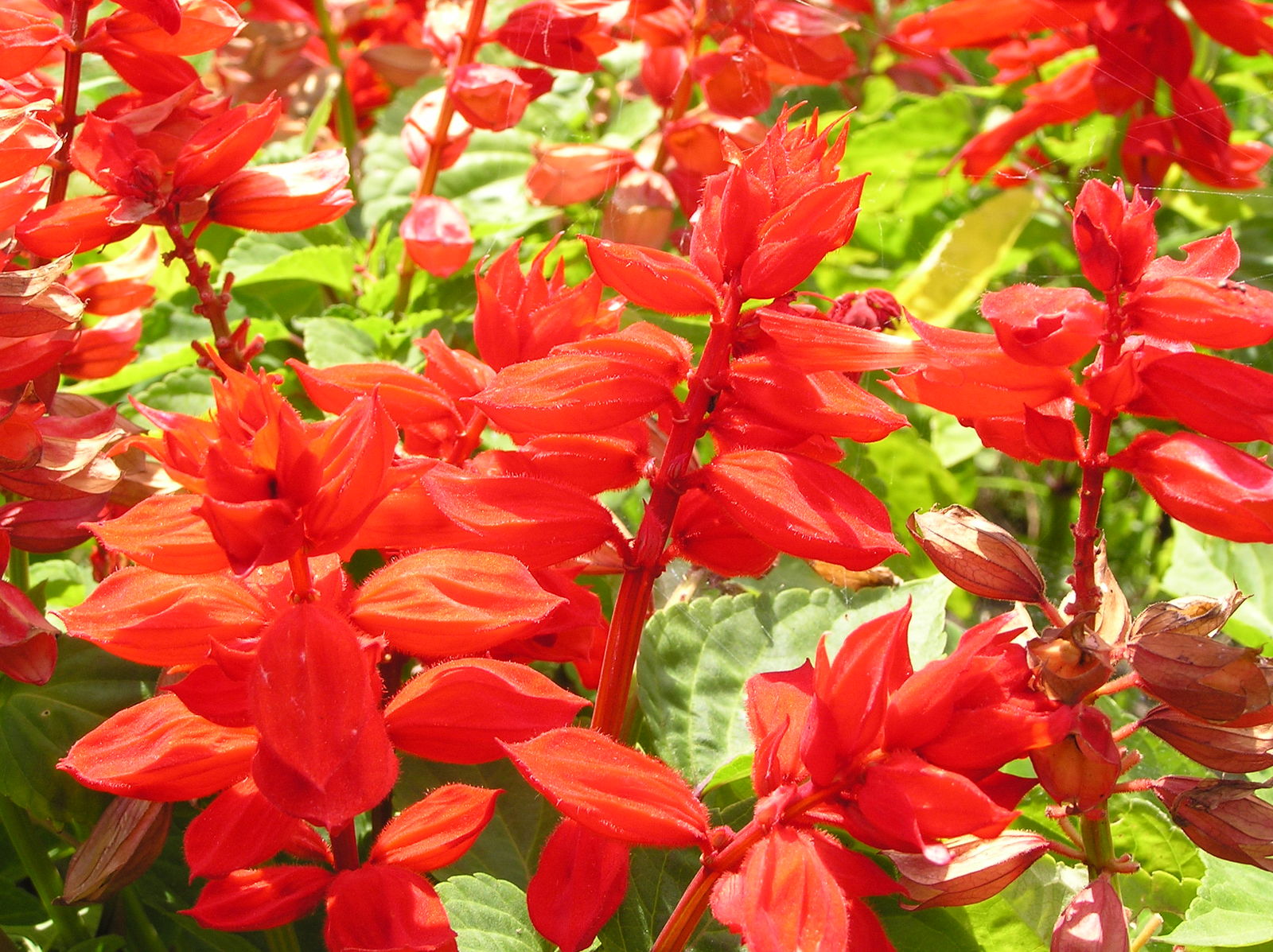
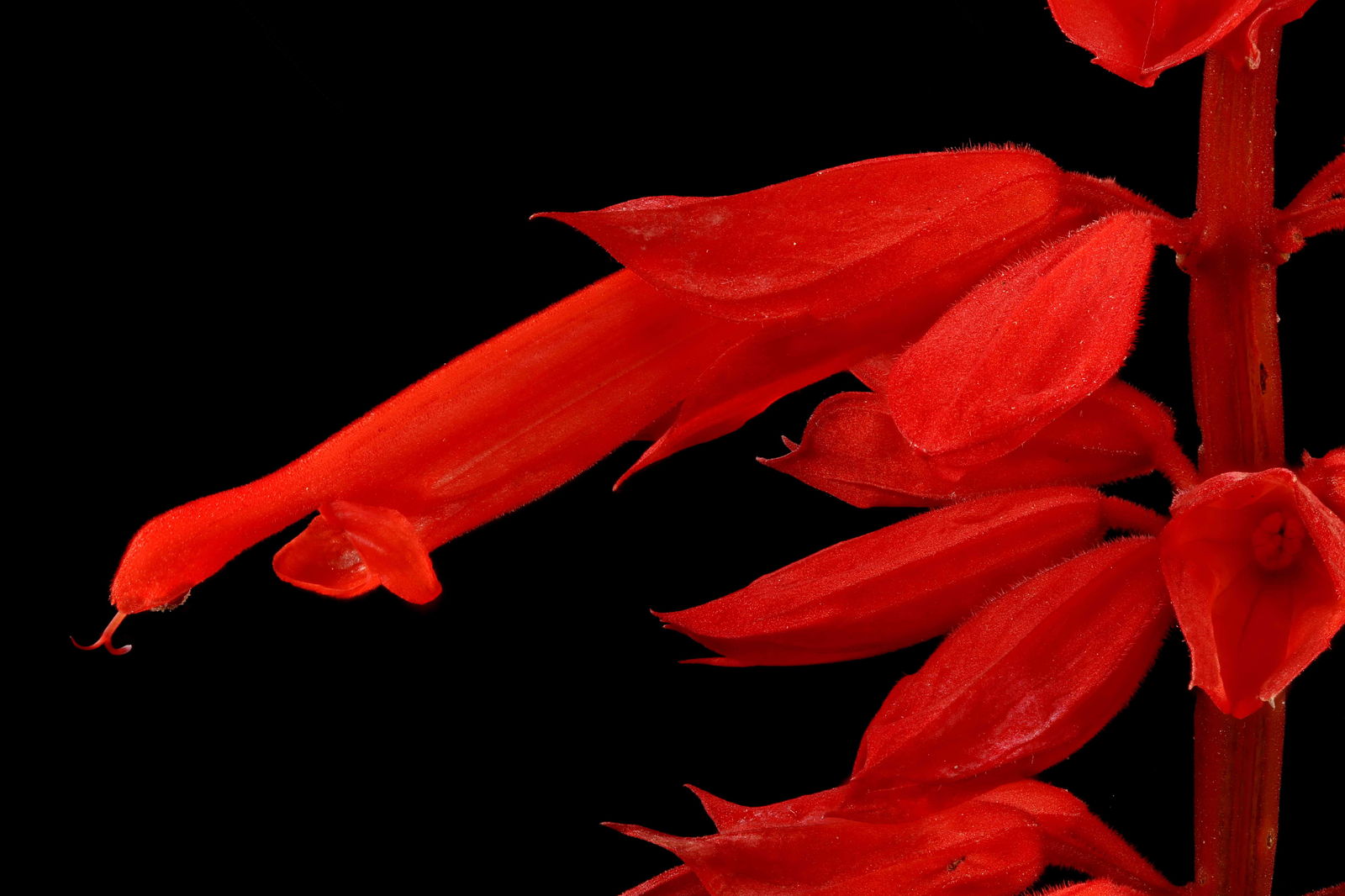
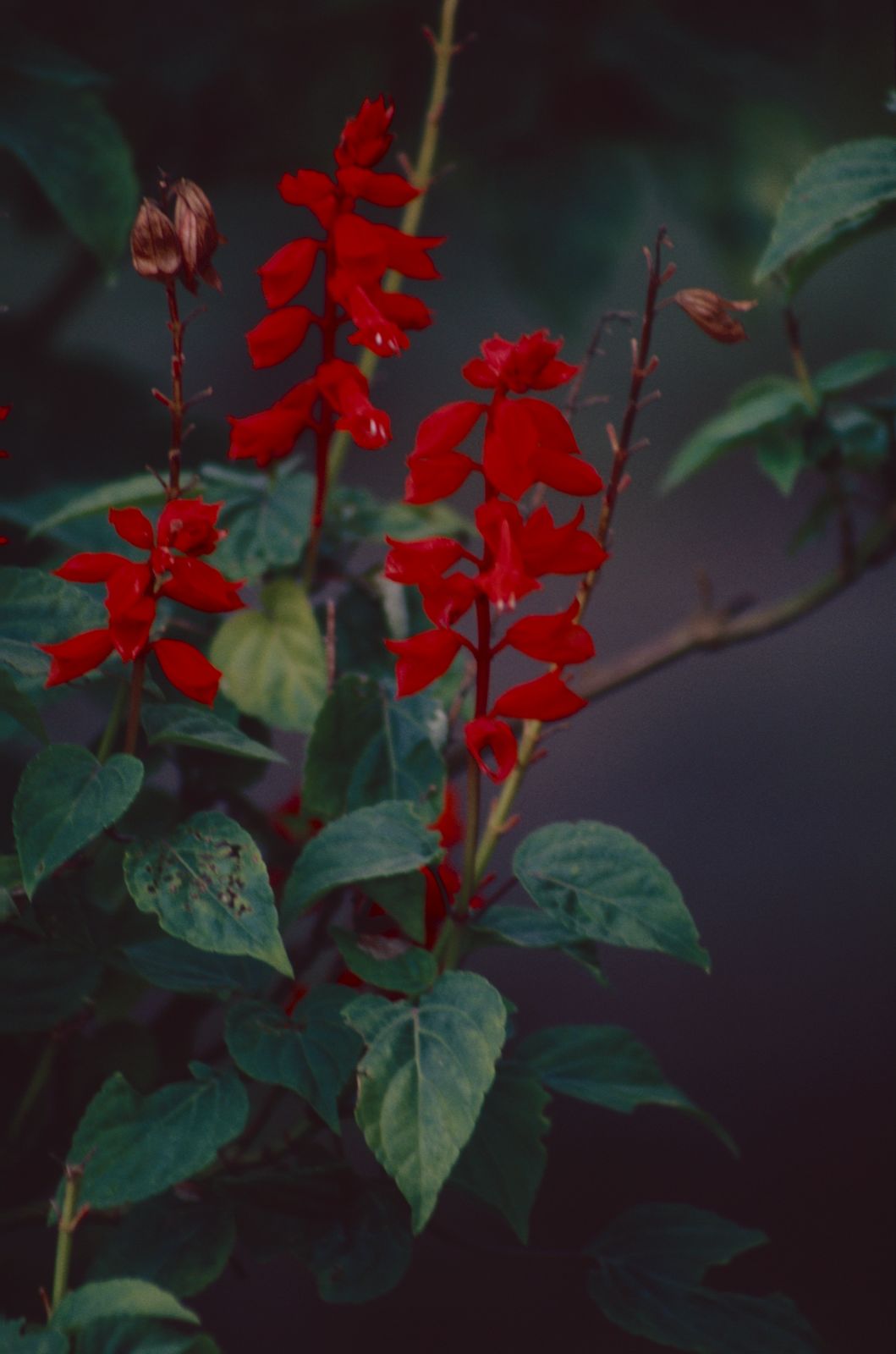
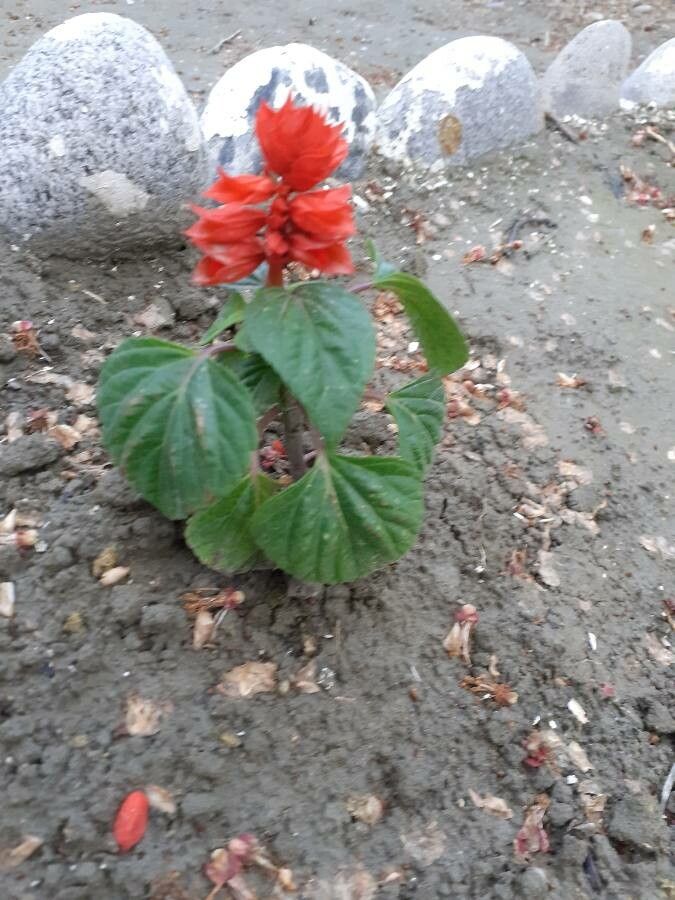
Erect stems carry spikes of tubular red flowers, with pink, purple or white alternatives among cultivars. Colored bracts often contribute to the dense mass of color, extending the visual impression beyond the individual tubular blooms. 5 7
Green leaves feel softer than those of garden sage. Compact to medium-sized clumps are widely used in formal edging or repeated patches of color, where the foliage provides a background for the upright flowering spikes. 6
In temperate climates, planting follows the last frosts. Freezing destroys the aboveground growth, so the plant is most often grown as a summer annual rather than relied on for a permanent framework in a cold garden. 5
Red is the defining visual feature. A successful planting stays dense, flowering and tidy; if stems stretch or the clumps become bare, the clear graphic effect quickly weakens, even when some flowers remain. 8
Useful taxonomy
This bedding species bears the accepted name Salvia splendens Sellow ex Schult. Keeping the complete binomial attached to it preserves the distinction between this ornamental species and other sages that share a similar common name. 2 8
A name such as “red sage” can be imprecise because other sages also have red flowers. Here it refers to S. splendens, the familiar bright-flowered plant used for summer edging, rather than identifying every red-flowered member of Salvia. 8 7
Modern cultivars vary in height and color. Some remain compact for public bedding schemes, while others are taller and less rigid, but all retain the characteristic effect of upright, colorful spikes over their foliage. 6
Precise identification also prevents confusion with medicinal sage. Salvia splendens is not a culinary sage: its interest lies in its colored flowers rather than in leaves harvested for the kitchen or herbal preparations. 2
Cultivation
Warmth, sun and drained soil support flowering, but avoid leaving the roots dry for too long. In pots, regular watering keeps the flower spikes fresh through summer, when a small volume of growing medium can dry quickly. 5 6
Plant after frost in improved soil that is not heavy. Excess shade produces soft stems, while prolonged drought in a pot can stop flowering. Both conditions reduce the compact, flower-filled effect for which scarlet sage is grown. 5
Remove faded flowers and keep feeding moderate to prolong the display. The aim is an even, compact plant, rather than lush foliage produced at the expense of the colorful spikes that give the border its character. 6
Seeds can be used for propagation, although purchased young plants produce a quicker result in borders and pots. Cuttings preserve certain selections more reliably when the characteristics of a particular plant are important to the display. 6
Uses
A crisp red border makes especially good use of scarlet sage, whether in a balcony pot, summer bed or foreground planting in a park. Dark foliage and white flowers can provide a clear setting for its intense color. 8
Pelargoniums and petunias work with it when a design calls for bright color. In a naturalistic planting it can appear too rigid or too obviously cultivated, so its strong formal presence needs to suit the surrounding plants. 8
Pollinators visit the tubular flowers, but the gardener's main interest remains visual. Repeated bright red spikes form a color signal that is easy to see from a distance and useful for defining the edge of a planting. 5
A few plants are enough in a small space. Too much scarlet sage in one planter can become visually heavy; foliage or flowers with less saturated colors help keep its strong red from overwhelming the whole composition. 6
Precautions
Dogs and cats are listed as non-toxic audiences in the available plant profile, while the status for horses is undocumented. Scarlet sage remains an ornamental plant and should not be confused with a sage grown for food. 2
Identification is therefore the main precaution. The word “sage” alone is insufficient: S. splendens supplies color in the garden, rather than leaves for tea or cooking. Its floral appearance does not establish an edible use. 8
Cold, shade and pots that are too small account for many cultivation problems. When flowering stops, check light, water and nutrition before replacing the plant; an unsuitable growing situation can undermine an otherwise healthy planting. 5
Bright red works best in a simple composition. Dark green foliage, a few white flowers or a well-kept pelargonium let the color remain clear. Combined with too many other saturated colors, it quickly looks busy and may not suit every garden style. 8
Predictability is valuable in public or family borders. Young plants establish quickly, stay compact when adequately watered and provide an immediate red focal point. They suit designs seeking a clear, consistent effect across a bed or container group. 6 8
To carry the display into fall, remove exhausted spikes and avoid repeated bouts of drought. In pots, a light mulch or a deeper container often provides a more useful buffer than relying on emergency watering every day. 5
Keep the distinction between scarlet sage and garden sage clear. Their common names connect them, but their uses, cultivation requirements and most valued parts differ. The ornamental flower spikes of one do not replace the aromatic leaves of the other. 2 8
Repeated planting gives the strongest effect in a bed. A few scattered patches may look incidental, while a short border that is kept watered and regularly tidied becomes a deliberate red ribbon running through the design. 8 6
The plant also illustrates a useful distinction between decorative color and culinary value. A bright red flower can be effective in a garden without providing any reason to use the plant as an aromatic herb. 8
For Salvia splendens, summer color is the defining garden role. Correct identification and suitable growing conditions preserve that ornamental purpose, while keeping it distinct from sages grown for medicinal or kitchen use. 8 2
Main sources
- Wikidata, Salvia splendens
- Plants of the World Online / Kew, Salvia splendens
- World Flora Online, Salvia splendens
- International Plant Names Index, Salvia splendens
- NC State Extension, Salvia splendens
- Royal Horticultural Society, Salvia splendens search results
- Wikipedia EN, Salvia splendens
- Floralens, red flower selection
If you are unsure about a plant’s toxicity, ask a botanist or veterinarian for advice.