
Red-berried elder (Sambucus racemosa, )
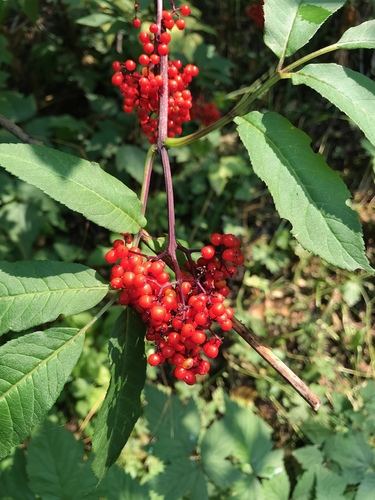
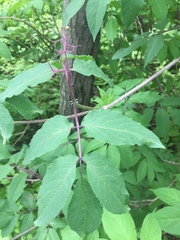
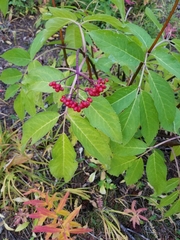
Red-berried elder (Sambucus racemosa) is a deciduous shrub in the Viburnaceae family, found in Europe, temperate Asia and North America. Its upright, cone-shaped flower clusters distinguish it from the flat umbels of European elderberry. Its berries are bright red, although some North American varieties have black fruit.
Read moreRed-berried elder and Red elderberry




© photo
no rights reserved, uploaded by neotrigonia · cc0
Scott Loarie · cc0
Rod · cc0
Taken May 6, 2014 by Tela Botanica − Benjamin Suze (cc-by-sa)
Taken May 3, 2022 by Stéphanie lord (cc-by-sa)
Taken Jun 12, 2018 by Robert Burk (cc-by-sa)
Taken Jan 16, 2022 by huy HO (cc-by-sa)
Taken May 9, 2021 by unitycoder (cc-by-sa)
© copyright of the Board of Trustees of the Royal Botanic Gardens, Kew.




Global distribution
The native range of Sambucus racemosa covers Europe to the Caucasus and a broad North American belt, from Canada to the mountains of the western United States. Recognized varieties occupy different areas on each continent, explaining some differences between floras.
- Native6
- Introduced1
- France
- Germany
- Russia
- Canada
- United States
- Japan
- New Zealand
Hexagons: regions where the plant occurs. Green dots: native range.1
Identity
Red-berried elder (Sambucus racemosa L., 1753), also called red elderberry, is a deciduous shrub in the genus Sambucus, family Viburnaceae. Carl Linnaeus described it in Species Plantarum in 1753 from material collected in the mountains of southern Europe. 2 1
Both English common names emphasize the usual red fruit. The French name sureau à grappes instead points to the upright flower cluster. Together, fruit color and panicle shape distinguish this shrub from European elderberry without a botanical identification key. 4
Recognition
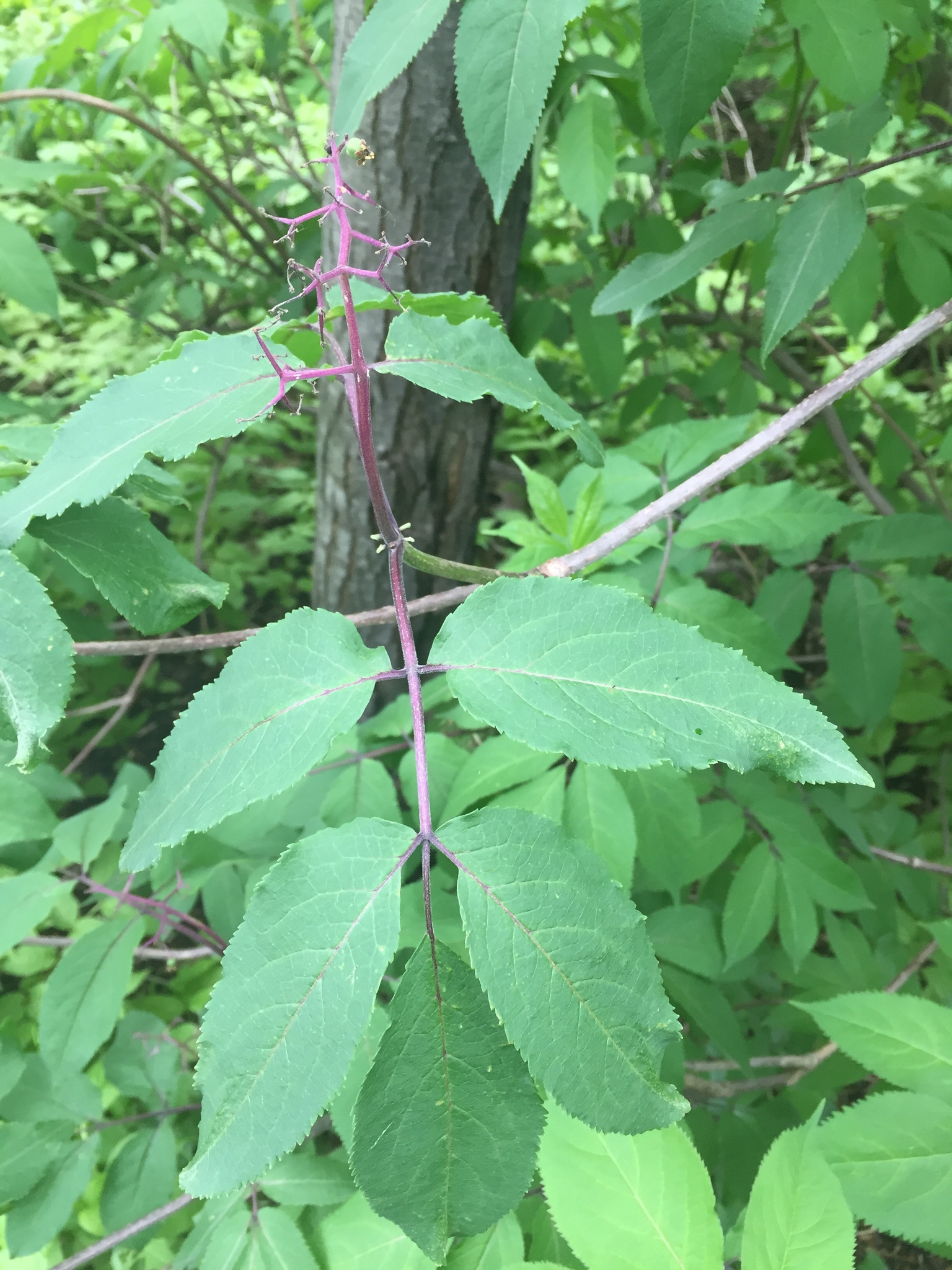
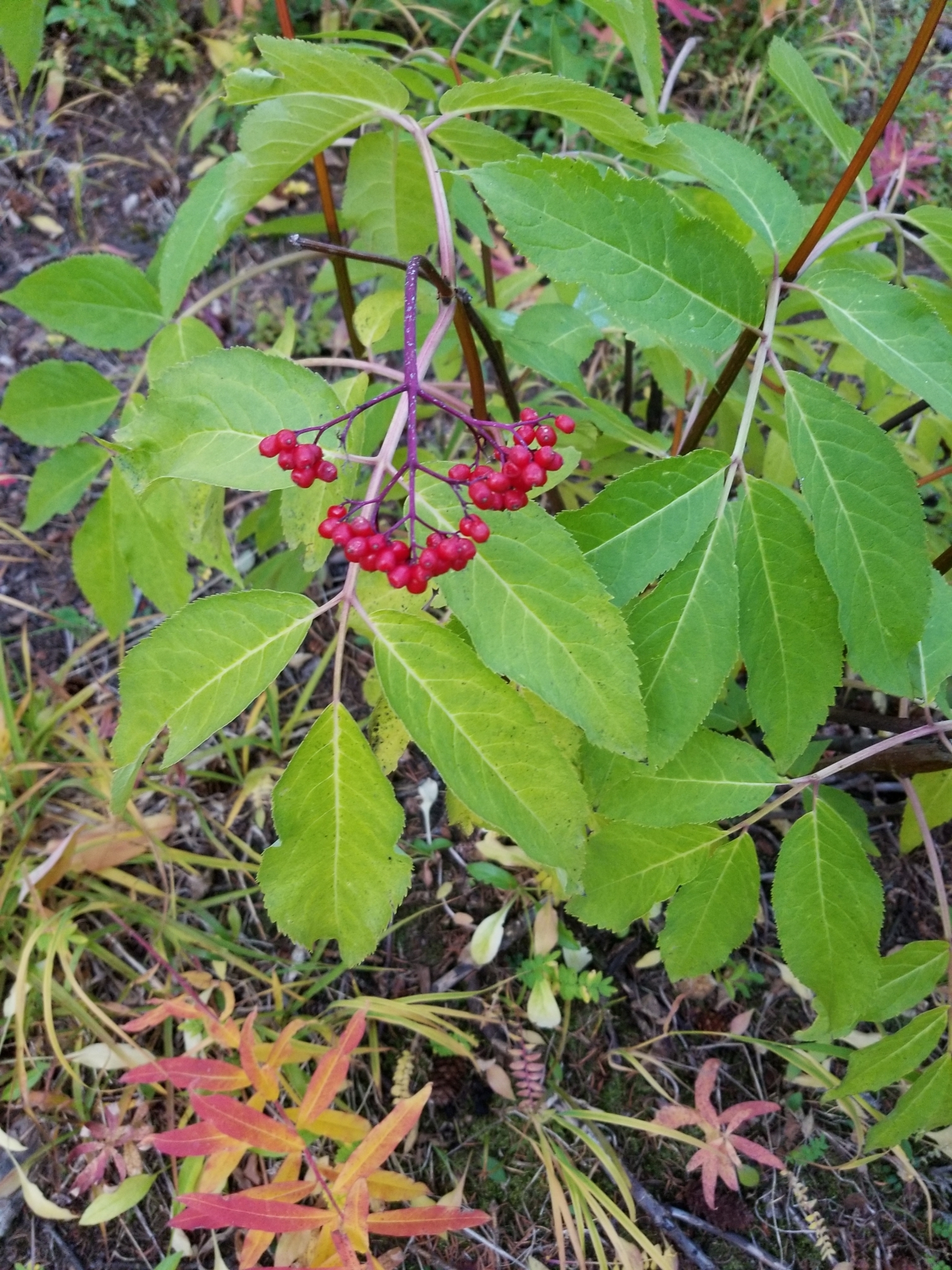
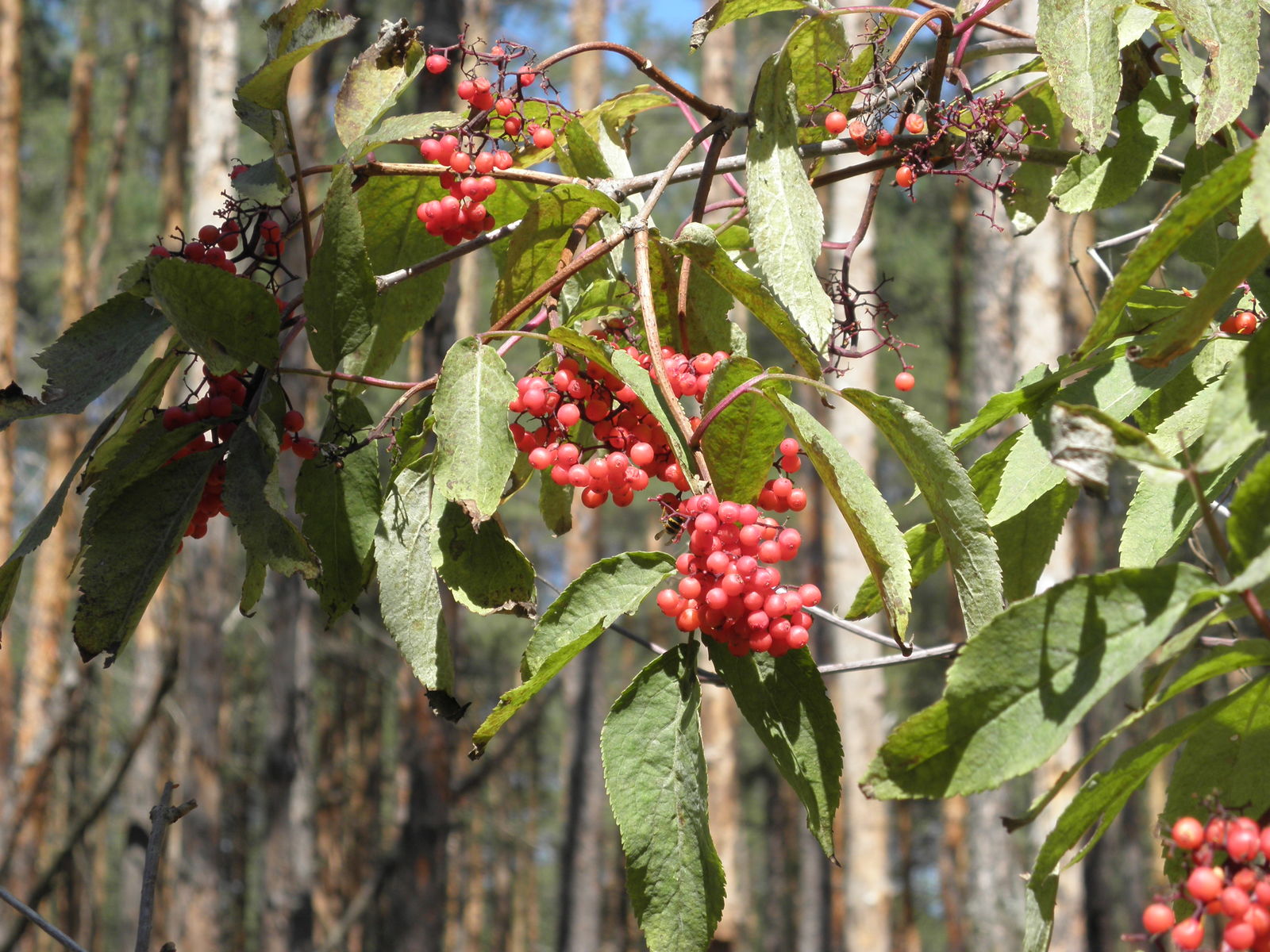
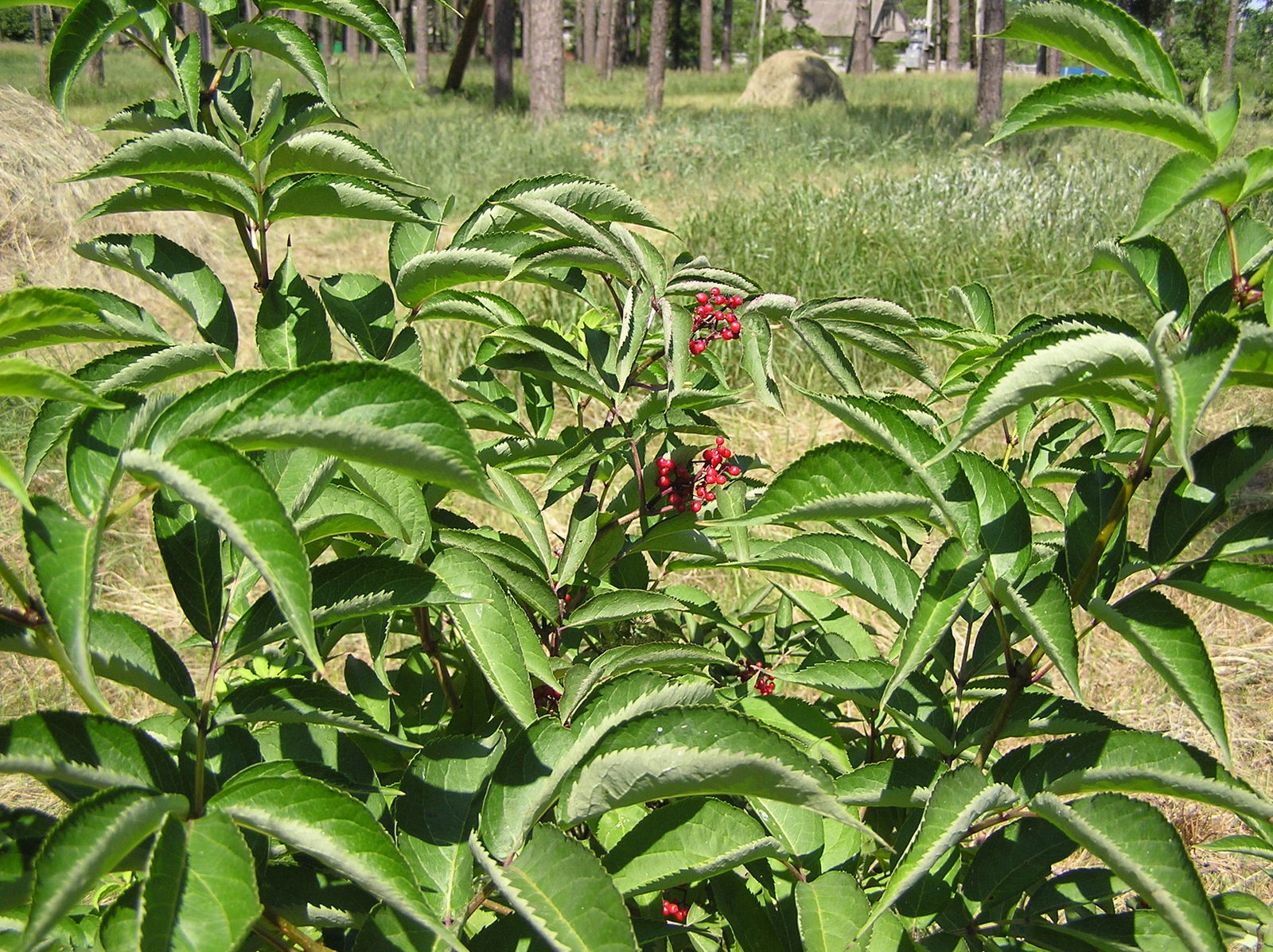
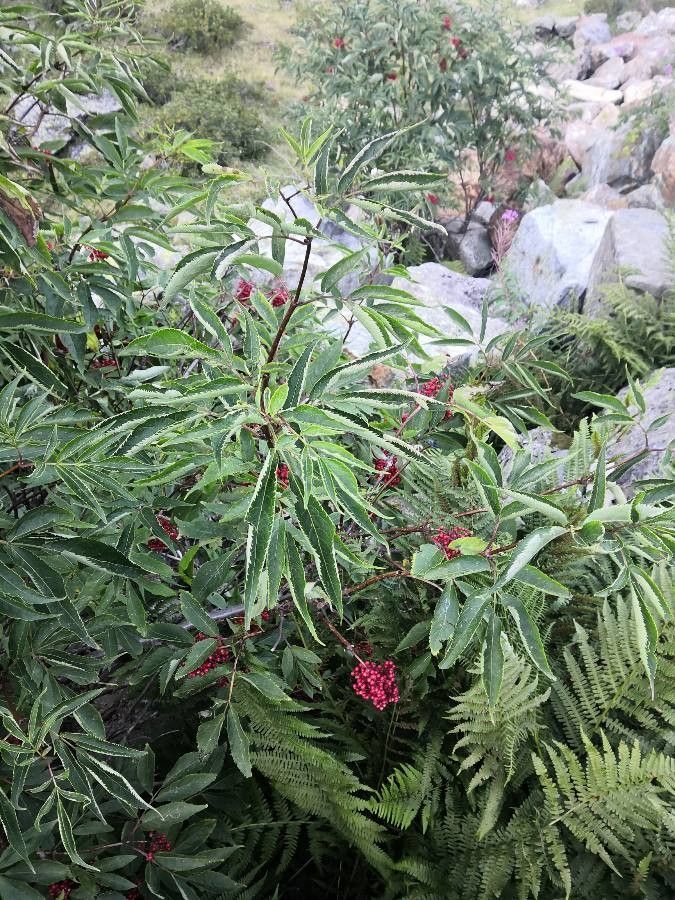
Dense growth reaches 2 to 4 m (6.5 to 13 ft) tall, with stems containing a broad white pith that can be seen by cutting a young twig. Opposite, compound leaves have 5 to 7 toothed leaflets, each 4 to 8 cm (1.6 to 3.1 in) long, and smell unpleasant when crushed. 4
Spring flowers open several weeks before those of European elderberry. Each upright, cone-shaped panicle measures 3 to 6 cm (1.2 to 2.4 in); pink buds open into cream to yellowish-white flowers with five yellow stamens, a consistent count in this species. This upright panicle, rather than the flat umbel of European elderberry, identifies Sambucus racemosa before its fruit develops. 4
Small drupes ripen bright red in summer, packed into compact clusters. Some North American varieties, such as var. melanocarpa, have purplish-black berries instead, so fruit color alone can mislead identification. 4
Useful taxonomy
Four recognized varieties and subspecies occupy distinct areas on different continents:
- Sambucus racemosa subsp. racemosa, the European form, extending to the Caucasus;
- Sambucus racemosa subsp. pubens (Michx.) Hultén, known as American red elder;
- Sambucus racemosa var. melanocarpa (A.Gray) McMinn, with black berries, in western North America;
- Sambucus racemosa var. microbotrys (Rydb.) Kearney & Peebles, in the southwestern United States.
The accepted name, Sambucus racemosa L., has remained stable since its original publication in 1753 through subsequent revisions. Its family placement has changed: formerly classified in Caprifoliaceae, the species now belongs to Viburnaceae in Kew's taxonomic references. 1 2
Habitat and range
European populations extend to the Caucasus, while a distinct North American population ranges from Canada to the mountains of the western United States. In France, Sambucus racemosa mainly occupies open woodland, forest edges and streambanks at moderate mountain elevations. 1 4
Compared with European elderberry, which is more common in lowlands and disturbed ground, red-berried elder favors cool and often higher sites. It tolerates a wide range of soils, from limestone to heavy clay, provided moisture is sufficient. 5 4
By late summer, its berries are among the first fleshy fruits available to fruit-eating birds in mountain woodland, before the later ripening of European elderberry. 4
Life cycle and reproduction
Early spring flowering in Sambucus racemosa mainly attracts flies and a few butterflies, a smaller group of visitors than European elderberry draws in the main growing season. After fertilization, the drupes ripen within a few weeks, becoming bright red or, more rarely, purplish black depending on the variety. 4
Propagation mainly uses seed after several months of cold stratification, or semi-ripe cuttings taken in summer. Fresh seed without stratification germinates slowly and irregularly, sometimes over several seasons. 5 4
An adult-sized shrub develops within 3 to 5 years and then flowers regularly each spring. Moderate pruning after flowering preserves buds formed the previous year; late-winter pruning can remove them. 4
Uses and risks
Garden planting centers on informal hedges, specimens and open woodland. Golden-leaved cultivars such as Sutherland Gold are valued for their finely cut outline, but need protection from scorching afternoon sun to prevent browned leaves. 3
Raw foliage of Sambucus racemosa causes digestive upset if eaten, as do its stems, bark and seeds, which are also toxic raw. In some regions, cooked fruit is traditionally made into syrup, jelly or wine, but the berries remain irritating when raw. The ASPCA lists elderberry as toxic to dogs and cats, including the fresh foliage. 5 6
Varieties, look-alikes and related plants
Sutherland Gold and Plumosa Aurea share deeply cut golden foliage, while Lemony Lace adds red-tinged spring shoots. Tenuifolia keeps finely dissected green leaves on a lower, more compact plant. None of these horticultural names represents a separate botanical species or subspecies. 3
Potential look-alikes include the following shrubs:
- Sambucus nigra, with flat umbels and black berries, the most frequent confusion in France;
- Viburnum opulus, whose lobed leaves differ from the elder's compound leaves;
- Viburnum lantana, with simple rather than compound leaves.
In field identification, flower-cluster shape separates Sambucus racemosa from these related species more quickly than fruit color, since color already varies among its North American varieties.
Main sources
Frequently asked questions
How can I tell red-berried elder from European elderberry?
Flower-cluster shape is the most reliable distinction: conical and upright in Sambucus racemosa, flat and spreading in an umbel in European elderberry (Sambucus nigra). Red versus black berries is useful but less consistent.
Are red-berried elder berries edible?
Only when cooked. Raw berries can cause digestive upset, as can the leaves, stems, bark and seeds, which remain toxic even after cooking.
Is red-berried elder toxic to dogs and cats?
The leaves, stems and bark are considered toxic to dogs and cats if eaten. Raw fruit can also cause digestive upset in pets.
Why do golden-leaved cultivars turn brown in summer?
Cultivars such as Sutherland Gold develop leaf scorch in direct afternoon sun. Light partial shade limits browning while maintaining the golden color.
Where does red-berried elder grow wild in France?
It mainly occupies open woodland, forest edges and streambanks in mountain areas, in cooler and often higher sites than European elderberry.
Does red-berried elder need pruning every year?
Light pruning after flowering is enough to control its shape and remove dead wood. Severe pruning in late winter can remove flower buds formed the previous year.
If you are unsure about a plant’s toxicity, ask a botanist or veterinarian for advice.