
Narrow-leaved ragwort (Senecio inaequidens, )
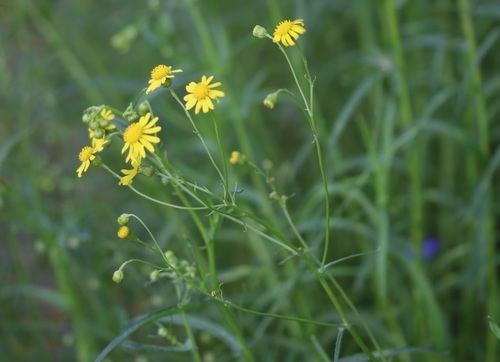
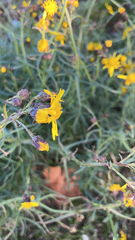
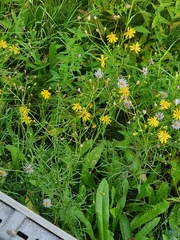
Narrow-leaved ragwort (Senecio inaequidens DC., 1838) is a perennial subshrub in the Asteraceae family, native to southern Africa and introduced to Europe through imported wool from 1889 onward. It colonizes disturbed ground, flowers almost year-round and contains pyrrolizidine alkaloids that pose a documented risk of liver damage to livestock and horses.
Read moreNarrow-leaved ragwort and South African ragwort
Place in full sun, with intense direct light all day long.
Full sun; tolerates light partial shade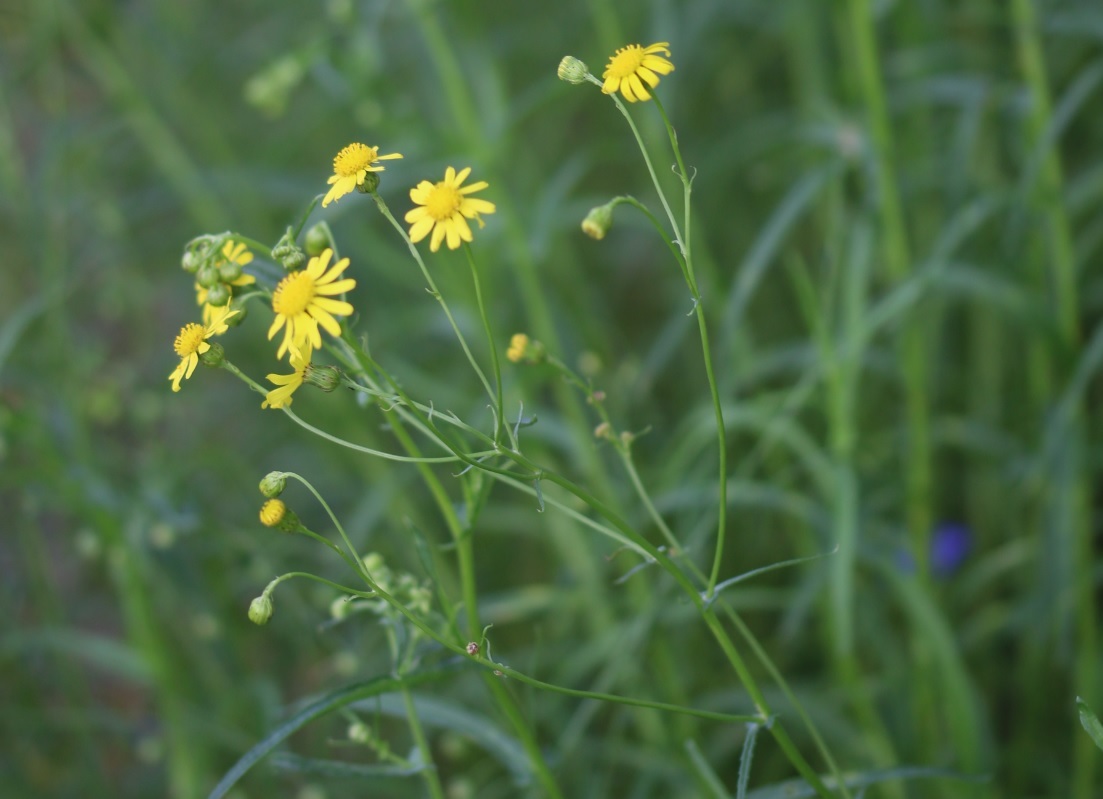


© photo
(c) Thorsten Usée, some rights reserved (CC BY-NC), uploaded by Thorsten Usée · cc-by-nc
iNaturalist User · cc0
Daniel Cahen · cc-by
Taken Nov 28, 2002 by Tela Botanica − Liliane Roubaudi (cc-by-sa)
Taken Jul 15, 2014 by Tela Botanica − Errol VELA (cc-by-sa)
Taken Feb 24, 2019 by Llandrich anna (cc-by-sa)
Taken Oct 2, 2021 by David Ginoux (cc-by-sa)
© copyright of the Board of Trustees of the Royal Botanic Gardens, Kew.




Global distribution
WCVP/POWO place the native range of Senecio inaequidens from Mozambique to South Africa, including Lesotho. EPPO monitors it as an invasive alien in Europe, invasive in Corsica and widely introduced across western Europe since the late nineteenth century.
- Native3
- Introduced3
- Invasive3
- South Africa
- Lesotho
- Mozambique
- Germany
- Belgium
- United Kingdom
- Metropolitan France
- Corsica
- Italy
Hexagons: regions where the plant occurs. Green dots: native range.1
Identity
Narrow-leaved ragwort (Senecio inaequidens DC., 1838), also known as South African ragwort, is an accepted species in the genus Senecio, family Asteraceae. The epithet inaequidens means “unequal-toothed” in Latin and describes the variable leaf margins: some are entire, others slightly toothed, even on the same plant. 3 2
Wool imports explain the French name “séneçon de Mazamet”: the town in southern France processed imported fleeces, and seeds caught in South African wool became established there in the 1930s. First recorded in Europe in Germany in 1889, the plant reached Belgium in 1922, Scotland in 1928, France around 1935 and Italy in 1947. 3 4
Recognition
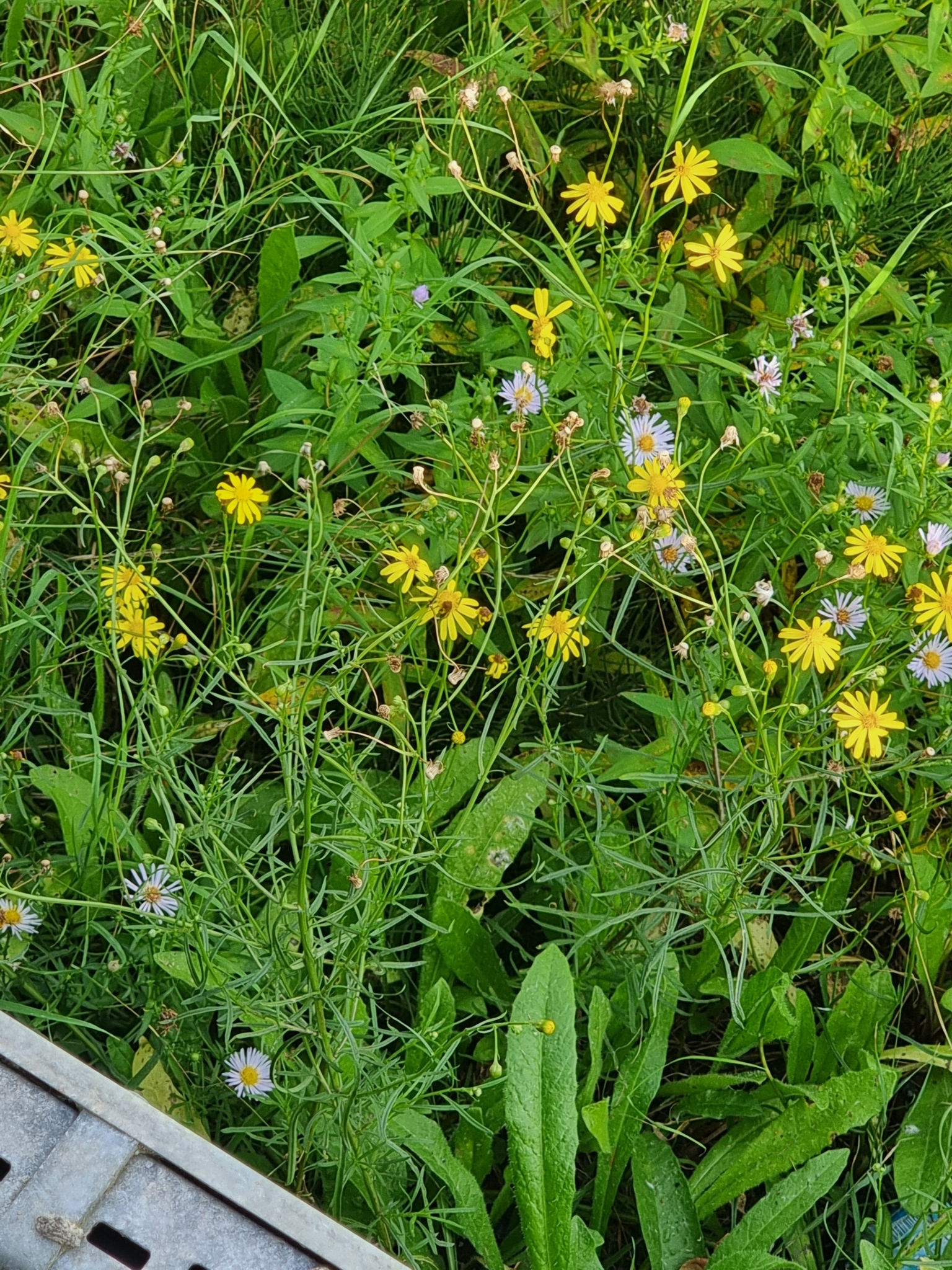
A perennial, bushy subshrub, Senecio inaequidens reaches 30–150 cm (1–5 ft), sometimes 200 cm (6.6 ft) in favorable conditions. Hairless stems branch heavily from the base and become partly woody with age, creating a recognizable outline even when the plant is not flowering. 5 3
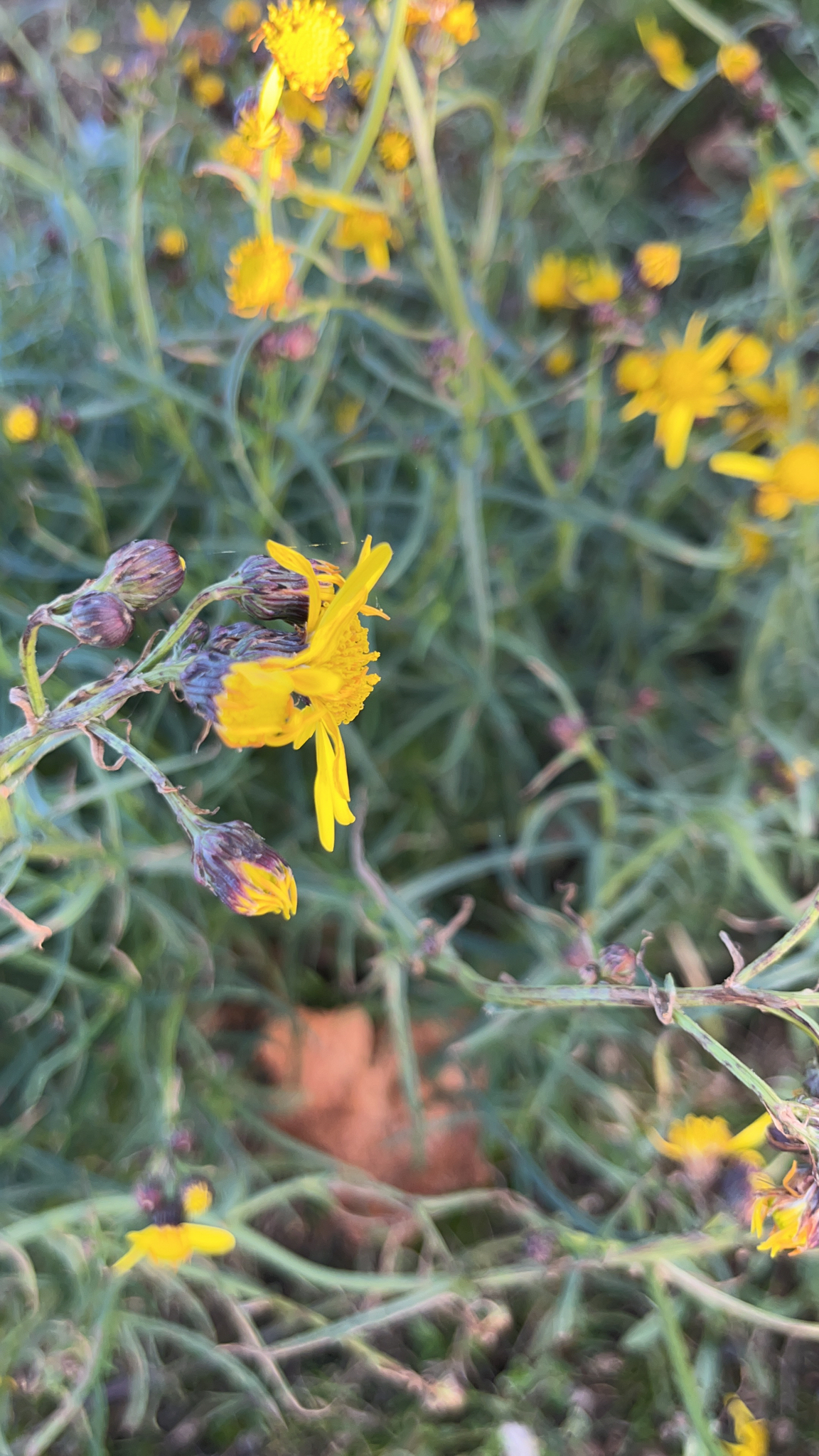
Narrow, linear leaves alternate along the stems, persist through the year and sometimes cluster in small bundles at their bases. Bright yellow flower heads about 2 cm (0.8 in) across have 12–14 outer ray florets surrounding central tubular florets. They form irregular corymbs at the branch tips. 5
Each tiny achene carries a white, feathery pappus. This tuft allows mainly wind dispersal over long distances, although fruits can also cling to animal hair or wool fibers, as they did during the historical introduction to Europe. 3
Taxonomy and names
Published in 1838, Senecio inaequidens DC. remains the accepted botanical reference. POWO and IPNI associate the name with this authority and record its native range from Mozambique to South Africa, including Lesotho. 1 2
Older botanical accounts also use Senecio harveianus MacOwan and Senecio vimineus Harv. These synonyms explain historical references without replacing the accepted name. 3
EPPO assigns the species the code SENIQ, used in plant-health databases and invasive alien plant lists. The code is a technical identifier rather than an alternative scientific name. 4
Habitat and range
Southern Africa, from Mozambique to South Africa and Lesotho, is its native range. In Europe, windborne achenes help the species reach new areas each year, particularly in Mediterranean regions and mountain systems. 1 4
As an alien plant in Europe, it is monitored by EPPO, recorded as invasive in Corsica and widely introduced across western Europe as a weed of waste ground. 4 Typical sites include roadsides, railways, fallow land, construction sites, abandoned vineyards and pastures, dunes and banks: open, disturbed habitats with little competing vegetation. 5
Recent soil disturbance links these habitats. Earthworks, mowing, overgrazing and machinery expose ground that the plant occupies ahead of surrounding vegetation. Regular disturbance beside major roads and railways helps explain its repeated establishment along these routes. 5
Life cycle and flowering
Reproduction takes place through achenes. After germinating on bare soil, a seedling reaches 5–15 cm (2–6 in) within two to four weeks. Its stem then branches and its base becomes woody within a few months. 3
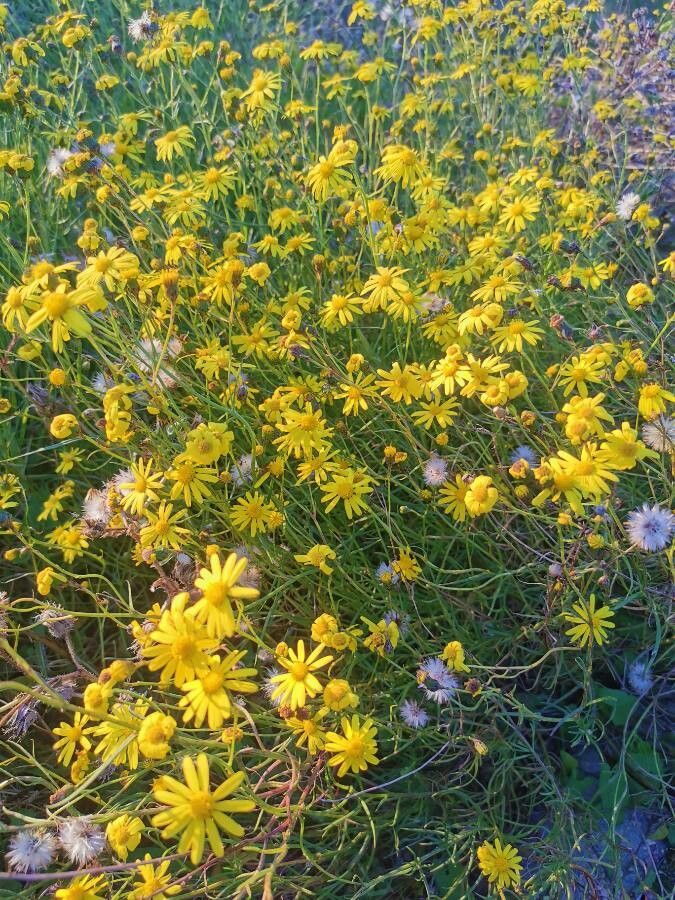
Almost uninterrupted flowering distinguishes narrow-leaved ragwort: in mild climates it can bloom nearly all year, peaking clearly from spring through fall. Continual production of flower heads replenishes the seed bank and helps explain rapid colonization along roads and railways. 3 5
Toxicity and livestock risks
Every part contains liver-toxic pyrrolizidine alkaloids. A South African study identified senecionine and retrorsine as the main toxic compounds, measuring a total concentration of 0.81% in field samples associated with cattle poisoning. 6
For cattle, the acute toxic dose is around 3–5% of body weight; chronic poisoning can follow ingestion of 50–100 g (1.8–3.5 oz) over 6–8 weeks. Chronic signs include weight loss, loss of appetite, constipation, jaundiced mucous membranes, staggering and recumbency, with milk becoming toxic. Acute poisoning also involves jaundice, rapid heartbeat and profound weakness. Postmortem examination shows hypertrophic liver cirrhosis with megalocytosis; there is no specific treatment. 5 6
Wilting and drying increase the ingestion risk by reducing the bitterness that normally discourages animals from eating fresh plants. Contaminated hay or silage is therefore more readily consumed. French equine veterinary networks list narrow-leaved ragwort among the toxic plants to watch for in forage. 7 5
Look-alikes, management and regulation
Ragwort (Jacobaea vulgaris, formerly Senecio jacobaea) is the best documented look-alike: another member of Asteraceae containing pyrrolizidine alkaloids and posing a comparable risk to horses. It is biennial, however, with more deeply divided leaves. Common groundsel (Senecio vulgaris) is a small annual without a woody base. 3
Horticultural use is not recommended. Management focuses on acting before achenes develop, removing patches beside pasture or mowing areas and cleaning equipment to limit seed transport. EPPO's A2 listing for invasive alien plants provides a European framework for this monitoring; it should be read in that regional context. 4 8
A single mowing leaves the woody base able to resprout from its partly woody stems. Repeated intervention before flowering over several seasons is needed to exhaust the seed bank already present in the soil. 5
Main sources
- Plants of the World Online / Kew, Senecio inaequidens DC.
- International Plant Names Index, Senecio inaequidens DC.
- French Wikipedia, Senecio inaequidens
- EPPO Global Database, Senecio inaequidens (SENIQ)
- École Nationale Vétérinaire de Toulouse, narrow-leaved ragwort
- Dimande et al. 2007, The toxicity of Senecio inaequidens DC, Journal of the South African Veterinary Association
- RESPE, ragworts toxic to equids
- USDA PLANTS Database, Senecio inaequidens (SEIN10)
Frequently asked questions
Is narrow-leaved ragwort dangerous to horses?
Yes. Every part contains liver-toxic pyrrolizidine alkaloids. French equine veterinary networks list it among the toxic plants to watch for, especially in dried forage.
Why is narrow-leaved ragwort invasive in France?
EPPO lists it as an invasive alien. It quickly colonizes bare, disturbed soil, flowers almost year-round and disperses its achenes over long distances on the wind.
How can I distinguish narrow-leaved ragwort from other ragworts?
Its woody base, linear leaves and small flower heads in corymbs distinguish it from biennial ragwort with more divided leaves and from common groundsel, a small annual.
Does narrow-leaved ragwort really flower all year?
In mild climates it can, with a clear peak from spring through fall. This almost continuous flowering keeps replenishing its seed bank.
Is dried forage still dangerous?
Yes. Drying reduces the bitterness that normally discourages animals from eating the fresh plant, increasing the risk of ingestion in contaminated hay or silage.
Where does narrow-leaved ragwort come from?
Its native range lies in southern Africa, from Mozambique to South Africa and Lesotho. It reached Europe through imported wool, with records in Germany from 1889 and in France around 1935.
If you are unsure about a plant’s toxicity, ask a botanist or veterinarian for advice.