
Coast redwood (Sequoia sempervirens, )
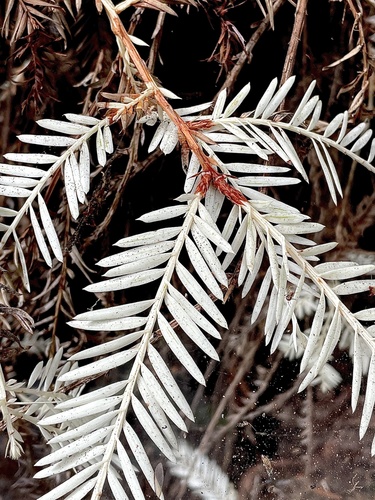
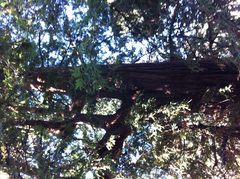
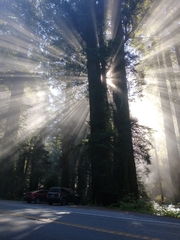
Coast redwood (Sequoia sempervirens) is a conifer in the Cupressaceae family and the only living species of its genus. Native to a narrow coastal strip from southwestern Oregon to central California, it holds the record for the tallest known living tree. Thick, fire-resistant bark protects its trunk, while its leaves take two different forms depending on light exposure. Its decay-resistant wood made it one of North America’s most heavily logged timber trees.
Read moreCoast redwood, Coastal redwood, California redwood and Redwood
Allow a few hours of direct sun per day, preferably morning or evening.
Full sun to light partial shade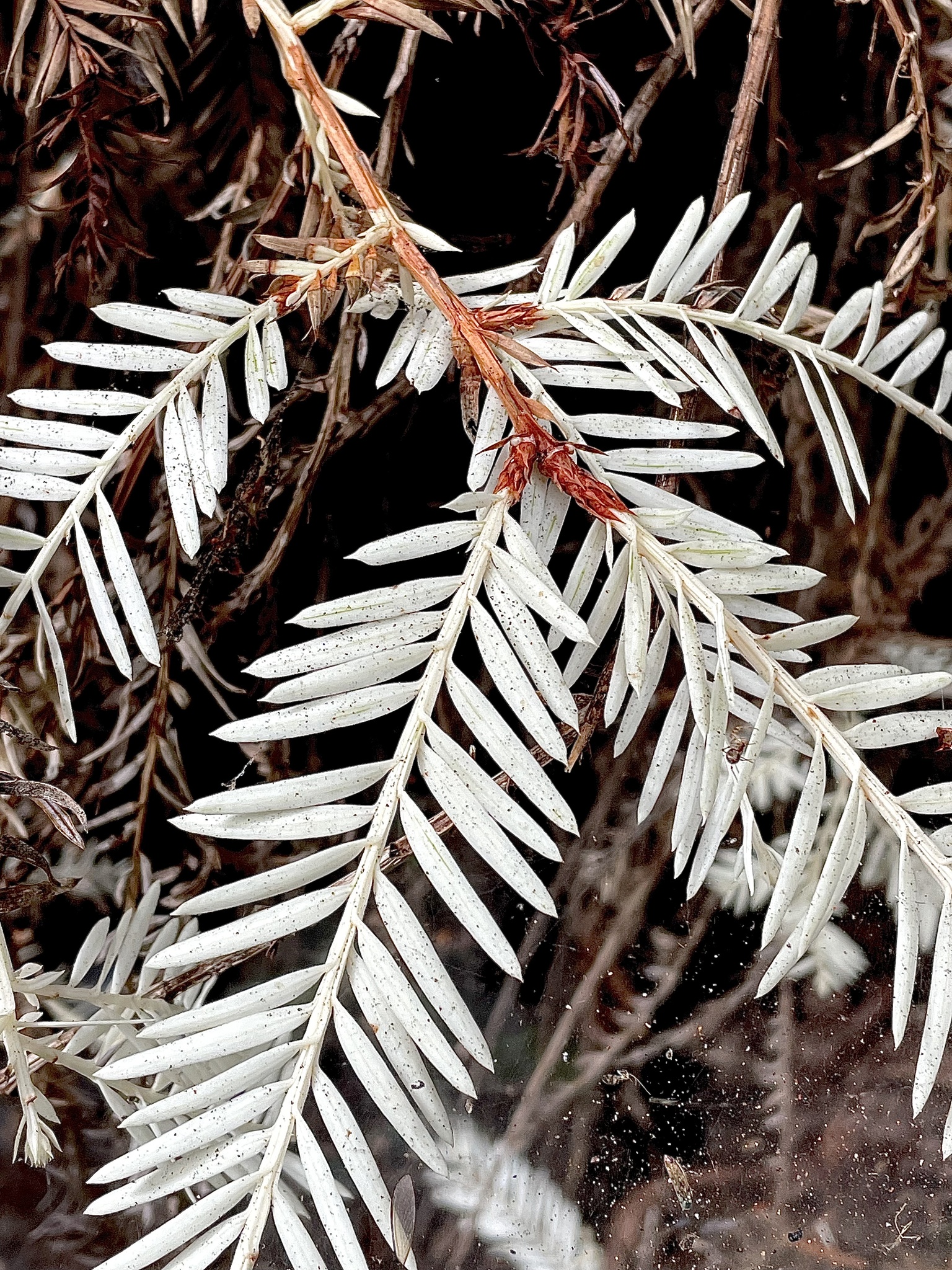
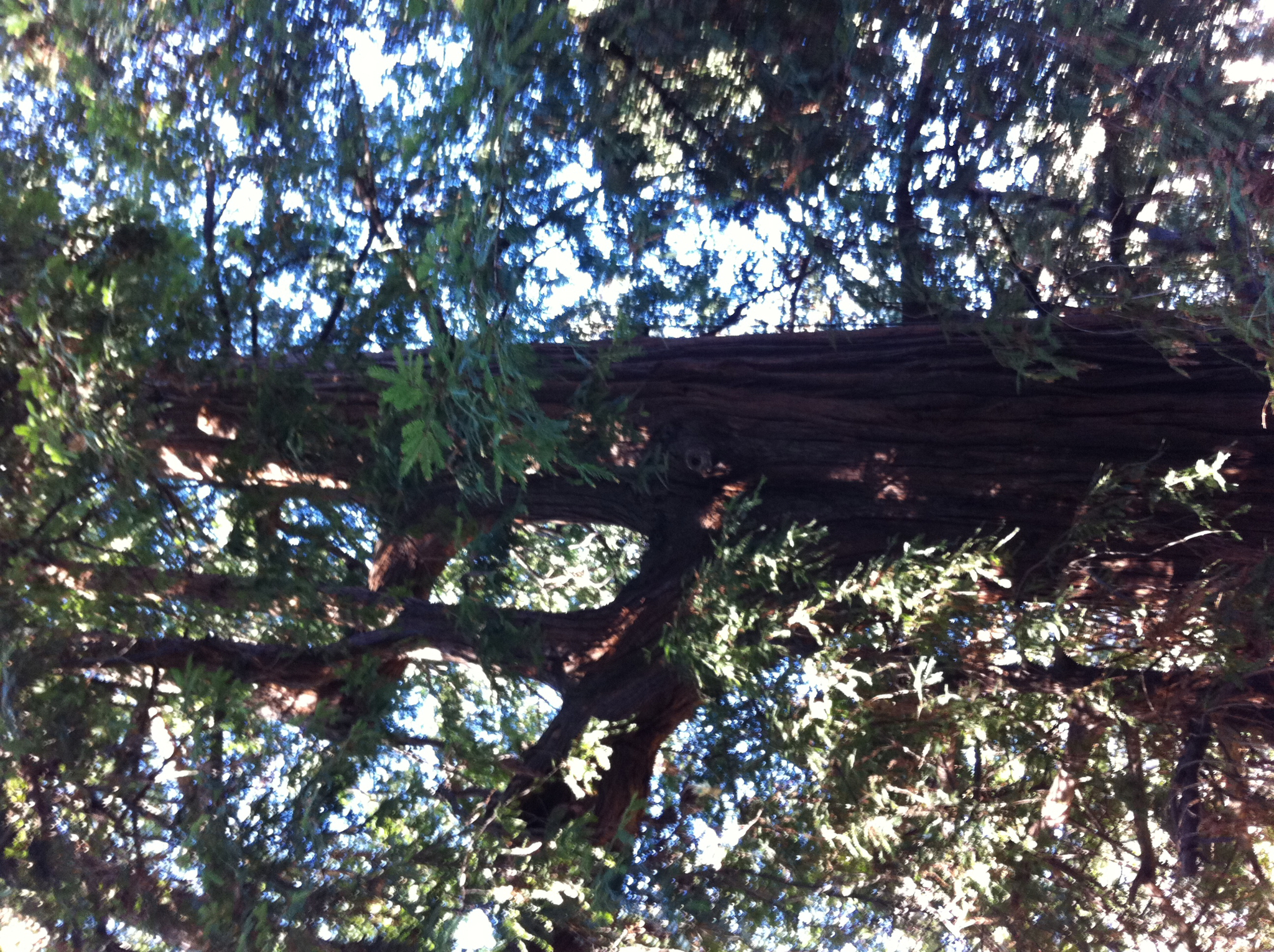
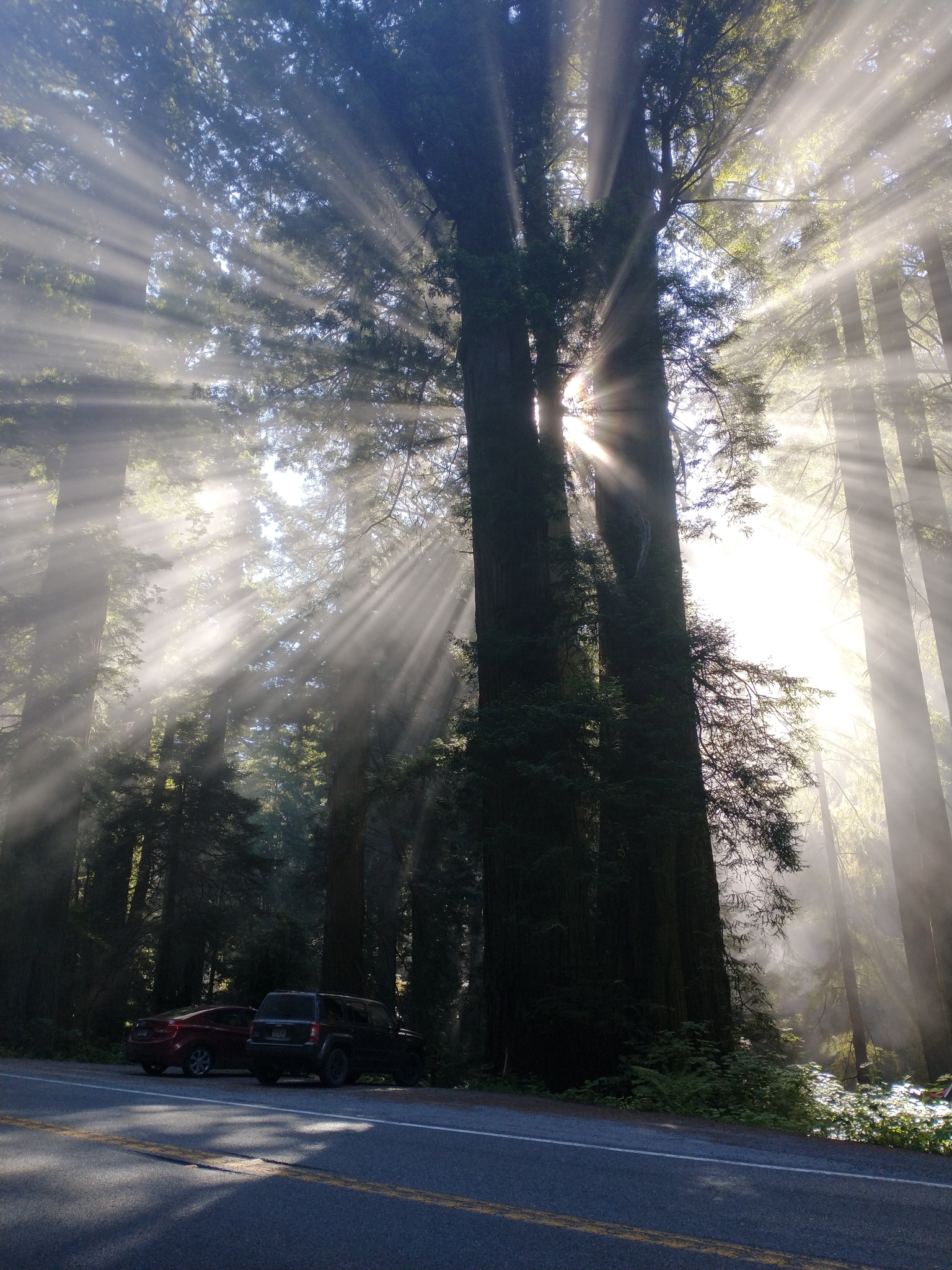


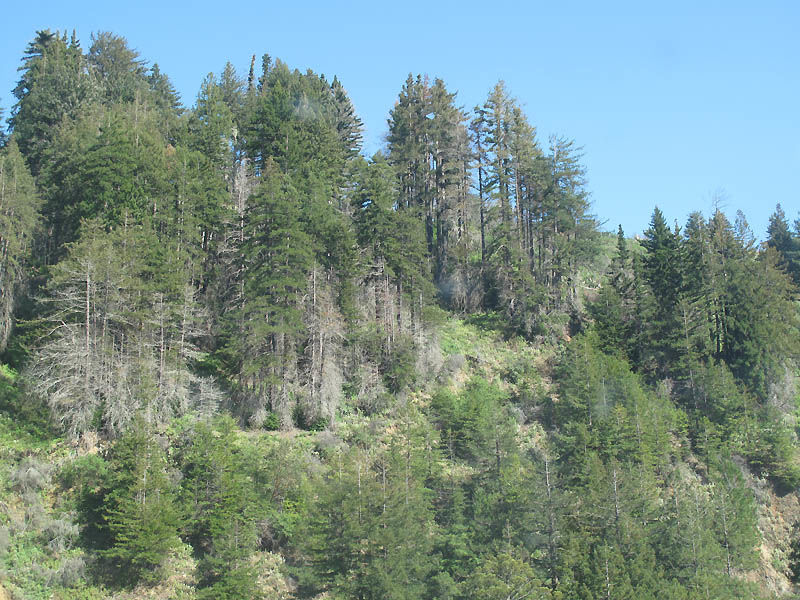
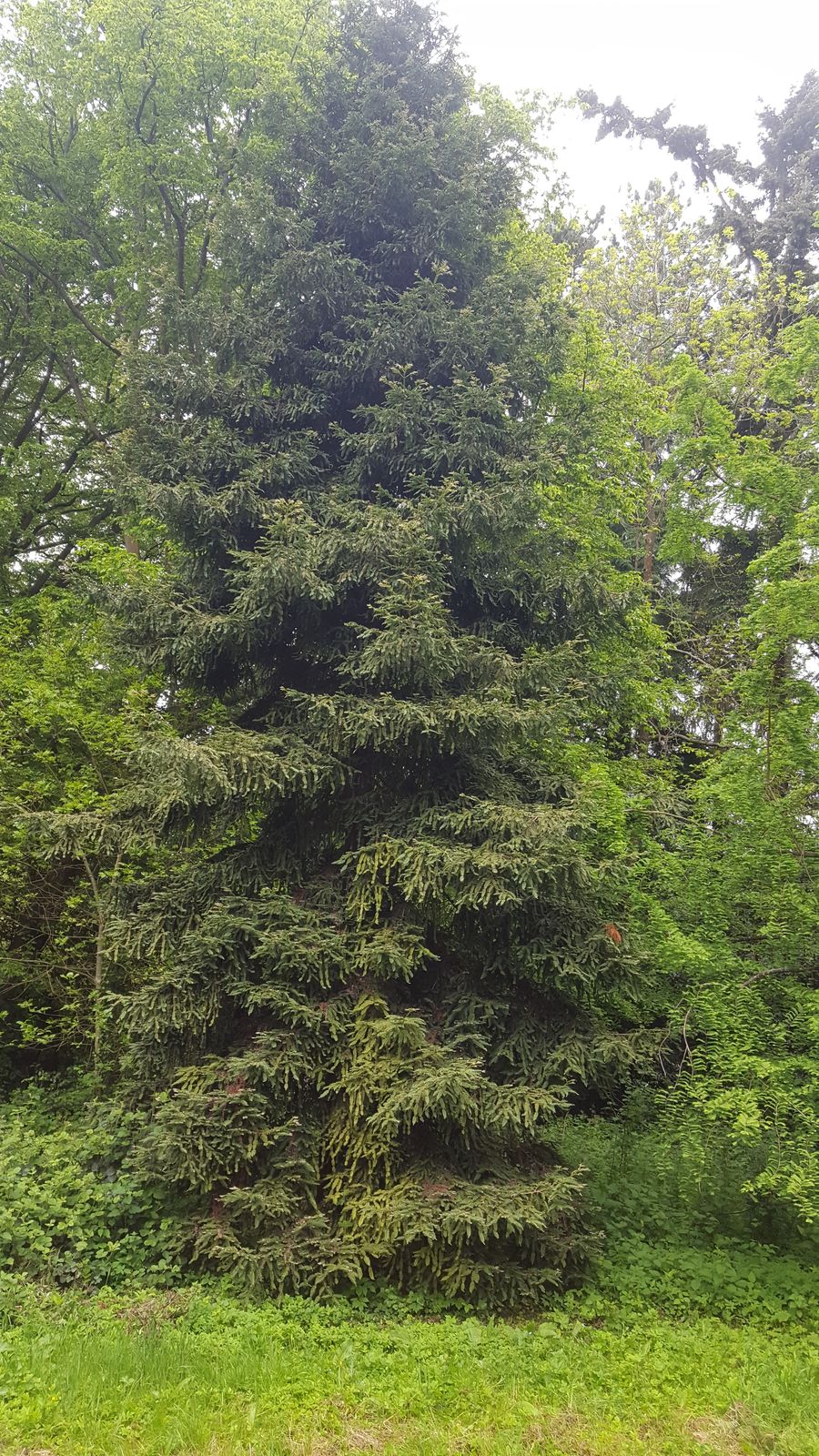
© photo
Irene · cc0
Scott Loarie · cc0
Drew Meyer · cc0
Taken Aug 15, 2021 by González Barri Xavi (cc-by-sa)
Taken Feb 3, 2022 by William Coville (cc-by-sa)
Taken Oct 7, 2021 by Елена н (cc-by-sa)
Taken Jan 1, 1800 by Tela Botanica − Thierry Pernot (cc-by-sa)
© copyright of the Board of Trustees of the Royal Botanic Gardens, Kew.




Global distribution
The native range of Sequoia sempervirens is a narrow coastal strip about 750 km (465 mi) long and 8–75 km (5–47 mi) wide, from southwestern Oregon to Monterey County in central California. Introduced to Victoria, Australia, in the 1930s, it has become well acclimatized there. Elsewhere outside the United States it is grown mainly as an ornamental in parks and arboretums.
- Native1
- Introduced1
- United States
- Australia
Hexagons: regions where the plant occurs. Green dots: native range.1
Identity
Coast redwood (Sequoia sempervirens (D.Don) Endl., 1847), also called coastal redwood, California redwood or redwood, is the only living species of Sequoia, a genus in the Cupressaceae family. The name redwood refers to the reddish-brown heartwood visible when a fresh trunk is cut. 1 4
Male and female cones occur on the same tree, making coast redwood monoecious, unlike the many conifers with separate male and female individuals. It is also exceptionally long-lived: trees can reach 1,200–2,200 years, with some protected individuals living still longer. 3
Recognition
Record-breaking height is the hallmark of Sequoia sempervirens. Hyperion, discovered in Redwood National Park in 2006, measures 115.5 m (379 ft), taller than any giant sequoia (Sequoiadendron giganteum), although that species has more wood by volume. The oldest redwoods can have trunks exceeding 8–9 m (26–30 ft) in diameter at breast height. 4 3
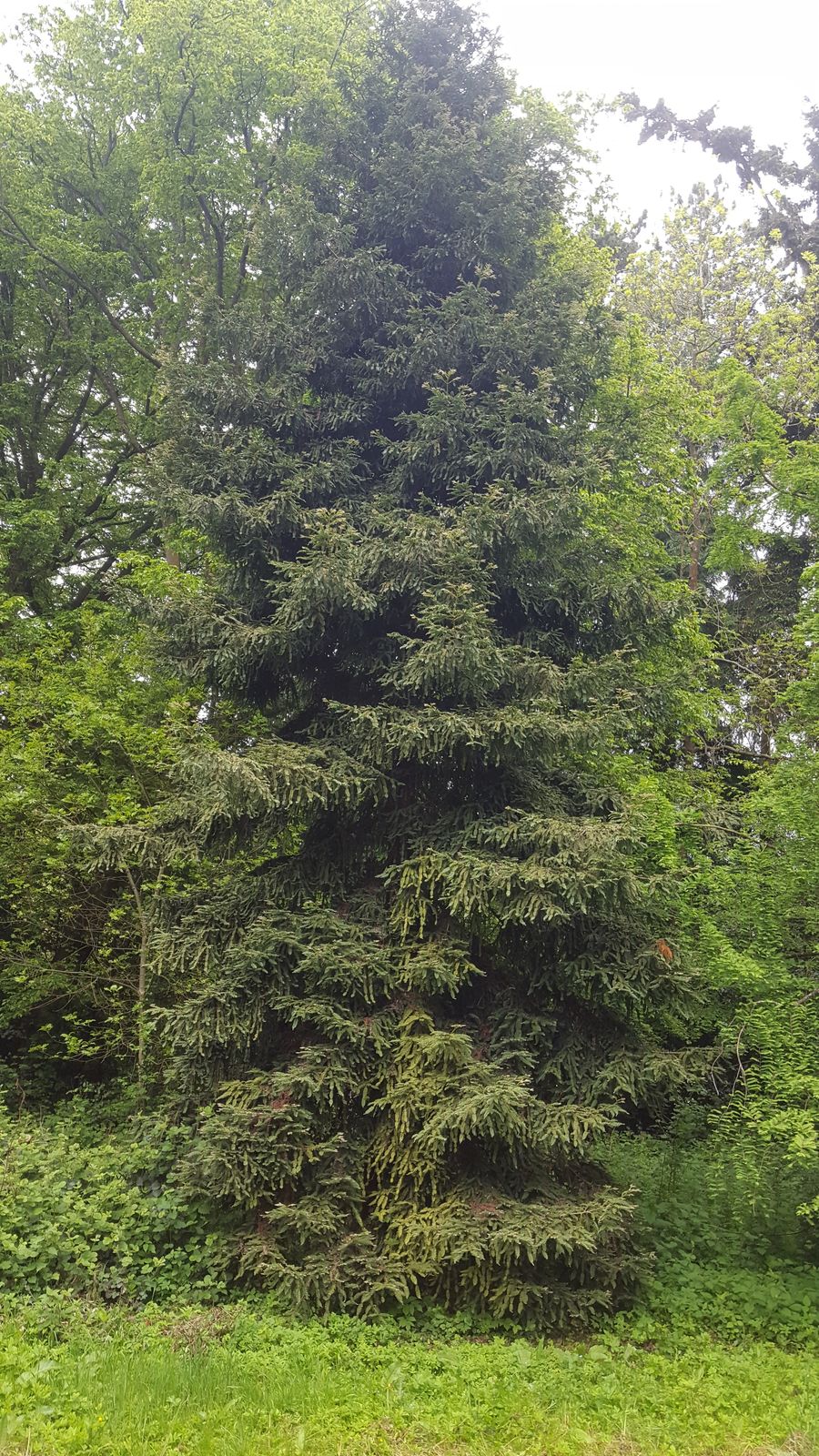
Fibrous, spongy bark can be 30 cm (12 in) thick or more. Bright reddish brown when cut, it becomes gray with age. Leaf form changes markedly with position: shaded shoots and young trees bear flat needles 15–25 mm (0.6–1 in) long, whereas sunlit shoots high in the crown carry closely packed scales only 5–10 mm (0.2–0.4 in) long. 4 5
Cones remain surprisingly small for such an enormous tree: just 15–32 mm (0.6–1.3 in) long, with 15–25 scales, and much smaller than those of giant sequoia. A massive trunk combined with tiny cones distinguishes coast redwood from most other giant conifers, whose cones more closely reflect their overall size. 4
Useful taxonomy
Scottish botanist David Don first described the species as Taxodium sempervirens in 1824, placing it in the same genus as bald cypress. Austrian botanist Stephan Endlicher separated Sequoia in 1847 and established its current binomial. The exact origin of the genus name remains uncertain: Endlicher never explained his choice. The popular suggestion that it honors the Cherokee scholar Sequoyah lacks confirmation in contemporary sources. 1
Two other genera, each with a single living species, share the subfamily Sequoioideae: giant sequoia (Sequoiadendron giganteum) and dawn redwood (Metasequoia glyptostroboides). Molecular studies have even suggested an ancient hybrid origin involving ancestors of those two genera to explain the unstable position of Sequoia in evolutionary trees. 1
Several named varieties and forms are now treated as synonyms of the accepted species:
- Sequoia sempervirens var. glauca R.Sm., a historical varietal name;
- Sequoia sempervirens var. adpressa Carrière, another name placed in synonymy;
- Sequoia sempervirens var. pendula Rovelli, also included within the species;
- Sequoia sempervirens var. albospica G.Nicholson, likewise a historical synonym.
Habitat and range
A narrow Pacific coastal belt supports the native forests, running about 750 km (465 mi) from southwestern Oregon to Monterey County in central California. The belt is only 8–75 km (5–47 mi) wide, with trees growing at elevations of 30–750 m (100–2,460 ft). 1 4
Growth depends closely on coastal fog. Moisture intercepted by the foliage supplies a significant share of the trees’ water, especially in sheltered valleys and ravines where the tallest specimens grow. Directly along the shoreline, however, salt spray limits establishment. 4
The IUCN lists coast redwood as Endangered (EN) following the sharp contraction of its forests after commercial logging began around 1850. Much of the old growth was replaced by second-growth forest. The species was introduced to Victoria, Australia, in the 1930s and has since become well acclimatized there. 2
Life cycle and reproduction
Cone production starts at about 10–15 years. Each cone holds only 90–150 seeds, and viability is low, often well below 15%. Seed viability reaches its peak only when the parent tree is around 250 years old. The very light, winged seeds travel an average of just 60–120 m (200–400 ft) from the parent. 4
With seed regeneration so unreliable, vegetative reproduction is especially important. Stump sprouts and lignotubers, underground woody swellings, can produce new stems after cutting or fire. This sharply separates coast redwood from giant sequoia, which cannot resprout from a cut stump. 3
Fire can favor regeneration: thick bark with little resin resists flames, while burned ground loses some competing vegetation and provides a better seedbed. More seeds can germinate where this competing cover has been removed. 4
Uses and risks
Lightweight, decay-resistant wood with little resin made coast redwood one of California’s most heavily exploited timber trees. Almost all stands harvested today are second growth rather than surviving old-growth forest. 5
Its fire resistance also has a documented use beyond the forest. After the great fire following the 1906 San Francisco earthquake, the city’s chief fire engineer credited exterior redwood cladding with slowing the spread of flames through several neighborhoods. 4
No reference source identifies Sequoia sempervirens as dangerous to cats or dogs. Toxicity to horses remains poorly documented, so reasonable caution is appropriate without undue alarm. 4
Varieties, look-alikes and related plants
Dwarf selections from spontaneous mutations have become established in horticulture. 'Adpressa', selected by French nurseryman André Leroy and named by Carrière in 1867, has cream new growth that turns green. 'Prostrata' arose around 1927 at Cambridge University Botanic Garden as a creeping form. 'Cantab', named by Roy Lancaster in 1977, is an upright mutation of Prostrata. Some trees are even trained as bonsai, including specimens at the Pacific Bonsai Museum. 8 9
Two other giant conifers in the same subfamily are the main look-alikes:
- Sequoiadendron giganteum, giant sequoia, has pointed, scale-like leaves, much larger cones and no ability to regrow from a cut stump;
- Metasequoia glyptostroboides, dawn redwood, has opposite, deciduous foliage rather than the evergreen, spirally arranged foliage of coast redwood.
Evergreen needles, fibrous reddish-brown bark and vigorous stump sprouting together provide a clear identification of Sequoia sempervirens. 1
Main sources
- Plants of the World Online / Kew, Sequoia sempervirens (D.Don) Endl.
- IUCN Red List, Sequoia sempervirens assessment (Farjon & Schmid, 2013)
- Royal Horticultural Society, Sequoia sempervirens (coastal redwood)
- North Carolina Extension Gardener Plant Toolbox, Sequoia sempervirens
- Plants For A Future, Sequoia sempervirens
- Missouri Botanical Garden, Sequoia genus plant finder results
- USDA Forest Service, Fire Effects Information System, Sequoia sempervirens
- Royal Horticultural Society, Sequoia sempervirens 'Adpressa'
- Royal Horticultural Society, Sequoia sempervirens 'Prostrata'
Frequently asked questions
Is coast redwood really the tallest tree in the world?
Yes, in height. Hyperion, discovered in Redwood National Park in 2006, measures 115.5 m (379 ft), a record for a living tree. Giant sequoia (Sequoiadendron giganteum) is still larger in total wood volume.
How does coast redwood differ from giant sequoia?
Coast redwood has flat leaves or small scales depending on light exposure, tiny cones and the ability to resprout from its stump after cutting. Giant sequoia has pointed scale-like leaves and much larger cones, and does not resprout after cutting.
Is Sequoia sempervirens toxic to cats and dogs?
No reference source lists it as toxic to cats or dogs. Toxicity to horses remains poorly documented, calling for reasonable caution without particular alarm.
How does coast redwood regrow after logging or fire?
Underground woody swellings called lignotubers and vigorous stump sprouts produce new growth. Thick bark with little resin also protects mature trees against flames.
Can coast redwood grow in a pot or as bonsai?
Yes, dwarf cultivars such as Adpressa and Prostrata can be grown in bonsai pots. The typical species far exceeds the size suitable for a small garden or patio.
Where does the name Sequoia come from?
Its origin remains uncertain. Stephan Endlicher, who established the genus in 1847, never documented his choice. No contemporary source confirms the popular suggestion that it honors the Cherokee scholar Sequoyah.
Why are young redwood seedlings rare in natural forest?
Seed viability is often below 15%, and germination succeeds mainly on burned or flooded ground where some competing vegetation has been removed. Most regeneration therefore comes from stump sprouts rather than naturally germinated seed.
If you are unsure about a plant’s toxicity, ask a botanist or veterinarian for advice.