
Japanese skimmia (Skimmia japonica, )
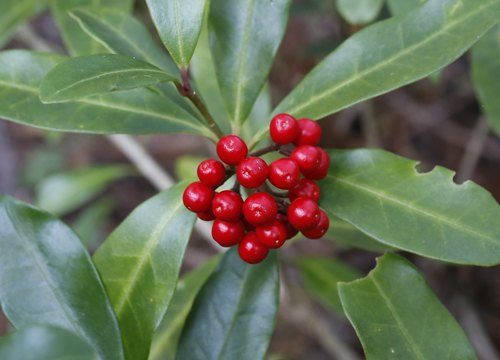

Japanese skimmia (Skimmia japonica) is an evergreen shrub in the Rutaceae family, native to East Asia. Male and female flowers grow on separate plants; only females pollinated by a nearby male produce the red berries that last through winter. It is widely grown in shaded borders and containers of acidic potting mix.
Read moreJapanese skimmia and Skimmia



© photo
(c) 空猫, some rights reserved (CC BY-NC), uploaded by 空猫 · cc-by-nc
呂一起(Lu i-chi) · cc-by
Wikimedia Commons · CC BY-SA or Public Domain
Taken Apr 18, 2021 by Klaus Schmeer (cc-by-sa)
Taken Mar 2, 2020 by Thierry LE COM (cc-by-sa)
Taken May 2, 2020 by Laurent FABRIZY (cc-by-sa)
Taken Feb 4, 2015 by Tela Botanica − Ingrid Archen (cc-by-sa)
Taken Nov 9, 2022 by Jean Marie Munck (cc-by-sa)
© copyright of the Board of Trustees of the Royal Botanic Gardens, Kew.




Global distribution
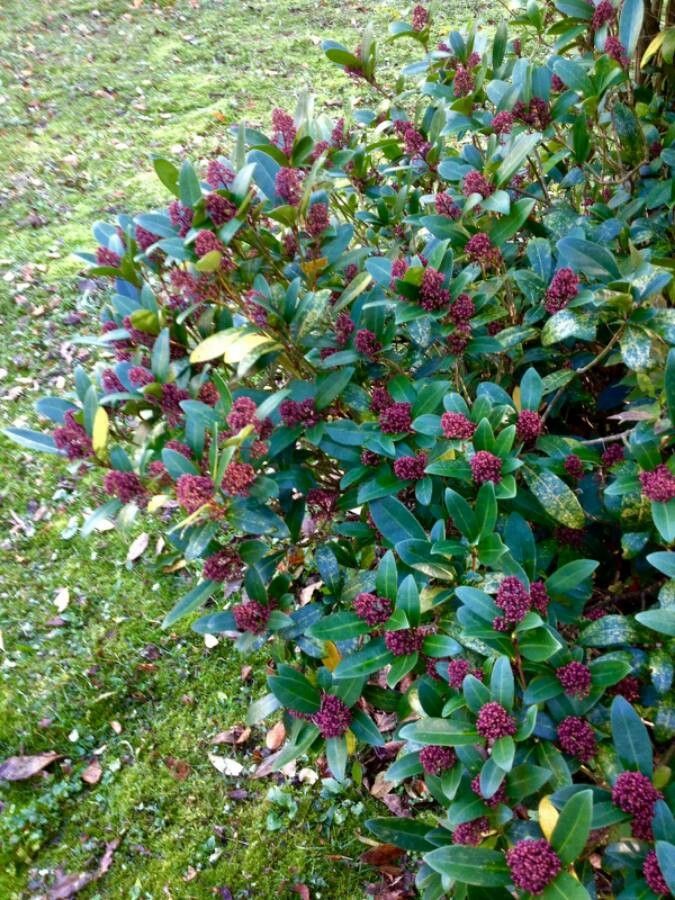
Skimmia japonica is native to East Asia, from Japan and Taiwan to China, Vietnam, the Philippines and the Russian Far East. Widely grown as an ornamental, it remains primarily a temperate garden shrub and is not considered invasive in France.
- Native6
- Japan
- Taiwan
- China
- Vietnam
- Philippines
- Russia (Far East)
Hexagons: regions where the plant occurs. Green dots: native range.1
Identity
Japanese skimmia (Skimmia japonica Thunb., 1783) is an evergreen shrub in the Rutaceae, the same family as citrus. The genus name Skimmia comes from the Japanese miyama-shikimi, while japonica refers to Japan, at the heart of its East Asian native range. 1 4
In temperate gardens, skimmia is an acid-loving shrub valued for dark green foliage, colored winter flower buds and persistent red berries. Its distinctive reproductive feature is dioecy: male and female flowers grow on different plants, and only pollinated females produce fruit. A plant covered in buds is therefore not necessarily one that will later carry berries. 2 6
Recognition
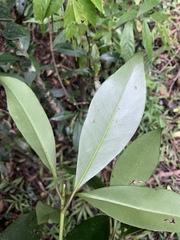
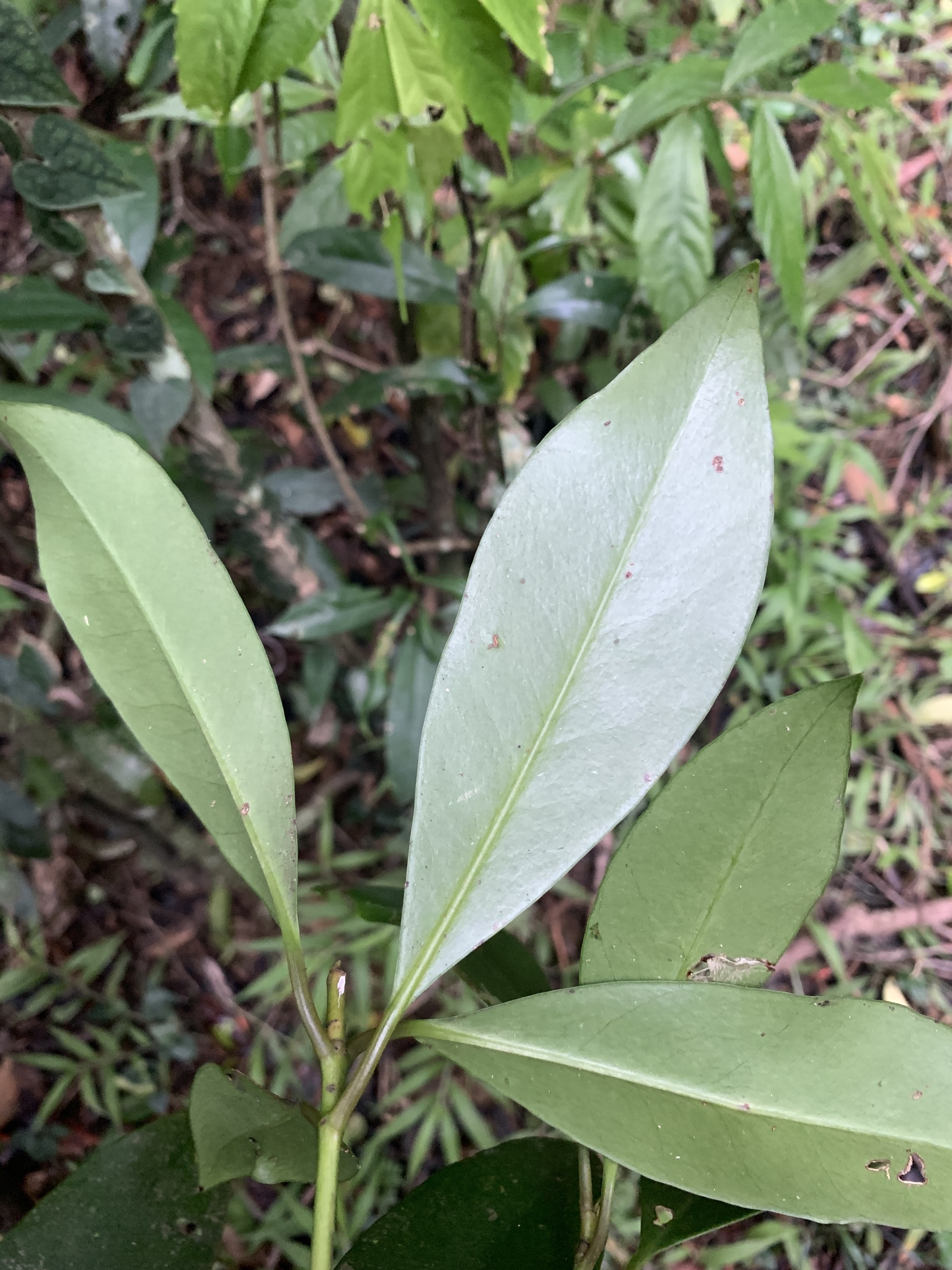
A compact, rounded shrub, Japanese skimmia grows slowly to about 1–2 m (3–6.5 ft) tall and a similar width. Leathery leaves are glossy dark green above and paler beneath, releasing an aromatic scent when crushed. This evergreen foliage provides a useful identification feature even when neither flowers nor fruits are present. 3 6
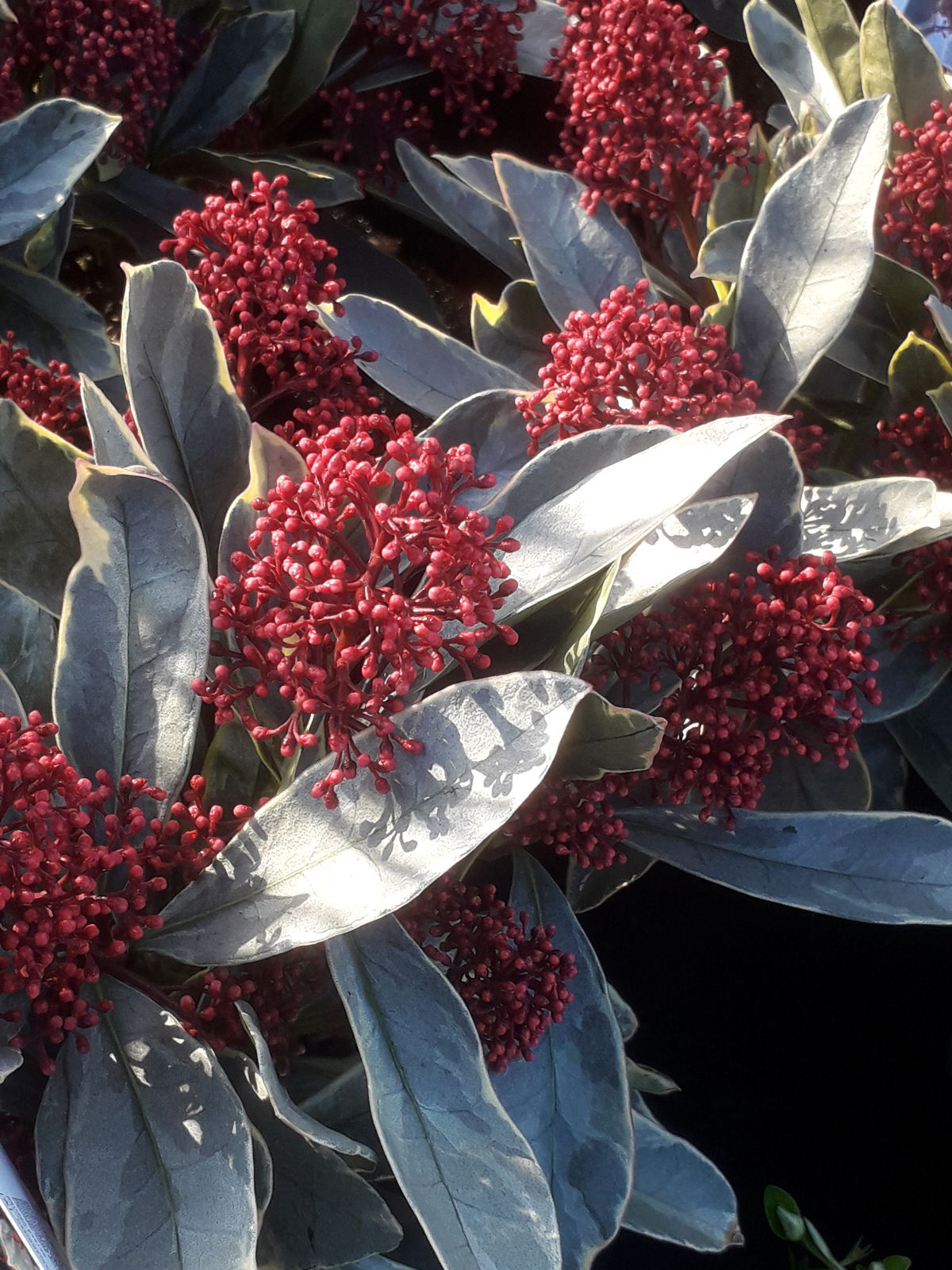
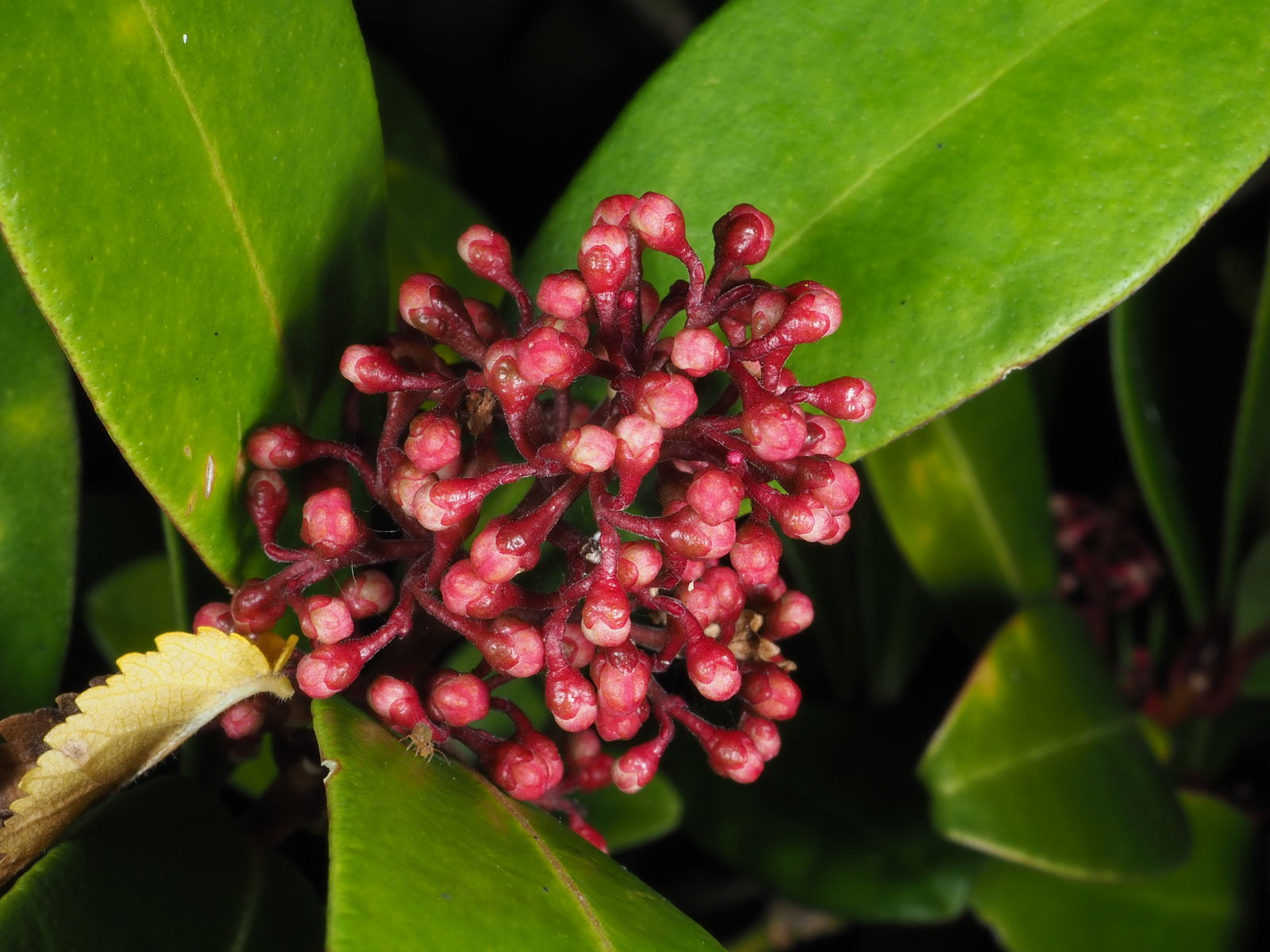
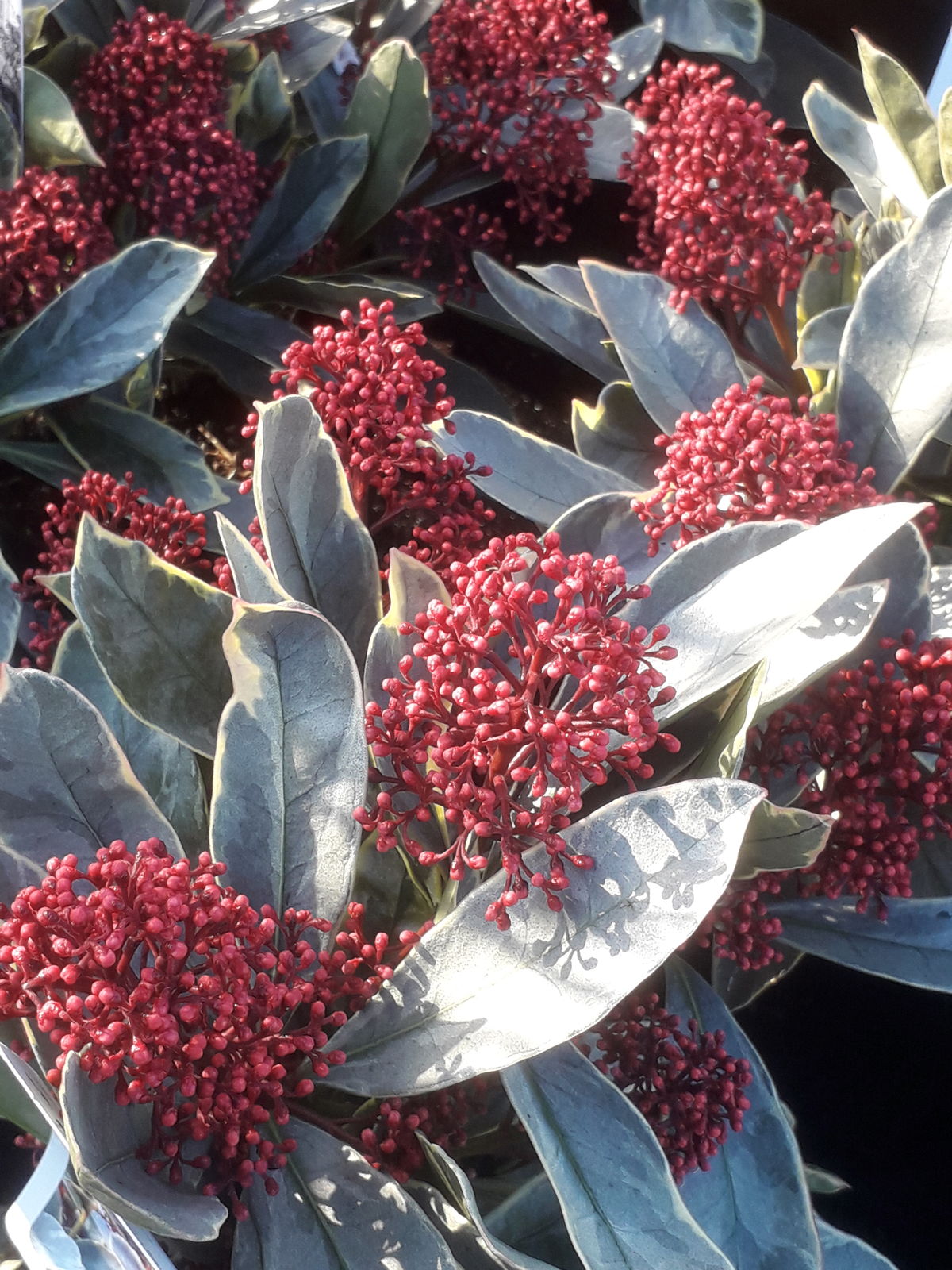
From fall onward, conspicuous flower buds remain visible through winter, often dark red on male cultivars. Terminal panicles of small, fragrant creamy-white flowers open in spring. Male flowers are slightly larger and more fragrant than female flowers, although both contribute to the spring display. 2 6
Bright red berries provide the clearest fruiting-season clue. About 1 cm (0.4 in) across and held in dense clusters, they ripen in fall and often last until the following spring. They develop only on pollinated female plants, immediately separating a fruiting female from a male that carries no berries. 3 4
Useful taxonomy
Carl Peter Thunberg described Skimmia japonica Thunb. in 1783. The species is highly variable, and several names for varieties or related species still appear in horticultural literature. Important names include:
- Skimmia japonica var. intermedia Komatsu, a botanical variety name;
- Skimmia japonica var. repens (Nakai) Ohwi, another variety name;
- Skimmia fortunei Mast., a name found in older literature;
- Skimmia oblata T.Moore ex Carrière, also encountered in horticultural references.
Use the accepted scientific name, Skimmia japonica, as the reference point: trade names such as Rubella or Fragrans identify selected cultivars rather than distinct species or botanical varieties. It should also be distinguished from Skimmia reevesiana, an often hermaphroditic species that can fruit on a single plant. 1 7
Habitat and range
Temperate forests across East Asia are home to Japanese skimmia, from Japan and Taiwan to China, Vietnam, the Philippines and the Russian Far East. It grows in cool, shaded understory on acidic, humus-rich soils, sometimes at elevation. These woodland conditions are more informative for garden placement than its evergreen appearance alone. 1 4
Woodland origins explain its garden requirements: partial shade or shade, soil that stays moist, and acidic to neutral conditions. Full sun, especially in the afternoon, yellows and scorches the foliage, while chalky soil causes pronounced chlorosis. Shelter from intense sun matters as much as finding space for the shrub’s mature spread. 3 6
European ornamental planting has made it familiar in acid-loving shrub borders and containers on sheltered patios. In temperate gardens it remains mainly a cultivated plant; it is not considered invasive in France. That regional status should be kept distinct from its much broader East Asian native distribution. 2 8
Life cycle and reproduction
Separate male and female individuals shape the reproductive cycle of Japanese skimmia: the species is dioecious and not self-fertile. To obtain berries, place at least one male near the females. In practice, one male such as Rubella can pollinate several females within the same border, so every female does not need its own partner. 6 4
Spring brings fragrant flowers that attract pollinating insects. After pollination, female plants develop their red berries during fall, and the fruits persist for much of winter. The flower display and the fruit display therefore belong to different parts of the seasonal cycle. 3 2
Growers mainly propagate the shrub using semi-ripe cuttings in late summer, kept under cover with bottom heat. Rooting takes six to ten weeks. Seed from ripe berries is another possibility, but germination and development are slow; several years may pass before the seedlings’ sex becomes apparent. Seed propagation is consequently more useful for selection than for quickly establishing a known male-female planting. 5 6
Uses and risks
Dark evergreen leaves, fragrance and winter color make Japanese skimmia primarily an ornamental shrub. Its buds and fruit give structure to shaded acidic borders alongside rhododendrons and camellias. It also grows in containers on patios protected from scorching sun, where its slow, compact growth is useful. 2 3
The whole plant contains the alkaloid skimmianine, with higher concentrations in the red berries. Ingestion can cause nausea and digestive upset, and large quantities are reported to be considerably more dangerous. Keep the fruits away from young children and pets, and wash hands after pruning. Attractive berries should be treated as an ornamental feature rather than food. 5 6
Varieties, look-alikes and related plants
Garden-center names identify selected cultivars, chosen for sex and decorative features rather than separate species. Rubella and Fragrans are males grown for colored buds or scented flowers and used as pollinators. Nymans and Veitchii are females selected for abundant red fruit. Check the stated sex when buying and pair females with a suitable male nearby. 2
Names most likely to cause confusion include:
- Skimmia reevesiana, often hermaphroditic and able to fruit alone without a partner;
- Skimmia × confusa, a related garden hybrid whose male clones can also serve as pollinators;
- Skimmia japonica subsp. reevesiana, sometimes listed in the trade under a debated taxonomic status.
Aromatic evergreen foliage, colored winter buds and, above all, the need for a male plant to obtain fruit remain the most useful clues for recognizing a typical Skimmia japonica. The label’s botanical name and the plant’s sex help resolve confusion before planting. 1 6
Main sources
- Plants of the World Online / Kew, Skimmia japonica Thunb.
- Royal Horticultural Society, Skimmia japonica
- Missouri Botanical Garden, Skimmia japonica
- Encyclopaedia Britannica, Japanese skimmia
- Plants For A Future, Skimmia japonica
- North Carolina State Extension, Skimmia japonica
- International Plant Names Index, Skimmia japonica Thunb.
- USDA PLANTS Database, Skimmia japonica Thunb.
Frequently asked questions
Is Japanese skimmia poisonous?
The whole plant contains skimmianine, an alkaloid especially concentrated in the red berries. Ingestion can cause nausea and digestive upset; keep the fruits out of reach of young children and pets.
Why does my Japanese skimmia have no berries?
The species is dioecious: only female plants bear fruit, and only after pollination by a nearby male. A male cultivar such as Rubella can pollinate several females planted close by.
Where should I plant Japanese skimmia?
Partial or full shade suits it best, such as open woodland or a north-facing border in the Northern Hemisphere. Direct sun scorches the leaves and causes unsightly yellowing.
Can Japanese skimmia grow in alkaline soil?
It needs acidic to neutral, humus-rich soil. Chalky soil causes chlorosis; in a container, acidic potting mix provides a straightforward solution.
How hardy is Japanese skimmia?
It tolerates around -15 °C (5 °F) and retains its leaves year-round. This temperate garden shrub is particularly valued for winter color.
How large does Japanese skimmia grow?
Japanese skimmia forms a rounded shrub about 1–2 m (3–6.5 ft) tall and similarly wide. Its slow growth makes its size easy to manage.
If you are unsure about a plant’s toxicity, ask a botanist or veterinarian for advice.