
Yacón (Smallanthus sonchifolius, )
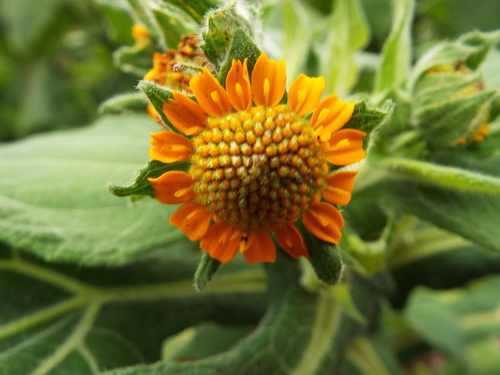


Yacón (Smallanthus sonchifolius) is an Asteraceae perennial grown in the Andes for sweet, crisp tuberous roots, eaten like fruit rather than a typical root vegetable. Also known as Peruvian ground apple, it differs from Jerusalem artichoke, with which it shares the French name poire de terre. Its fructooligosaccharide-rich tubers become sweeter after the first frosts.
Read moreYacón and Peruvian ground apple
Allow a few hours of direct sun per day, preferably morning or evening.
Full sun, sheltered from strong winds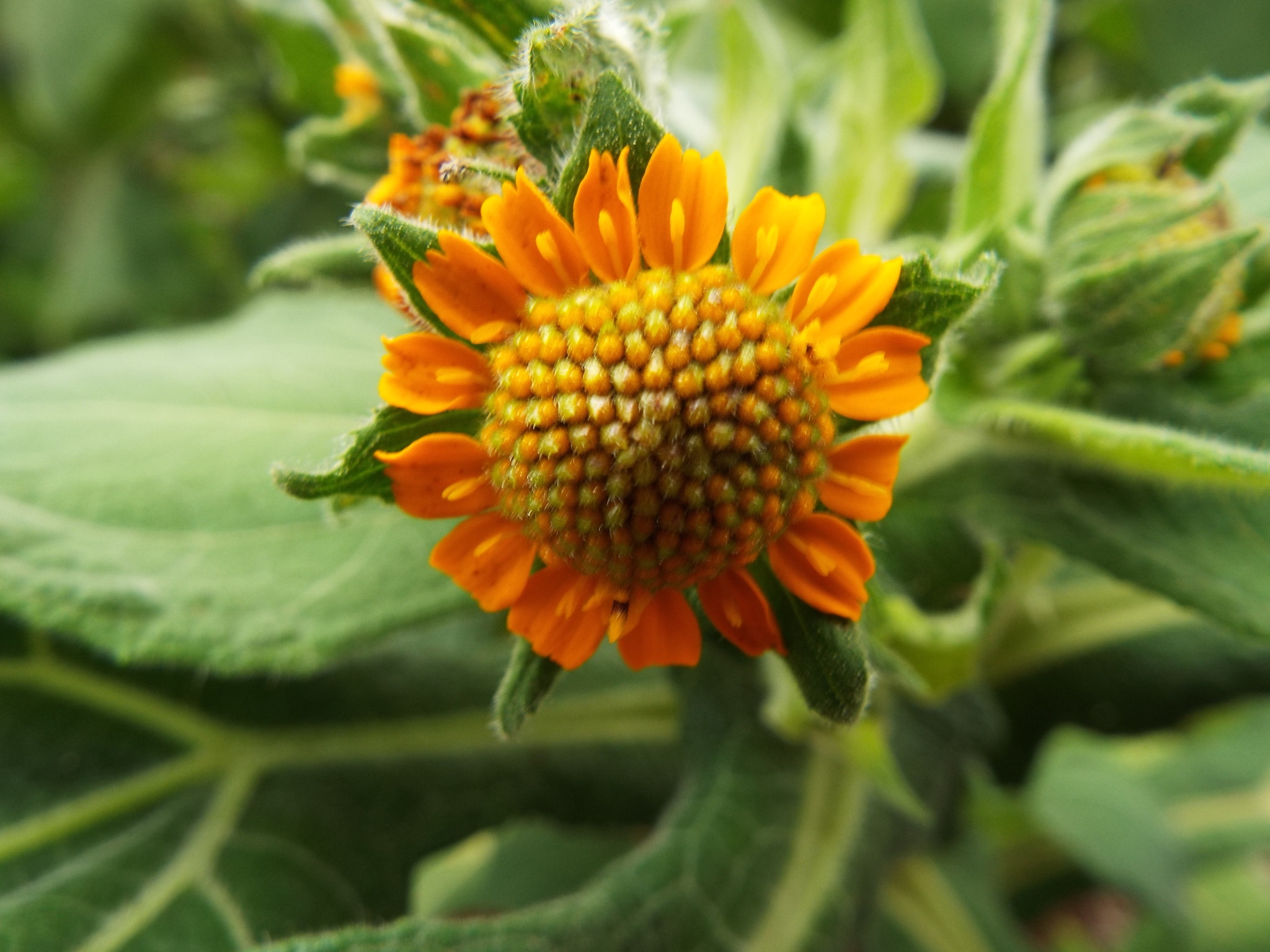

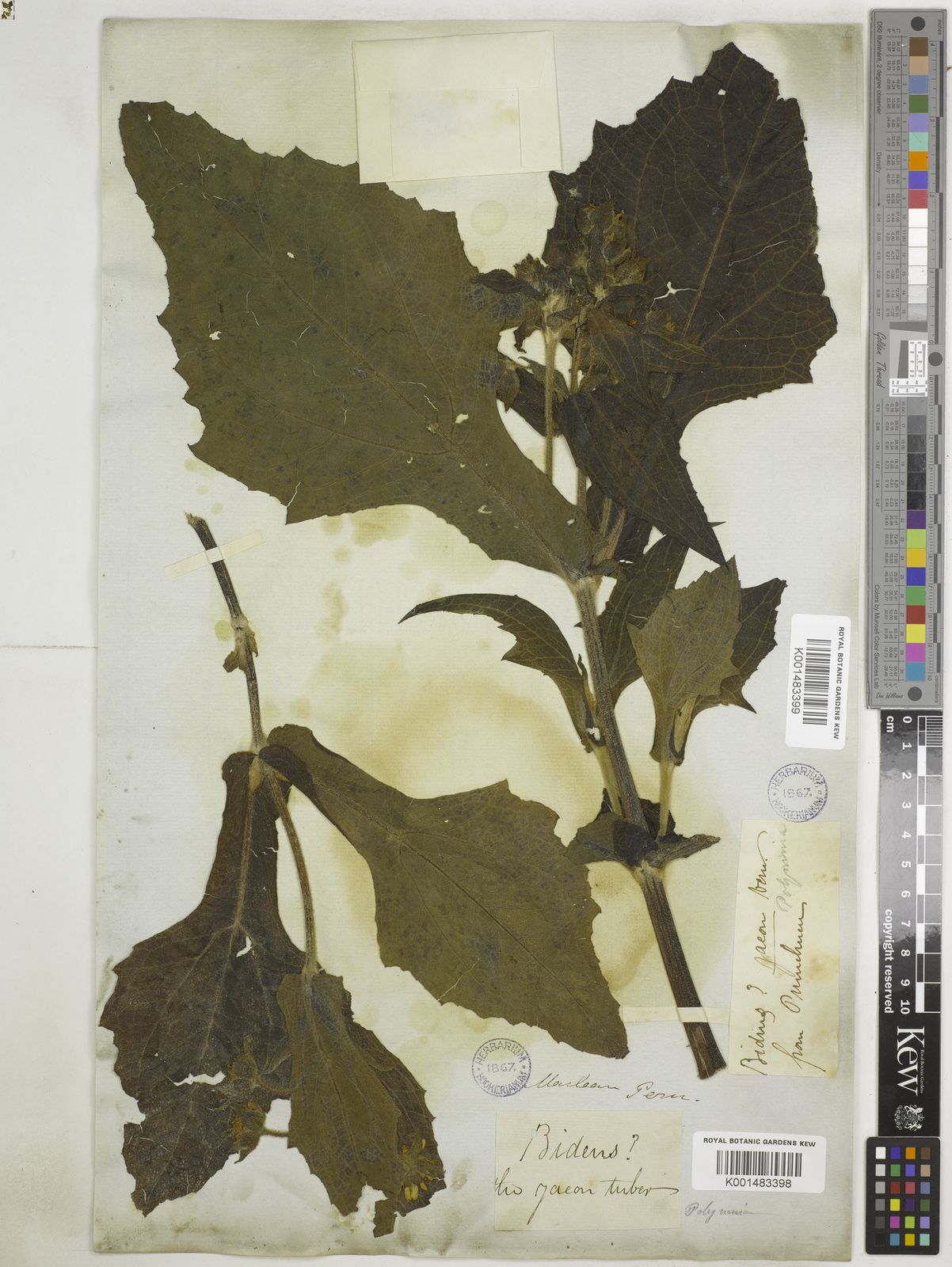
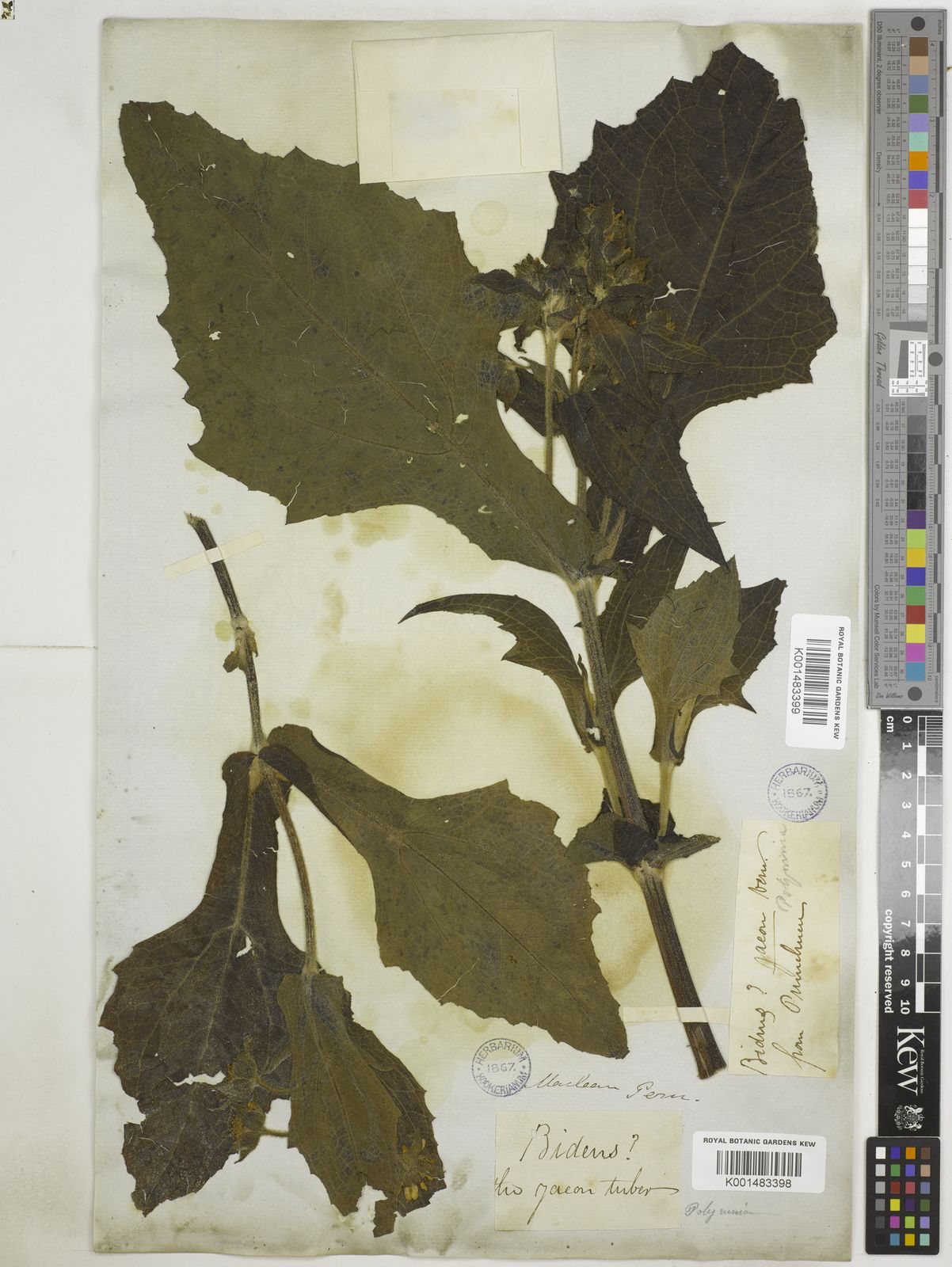
© photo
(c) Forest and Kim Starr, some rights reserved (CC BY) · cc-by
Nicolás Baresch Uribe · cc-by
Wikimedia Commons · CC BY-SA or Public Domain
© copyright of the Board of Trustees of the Royal Botanic Gardens, Kew.


Global distribution
Smallanthus sonchifolius is native to Andean slopes from Colombia to northern Argentina. Cultivation spread to East Asia from the 1980s, then to Oceania; trials in metropolitan France remain recent and localized.
- Native5
- Introduced2
- Peru
- Bolivia
- Ecuador
- Colombia
- Argentina (north)
- Japan
- New Zealand
Hexagons: regions where the plant occurs. Green dots: native range.1
Identity
Yacón (Smallanthus sonchifolius (Poepp.) H.Rob., 1978), also known as Peruvian ground apple, is a perennial in the genus Smallanthus, within the Asteraceae family. Grown in the Andes since pre-Columbian times, it produces tuberous roots that are eaten raw and crisp like fruit, rather than usually cooked like an ordinary root vegetable. 1 2
French common names illustrate a potential confusion: “poire de terre” also refers to Jerusalem artichoke (Helianthus tuberosus), another tuber-forming Asteraceae. At the table, the distinction is clear. Yacón is juicy and sweet when eaten raw, while Jerusalem artichoke is cooked and has a flavor closer to artichoke. 3 Another yacón feature is the conversion of complex sugars into fructose and glucose after the first frosts, producing sweeter flesh than an early harvest.
Recognition
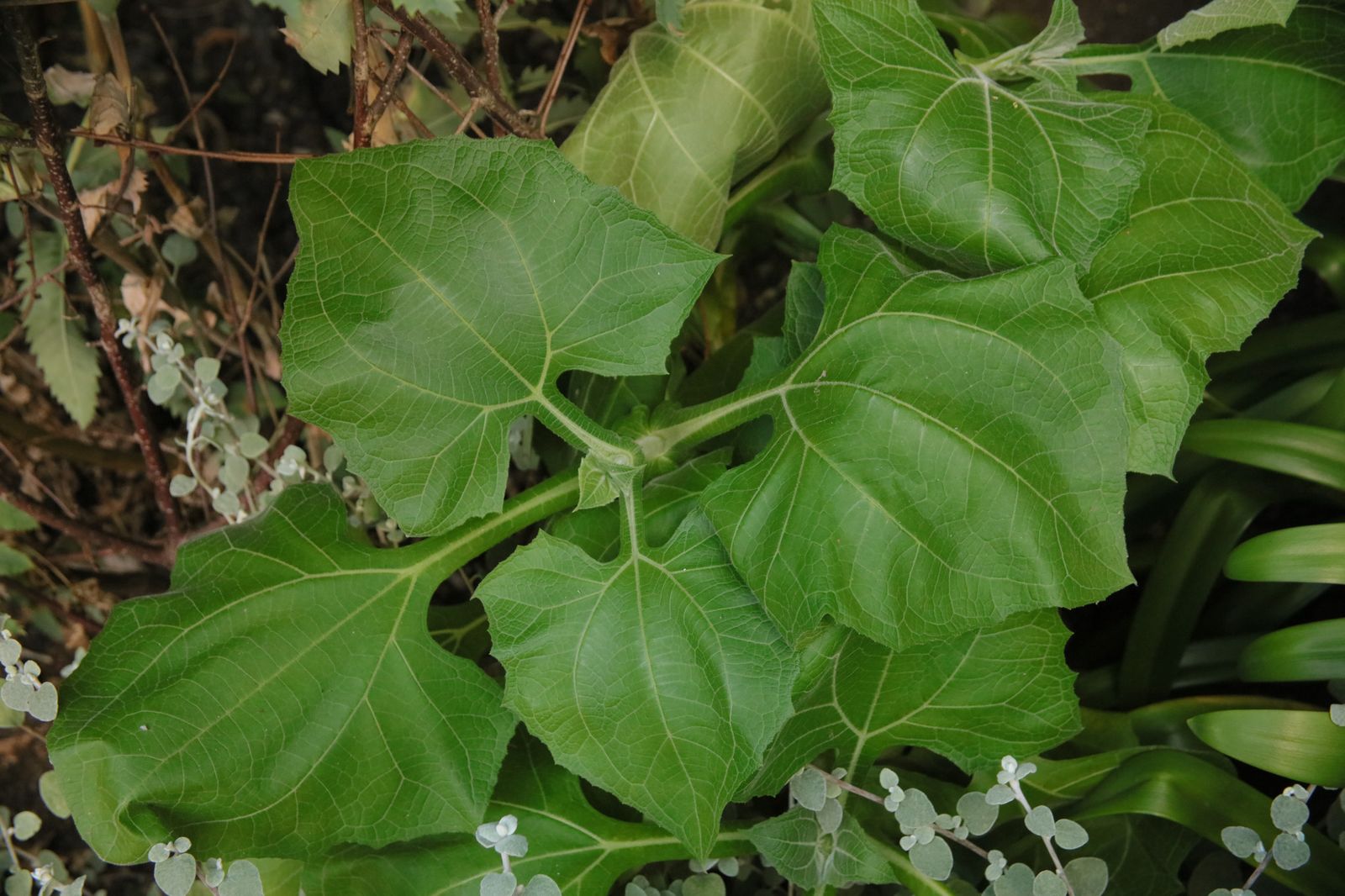
A hollow, angular stem helps identify yacón above ground. It can exceed 2 m (6.5 ft) in favorable Andean conditions, while temperate-grown plants usually stand around 1–1.5 m (3–5 ft). Unlike the green stem of Jerusalem artichoke, the yacón stem often turns purple, offering a useful garden clue before any roots are lifted. Opposite, triangular leaves have a hairy upper surface. 4 3
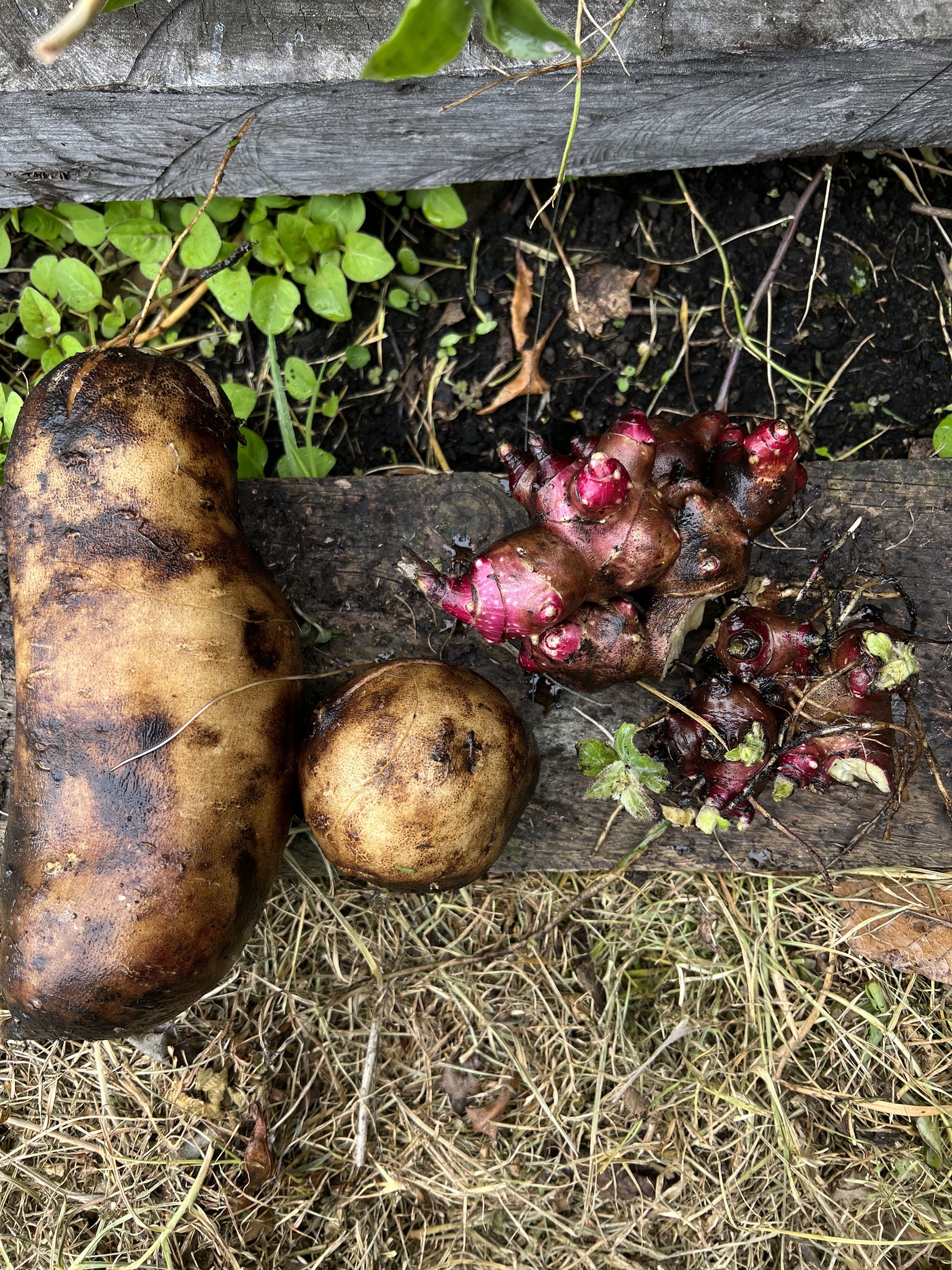
Below ground, two distinct organs develop: branching rhizomes bearing propagation buds, and up to 20 fleshy storage roots, 10–25 cm (4–10 in) long. Their skin ranges from white to pink and brown according to the ecotype. This distinction explains why rhizome pieces, rather than harvested tubers, are used to multiply the crop. 4
Small, inconspicuous flowers appear near the end of the growing season as yellow to orange flower heads typical of the Asteraceae. Flowering depends strongly on climate and remains uncommon far from the Andes, so a lack of flowers alone does not rule out yacón. 4
Useful taxonomy
The currently accepted Smallanthus sonchifolius name reflects a relatively late taxonomic revision. German naturalist Eduard Friedrich Poeppig first described the species in 1843 as Polymnia sonchifolia Poepp.. In 1978, Harold E. Robinson separated a coherent group of South American Polymnia species into Smallanthus, producing the current combination. 1 2
Important synonyms found in botanical literature include:
- Polymnia sonchifolia Poepp., the original name;
- Polymnia edulis Wedd., a historical synonym;
- Silphium edule Baill., another earlier name;
- Helianthus esculentus Warsz. ex Otto & Dietr., also used in older literature.
For a consistent identification, use Smallanthus sonchifolius. POWO places it in the tribe Millerieae within the subfamily Asteroideae. This accepted botanical name connects the plant to older accounts without confusing it with other edible tuber crops. 1
Habitat and range
Andean slopes at roughly 2,000 m (6,600 ft) elevation form yacón’s native habitat, from Colombia to northern Argentina through Ecuador, Peru and Bolivia. POWO locates its native range in western South America. 1
Cultivation expanded beyond the Andes from the 1980s, first into Japan and then South Korea, China and the Philippines, encouraged by interest in its proposed blood-glucose-lowering properties. Yacón tolerates -5 to 30 °C (23–86 °F) and grows in USDA zones 7–9. This climatic range helped its spread in New Zealand and southern Australia, where frosts are light. 7 3
French growing trials remain recent. A first harvest in Brittany in 2024 followed unsuccessful trials in Auvergne, as part of efforts to diversify vegetable production rather than an already established crop industry. This example concerns regional cultivation, separate from the species’ Andean origin. 9
Life cycle and reproduction
Rhizomes make yacón a perennial, although the foliage dies at the first frosts. In favorable Andean conditions, flowering starts six to seven months after planting and peaks about two months later. Seed production is low, and some ecotypes are even pollen-sterile. 4
Crop propagation relies on dividing a rhizome with a bud, never planting the harvested tubers themselves, which rot in the ground if left unharvested. Set out after the risk of spring frost has passed, rhizome pieces resume growth in 2–4 weeks. 4 Allow a further 6–8 months for tubers to reach harvest size, with lifting delayed until after the first frosts.
Harvest the tubers when the first frosts have already withered the aboveground parts. Cold triggers conversion of fructooligosaccharides into simple sugars, making the flesh noticeably sweeter than that of an early harvest. The seasonal change affects flavor as well as the visible condition of the plant. 5
Uses and risks
Sweet tuberous roots are yacón’s principal food product. They are eaten raw, juiced or cooked, and processed into syrup, vinegar or flour. 8 Their fructooligosaccharides and inulin escape digestion in the small intestine, reducing the tuber’s calorie contribution despite its distinctly sweet taste. 5
Those compounds have prompted studies of prebiotic effects and possible dietary value for people with diabetes. Such uses belong alongside an appropriate diet and do not replace medical treatment. Potential nutritional interest should therefore be kept separate from a claim that the plant treats disease. 5
The tubers themselves have no documented toxic risk. Caution instead concerns the leaves, sometimes made into tea in traditional Andean medicine. A study found kidney toxicity linked to prolonged, high-dose oral use, supporting caution about using leaf preparations beyond occasional consumption. 6
Varieties, look-alikes and related plants
Yacón lacks the stable commercial cultivars familiar in many ordinary vegetable crops. The most obvious variation lies in tuber skin color, from white through pink or purple to brown among locally grown Andean ecotypes. The English name Yacon Strawberry denotes a pink-skinned type rather than a registered horticultural selection. 7
Three other plants invite comparison for different reasons. Jerusalem artichoke (Helianthus tuberosus) shares the French name “poire de terre,” but is cooked as a vegetable rather than eaten raw for its crunch. Jícama (Pachyrhizus erosus), a Mexican Fabaceae, shares a vernacular name with yacón in Ecuador despite being unrelated. Sunflower (Helianthus annuus) is not confused with it at the table: this botanical relative is instead planted as a trap crop for insects attacking yacón.
The binomial Smallanthus sonchifolius offers a more reliable distinction than common names, particularly when separating yacón from Jerusalem artichoke. These two tuber crops differ substantially in how they are cooked and stored, so identifying the species matters beyond the garden label. 3
Main sources
- Plants of the World Online / Kew, Smallanthus sonchifolius (Poepp.) H.Rob.
- International Plant Names Index, Smallanthus sonchifolius (Poepp.) H.Rob.
- Royal Horticultural Society, Smallanthus sonchifolius
- Zardini, 1991, Ethnobotanical notes on Yacon, Polymnia sonchifolia (Asteraceae), Economic Botany
- Ojansivu, Ferreira & Salminen, 2011, Yacon, a new source of prebiotic oligosaccharides, Trends in Food Science & Technology
- Oliveira et al., 2011, Renal toxicity caused by oral use of medicinal plants, the yacon example, Journal of Ethnopharmacology
- Plants For A Future, Smallanthus sonchifolius
- International Potato Center, Yacon syrup, principles and processing
- actu.fr, Tested in Morbihan, yacon sets out to conquer Brittany
Frequently asked questions
Is yacón the same as Jerusalem artichoke?
No. Both belong to the Asteraceae family and share the French nickname poire de terre, but yacón (Smallanthus sonchifolius) and Jerusalem artichoke (Helianthus tuberosus) are different species with different flavors and textures.
Is yacón poisonous?
The tubers are edible with no documented toxicity. Caution mainly concerns high-dose leaf tea, associated with a risk of kidney toxicity during prolonged oral use.
Why does yacón taste sweeter after frost?
Cold triggers conversion of tuber fructooligosaccharides into simple sugars such as fructose and glucose, making the flavor noticeably sweeter than an early harvest.
Can yacón grow in a temperate climate?
Yes, if planted after the last frosts and if its rhizomes are protected from winter freezing. It suits climates with light frosts, as its spread in New Zealand and southern Australia illustrates.
How do you propagate yacón?
By dividing a rhizome with a bud, never from the harvested tubers, which rot in the soil if not lifted in time.
Is yacón related to sunflowers?
Yes. Yacón belongs to the same Asteraceae family as sunflowers and Jerusalem artichokes. Some gardeners also plant sunflowers as a trap crop for insects that attack yacón.
Where does yacón come from?
Its native range lies in the Andes, from Colombia to northern Argentina through Ecuador, Peru and Bolivia. It spread more recently to Asia and Oceania.
If you are unsure about a plant’s toxicity, ask a botanist or veterinarian for advice.