
Giant goldenrod (Solidago gigantea, )
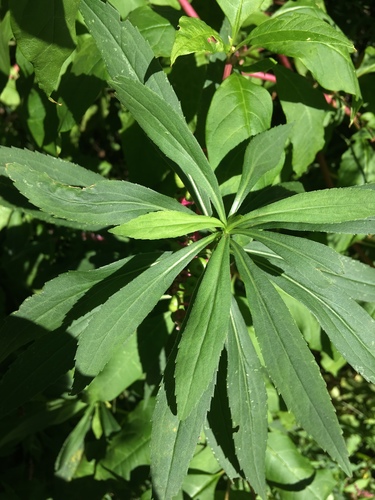
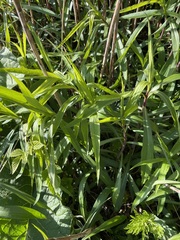
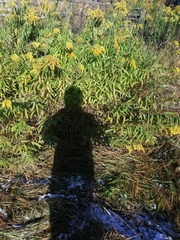
Giant goldenrod (Solidago gigantea Aiton) is a North American perennial in the Asteraceae family, introduced to Europe as an ornamental and widely naturalized in wet habitats. Its smooth, often bluish stem distinguishes it from the hairy-stemmed Solidago canadensis, although both form rhizomatous colonies and flower late in the growing season.
Read moreGiant goldenrod and Tall goldenrod
Allow a few hours of direct sun per day, preferably morning or evening.
Full sun; tolerates light partial shade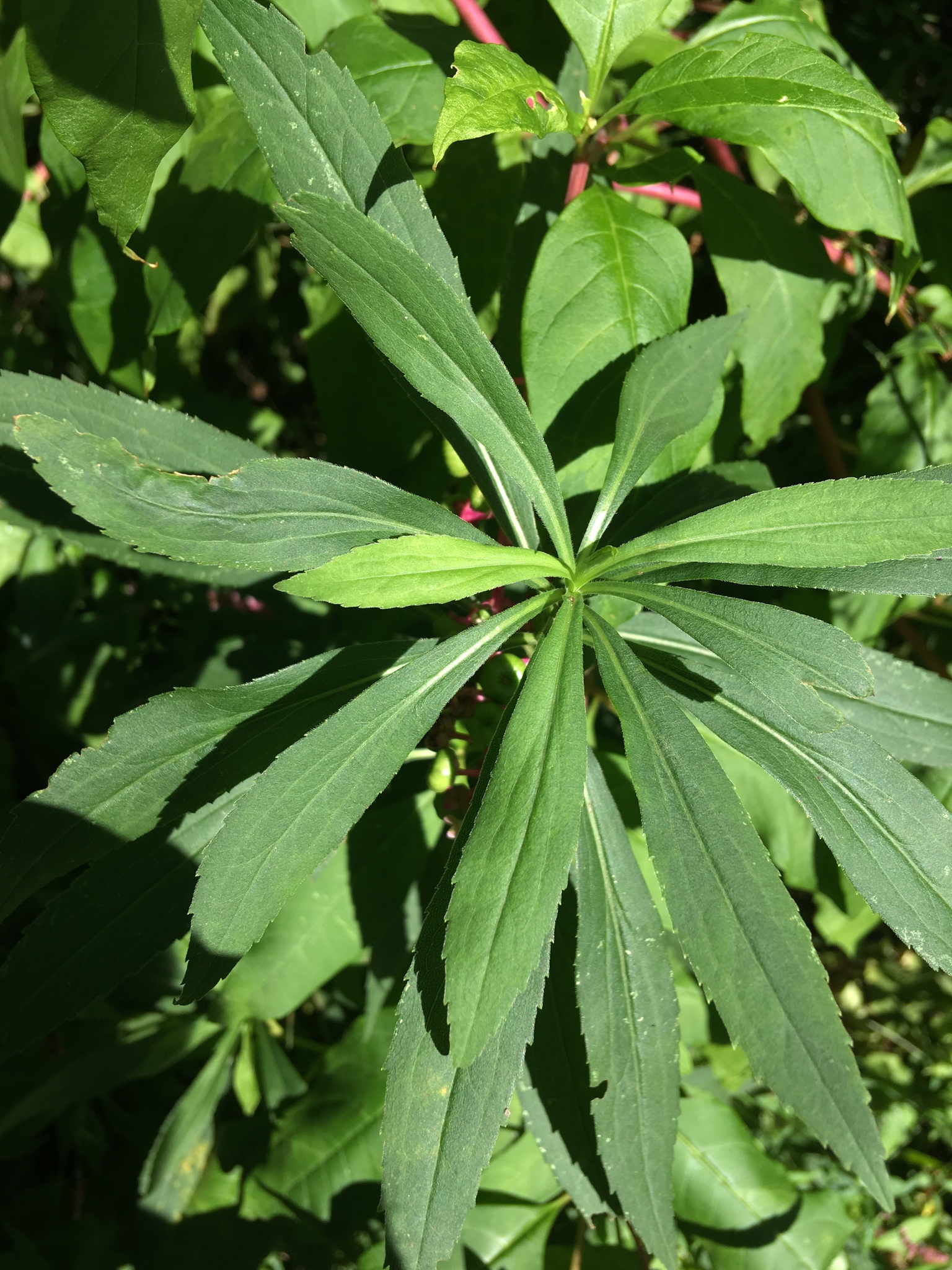


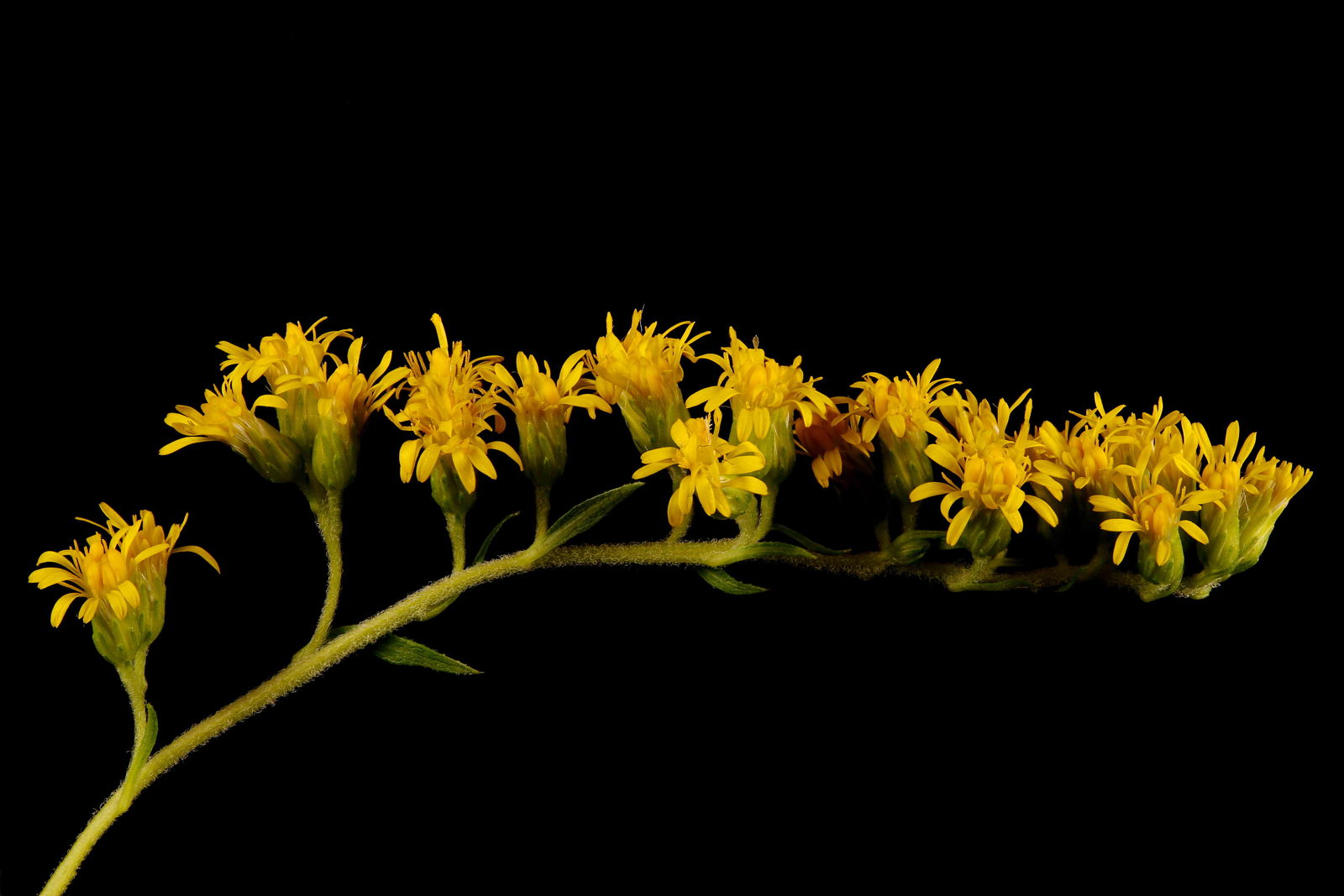
© photo
Daniel Atha · cc0
Силаева Татьяна Борисовна · cc0
Roman A. Lagazyuk (Роман А. Лагазюк) · cc-by
Taken Aug 20, 2019 by zmei (cc-by-sa)
Taken Aug 17, 2020 by Parobek Kamil (cc-by-sa)
Taken Aug 28, 2022 by Jim Knopf (cc-by-sa)
Taken Jul 27, 2014 by Tela Botanica − Juliette Martin (cc-by-sa)
Taken Aug 27, 2011 by Tela Botanica − Bertrand BUI (cc-by-sa)
© copyright of the Board of Trustees of the Royal Botanic Gardens, Kew.


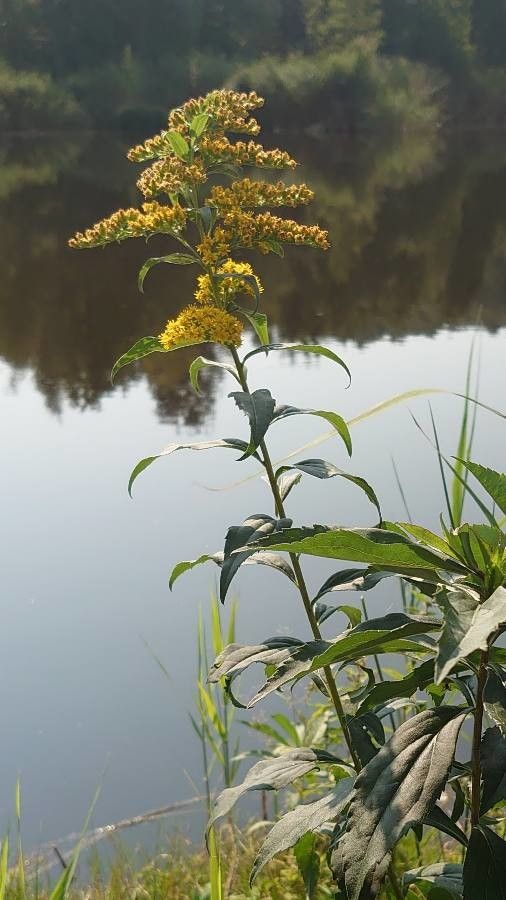


Global distribution
POWO places the native range from Canada to northeastern Mexico, across most of North America east of the Rocky Mountains. EPPO records introductions to Europe, Siberia and Japan, where the species behaves as an invasive weed of wet habitats.
- Native3
- Introduced1
- Invasive3
- Canada
- United States
- Mexico
- United Kingdom
- Metropolitan France
- Central and Eastern Europe
- Japan
Hexagons: regions where the plant occurs. Green dots: native range.1
Identity
Giant goldenrod (Solidago gigantea Aiton, 1789), also called tall goldenrod, is an accepted species of Solidago in the Asteraceae family. POWO attributes the name to William Aiton, who published it in Hortus Kewensis. Its native range runs from Canada to northeastern Mexico, across most of North America east of the Rocky Mountains. 1
The names giant goldenrod and tall goldenrod emphasize the plant's imposing height. French names recorded by Tela Botanica also draw attention to another useful feature: the smooth, hairless stem. This structural detail matters more for identification than the common name alone. 5
A hairless, often bluish stem separates Solidago gigantea from its hairy-stemmed relative Solidago canadensis. Following introduction to Europe, giant goldenrod became an invasive weed of riverbanks and wet meadows. 6
Recognition
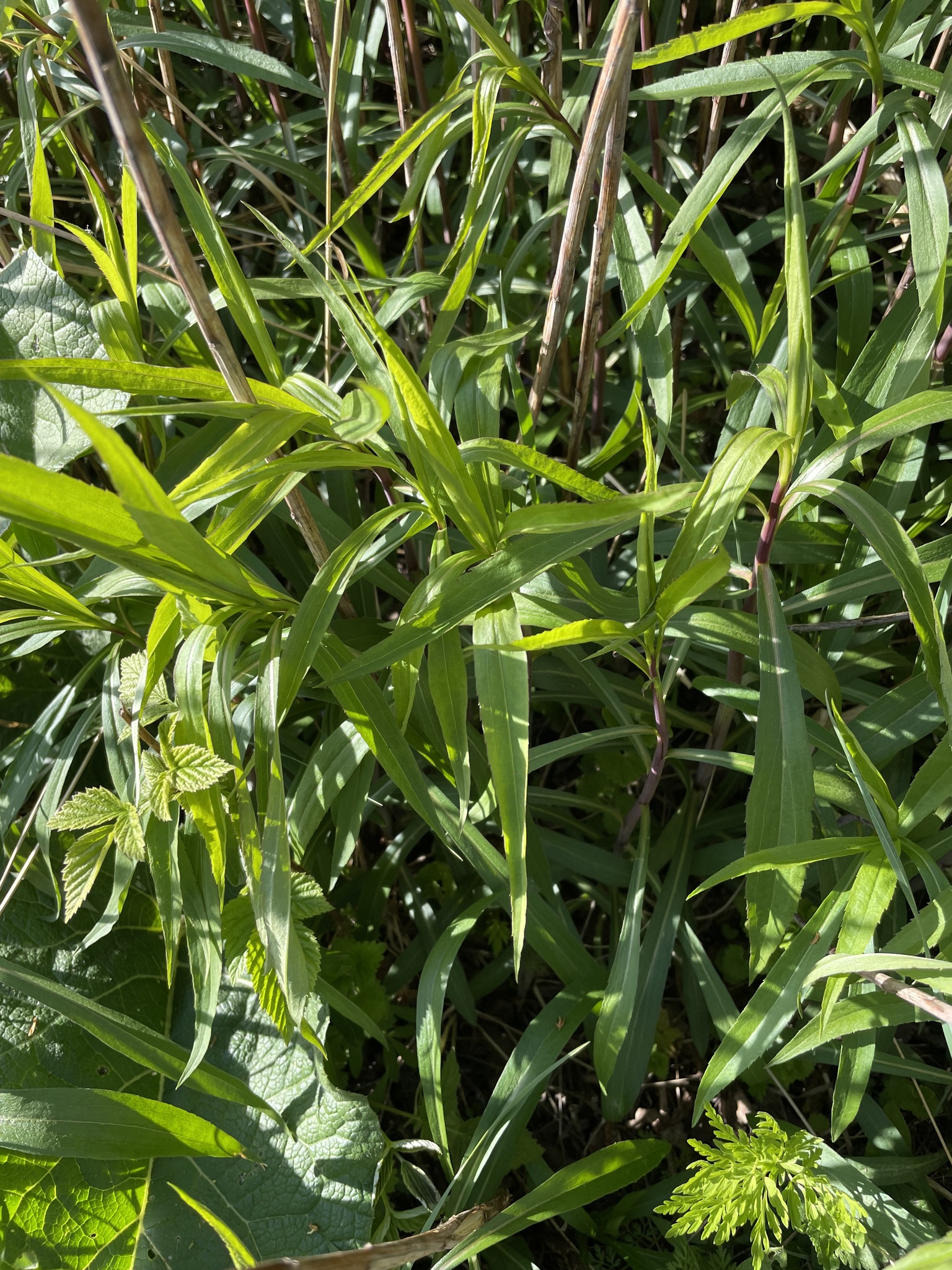
Upright clumps reach 1–2.5 m (3–8 ft) tall, with individual plants spreading 0.6–1.5 m (2–5 ft). Missouri Botanical Garden gives a typical height of 1–2 m (3–6.5 ft), while the Royal Horticultural Society gives 1.5–2.5 m (5–8 ft). Alternate, lance-shaped leaves have finely toothed edges, taper at both ends and measure 7–13 cm (3–5 in) long. 3 2
Stem texture provides the clearest distinction: it is smooth, hairless and often bluish, with a whitish waxy bloom. It lacks the conspicuous hairs found toward the top of Solidago canadensis. A hairy-stemmed plant is therefore not Solidago gigantea, regardless of the color of its flower heads. 3
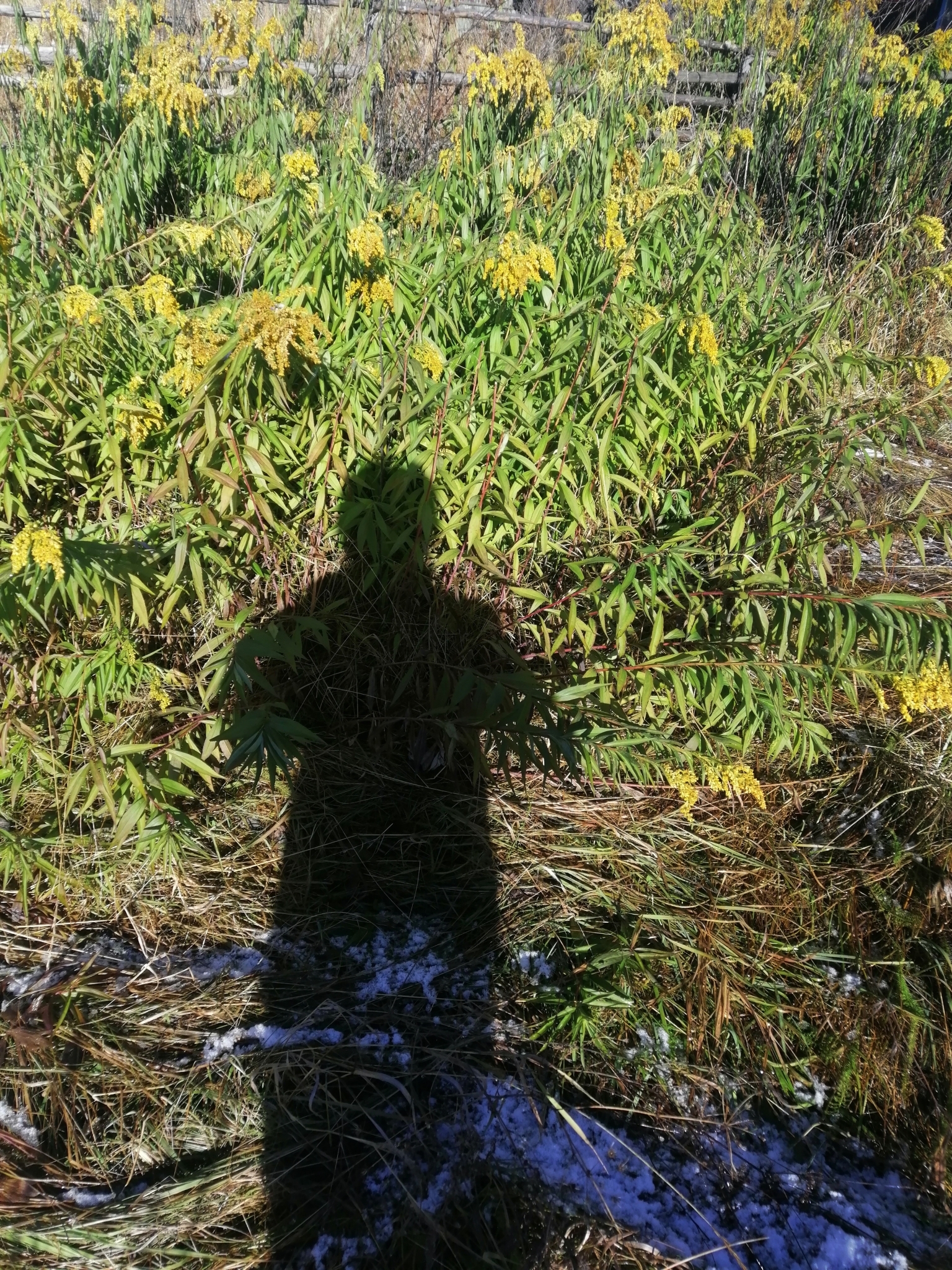
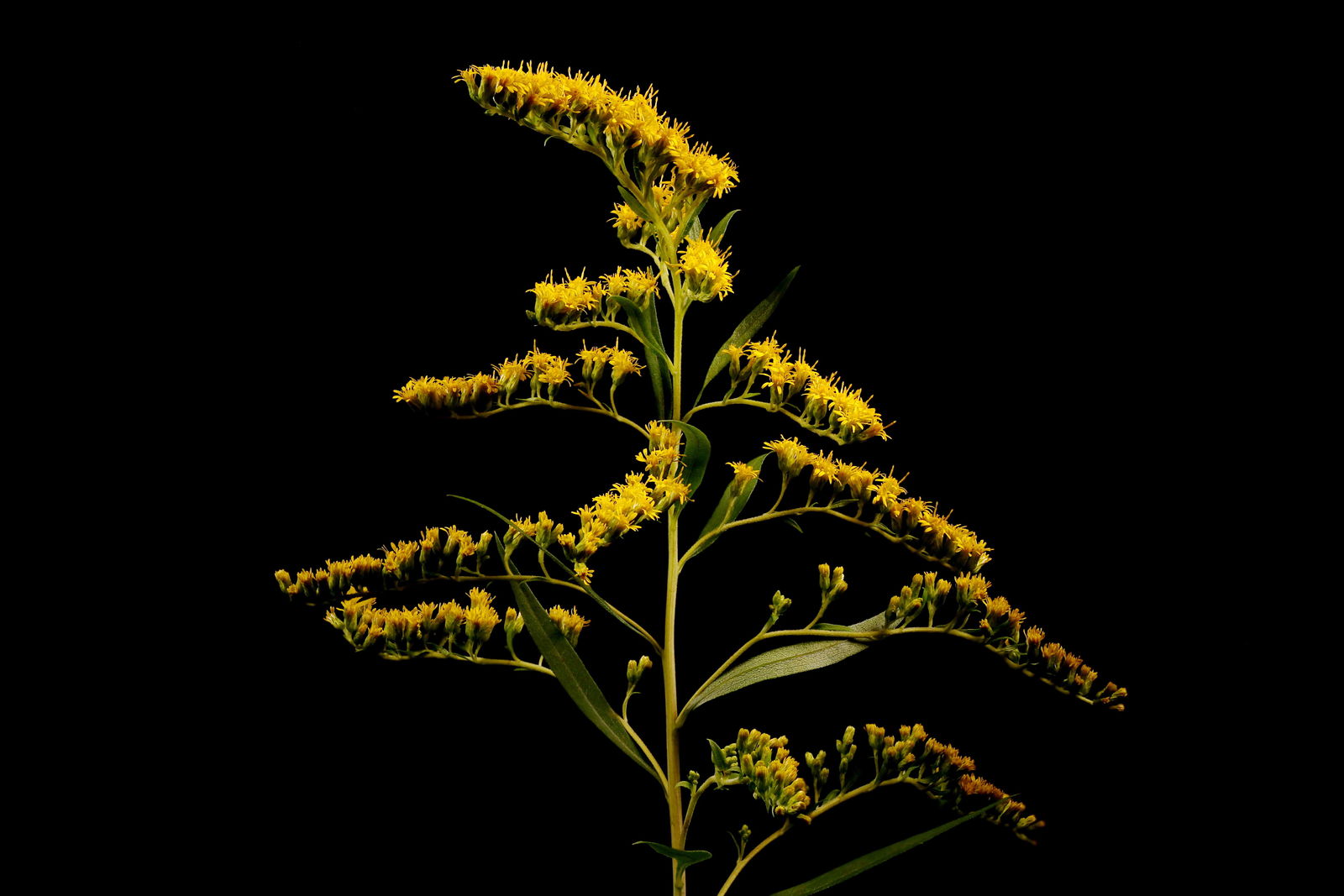
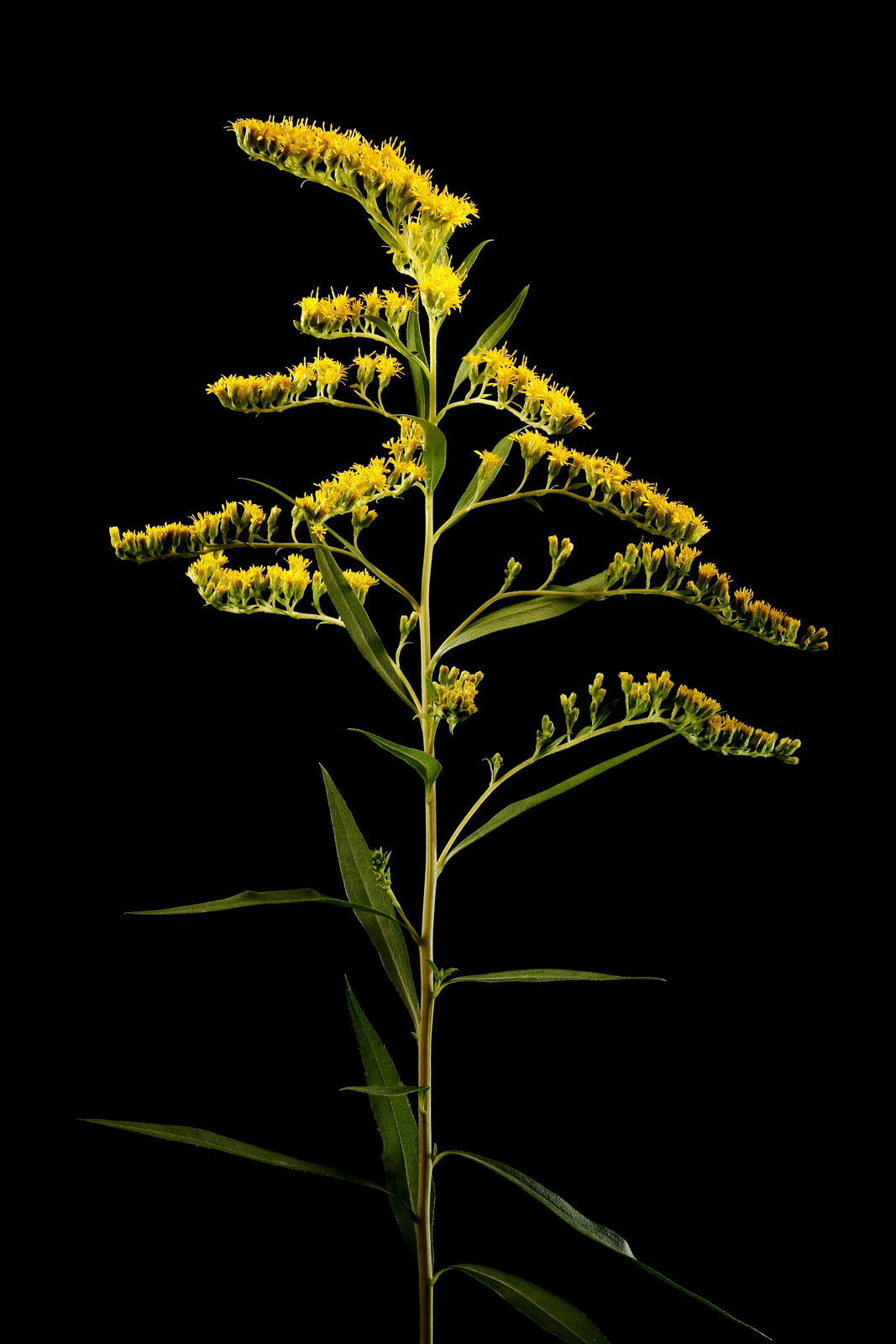
The inflorescence is a broad, pyramidal panicle with horizontally arching branches. It can reach 30 cm (12 in) long and contain several hundred tiny yellow flower heads. Flowering takes place in late summer and fall, corresponding to late July or August through October in the northern temperate range, and overlaps substantially with other introduced goldenrods. 2 3
Useful taxonomy
Aiton's name Solidago gigantea remains accepted by POWO. It was published in 1789 in Hortus Kewensis, the catalog of plants cultivated in the royal garden at Kew. Older literature often uses Solidago serotina; treated as a subspecies or variety by different authors, this historical synonym refers to the same smooth, bluish-stemmed plant. 1 8
For field identification, the most relevant comparisons are with Solidago canadensis and Solidago altissima, two other North American species introduced to Europe. Stem hairiness is the most consistent distinction, more useful than yellow flower color or the general outline of the panicle. 5
Tela Botanica still places this name among taxa whose validity is debated in different floras. That taxonomic caution does not change the value of the hairless stem as a field identification feature. 5
Habitat and range
Across its North American homeland, giant goldenrod occurs in Canada, most of the United States east of the Rocky Mountains and northeastern Mexico. Unlike Solidago canadensis, which tolerates fairly dry disturbed ground, Solidago gigantea is restricted by Missouri Botanical Garden and Plants For A Future to at least seasonally moist soil: river and pond banks, floodplain woods, wet meadows and ditches. 3 4
EPPO records its introduction as an ornamental to Europe, Siberia and Japan, followed by widespread naturalization. The database specifically describes the former subspecies serotina as introduced and invasive in Europe, central Russia and Japan. 6
In the United Kingdom, the Royal Horticultural Society describes the species as hardy to −20 °C (−4 °F) and tolerant of acidic, alkaline or neutral soil in sunny, exposed positions. This broad climatic tolerance helps explain its establishment outside its native range. 2
Life cycle and reproduction
Rhizome growth and seed production give giant goldenrod two complementary ways to spread. Underground rhizomes extend each year and send up new shoots in spring, forming clonal colonies along water margins that often contain little other vegetation. 3
Each plant then produces several hundred small flower heads, followed by light achenes with a feathery pappus. Wind, water and human activity disperse these fruits over long distances, particularly along banks and ditches. 2
Cutting stems back after flowering is recommended by the Royal Horticultural Society to reduce self-seeding. This gardening practice serves a similar purpose to management methods used against invasive colonies. 2
Uses and risks
According to Perenual, Solidago gigantea is non-toxic to cats and dogs; the source does not document its effects on horses. No toxic constituent associated with ingestion is reported. 7
Plants For A Future records historical medicinal uses of the leaves and flowering tops as astringents, cathartics and styptics, including herbal teas used for bleeding and fevers. It also reports diuretic properties for an extracted oil. These are documentary records of past uses, rather than a present-day recommendation to consume the plant. 4
Within its native range, late flowers attract beneficial insects including lady beetles, lacewings and hoverflies, which help control pests in neighboring crops. In Europe, that ecological value does not offset the loss of plant diversity observed in dense colonies competing with local vegetation. 4 6
Management in Europe
European management concerns arise because EPPO lists Solidago gigantea, like Solidago canadensis, as an invasive alien plant in Europe. Its presence reduces plant diversity in colonized wet habitats, particularly banks, floodplain meadows and ditches. 6
As with other introduced North American goldenrods, the recommended approach is repeated mowing or uprooting before flowering, continued over several years. Removing debris helps prevent renewed growth from rhizomes or dispersal of any achenes already formed. 6
Reaching colonies on banks or in wet ditches often makes mechanical work harder than on the dry disturbed sites occupied by Solidago canadensis. Mowing schedules must therefore take seasonal water levels into account. 3
Varieties, look-alikes and related plants
Several names and related species can cause confusion:
- Solidago canadensis has a hairy upper stem, lacking the smooth, bluish surface of Solidago gigantea;
- Solidago altissima is a distinct species according to POWO, also hairy-stemmed and introduced to Europe;
- Solidago serotina is a historical synonym of Solidago gigantea, referring to the same plant;
- Solidago virgaurea, European goldenrod, is native to Europe, much shorter and not classified as invasive. It should be distinguished from the introduced North American goldenrods.
Before taking action against a colony of Solidago canadensis or Solidago altissima, check the stem surface by touch. It is smooth in Solidago gigantea and distinctly hairy in those two North American relatives. 5 1
Main sources
- Plants of the World Online / Kew, Solidago gigantea Aiton
- Royal Horticultural Society, Solidago gigantea
- Missouri Botanical Garden, Plant Finder, Solidago gigantea
- Plants For A Future, Solidago gigantea
- Tela Botanica, BDTFX taxonomic reference, Solidago gigantea
- EPPO Global Database, Solidago gigantea (SOOGI)
- Perenual, horticultural and toxicity traits, Solidago gigantea
- International Plant Names Index, Solidago gigantea Aiton
Frequently asked questions
Is giant goldenrod toxic to cats and dogs?
No. Perenual lists Solidago gigantea as non-toxic to cats and dogs. This source does not document its effects on horses.
How can I tell Solidago gigantea from Solidago canadensis?
The stem is the most reliable clue: smooth, hairless and often bluish in Solidago gigantea, hairy toward the top in Solidago canadensis. Overall shape and yellow flower heads alone cannot distinguish them.
Should I plant giant goldenrod in a European garden?
Planting it is not recommended. EPPO documents the species as invasive in Europe, where it forms dense colonies beside rivers and wet meadows.
Why does giant goldenrod usually grow near water?
Missouri Botanical Garden and Plants For A Future describe a species restricted to at least seasonally moist soil, including banks, ditches, floodplain woods and wet meadows, unlike more drought-tolerant goldenrods.
How are invasive colonies of giant goldenrod managed?
Management follows the approach used for other introduced North American goldenrods: repeated mowing or uprooting before flowering over several years, removing debris to prevent regrowth from rhizomes.
Where does the name Solidago gigantea come from?
The Latin epithet gigantea means giant and describes the imposing size of the plant. William Aiton published the name in Hortus Kewensis in 1789.
Does giant goldenrod have ecological value?
Yes, within its native range. Plants For A Future records its attraction for beneficial insects such as lady beetles and hoverflies. In Europe, this value does not offset the loss of plant diversity observed in dense colonies.
If you are unsure about a plant’s toxicity, ask a botanist or veterinarian for advice.