
Candy leaf (Stevia rebaudiana, )
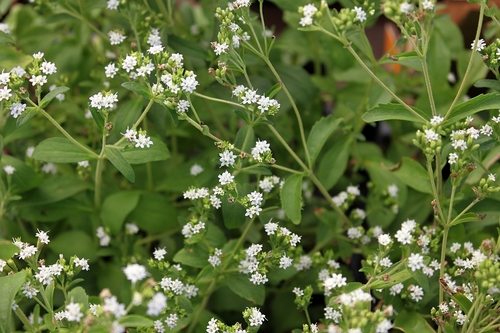

Candy leaf (Stevia rebaudiana) is a perennial herb in the Asteraceae family, native to high, semi-arid grasslands in Paraguay and Brazil. Its leaves contain steviol glycosides, compounds up to 200–300 times sweeter than sucrose without supplying calories. This has made it one of the most widely cultivated sources of natural sweeteners.
Read moreCandy leaf, Stevia, Candyleaf and Sweetleaf
Allow a few hours of direct sun per day, preferably morning or evening.
Full sun; tolerates light partial shade


© photo
(c) lskrida, some rights reserved (CC BY-NC) · cc-by-nc
Wikimedia Commons · CC BY-SA or Public Domain
Wikipedia · CC BY-SA
Taken Sep 5, 2020 by Sabaté Sant Jordi (cc-by-sa)
Taken Jun 14, 2020 by ritaz rita (cc-by-sa)
Taken Nov 17, 2017 by huy HO (cc-by-sa)
© copyright of the Board of Trustees of the Royal Botanic Gardens, Kew.




Global distribution
Stevia rebaudiana has a restricted native range between northern Paraguay, especially Amambay, and southern Brazil (Minas Gerais and Mato Grosso do Sul). It grows wild on poor sandy soils beside wetlands. Commercial cultivation has largely shifted to East Asia, with China now the leading global producer of stevia leaves.
Identity
Candy leaf (Stevia rebaudiana (Bertoni) Bertoni, 1905), also called stevia, candyleaf or sweetleaf, is a perennial herb of the genus Stevia in Asteraceae. Its leaves concentrate steviol glycosides up to 200–300 times sweeter than sucrose, without supplying calories. Plants of the World Online accepts this name and records the species’ wide spread beyond its native range. 1
Despite the French name chanvre d’eau, meaning water hemp, this plant has no botanical relationship with hemp (Cannabis sativa). That name describes its original habitat along damp grasslands and marshes in Paraguay, rather than any link between the two plants. 3
Guaraní communities were already sweetening herbal drinks with fresh leaves long before Paraguayan naturalist Moisés Santiago Bertoni described the species in the late 19th century. Chemist Ovidio Rebaudi soon isolated its first sweet compounds. The epithet rebaudiana honors his work on the plant. 4 7
Recognition
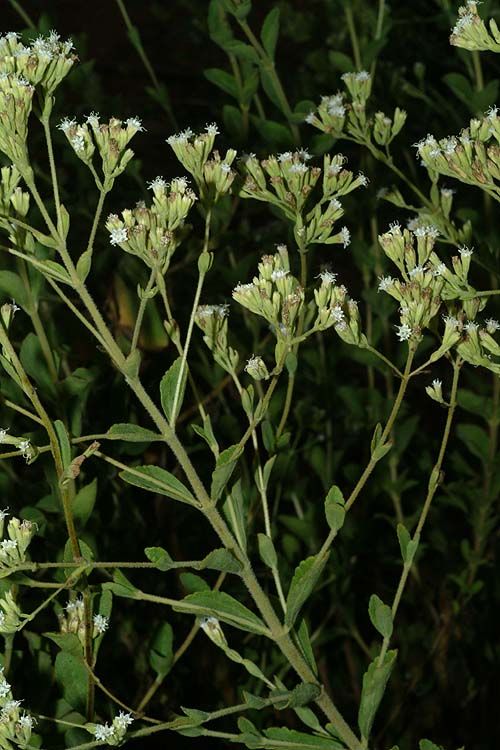
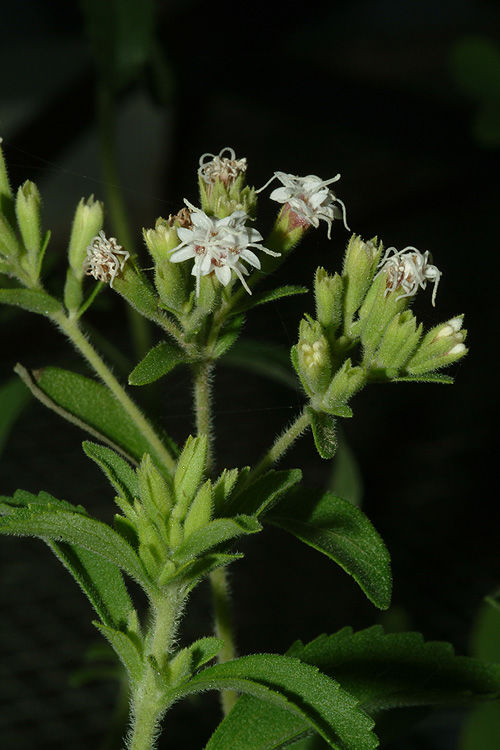
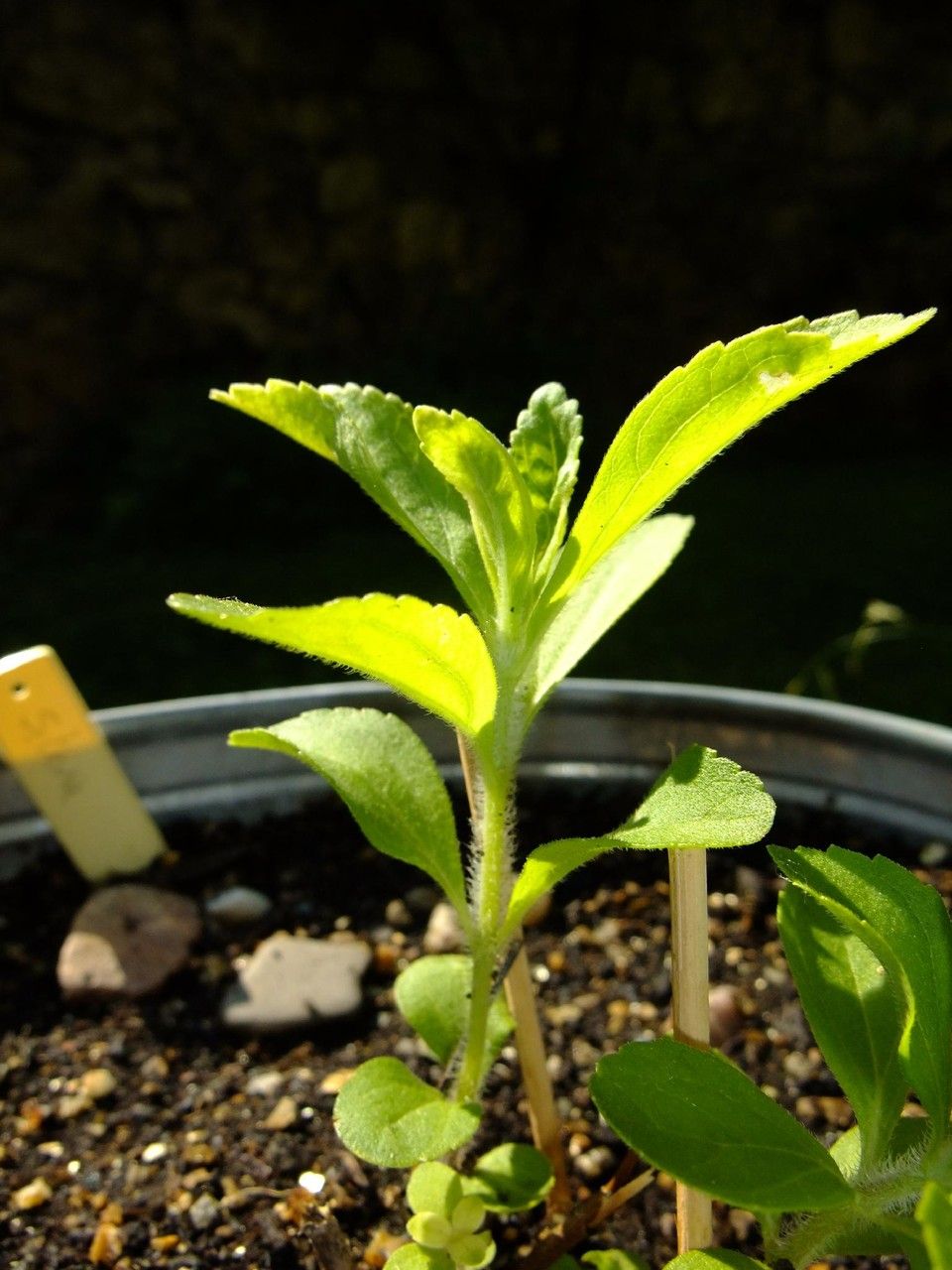
Upright leafy clumps reach 30–80 cm (12–32 in) tall and 30–60 cm (12–24 in) wide in cultivation, sometimes with a semiwoody base. Bright green leaves grow in opposite pairs. Their shape ranges from oblong to lance-shaped, with toothed margins, and they rarely exceed 3 cm (1.2 in) in length. 4 2
Fresh leaves reveal an intense sweetness with a licorice-like note when crushed or chewed, well before the plant flowers. This distinctive garden feature is often more immediately recognizable than its appearance alone and needs no magnifying lens or botanical key. The flavor comes from concentrated steviol glycosides, up to 200–300 times sweeter than sucrose. 4 3
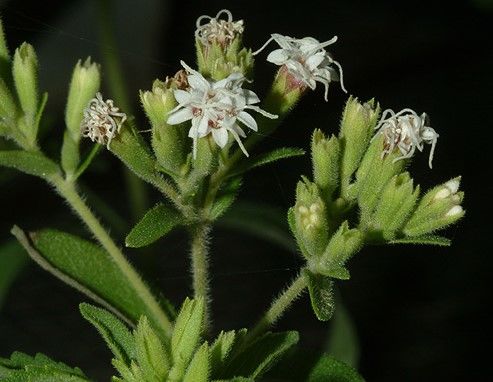
Small white tubular flowers, sometimes tinged with mauve, appear in clusters in late summer or fall, depending on day length. Flowering substantially reduces the concentration of sweet compounds in the leaves, which is why growers pinch out the buds as soon as they appear. 4
Useful taxonomy
Bertoni’s accepted name, Stevia rebaudiana (Bertoni) Bertoni, reflects a transfer between genera. He first described the plant in 1899 under the basionym Eupatorium rebaudianum Bertoni, then moved it to Stevia in 1905. 1
A separate homonym, Stevia rebaudiana Hemsl., published in 1906, is not accepted. Keeping the full name and botanical authority together prevents confusion between the two publications and the names they established. 1
Roughly 240 species belong to Stevia, almost all native to the Americas. None matches the concentration of sweet glycosides in S. rebaudiana, which explains this species’ near monopoly in commercial use as a sweetener source. 9
Habitat and range
Upland grasslands and marsh edges in northern Paraguay, especially Amambay, hold part of its restricted native range. That range extends into southern Brazil, including Minas Gerais and Mato Grosso do Sul. The plant colonizes poor, acidic sandy soils there, under a semi-arid subtropical climate. 1 3
Commercial production has spread far beyond those native habitats. China is now the largest global producer of stevia leaves, following Japan’s early adoption of the sweetener during the 1970s. Cultivation and the plant’s original wild distribution therefore describe very different geographical patterns. 7
Prolonged frost sets the main limit in temperate climates. Candy leaf is hardy only in USDA zones 10–11 and blackens after the first sustained freezes, preventing year-round outdoor cultivation in colder zones. A temperate garden can instead use the plant as an annual or container crop. 4 2
Life cycle and reproduction
Shortening days trigger flowering, the characteristic response of a short-day plant, usually in late summer or fall according to latitude. Each flower then produces a small dry achene, the type of fruit typical of the Asteraceae family. 4
Seed propagation remains unreliable because germination is naturally low and seed viability is short. Tip stem cuttings taken from nonflowering shoots remain the most widely used propagation method. They root in 2–3 weeks, providing a more dependable way to produce new plants than sowing. 3 4
Harvesting leaves before flower buds appear preserves their sweetness, because flowering reduces sweet glycoside levels. Growers also pinch the stems to prolong the period during which the plant supplies sweeter leaves, rather than allowing it to move straight into flowering. 4
Uses and risks
Sweetening food is the principal use of candy leaf. Dried leaves and their extracts contain abundant stevioside and rebaudioside A, used as calorie-free sweeteners. A study available through PubMed Central reports acute toxicity tests without adverse effects and indicates that steviol formed during intestinal metabolism does not accumulate in the body. 7
Food rules distinguish between countries and between extracted compounds. The European Union has authorized steviol glycosides as food additives since November 2011. In the United States, highly purified rebaudioside A extracts have had GRAS status since 2008. Whole leaves and crude extracts remain subject to an FDA import alert, so the regulatory treatment of purified compounds does not extend to every leaf product. 8
For cats, dogs and horses, the ASPCA lists Stevia rebaudiana as non-toxic. No symptoms following ingestion have been documented to date in that account. 5
Varieties, look-alikes and related plants
Cultivated candy leaf is divided into populations and breeding lines rather than the named ornamental cultivars familiar in many garden plants. The traditional Paraguayan 'Criolla' population contains more stevioside than rebaudioside A. It retains a stronger aftertaste than recent commercial lines, which were selected specifically to reduce that bitterness. 9
Confusion over this plant often concerns names rather than physical resemblance. The French common name chanvre d’eau can suggest a misleading association with hemp, although the plants are unrelated and do not even belong to the same botanical family. 3
Many other Stevia species are wild or ornamental plants with no sweetening value. The full binomial, Stevia rebaudiana, identifies the species grown for sweet leaves. A young nursery plant labeled simply “stevia” almost always belongs to this species, since its relatives have little commercial interest as sweeteners. 9
Main sources
- Plants of the World Online / Kew, Stevia rebaudiana (Bertoni) Bertoni
- Missouri Botanical Garden Plant Finder, Stevia rebaudiana
- Plants For A Future, Stevia rebaudiana
- NC State Extension Gardener Plant Toolbox, Stevia rebaudiana
- ASPCA, Stevia toxicity entry
- USDA PLANTS Database, Stevia rebaudiana profile
- PubMed Central, steviol glycosides safety and antidiabetic study
- U.S. FDA, Import Alert 45-06 on unapproved stevia products
- Tela Botanica, Stevia rebaudiana, taxonomic summary
Frequently asked questions
Is candy leaf toxic to cats or dogs?
No. The ASPCA lists Stevia rebaudiana as non-toxic to cats, dogs and horses, and no ingestion symptoms have been documented to date.
Why are candy leaf leaves so sweet?
They contain steviol glycosides, chiefly stevioside and rebaudioside A, which are up to 200–300 times sweeter than table sugar without supplying calories.
Can you grow candy leaf in a temperate climate?
Yes, mainly in a container or as an annual vegetable-garden crop. It is hardy only in USDA zones 10–11 and cannot withstand prolonged frost.
Why should I pinch out candy leaf flowers?
Shortening days trigger flowering in late summer, reducing the leaves’ concentration of sweet glycosides. Pinching out buds prolongs a sweeter harvest.
Is candy leaf related to hemp?
No. Stevia rebaudiana has no botanical relationship with Cannabis sativa. Its French name chanvre d’eau, meaning water hemp, refers only to its original marsh-edge habitat in Paraguay.
Does candy leaf self-seed readily in gardens?
Rarely. Its seeds naturally have a low germination rate and short viability, making stem cuttings much more reliable for propagation.
Are all stevia extracts approved for food use?
No. In the United States, only highly purified steviol glycosides such as rebaudioside A have had GRAS status since 2008; whole leaves and crude extracts remain subject to an FDA import alert.
If you are unsure about a plant’s toxicity, ask a botanist or veterinarian for advice.