
Dandelion (Taraxacum, )
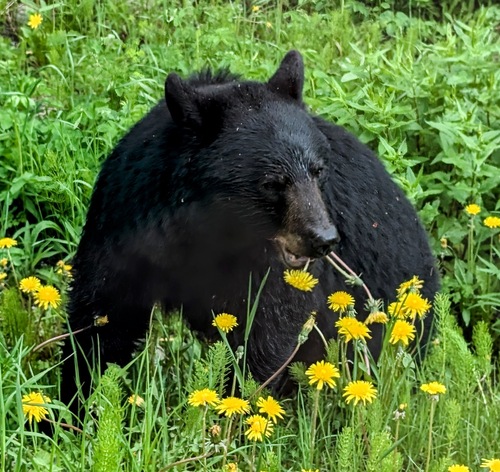
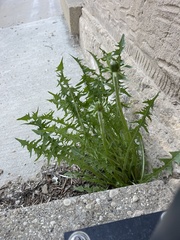
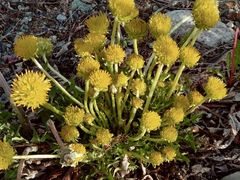
Dandelion (Taraxacum) is a genus of herbaceous perennials in the Asteraceae family. Familiar lawn dandelions have yellow flower heads, low leaf rosettes and plumed fruits. Treating them at genus level preserves the diversity of these closely related plants without assigning an uncertain species name.
Read moreDandelion, Lion’s-tooth and Blowball


© photo
Daughter Dad · cc-by
Brandon Corder · cc-by
Syd Cannings · cc-by
© copyright of the Board of Trustees of the Royal Botanic Gardens, Kew.
Identity
Dandelion (Taraxacum F.H.Wigg.) is treated here at genus level. The notation Taraxacum spp. covers several possible dandelion species rather than assigning a single species name without sufficient evidence. 1 8
POWO, WFO and IPNI place Taraxacum in the Asteraceae family. Although “dandelion” sounds straightforward, the group is taxonomically complex and contains many closely similar forms. 1 2 3
Familiarity can make dandelions easy to overlook. A flower seen almost everywhere is not necessarily one observed closely; examining this common plant offers a useful exercise in field botany. 8
As a teaching wildflower, dandelion offers a recognizable combination of yellow flower head, low leaf rosette and plumed fruits. Check the whole plant to avoid mistaking a similar yellow-flowered species for it. 6
Recognition
A typical dandelion has a basal rosette of divided, often toothed leaves and hollow stalks bearing one yellow head each. After flowering, the fruits gather into a feathery ball. 5 6
Each head contains many florets rather than being a single flower. This Asteraceae structure produces a striking yellow display even on a low-growing plant. 1
White latex in stems and leaves, a ground-hugging rosette and windborne plumes are useful recognition features. No single feature suffices alone, but their combination provides stronger evidence. 5
Other yellow lawn Asteraceae create the main identification trap. Hawkweeds, sow-thistles and coltsfoot can resemble dandelions from a distance; leaves, stems and seasonal timing help correct that first impression. 8
Useful taxonomy
At genus rank, the accepted name used here is Taraxacum. Describing these plants as Taraxacum spp. is more accurate than automatically assigning them to Taraxacum officinale. 1 8
Many species, sections and apomictic forms make this group complex, with treatment varying among floras. Practical recognition can place an observed dandelion in its correct group without claiming to resolve that complexity. 7 6
The name lion’s-tooth, echoed in the origin of “dandelion,” describes the toothed leaves. A common name still cannot replace a scientific name when several dandelion species are under discussion; the genus preserves that diversity. 3
For everyday recognition in a lawn, two levels remain useful: dandelion as the common name and Taraxacum as the botanical genus. Identifying a particular species requires closer specialist examination. 2
Cultivation
Cultivation as a bedding flower is unusual, but managing Taraxacum is common. It favors open, well-lit soil with limited competition and benefits from mown lawns where the rosette remains protected. 5
Its lawn life cycle explains this persistence. Low flowers are followed by plumed seeds, while a taproot stores reserves. Very close mowing does not always exhaust the plant. 4
To limit dandelions, act before seeds form, remove as much of the taproot as possible and improve the density of surrounding vegetation. Bare ground leaves room for new seedlings. 4
For observation, leave a few rosettes in an area with little chemical treatment. The flower heads feed early insects, and the fruits clearly demonstrate wind dispersal to children. 8
The time of observation affects what you see. Heads may stay closed on cool mornings and open in sunshine, making plants much more conspicuous. After rain or mowing, return a few days later to see more of the cycle. 8
A persistent taproot also explains the plant’s resilience. Removing leaves gives only brief control if stored reserves remain. In a meadow where dandelions are welcome, that same root helps them withstand moderate drought without watering. 4
Uses
Dandelions make botanical learning accessible without seeking a rare plant. They reveal rosettes, composite heads, latex, achenes and seed dispersal in one familiar example. 8
Traditional uses include leaves, buds or roots, but require reliable identification, untreated plants and an uncontaminated site. A chemically treated urban lawn is not a food source. 6
Keeping a few dandelions in a wildlife-friendly garden can be a reasonable choice. They may provide nectar and pollen, especially early in the season, provided the whole lawn is not allowed to become a single-species stand. 7
A zoned approach offers a practical compromise: tolerate plants in a meadow or natural corner, remove them from a newly sown vegetable bed, and retain some in an observation strip. Their presence can then inform garden management as well as being judged as weeds. 8
For household food uses, collection location comes before recipes. Do not harvest a rosette beside a road, in a treated lawn or where animals frequently pass. Even a common plant is affected by its immediate surroundings. 6
Precautions
Overall caution is low in this account. Identification, site contamination and possible chemical treatments are the main concerns, rather than assuming that commonness alone establishes suitability for eating. 1
Concentrated preparations should also be avoided for sensitive people, children and animals. A familiar plant is not automatically suitable for consumption in every setting. 6
From an ecological perspective, widespread lawn treatment to eliminate a few flowers is unnecessary when the concern is mainly appearance. Denser grass, suitable mowing and localized removal often suffice. 4
Beginners may call every small yellow flower a dandelion. Pause to check the rosette, hollow stalk, latex and plumes so that a familiar name does not become a catch-all identification. 8
Using Taraxacum at genus level keeps the identification appropriately broad. Observe the rosette, head and achenes, then decide whether to retain or limit dandelions according to the particular site. 8 1
Main sources
- Plants of the World Online / Kew, Taraxacum
- World Flora Online Plant List, Taraxacum F.H.Wigg. — accepted genus, June 2026 snapshot
- International Plant Names Index, Taraxacum
- Royal Horticultural Society, Taraxacum search results
- Royal Horticultural Society, Dandelion — Taraxacum genus advice guide
- Wikipedia EN, Taraxacum
- GBIF, Taraxacum
- Floralens, yellow flower selection
If you are unsure about a plant’s toxicity, ask a botanist or veterinarian for advice.