
Common thyme (Thymus vulgaris, )
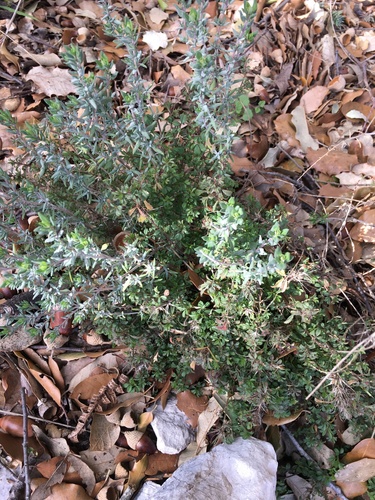
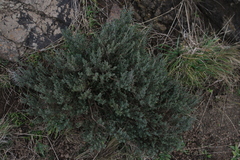
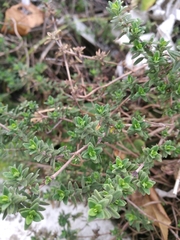
Common thyme (Thymus vulgaris) is a small Mediterranean member of the Lamiaceae, woody at the base and grown as a culinary herb in full sun. Free drainage, modest soil fertility and light pruning after flowering help keep its aromatic growth compact.
Read moreCommon thyme, Garden thyme, English thyme and German thyme
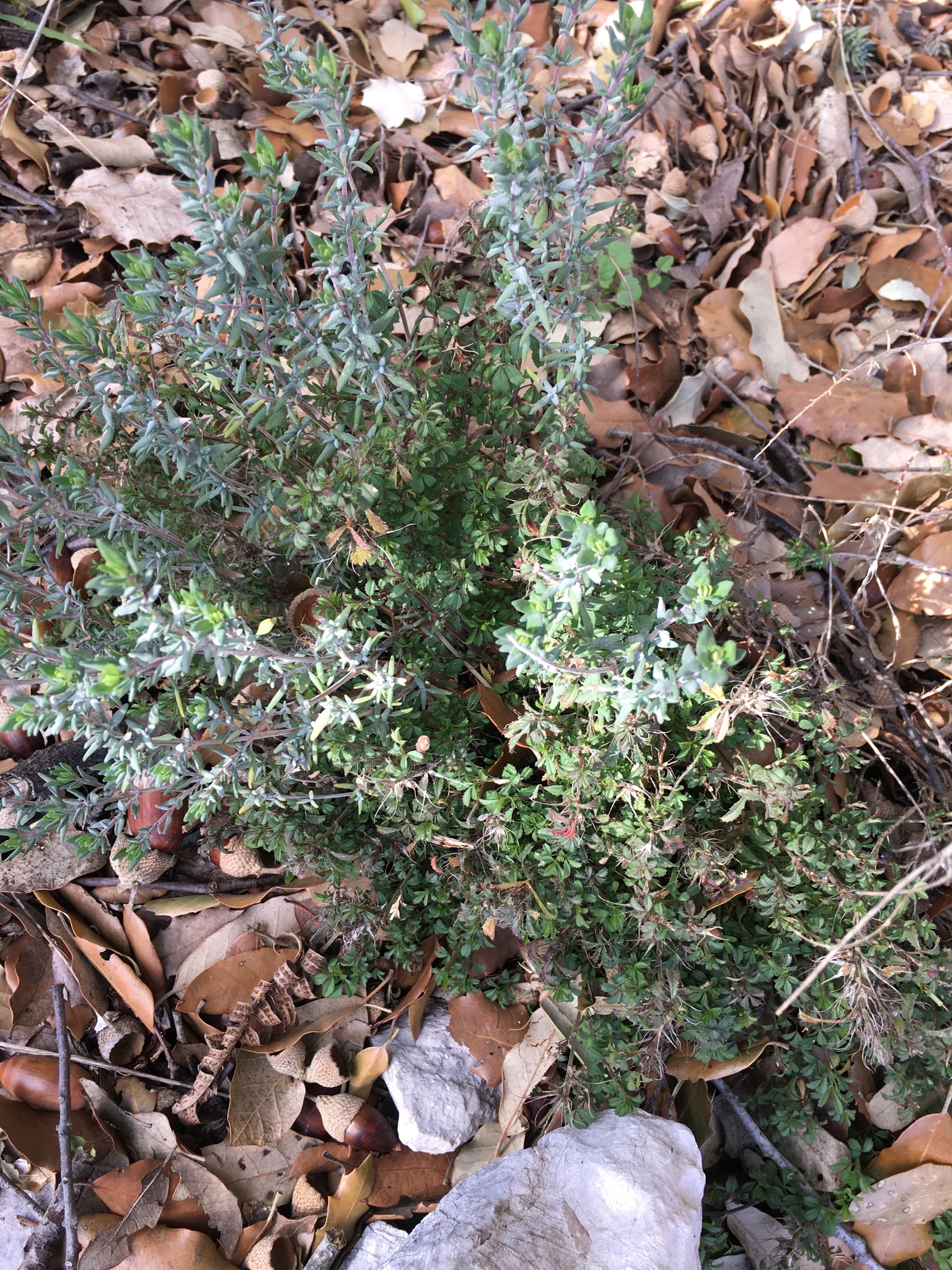


© photo
Ryan McMinds · cc-by
Joe Potter Butler · cc-by
Jenny Saito · cc-by
Taken Apr 12, 2016 by miguel angel del viejo (cc-by-sa)
Taken Feb 25, 2016 by Tela Botanica − jean-marie PAGNIER (cc-by-sa)
Taken Jan 16, 2021 by pi frederic (cc-by-sa)
Taken Apr 1, 2022 by Emilio Nieto (cc-by-sa)
Taken Jul 21, 2019 by Bogdan Sidorenko (cc-by-sa)
© copyright of the Board of Trustees of the Royal Botanic Gardens, Kew.




Identity
Common thyme (Thymus vulgaris L.), also known as garden thyme, English thyme or German thyme, is a small Mediterranean culinary herb that thrives in sunny, freely draining sites with modest soil fertility. Its hardiness and ability to grow in relatively lean conditions make it useful in dry gardens, where persistent moisture can be a greater problem than a brief spell of cold. 2 8
POWO, WFO, IPNI and Wikidata confirm Thymus vulgaris L. in the Lamiaceae. More than a familiar kitchen fragrance, it is a small subshrub adapted to dry habitats, with woody growth at the base. Treating it as a miniature woody plant helps explain its response to soil, pruning and age. 2 3 4 1
Cold moisture is a particular hazard. Thyme tolerates dry cold better than standing water, especially in compacted soil. Where the cool season is wet, preparing drainage can matter more than planting as soon as a nursery plant becomes available. 8
Its horticultural requirements are sun, drainage and restrained fertility. Even its aromatic growth depends substantially on those conditions. A rich, constantly wet herb container does not reproduce the environment that keeps common thyme compact. 6
Recognition
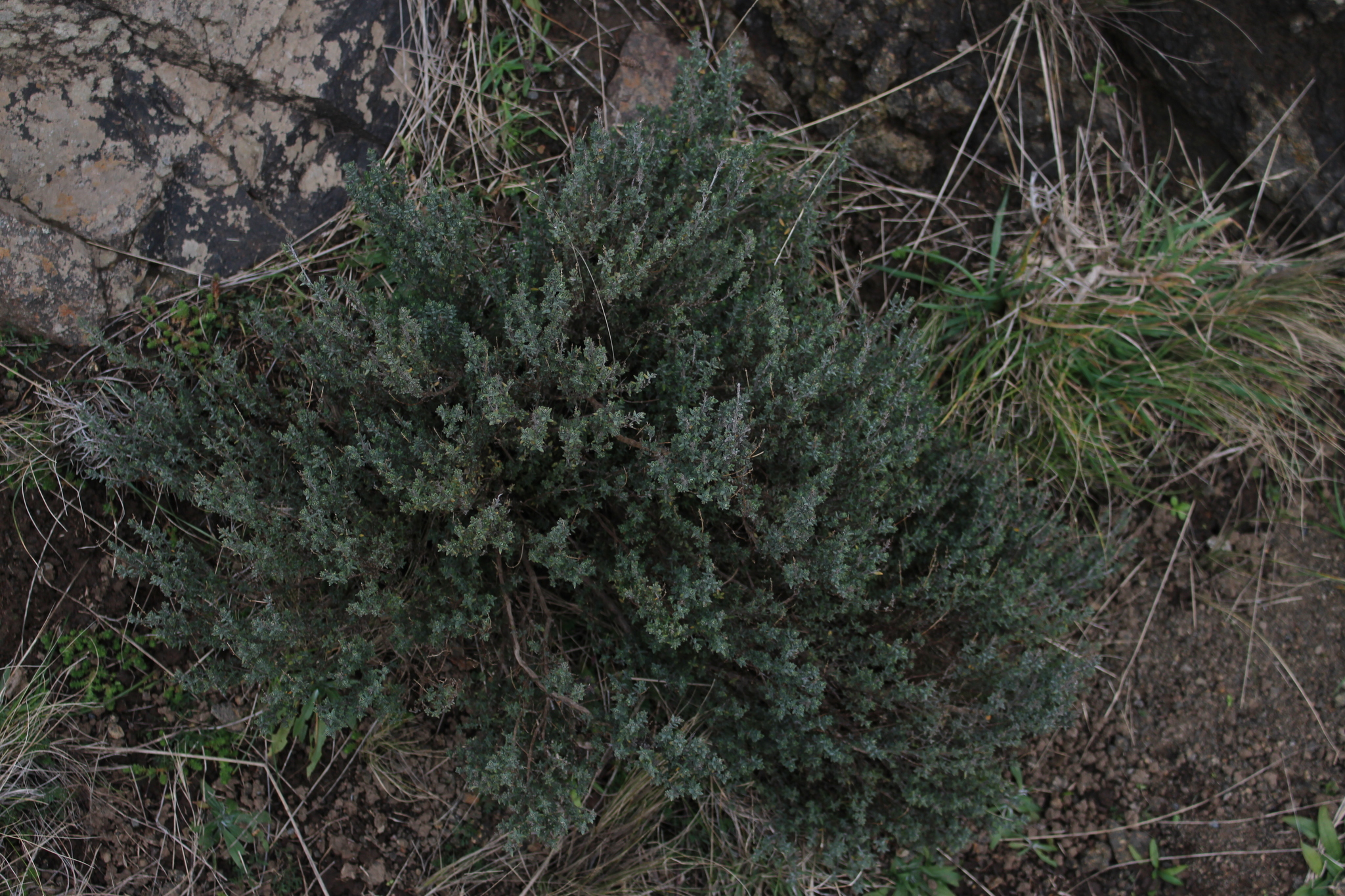
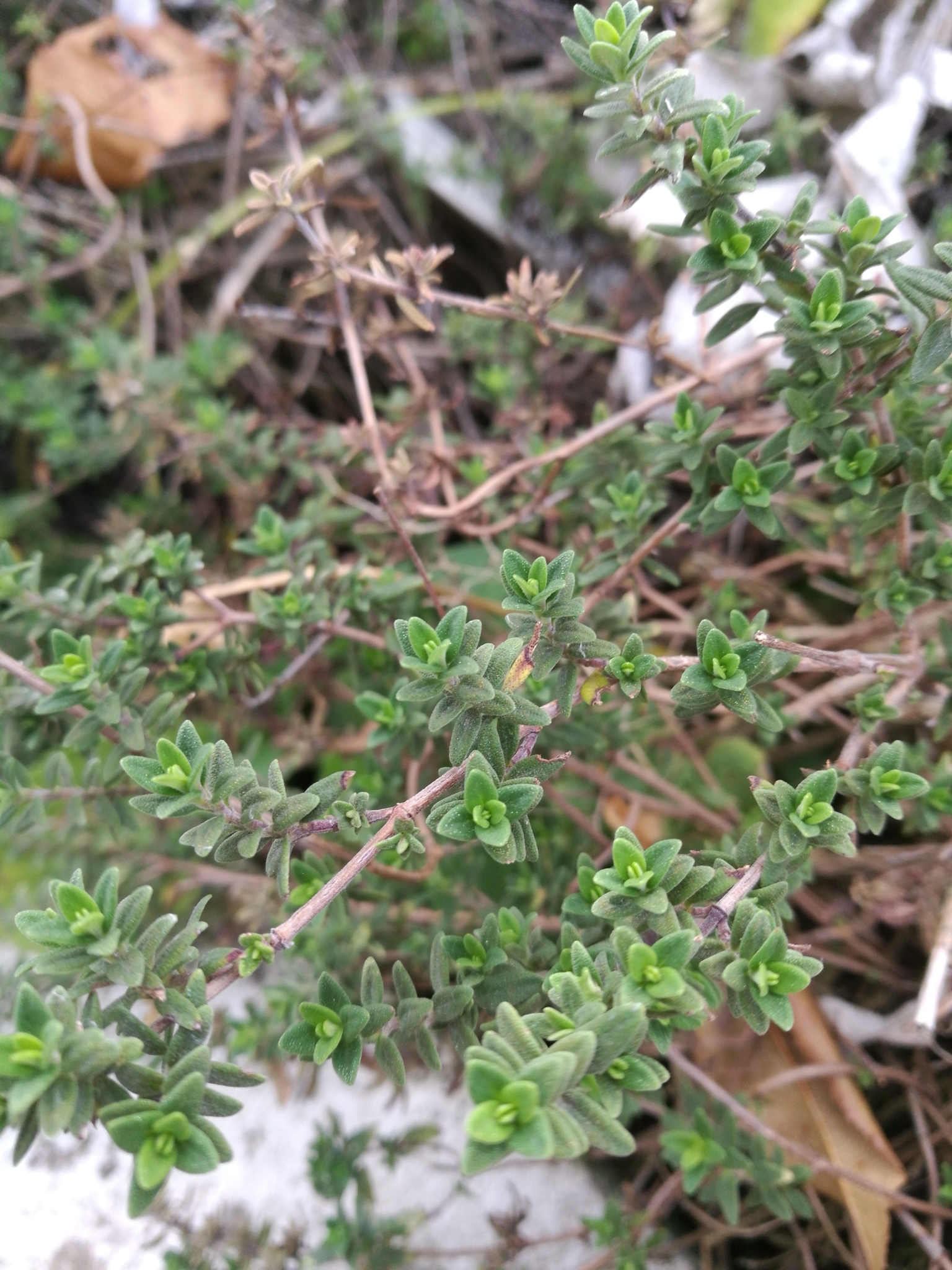
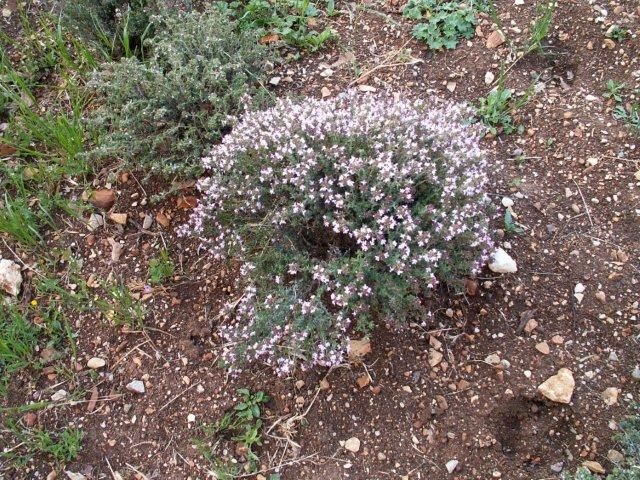
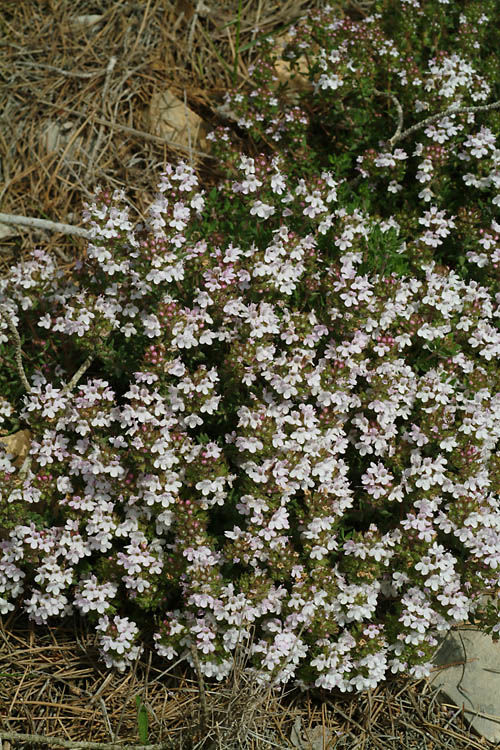
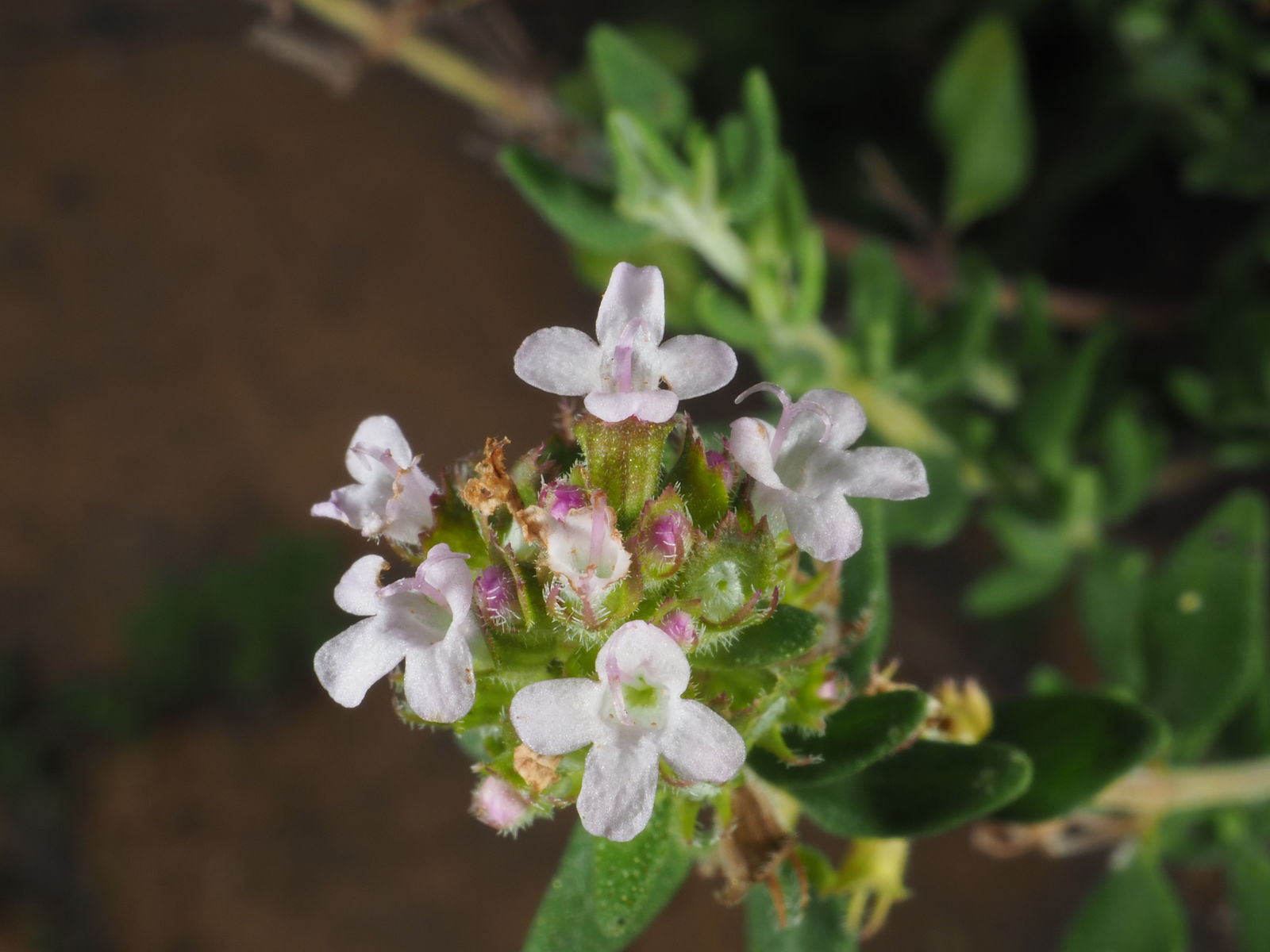
Small stems become woody at the base and carry tiny, opposite, aromatic leaves, gray-green to dark green depending on conditions. Small flowers appear in late spring or early summer. The combination of woody basal growth and fine foliage is more useful than judging from fragrance alone. 6 7
Scent is a strong clue, but several thymes and related herbs resemble one another. Lemon thyme, creeping thyme and neighboring forms can be confused at purchase. A pleasing thyme-like aroma does not prove that the plant is Thymus vulgaris. 8
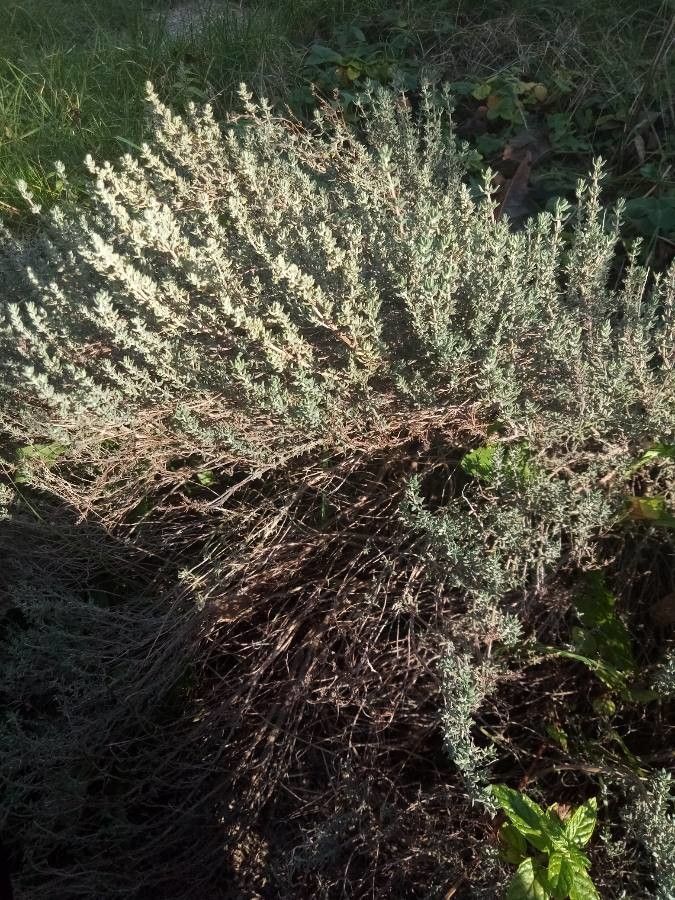
A mature plant should remain low, dense and branched. A clump that stretches, opens out or becomes hollow often has too much shade, excessive fertility or insufficient light pruning. These changes describe the condition of a cultivated plant rather than a different botanical identity. 5
A useful growing clue is its response to a sunny, lean, well-drained position: it stays compact without demanding intensive care. Soft growth in cold soil does not show the plant's characteristic habit at its best. The whole plant and its growing conditions provide context for the leaves and scent. 8
Useful taxonomy
Thymus vulgaris L. is the accepted reference for common thyme. It should not be extended to every plant sold as thyme, because the genus contains other aromatic and ornamental plants with different habits. The full name establishes which species is intended. 2 8
That precision separates it from creeping thyme, lemon-scented thymes and ornamental selections. They may share some growing requirements, but their growth forms, scents and uses do not always coincide. Similar cultural needs are not evidence that two nursery labels name the same plant. 5
The French regional name farigoule remains useful in southern France, while the binomial provides a consistent reference in catalogs, botanical sources and culinary identification. A regional vernacular and an accepted species name serve different purposes without being competing classifications. 4
In a productive garden, common thyme is a basic culinary herb: more upright and culinary in character than many carpeting thymes, and suited to leaner conditions than herbs requiring consistently moist soil. It is useful to make that distinction when choosing both a plant and its position. 7
Cultivation
Provide full sun and strict drainage. If the ground is cold, heavy and wet, improve the site before planting rather than setting roots directly into unsuitable soil. The immediate condition of the planting place matters more than an early start. 8
Slopes, rock gardens, mineral borders, containers with drainage holes and poor to moderately fertile soils suit thyme. Rich fertilizer often produces softer foliage with less aroma. Vigorous soft growth is therefore not necessarily the most useful result for a compact culinary subshrub. 6
Prune lightly after flowering or harvest, avoiding a hard cut into old bare wood that cannot regrow quickly. This keeps the clump compact and reduces hollow aging. Thyme responds better to continued modest shaping than to a sudden attempt to turn an old woody base into fresh leafy growth. 5
Wet winter conditions are the critical issue. A pot without a hole, a full saucer or compacted clay can cause more damage than moderate cold. Improving drainage is more effective than relying on a protective fabric while the roots remain saturated. 8
A simple drainage test is to water the soil and watch how quickly the water disappears. If the surface stays shiny or sticky for a long time, the site is unsuitable for thyme. Surface gravel alone is insufficient: lighten the root zone or raise the planting. 8
Natural aging also matters. A thyme clump does not remain dense indefinitely: it can become woody, open and hollow. Regularly taking healthy shoot-tip cuttings provides more reliable replacement plants than trying to rejuvenate old bare wood by severe pruning. 5
Uses
The principal use is culinary and aromatic, in cooking, dry vegetable-garden borders, containers near the kitchen, Mediterranean planting and pollinator-friendly rock gardens. Its perennial productivity and resilience make it useful where a lasting herb is wanted rather than a short seasonal crop. 8
Flowers also attract pollinators. Leaving some stems to bloom provides a resource without preventing harvest, provided the plant is subsequently trimmed to retain its shape. Flowering and culinary picking can therefore share a plant instead of requiring every shoot to be removed before buds form. 6
On a balcony, a deep container with drainage suits thyme better than a planter constantly watered for basil or parsley. Group plants by actual water needs rather than by their shared use in cooking. A culinary grouping can otherwise force a dry-habitat herb into unsuitable moisture conditions. 8
Suitable neighbors include lavender, rosemary, sage, santolina and small dry-soil grasses. Moisture-loving mint or chives call for a different watering rhythm. The shared site should suit the roots as well as looking coherent above ground. 5
Harvest small amounts regularly. Taking aromatic shoot tips encourages branching, whereas stripping a large part before cold weather leaves bare stems that heal poorly. Manage the plant as a small shrub rather than harvesting it as though it were a lettuce. 6
Precautions
No major toxicity is identified for the culinary plant, with cats, dogs and horses treated as safe. Essential oils and concentrated products require separate caution and should not be handled as equivalent to a fresh sprig. Their concentration changes the practical exposure even when they carry the same herb name. 1
Avoid excessive amounts around children, animals or sensitive people. A food herb still contains aromatic compounds, particularly important in concentrated preparations. Ordinary culinary use does not justify assuming that any quantity or formulation is suitable. 7
Growing mistakes are more common than poisoning problems: avoid watering out of concern while the soil is cold, heavy enrichment and burying the crown under damp mulch. These habits work against the plant's preference for air and drainage around its woody base. 8
Check the full label when buying. Thyme may mean creeping, lemon-scented, variegated or ornamental plants. For the familiar Mediterranean culinary herb, Thymus vulgaris gives the expected identity more precisely than the broad common name. 8
A successful common thyme plant combines a sunny site, modest fertility, quickly draining water and light pruning. Its low woody growth and aromatic shoots are best maintained by working with those Mediterranean requirements rather than trying to produce lush, soft foliage through extra water and feed. 8 2
Main sources
- Wikidata, Thymus vulgaris
- Plants of the World Online / Kew, Thymus vulgaris
- World Flora Online, Thymus vulgaris
- International Plant Names Index, Thymus vulgaris
- Royal Horticultural Society, Thymus vulgaris search results
- NC State Extension, Thymus vulgaris
- Wikipedia EN, Thymus vulgaris
- Floralens, What to plant in February
If you are unsure about a plant’s toxicity, ask a botanist or veterinarian for advice.