
Great mullein (Verbascum thapsus, )
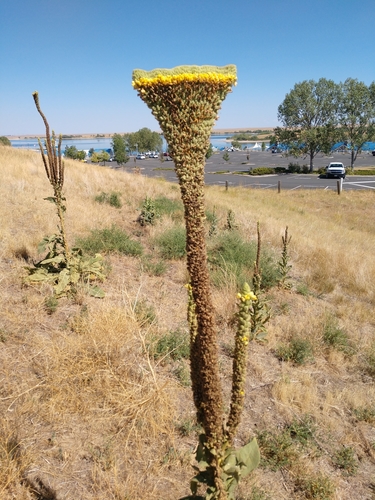
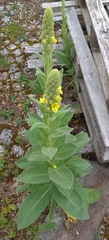
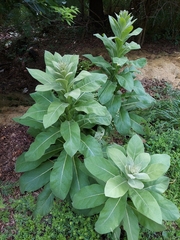
Great mullein (Verbascum thapsus L., 1753) is a biennial in the Scrophulariaceae family, native to Europe, North Africa and temperate Asia, from the Azores to Siberia and the Himalayas. A rosette of felted leaves in its first year precedes a tall upright yellow flower spike in its second, on dry banks, waste ground and sunny roadsides.
Read moreGreat mullein, Common mullein, Woolly mullein and Velvet mullein
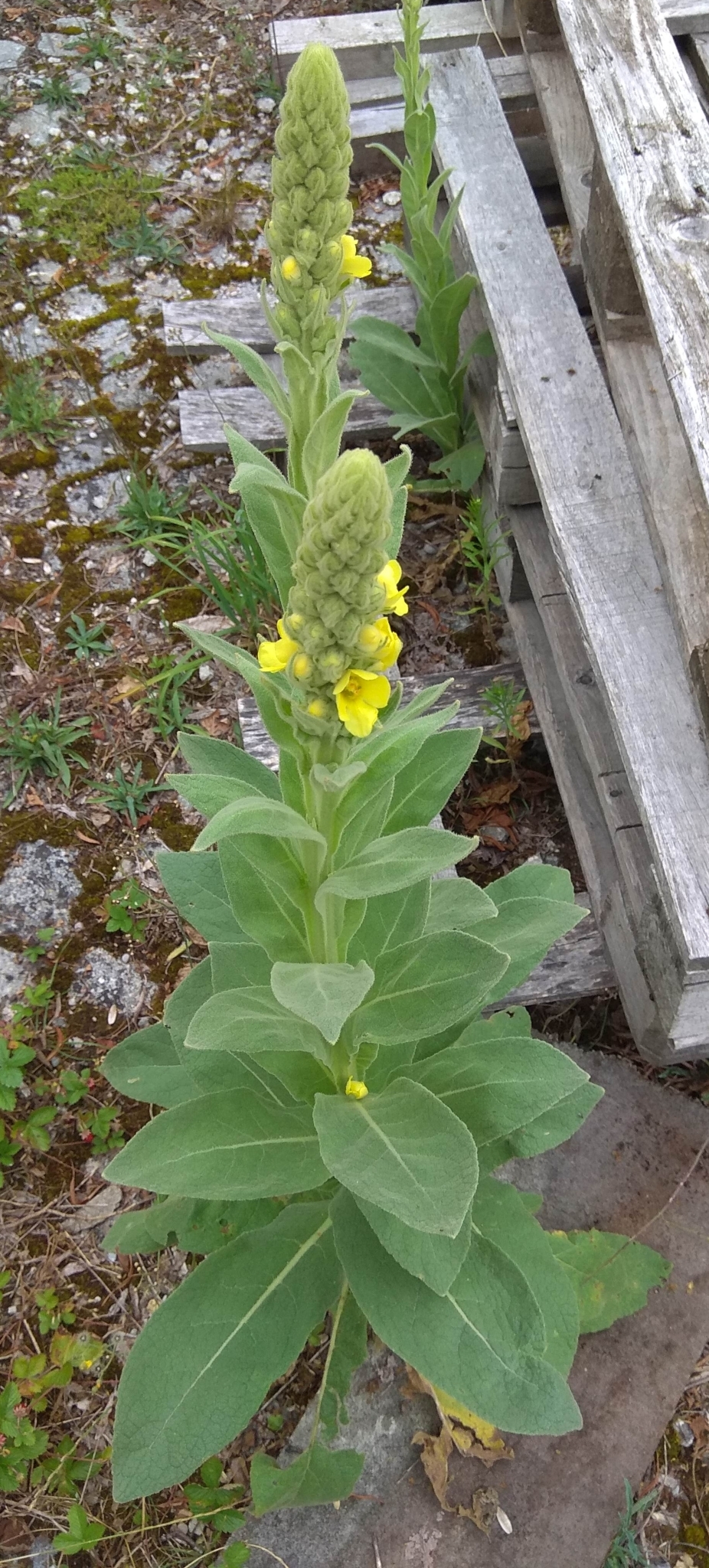
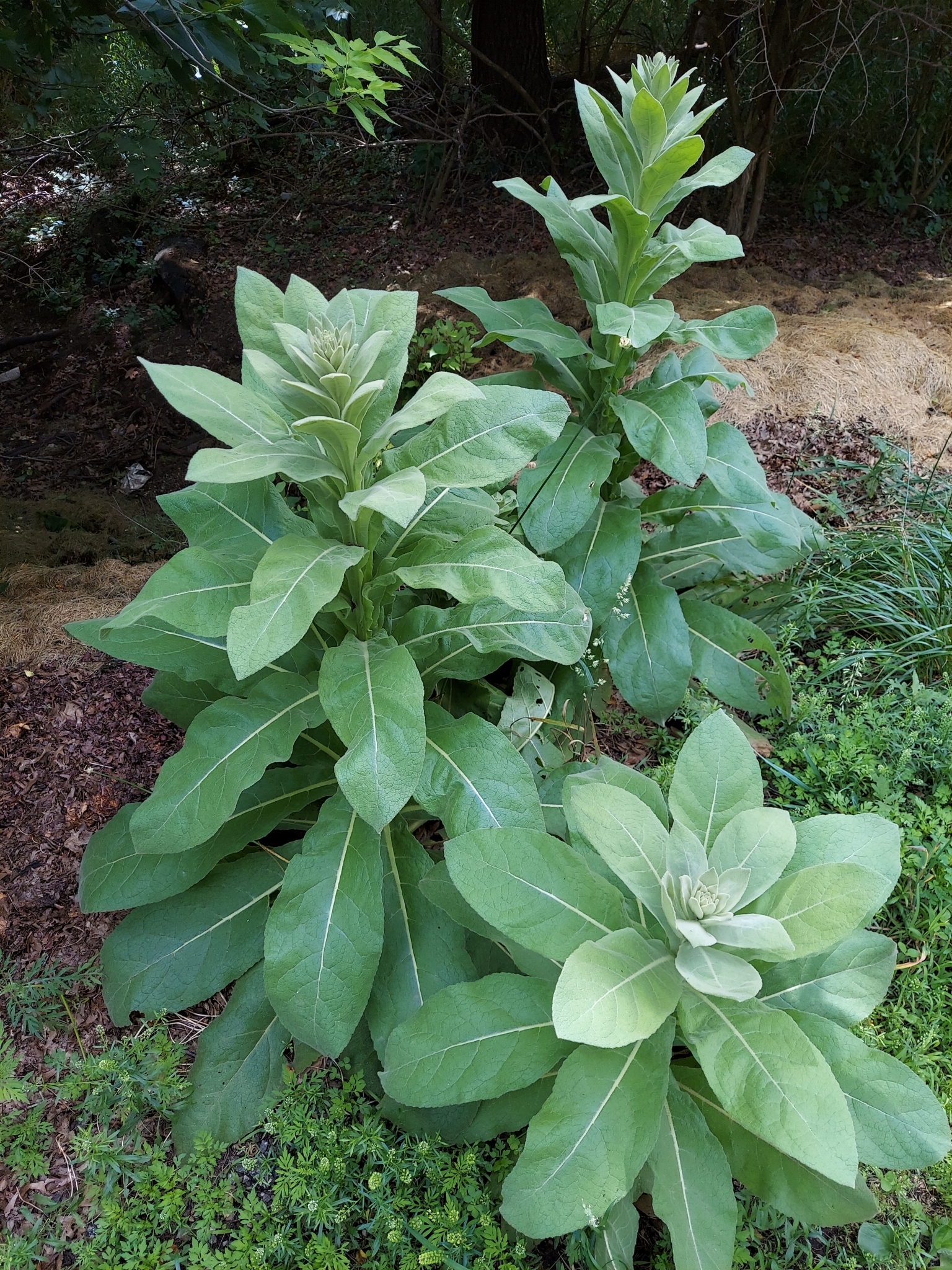


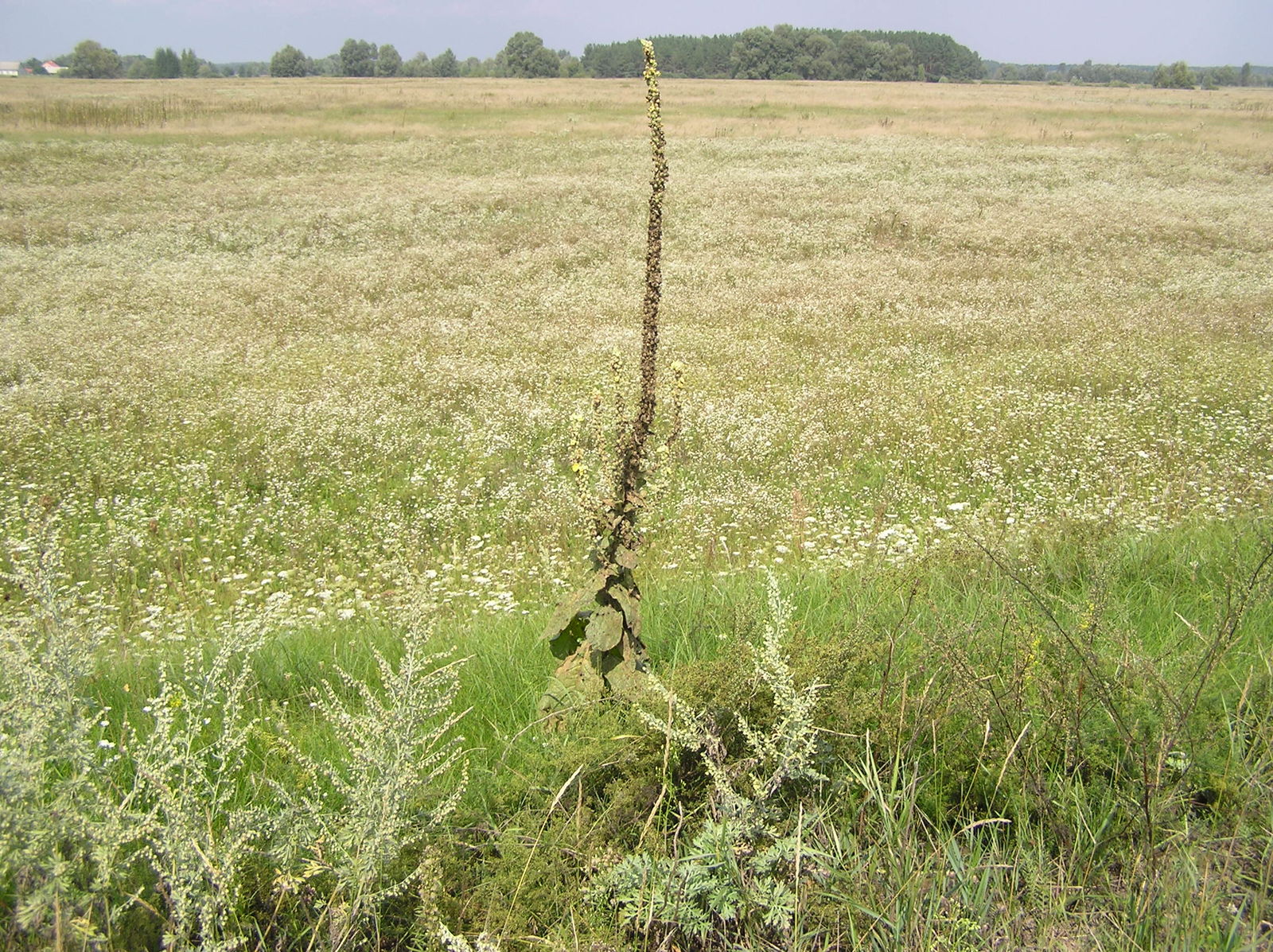
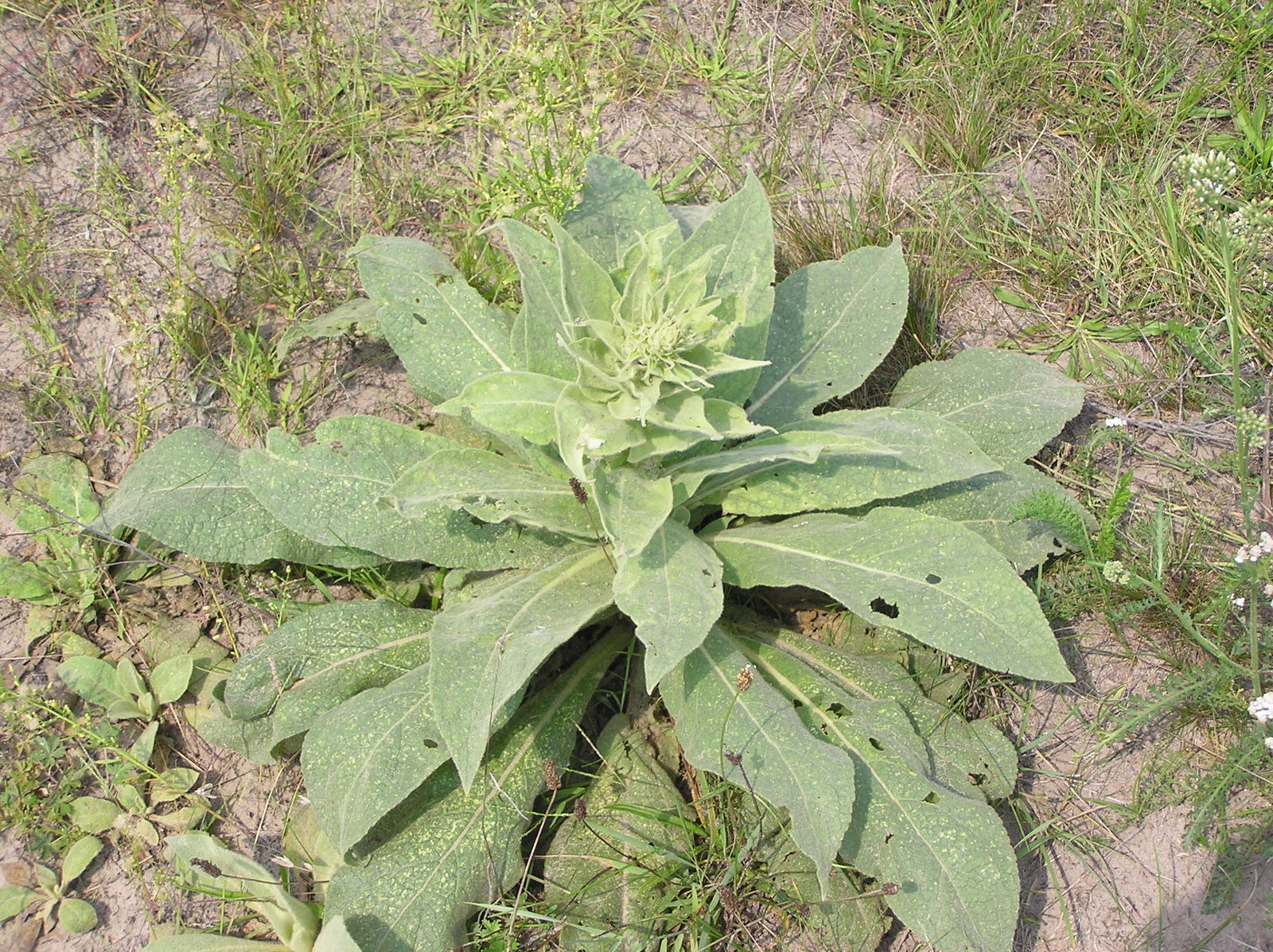

© photo
Eric Watts · cc-by
Christoph M. · cc0
iNaturalist User · cc-by
Taken Jun 12, 2016 by Tela Botanica − Sylvie SYLVIE (cc-by-sa)
Taken Jul 27, 2019 by Otto Ninaus (cc-by-sa)
Taken Nov 8, 2020 by Minotti (cc-by-sa)
Taken Aug 13, 2006 by Tela Botanica − Jean- Marie MARTIG (cc-by-sa)
Taken Sep 8, 2022 by Burg Garten (cc-by-sa)
© copyright of the Board of Trustees of the Royal Botanic Gardens, Kew.




Global distribution
The native range of Verbascum thapsus covers Europe, North Africa and temperate Asia, from the Azores to Siberia and the Himalayas. Introduced beyond this range, it has become widely naturalized in North America, Australia and New Zealand.
- Native4
- Introduced3
- Invasive1
- Metropolitan France
- Europe
- North Africa
- Temperate Asia
- United States
- Canada
- New Zealand
- Australia
Hexagons: regions where the plant occurs. Green dots: native range.1
Identity
Great mullein (Verbascum thapsus L., 1753), also known as common mullein, woolly mullein or velvet mullein, is a biennial herb in the genus Verbascum and family Scrophulariaceae. Plants of the World Online accepts the name published by Linnaeus in 1753. Its native range extends from the Azores and Europe to Siberia and the Himalayas. Unlike selected garden mulleins bred for borders, it grows wild on banks and poor soils. 1
The scientific name derives from Latin barbascum, from barba, meaning “beard,” describing the woolly foliage. The epithet thapsus refers to Thapsos, a Sicilian peninsula where the species flowers abundantly. Its French name cierge de Notre-Dame recalls a medieval use: stripping the flower stalk of leaves and coating it with pitch to make a torch. 5
Recognition
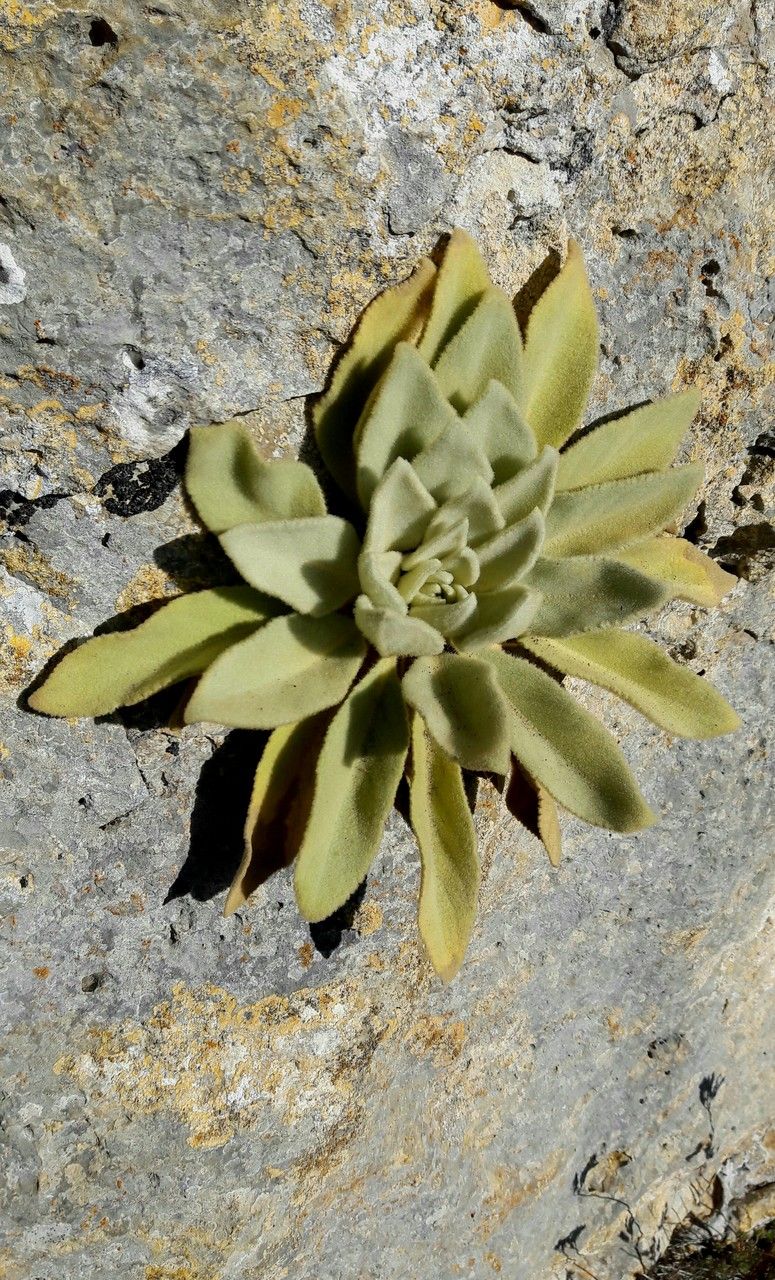
During its first year, great mullein develops a basal rosette of gray-green leaves, 8–50 cm (3–20 in) long, densely covered with star-shaped hairs that create a distinctive felted texture. A deep taproot also establishes during this first season. 7 3
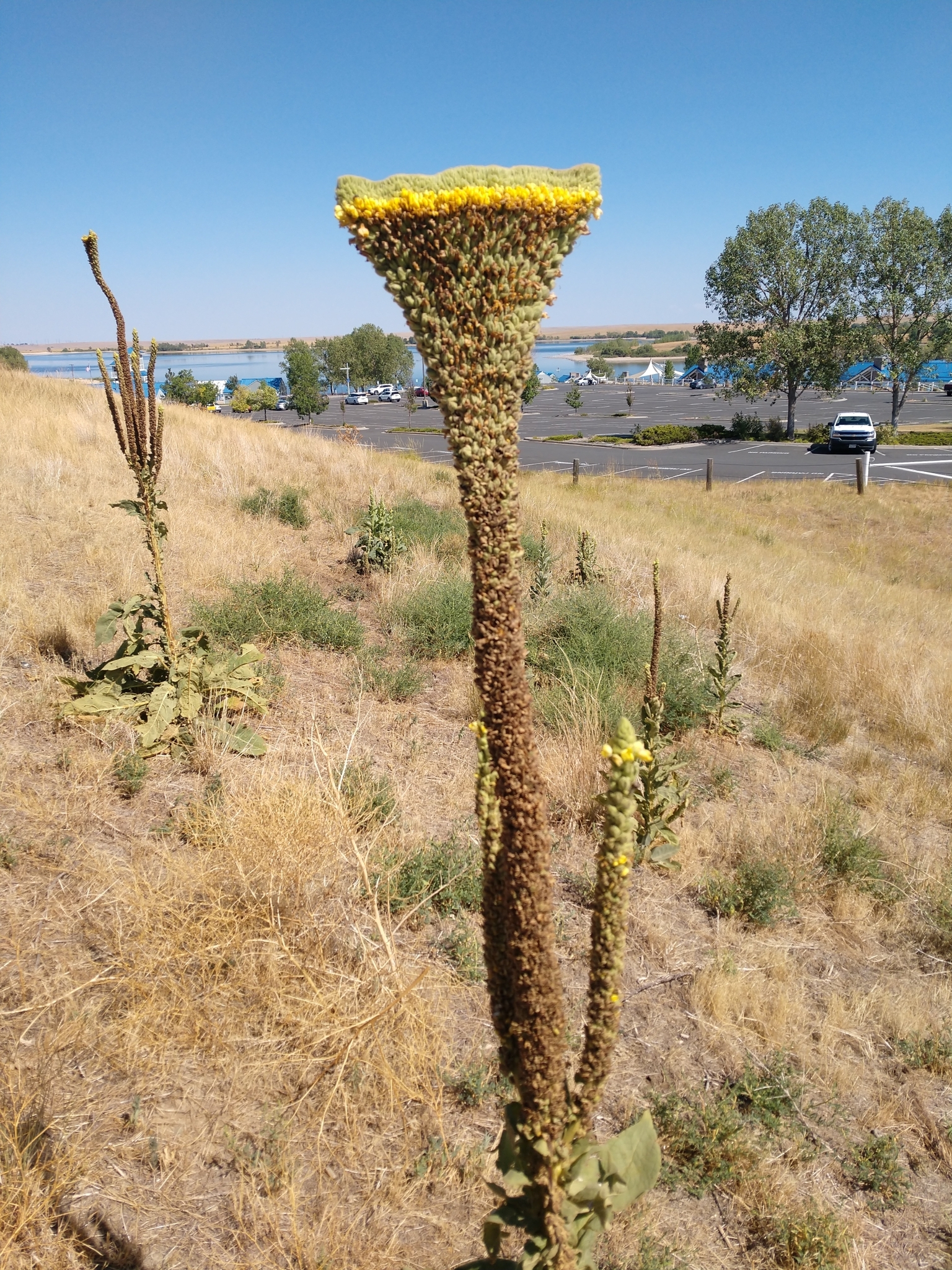
In the second year, a single upright flowering stem rises, commonly reaching 1–2 m (3–7 ft) and occasionally 3 m (10 ft) in favorable soil. 7 3
A dense terminal spike bears numerous pale to bright yellow flowers, each 1.2–3 cm (0.5–1.2 in) across, with five petals and five stamens. Flowering occurs in successive waves along the spike, rather than all at once, from June to September in the Northern Hemisphere seasonal frame. 7 3
Useful taxonomy
For this biennial, Plants of the World Online accepts Verbascum thapsus L., published in 1753. A distinct recognized subspecies, Verbascum thapsus subsp. montanum (Schrad.) Bonnier & Layens, is restricted to central and southwestern Europe. 1
Older floras and seed catalogs still use three synonyms of this accepted name: Verbascum thapsiforme Schrad., Verbascum thapsus var. crassifolium (DC.) Murb., and Verbascum lanatum Schrad. These labels refer to the same plant under names no longer valid for it.
More than 300 species belong to Verbascum within the Scrophulariaceae. Recent molecular classifications have reshaped the family, removing foxglove, which is now placed in the Plantaginaceae. 6 5
Habitat and range
Across its native range, Verbascum thapsus occupies Europe, North Africa and temperate Asia, from the Azores to Siberia and the Himalayas. 1
North American introductions date to the eighteenth century, partly for use as a fish poison, and the species has become widely naturalized there. In Australia it arrived as a garden plant, appearing in Tasmanian and Victorian nursery catalogs between 1845 and 1855. It is now naturalized there and classified as a weed. 8 7
Dry, disturbed, well-drained ground supports this species: banks, roadsides, waste ground, quarries and sunny logged woodland. It cannot tolerate shade and soon disappears when taller shrubs or herbs grow above it. 7 3
Life cycle and reproduction
Following germination, the plant spends its first summer and winter as a rosette without a flower stalk. Flowering follows only in the second year, during spring and summer, on an unbranched stem. 7
An individual produces 100,000–240,000 seeds, tiny reddish-brown structures shaped like ribbed rods. They can remain viable for decades in the soil, with documented germination after more than 100 years of burial. This longevity makes established populations difficult to eradicate. 7
Bees, butterflies and pollinating flies visit the flowers throughout summer. Without visitors, self-fertilization remains possible but produces fewer viable seeds. 3
Uses and risks
Dried leaves and flowers have been used since antiquity in chest-soothing herbal teas, traditionally reputed to ease coughs and bronchitis through expectorant and anti-inflammatory effects. Preparations require careful straining to remove the irritating hairs that can irritate the throat. 2
Historically, the rotenone-rich seeds served as fish poison. Native American peoples crushed them to stun fish; fish poisoning was also described by Aristotle and helped motivate the early introduction of this plant into colonial Virginia. Such fishing is now prohibited in many jurisdictions; local rules determine its legal status. 8 2
Available cross-referenced information describes the plant as non-toxic to cats, dogs and humans. The documented risk is skin irritation from the star-shaped leaf hairs, rather than an internal toxic substance. 2
Varieties, look-alikes and related plants
Unlike garden mulleins such as Verbascum bombyciferum or selected large-flowered perennial hybrids, Verbascum thapsus has no widely distributed horticultural cultivar. 5
Other mulleins with woolly rosettes are the main look-alikes:
- Verbascum densiflorum, with leaves that run distinctly down the stem;
- Verbascum lychnitis, with finer hairs, white mainly on the leaf undersides;
- Verbascum blattaria, almost hairless, without the thick felt of great mullein.
Dense, almost uniformly gray-green leaf hairs on Verbascum thapsus are a more reliable clue than spike height alone when separating it from Verbascum densiflorum and Verbascum lychnitis. They are often sufficient without a full identification key. 5
Main sources
- Plants of the World Online / Kew, Verbascum thapsus L.
- Plants For A Future, Verbascum thapsus
- NC State Extension Gardener Plant Toolbox, Verbascum thapsus - common mullein
- INPN / MNHN, Verbascum thapsus L., 1753 - great mullein
- Tela Botanica / eFlore bdtfx, Verbascum thapsus L.
- GBIF, Verbascum thapsus L.
- Weeds Australia, Great mullein - Verbascum thapsus
- USDA Forest Service, Fire Effects Information System - Verbascum thapsus
Frequently asked questions
Is great mullein toxic?
The plant is not toxic to humans or common domestic animals. The documented risk is skin irritation from contact with the star-shaped leaf hairs, rather than an internal toxic substance.
Why does great mullein flower only in its second year?
It is a biennial. The first year produces only a leaf rosette; the flower stalk and blooms develop in the second year, after winter chilling.
Why is great mullein associated with torches?
In the Middle Ages, the flower stalk was stripped of its leaves and coated with pitch for use as a torch. This practical use is recalled by the French name cierge de Notre-Dame.
Is great mullein invasive?
In France, where it is native, it remains a common plant of banks and waste ground. Introduced to Australia as a garden plant in the nineteenth century, it has naturalized there and is now included in weed profiles.
How can I distinguish great mullein from other mulleins?
The density and color of the leaf hairs are the most reliable clues, usually enough to distinguish it from related species such as Verbascum densiflorum or Verbascum lychnitis.
Do great mullein seeds remain viable for a long time?
Yes. Each plant produces tens of thousands of tiny seeds that can remain viable in the soil for decades. Germination after more than a century of burial has been documented.
Can great mullein be consumed?
Dried leaves and flowers have traditionally been used in chest-soothing herbal teas. Preparations must be thoroughly strained to remove the irritating hairs, which can irritate the throat.
If you are unsure about a plant’s toxicity, ask a botanist or veterinarian for advice.