
Horned violet (Viola cornuta, )
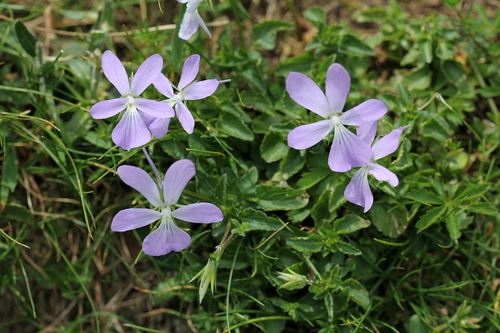


Horned violet (Viola cornuta) is a low perennial in the Violaceae family, associated with cool meadows and rocky ground. Its flowers are smaller than those of large garden pansies but often last longer, making it useful in containers and moist borders during the cool growing season.
Read moreHorned violet and Horned pansy
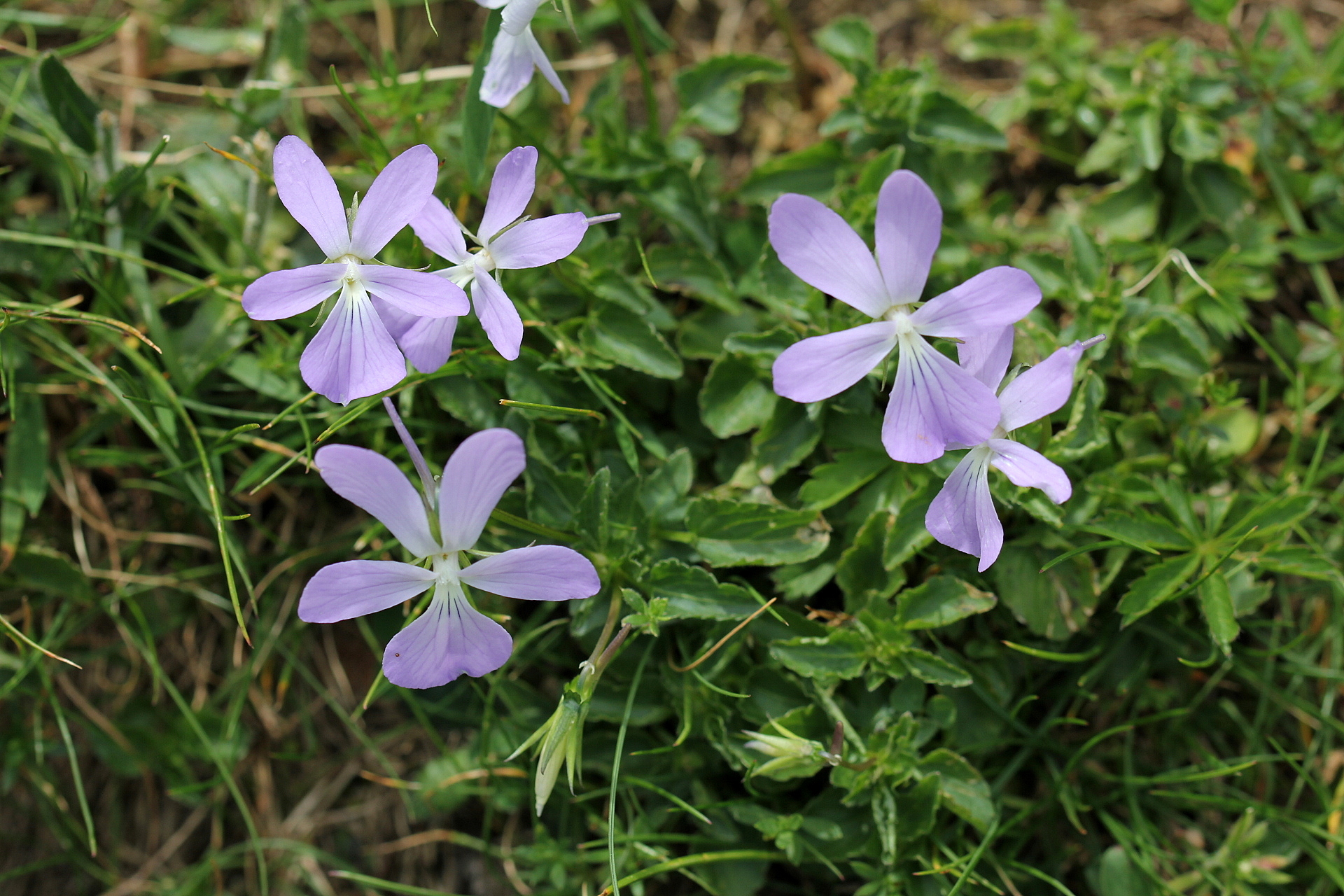
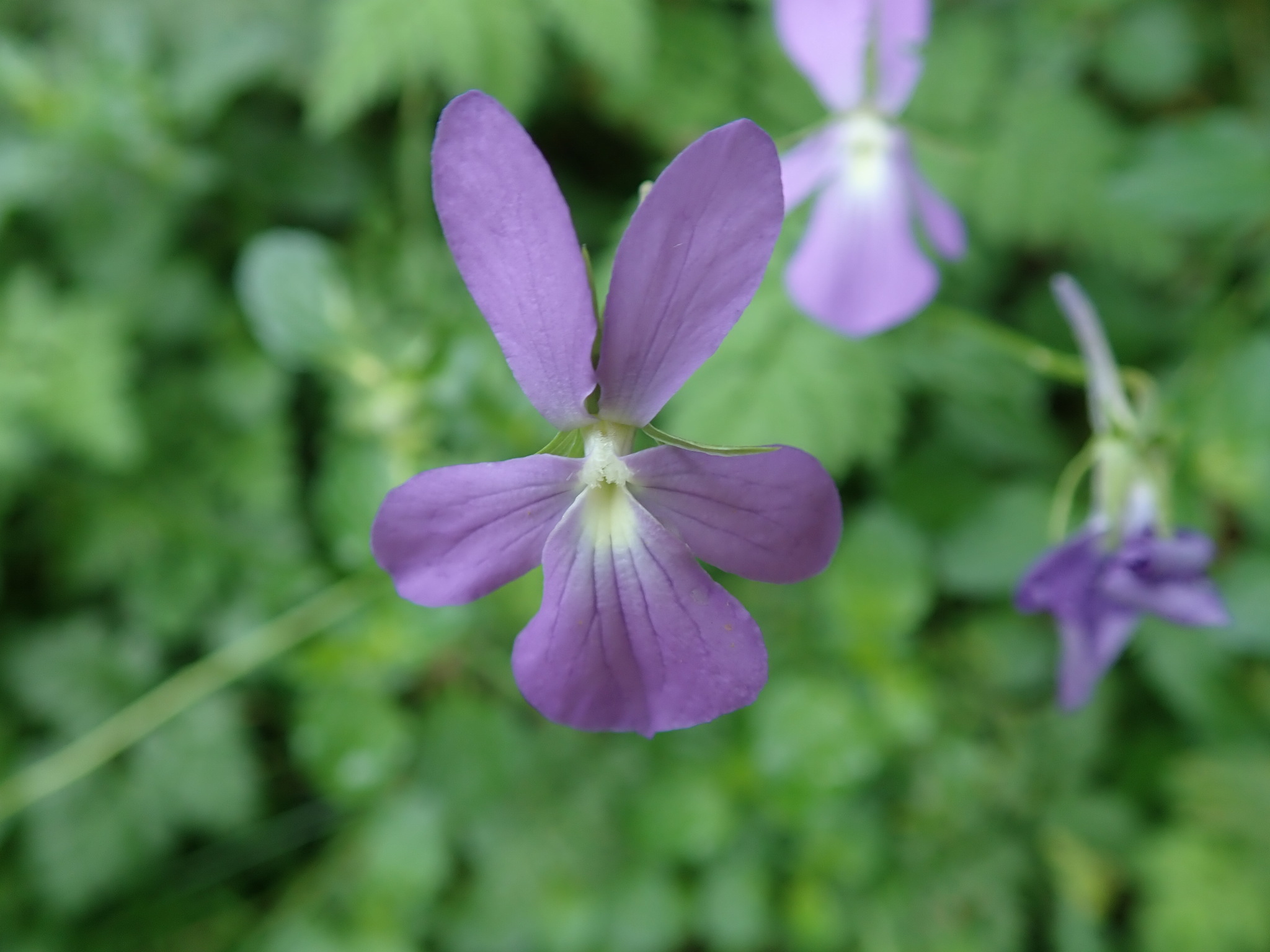


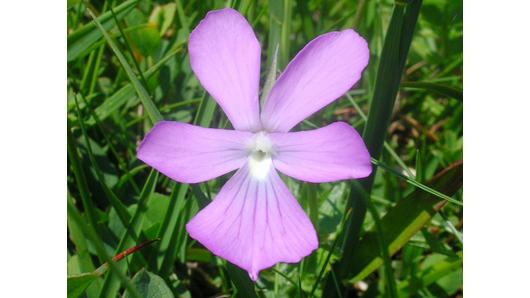

© photo
(c) Joan Simon, some rights reserved (CC BY-SA) · cc-by-sa
iNaturalist User · cc-by
Wikimedia Commons · CC BY-SA or Public Domain
Taken Jan 1, 1970 by Photoflora - L'Abbé COSTE (©)
Taken Jun 23, 2022 by Meg (cc-by-sa)
Taken Jul 15, 2011 by Photoflora - Benoit BOCK (©)
© copyright of the Board of Trustees of the Royal Botanic Gardens, Kew.




Identity
Horned violet (Viola cornuta L.), also called horned pansy, belongs among the small violas grown alongside garden pansies, Viola × wittrockiana. Its flowers are smaller than those of the large pansies but often continue for longer. 2 8
The name Viola cornuta L. identifies a species in the Violaceae family, recognized by POWO, WFO, IPNI, and Wikidata. This low perennial is widely planted in window boxes, moist borders, and early-season displays. 2 3 4 1
Cool, changeable early-spring weather suits these violas, even when conditions are uninviting for other bedding flowers. They perform well because they tolerate cool weather, rather than needing the conditions favored by summer flowers. 8
Its garden role is that of a dependable small flower for the cool season, offering a longer-lasting, quieter display than large bedding pansies. 5
Recognition
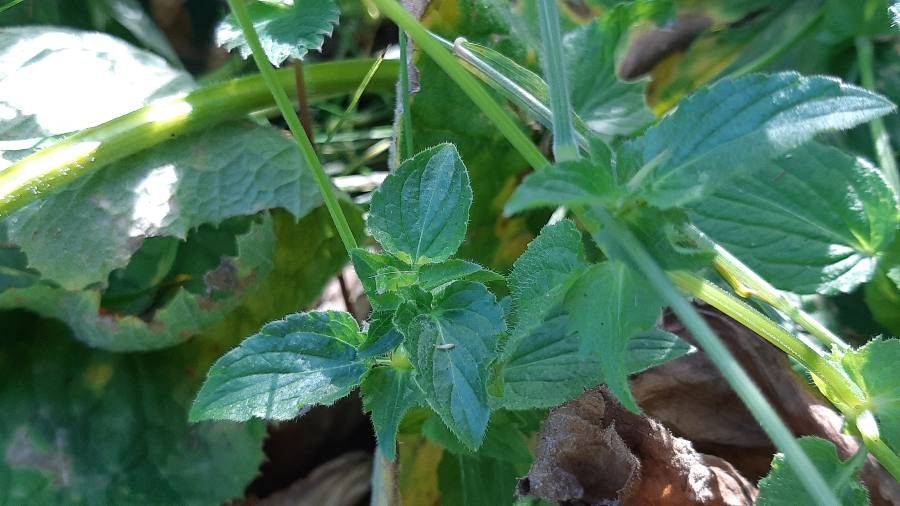
Low green foliage supports the small, five-petaled flowers of horned violet. Depending on the selection, flowers may be purple, blue, yellow, white, or bicolored. 6 7
The epithet cornuta refers to the flower’s spur. Together with the small flowers and long flowering period, this feature helps distinguish horned violet from large garden pansies. 7
Plants form low cushions that suit pots, borders, and the front of beds. They remain neat in cool conditions but become tired more quickly in summer heat. 5
A useful comparison with large pansies is the balance between flower size and duration. Horned violet has smaller blooms than the large-flowered series, but its flowering often lasts longer. The two plants therefore remain distinct choices. 8
Useful taxonomy
Botanically, the accepted name is Viola cornuta L. This species should retain its own identity rather than being merged indiscriminately with hybrid pansies. 2 8
Garden pansies, usually grouped under Viola × wittrockiana, have a related but different horticultural role: large flower faces, commercial series, and immediate visual impact. Viola cornuta keeps a finer outline. 5
Within the large genus Viola are wild violets, garden pansies, and hybrids. Using the binomial avoids treating every small pansy as an unspecified hybrid. 3
The practical distinction is a separate species used in the same cool-season displays as pansies, particularly where a longer flowering period and a less imposing effect are wanted. 8
Cultivation
For successful cultivation, provide moist but well-drained soil, gentle light or sun without scorching heat, and regular watering in pots. During cool spring weather, the plant tolerates temperature fluctuations better than heavy, waterlogged ground. 8 6
Good drainage is essential in a window box. A root ball left soaked in cold conditions damages the roots; one that dries out in the wind causes the flowers to wilt. 5
Removing faded flowers extends the display. Light trimming after a tired-looking spell can encourage fresh shoots if the weather remains cool. 6
The best position is often a spring border, a container by a doorway, a window box, or the front of a bed. These are places where the small flowers can be appreciated at close range. 8
A loose potting mix matters. Old, compacted compost holds too much water and then dries into a solid mass, and the fine roots of violas respond quickly. Fresh, moisture-retentive but draining mix produces more consistent plants. 5
The seasonal pattern explains many summer disappointments. A horned violet planted for an early-spring display may look excellent in spring and then decline in heat. This does not necessarily indicate poor care: the plant favors cool seasons. 8
Uses
Color early in the growing season is its main ornamental use. Horned violet provides immediate cool-season flowers while many other beds are still waiting to come into bloom. 8
Combine it with primroses, small bulbs, daisies, forget-me-nots, and low evergreen foliage. Cool colors make a quiet composition, while yellows and purples create stronger contrasts. 5
Some Viola flowers are used as food decorations, but only when the plant is correctly identified and grown without treatments. Ornamental plants from a garden center are not automatically suitable for eating. 7
Repeated planting gives the clearest design effect. Several small plants form a more graceful carpet than a lone pot lost among other plants; the overall composition works best when it remains low and easy to read. 8
When combining plants, consider flower scale. Beside large tulips or daffodils, violas act as a carpet; with low primroses and small bulbs, they become a pattern in their own right. Their small blooms need to be seen at close range. 5
Precautions
No major toxicity is recorded for horned violet, with cats and dogs considered safe and the status for horses unknown. This does not make every plant food: treatments and growing media used in production still matter. 1
For container plants, the main precautions concern growing conditions. Avoid a saucer full of cold water, replace exhausted potting mix, and avoid trying to keep the plant flowering through summer heat. 5
When buying, check the plant’s identity: Viola cornuta, a hybrid pansy, or a commercial mixture. They have similar uses, but their height, flower size, and flowering duration are not identical. 8
For edible flowers, use only plants grown without treatments and specifically intended for food. Decorative spring plants are often produced for ornament rather than for the kitchen. 7
Replace tired plants when the season changes instead of forcing them to persist. A cool-season window box can look beautiful before making way for summer flowers; this rotation gives a better result than keeping plants struggling in heat. 8
Horned violet remains a distinct choice for cool-season viola displays. Its smaller flowers, ability to perform in cool weather, and often prolonged flowering separate it from the large garden pansies. 8 2
Main sources
If you are unsure about a plant’s toxicity, ask a botanist or veterinarian for advice.