
Calla lily (Zantedeschia aethiopica, )
Calla lily (Zantedeschia aethiopica) is an herbaceous perennial in the Araceae from southern Africa. A large white spathe surrounding a yellow spadix gives its inflorescence a sculptural form, used beside water and in bouquets; irritating calcium oxalates require care around animals.
Read moreCalla lily and Arum lily

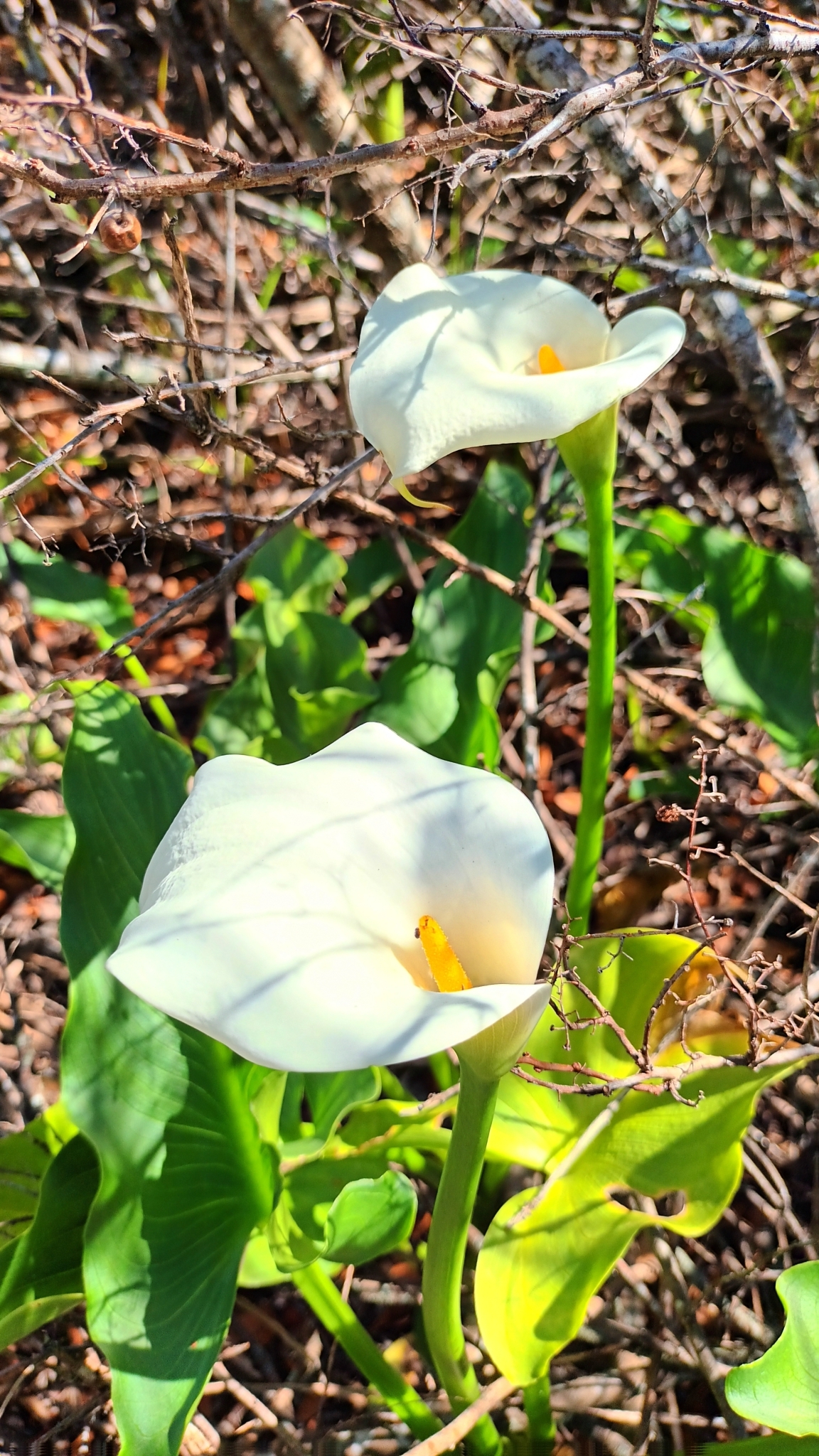


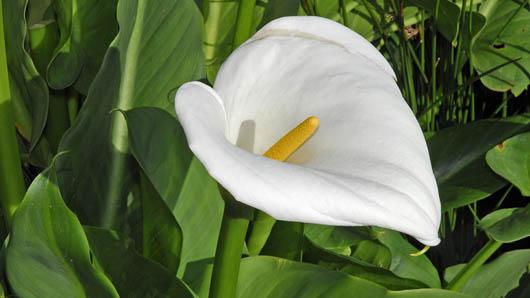
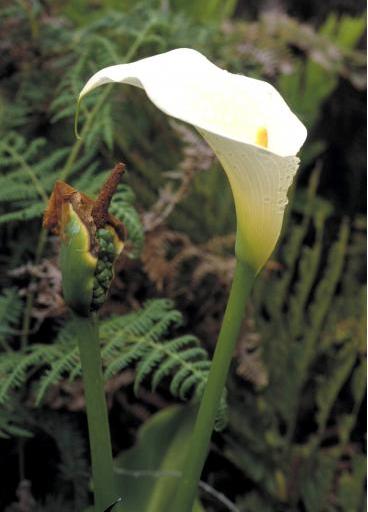

© photo
(c) flipsockgrrl, some rights reserved (CC BY-NC-SA) · cc-by-nc-sa
Julien Renoult · cc0
Siphiwe Bright Zengele · cc-by
Taken May 3, 2022 by Alboss (cc-by-sa)
Taken Feb 27, 2022 by Tristan Jaton-Maria (cc-by-sa)
Taken Mar 18, 2020 by Thierry LE COM (cc-by-sa)
Taken Jan 1, 1900 by EOL − W. L. Wagner (cc-by-nc-sa)
Taken Nov 28, 2015 by Tela Botanica − Pierre BONNET (cc-by-sa)
© copyright of the Board of Trustees of the Royal Botanic Gardens, Kew.


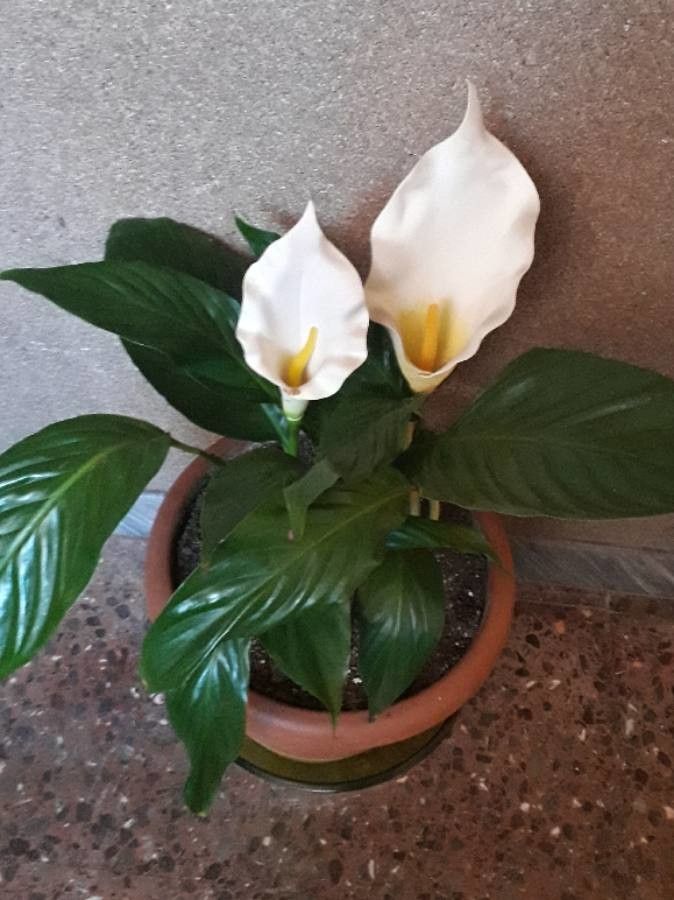


Identity
Calla lily (Zantedeschia aethiopica (L.) Spreng.) is a sculptural flowering plant in the Araceae. Its white inflorescences suit contemporary planting and formal bouquets, where a clear outline and a strong, simple shape are often more important than a large number of individual blooms. 2 8
The accepted species is Zantedeschia aethiopica (L.) Spreng. The horticultural name arum lily does not place it in the genus Arum. Its botanical family is the Araceae, and the binomial distinguishes this particular species from other plants sold under loose arum or calla names. 2 3 4 1
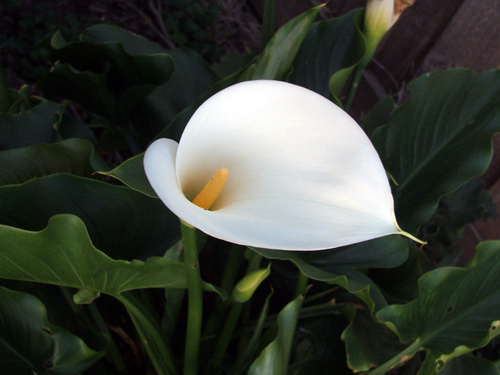
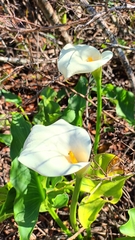
A large white spathe surrounds the central yellow spadix. The white funnel gives calla lily its clean, architectural line, visible both on the growing plant and in a cut stem. The contrast between these two structures accounts for much of its ornamental effect. 5 8
Calcium oxalate irritation is a major safety concern. Like many Araceae, calla lily contains irritating crystals and must remain beyond the reach of animals that chew plants. Attractive white inflorescences do not make either the foliage or cut material harmless to curious pets. 7
Recognition
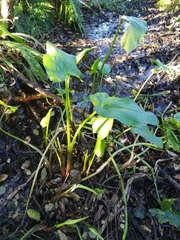
Large green leaves, arrow-shaped to broadly oval and often glossy, accompany upright white inflorescences. The decorative white part is a spathe, rather than a single petal. This distinction explains the appearance of the funnel and provides a better identifying character than white color alone. 5
The central yellow spadix carries the actual flowers. This Araceae structure creates a visual resemblance to peace lilies and anthuriums, although these plants have different ornamental uses. Spathe and spadix should therefore be recognized as parts of an inflorescence rather than treated as one ordinary lily flower. 2
Calla lily has a crisp outline rather than a ruffled, romantic effect. That restrained form gives it a strong presence in a white bouquet, where the smooth curve of a single spathe can remain clearly visible among other flowers or a small amount of foliage. 8
Combine broad leaves, a sturdy flower stalk, a white funnel-shaped spathe and a yellow spadix when identifying the plant. A true white lily instead has tepals and belongs to the Liliaceae. Similar color and a shared common-name word do not erase those structural differences. 8
Useful taxonomy
The accepted botanical name is Zantedeschia aethiopica (L.) Spreng. It identifies the species more precisely than calla or arum used alone. Those horticultural names can cover a broader assortment of plants and should not replace the binomial where an exact identification matters. 2 8
Despite its common name, calla lily is not a true lily. The distinction matters for both classification and toxicity, since the risks associated with Araceae differ from those of true Lilium. A name shared in horticulture does not establish that two plants have the same toxicological effects. 7
Zantedeschia belongs to the Araceae, a family characterized by spathes and spadices and containing irritating raphides in many species. These features connect the visible flower structure with an important precaution when the foliage, stems or inflorescences might be handled or chewed. 3 5
A white cut flower with a sculptural form can still present a substantial animal-ingestion risk. Calla lily combines that ornamental role with the calcium-oxalate irritation characteristic of this plant; neither its use in bouquets nor the name arum establishes that it is harmless. 8 7
Cultivation
Provide rich, moist to wet soil and bright light without prolonged dryness. Calla lily can remain vigorous outdoors where winters are mild. Where frost threatens the crown, protect it through the cold season rather than assuming that outdoor summer performance guarantees year-round survival. 6
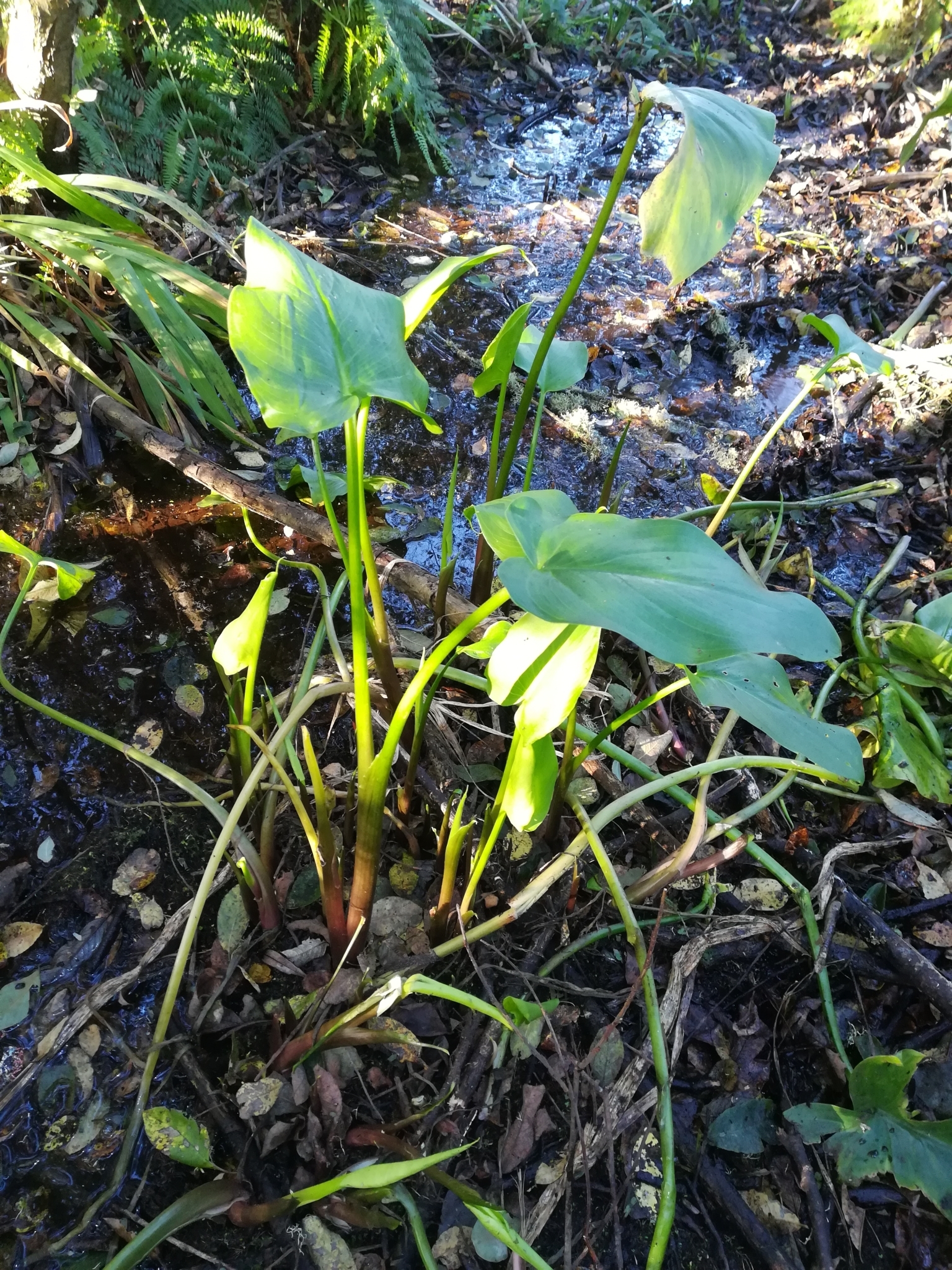
Planting near water, a regularly watered large container or a consistently moist bed can all suit the species. Prolonged drought causes leaves to collapse. Its preference for moisture should guide the growing position, especially where a container can dry faster than the surrounding garden soil. 5
Division of established crowns both propagates and rejuvenates clumps. In containers, monitor compaction and depletion of the growing medium, since a large plant quickly uses the available space. A crowded or exhausted pot needs attention even when the above-ground leaves still make a substantial display. 6
Keep the roots moist without leaving a container stagnant and airless. A moist growing medium does not mean a pot with no drainage or decomposing, saturated substrate. Maintaining suitable root conditions is as important as supplying enough water to support the large leaves. 5
A large, deep container helps maintain moisture and makes it possible to move or protect the crown outside mild climates. It also helps control animals’ access to the plant. A small pot dries too rapidly and can topple under the weight of the leaves. 6
Remove damaged foliage cleanly and collect the waste. Do not leave trimmings where a dog or cat can investigate and chew them. Disposal after maintenance is part of safe placement, since cut pieces can remain accessible even when the living clump itself is protected. 7
Uses
White, sculptural cut-flower arrangements are a principal use. Calla lily performs well when vase water stays clean and the stems are recut. The shape of the spathe gives a bouquet its structure without needing a large mass of delicate additional flowers. 8
In gardens it suits moist planting, watersides, large pots and white-flowered beds. Its defined outline creates a strong focal point, with a less airy effect than gaura or jasmine. These uses depend on providing the fresh, moist conditions that support the foliage and inflorescences. 6
One stem can be enough in a contemporary arrangement. An upright line, a clearly defined spathe and a readable white surface explain its value in formal compositions. Leaving the curve visible often suits the flower better than burying it among many competing shapes. 8
Keep bouquets, leaves and discarded trimmings inaccessible to curious cats, dogs and horses. The same precautions apply to a vase indoors and a cut-flower display beside a garden planting. Avoid putting an arrangement where an animal can easily chew the stems or foliage. 7
Recut stems and clean water matter more than crowding the vase with numerous fragile flowers. Calla lily already provides a strong shape; quiet foliage or a few other white flowers can preserve that character. Handling the cut stems also requires the same attention to irritation as garden maintenance. 8
Precautions
Calla lily presents a high toxicity concern for cats, dogs and horses. The ASPCA lists it as toxic to dogs and cats, and horses are also treated as susceptible. Keep the plant, arrangements and discarded material out of reach rather than judging safety from its common ornamental use. 7 1
Insoluble calcium oxalates irritate the mouth and throat after chewing. Expected signs include oral pain, salivation, vomiting and difficulty swallowing. The immediate irritation concerns contact with the tissues, including material that has been cut for an arrangement or removed during pruning. 7
Wear gloves if the sap irritates your skin, keep discarded pieces and compost inaccessible to animals, clean vases and place bouquets out of reach. These practical measures apply throughout handling and disposal, rather than only while the plant is growing in its original pot or bed. 5
Confusion with a true lily creates a safety problem in either direction. Calla lily is not Lilium, but that does not make it innocuous. Use the botanical name Zantedeschia aethiopica to identify the plant accurately instead of inferring its risks from the word lily. 7 8
Choose a position with access in mind. A clump beside a pond can be striking, yet is unsuitable for a route used by animals that dig or an area where children handle stems without supervision. The ornamental location and the possibility of contact need to be considered together. 7
The white spathe is the principal decorative feature of Zantedeschia aethiopica, while irritating Araceae tissues make careful placement essential. Give the plant the moist conditions it needs and keep both the living clump and cut material away from unsupervised chewing or handling. 8 2
Main sources
- Wikidata, Zantedeschia aethiopica
- Plants of the World Online / Kew, Zantedeschia aethiopica
- World Flora Online, Zantedeschia aethiopica
- International Plant Names Index, Zantedeschia aethiopica
- NC State Extension, Zantedeschia aethiopica
- Royal Horticultural Society, Zantedeschia aethiopica search results
- ASPCA, Calla Lily
- Floralens, white-flower selection
If you are unsure about a plant’s toxicity, ask a botanist or veterinarian for advice.