
Bluemink (Ageratum houstonianum, )
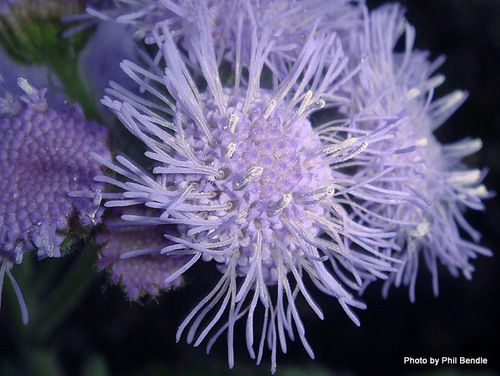
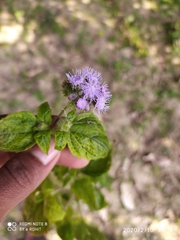
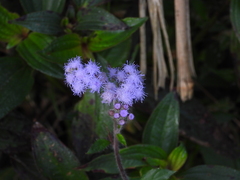
Bluemink (Ageratum houstonianum Mill.) is an Asteraceae species from Mexico and Central America, grown as a bedding annual for its fluffy blue, violet, white or pink flower heads. Its dense flowering clumps distinguish this familiar garden species within the wider genus Ageratum.
Read moreBluemink, Floss flower, Mexican ageratum, Blueweed and Mexican paintbrush
Place in full sun, with intense direct light all day long.
Full sun or light partial shade; do not let soil dry out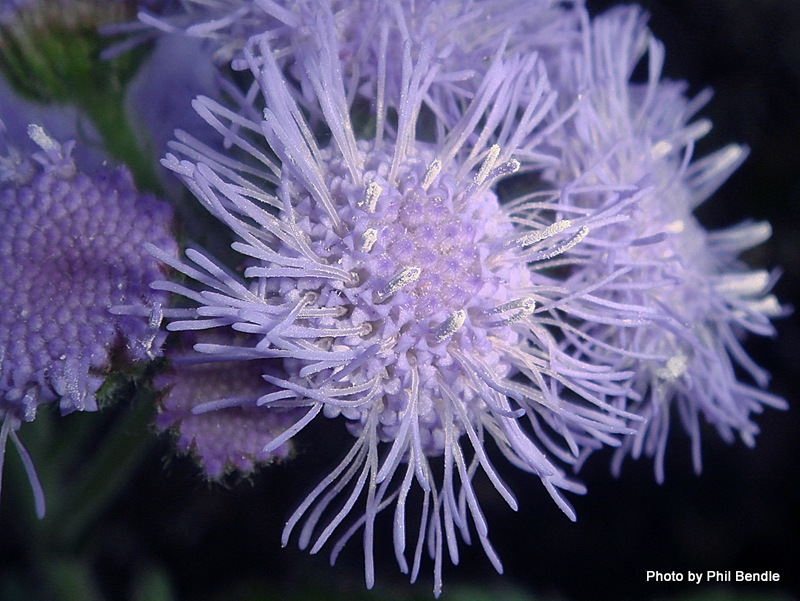


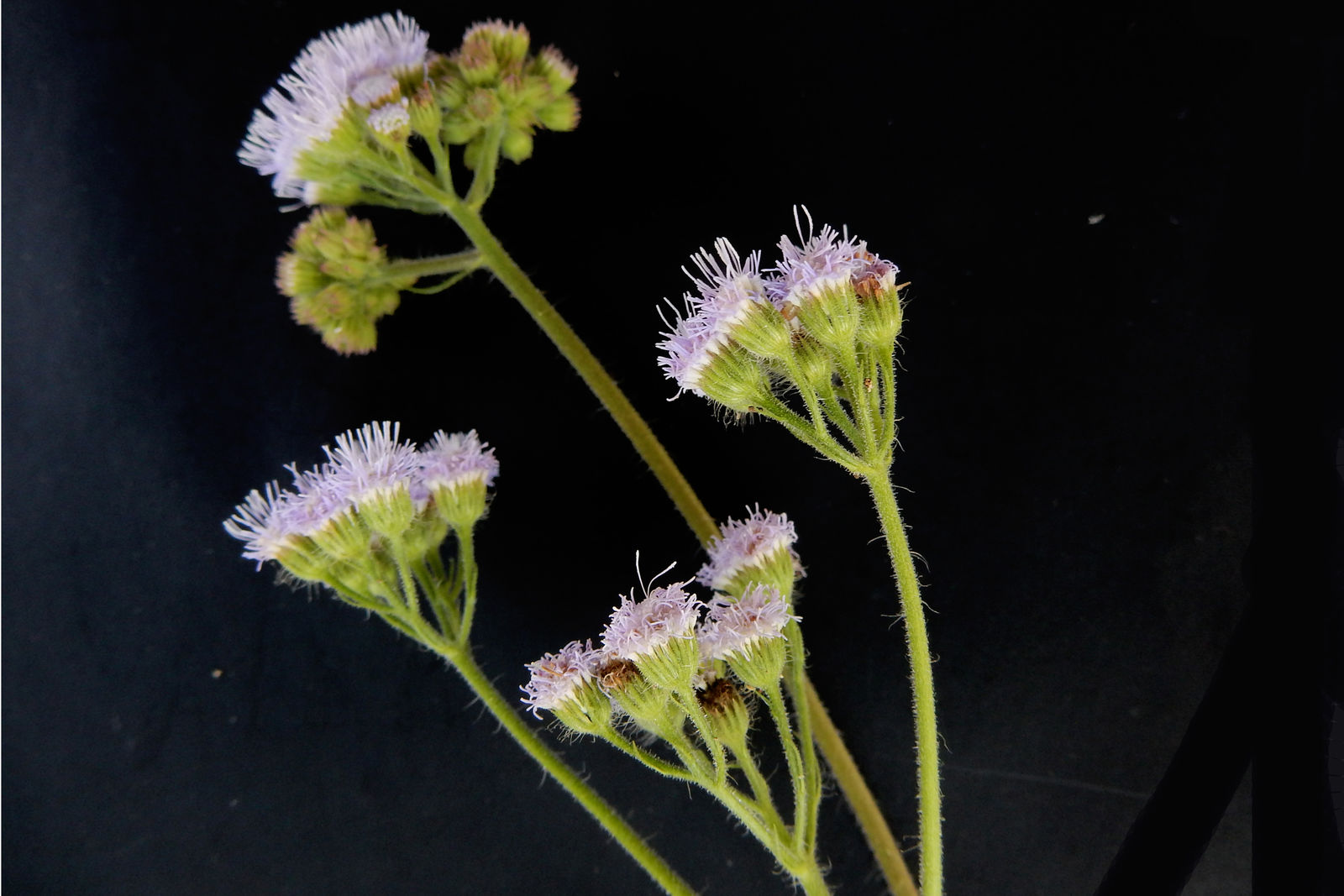
© photo
(c) Phil Bendle, some rights reserved (CC BY-NC), uploaded by Phil Bendle · cc-by-nc
Ankit Shakya · cc-by
iNaturalist User · cc-by
Taken Mar 1, 1983 by Royal Botanic Garden Edinburgh - Anonymous (cc-by-nc)
Taken Mar 13, 1976 by Royal Botanic Garden Edinburgh - Bhaskar Adhikari (cc-by-nc)
Taken Jul 10, 2022 by manuseitz (cc-by-sa)
Taken Dec 29, 2021 by mohammad fazel dehkordi (cc-by-sa)
Taken Sep 9, 2021 by Irmgard Groß (cc-by-sa)
© copyright of the Board of Trustees of the Royal Botanic Gardens, Kew.




Global distribution
POWO accepts Ageratum houstonianum, linking it to Central America and Mexico, with many tropical naturalizations. In France it is mainly grown as an ornamental annual.
- Native2
- Introduced1
- Mexico
- Belize and Guatemala
- Tropics outside the native range
Hexagons: regions where the plant occurs. Green dots: native range.2
Identity
Bluemink (Ageratum houstonianum Mill.) is an accepted species in the Asteraceae. POWO, WFO and the international nomenclatural records distinguish this familiar blue bedding plant at species level. It should not be confused with the wider genus Ageratum, which includes other plants with their own identities. 2 3 1
The names floss flower and bluemink evoke the fluffy texture and blue color of the flower heads. Mexican ageratum is another established garden name; in French it is agérate du Mexique. These common names help identify the familiar ornamental, while Ageratum houstonianum remains its precise botanical name. 6 4
The genus Ageratum contains several tropical and warm-temperate species. Ageratum houstonianum is the bedding species most often encountered in annual-flower catalogs, rather than a name that can be applied indiscriminately to every member of the genus. 7 8
Recognition
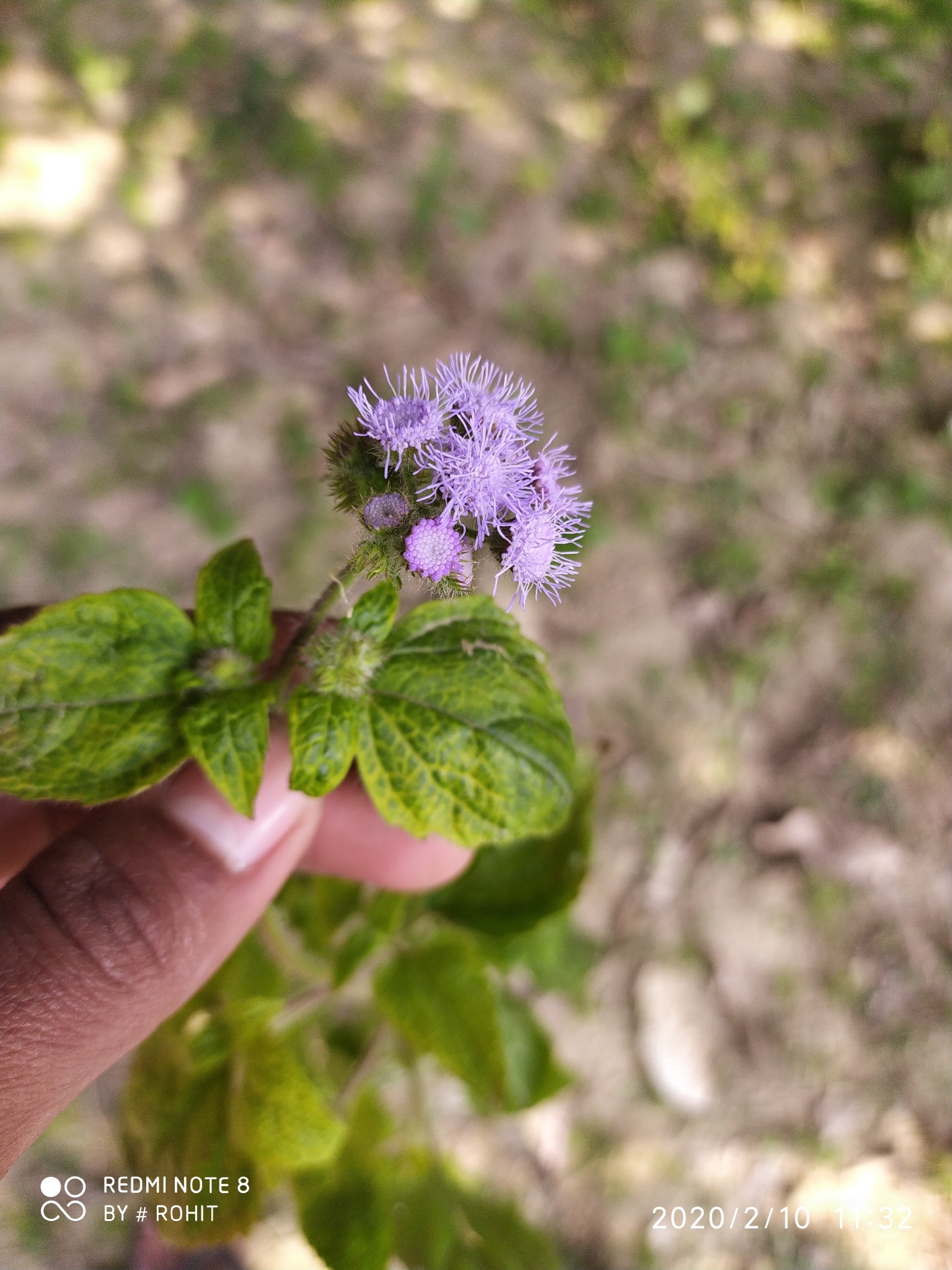
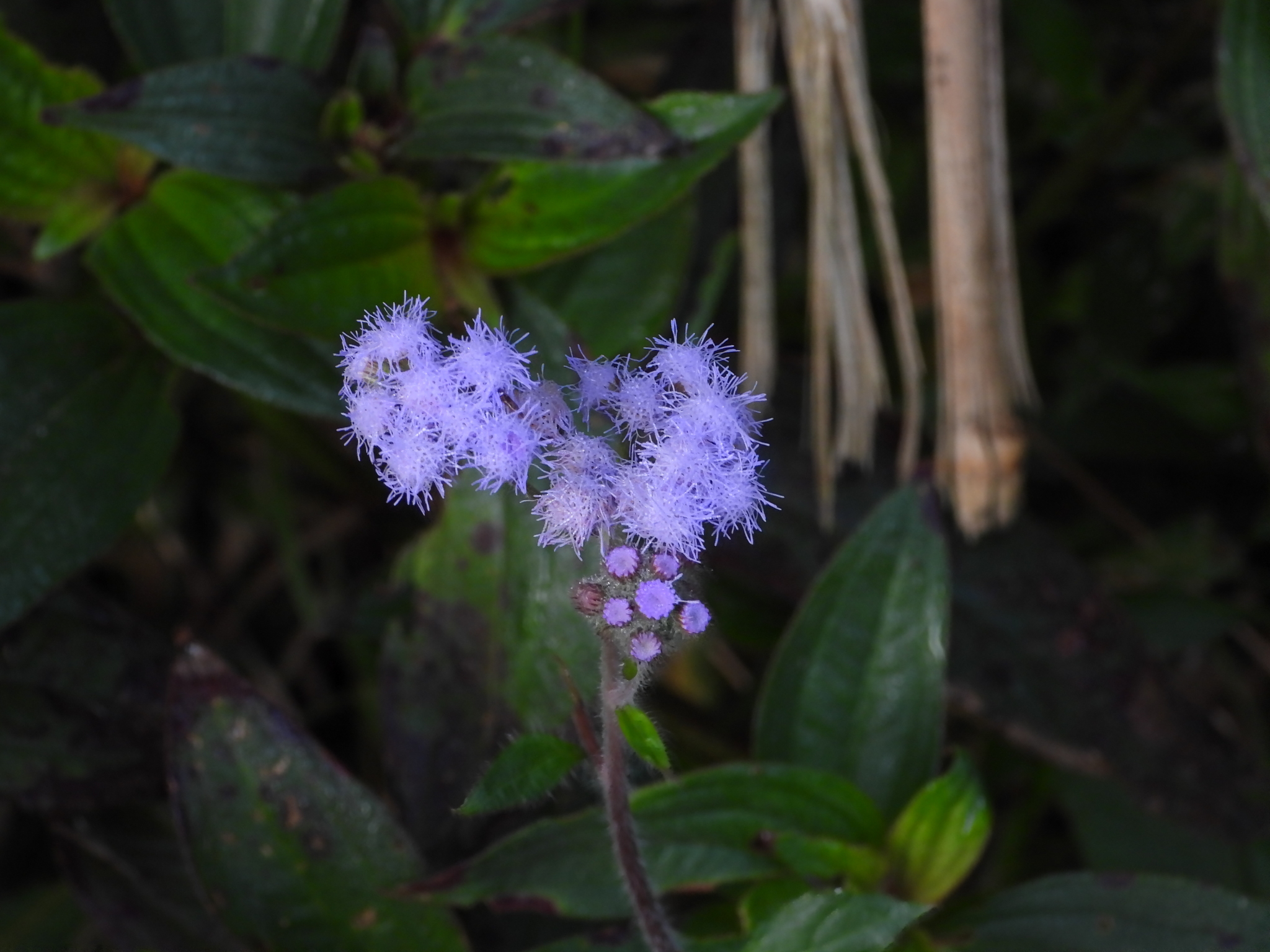
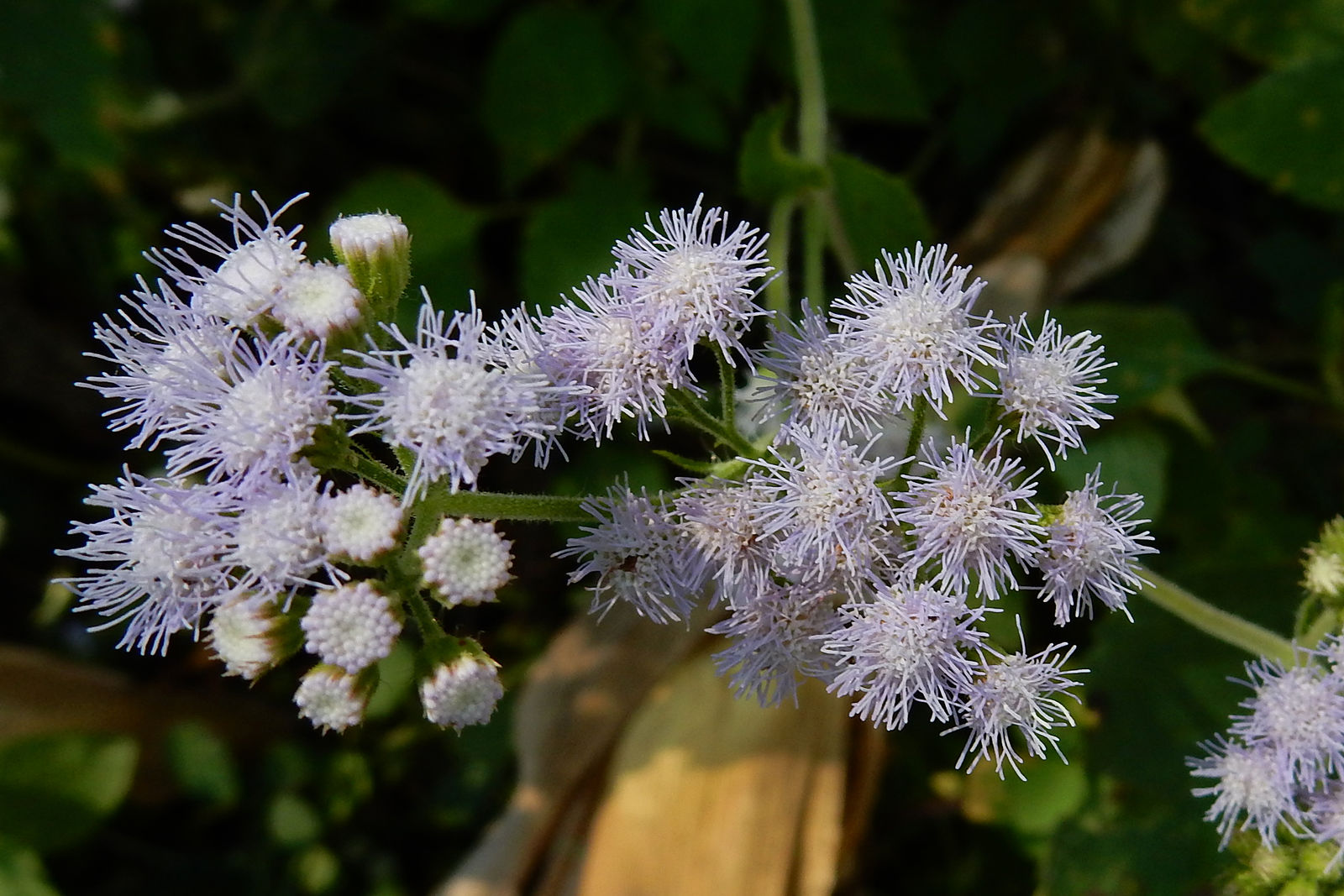
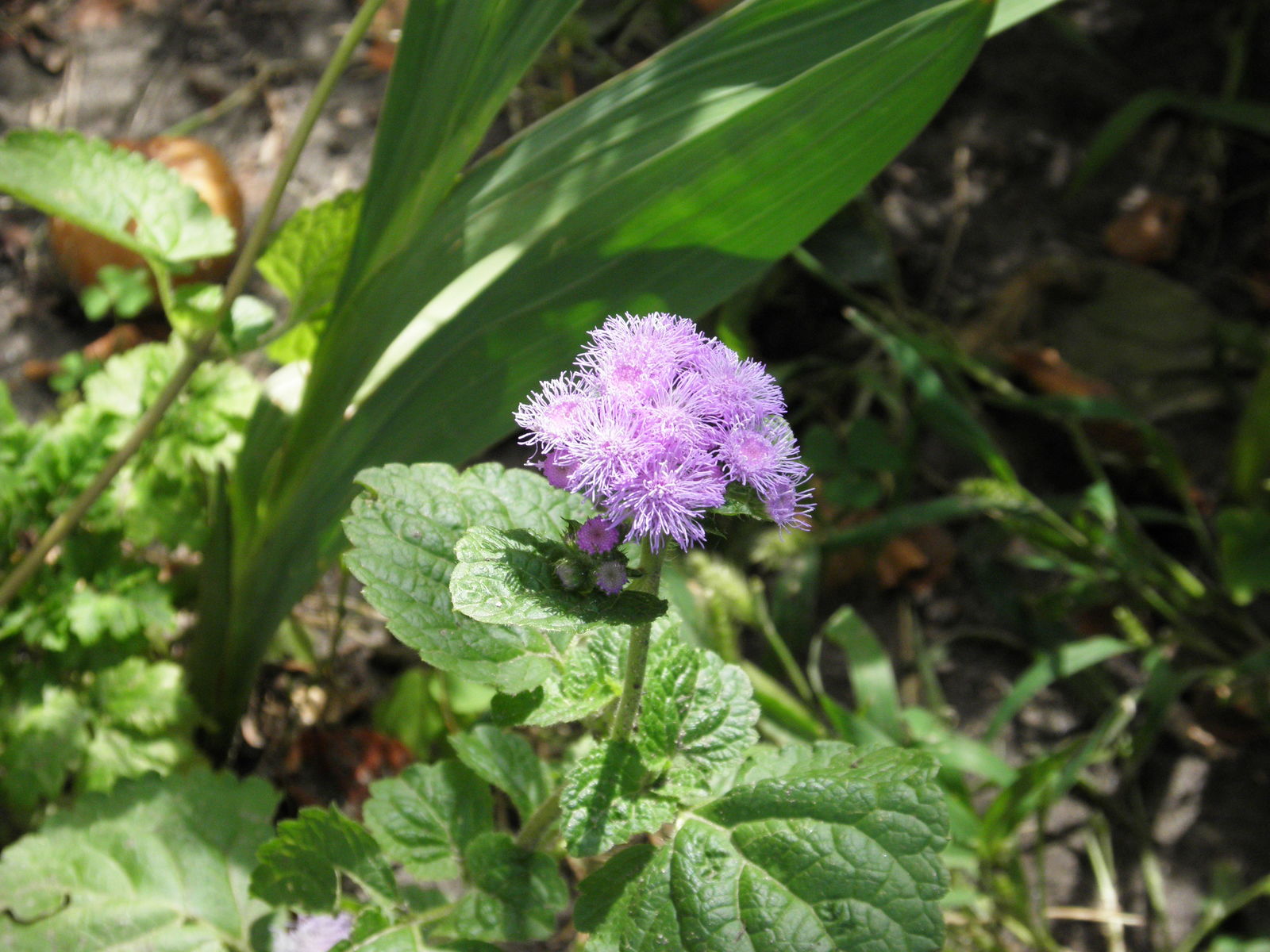
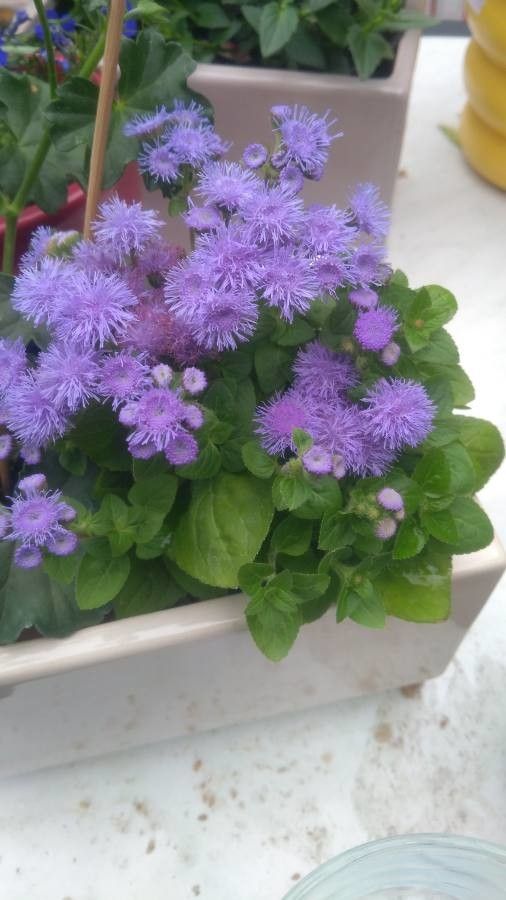
Bluemink forms a low to medium-sized clump with opposite, oval to triangular, slightly toothed leaves. Small, numerous flower heads gather in dense clusters, creating a soft, almost misty surface above the foliage. Their collective texture is more conspicuous than any one head. 6 8
Blue is especially valued because it is relatively uncommon among bedding annuals. Cultivars can also be violet, pink or white. The botanical name identifies the species, while the cultivar determines its color; a plant sold as bluemink need not have blue flowers. 7
Habit varies considerably. Compact forms suit border edges and containers, while taller selections such as Blue Horizon are better for cutting. In temperate gardens, frost ends their growing cycle regardless of whether the chosen plant is a dwarf border form or a tall cutting variety.
The simple foliage still supplies useful identification clues. Leaves are opposite, soft and slightly hairy, and young plants branch after pinching. These characters help distinguish bluemink in nursery trays from more open-growing blue annuals such as nemophila or some sages. 8
The flower heads are not large daisies. They are small, compact heads without a display of radiating petals. This texture produces the blue-cloud effect of a planted group. Bluemink is more effective as a mass of color than as a single isolated specimen. 6
Growing as an annual
In mainland France and other frost-prone climates, bluemink is chiefly grown as an annual. Sow in warmth and transplant after frost risk has passed, into full sun or light partial shade. The soil should be fertile, well drained and consistently moist. 8 6
Watering makes a marked difference in containers. Repeated drying produces smaller flowers, dull foliage and rapidly browning heads. A pot without drainage, on the other hand, encourages rot. Maintain steady moisture without letting water stand around the roots.
Plant it at the front of zinnias, mealycup sages, marigolds, cosmos or petunias. Its role is chiefly a carpet of color, rather than an architectural centerpiece. Groups provide a more lasting visual effect than a few plants scattered separately through a bed.
Warm conditions matter at establishment. Sowing too early can produce leggy seedlings behind a window, while premature transplanting stalls growth when cold weather returns. Wait for the soil to warm to obtain more even clumps and a longer flower display. 8
In a blue planting, bluemink supplies a dense base beneath more upright blue sages or alongside verbenas and white cosmos. Use it sparingly for a naturalistic effect: very uniform dwarf cultivars can quickly suggest a formal public bedding scheme rather than an informal meadow.
Choose one floss-flower color and build contrasts around it. Blue forms stand out beside silver foliage, white flowers or purple leaves. Pink and white selections are useful for softening a border with otherwise strong colors. 8
Toxicity and precautions
Some horticultural descriptions imply that bluemink presents no concerns, but accounts of Ageratum houstonianum report pyrrolizidine alkaloids and documented toxicity in grazing animals. A low-to-moderate level of caution is appropriate; the plant should not be treated as freely edible. 6 7
The usual risk in a family garden remains limited, unlike that of highly poisonous plants such as monkshood or lily-of-the-valley. Even so, do not use the flowers as food, allow cut material into fodder or make medicinal preparations from the plant. 6
Data for cats and dogs are less precise than for well-established veterinary poison plants. Caution remains appropriate: prevent chewing and monitor substantial ingestion rather than assuming that ornamental use establishes safety.
Bluemink remains an easy ornamental, but it is not a flower to taste, add to salads or feed to animals. Where children, poultry or small herbivores use the garden, keep plants in an ornamental area and remove cut material. 8
Role in blue flower borders
Ageratum houstonianum provides soft blue color and dense summer edging. Its cultivation needs, ingestion cautions and range of cultivars all matter when choosing it for a blue-flowered planting, alongside the botanical name itself. 2 8
The species name Ageratum houstonianum identifies this bedding plant more accurately than Ageratum alone. Its practical value comes from combining that identification with the appropriate cultivar, planting conditions and precautions, rather than treating every ageratum as interchangeable.
Main sources
- Wikidata, Ageratum houstonianum
- Plants of the World Online / Kew, Ageratum houstonianum
- World Flora Online, Ageratum houstonianum
- International Plant Names Index, Ageratum houstonianum
- International Plant Names Index, Ageratum houstonianum basionym record
- Wikipedia EN, Ageratum houstonianum
- Wikipedia EN, Ageratum
- NC State Extension, Ageratum houstonianum
Frequently asked questions
Is floss flower a perennial?
It can be perennial in very mild climates, but is grown as an annual in mainland France and other frost-prone regions.
Is Ageratum houstonianum the same as the genus Ageratum?
No. Ageratum houstonianum identifies this particular blue-flowered bedding species. Ageratum is a broader genus name and is less precise.
Is floss flower toxic?
It is not treated as a major garden poison, but pyrrolizidine alkaloids have been reported. Do not eat it or use it as fodder.
Does it attract pollinators?
Yes. Butterflies and small insects may visit the flowers, especially in a varied border.
Can it grow in a pot?
Yes, in a bright position with good drainage and regular watering during local summer.
Why do the flowers turn brown?
Dry heat, lack of water or the end of the growth cycle can cause browning. Light trimming sometimes encourages renewed growth.
Similar plants
If you are unsure about a plant’s toxicity, ask a botanist or veterinarian for advice.