
Hollyhock (Alcea rosea, )
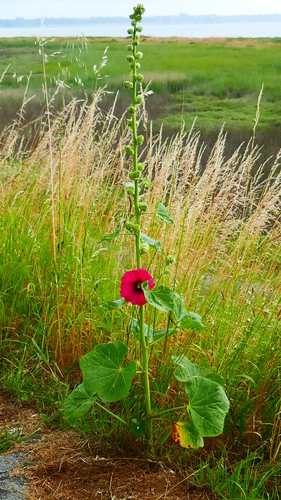
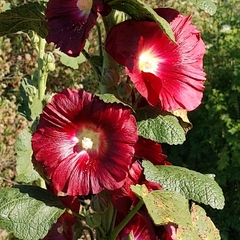
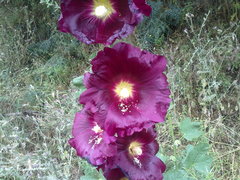
Hollyhock (Alcea rosea) is a biennial to short-lived herbaceous perennial in the Malvaceae. A leaf rosette forms in its first year, followed by a tall upright spike of large funnel-shaped flowers in the second. Its origin is disputed between temperate Asia and southwestern China. It is now a classic cottage garden plant, flowering through summer in temperate Northern Hemisphere gardens.
Read moreHollyhock and Common hollyhock
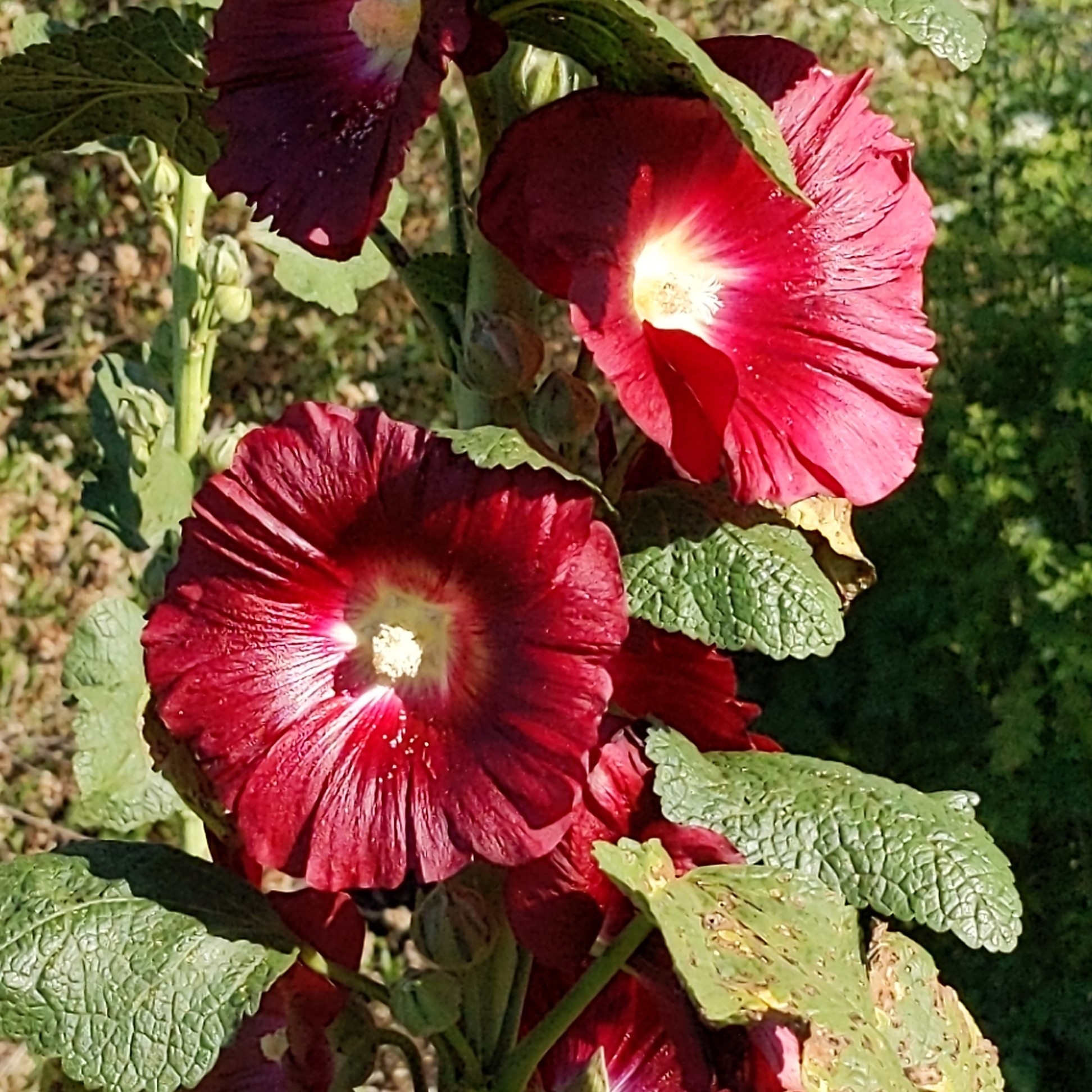
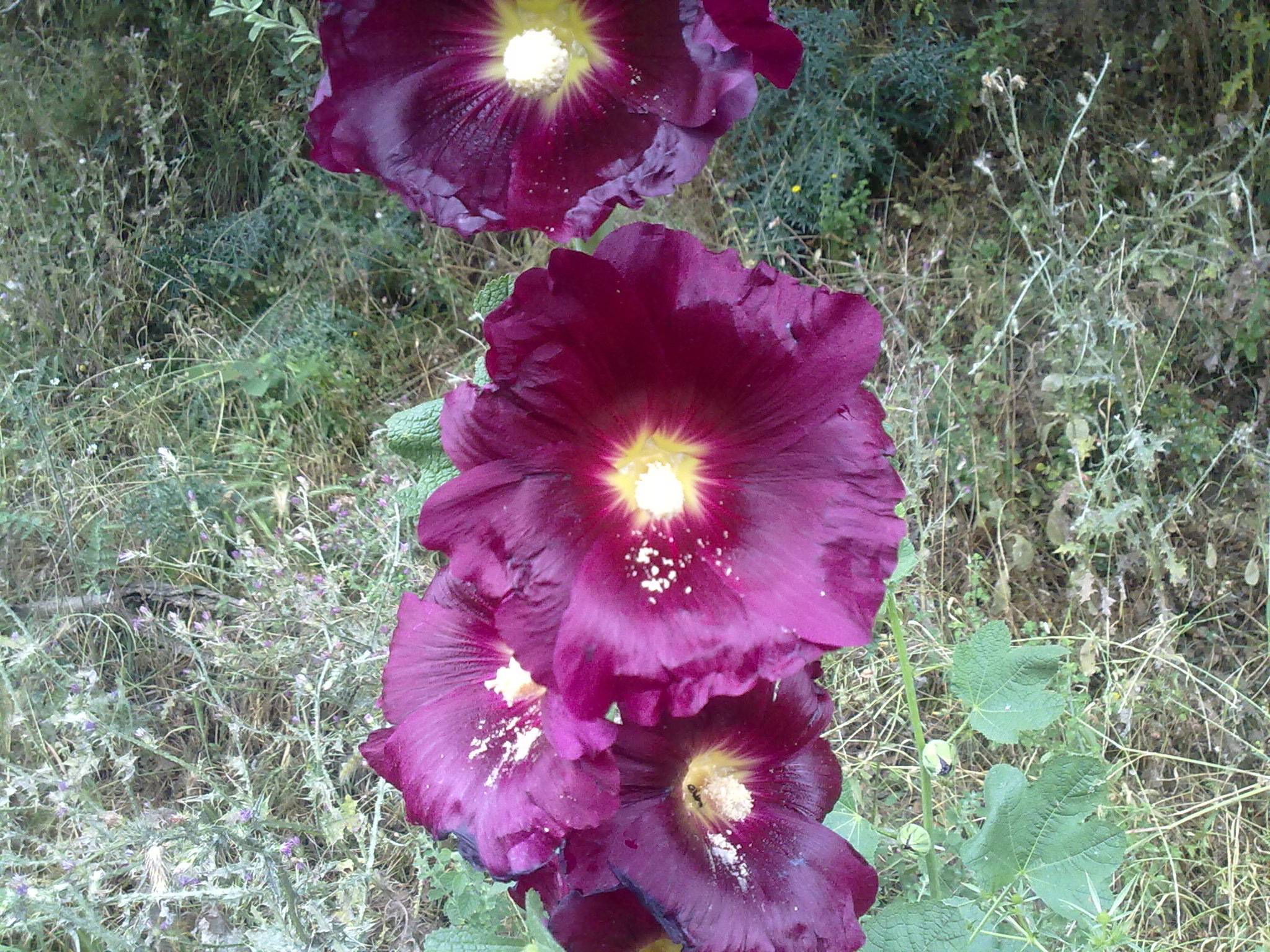


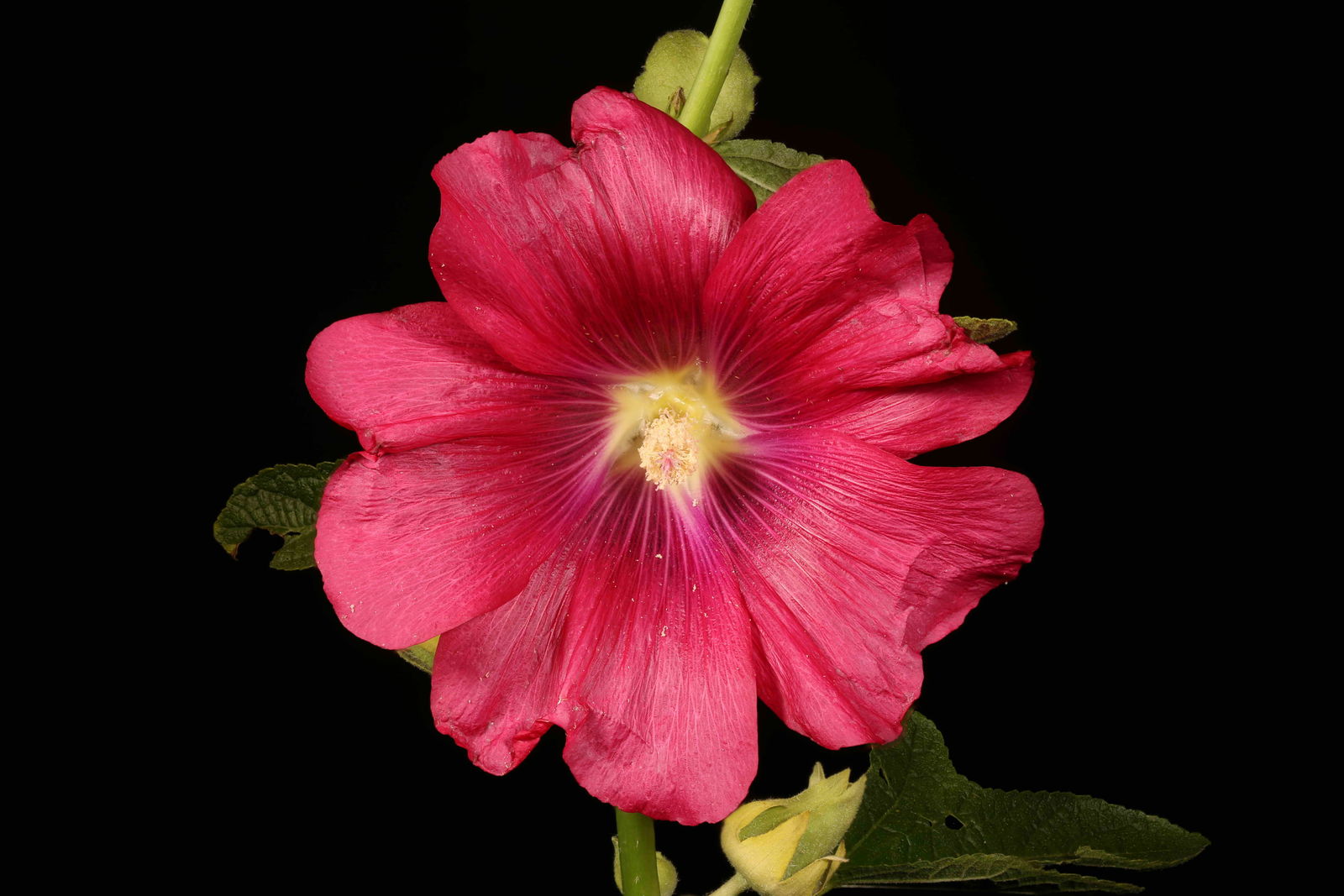
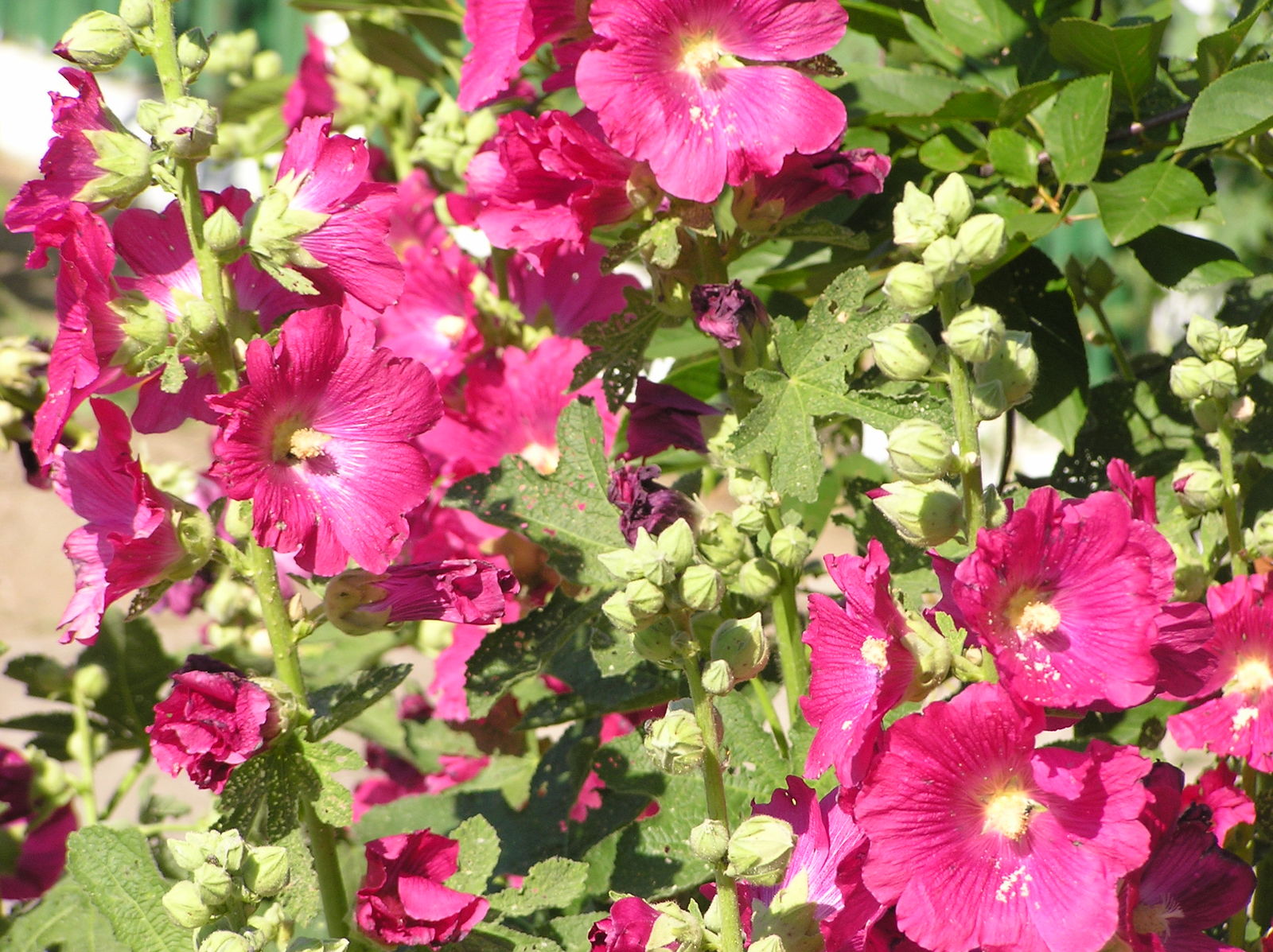
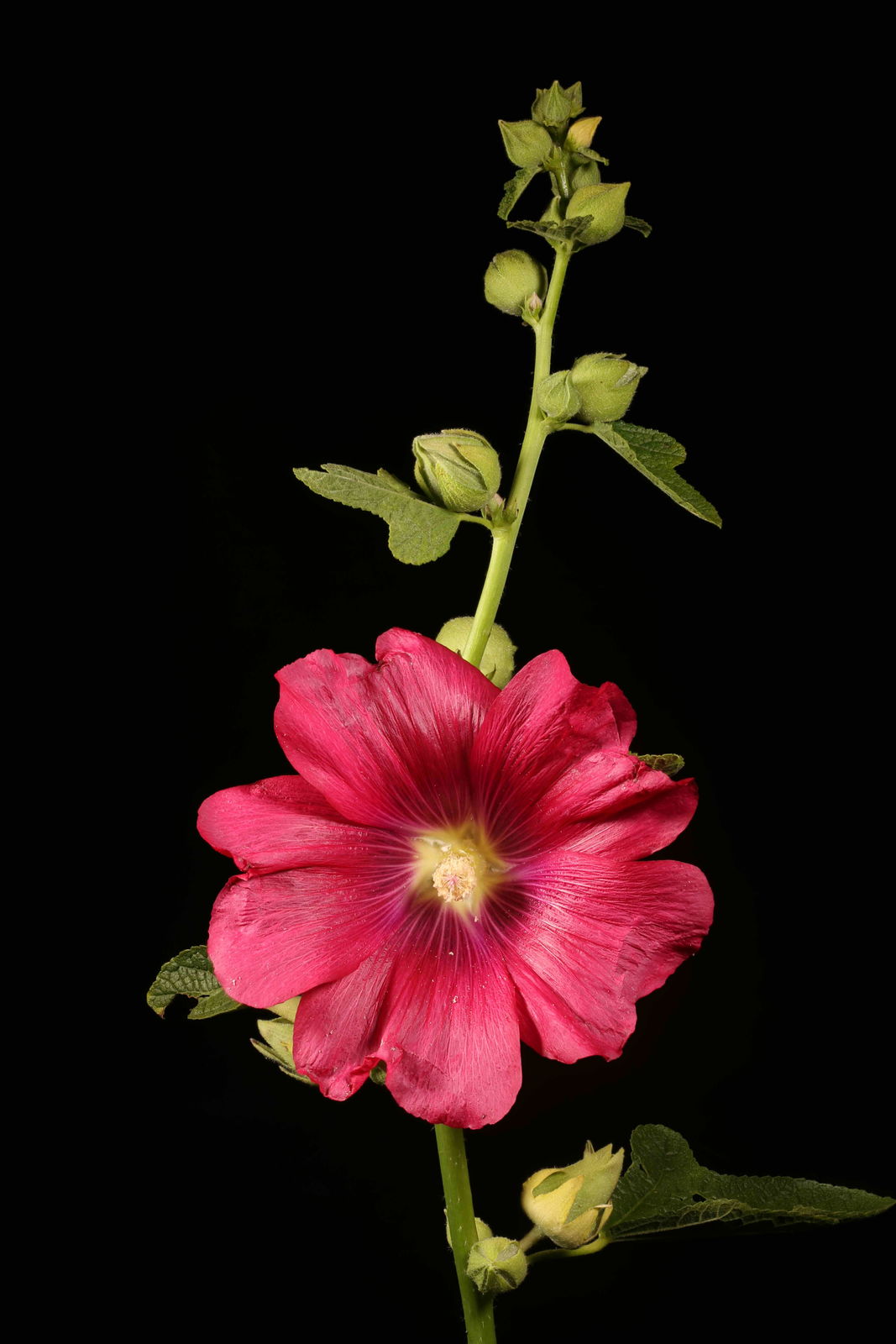
© photo
Patrick Le Mao · cc0
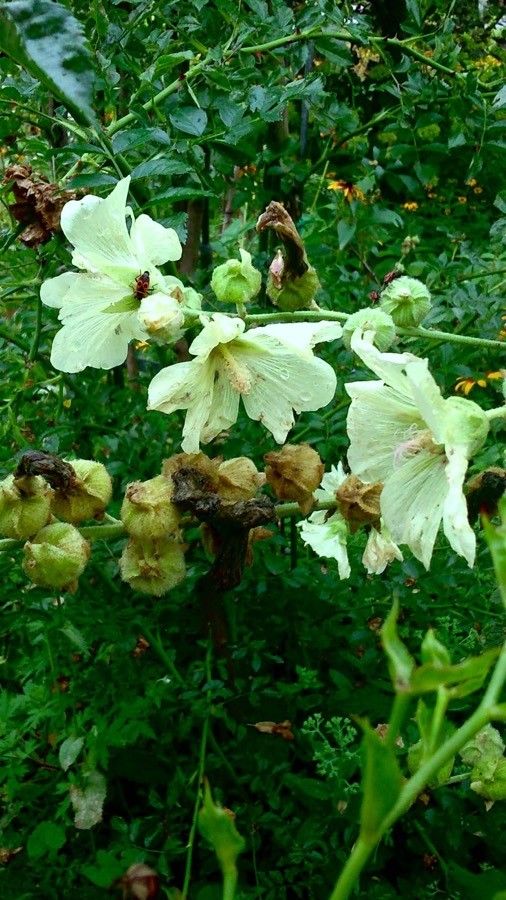
Vasily Reinkymov · cc0
George Papademetriou · cc-by
Taken Aug 25, 2022 by Jacques Zuber (cc-by-sa)
Taken Aug 16, 2022 by Andrzej Konstantynowicz (cc-by-sa)
Taken Aug 8, 2019 by Mathias Chouet (cc-by-sa)
Taken Aug 6, 2020 by Dieter Wagner (cc-by-sa)
Taken Aug 31, 2021 by maire sofia (cc-by-sa)
© copyright of the Board of Trustees of the Royal Botanic Gardens, Kew.




Global distribution
The origin of Alcea rosea is disputed: POWO links it to temperate Asia and Turkey, while other botanists favor southwestern China. Accounts describe westward spread along trade routes and later with the Crusades or Ottoman expansion. Now cultivated worldwide, it self-seeds in urban areas without being considered invasive in the regions described.
- Native1
- Introduced1
- Turkey
- United States
Hexagons: regions where the plant occurs. Green dots: native range.1
Identity
Hollyhock (Alcea rosea L., 1753) is a biennial to short-lived herbaceous perennial in the Malvaceae. Its French names include rose trémière, passerose and alcée rose. The first may derive from a distortion of “rose from overseas,” an expression recorded in the 16th century that recalls its supposed arrival by the Mediterranean route. 8 1
Hollyhock's geographic origin remains disputed. POWO treats it as a cultigen associated with Turkey, while several botanists place it in southwestern China, spreading west along trade routes and later through the Crusades or Ottoman expansion between the 12th and 16th centuries. An ancient hybrid between Alcea setosa and Alcea pallida, from eastern Europe and western Asia, has been proposed to explain this uncertainty. 1 8
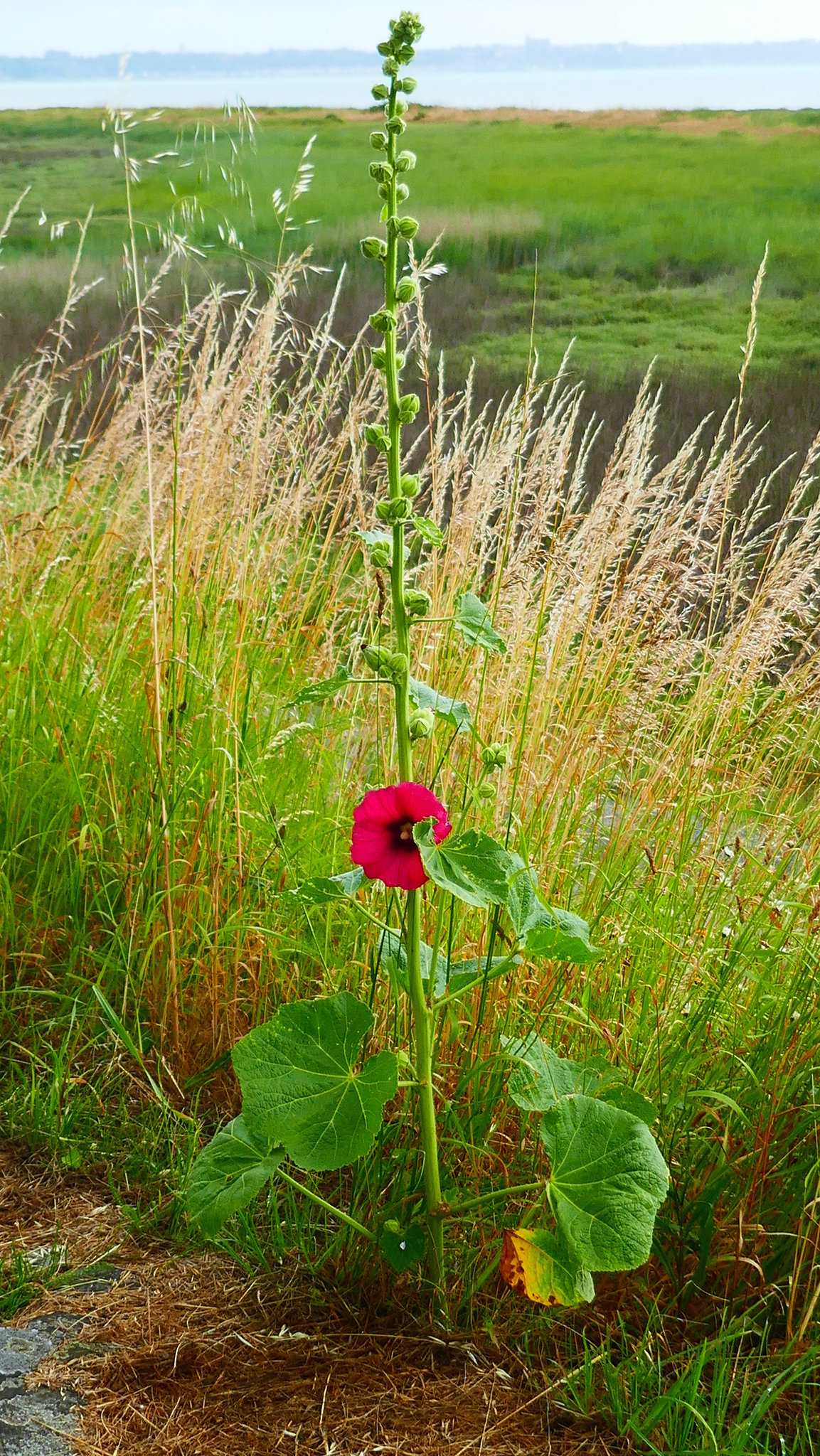
Another French name, bâton de Jacob, is associated with pilgrims to Santiago de Compostela and describes the same upright silhouette. Hollyhock produces a flowering stem 1.5–2.5 m (5–8 ft) tall in its second year, the feature that made it a cottage garden back-border classic. 8
Recognition
A young hollyhock first forms a rosette of large, rounded, rough-textured leaves with three, five or seven shallow lobes. In its second year, an upright flowering stem rises 1.5–2.5 m (5–8 ft) above a spread of just 50–100 cm (20–39 in). This columnar habit generally supports itself in a sheltered location. 2 4
Funnel-shaped flowers measure 8–10 cm (3–4 in) across and open from the bottom of the spike upward. In temperate Northern Hemisphere gardens, flowering runs from June to September. Cultivars offer white, pink, red, yellow and purple shades, including almost black flowers. 2 3
Orange rust spots on hollyhock's lower leaves do not indicate a different species. The foliage can be affected while flowers continue to open at the top of the stem, so a spotted plant in midsummer can still be identified by the same leaf and flower features. 3 4
Useful taxonomy
For hollyhock, POWO accepts the name Alcea rosea L. Its homotypic synonym, Althaea rosea (L.) Cav., long prevailed in European floras before the genus Alcea was restored. Older literature also uses these synonyms:
- Malva rosea (L.) E.H.L.Krause, a historical combination
- Alcea rosea var. sinensis (Cav.) Alef., a historical varietal name
- Althaea sinensis Cav.
- Althaea chinensis Wall.
- Althaea flexuosa Sims
The epithets sinensis and chinensis reflect the hypothesis of a Chinese origin, echoed by Chinese vernacular names for the species. For purchasing or research, the accepted name Alcea rosea provides a consistent reference. 1 8
Related Alcea ficifolia L. has more deeply divided leaves and often yellow flowers. It is a separate species rather than a synonym of Alcea rosea. The two readily hybridize in nursery cultivation, which can make sales labels confusing. 1
Habitat and range
Within its proposed native area between temperate Asia and Turkey, hollyhock grows at woodland edges, on banks and beside sunny paths. Centuries of cultivation in Europe, East Asia and North America have spread it far beyond that area through horticulture. 1 3
Abundant seed allows hollyhock to self-sow in vacant lots, pavement cracks and urban wasteland. The account describes it as non-invasive and hardy to −15 °C (5 °F), allowing garden escapes to overwinter in temperate settings in the United States and western Europe. Local climate still governs winter survival. 8 3
France mainly records hollyhock as a cultivated plant. Its national natural heritage inventory lists it under the French names rose trémière, passerose and alcée rose. 7
Life cycle and reproduction
Summer sowing prepares hollyhock for flowering the following year, with August or September preferred in the Northern Hemisphere setting described. At around 20 °C (68 °F), seeds germinate in two to three weeks. A low rosette forms during the first season, remains dormant over winter, then sends up a flowering stem the next spring. 5 2
Each faded hollyhock flower develops into a dry, segmented disk-shaped fruit resembling a small cheese wheel. At maturity, it releases numerous flat seeds, explaining the abundant self-sown seedlings seen in urban areas. 8
Garden propagation relies mainly on seed, although established crowns that persist for more than two years in mild climates can also be divided in spring. Such plants behave as short-lived perennials rather than strict biennials. 5 2
Uses and risks
Tall hollyhocks provide ornamental height at the back of cottage garden borders or beside a sunny wall. The wall also gives their flowering stems some natural support against wind. 4 3
All parts of hollyhock are edible: young leaves cooked as a leafy vegetable, flower buds and petals eaten raw in salads or dried for herbal tea, and roots containing starch. The ASPCA lists hollyhock as non-toxic to cats, dogs and horses. 5 6
Traditional medicine uses the mucilaginous flowers and roots to soothe respiratory and urinary passages. More recent research has isolated anti-ulcer polysaccharides and antioxidant compounds from flowers. These remain traditional or experimental uses rather than validated treatments. 8 5
Hollyhock's main horticultural problem is hollyhock rust (Puccinia malvacearum). This fungus spots and dries the lower foliage almost every summer while flowers continue to open at the top of the stem. 2 3
Varieties, look-alikes and related plants
Single-flowered garden forms resemble the wild type, while dense double-flowered groups such as Chater's Double reflect selection since the 19th century. Almost black-flowered Nigra has received the RHS Award of Garden Merit; the Halo series was selected for improved rust resistance. 2
Look-alikes chiefly include deeply divided-leaved Alcea ficifolia and hybrids between that species and hollyhock, whose sales labels do not always specify their parentage. An unlabeled flowering stem in an urban area generally comes from seed shed by a nearby garden. In the account described, Alcea rosea does not form stable naturalized populations away from gardens. 1 8
Main sources
- Plants of the World Online / Kew, Alcea rosea L.
- Royal Horticultural Society, Alcea rosea - hollyhock
- NC State Extension Gardener Plant Toolbox, Alcea rosea
- Missouri Botanical Garden Plant Finder, Alcea rosea
- Plants For A Future, Alcea rosea
- ASPCA, Hollyhock toxicity entry
- INPN, Alcea rosea L. 1753 - Hollyhock
- Wikipedia FR, Alcea rosea
- Wikidata, Alcea rosea
Frequently asked questions
Is hollyhock toxic to cats and dogs?
No. The ASPCA lists Alcea rosea as non-toxic to cats, dogs and horses. All parts are also edible for humans, including leaves, buds and petals.
Why does my hollyhock not flower in its first year?
This is the normal biennial cycle. The first year produces a leaf rosette without flowers; the flowering stem appears in the second season after winter dormancy.
How can I limit rust on hollyhock leaves?
Remove affected leaves when orange spots first appear, water at soil level rather than overhead, and space plants for better airflow to limit the spread of Puccinia malvacearum.
Can you eat hollyhock flowers?
Yes. Buds and petals can be eaten raw in salads or dried for herbal tea, while young leaves can be cooked as a leafy vegetable. The root also provides edible starch.
What is the difference between Alcea rosea and Althaea rosea?
There is no botanical difference. Althaea rosea is a historical synonym of Alcea rosea, long used in European floras before current classifications retained the genus Alcea.
Is hollyhock invasive?
It is not classified as invasive in the account described. It readily self-seeds in vacant lots and pavement cracks because it produces abundant seed, without forming lasting populations outside gardens.
Do hollyhocks need staking?
Not always. A flowering stem can stand alone in a sheltered site; in a windy location, a discreet stake or a wall behind the plant helps prevent tall, flower-laden stems from breaking.
Similar plants
If you are unsure about a plant’s toxicity, ask a botanist or veterinarian for advice.