
Blackboard tree (Alstonia scholaris, )
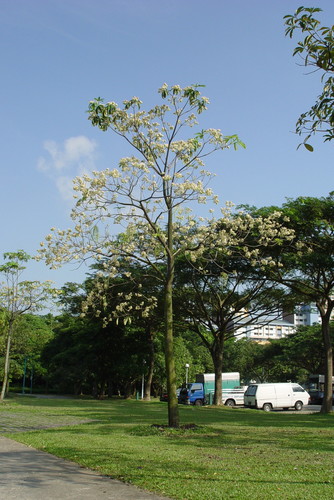

Blackboard tree (Alstonia scholaris) is a large evergreen in the Apocynaceae, native from tropical Pakistan and southern China to northern Australia. Whorled leaves, abundant white latex and alkaloid-rich bark distinguish this tree, whose pale wood traditionally supplied school writing boards.
Read moreBlackboard tree, Dita, Devil tree, Scholar tree, Milkwood and White cheesewood
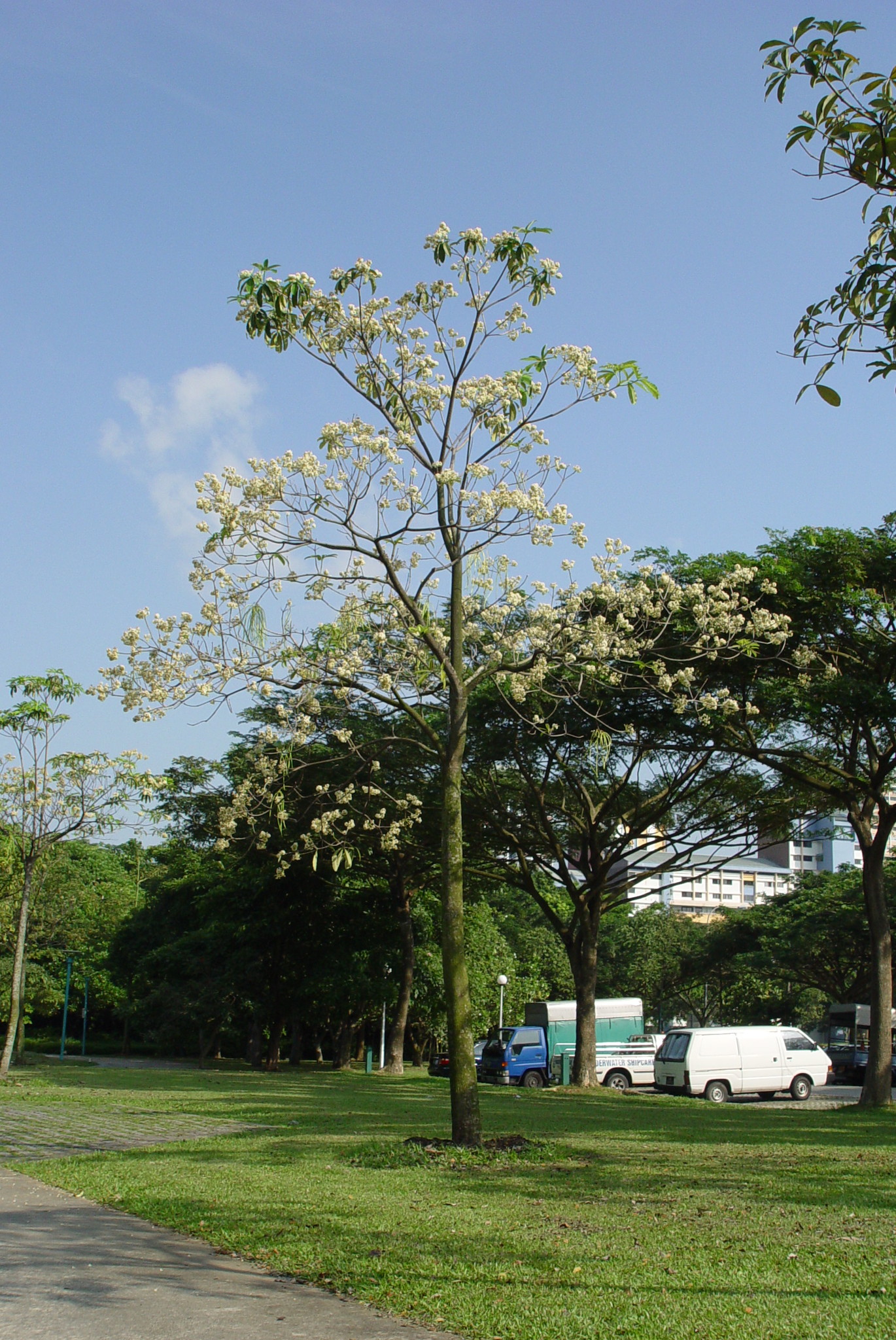


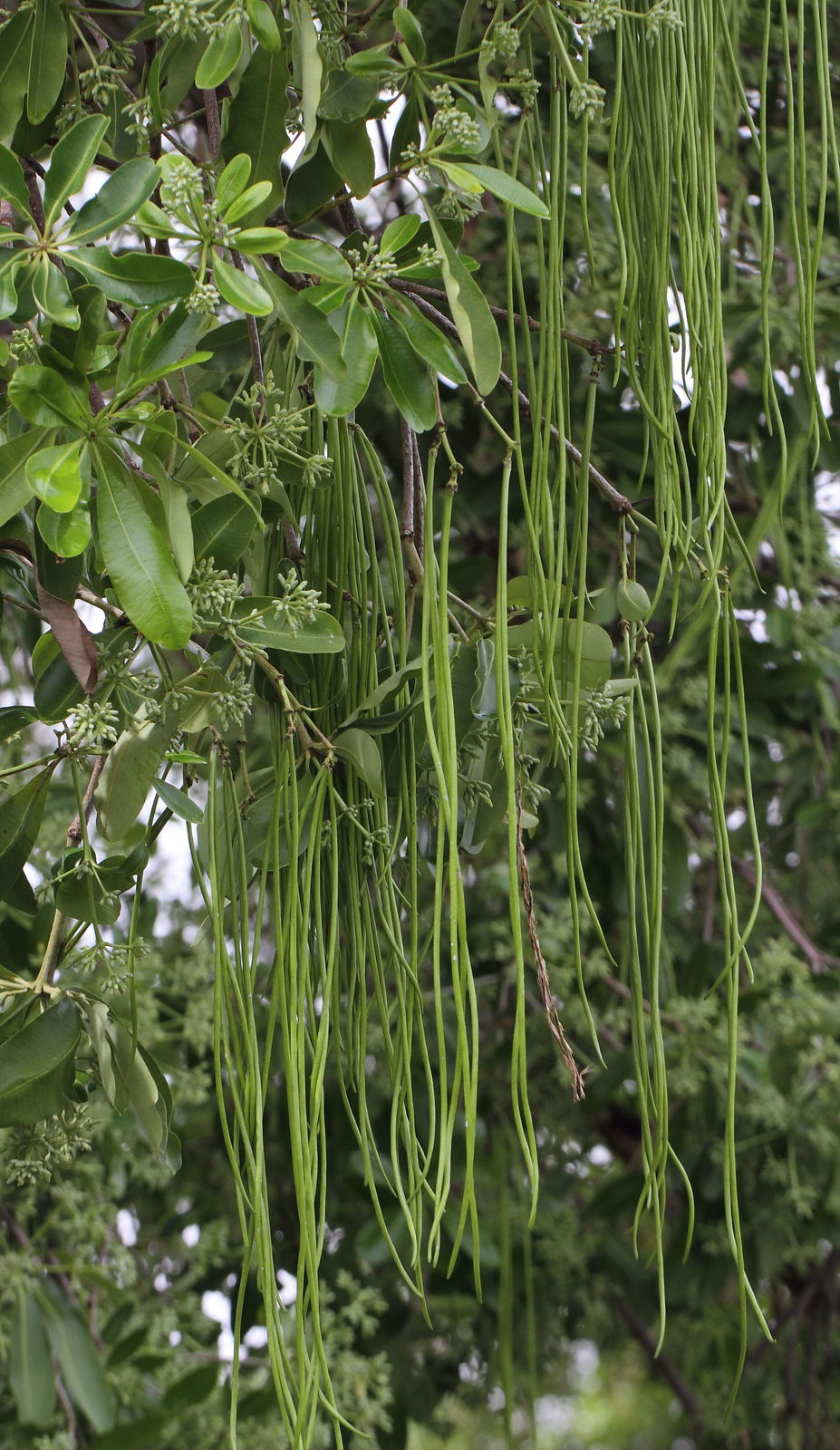
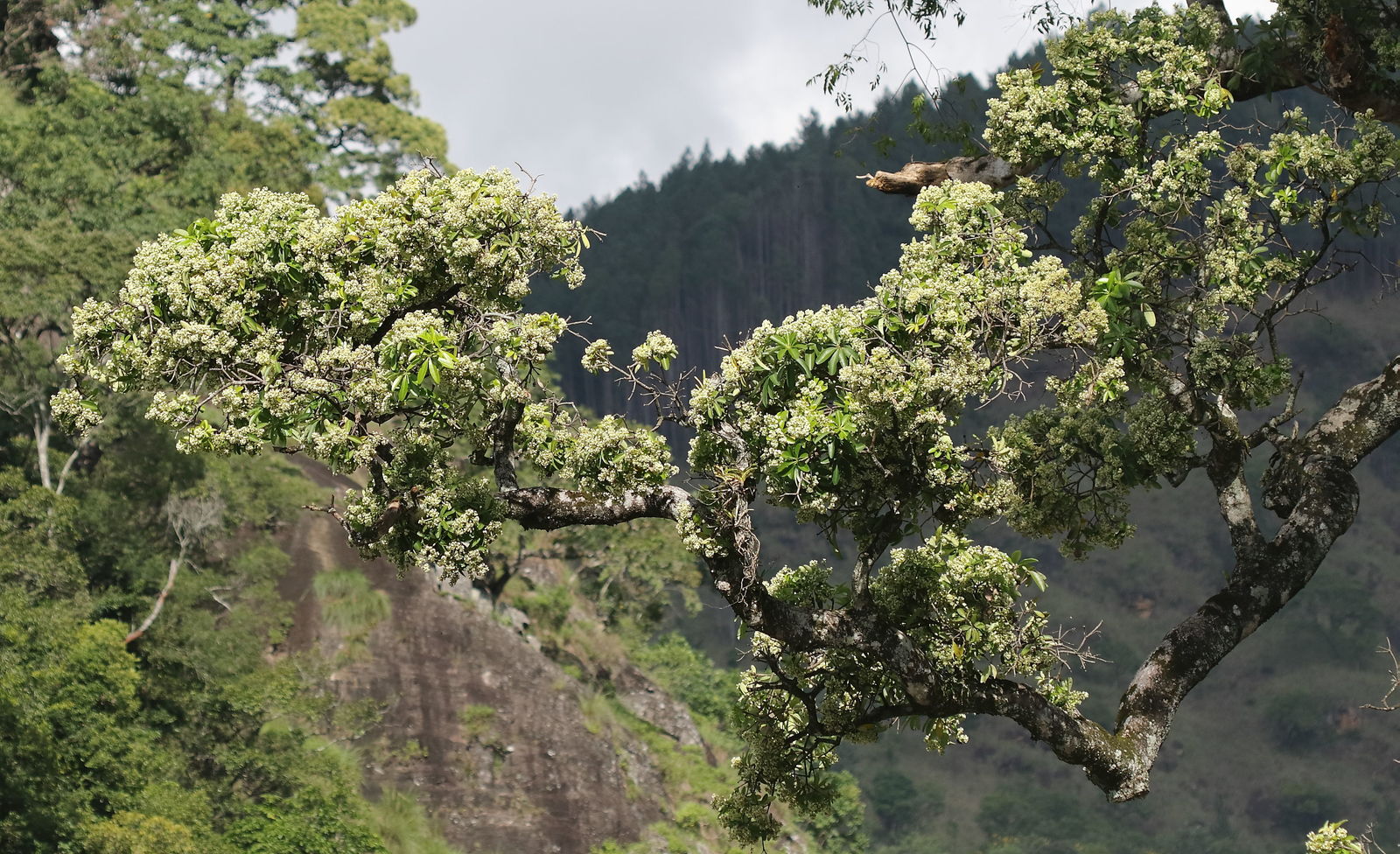
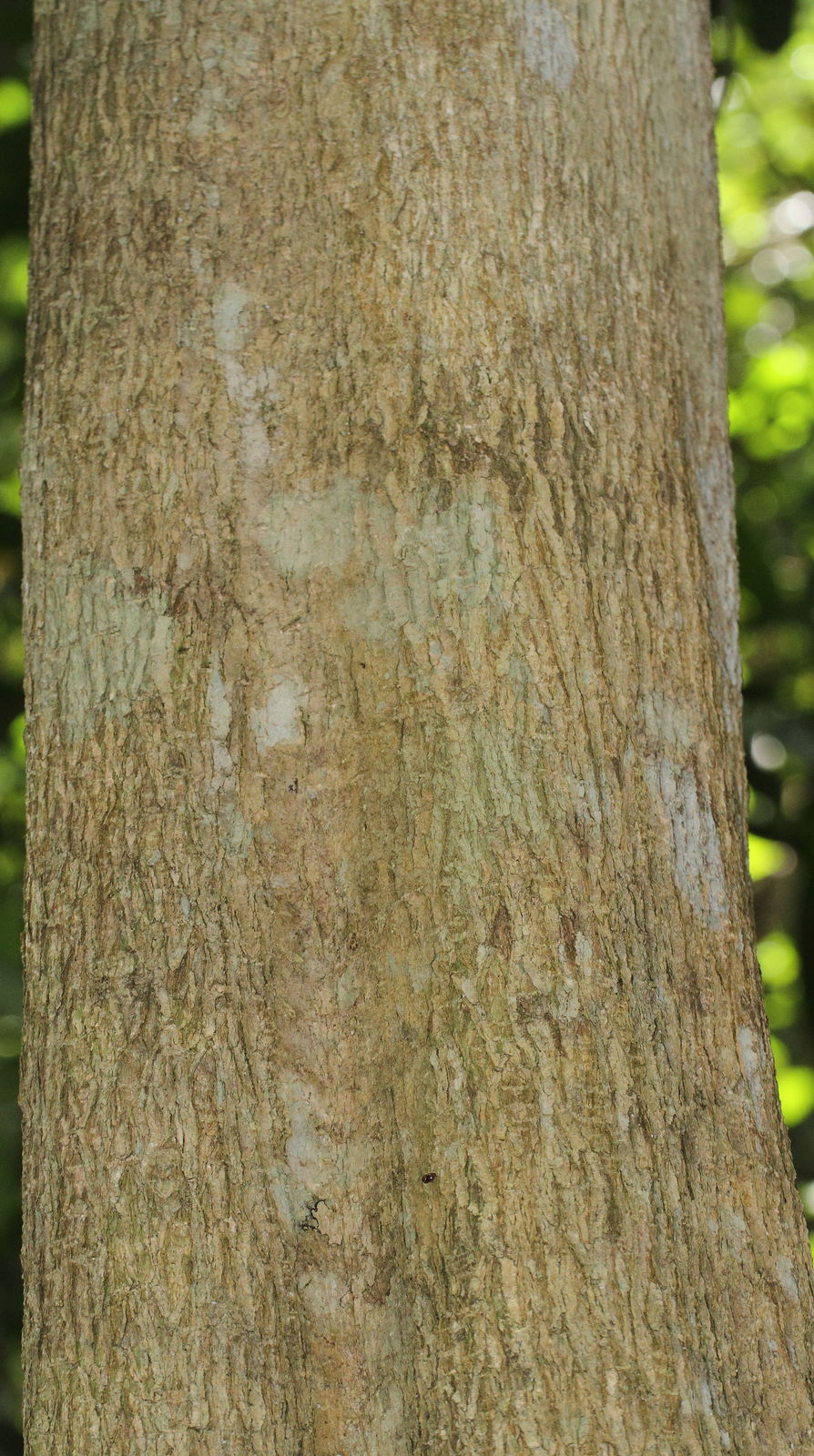
© photo
Cheongweei Gan · cc0
Wikimedia Commons · CC BY-SA or Public Domain
Wikipedia · CC BY-SA
Taken Apr 20, 2018 by Daniel Barthelemy (cc-by-nc)
Taken Feb 2, 2018 by huy HO (cc-by-sa)
© copyright of the Board of Trustees of the Royal Botanic Gardens, Kew.




Global distribution
The native range of Alstonia scholaris extends from Pakistan and the Indian subcontinent through southern China and mainland and island Southeast Asia to northern Australia and the Solomon Islands. It is also widely planted as an ornamental and street tree outside this range in tropical and subtropical regions.
- Native8
- India
- Sri Lanka
- Pakistan
- Southern China
- Thailand
- Vietnam
- Philippines
- Australia
Hexagons: regions where the plant occurs. Green dots: native range.1
Identity
Blackboard tree (Alstonia scholaris (L.) R.Br., 1810), also known as dita, is a large evergreen tree in the genus Alstonia and the Apocynaceae family. Its epithet scholaris recalls the traditional use of the pale wood for school slates and blackboards in Myanmar. The English names scholar tree and blackboard tree preserve this practical association with classrooms. 3 1
Charles Alston, the Scottish botanist and professor at the University of Edinburgh, gave the genus its commemorative name. Every cut or damaged part releases abundant white latex. This sap is absent from many neighboring street trees, including mango and tropical almond, and offers a quick field distinction without a lens or botanical key. Other established English names include devil tree, milkwood and white cheesewood. 3
Recognition
Mature blackboard trees commonly reach 20–40 m (65–130 ft), with exceptional individuals reported at 60 m (197 ft). The cylindrical trunk often becomes fluted with age, may exceed 1.25 m (4 ft) in diameter, and develops narrow buttresses extending well up its base. These raised supports give older trees a distinctive outline even before their leaves can be examined. 4 3
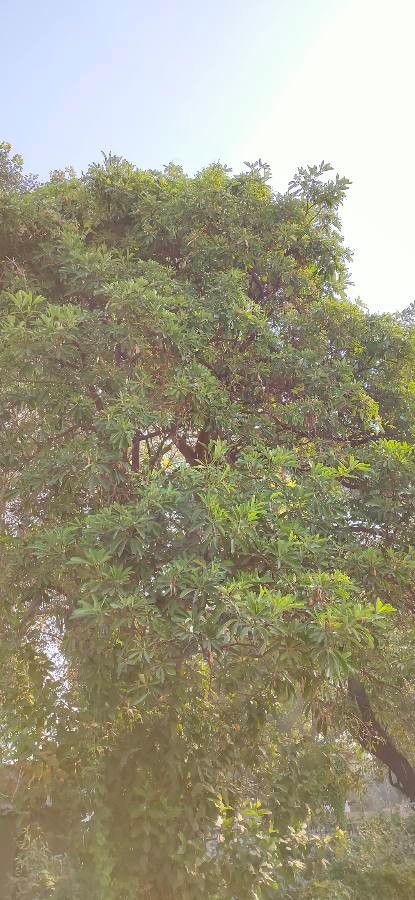
Leaf arrangement provides a more dependable clue than either height or trunk shape, both of which change as the tree ages. The leaves form whorls of four to eight, unlike the alternate foliage of nearby mango or tropical almond trees. Each obovate to elliptical blade measures 5–22 cm (2–9 in), glossy dark green above and paler beneath, with 25–45 pairs of lateral veins running almost at right angles to the midrib. 3
White, cream or yellowish flowers form branched cymes at the shoot tips. Their strong fragrance can become overpowering during heavy flowering. Each fruit consists of two slender, hanging follicles up to 40 cm (16 in) long. They split while still on the tree, releasing flattened seeds with silky hair tufts at both ends that carry them on the wind. 3
Useful taxonomy
Robert Brown published the combination Alstonia scholaris (L.) R.Br. in 1810, transferring the plant from Linnaeus's 1767 name Echites scholaris. POWO/WCVP accepts Brown's combination. Older literature and seed catalogs may use the following synonyms:
- Echites scholaris L., the original name
- Alstonia scholaris var. velutina Monach., a historical variety
- Alstonia scholaris var. blumei A.DC., a historical variety
- Alstonia scholaris var. avae A.DC., a historical variety
- Alstonia kurzii Hook.f., a synonym
- Alstonia spectabilis Kurz, a synonym
- Pala scholaris (L.) Roberty, a synonym
Several dozen tropical trees and shrubs belong to Alstonia, all sharing the genus's latex-bearing character. Several can readily be confused with A. scholaris in the same parts of Asia and Australia. The accepted scientific name remains the stable reference for connecting descriptions and older names to this species. 1
Habitat and range
From Pakistan, its natural range crosses the Indian subcontinent and southern China, continues through mainland and island Southeast Asia, and reaches northern Australia and the Solomon Islands. This is a broad Indo-Pacific distribution rather than a range confined to a single tropical country. 1 3
Primary and secondary rainforest, monsoon forest, savanna and stream banks all support this tree. It occurs from sea level to above 1,200 m (3,940 ft) and tolerates alluvial, volcanic and metamorphic soils. Even poor limestone soils near the coast can support it, although trees remain smaller under those conditions. 4 3
The IUCN assesses blackboard tree as Least Concern. Its extensive range across several continents supports generally stable populations, despite local exploitation for timber and traditional medicine. Local harvesting therefore needs to be distinguished from the species' overall conservation assessment. 2
Life cycle and reproduction
Growth ranges from moderate to fairly fast with climate. Trees planted in Taiwan reached 23.5 m (77 ft) in 18 years and as much as 35 m (115 ft) at 41 years. Flowering follows a pronounced dry period, so the tree responds to a seasonal rhythm rather than producing flowers continuously throughout the year. 4
Fresh seeds germinate readily, at rates approaching 100%, but collecting them is difficult. The follicles open on the tree and quickly release their contents to the wind. When stored dry in a closed container, seeds retain about 90% germination for only two months, making freshness a practical consideration for propagation. 4
Besides seed, grafting offers another propagation route. Cleft grafts and inverted T grafts are used to reproduce selected trees intended for urban ornamental planting, where retaining the characteristics of a chosen individual matters more than raising variable seedlings. 4
Uses and risks
Bark contains several indole alkaloids, notably echitamine, the principal compound found in the studied samples and sold in herbal preparations. In South and Southeast Asian traditional medicine, bark decoctions have been used for diarrhea, dysentery, fever and malaria. This history of use does not establish effectiveness: laboratory trials indicate weak antimalarial activity. 6 4
At high doses, bark extracts cause marked organ damage in rats and mice. Toxicity changes with the harvest season: bark collected during the monsoon is least toxic, while summer-harvested bark is most toxic. In dogs, a single high dose causes an unsteady gait, excessive salivation and temporary vomiting, without reported deaths in the cited study. 6 7
Damaged parts exude irritating white latex that affects skin and mucous membranes on contact. Heavy flowering may also cause respiratory sensitivity in some people exposed at close range. These contact and exposure risks are separate from the high-dose extract findings reported in laboratory animals. 3
Light, pale timber supplies pencils, coffins in Sri Lanka, household utensils in Borneo and traditional Topeng dance masks in Bali, as well as paper pulp and plywood. In India, blackboard tree is West Bengal's state tree. Its leaves are presented to Visva-Bharati University graduates in a tradition begun by Rabindranath Tagore. 9 4
Varieties, look-alikes and related plants
Asian and Australian relatives include Alstonia angustifolia, Alstonia macrophylla, Alstonia spatulata and Alstonia angustiloba. They differ chiefly in leaf size, the number of leaves per whorl and follicle dimensions. The paired follicles of A. scholaris reach 40 cm (16 in), but a fertile specimen is usually needed to distinguish related species confidently using fruit characters. 3
In Vietnam, the species' autumn bloom is called hoa sữa, meaning “milk flower,” and appears in poetry and popular songs. Its heavy scent has also prompted requests for tree removal in some neighborhoods, including Trà Vinh in 2011. In India, the Sanskrit name saptaparna means “seven leaves”; the species is regarded as the sacred tree of Ajitanatha, the second Jain tirthankara. 8
Main sources
- Plants of the World Online / Kew, Alstonia scholaris (L.) R.Br.
- IUCN Red List, Alstonia scholaris assessment (Lakhey & Pathak, 2021)
- NParks Singapore, Flora & Fauna Web, Alstonia scholaris
- Useful Tropical Plants Database, Alstonia scholaris
- Australian Tropical Rainforest Plants (RFK8), Alstonia scholaris
- Baliga et al., 2004, acute toxicity and safety of Alstonia scholaris extract, Toxicology Letters
- PMC, acute and sub-chronic toxicity of Alstonia scholaris indole alkaloids in beagle dogs
- INPN MNHN, Alstonia scholaris (L.) R.Br.
- Government of West Bengal, Plant Wealth of The Raj Bhavan (Alstonia scholaris, state tree)
Frequently asked questions
Why is Alstonia scholaris called blackboard tree?
The epithet scholaris refers to the traditional use of its pale wood for school slates and blackboards in Myanmar. The English name directly preserves that connection.
Is blackboard tree poisonous?
The white latex released from cut parts irritates on contact. Its bark contains alkaloids, including echitamine, that cause organ damage in rats and mice at high laboratory doses. Toxicity varies with the season when the bark is harvested.
How do you identify blackboard tree among large tropical trees?
The most reliable feature is the arrangement of leaves in whorls of four to eight around the stem, together with abundant white latex released when the plant is damaged.
Does blackboard tree grow quickly?
Growth is moderate to fairly fast depending on climate. Trees planted in Taiwan reached 23.5 m (77 ft) in 18 years and up to 35 m (115 ft) at 41 years, comparable with other large tropical pioneer trees.
Why have some neighborhoods in Vietnam asked for these trees to be removed?
The autumn flowers, known as hoa sữa, have a heavy fragrance celebrated in poetry but considered unpleasant at high concentrations near homes. This has prompted local requests to fell trees.
Is blackboard tree timber durable?
No. The wood is light, soft and not durable, and is susceptible to termites and wood borers. It needs rapid drying after cutting to prevent blue stain, a common cosmetic defect.
Is blackboard tree endangered?
No. The IUCN lists it as Least Concern. Its very wide distribution across several continents supports generally stable populations despite local harvesting for timber and traditional medicine.
Similar plants
If you are unsure about a plant’s toxicity, ask a botanist or veterinarian for advice.