
Italian arum (Arum italicum, )
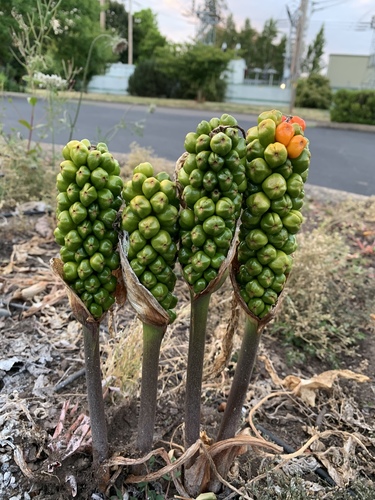
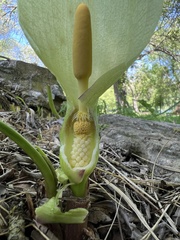
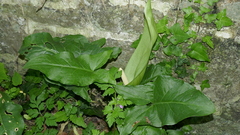
Italian arum (Arum italicum Mill.) is an accepted Araceae species of woodland and hedges in western and southern Europe. Its arrow-shaped leaves appear in fall and winter while most other herbs are dormant. A spring inflorescence is followed by a spike of bright orange berries in summer; all parts of the plant are toxic.
Read moreItalian arum and Italian lords-and-ladies


© photo
Kathy Fulton · cc0
Mirko Ubović · cc0
Patrick Le Mao · cc0
Taken Aug 2, 2020 by nbx (cc-by-sa)
Taken Sep 14, 2022 by Fabrice Rubio (cc-by-sa)
Taken Jul 12, 2022 by Jesus Pizarro (cc-by-sa)
Taken Jan 6, 2021 by massimiliano belotti (cc-by-sa)
Taken Jan 15, 2022 by Gaël Herve (cc-by-sa)
© copyright of the Board of Trustees of the Royal Botanic Gardens, Kew.




Identity
Italian arum (Arum italicum Mill., 1768) is an accepted species in the genus Arum, family Araceae. Its arrow-shaped leaves, 15 to 40 cm long, emerge in fall and remain green through winter, followed in summer by a spike of toxic orange berries. POWO and Wikidata use this name, published by Philip Miller in 1768. 2 1
The English name Italian lords-and-ladies also refers to this plant. French names such as pied-de-veau and vachotte describe its broad arrowhead-shaped leaves. None implies edibility: calcium oxalate crystals throughout the plant cause immediate mouth and throat irritation when chewed. Young leaves can be mistaken for wild garlic, despite being unsuitable as a wild vegetable. 7 5
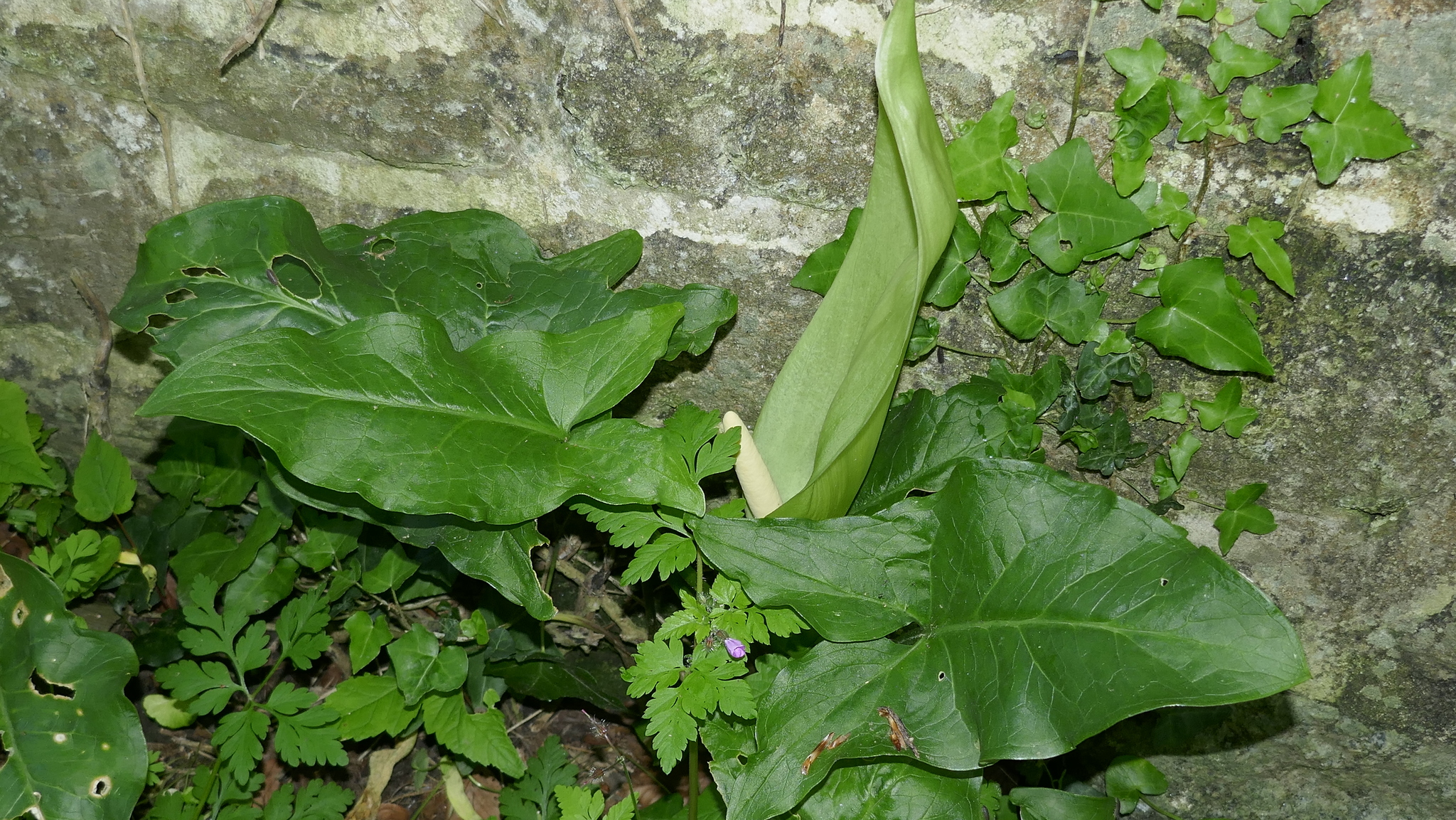
Seasonal behavior provides a stronger field clue than flowers alone. Italian arum's leaves emerge in fall and stay green throughout winter, when most woodland herbs have withered or become dormant. They yellow before summer drought. This reversed rhythm makes Arum italicum one of the few temperate European Araceae visible in midwinter. 4 3
Recognition
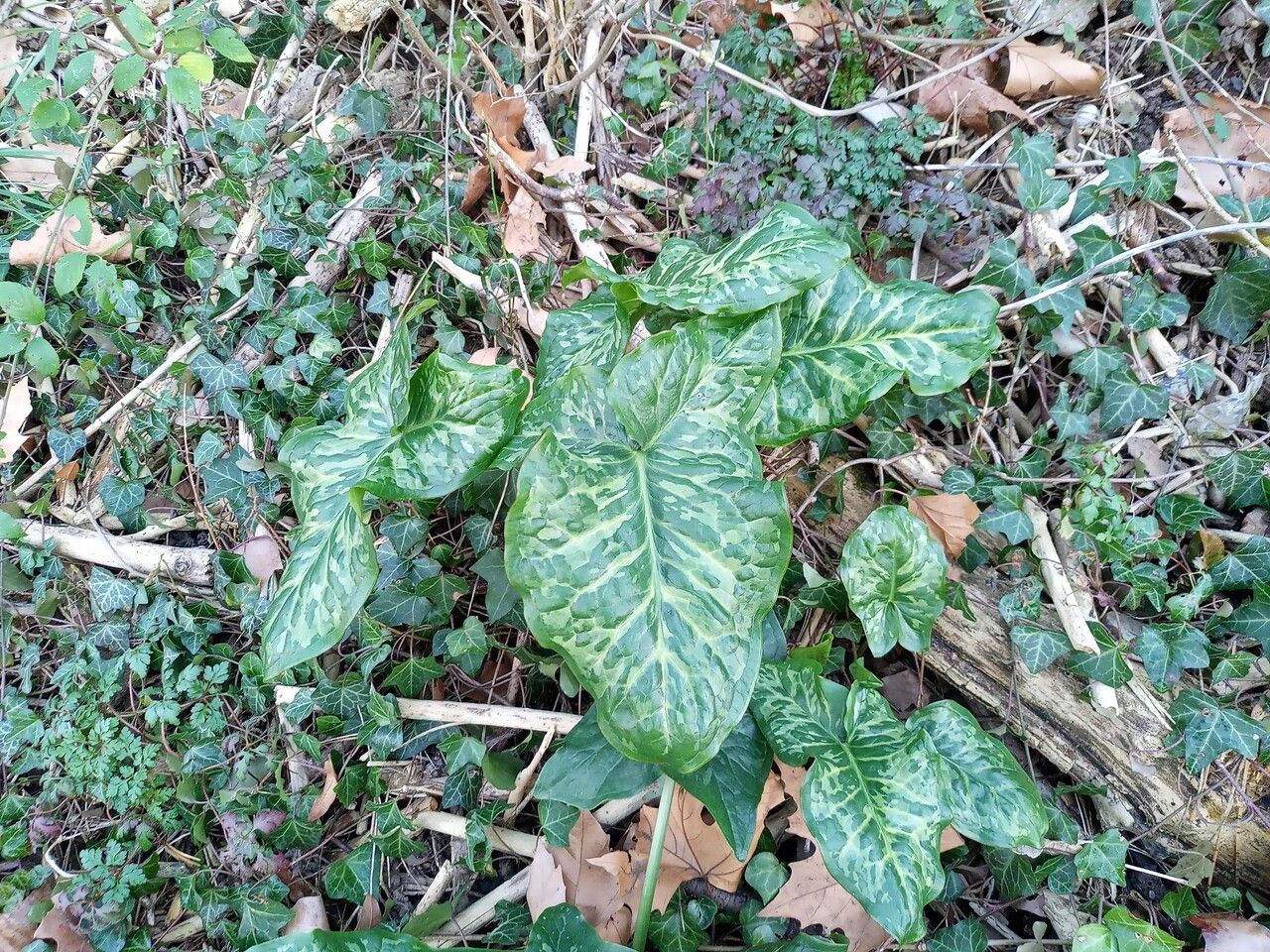
Long, upright leaf stalks support the arrow-shaped leaves, which measure 15 to 40 cm. Their shape helps distinguish them from wild garlic at the same vegetative stage. The horticultural form Marmoratum has strong cream-white veining, whereas the type subspecies more often has plain green or faintly marbled leaves. 3 4
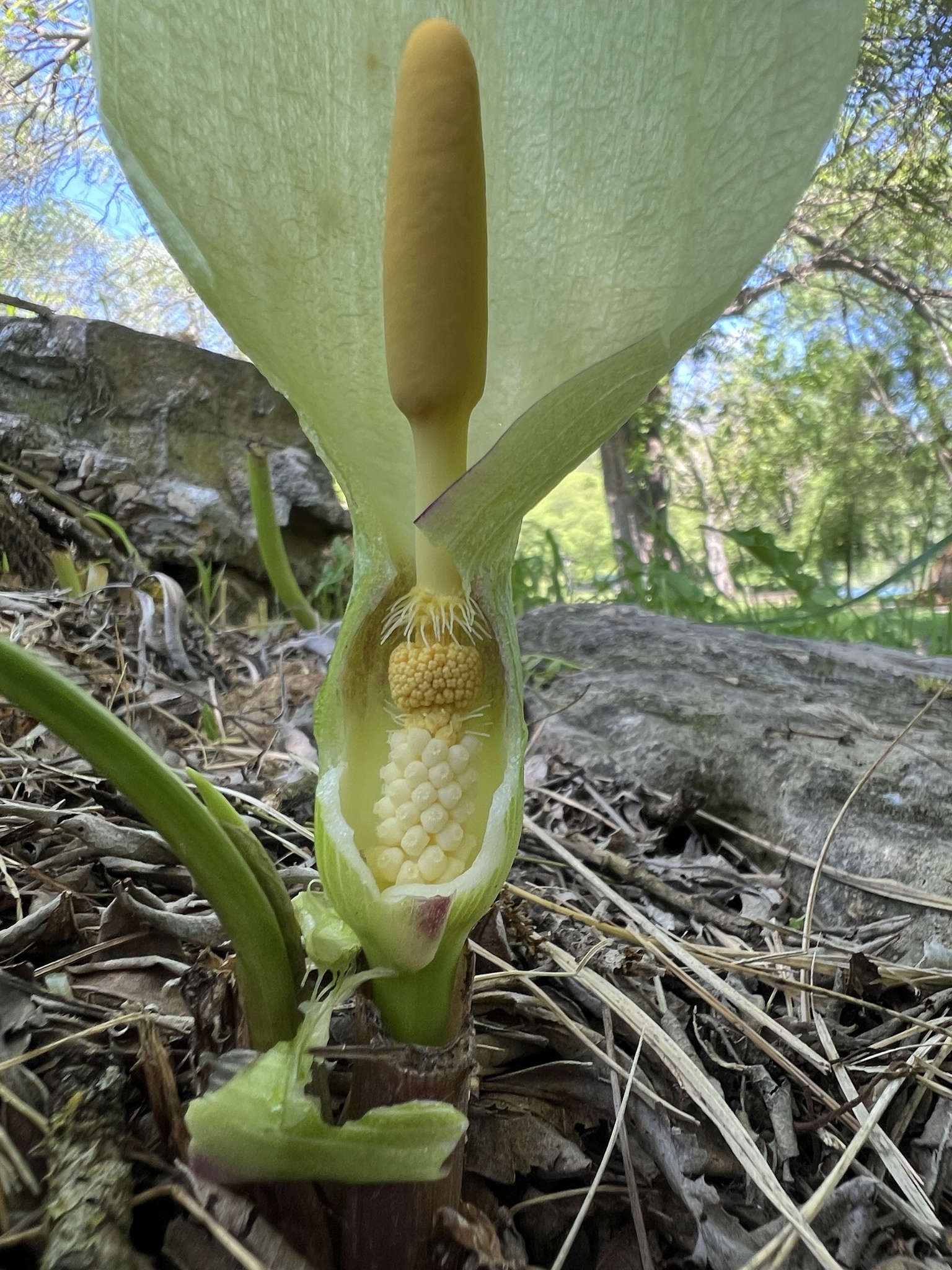
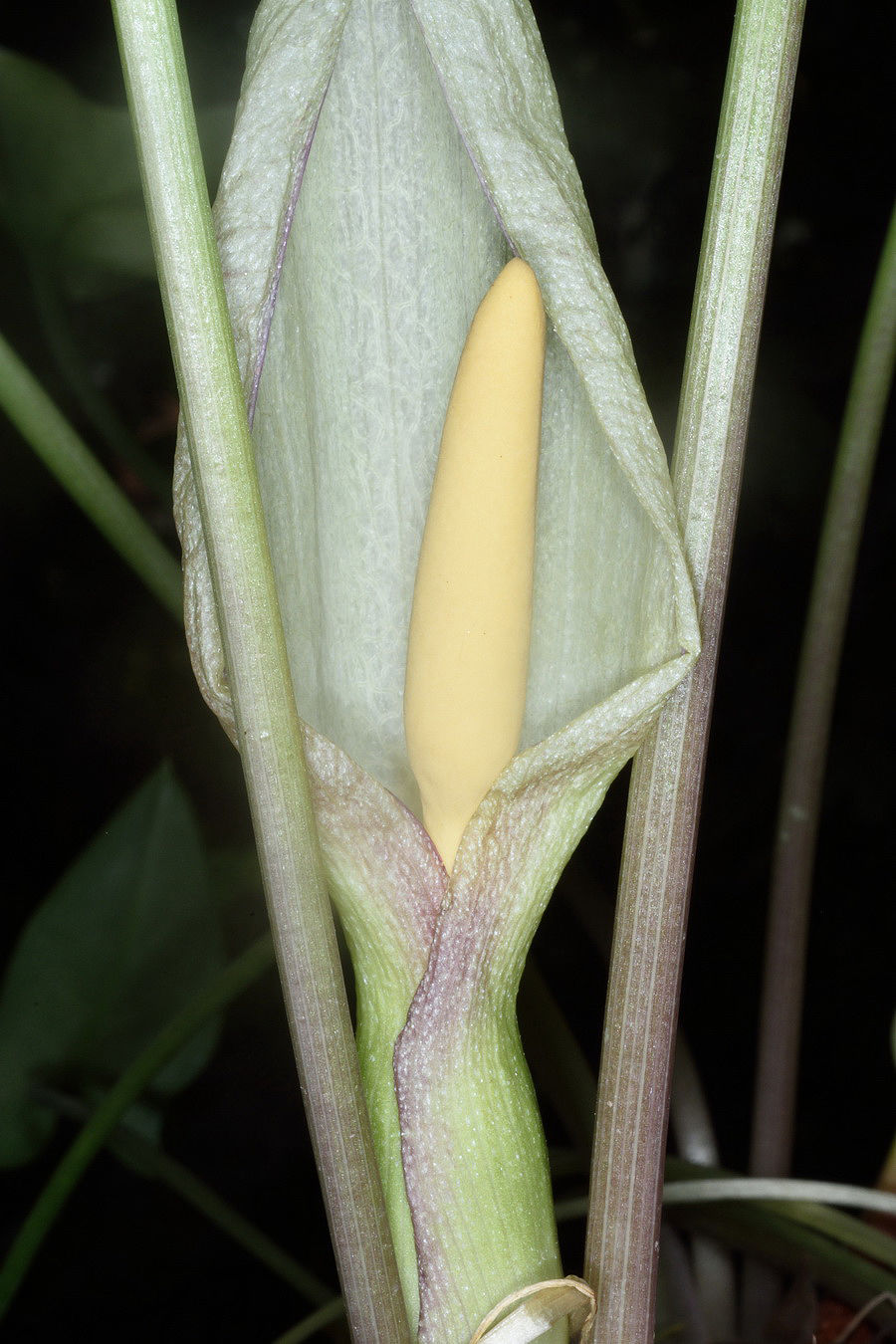
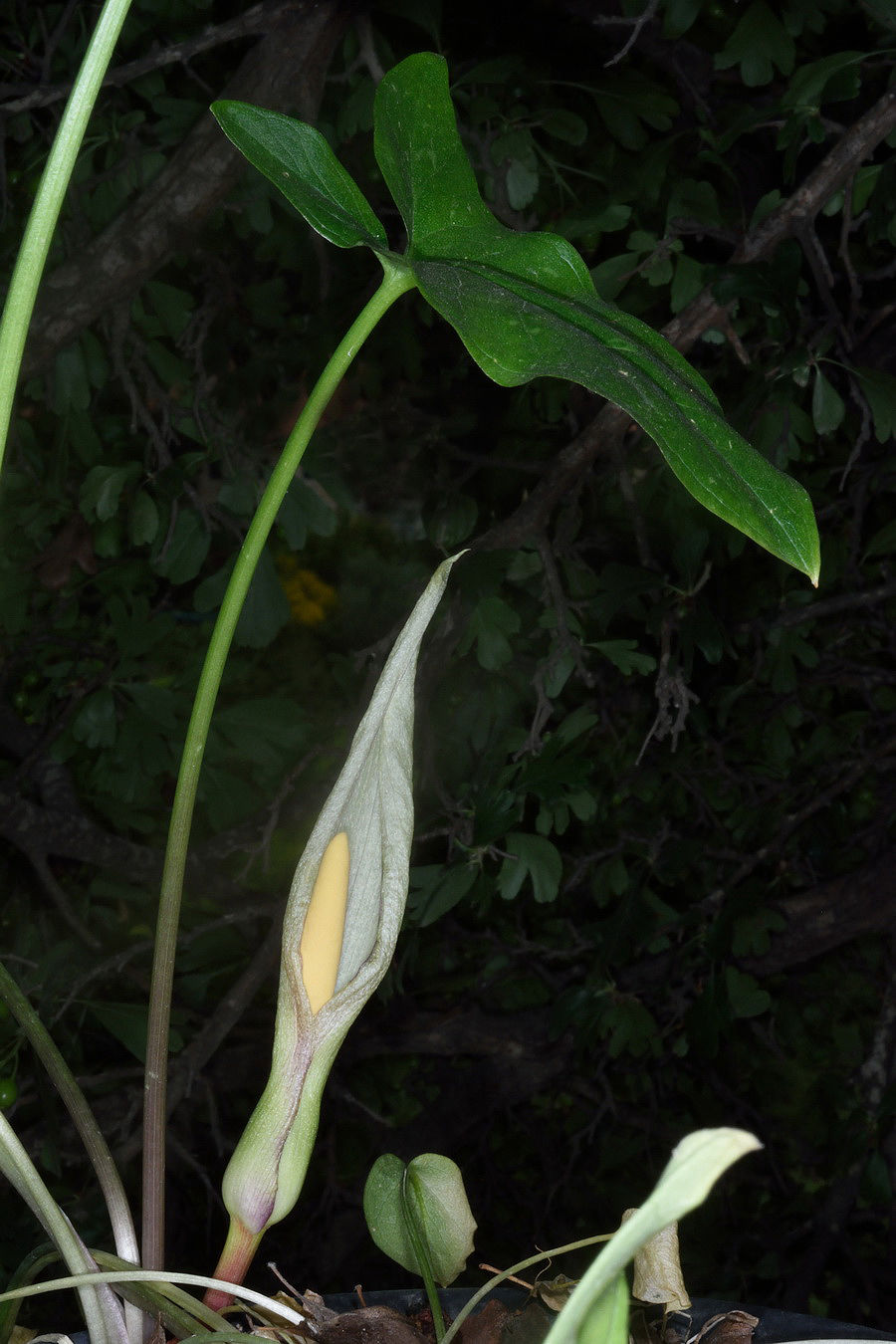
In spring, a pale yellowish to cream spathe surrounds an upright yellow spadix. The inflorescence gives off an odor that attracts small flies, which act as pollinators. Several European Araceae share this pollination mechanism. 5 4
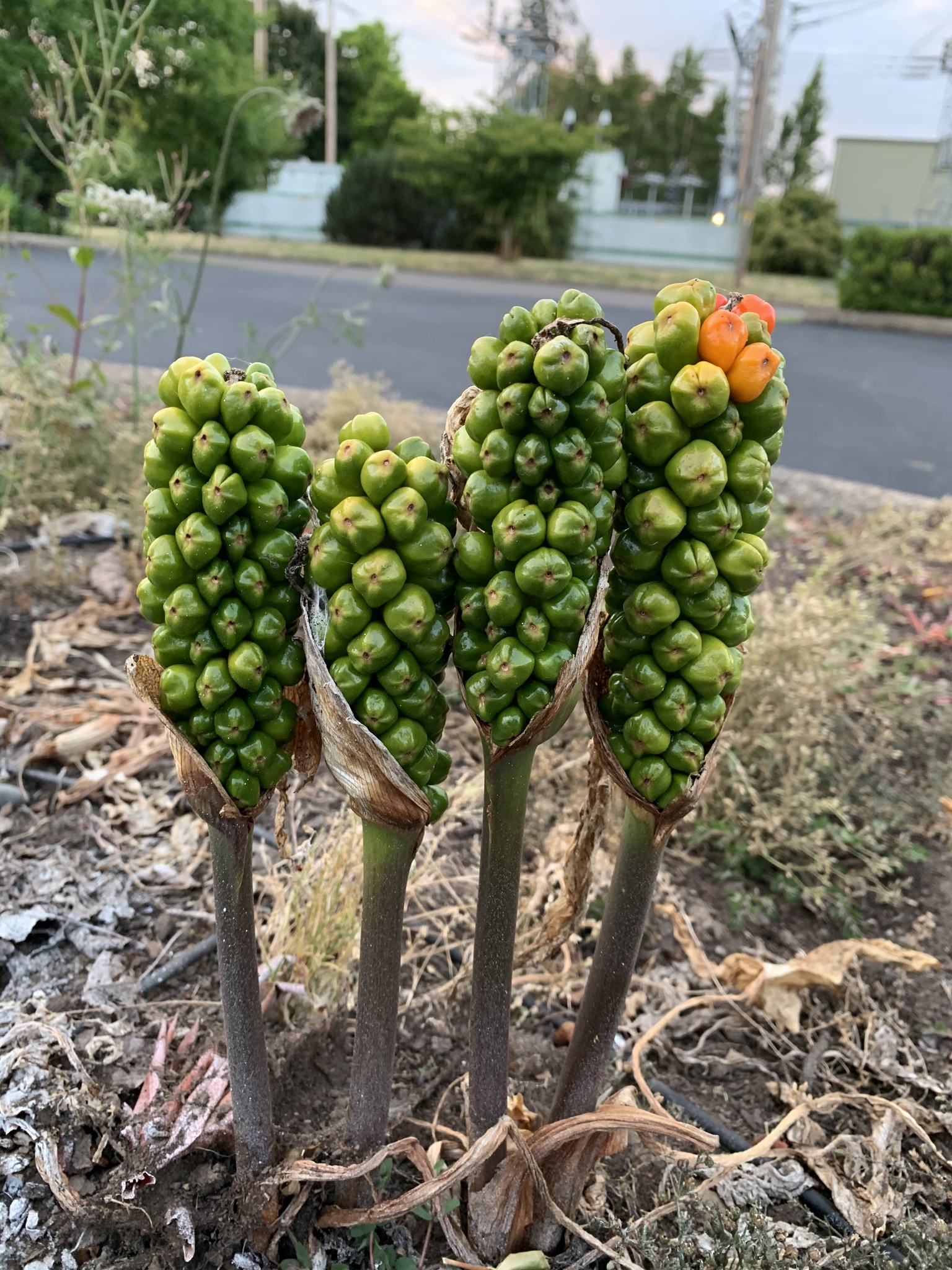
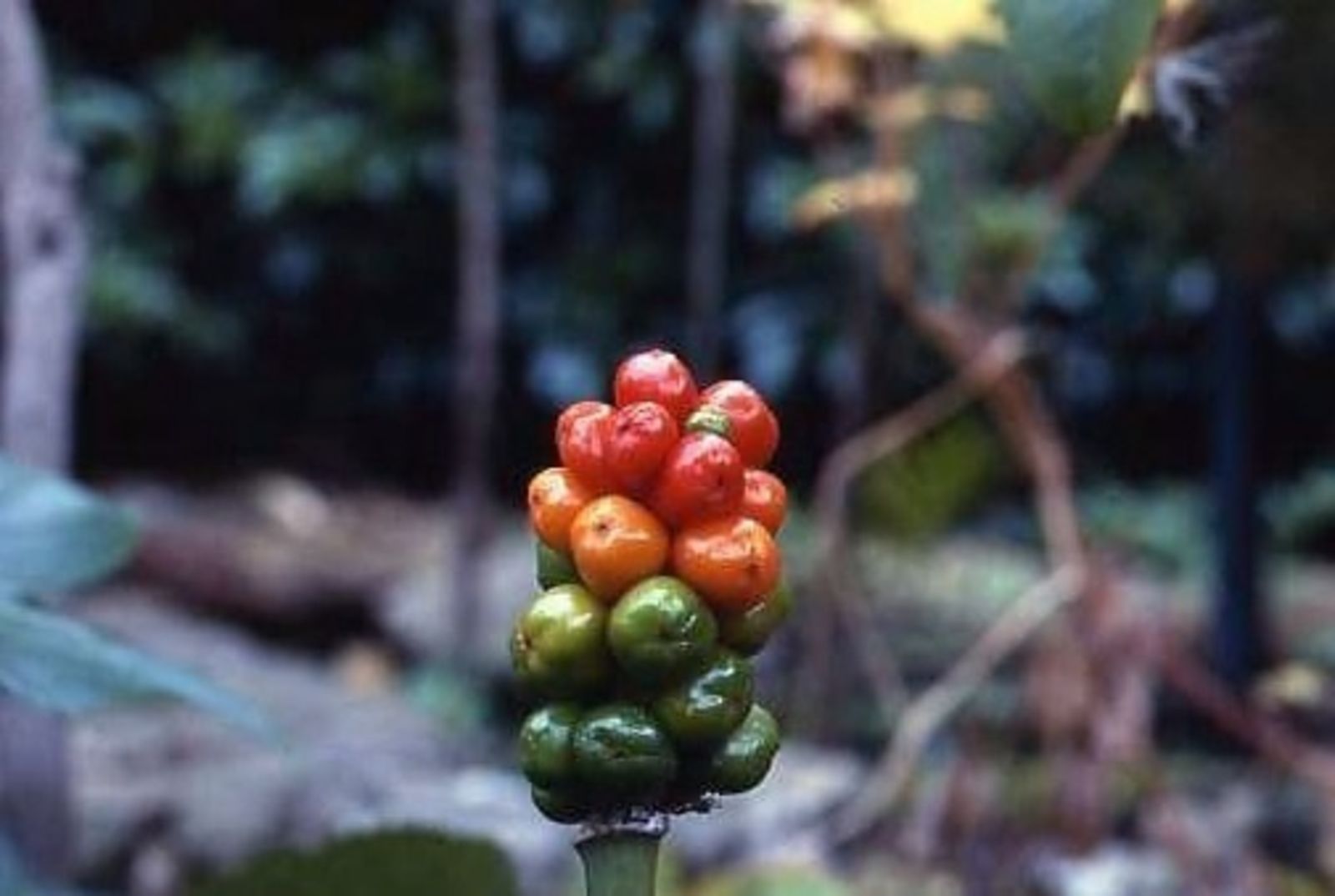
After the spathe withers, the stem becomes bare and carries a conspicuous spike of bright orange berries in summer. Against the exposed woodland floor, this isolated fruiting spike, with no leaves or flowers nearby, makes Arum italicum recognizable from a distance. 6 4
Useful taxonomy
Miller's accepted name Arum italicum, published in 1768, includes several subspecies recognized by POWO. These geographical entities should be distinguished from horticultural selections:
- Arum italicum subsp. italicum, the type subspecies, grows from the Mediterranean basin to Iraq;
- Arum italicum subsp. neglectum (F.Towns.) Prime occurs in southern Great Britain, western France and northwestern Spain;
- Arum italicum subsp. albispathum (Steven ex Ledeb.) Prime grows in Crimea and the Caucasus;
- Arum italicum subsp. canariense (Webb & Berthel.) P.C.Boyce is endemic to Macaronesia.
Geographical subdivision explains why descriptions differ between regions. Plants in British gardens and Mediterranean scrub belong to the same species, but they do not always belong to the same subspecies. A regional description therefore needs to be read in that context. 2 1
Habitat and range
Western and southern Europe, Macaronesia and Asia Minor east to Iraq make up the native range, depending on the taxonomic treatment. Italian arum grows in moist woodland, field hedges, shaded banks and path margins on clay or calcareous soils. 2 7
Within France, the species is recorded and monitored by the national natural heritage inventory, INPN. It is not treated as threatened at the national scale, a statement about its French status rather than a general assessment for every region. 7 8
Introduced for ornament beyond Europe, Arum italicum has become invasive in several temperate parts of North America. Its dense winter foliage can prevent native woodland plants from establishing even before spring returns, giving its unusual seasonal cycle an ecological consequence. 6 5
Life cycle and reproduction
An underground tuber sustains the plant through dormancy during dry summers, sometimes protecting it from prolonged seasonal drought. No aboveground parts are then visible. Leaves return in fall, persist through winter and yellow before the next summer dry period. 4 3
Following pollination by small flies, spring flowering produces a dense spike of berries that gradually change from green to bright orange. The berries remain upright on the bare stem through summer, long after the leaves have disappeared. 5 6
Garden propagation uses division of dormant tubers or fresh seed from the berries. Dispersed berries also allow spontaneous seedling establishment. Together, vegetative persistence and seed spread help explain rapid naturalization in some gardens and woodland. 4 6
Uses and risks
Winter foliage is the chief ornamental attraction in woodland gardens, hedges and shaded borders, remaining visible when most perennials are dormant. Marmoratum, with its strongly white-marbled leaves, is particularly valued for winter garden interest. 3 4
Every part, including tubers, leaves, spathes and berries, contains insoluble calcium oxalate crystals. Chewing or swallowing them causes immediate mouth and throat irritation, excessive salivation and difficulty swallowing; larger amounts may cause digestive upset. The orange berries, which may look sweet, pose a particular risk to young children and household animals. 5 6
INPN and Tela Botanica document confusion between young arum leaves and wild garlic (Allium ursinum) before flowering during wild-food gathering. Crushed wild garlic leaves have a distinct garlic smell; Arum italicum does not. This distinction helps explain the confusion but does not make an uncertainly identified leaf suitable to eat. 7 8
Varieties, look-alikes and related plants
Marmoratum is the usual horticultural trade name for forms with strongly cream-white-veined leaves. It is a selection of the type subspecies rather than a separate species. The botanical subspecies neglectum, albispathum and canariense differ mainly in geographical range, rather than through an obvious visual feature in the garden. 3 2
Before flowering, three groups are especially relevant when comparing leaves:
- Allium ursinum, wild garlic, has a garlic odor when its leaves are crushed;
- Arum maculatum, lords-and-ladies, often has black-spotted leaves and flowers in spring rather than winter;
- Rumex species, wild sorrels, have narrower leaves without the same arrowhead shape.
As with other toxic woodland geophytes, leaves or berries should never be gathered for cooking unless their identity is certain, even in small quantities. An unresolved identification leaves a poisoning risk that appearance alone cannot exclude. 8 7
Main sources
- Wikidata, Arum italicum
- Plants of the World Online / Kew, Arum italicum Mill.
- Royal Horticultural Society, Arum italicum subsp. italicum 'Marmoratum'
- Missouri Botanical Garden, Plant Finder, Arum italicum
- Plants For A Future, Arum italicum
- Washington State Noxious Weed Control Board, Italian arum
- INPN / MNHN–OFB, Arum italicum Mill., CD_NOM 84110: original species notice, archived 8 October 2022
- Tela Botanica, eFlore BDTFX: Arum italicum Mill. — official nomenclatural record 7024
Similar plants
If you are unsure about a plant’s toxicity, ask a botanist or veterinarian for advice.