
Japanese barberry (Berberis thunbergii, )
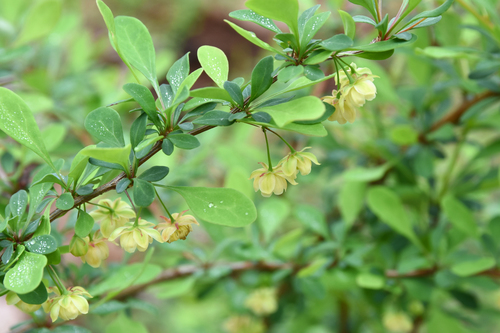
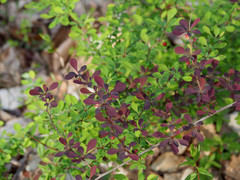
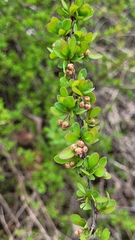
Japanese barberry (Berberis thunbergii) is a deciduous, thorny shrub in the Berberidaceae, native to central and southern Japan. Grown for purple or golden foliage and red autumn berries, it is also invasive across much of eastern North America.
Read moreJapanese barberry, Thunberg’s barberry and Red barberry





© photo
(c) Mark Kluge, some rights reserved (CC BY-NC), uploaded by Mark Kluge · cc-by-nc
Katja Schulz · cc0
Leanne Stacy Reitan · cc0
Taken Nov 23, 2019 by mohammad fazel dehkordi (cc-by-sa)
Taken Sep 9, 2020 by Hem B (cc-by-sa)
Taken Jul 21, 2022 by Oğuzhan (cc-by-sa)
Taken Apr 14, 2022 by ñah (cc-by-sa)
© copyright of the Board of Trustees of the Royal Botanic Gardens, Kew.




Global distribution
Native to central and southern Japan, Japanese barberry was introduced to North America and Europe in the nineteenth century as an ornamental and hedge shrub and has become widely naturalized. It is invasive in most northeastern US states.
- Native1
- Introduced1
- Invasive1
- Japan
- China
- Northeastern United States
Hexagons: regions where the plant occurs. Green dots: native range.1
Identity
Japanese barberry (Berberis thunbergii DC., 1821), also known as Thunberg’s barberry or Red barberry, can be identified by the single spine at each node. European barberry, Berberis vulgaris, usually has three-branched spines. This distinction works on a leafy shoot from the first year, without a hand lens or identification key. 3
The epithet thunbergii honors Swedish naturalist Carl Peter Thunberg, who collected plants in Japan in the eighteenth century. De Candolle formally described this member of the genus Berberis, in the Berberidaceae, in 1821. 1 2
Recognition
Arching branches give Japanese barberry a dense, rounded outline. In temperate climates it commonly reaches 60 cm–1.5 m (2–5 ft) tall, with a similar spread. Growth is slow at first, becoming stronger once the shrub is established. 3 4
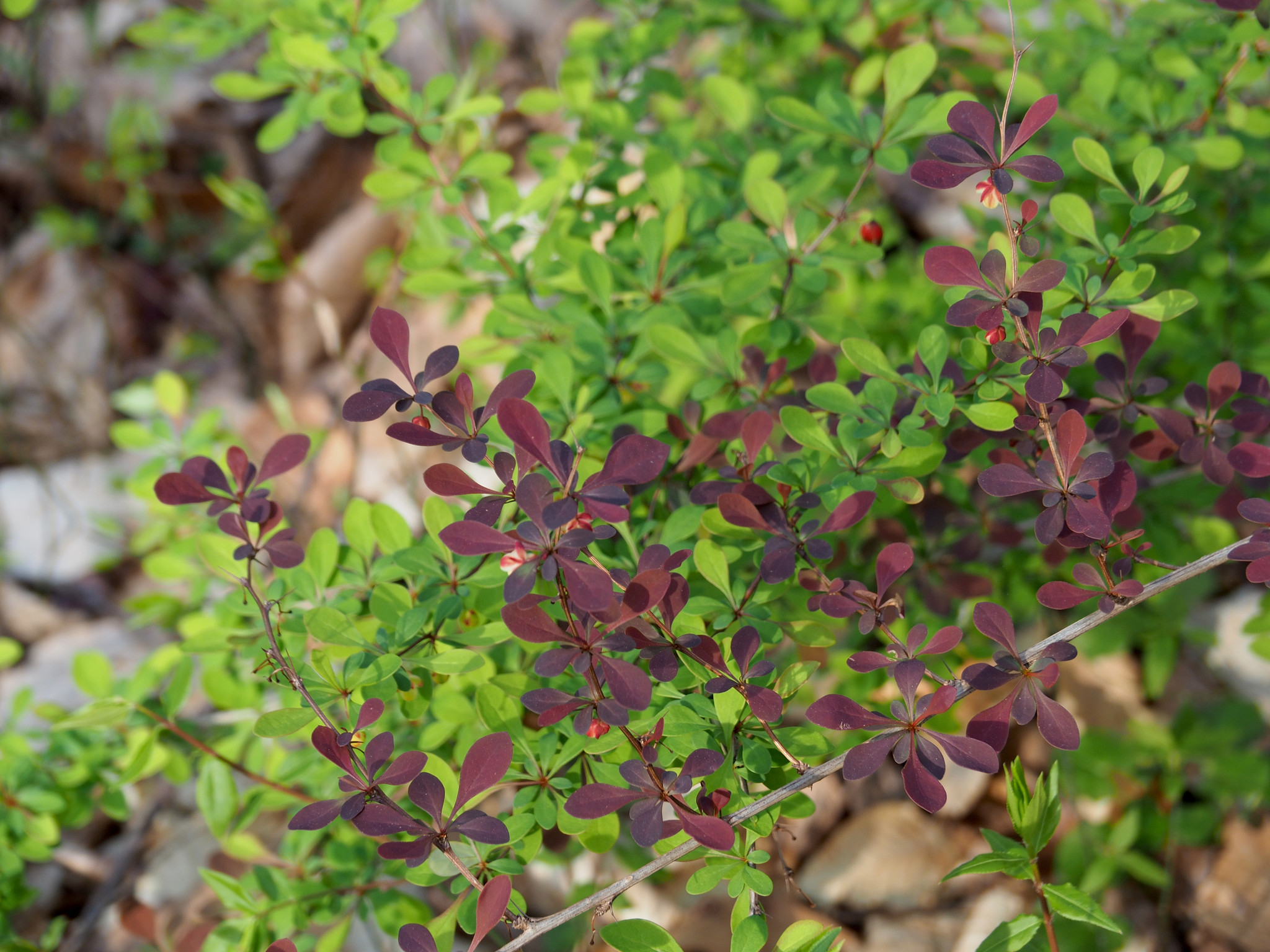
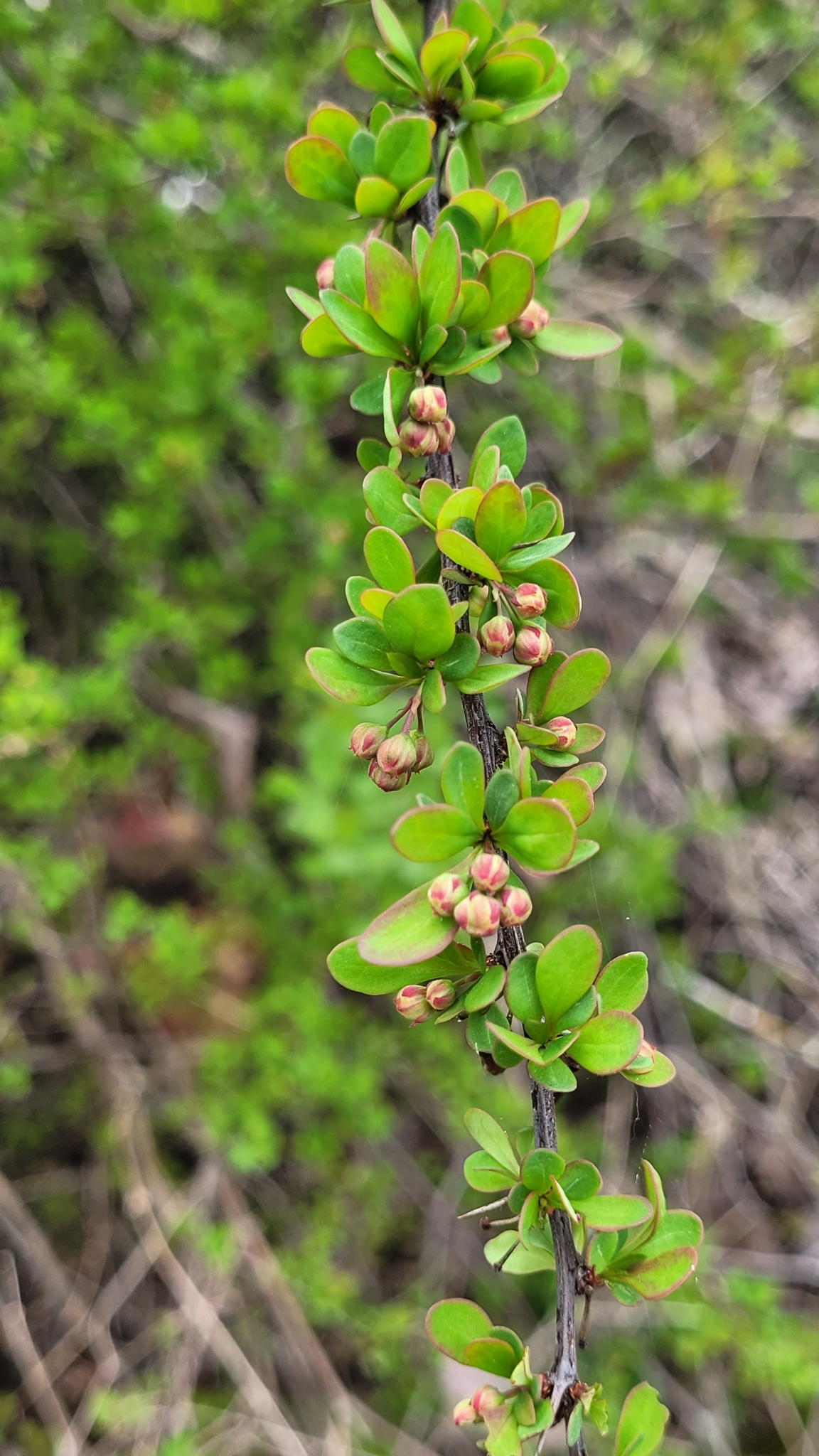
Small, obovate leaves have smooth margins. They are green in the typical species and purple or golden in selected cultivars. Autumn often brings orange, red or yellow before leaf fall; the display depends largely on the light received during summer. 5 4
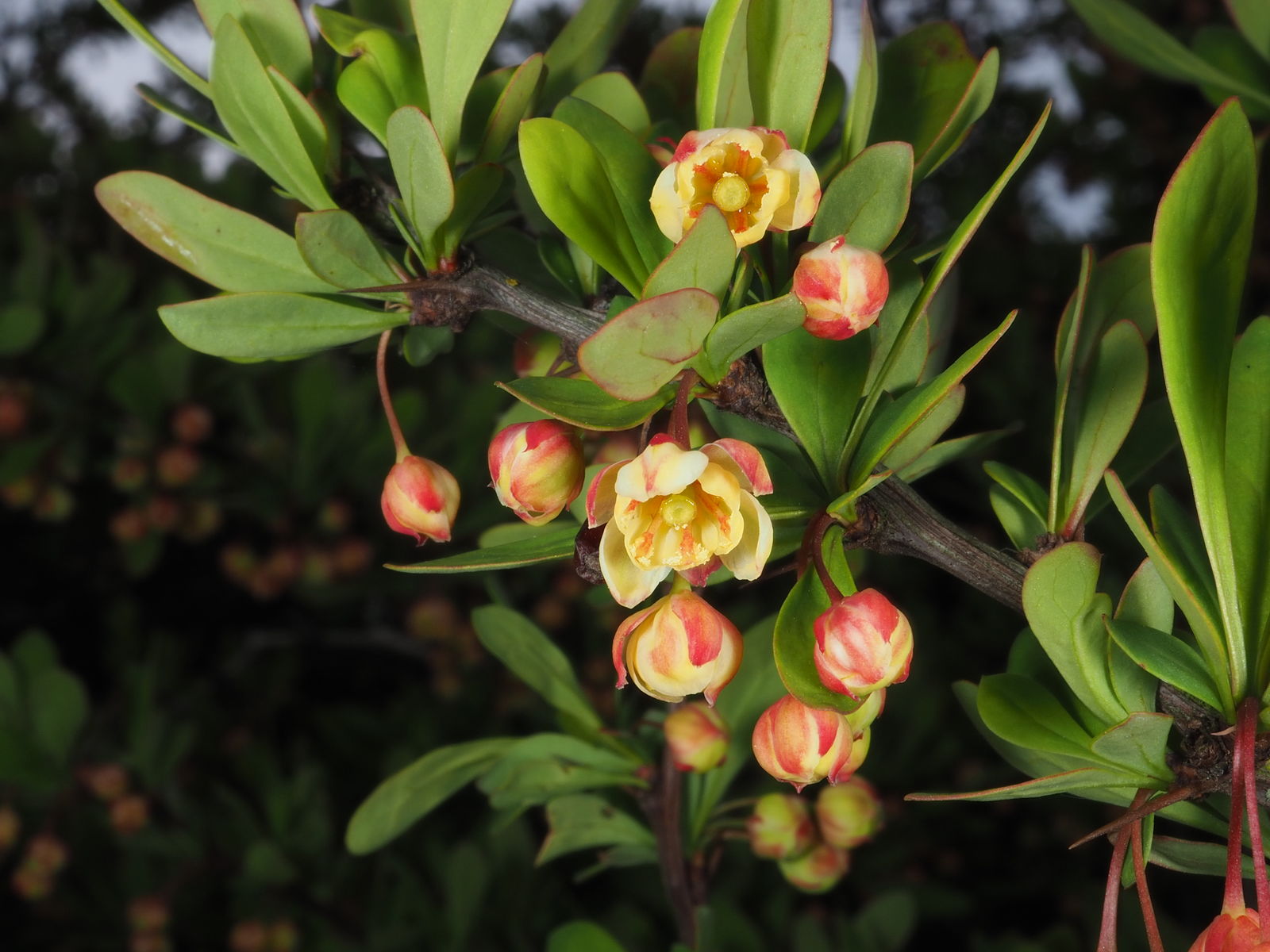
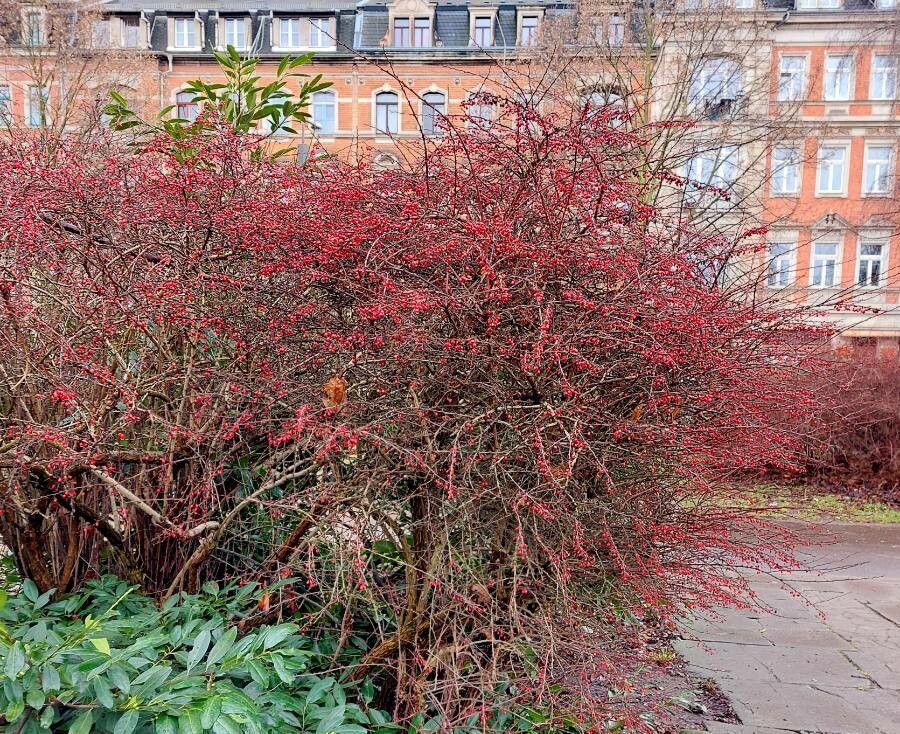
Spring flowers are easily overlooked: small pale-yellow blooms, sometimes with red-tinged sepals, open in short clusters along the branches. Their oval, bright-red berries are far more conspicuous in autumn and can remain on bare stems well into winter. 3 4
A young shoot without flowers or fruit offers another clue. Cutting the bark of stems or roots exposes bright-yellow tissue, a characteristic of the genus Berberis. 4
Useful taxonomy
The accepted botanical name, Berberis thunbergii DC., dates to 1821. Several historically described varieties and forms are now treated as synonyms of this taxon:
- Berberis thunbergii var. atropurpurea Chenault
- Berberis thunbergii var. minor Rehder
- Berberis thunbergii var. maximowiczii (Regel) Regel
- Berberis thunbergii f. erecta Rehder These are historical synonyms.
Historical names may still appear in nursery catalogs and older literature. Using the binomial Berberis thunbergii provides a consistent identification when a seller retains one of these synonyms. 1 2
Habitat and range
Central and southern Japan form the native range, where the shrub grows in open woodland and along forest edges. It was introduced to North America and Europe in the nineteenth century for ornament and defensive hedges, and has also naturalized in China. 7 5
Its introduced US range stretches from New England to North Carolina and west to Minnesota, Iowa and Washington State. Birds carry seeds over long distances. Soil disturbed by introduced earthworms provides particularly favorable germination sites. 7
Dense Japanese barberry stands alter soil chemistry, increasing pH and available nitrogen. These changes can favor other introduced plants, including buckthorn and Japanese honeysuckle. Established shrubs tolerate cold down to −25 °C (−13 °F), with a USDA 4–8 range, helping explain their persistence in both Minnesota and temperate Britain. 7
Life cycle and reproduction
Flowering can begin 2–3 years after planting, in spring in temperate conditions. Autumn fruit may persist through winter. The full framework takes longer to develop, with the mature habit reached after about 5–10 years. 4 5
Birds eating the red berries provide the main route of natural seed dispersal. Low branches can also root where they touch soil, while stumps resprout after cutting. Together, these processes accelerate spread through invaded habitats. 7
Garden propagation chiefly uses cold-stratified seed or semi-ripe cuttings taken in summer. Cuttings root readily under temperate growing conditions. 6
Uses and risks
A low, thorny barrier, a colorful foliage bed or a specimen at a property boundary are familiar ornamental uses. The RHS places Japanese barberry in pruning group 2: prune just after spring flowering to encourage dense regrowth. 3
Bark and roots contain berberine, an alkaloid also studied for antibacterial properties. Substantial ingestion can cause mild digestive upset in cats and dogs. Human risk has not been documented in the same way. 6
Ecological effects reach beyond the garden. North American forests invaded by Berberis thunbergii have supported up to 12 times more ticks carrying Lyme disease than nearby uninvaded forests, an effect attributed to the humid, shaded understory created by dense growth. 7
Varieties, look-alikes and related plants
Foliage selections dominate nursery offerings. Atropurpurea and dwarf Atropurpurea Nana are widely sold for purple hedges; Rose Glow adds pink-and-white marbling to young leaves; Aurea and Golden Ring offer golden tones or margins. The cultivars retain the species’ hardiness, down to −25 °C (−13 °F) in well-rooted plants within USDA 4–8. 3
Common identification pitfalls include:
- Berberis vulgaris, with three-branched spines and toothed leaves rather than the single spines and smooth margins of B. thunbergii;
- Berberis darwinii, an evergreen with orange flowers and a different foliage effect from purple Japanese barberry;
- other small, thorny hedge shrubs, distinguished partly by the bright-yellow inner bark exposed when stems or roots of Berberis are cut.
Local restrictions matter before planting. Several US states prohibit the sale of Berberis thunbergii, while the shrub remains widely grown in France and the United Kingdom. Check the rules that apply where you live. 7 3
Main sources
- Plants of the World Online / Kew, Berberis thunbergii DC.
- International Plant Names Index, Berberis thunbergii
- Royal Horticultural Society, Berberis thunbergii
- Missouri Botanical Garden Plant Finder, Berberis thunbergii
- NC State Extension, Berberis thunbergii
- Plants For A Future, Berberis thunbergii
- US National Park Service, Species Spotlight — Japanese Barberry
Frequently asked questions
Is Japanese barberry invasive?
Yes, across much of eastern North America, where dense thickets alter soil conditions and provide favorable tick habitat. In France it remains mainly a cultivated hedge shrub, without a widespread invasive designation.
Why is Japanese barberry associated with ticks?
Its dense, humid thickets shelter ticks and the small rodents that host them. Invaded forests have supported up to twelve times more ticks carrying Lyme disease than nearby uninvaded forests.
Is Japanese barberry toxic to cats and dogs?
Its tissues contain berberine, an alkaloid that may cause mild digestive upset after ingestion by cats and dogs. Human risk is not documented in a comparable way.
How can I tell Japanese barberry from European barberry?
Berberis thunbergii has a single spine at each node, whereas Berberis vulgaris usually has spines grouped in threes. European barberry also has toothed leaves; Japanese barberry has smooth leaf margins.
Which exposure produces the best foliage color?
Purple and golden cultivars need full sun to maintain their color. In shade, leaves tend to become greener and lose their ornamental effect.
Should I wear gloves when pruning Japanese barberry?
Yes. Fine, sharp thorns run along the branches, including older wood removed during routine pruning.
Similar plants
If you are unsure about a plant’s toxicity, ask a botanist or veterinarian for advice.