
Chaste tree (Vitex agnus-castus, )
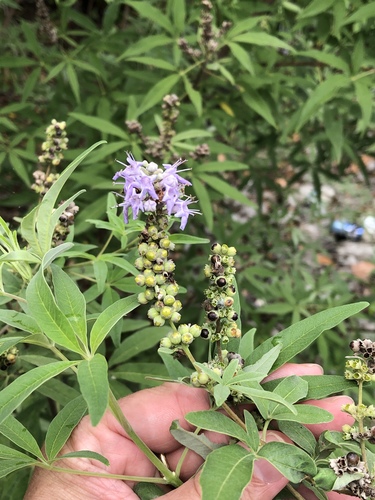
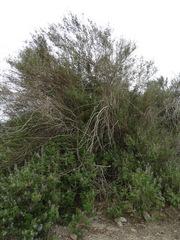
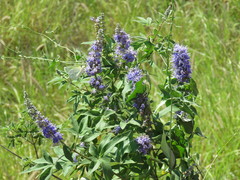
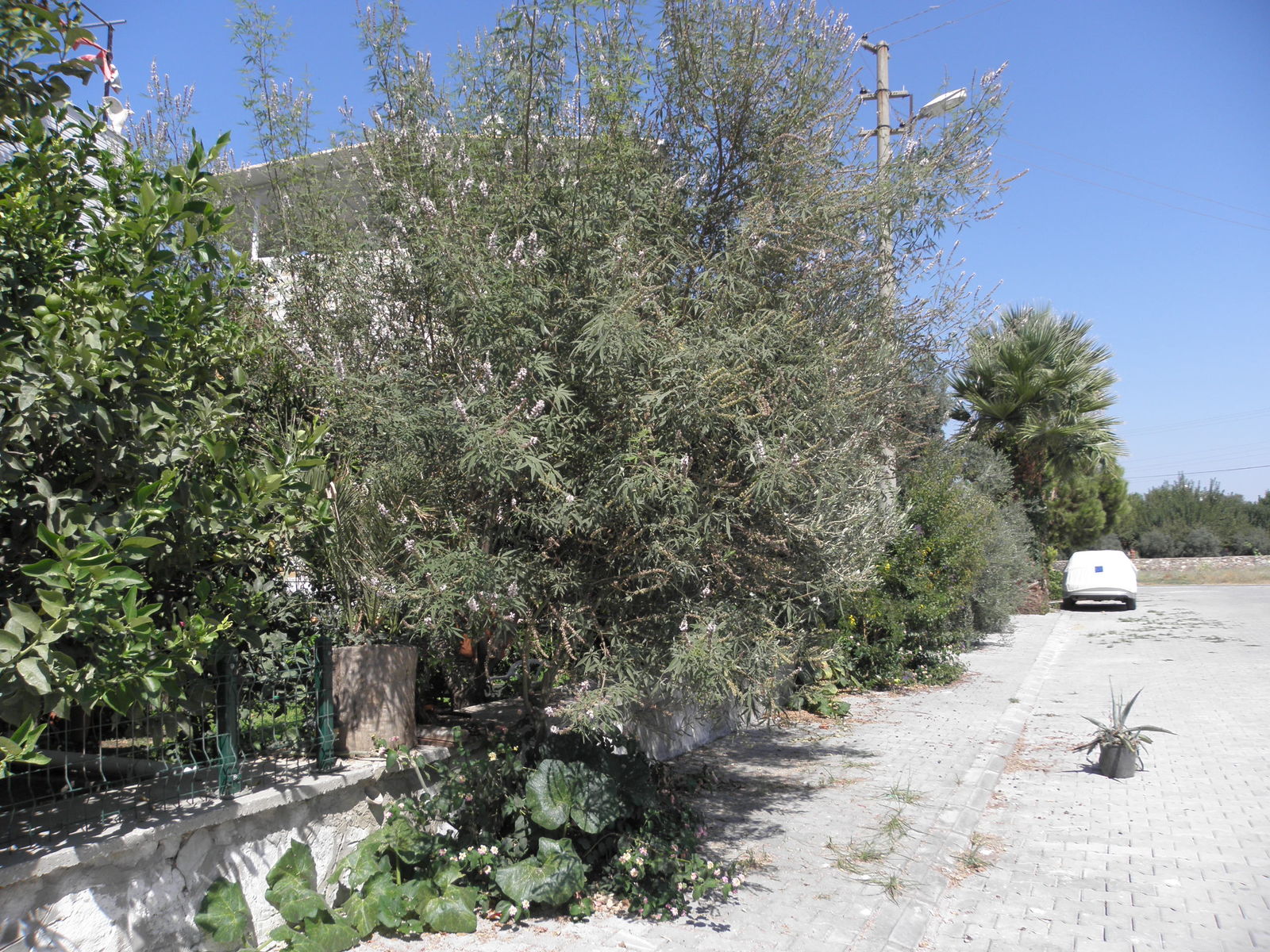
Chaste tree (Vitex agnus-castus L.), also called monk’s pepper, is a deciduous shrub in the Lamiaceae family, native from the Mediterranean to central Asia and northwestern India. Aromatic, palmate leaves and long panicles of mauve to blue-violet flowers identify it. It flowers in late summer on the current year’s growth.
Read moreChaste tree, Chasteberry, Monk’s pepper, Lilac chaste tree and Vitex


© photo
Sam Kieschnick · cc-by
Jacky Judas · cc-by
Alexis López Hernández · cc-by
Taken Jul 5, 2020 by Giode Tonpino (cc-by-sa)
Taken Sep 14, 2019 by Jean-Daniel BLARD (cc-by-sa)
Taken May 2, 2012 by Tela Botanica − pierre BONNET (cc-by-sa)
Taken Aug 16, 2019 by Rolf Lehmann (cc-by-sa)
Taken Aug 28, 2022 by Joan Francesc (cc-by-sa)
© copyright of the Board of Trustees of the Royal Botanic Gardens, Kew.




Global distribution
Vitex agnus-castus is native from the Mediterranean basin to central Asia and northwestern India according to Plants of the World Online. Widely introduced as an ornamental shrub, it has naturalized in several temperate to subtropical regions, notably the southeastern United States.
- Native7
- Introduced1
- France
- Spain
- Italy
- Greece
- Turkey
- Iran
- India (Rajasthan)
- United States (Southeast)
Hexagons: regions where the plant occurs. Green dots: native range.1
Identity
Chaste tree (Vitex agnus-castus L., 1753) is a deciduous shrub reaching 2–6 m (6.5–20 ft), native from the Mediterranean basin to central Asia and northwestern India. Plants of the World Online recognizes this binomial as the accepted name within Vitex, in the Lamiaceae family. 1 Other established names include chasteberry, monk’s pepper, lilac chaste tree and vitex; its pepper-related names belong to a long history of naming and etymological confusion.
An old misunderstanding lies behind the scientific epithet: Latin agnus, meaning “lamb,” was long associated with Greek hagnos, meaning “pure” or “chaste,” although the words have no real botanical connection. Theophrastus had already described the shrub as agnos in ancient Greece, long before the Latin confusion became established. 6
Recognition
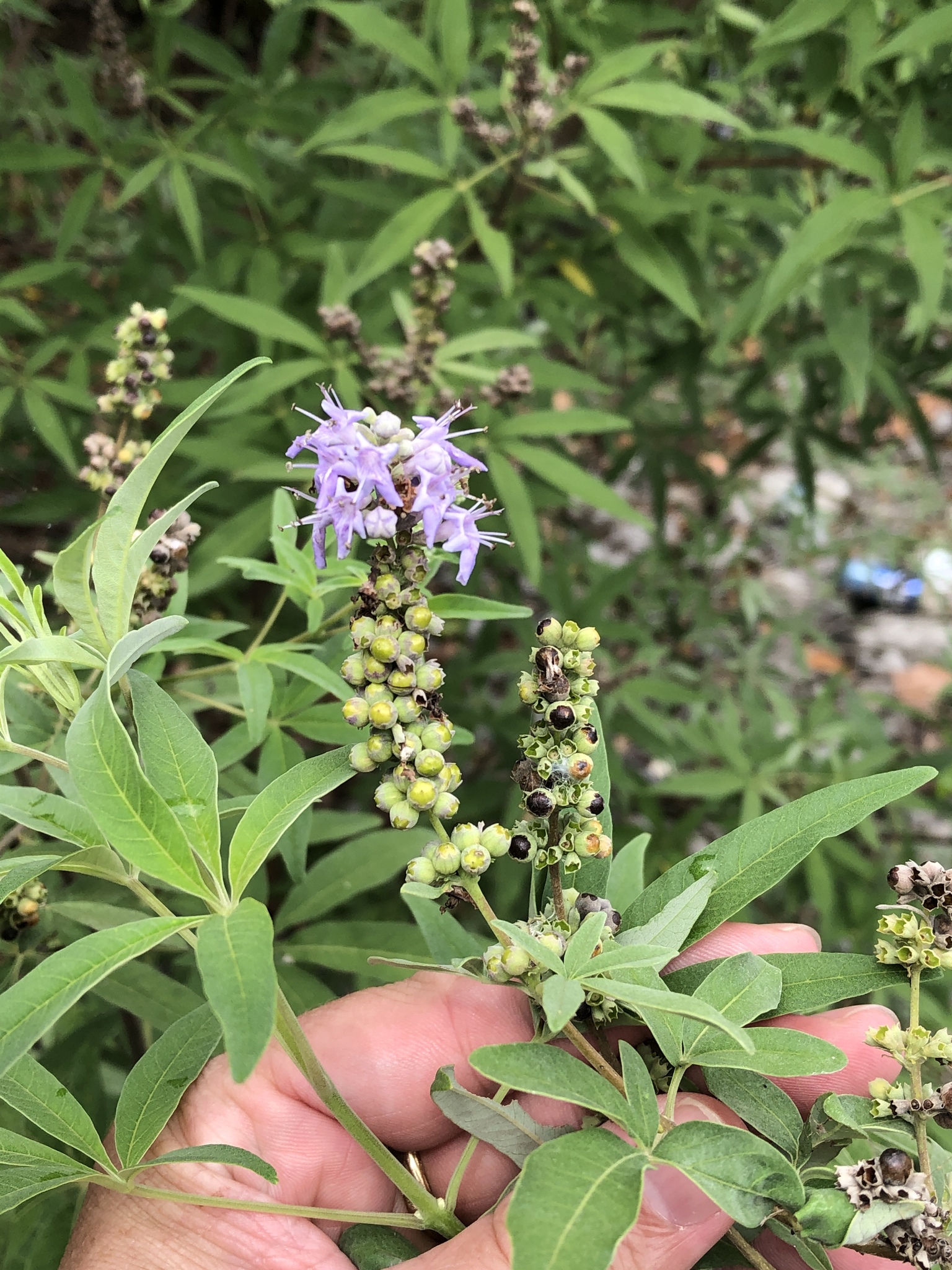
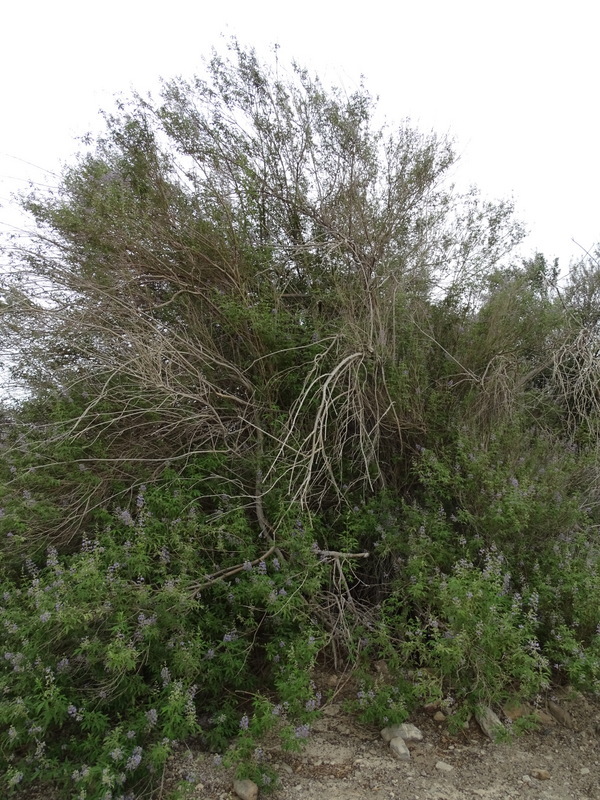
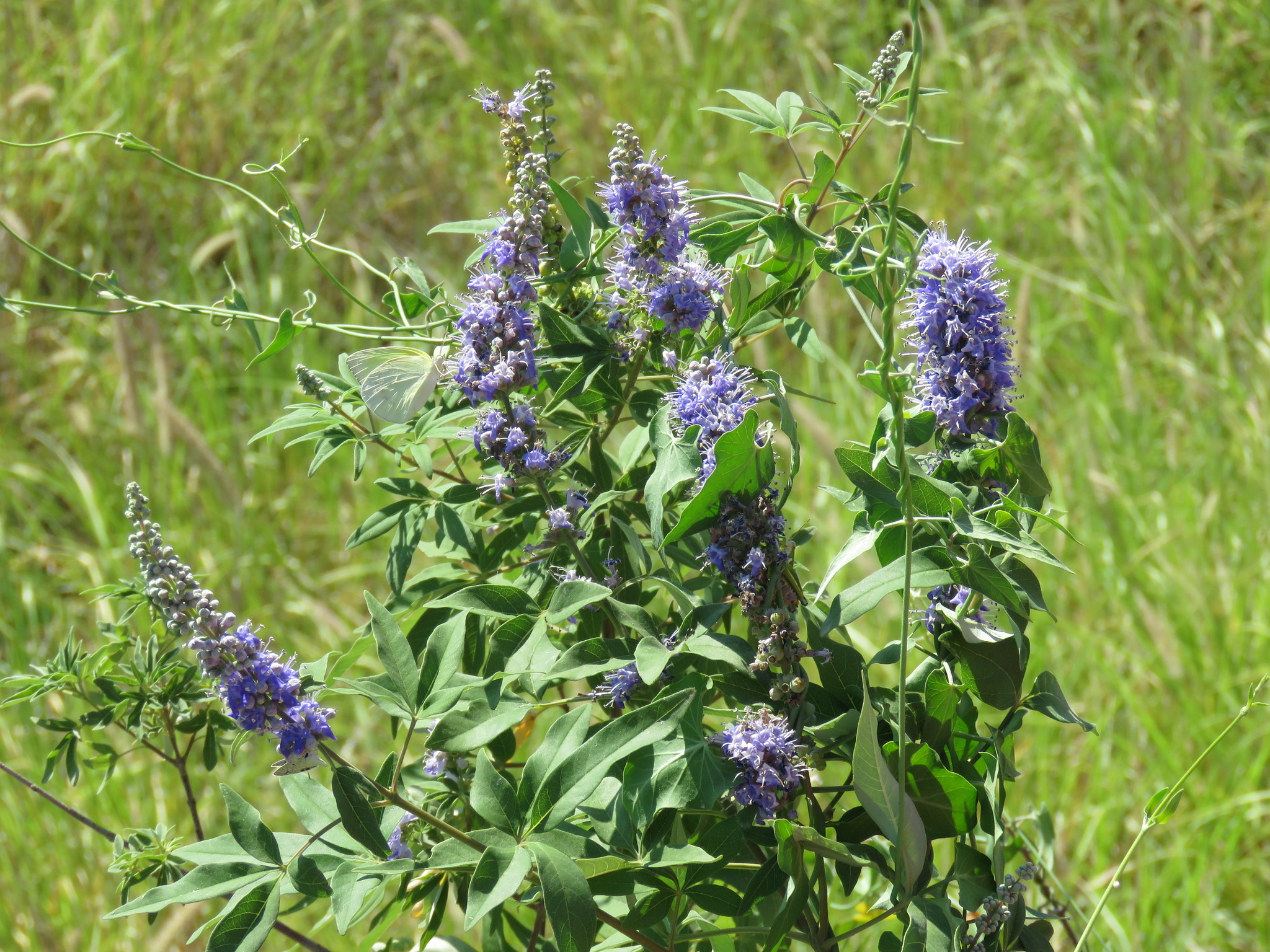
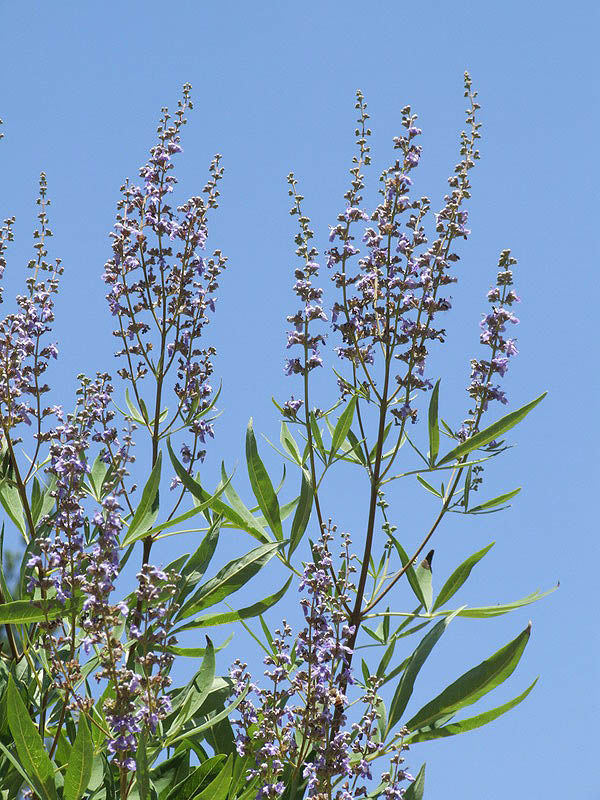
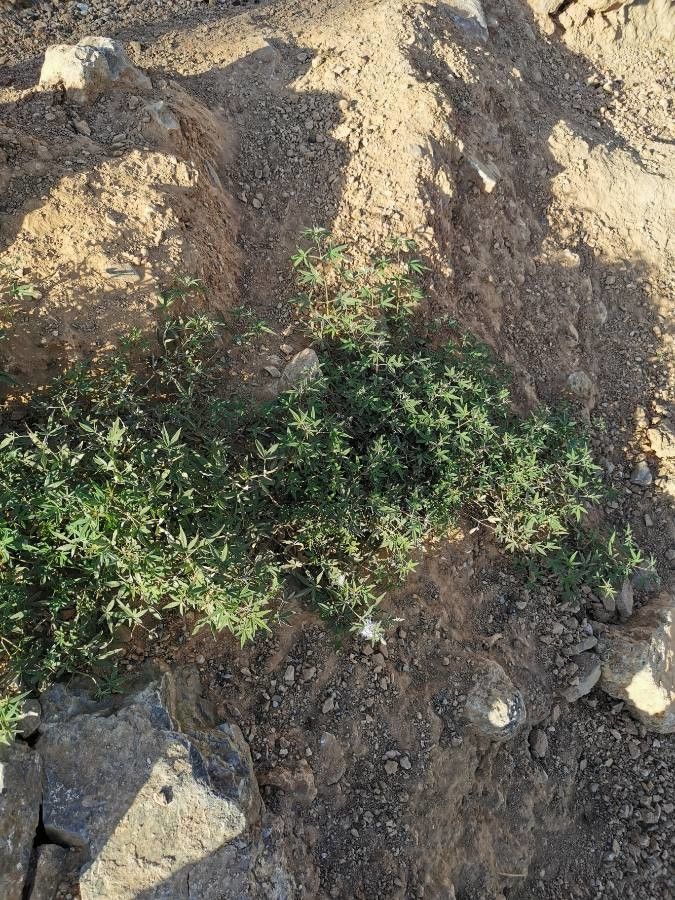
Square stems and aromatic, finger-like leaflets help identify chaste tree. It forms a bushy shrub or small tree, with stems initially gray-green and later brown, showing the four-sided shape typical of Lamiaceae. Its palmate leaves have 5–7 lance-shaped leaflets, gray-green above and paler beneath. Crushing them releases an aromatic, peppery scent, one of the most useful field characters. 3 4
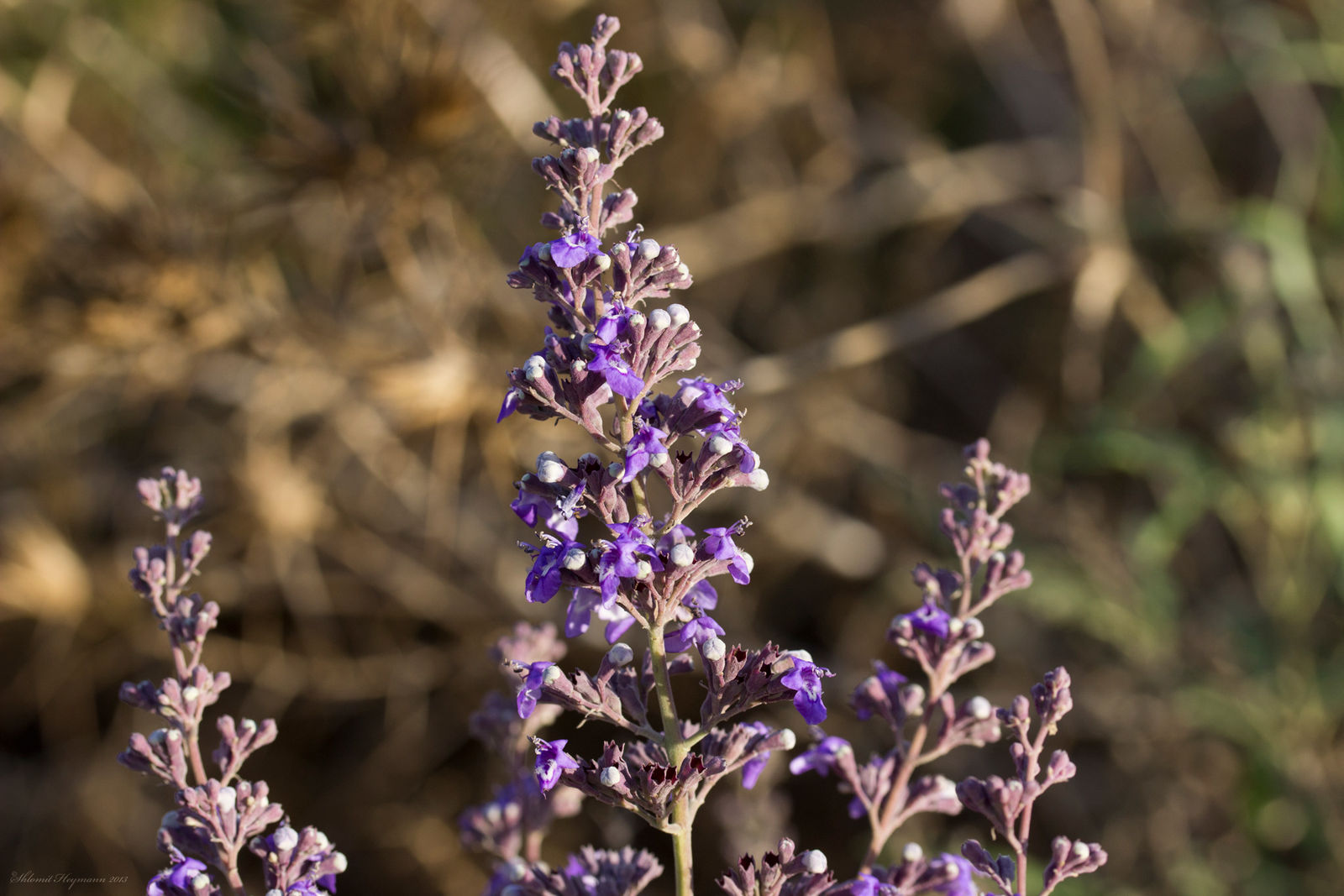
Late-summer shoots carry terminal panicles 15–30 cm (6–12 in) long. Small, two-lipped tubular flowers are usually mauve to blue-violet, although horticultural selections may be white or pink. They are followed by round drupes measuring 4–6 mm (about 0.2 in), dark brown when ripe. These small fruits account for the plant's pepper-related common names. 4 5
Useful taxonomy
Among the several hundred tropical and subtropical species of Vitex, chaste tree is one of the few able to flower in a temperate climate. This explains its place in European gardens where most other members of the genus cannot survive. Modern classification places it in Lamiaceae, following its historical transfer from Verbenaceae. 1
Flower color and leaflet width have prompted descriptions of several botanical forms, including Vitex agnus-castus f. latifolia, f. alba and f. rosea. These are variations within the species, not distinct species, and none replaces the accepted name Vitex agnus-castus. The full species name remains the useful reference when comparing cultivated forms. 2
Habitat and range
Mediterranean riverbeds and stream banks are characteristic habitats of chaste tree. Kew records a native range extending from the Mediterranean basin through central Asia to northwestern India. Within that range, the shrub shows a marked preference for watercourses, banks and moist coastal margins rather than uniformly dry ground. 1 5
Ornamental planting has spread Vitex agnus-castus well beyond its native range. It has naturalized in several southeastern US states, reseeding readily along rivers and locally competing with native plants; regional inventories, including the Texas list, identify it as a species to watch. 8 9 In France, no invasive status is currently assigned in the source account; it remains cultivated in Mediterranean climates and sheltered Atlantic coastal locations. 7
The difference between regional monitoring in the United States and the absence of an invasive designation in France illustrates why status must be read geographically. An introduced or monitored plant in one region does not necessarily behave the same way elsewhere. Local climate, access to water and seed pressure along nearby streams influence its capacity to spread.
Life cycle and flowering
Flowers form on the current year’s growth during summer, typically from midsummer to early fall and lasting nearly three months, depending on climate. This has a direct consequence for pruning: cutting back in late winter, before bud break, encourages new flowering shoots rather than removing the season's future flower buds. 3 4
Cold tolerance generally reaches about -10 to -15 °C (14 to 5 °F) in temperate conditions. A severe winter may kill stems down to ground level, but the rootstock can resprout in spring and still flower that same season. 5 3 Propagation uses stratified seed in spring or semi-ripe cuttings taken from midsummer through fall. 5
Uses and herbal medicine
Dried fruits sold as chasteberry are among the more extensively studied herbal supplements for premenstrual syndrome and cyclical breast pain. Other menstrual complaints also feature in documented traditional uses. The US National Center for Complementary and Integrative Health (NCCIH) describes studies of low to moderate quality, with results considered promising rather than conclusive. 6
NCCIH also identifies specific precautions: medicinal chasteberry is discouraged during pregnancy, breastfeeding or with hormone-sensitive cancer, including breast, uterine or ovarian cancer. Common side effects are generally mild digestive or skin complaints. 6 No serious plant toxin is identified for this species in cats, dogs or horses in the botanical account; the documented concern mainly involves poorly supervised medicinal use rather than accidental eating of foliage. 5
Historically, dried fruits also served as a pepper substitute, including in some Mediterranean and Middle Eastern spice mixtures. 5 This older culinary role is distinct from modern herbal treatment. A few berries used to flavor a dish are not equivalent to the concentrated dose of a standardized extract sold through a pharmacy or herbal supplier. The difference in preparation and quantity matters when interpreting claims about traditional use.
Varieties, cultivars and look-alikes
Nursery selections differ mainly in flower color and habit. 'Blue Spire' has dense blue-violet spikes; 'Alba' labels white-flowered plants; 'Rosea' denotes the less common pink forms; and 'Silver Spire' offers a compact habit for small gardens. The broader-leafleted f. latifolia is among the forms most often cultivated in the United Kingdom and has its own RHS cultivation entry. 2
The main horticultural confusion involves Vitex negundo, an Asian species with a more shrubby habit and leaflets that are often narrower and toothed. Similar traditional uses maintain confusion between the two species in the medicinal-plant trade. Common names alone are therefore an unreliable guide: the complete scientific name distinguishes Vitex agnus-castus from Vitex negundo. 2
Main sources
- Plants of the World Online / Kew, Vitex agnus-castus L.
- Royal Horticultural Society, Vitex agnus-castus f. latifolia
- Missouri Botanical Garden Plant Finder, Vitex agnus-castus
- NC State Extension Gardener Plant Toolbox, Vitex agnus-castus
- Plants For A Future, Vitex agnus-castus
- National Center for Complementary and Integrative Health, Chasteberry
- Tela Botanica / eFlore, Vitex agnus-castus
- Invasive Plant Atlas of the United States, lilac chastetree
- Texas Invasives Plant Database, Vitex agnus-castus
Frequently asked questions
Is chaste tree toxic to cats or dogs?
No major toxin is identified for Vitex agnus-castus in pets. The documented risk mainly concerns poorly supervised human medicinal use rather than accidental ingestion of foliage.
Can I take chasteberry without medical advice?
The dried fruits have been studied for premenstrual syndrome, but NCCIH discourages use during pregnancy, breastfeeding or with hormone-sensitive cancer. Seek medical advice before taking a course.
Why is my chaste tree flowering poorly?
Common causes include shade, pruning after bud break or a plant that is still young. Flowers form on the current year’s growth, so prune in late winter.
Are Vitex agnus-castus and Vitex negundo the same plant?
No. They are different species of the same genus, with similar traditional uses but different leaflets and native ranges. The full scientific name distinguishes them.
How much frost can chaste tree tolerate?
It generally tolerates temperatures down to about -10 to -15 °C (14 to 5 °F). Stems may die back to ground level in severe winters, but the rootstock often sprouts again in spring.
Similar plants
If you are unsure about a plant’s toxicity, ask a botanist or veterinarian for advice.