
Common lavender (Lavandula angustifolia, )
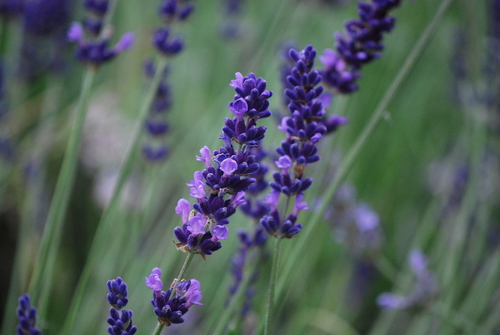
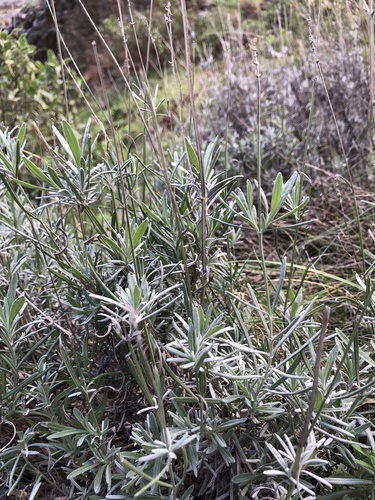
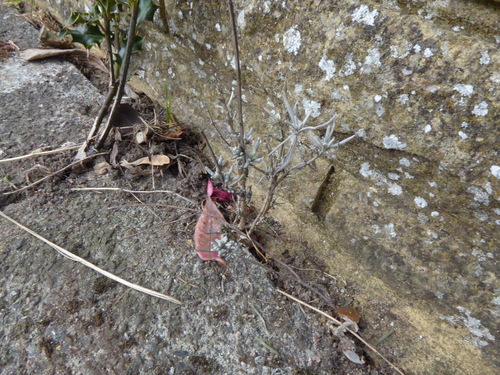
Common lavender (Lavandula angustifolia Mill.), also called English lavender, is an aromatic subshrub in the mint family, Lamiaceae, accepted by POWO and native to France, Italy and Spain. Narrow gray-green leaves, square stems and fragrant summer flower spikes identify it, but it should not be confused with lavandins or other lavender species.
Read moreEnglish lavender, True lavender, Narrow-leaved lavender, Lavender and Spike-oil plant
Place in full sun, with intense direct light all day long.
Global distribution
POWO gives a native range from northeastern Spain to Italy, with France, Spain and Italy listed as native. Records from Great Britain and other regions reflect introduction or cultivation, not the origin of the English name.
- Observations52.2K
- Native range3
- Francenative
- Spainnative
- Italynative
Yellow-orange dots: concentration of documented observations by country. Green countries: sourced native range. GBIF source · Native range according to POWO (Kew).
Identity
Common lavender (Lavandula angustifolia Mill.) is an accepted species in the genus Lavandula, family Lamiaceae. POWO ties the name to the eighth edition of the Gardener's Dictionary, published in 1768, and IPNI keeps the same abbreviated author, Mill. 1 2
English lavender, true lavender and narrow-leaved lavender are all everyday names. None of them should hide the botanical point that matters: "English lavender" does not mean native to England. POWO lists Great Britain among the regions of introduction, and the RHS states that the plant is native to neither Britain nor Ireland. 1 3
For identification, then, the binomial is more reliable than scent, flower color or a trade name. Cultivated lavenders share many traits, yet not all of them are L. angustifolia. 4
Recognition
Expect a small, dense, aromatic evergreen subshrub. The RHS describes a compact, bushy shrub reaching roughly 0.5–1 m (1.5–3.3 ft), with narrow gray-green leaves and short spikes of pale to deep purple flowers in summer. 3
NC State lists the features that help on a living plant: opposite, simple, linear to lanceolate leaves with smooth margins, gray-green to bluish and aromatic when crushed; square, hairy stems; flowers held in terminal spikes. 5
Flowers are usually purple to violet-blue, though some cultivars bloom pink or white. Color alone settles nothing: check the woody habit, narrow leaves, flower spikes, aromatic scent and botanical label together. 5 6
Useful taxonomy
On the reference name, POWO, IPNI and GBIF agree: Lavandula angustifolia Mill. The historical synonyms Lavandula officinalis and Lavandula vera still turn up in horticultural sources, but they are synonyms or older names, not separate species. 1 3 4
- Lavandula officinalis
- Lavandula vera DC.
- Lavandula spica, a name to handle with care, since some sources apply it correctly and others misapply it
That care matters for essential oils and commercial lots: a "lavender" label can cover a species, a cultivar, a hybrid or a fragrance raw material. A common name alone tells you nothing about a product's aromatic composition. 1 7
Habitat and range
Native populations run from northeastern Spain to Italy, with France, Spain and Italy listed as native by POWO. The same source lists several regions of introduction, including Great Britain, Germany and Austria. 1
Garden care follows that ecology: full sun, well-drained soil, tolerance of limestone or neutral soils and little tolerance of standing water. The RHS recommends improving drainage in heavy soil, and IFAS also notes that plants suffer more in wet, heavy ground, especially in winter. 3 6
No invasive status turns up for this species in the botanical and horticultural references consulted, and within its native range the question hardly arises. The IFAS note "not known to be invasive" is a useful horticultural cross-check, but it reflects a North American context and is not a regulatory status elsewhere. 1 6
Cultivation and life cycle
Common lavender grows as a subshrub: a woody base persists, and leafy shoots carry the summer flowers. That architecture explains the pruning rule. You can trim and tighten the plant after flowering, but the RHS advises against cutting into old wood. 3
Overwatering is the usual mistake, in containers and beds alike. IFAS sums up the trade-off well: a sunny spot and dry, fairly poor soil, with a higher risk of winter injury when the plant sits in heavy, wet ground. Where winters are wet rather than cold, drainage matters more than frost protection. 6
Propagation is by seed or by semi-ripe cuttings in summer, and cuttings remain the dependable choice for keeping a specific cultivar true. Seedlings can vary from plant to plant, which is normal for a selected garden plant. 3
Uses, toxicity and edibility
Well-sourced uses are ornamental and aromatic: edging, rock gardens, containers, dried bunches, potpourri, sachets, perfumery and pollinator gardens. The RHS lists the plant among those providing nectar and pollen for bees and other pollinating insects. 3 6
NC State flags the flowers as "edible," but caution still applies: no dose is given, no home ingestion is recommended, and edible flowers, garden plant, scented product and concentrated essential oil are different things. 5
For animals, the ASPCA lists lavender as toxic to dogs, cats and horses, naming linalool and linalyl acetate as the compounds of concern. NC State gives a low severity for people and the same main digestive signs, so the practical advice is to keep the plant, and above all concentrated extracts, out of reach of pets and children. 8 5
No medical recommendation is made here. Traditional uses, relaxation claims and properties attributed to essential oils would require clinical evidence, formulation details and contraindications that the available horticultural references do not provide. 8
Cultivars, look-alikes and plant health
Among the cultivars and selections named by the RHS and IFAS are 'Hidcote', 'Munstead' and 'Folgate'. These names help you pick a size, color or garden form, but they do not replace the species' botanical name. 3 6
Lavandin, Lavandula x intermedia, causes the most frequent mix-up. The RHS treats it as a hybrid lavandin and explicitly lists Lavandula hybrida (angustifolia x latifolia) among its synonyms. It can look very similar, yet it should never be recorded as plain common lavender. 7
Other look-alikes worth knowing are Lavandula stoechas, with showy "rabbit ear" bracts, Lavandula latifolia, more closely tied to spike lavender, and rosemary, another aromatic Lamiaceae with different leaves and flowers. When in doubt, the combination of narrow opposite leaves, terminal spike, compact woody habit and full binomial remains the best check. 5 4
On the plant-health side, the RHS reports rosemary beetle, froghoppers, Botrytis, occasionally honey fungus, and above all a high-risk host status for Xylella fastidiosa. That listing is a good reason not to move doubtful plants between sensitive areas without checks. 3
Main sources
- Plants of the World Online / Kew, Lavandula angustifolia Mill.
- International Plant Names Index, Lavandula angustifolia Mill.
- GBIF Backbone Taxonomy, Lavandula angustifolia Mill.
- Royal Horticultural Society, Lavandula angustifolia
- NC State Extension Gardener Plant Toolbox, Lavandula angustifolia
- University of Florida IFAS Extension, Lavandula angustifolia
- ASPCA, Lavender toxicity entry
Frequently asked questions
Does English lavender come from England?
No. POWO gives France, Spain and Italy as its native range and lists Great Britain among the regions where it was introduced.
Why does my lavender die over winter?
The most common cause is standing water in heavy soil or around the crown, more often than dry cold.
Can I cut lavender back hard?
No. The RHS advises against cutting into old wood; always leave some live foliage.
Is lavender edible?
NC State lists the flowers as edible, but gives no dose or recipe, and edible flowers are not the same thing as concentrated essential oil.
Is lavender toxic to pets?
Yes, to cats, dogs and horses according to the ASPCA. The listed signs are mainly digestive, and concentrated essential oil calls for extra caution.
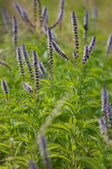
Similar plants
Botanical data compiled from reference sources (RHS, Kew Gardens, POWO). This profile is for guidance only and is not a substitute for advice from a botanist or veterinarian if you have concerns about toxicity.