
Peacock flower (Caesalpinia pulcherrima, )
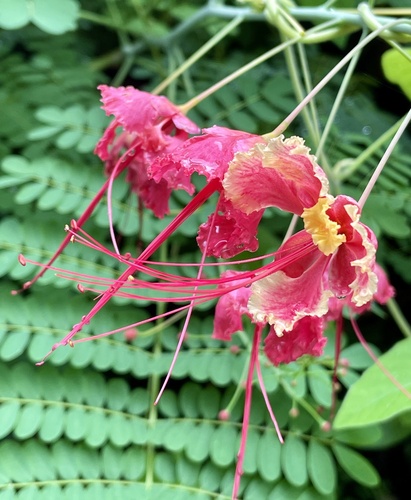

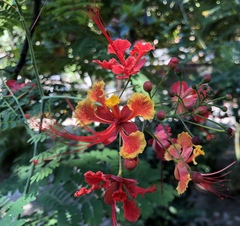
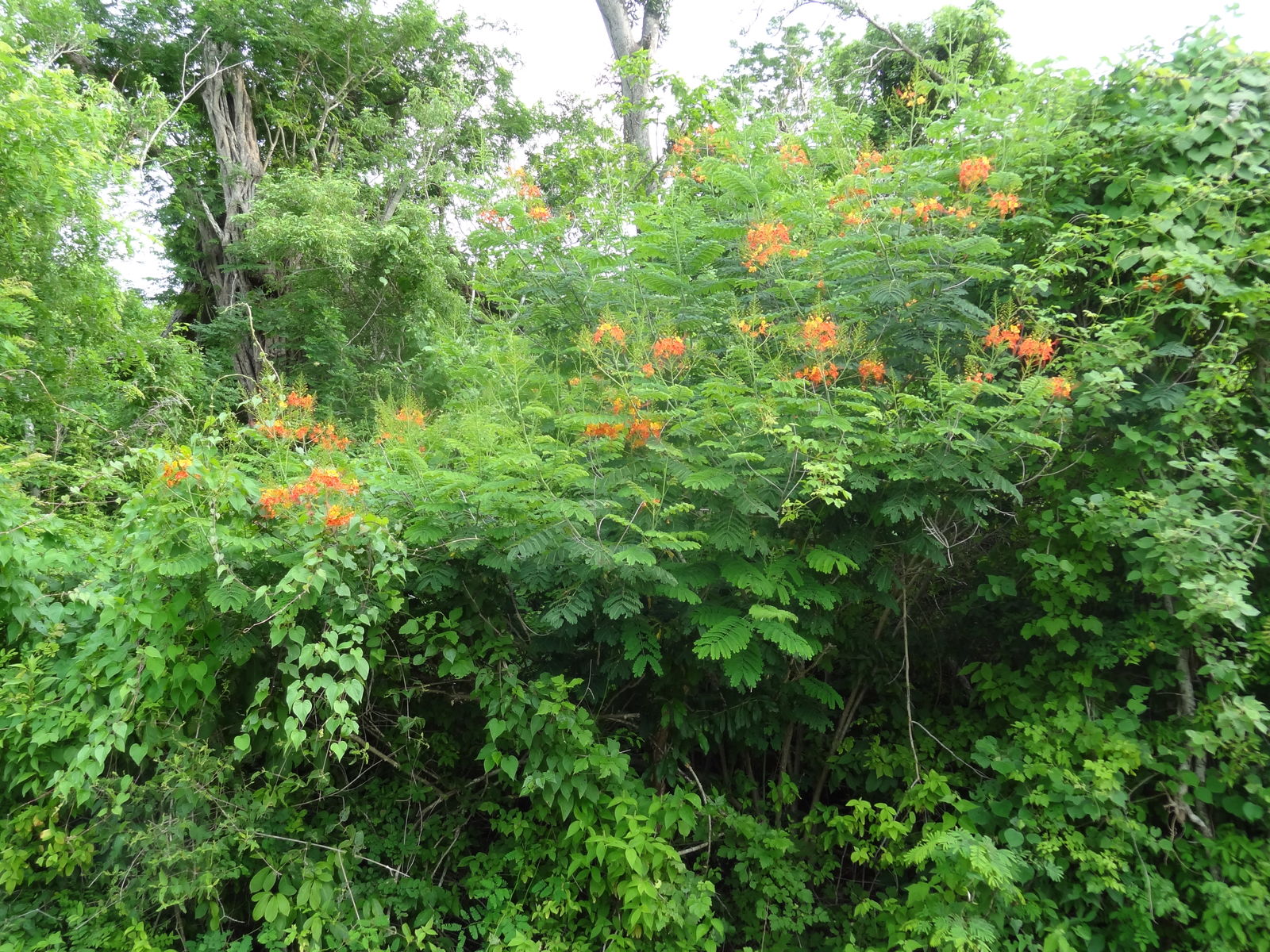
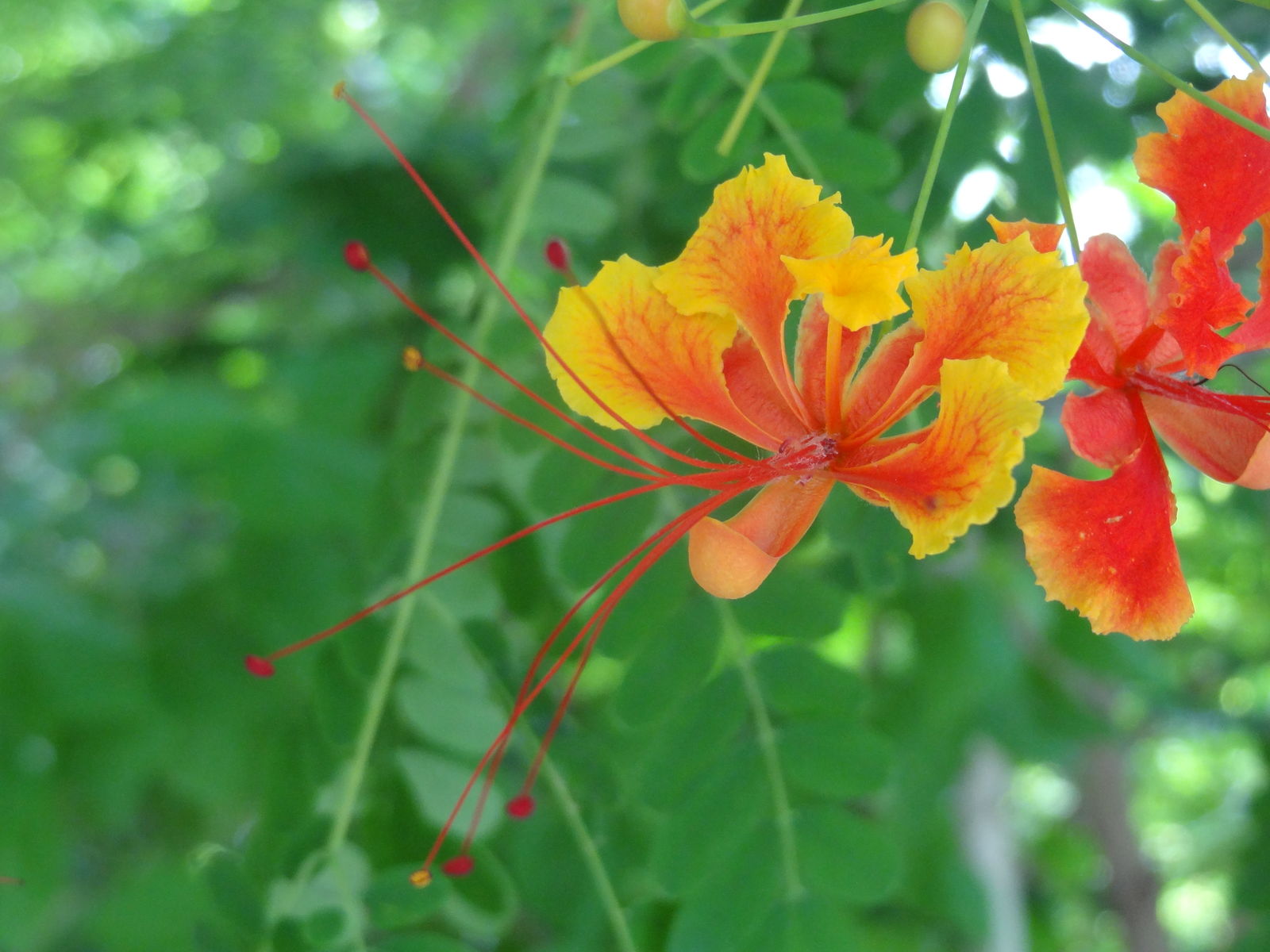
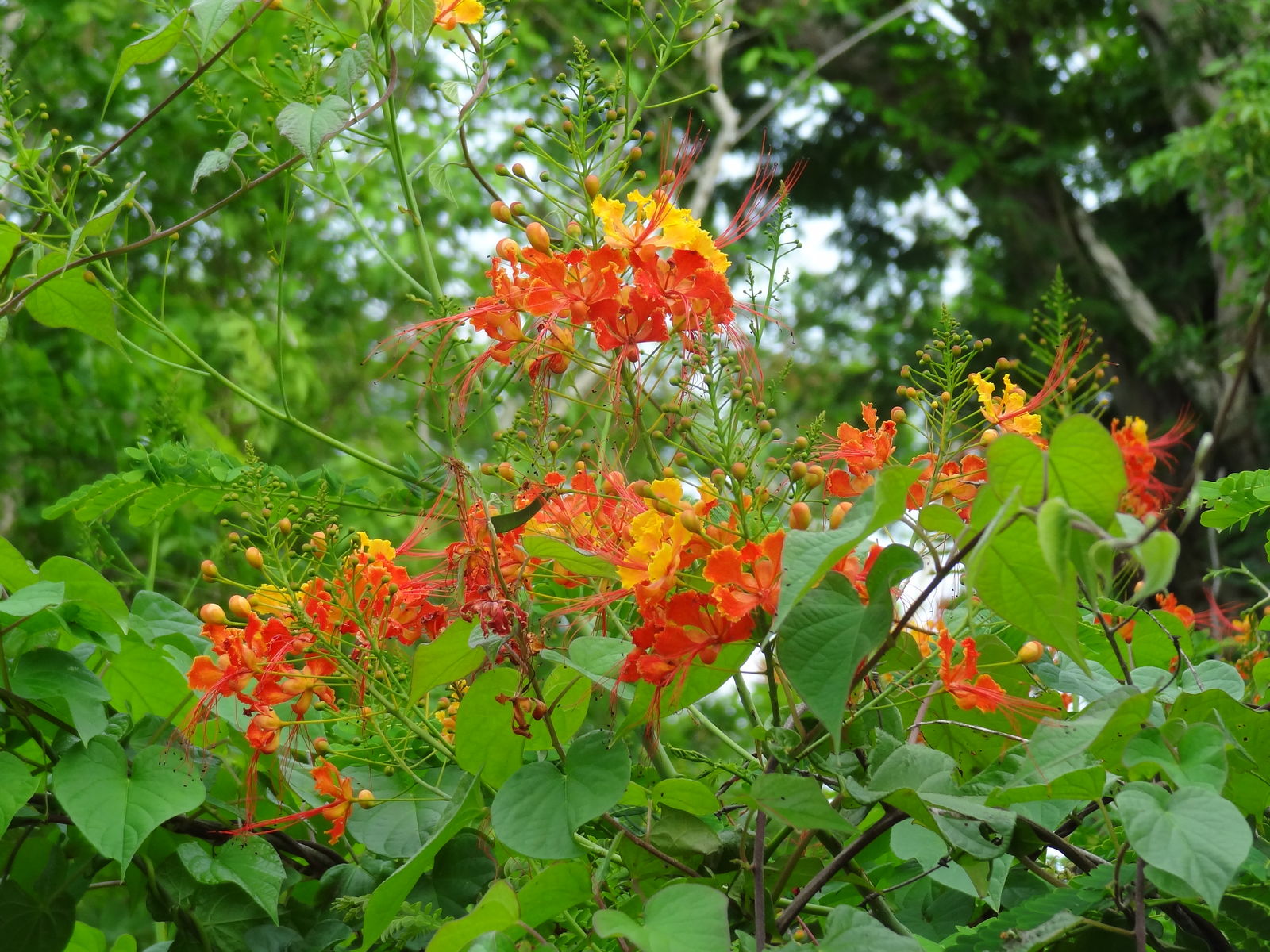
Peacock flower (Caesalpinia pulcherrima) is a prickly shrub in the Fabaceae family, native to tropical America, although its exact origin remains debated. Its red, orange and yellow flowers have long red stamens. Widely grown as an ornamental, it is toxic to dogs, cats and horses.
Read morePeacock flower, Pride of Barbados, Dwarf poinciana and Red bird of paradise
Place in full sun, with intense direct light all day long.
Full sun is needed for abundant flowering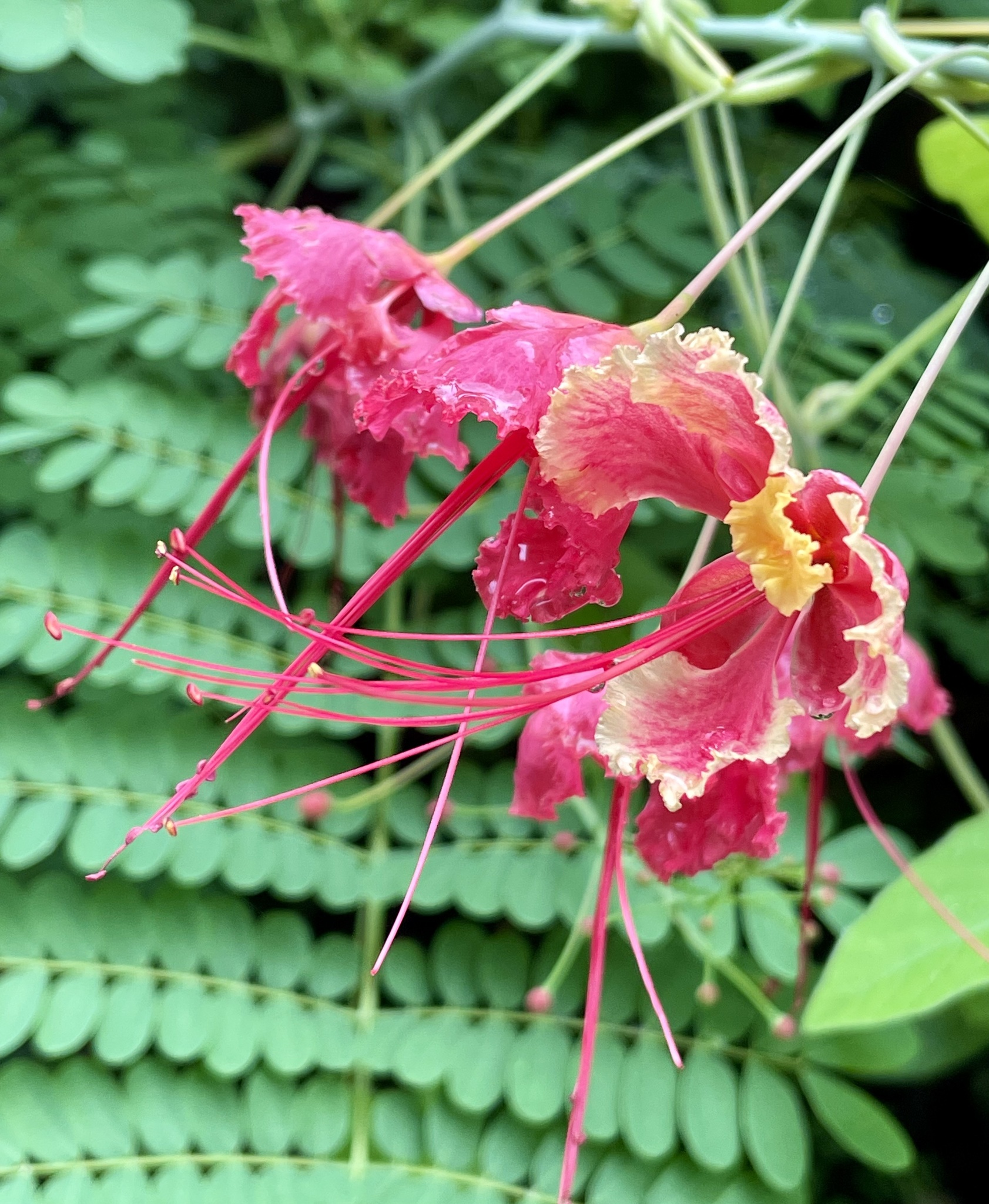



© photo
Irene · cc0
(c) Jonathan Ortiz Torres, some rights reserved (CC BY-NC), uploaded by Jonathan Ortiz Torres · cc-by-nc
Drew Baxter · cc0
Taken Feb 28, 2020 by Vázquez Jactziri (cc-by-sa)
Taken Sep 28, 2022 by Pratiksha Reddy (cc-by-sa)
Taken Mar 4, 2021 by Sébastien TRASBOT (cc-by-sa)
Taken Jul 7, 2020 by Praia Thiago (cc-by-sa)
Taken Dec 15, 2019 by jangleress (cc-by-sa)
© copyright of the Board of Trustees of the Royal Botanic Gardens, Kew.


Global distribution
The precise native range of Caesalpinia pulcherrima remains debated. POWO places it from southeastern Mexico to Central America, while other sources link it to the West Indies. Centuries of cultivation across tropical America obscured its exact origin long before the first European herbarium collections.
- Native2
- Introduced3
- Invasive2
- Mexico
- Barbados
- India
- Hawaii
- Florida (United States)
- Northern Australia
- Galápagos Islands (Ecuador)
Hexagons: regions where the plant occurs. Green dots: native range.1
Identity
Peacock flower (Caesalpinia pulcherrima (L.) Sw., 1791) is a prickly shrub in the Fabaceae family, subfamily Caesalpinioideae. Linnaeus described it as Poinciana pulcherrima in 1753; Swedish botanist Olof Swartz transferred it to Caesalpinia in 1791. POWO/Kew retains that combination as the accepted name. 1 2
Latin pulcherrima means “most beautiful,” referring to the showy red and yellow flowers. The species is the national flower of Barbados and appeared in that role on Queen Elizabeth II’s personal flag for Barbados. 6
French horticultural names such as fleur de paon, orgueil de Chine, aigrette and flamboyant nain reflect its appearance and its resemblance to a smaller version of Madagascar’s Delonix regia. English usage includes pride of Barbados, dwarf poinciana and red bird of paradise for the same shrub. 3
Recognition
A spreading crown and short, hooked prickles characterize peacock flower. This shrub or small tree usually reaches 2 to 5 m (6.5 to 16 ft), sometimes more in frost-free tropical conditions. The prickles help distinguish it from unarmed shrubs with similarly divided foliage. 5 8
Its bipinnate leaves, 20 to 40 cm (8 to 16 in) long, have three to ten pairs of pinnae, each bearing oval leaflets 15 to 25 mm (0.6 to 1 in) long. Semi-evergreen in temperate conditions, it is evergreen in the tropics, where it never loses all its leaves at once. 6
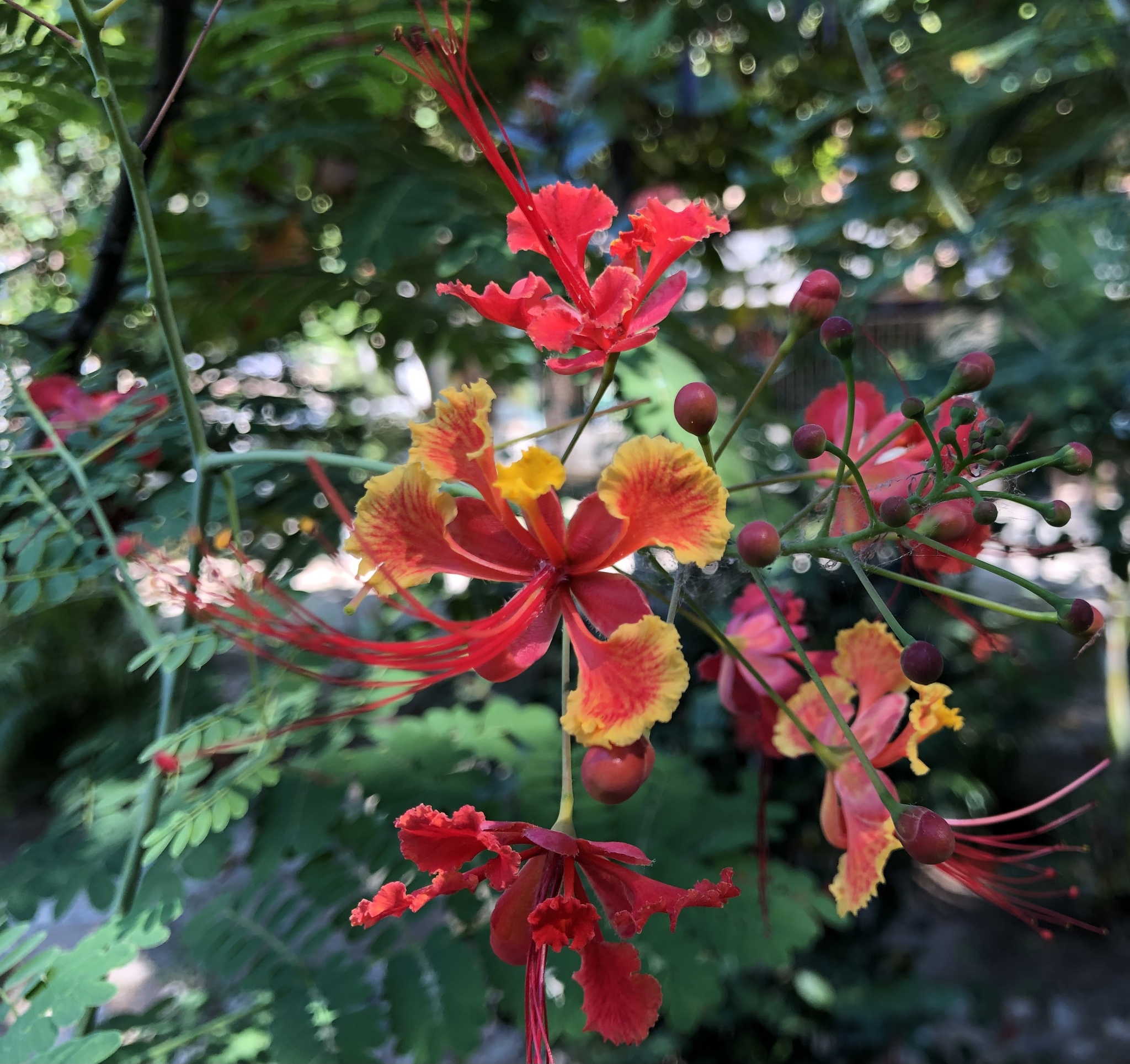
Upright flower clusters, 15 to 20 cm (6 to 8 in) long, combine yellow, orange or red petals with very long bright red stamens extending well beyond the corolla. The contrast explains the peacock flower name. A cluster may hold up to 40 flowers, opening gradually from bottom to top. 5 4
Flat, woody pods measure 6 to 12 cm (2.4 to 4.7 in) long. At maturity each splits into two valves and ejects its seeds, helping explain the plant’s rapid colonization beyond its original range. 6
Useful taxonomy
Taxonomic changes reflect the history of Caesalpinia, once a broad grouping for prickly tropical legumes. Names recorded for this plant include:
- Poinciana pulcherrima L., the basionym published in 1753
- Poinciana pulcherrima f. flava (F.T.Hubb. & Rehder) O.Deg., a yellow-flowered form
- Caesalpinia pulcherrima f. flava (F.T.Hubb. & Rehder) H.St.John, another combination for that form
- Caesalpinia pulcherrima var. insignis Kuntze, a historical varietal name
Revisions of Caesalpinia have moved several species into Poinciana or Erythrostemon. POWO nevertheless retains Caesalpinia pulcherrima as accepted, making it the useful reference when comparing horticultural catalogs. 1 2
Habitat and range
The precise geographic origin remains debated. POWO places it from southeastern Mexico to Central America, while other sources associate it with the West Indies. Centuries of cultivation throughout tropical America had already obscured its origins before the first European herbarium collections. 1 5
Early introduction into the West Indies made the plant so familiar there that it became the national flower of Barbados. It subsequently spread through most tropical and subtropical regions, including India, Hawaii, Florida, East Africa and Southeast Asia. 6
Naturalization beyond its native range is aided by seed-ejecting pods and dispersal by birds, wind and water. Northern Australia and the Galápagos regard it as invasive, with dense thickets forming on disturbed soil. On Réunion, by contrast, it remains a garden and low-hedge plant without reported naturalization. 6
Life cycle and flowering
Soaking seeds for 12 to 24 hours in warm water softens their hard coats and markedly speeds emergence. Softwood cuttings under cover are also possible, although seed propagation is more common. 8
Tropical conditions allow almost continuous flowering. In cooler or Mediterranean climates, the main flushes occur in spring and autumn, slowing during very hot summers or in winter. Flowers open successively along each cluster, extending a flush over several weeks. 4
Following flowering, pods harden over several months before splitting abruptly and ejecting seeds. Where winters are cool, aboveground growth may freeze and then regrow from the base in spring, a response that distinguishes this shrub from more strictly tropical relatives. 6
Uses and risks
Low hedges, flower beds and specimen planting in full sun are the main ornamental uses. The flowers actively attract hummingbirds and butterflies. The Royal Horticultural Society has given the species its Award of Garden Merit, recognizing its horticultural value even in cultivation beyond the tropics. 4
Young seeds with their coats removed are eaten raw or cooked in some tropical culinary traditions; cooked flowers are also used as food. Roots, bark, leaves and flowers have a long history in traditional medicine, including use as purgatives and in gynecological preparations. These records describe traditional practices rather than establish safe home use. 8
A historical account gives the latter use a specific context. Writing from Suriname in the 17th century, naturalist Maria Sibylla Merian reported that Indigenous and enslaved women used the plant as an abortifacient to avoid passing slavery on to their children. 6
The ASPCA lists Caesalpinia pulcherrima as toxic to dogs, cats and horses. Gastrointestinal irritants and tannins can cause vomiting and diarrhea after ingestion. Unprepared pods and seeds are the main concern and should be kept beyond pets’ reach. 7
Varieties and look-alikes
Horticulture recognizes few established cultivars beyond the entirely yellow flava form, contrasting with the typical red and orange flowers. The name “Flamboyant” sometimes labels particularly floriferous plants, but it does not denote a registered cultivar. 8
Other tropical plants with red or yellow flowers can be confused with peacock flower:
- Caesalpinia gilliesii has similarly long red stamens but uniformly pale yellow petals, without the strong red of C. pulcherrima;
- Delonix regia is much larger and unarmed, with massed flowers whose five petals are nearly equal in size;
- Erythrina crista-galli has clustered red flowers but trifoliate leaves rather than bipinnate foliage.
Use three features together for identification: prickly stems, bipinnate leaves with small leaflets, and a shrubby habit far more compact than a mature Delonix regia. This combination is more dependable than flower color alone. 5
Main sources
- Plants of the World Online / Kew, Caesalpinia pulcherrima (L.) Sw.
- International Plant Names Index, Caesalpinia pulcherrima (L.) Sw.
- INPN / MNHN, Caesalpinia pulcherrima (L.) Sw., 1791
- Royal Horticultural Society, Caesalpinia pulcherrima
- Missouri Botanical Garden Plant Finder, Caesalpinia pulcherrima
- Wikipedia EN, Caesalpinia pulcherrima
- ASPCA, Dwarf Poinciana (Caesalpinia pulcherrima) toxicity entry
- Useful Tropical Plants, Caesalpinia pulcherrima
Frequently asked questions
Is peacock flower poisonous to dogs and cats?
Yes. The ASPCA lists Caesalpinia pulcherrima as toxic to dogs, cats and horses. Gastrointestinal irritants and tannins can cause vomiting and diarrhea after pods or seeds are eaten.
How does Caesalpinia pulcherrima differ from Delonix regia?
Caesalpinia pulcherrima is a prickly shrub about 2 to 5 m (6.5 to 16 ft) tall, while Delonix regia is a tree reaching 10 to 15 m (33 to 49 ft) with no prickles. Both have bipinnate foliage and red flowers, explaining the name dwarf poinciana for the smaller plant.
Why is my peacock flower not blooming?
Insufficient direct sun is the most common cause: a plant in partial shade may grow but flower sparsely. A seed-raised plant may also need a full first year before flowering.
How do I germinate peacock flower seeds?
Soak the seeds in warm water for 12 to 24 hours before sowing to soften their hard coats. Treated seeds emerge in 1 to 3 weeks; untreated seeds germinate slowly and unevenly.
Can peacock flower survive frost?
It does not tolerate prolonged frost. Below about -2 to -3 °C (28 to 27 °F), the aboveground growth may freeze. In temperate climates it sometimes regrows from the base in spring, but growing it in a protected container is safer.
Are Caesalpinia pulcherrima seeds edible?
Young seeds with the coats removed are eaten cooked in some tropical culinary traditions. Keep mature, unprepared seeds and pods away from pets.
Where does the name Caesalpinia pulcherrima come from?
Linnaeus first described the species as Poinciana pulcherrima in 1753. Swedish botanist Olof Swartz transferred it to Caesalpinia in 1791. The Latin epithet pulcherrima means “most beautiful.”
Similar plants
If you are unsure about a plant’s toxicity, ask a botanist or veterinarian for advice.