
Common lantana (Lantana camara, )
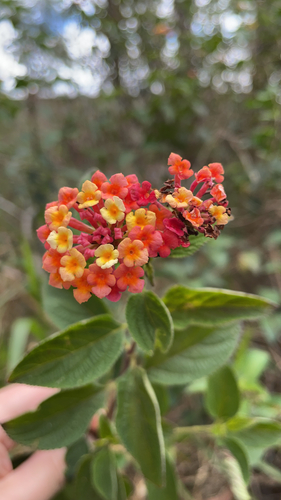
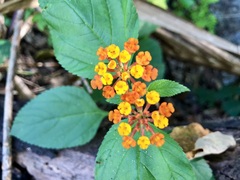
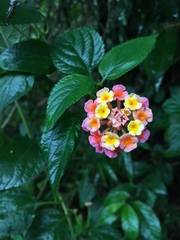
Common lantana (Lantana camara L.) is a shrub in the Verbenaceae, native to Mexico and tropical America and cultivated widely for flower clusters that change color as they age. The IUCN lists it among the world’s 100 worst invasive alien species, making its spread a central consideration when choosing plants for warm climates.
Read moreCommon lantana, Lantana and Shrub verbena


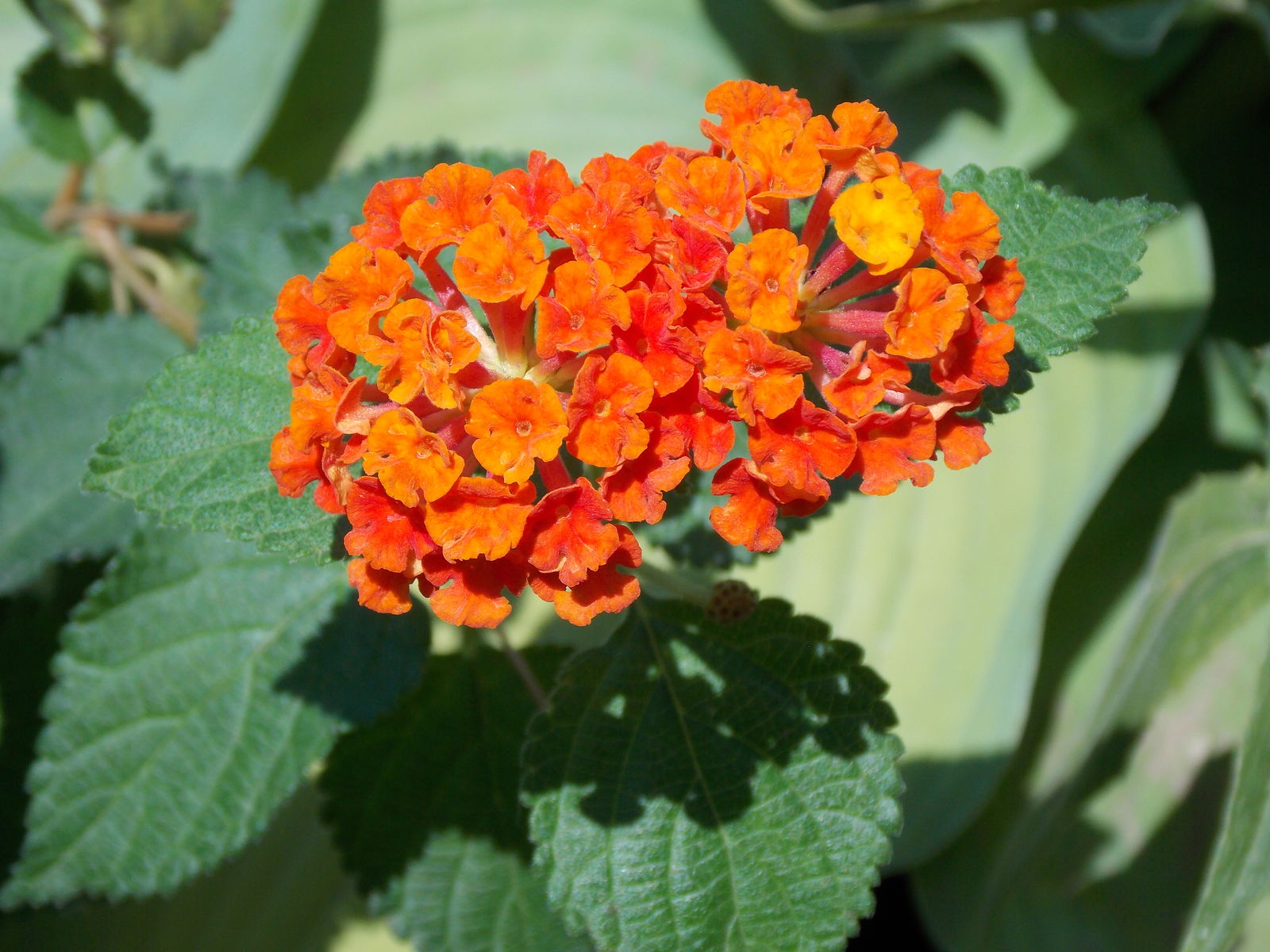
© photo
Mike Youdale · cc0
Drew Baxter · cc0
Matt Berger · cc-by
Taken Dec 5, 2017 by Gomes Joel (cc-by-sa)
Taken Aug 11, 2021 by Manuëlle (cc-by-sa)
Taken Oct 20, 2021 by Gianni Del Bufalo (cc-by-sa)
Taken Oct 28, 2017 by ivo (cc-by-sa)
Taken Jan 7, 2018 by Mehmet Basbag (cc-by-sa)
© copyright of the Board of Trustees of the Royal Botanic Gardens, Kew.




Global distribution
POWO places the native range from Mexico through tropical America. Now pantropical, the species was introduced as an ornamental and then became naturalized and invasive in over 60 countries according to the Global Invasive Species Database.
- Native3
- Invasive5
- Mexico
- Caribbean
- Brazil
- Réunion
- Martinique
- Guadeloupe
- Eastern Australia
- India
Hexagons: regions where the plant occurs. Green dots: native range.1
Identity
Common lantana (Lantana camara L., 1753) is a perennial shrub in the genus Lantana, family Verbenaceae, native to Mexico and tropical America according to POWO. The IUCN lists it among the world’s 100 worst invasive alien species, a ranking relevant to planting decisions as well as field identification. 1 2 5
Regional names vary greatly. In Réunion and the French Caribbean, the Creole name galabert has long been familiar in everyday speech, predating the widespread use of the Latin binomial in horticultural catalogs. Other French names include corbeille d’or, camara commun, lantanier and queue-de-chat. 6
For common lantana, POWO accepts the name Lantana camara, described by Linnaeus in 1753. This stable botanical reference contrasts with the diversity of local names: two gardeners may discuss the same species using entirely different words. 1
Recognition
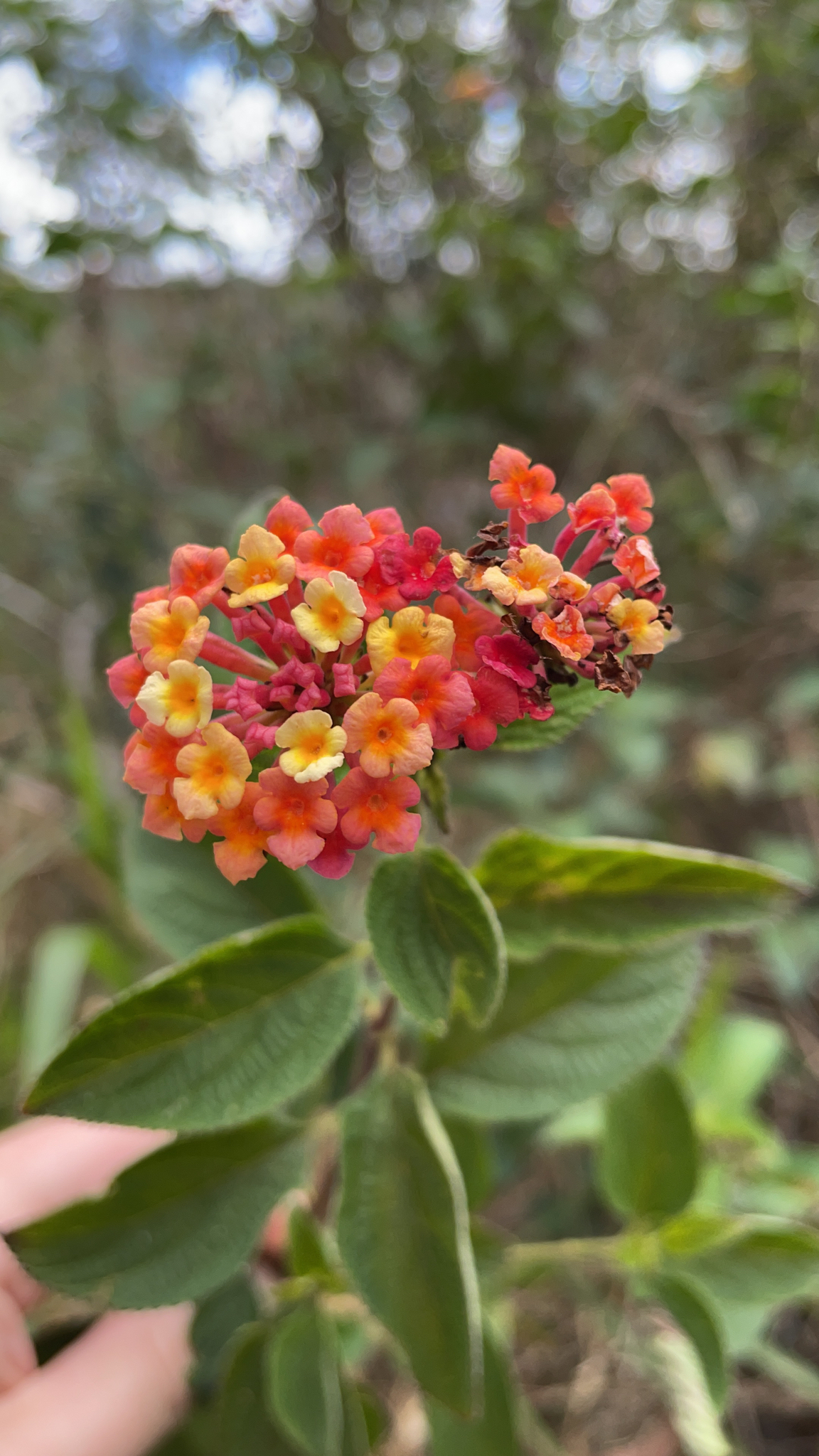
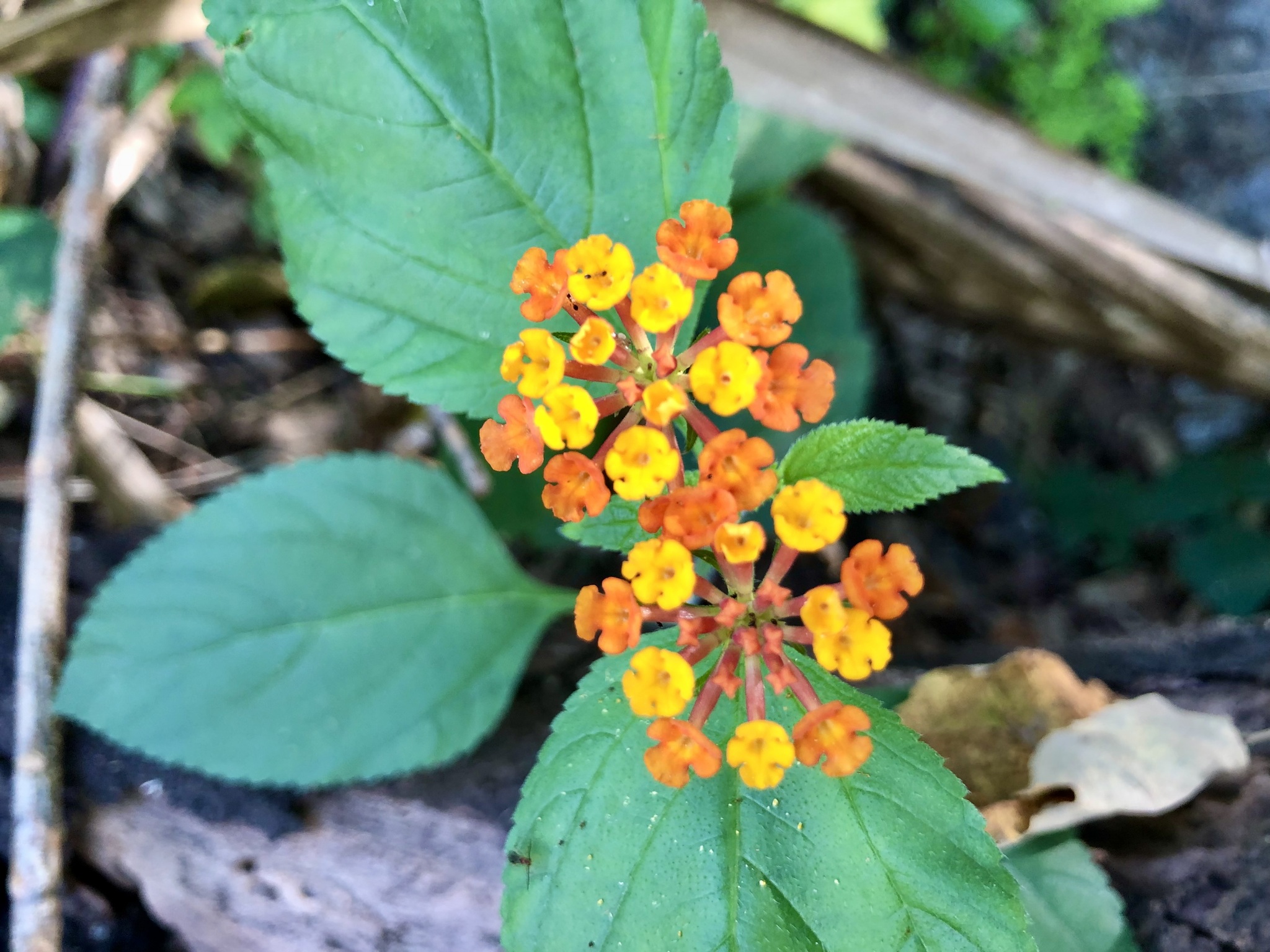
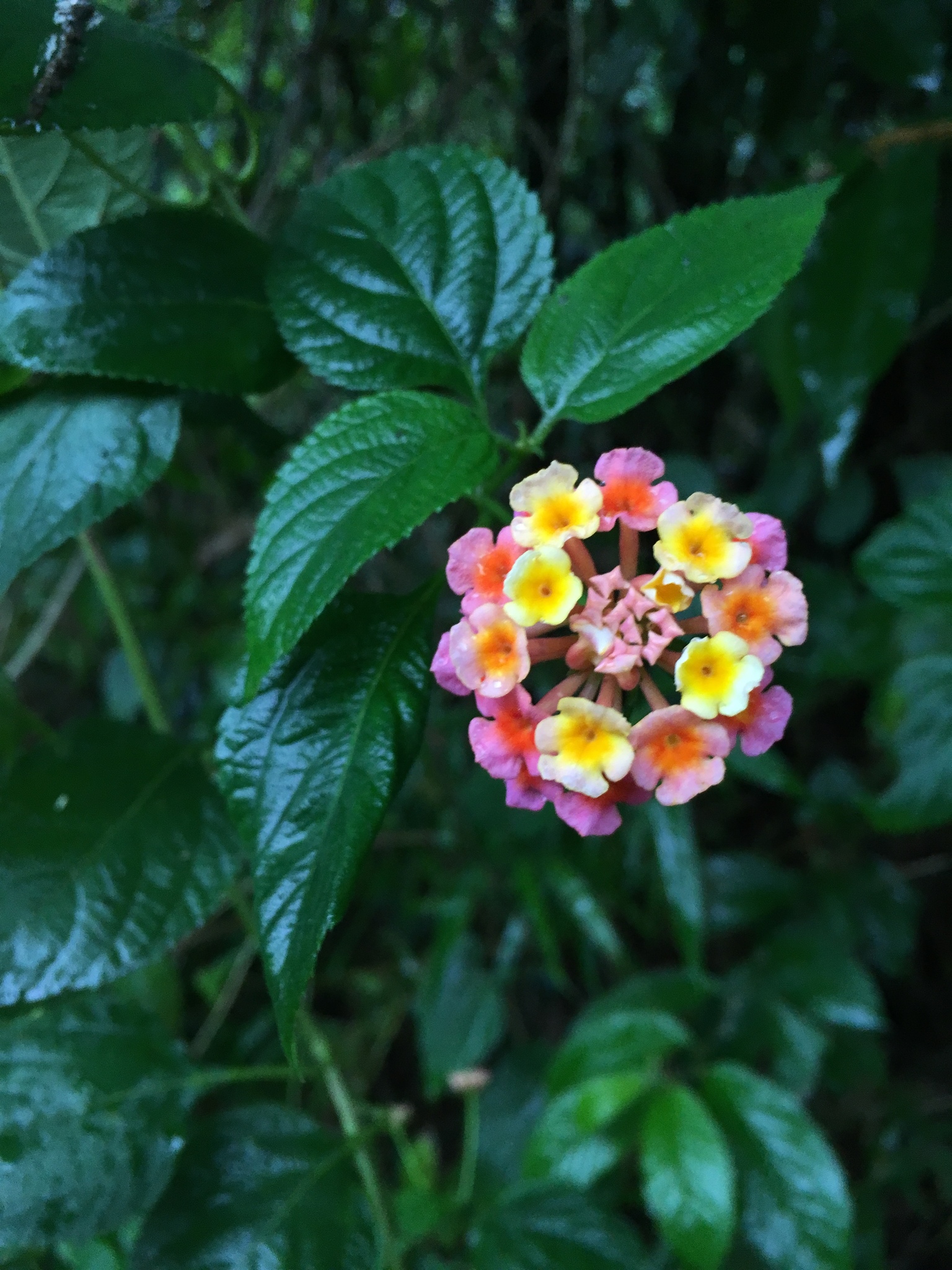
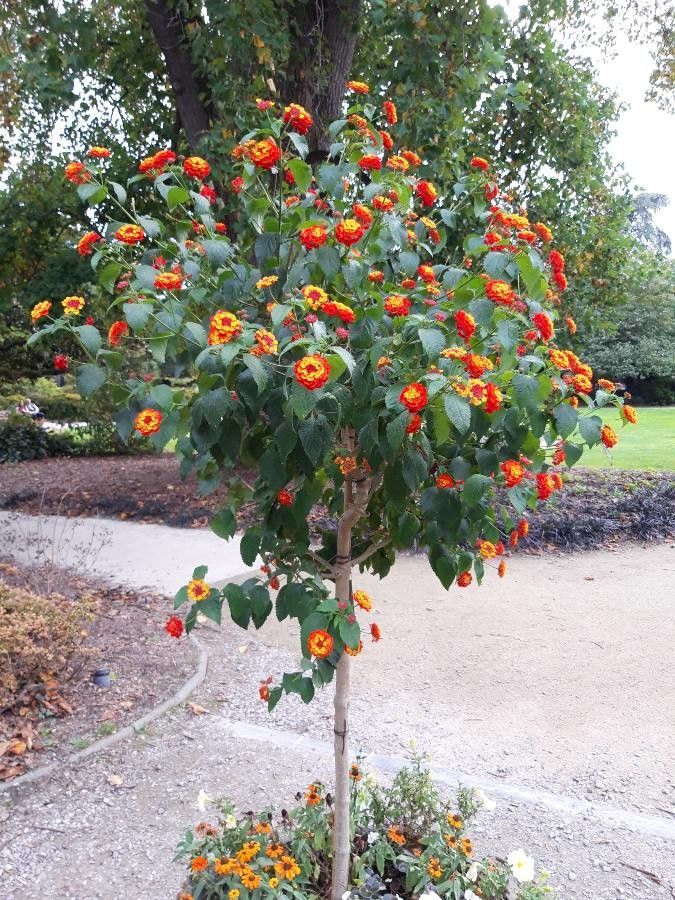
Bushy Lantana camara reaches 0.5–4 m (1.6–13 ft), often with square stems and curved prickles. The opposite, oval, toothed leaves have a puckered upper surface and release a sharp smell when crushed, a useful clue even when no flowers are present. 7 9
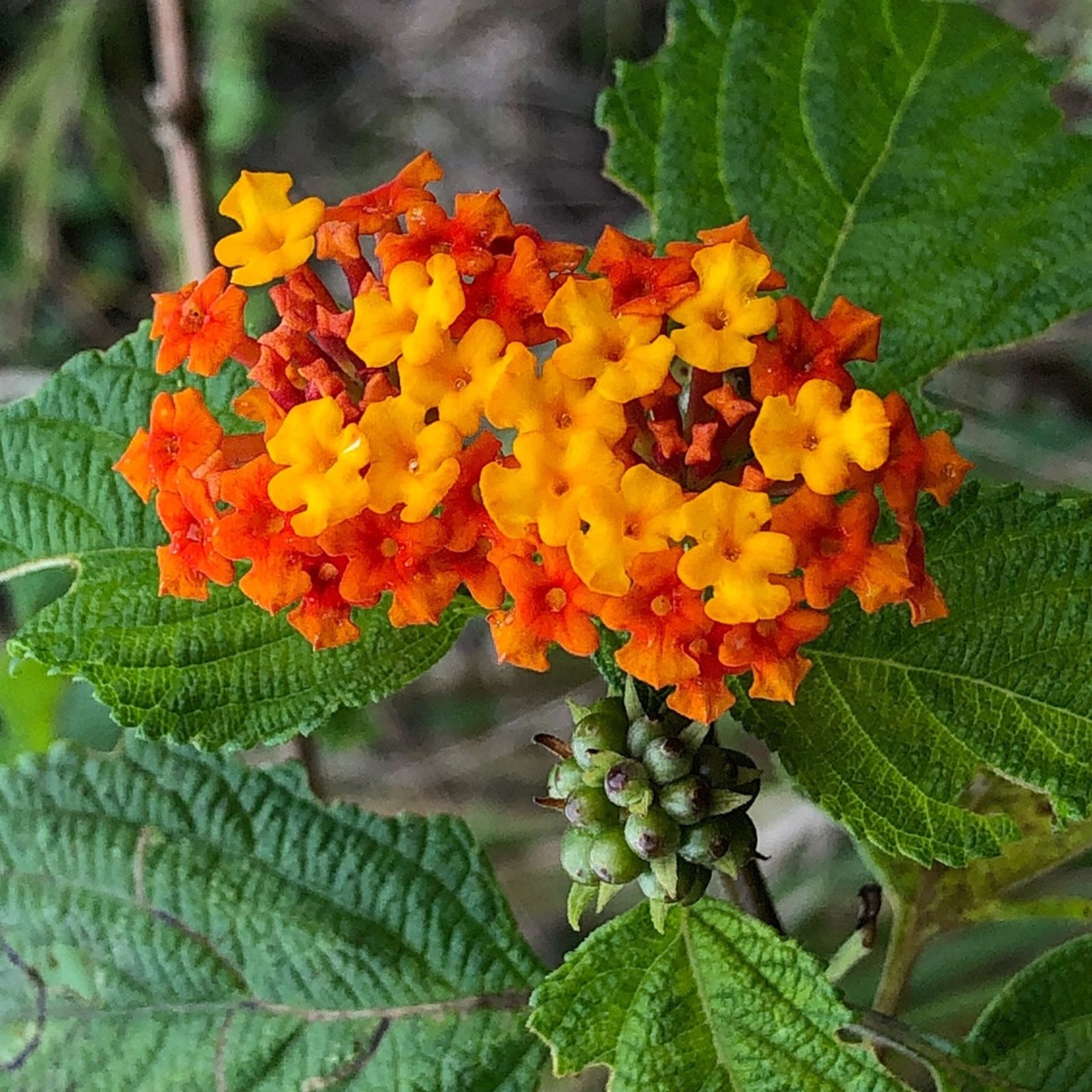
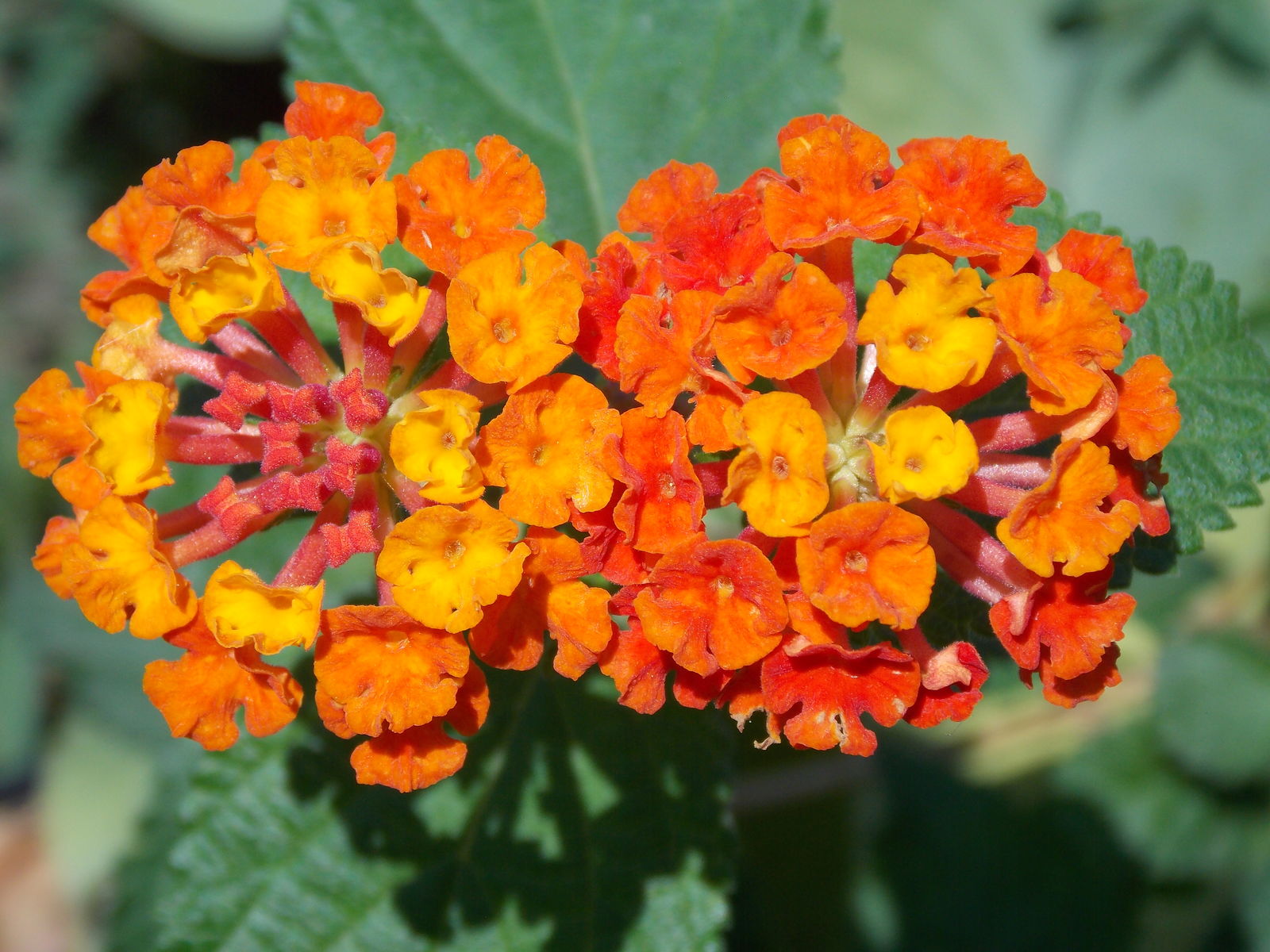
Small tubular flowers form dense, rounded clusters about 2.5–5 cm (1–2 in) across. Initially yellow or orange, they turn pink or red after pollination. The changing color indicates to pollinators which flowers still contain nectar. 9 5
Fleshy berries develop from green to black when fully ripe, forming small, conspicuous clusters beneath the leaves. A plant with round stems and no obvious prickles is more likely a related species; where identification is uncertain, the scientific name remains the safest reference. 7
Taxonomy and names
Within the Verbenaceae and the order Lamiales, POWO and IPNI place Lantana camara under Linnaeus’s original 1753 description. It encompasses a large hybrid complex, cultivated and selected in Europe since the seventeenth century, explaining the wealth of horticultural cultivars. 1 5
Historical names remain in catalogs and herbaria, often treated as varieties or forms rather than distinct species:
- Lantana camara var. aculeata (L.) Moldenke, a historical variety
- Lantana camara f. mutabilis (Hook.) Moldenke, a named form
- Lantana camara subsp. aculeata (L.) R.W.Sanders, a subspecies name
These names explain why nurseries may offer the same plant under different labels without changing its accepted species status. 2 1
Habitat and range
Across its native range, common lantana occupies open, disturbed habitats from sea level to about 1,700 m (5,580 ft). It tolerates poor, dry or gravelly soils, helping it establish on waste ground, woodland edges and roadsides. 4
Beyond its native range, Lantana camara is now pantropical. Introduced as an ornamental, it has naturalized in more than 60 countries according to the Global Invasive Species Database. On Réunion, where it arrived for ornamental use around 1840, it now occupies sunlit habitats up to 1,200 m (3,940 ft). 5 6
Broad environmental tolerance, together with resistance to drought and fire, helps this shrub colonize abandoned farmland as readily as recently burned woodland edges. 5
Life cycle and reproduction
In warm climates, flowering extends through much of the year. Where grown in temperate conditions as an annual or potted plant, it peaks in summer. Each pollinated flower changes color within days, directing visiting pollinators toward younger flowers. 9
Seed production drives most of its invasion. A single plant can produce up to 12,000 fruits a year, and birds eating the ripe berries disperse the seeds efficiently. 4
Horticultural propagation uses seed or semi-hardwood cuttings taken in summer. Seeds deposited by birds from a neighboring garden germinate readily on bare soil, directly linking ornamental cultivation with spread into natural habitats. 4 8
Invasive status and management
The IUCN includes Lantana camara among the world’s 100 worst invasive alien species. Its dense thickets suppress forest regeneration and reduce understory biodiversity. Allelopathic compounds released into the soil also help it compete with native vegetation. 5
Agricultural impacts have long been documented, including loss of grazing land and reduced yields in some tropical plantations. In several regions, the shrub also shelters insects that transmit diseases. 5
Management combines hand removal on small sites with controlled burning for large infestations. Biological control uses specific insects or fungi, including the insect Teleonemia scrupulosa. No single method provides lasting eradication; repeated monitoring for regrowth remains necessary. 5
Uses and toxicity
Abundant, long-lasting flowers underpin its main ornamental use in beds, containers and low hedges. They attract butterflies and hummingbirds, a benefit highlighted by the RHS for pollinator gardens. 8
Animal toxicity is well documented. The ASPCA lists the plant as toxic to cats, dogs and horses. Its lantadenes cause vomiting, diarrhea and breathing difficulties, with liver damage and photosensitization more frequent in livestock. 3 5
In some regions, people, including children, eat only the fully ripe black fruit. Green berries and leaves remain irritating and can cause serious digestive problems if swallowed, warranting care around young children when plants are fruiting. 4
Main sources
- Plants of the World Online / Kew, Lantana camara L.
- International Plant Names Index, Lantana camara L.
- ASPCA, Lantana toxicity entry
- Plants For A Future, Lantana camara
- IUCN Global Invasive Species Database, Lantana camara
- Espèces Envahissantes Outre-mer, Lantana camara
- Missouri Botanical Garden Plant Finder, Lantana camara
- Royal Horticultural Society, Lantana camara
- NC State Extension Gardener Plant Toolbox, Lantana camara
Frequently asked questions
Is common lantana poisonous to cats and dogs?
Yes. The ASPCA lists it as toxic to cats, dogs and horses. Its lantadenes cause vomiting, diarrhea and breathing difficulties, and can damage the liver in livestock.
Is common lantana still grown in metropolitan France?
It is still commonly grown in pots or as an annual bedding plant there, because frost limits its spread. Particular care is needed in warm, humid climates, where it naturalizes and becomes invasive.
Why do common lantana flowers change color?
The shift from yellow through orange to red or pink follows pollination. It signals to pollinators which flowers still contain abundant nectar.
Is common lantana fruit edible?
Only fully ripe black fruit is eaten locally in some regions. Green berries and leaves remain toxic and cause digestive problems if swallowed.
Why is common lantana considered invasive?
The IUCN lists it among the world’s 100 worst invasive alien species. Abundant seed production, dispersal by birds and broad environmental tolerance have helped it colonize more than 60 countries.
How does common lantana differ from Lantana montevidensis?
Lantana montevidensis stays low and trails, with mostly mauve flowers. Common lantana forms an upright shrub with multicolored flowers that change shade as they age.
Similar plants
If you are unsure about a plant’s toxicity, ask a botanist or veterinarian for advice.