
Purpletop vervain (Verbena bonariensis, )
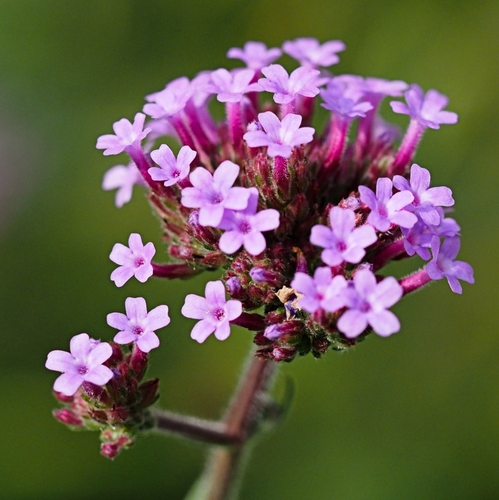
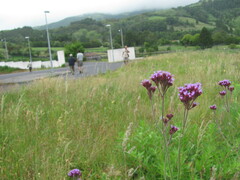
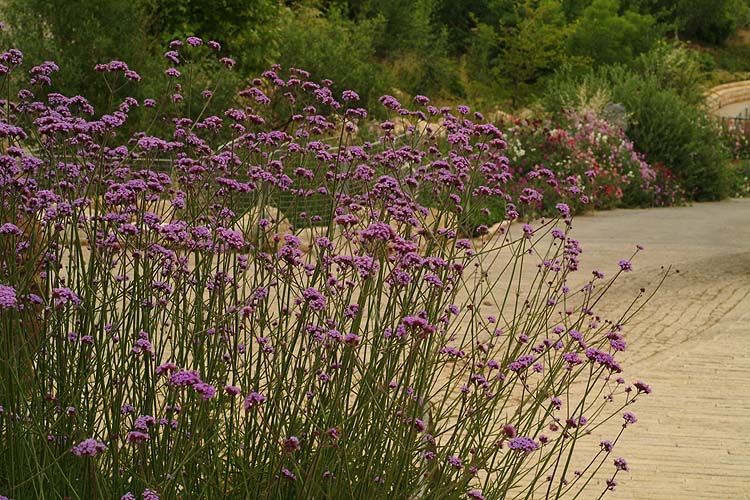
Purpletop vervain (Verbena bonariensis) is a tall, airy perennial in the Verbenaceae family, native to South America. Fine, stiff, angular stems hold small clusters of mauve flowers around 1.2 m (4 ft) high, attracting many butterflies. Often grown as an annual in cool climates, it self-seeds readily and can become invasive in mild regions.
Read morePurpletop vervain, Clustertop vervain, Argentinian vervain, South American vervain and Tall verbena


© photo
(c) akolter, some rights reserved (CC BY-NC) · cc-by-nc
Di Turner · cc0
zebedeugalinha · cc-by
Taken Oct 30, 2022 by Francois Mansour (cc-by-sa)
Taken Oct 4, 2022 by Caw Vus (cc-by-sa)
Taken Aug 9, 2020 by Rico Mende (cc-by-sa)
Taken Aug 24, 2020 by codecas (cc-by-sa)
Taken Jun 4, 2022 by Tristan Jaton-Maria (cc-by-sa)
© copyright of the Board of Trustees of the Royal Botanic Gardens, Kew.


Global distribution
The native range of Verbena bonariensis extends from southeastern and southern Brazil into southern South America, including Argentina and Uruguay. Widely grown as an ornamental, it has naturalized beyond this range in many mild-climate regions, sometimes becoming invasive. These introduced areas are distinct from its South American native range.
- Native3
- Introduced2
- Argentina
- Southern Brazil
- Uruguay
- Australia
- Southern United States
Hexagons: regions where the plant occurs. Green dots: native range.1
Identity
Purpletop vervain (Verbena bonariensis L., 1753), also known as tall verbena, is a tall perennial in the Verbenaceae family and genus Verbena. The epithet bonariensis refers to Buenos Aires, the source of the first specimens described by Linnaeus in the eighteenth century. 1 4
Its garden appeal lies in an airy border silhouette: small clusters of mauve flowers rise on fine, stiff stems and draw many butterflies. The open framework lets the background show through. Also called clustertop vervain, Argentinian vervain and South American vervain, it self-seeds freely and is often grown as an annual where winters are cold. 2 6
Recognition
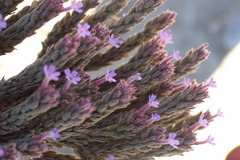
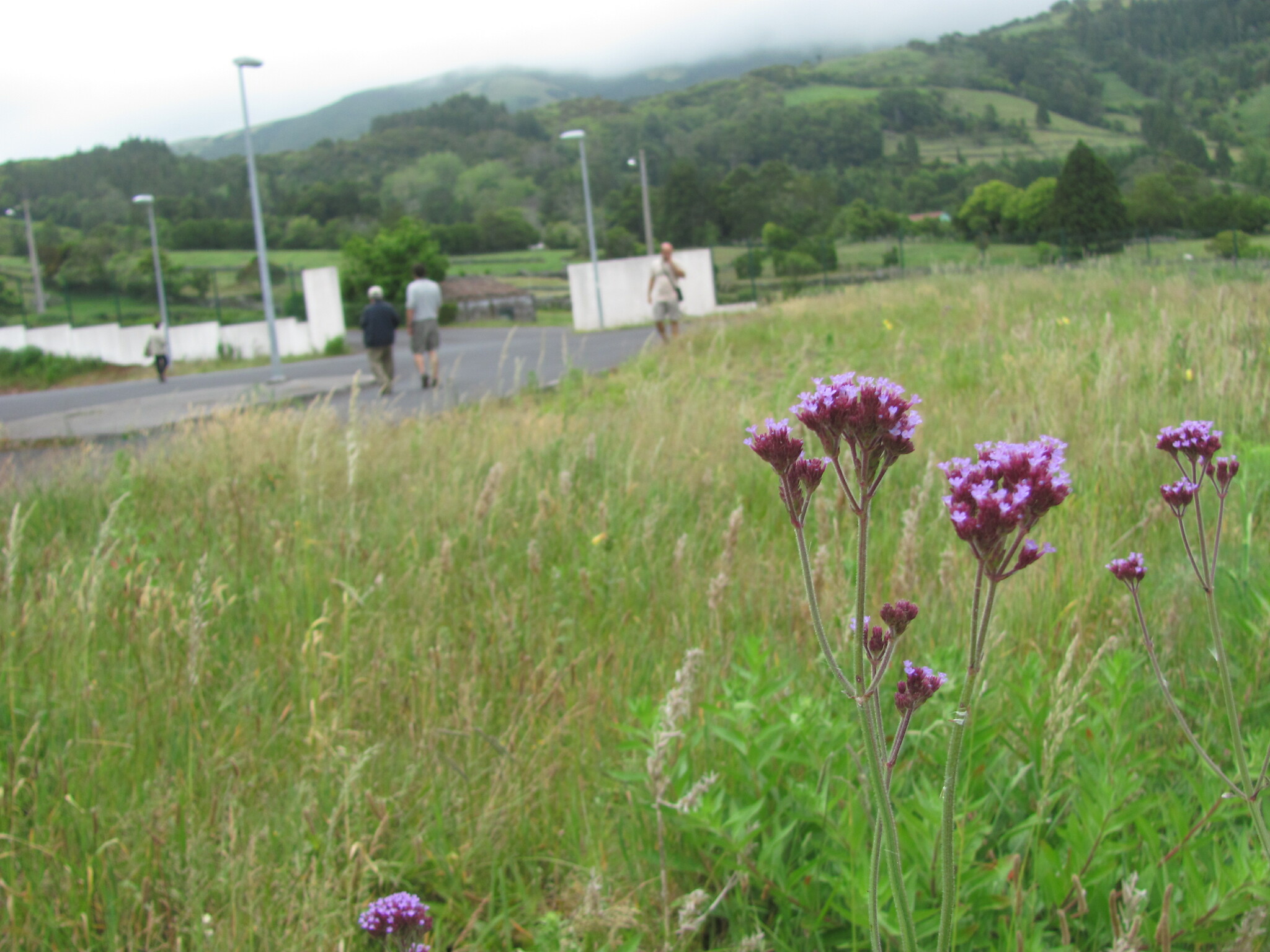
A clump of Verbena bonariensis grows 100–200 cm (3–7 ft) tall on stiff, clearly angular stems, almost leafless in their upper portions. Opposite, lance-shaped leaves are concentrated toward the base. 3 6
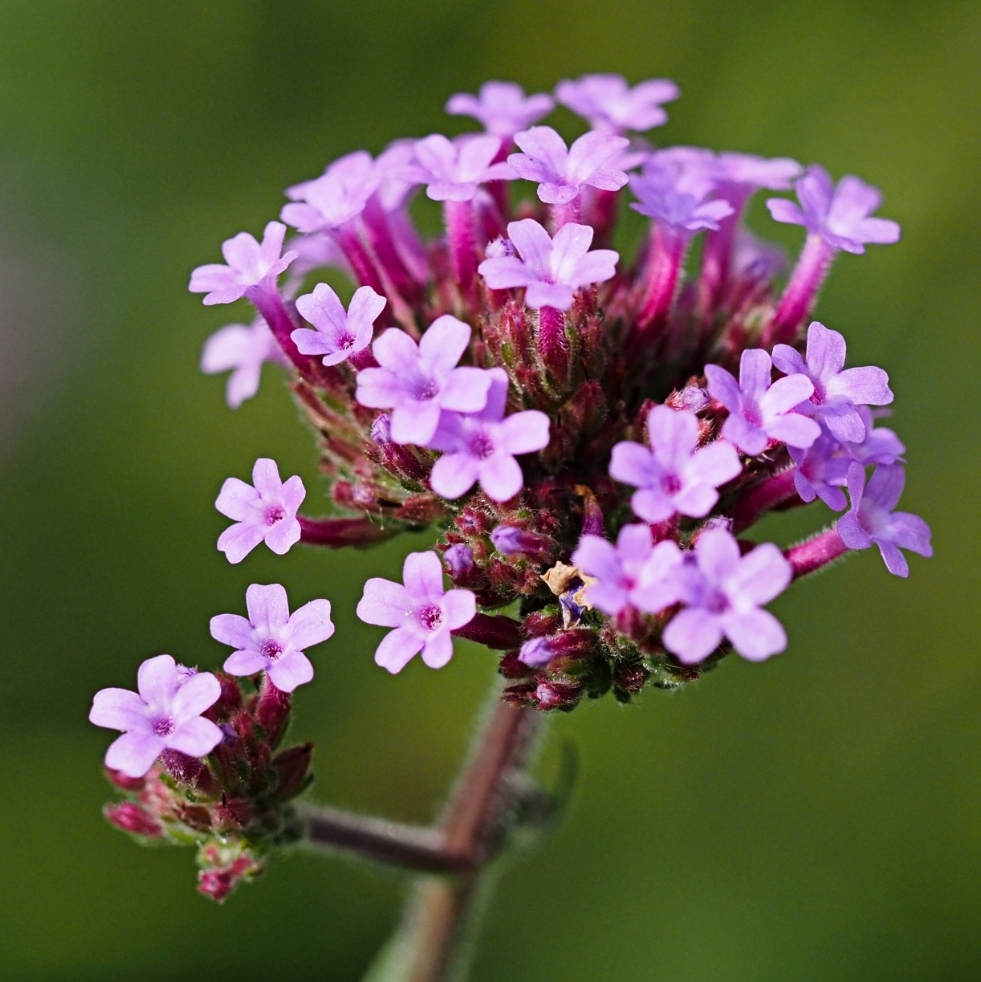
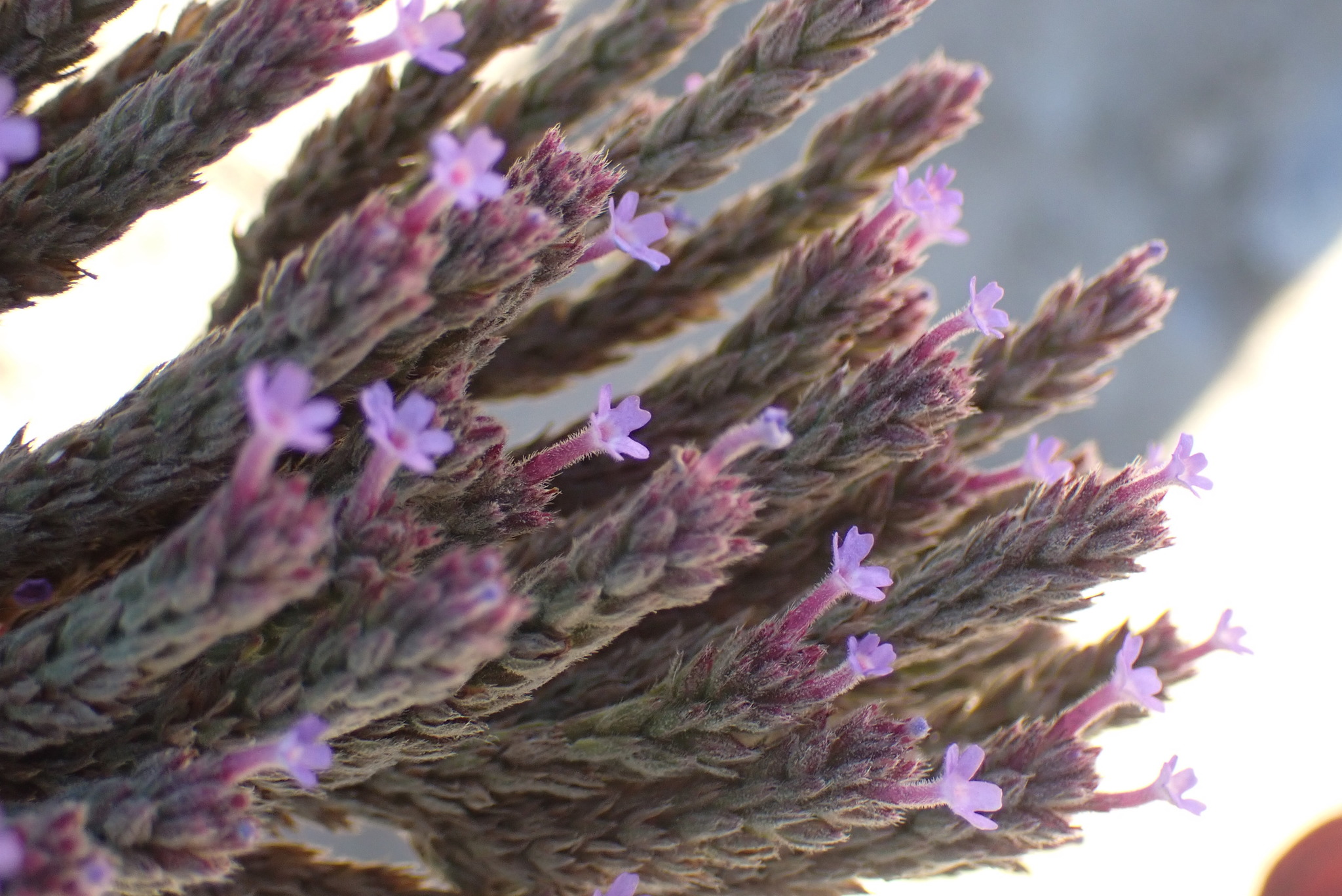
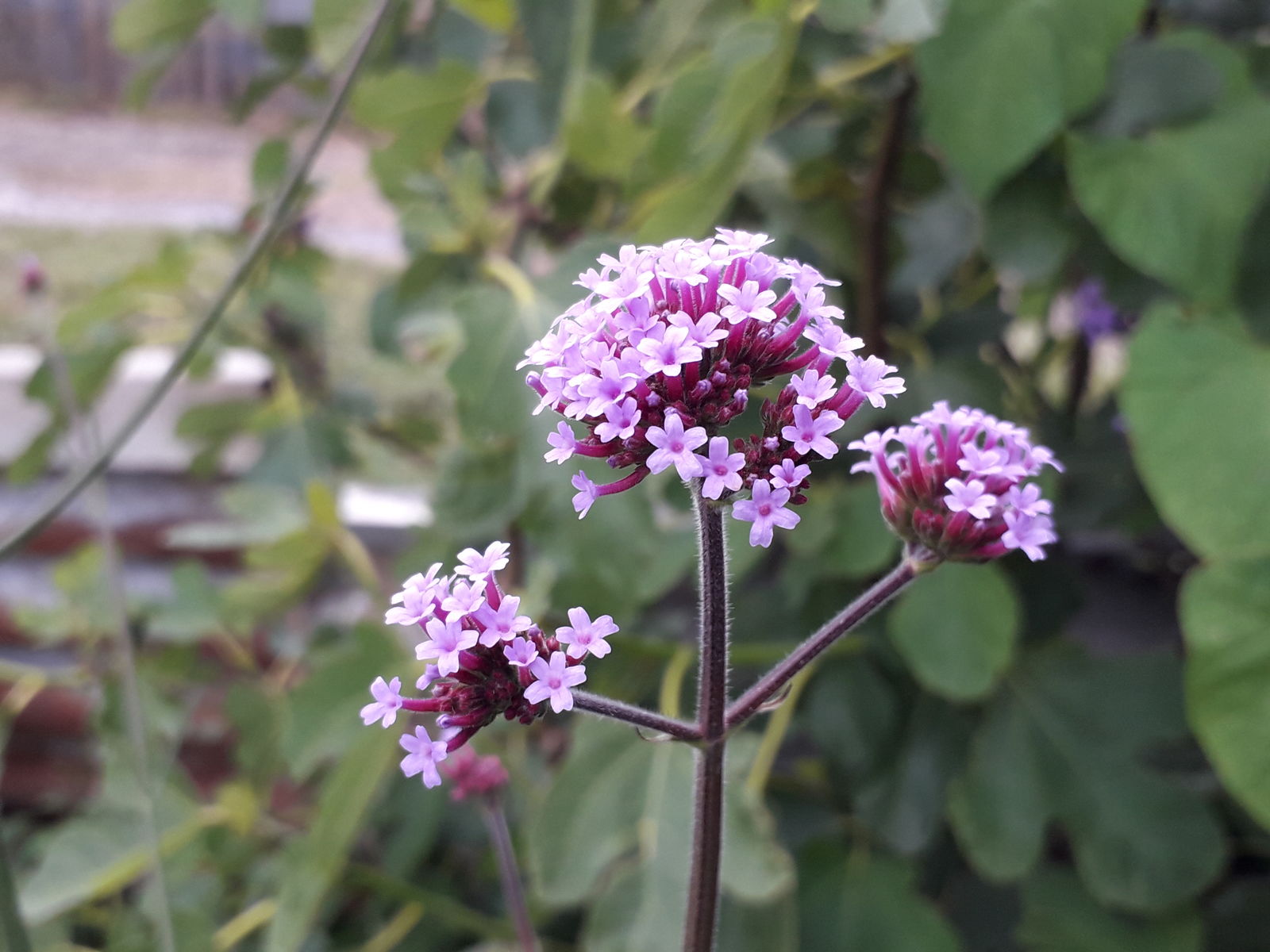
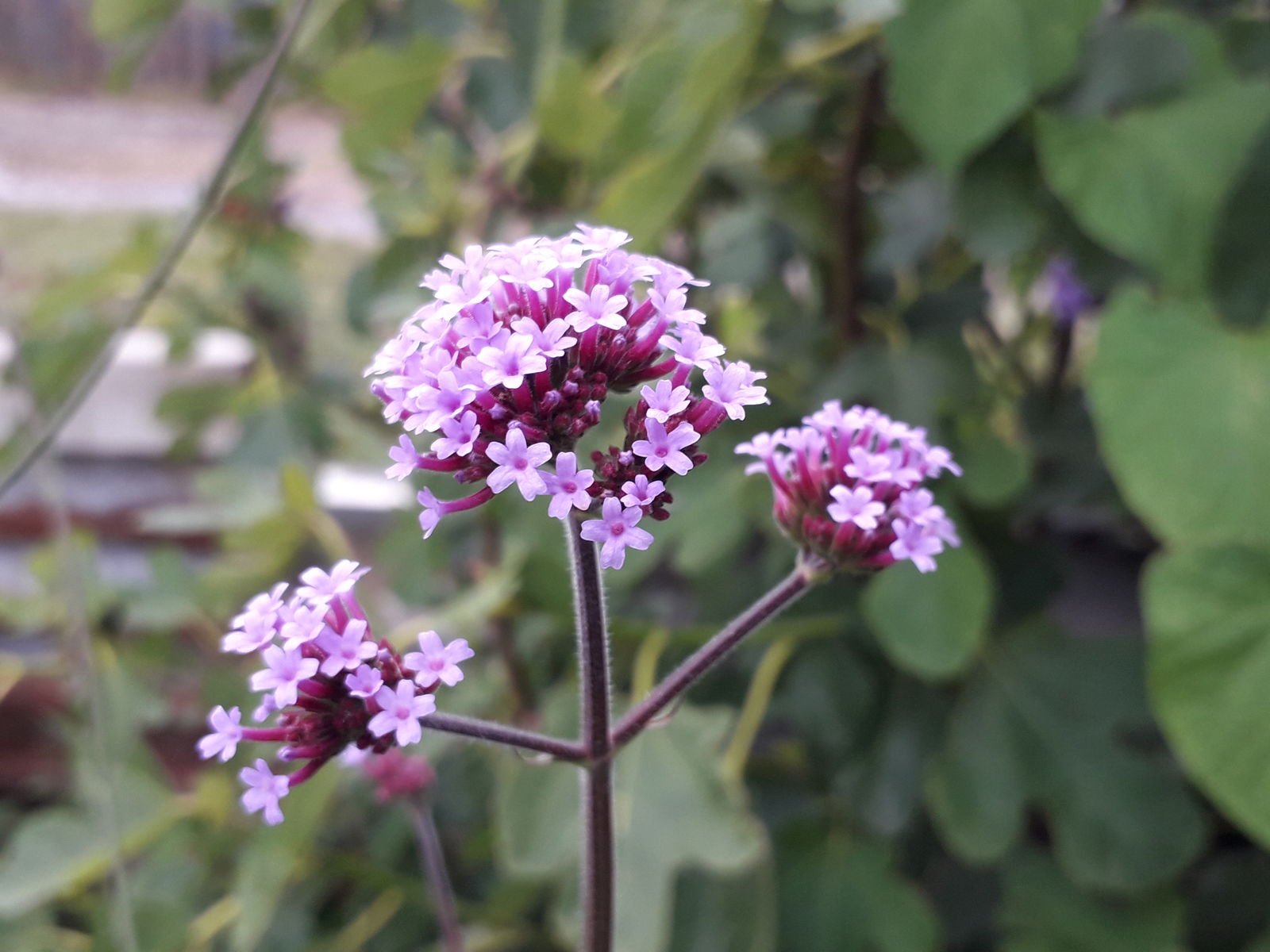
The most distinctive feature is the flower head: small mauve to purple flowers form dense, flat clusters at the stem tips. Held high on slender stems, these clusters create the characteristic airy, transparent outline that is recognizable from a distance. 4 2
Nectar-rich blooms continue from summer into fall, attracting bees, hoverflies and especially butterflies. Numerous self-sown seedlings often appear around established plants, providing another useful identification clue. 5 3
Useful taxonomy
In 1753, Carl Linnaeus described this species as Verbena bonariensis L. The genus Verbena includes many related American species, and older names still occur in the literature. The main synonyms are:
- Verbena trichotoma Moench (historical synonym)
- Verbena elongata Salisb. (historical synonym)
- Verbena inamoena Briq. (historical synonym)
- Verbena intercedens Briq. (historical synonym)
- Verbena bonariensis var. conglomerata Briq. (historical synonym)
Cultivar names such as Lollipop and Little One refer to horticultural selections, rather than separate species or botanical varieties. The accepted scientific name, Verbena bonariensis, remains the reliable identification reference. 1 7
Habitat and range
From southeastern and southern Brazil, Verbena bonariensis ranges into southern South America, including Argentina and Uruguay. It grows wild in open wet grasslands, waste ground and sunny stream margins where the soil drains well. 1 3
As a South American grassland plant, it needs bright exposure and drained soil but tolerates stagnant winter moisture poorly. Full sun and good drainage therefore guide garden cultivation and explain its relative vulnerability to frost in heavy ground. 6 2
Widespread ornamental cultivation has allowed purpletop vervain to become naturalized outside its range in many mild-climate regions. Prolific self-seeding makes it invasive in some of them. These introduced areas remain distinct from its South American native range. 7 5
Life cycle and reproduction
A short-lived perennial, Verbena bonariensis is often grown as an annual where winter is cold and wet. In drained soil, its crown tolerates moderate frost, down to roughly −10 °C (14 °F), before resuming growth in spring. Elsewhere, seedlings maintain its presence. 3 5
The small mauve flowers suit pollination by long-tongued insects, and butterflies visit their clusters throughout summer. After flowering, each flower produces small, highly viable seeds, leading to potentially abundant self-seeding. 4 6
For garden propagation, sowing in warmth during spring is simplest, followed by transplanting after the last frost. Early sowings flower in their first year. Summer stem cuttings and spring division of established clumps also succeed, and preserve dwarf forms such as Lollipop more faithfully: self-sown seedlings revert to the tall species type. 2 5
Uses and risks
Purpletop vervain is grown chiefly as an ornamental in borders, flower meadows and naturalistic gardens. Its airy habit and prolonged nectar-rich flowering combine well with coneflowers, black-eyed Susans, gauras and grasses for an open meadow effect. 2 3
For household toxicity, purpletop vervain is considered non-toxic. The ASPCA lists garden verbenas (genus Verbena) as non-toxic to cats, dogs and horses, and no notable toxin is reported for this species. 8 6
Ecological spread is the main concern: prolific self-seeding has led to its recognition as a naturalized invasive species in several mild-climate regions. Remove some spent flowers before they set seed and monitor young volunteers to contain it in the garden. Cold, wet conditions also expose it to winter frost damage in poorly drained soil. 7 5
Varieties, look-alikes and related plants
The forms sold are horticultural selections. Lollipop is a compact dwarf around 60 cm (24 in), suited to small borders; Buenos Aires represents the classic tall type; Little One is low and branching, offered for edging and containers. Before buying, check the stated height and root condition. 2
Common look-alikes include the following:
- Verbena rigida, a much lower, spreading verbena around 30–50 cm (12–20 in) tall;
- Verbena hastata, with narrower upright flower spikes;
- large-flowered garden hybrids sold as trailing verbenas.
Nearly bare angular stems, great height and elevated mauve flower clusters are the most reliable clues for confirming that a plant sold as purpletop vervain is Verbena bonariensis. 3 1
Main sources
- Plants of the World Online / Kew, Verbena bonariensis L.
- Royal Horticultural Society, Verbena bonariensis - purple top
- Missouri Botanical Garden, Verbena bonariensis
- Encyclopaedia Britannica, Verbenaceae
- Plants For A Future, Verbena bonariensis
- NC State Extension, Verbena bonariensis
- USDA PLANTS Database, Verbena bonariensis L.
- ASPCA, Garden verbena (Verbena) non-toxic plant entry
Frequently asked questions
Is purpletop vervain toxic?
Verbena bonariensis is considered non-toxic. The ASPCA lists garden verbenas (genus Verbena) as non-toxic to cats, dogs and horses, and no notable toxin is reported for this ornamental species.
Is purpletop vervain a perennial or an annual?
It is a short-lived perennial in mild climates, often grown as an annual where winters are cold and wet. It self-seeds so readily that it can persist from year to year through its own seedlings.
Is purpletop vervain invasive?
In several mild-climate regions it is considered an invasive naturalized species because of its prolific self-seeding. In gardens, remove some spent flowers before seed develops to limit its spread.
What exposure does purpletop vervain need?
Full sun is essential. In shade, stems become elongated and fall over, and flowering declines. It also appreciates well-drained soil that does not remain waterlogged in winter.
How do I propagate purpletop vervain?
The simplest method is warm spring sowing; the plant then self-seeds. Summer stem cuttings and division of an established clump also work and help preserve a particular form.
Why is my purpletop vervain falling over?
Falling stems indicate overly rich soil, excess nitrogen or a windy site. Planting closely in groups, limiting fertilizer and choosing a dwarf form such as Lollipop improve stability.
How does purpletop vervain differ from Verbena rigida?
Verbena bonariensis is tall and very airy, reaching 2 m (7 ft), while Verbena rigida remains low and spreading, around 30–50 cm (12–20 in). Both have mauve flowers but very different habits.
Similar plants



If you are unsure about a plant’s toxicity, ask a botanist or veterinarian for advice.